
A New Parent’s Guide to Tummy Time—What It Is & Why It Matters
Wondering how tummy time helps your baby? We’ve got the why, plus tips to make it a breeze.

By

Tummy time is an important (and easy!) way for babies to start building strength—and you can start from day one. It’s simple to weave into your daily routine and doesn’t require a bunch of prep or props. But what exactly is tummy time? It’s pretty much what it sounds like: a time during the day when your baby spends a few minutes on their tummy while they’re awake and supervised.
Placing your baby on their stomach helps them build key muscles, setting the stage for major milestones like sitting, rolling over, crawling and walking. But as a new parent, you’ve likely never had to facilitate tummy time before.
To help break it all down, we talked to board-certified pediatrician Dr. Mona Amin and Gabriella Shelley, a pediatric occupational therapist and face of Gabriella OT, who shared everything new parents need to know about tummy time—including when and how to start, plus a few fun products to make it even more enjoyable for you and your baby.
Why do babies need tummy time?
Tummy time became popular in the 2000s when the American Academy of Pediatrics (AAP) added the Tummy to Play to their Back to Sleep campaign. This initiative recommends that parents and caregivers place healthy infants on their backs for sleep in an effort to reduce the risk of SIDS.
And while placing baby on their back is best for sleep, prolonged time on their backs can cause a flat spot on the head (called plagiocephaly) for some babies. Getting in a few sessions of tummy time each day can help prevent this.
Doing tummy time with your little one is also more than just cute—it comes with a ton of benefits. “Tummy time does so much more than just strengthen neck muscles!” says Shelly. In addition to helping babies build head and neck control, “[It] strengthens the postural and core muscles babies need to push up, pivot, reach, roll, sit, crawl and eventually walk. It also integrates important reflexes for central nervous system development and helps organize the brain for coordinated, purposeful movement,” she says.
“When babies spend time on their stomachs—while awake and supervised—they’re working important muscle groups, especially the neck, shoulders, arms and core,” says Dr. Mona. She says that it’s essential for developing the strength and coordination babies need to achieve important motor milestones. Shelley adds that babies who regularly spend time on their tummies often reach those milestones right on time.
How exactly does this help? Shelley explains a bit of the science behind tummy time:
“By pressing their hands into the ground and feeling different textures, babies activate the tiny muscles of the hands and fingers—the foundations of fine motor control. Sensory-wise, tummy time gives rich proprioceptive input (body awareness) and vestibular input (balance and spatial orientation) as they shift weight, push and lift,” she says.
Over time this allows babies to learn how to move their bodies and become more confident doing so.
When to Start Tummy Time + How Long to Do It
For babies with no health concerns, it’s never too early for tummy time. “In the newborn stage, just a few minutes at a time, a few times per day, is a great start,” says Dr. Mona. Start with short spurts of time each day and increase as baby gets older, stronger and more alert. “Even skin-to-skin inclined tummy time on a parent's chest counts and is perfect for newborns,” says Shelley.
Dr. Mona says not to get too caught up in the exact time spent. “It’s really less about the number, and more about giving them plenty of opportunities, support and encouragement. It’s not easy for little babies—tummy time is hard work!”
Most babies are not big fans of tummy time in the beginning, so don’t be surprised if they cry at first. Do it as long as they’ll tolerate it before getting upset and gradually increase the time as they get used to it. “Always follow the baby’s lead—quality over quantity at first.” Shelley says.
Here’s a simple breakdown that can serve as a loose guide and help you know what to aim for at each stage. Just remember—tummy time can be done in short sessions throughout the day, and even a few minutes at a time adds up.
Newborns (from birth): Start with a few minutes at a time, a few times a day. Even laying baby tummy-down on your chest counts.
One to two months: Gradually work up to 15–30 minutes total per day, broken into shorter sessions. Follow your baby’s lead and keep it fun.
Around three months: Aim for up to one hour total each day, split into multiple sessions. But at this stage, baby may start enjoying longer stretches on their tummy!
How do you do tummy time?
Tummy time is the perfect excuse to spend some uninterrupted time interacting and having fun with your little one—and it doesn’t require a whole bunch of thought or preparation.
Start by placing your baby on their tummy on a low, firm surface—a playmat or blanket on the floor works perfectly. Make sure the area is clear of pets, siblings or anything else that could get in the way. The best time to try tummy time is when your baby is awake, alert and content—so not when they’re hungry or just fed. “Think about doing it whenever your baby is awake and supervised, preferably not right after a feed to minimize spit-up,” says Dr. Mona.
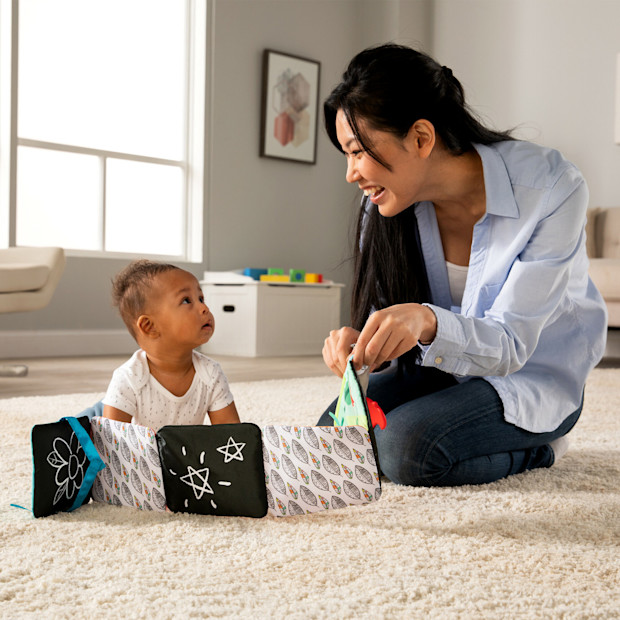
Once your baby is on their tummy, get down on the floor with them. Make eye contact, talk or sing softly and mirror their little movements or sounds. You’re their favorite person, so just being close and responsive helps them feel safe and engaged.
There’s no need to follow strict rules. Your baby may only tolerate a minute or two at first—and that’s totally okay. “Even 30 seconds counts!” Shelley says. The goal is to follow baby’s lead and work them up to longer stretches of time as they become stronger and older. You can wrap up baby’s tummy time session when they start showing signs they’ve had enough: turning away, fussing or losing interest.
And if you notice they start to get sleepy—which can happen pretty easily with a newborn—move them to a safe sleep space and place them on their back for a snooze.
While there isn’t really a “right” way to do tummy time, in general, Shelley says you can tell your baby is getting good practice by looking for a few things:
You observe your baby lifting their head, even if it’s very brief
Baby’s eyes are open and engaged
They’re practicing propping themselves up with their arms
There’s some gentle ‘wiggling’ as they shift their weight
How do you know it’s not going so well? Here are a few signs that baby is struggling:
They’re struggling to lift their head, and their face is buried in the playmat
They become fussy or frustrated quickly
Baby is in a “skydiving” position with their arms straight out
Arching back and pushing up with only the legs (versus using arms/core)
If you’re seeing these signs regularly, despite gentle support, “It’s worth investigating further with your pediatrician or a licensed pediatric occupational or physical therapist,” Shelley says.
What if my baby hates tummy time?
Most babies won’t be too jazzed about tummy time in the beginning—but don’t get discouraged. Shelley shares a few tips that can help even the most reluctant tummy time babies come around.
The floor isn’t the only option. Chest time, baby wearing, tummy-time approved props and even your lap are all valid spots to get a few seconds of tummy time in, Shelley explains. You can switch it up if baby isn’t a fan of tummy time on the floor.
Give baby a little massage. “A gentle infant massage can warm up their bodies and make transitions easier,” she says.
Use engaging toys. Giving baby something interesting to look at can work wonders for turning tummy time into something fun. (We rounded up a bunch of picks below!)
Shelley also says trying tummy time after naps and feeds (but not too close, because spit up), “when they're happiest,” can also help. She also stresses the importance of trusting your parent intuition. “If a baby seems overwhelmed, it’s okay to take a break and try again later.”
A strong aversion to tummy time can also be a sign of something else going on with baby’s body. Shelley says a few things to keep an eye out for include:
Baby tends to tilt their head to one side and/or prefer to look one direction
Flat spots developing on their head
Baby has a very stiff or floppy muscle tone
Disinterest or distress in moving, rolling or pushing up after three to four months
If you notice any of these signs, definitely reach out to your baby’s pediatrician and/or a pediatric OT for support.
The Best Tummy Time Supplies
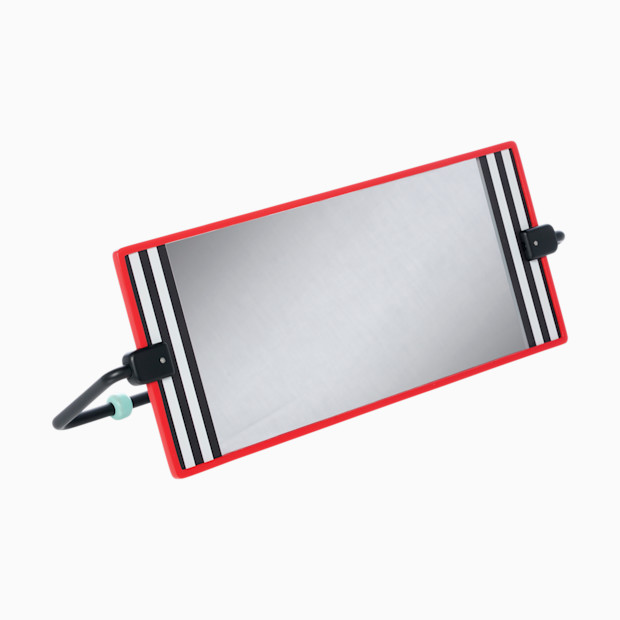
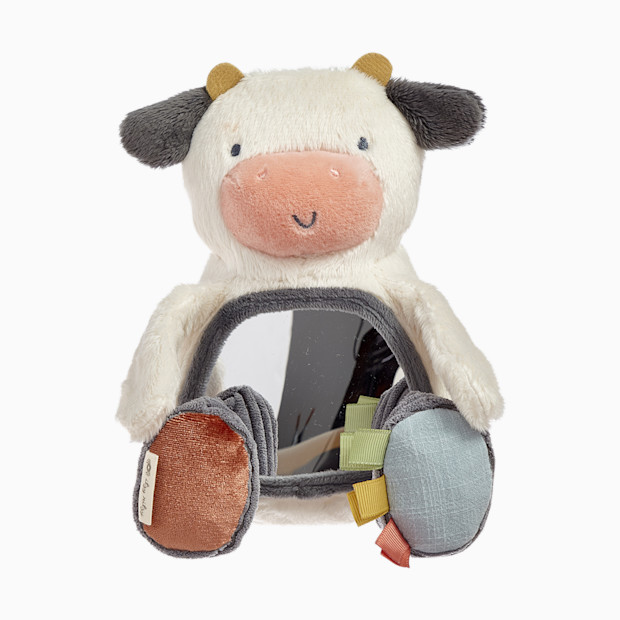
Tummy time with little ones is all about keeping them interested and engaged. Having a few things on hand, like a play gym or mat and a few toys can really help. For newborns and younger babies, a mirror that reflects your little one’s face is a great prop. Hanging toys that they can look at and eventually want to grab in contrasting colors can stimulate their vision and encourage motor development.
Tummy Time Friendly Play Gyms
These all-in-one activity gyms have engaging toys and are a safe space for babies to hang out. While most come with a few toys to hang on the play gym’s bars, you can also prop a book, mirror or high contrast cards at the edge of the mat for new experiences.
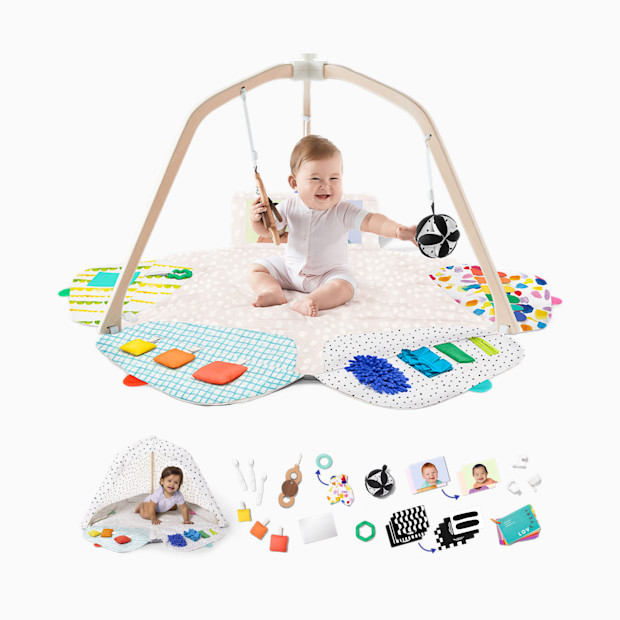
Lovevery
The Play Gym
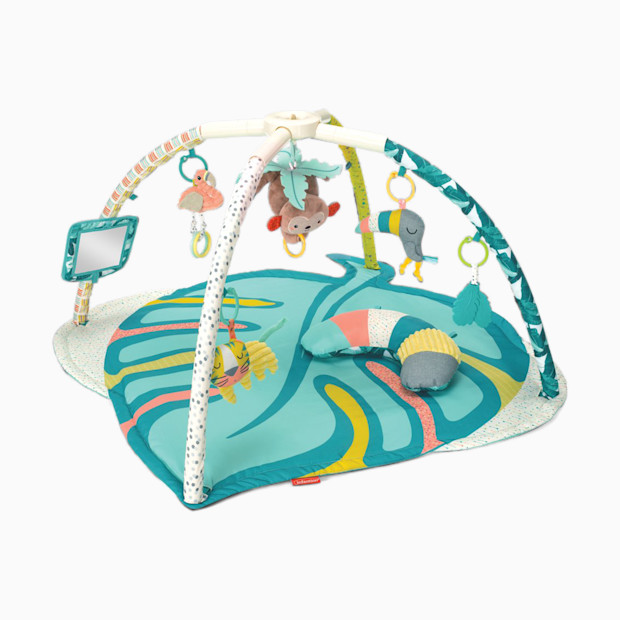
Infantino
4-in-1 Deluxe Twist & Fold Activity Gym & Play Mat
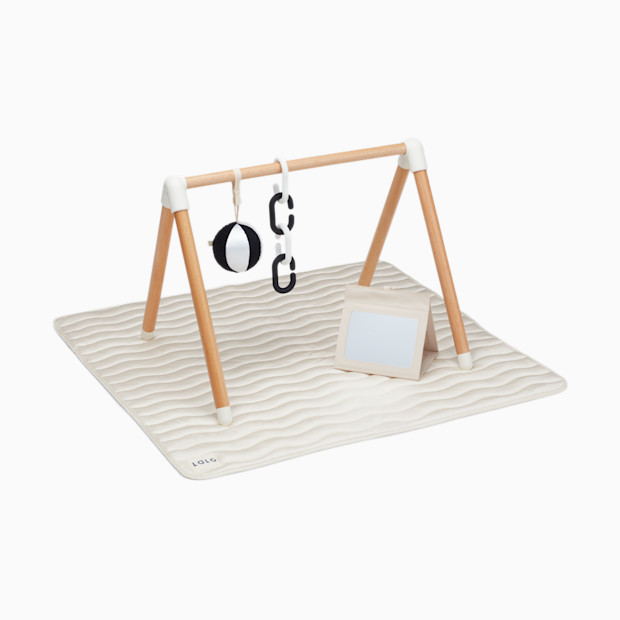
Lalo
The Play Gym
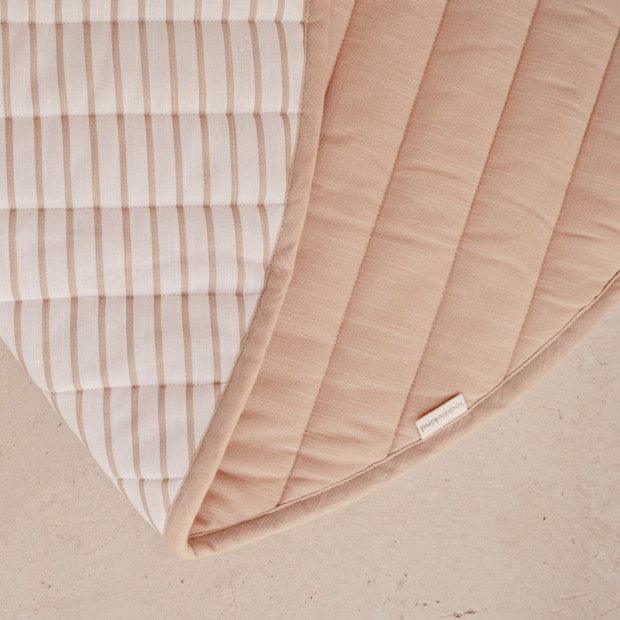
Playmats for Tummy Time
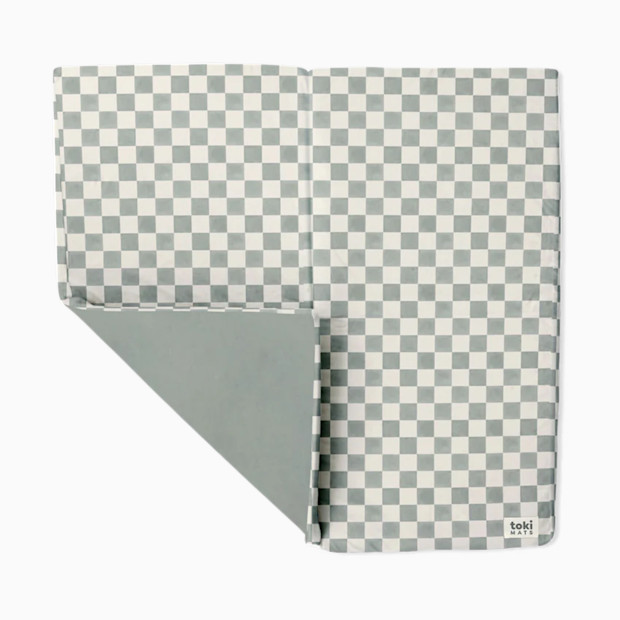
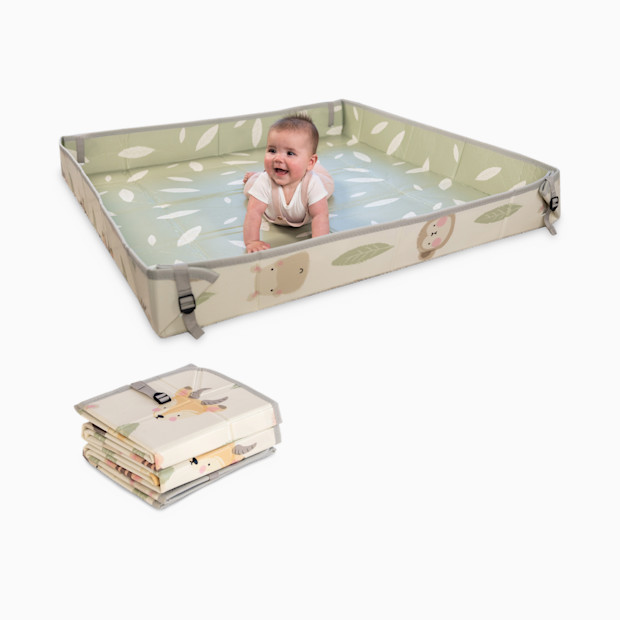
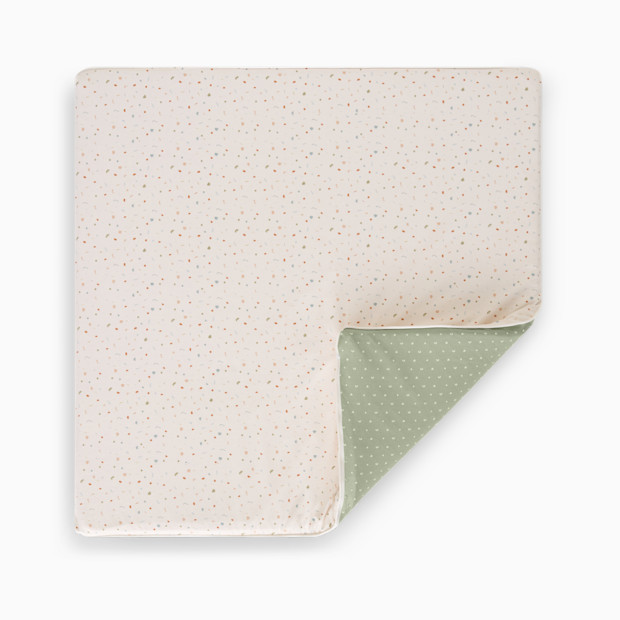
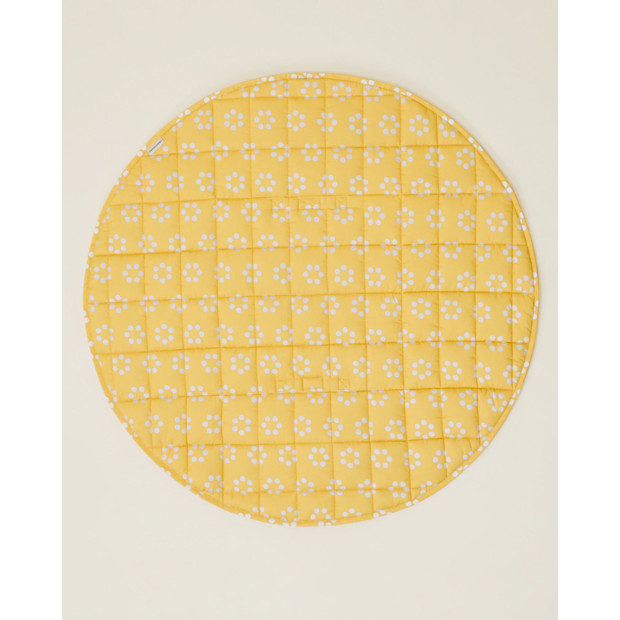
What’s great about a playmat—or floor mat—is that they’re a bit bigger than a play gym, providing more space for your baby to explore as they grow. They can also designate a space to play with any kind of toys.

Engaging Sensory Toys for Tummy Time
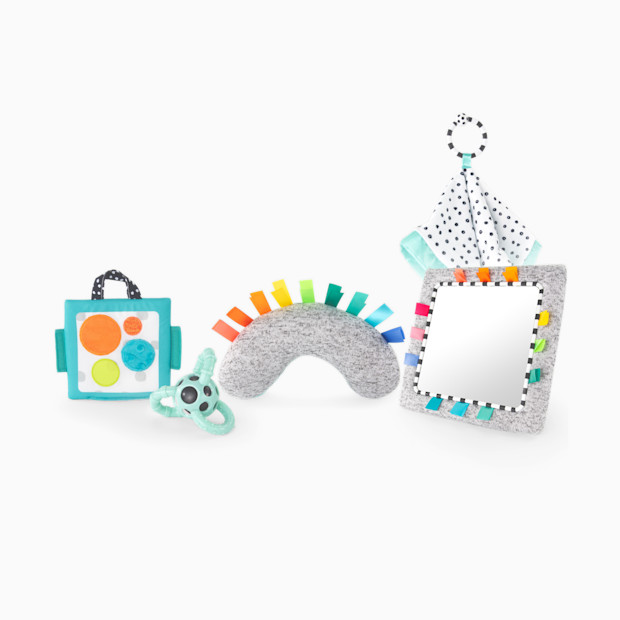
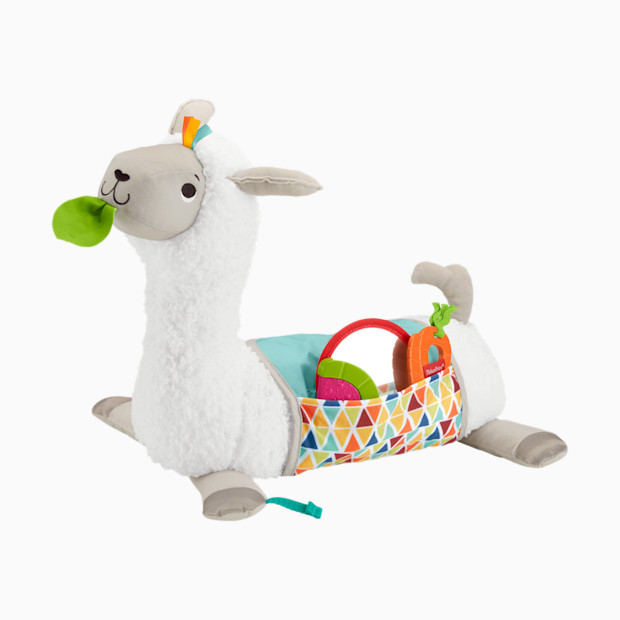
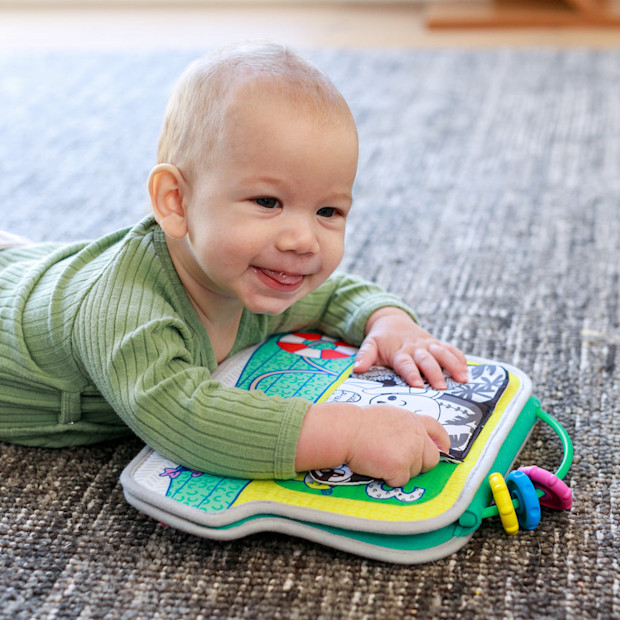
A good tummy time toy is anything that will actually hold their attention—especially for those babies who aren’t a fan—and is safe for them to explore. In the newborn stage, toys and books with high contrast colors and mirrors are great. (Fun fact: babies love to look at faces, including their own). And as they grow, you can introduce different sensory toys with a variety of textures, materials and shapes to give them new opportunities to work on their developing skills.



Expert Sources
Babylist uses high-quality subject matter experts to provide accurate and reliable information to our users. Sources for this story include:
Dr. Mona Amin, a board-certified pediatrician and founder of PedsDocTalk.
Gabriella Shelley, a pediatric occupational therapist, founder of GabriellatheOT and creator of Babyoga Cards.

;)
;)
;)
;)
;)
;)
;)
 / Rainbow (Sage)","url":"https://www.babylist.com/gp/piccalio-play-mat/56890/2131380","source":"hello_baby"});)
;)
;)
 - Keith Haring","url":"https://www.babylist.com/gp/etta-loves-sensory-strip-reversible/38243/1473010","source":"hello_baby"});)
;)
;)
;)
;)
;)
;)
;)