
12 Sample Meal Plans for Baby's First Year Eating Solids
Nutritious first meal plans—minus all the work.

By

The deliciously messy—and sometimes unpredictable—world of first foods can leave you staring down a spoonful of puréed peas, wondering: “Am I doing this right?” Transitioning from a straightforward diet of breast milk or formula to one that introduces foods like fruits, veggies and grains might feel like a tall order if you haven’t had it on your radar.
Even though milk or formula will still be the primary source of nutrition until your baby turns one, your six-month-old will be ready to expand their palette—and that means figuring out what foods to feed them and how. How many meals should they have in a day? Which food groups are best to start with? What textures are safe at what ages?
If you’re ready to start your solid foods journey, we’ve teamed up with Gerber (aka the baby food your parents probably trusted when you were a baby) to help take the guesswork out of it with personalized meal plans—created by expert dietitians—for each stage of your baby’s first year of eating solids. While it’s always a good idea to check in with your pediatrician for nutrition advice, these menus can take you from first bites to toddler meals as you help them explore the world through taste and texture, support their growth, and yes, learn to laugh through the flying spaghetti phase.
Stage 1: Supported Sitter Firsts (Around 6 Months)
What to look for: Before diving into solids, you’ll want to make sure your baby is showing signs they’re ready. Do they have good head and neck control? Can they sit up with minimal support? Are they watching you eat like they want a bite? If so, it might be time for their first taste.
Where to start: Start simple with single-ingredient purées and iron-fortified cereals—Gerber’s Oatmeal, Pears or Peas are great go-tos. Offer just a spoonful or two and keep an eye out for their cues. If they turn their head or push the spoon away, they’re likely done (even if you just warmed up a fresh jar). Remember, this stage is all about exploring new flavors, not filling up.
Serving size: 1 to 4 tablespoons of a single-ingredient puree or iron-fortified cereal
Solids feeding schedule: 4-5 solid food eating occasions
Food texture: Thin, smooth purees
Sample Day of Meals:
Breastmilk or Formula Feedings: Approximately a total of 6-8 feedings including prior to all solid food feedings.
Breakfast: Gerber Organic Oatmeal Cereal and 2 tablespoons of Gerber Organic 1st Foods Bananas
Lunch: Gerber Organic 1st Foods Bananas
Afternoon Snack: Gerber Organic 1st Foods Butternut Squash
Dinner: Gerber Organic Oatmeal Banana Cereal and Gerber Organic 1st Foods Butternut Squash mixed into a smooth puree
Meals to try:
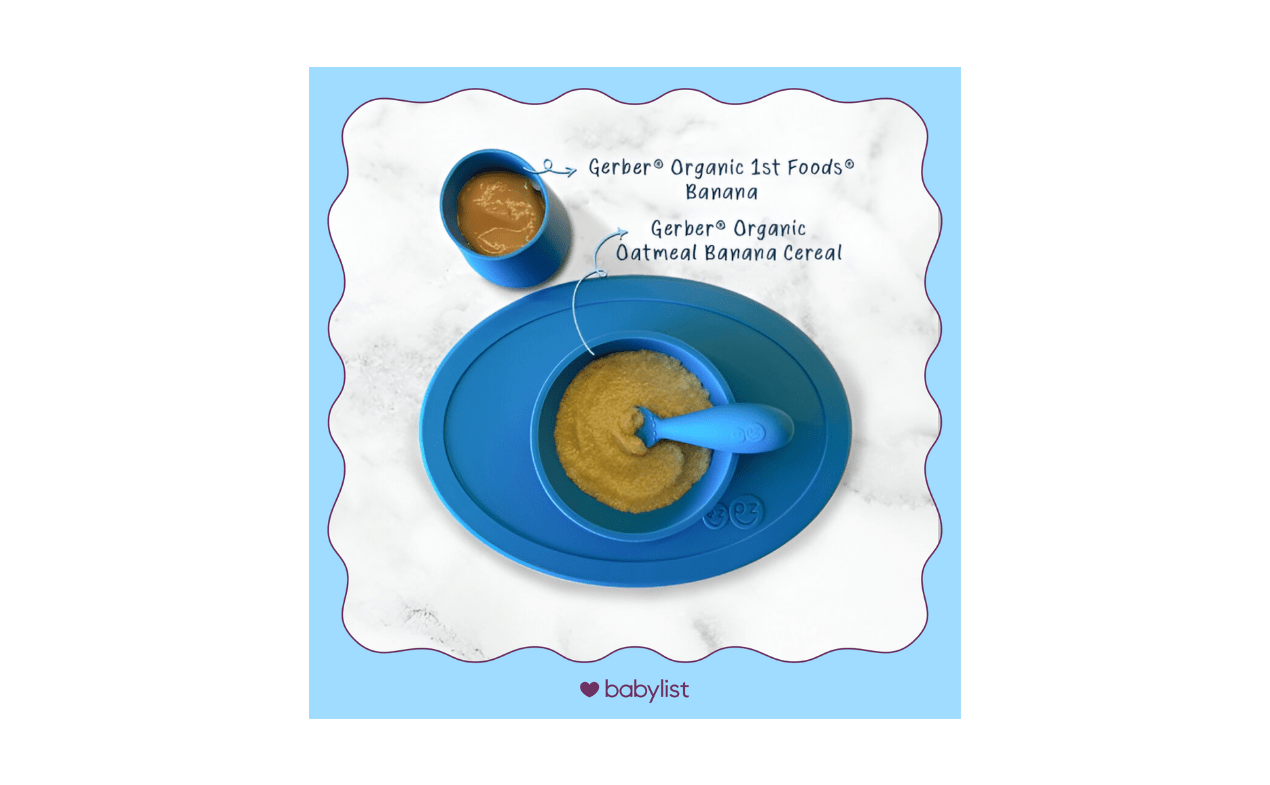
Supported Sitter Breakfast


Stage 2: Sitter (Around 6–8 Months)
What to look for:
By this stage, your baby is sitting up like a pro and enthusiastically gumming everything in sight—even if teeth are still nowhere to be found (baby gums are surprisingly efficient). It’s the perfect time to introduce new flavors and soft food combinations to keep things interesting.
Where to start:
Add variety with different textures and taste pairings, and make sure iron-rich foods are on the daily menu to support healthy development; think of it as their version of a tasting menu. You can also start offering a few sips of water with meals as another step in helping your little one feel like part of the family at the table.
Serving size: 1-4 tablespoons of food
Solids feeding schedule: 4-5 solid food eating occasions
Food texture: Purees, thick, hummus-like spreads and well-cooked, soft, stick-shaped, or palm-sized foods for self-feeding
Sample Day of Meals:
Breastmilk or Formula Feedings: Approximately a total of 6-8 feedings including prior to all solid food feedings.
Breakfast: Gerber 2nd Foods Cereal Apple Banana Oatmeal Cereal
and Gerber Cereal Power Blend Probiotic Oatmeal Lentil Carrots & Apples
Mid-morning Snack: Gerber Natural Banana Pear Whipped Melts
Lunch: Gerber 2nd Foods Vegetable Beef
Afternoon Snack: Gerber Lil' Crunchies Garden Tomato
Dinner: Gerber Nourishing Blends Sweet Potato Turkey with Oats
Meals to try:
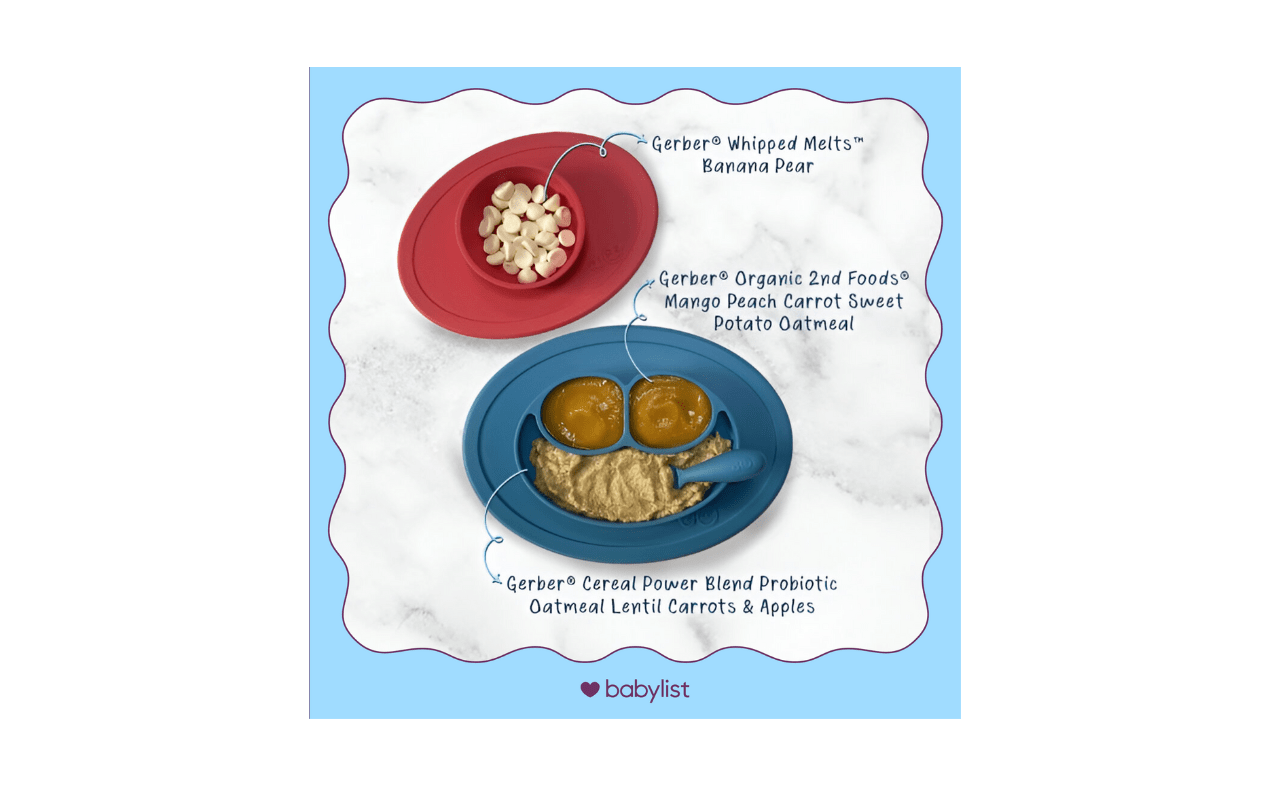
Sitter Breakfast


Stage 3: Crawler (Around 8–12 Months)
What to look for: With crawling (and possibly cruising) in full swing, your baby’s interest in self-feeding often ramps up. They’re ready for chunkier textures and small, soft finger foods they can grab on their own, so focus on serving chopped, soft-cooked veggies and fruits that are easy for little hands to grab and gums to mash.
Where to start: Plan for balanced meals that include soft proteins, grains and veggies to keep your baby fueled and exploring new tastes. If you want to let your baby practice using a spoon, now’s the time. Yes, it’ll be messy, but that’s part of the learning (and the charm).
Serving size: 1/4 cup to 1/2 cup from each food group
Solids feeding schedule: 4-5 solid food eating occasions
Food texture: Soft-cooked bite sized pieces and chunky, lumpy mashes
Sample Day of Meals:
Breastmilk or Formula Feedings: Approximately a total of 6-8 feedings including prior to all solid food feedings.
Breakfast: Gerber 2nd Foods Apple Peach Squash with Gerber Whole Wheat Cereal mixed into a lumpy mash
Lunch: Soft-cooked carrots with Gerber Organic 2nd Foods Pear Spinach as a dip, Gerber Toddler Meals Pasta Shells and Cheese
Dinner: Gerber 3rd Foods Pasta Marinara, Gerber Whole Wheat Cereal sprinkled on avocado or bananas to make slippery foods easier to grab
Meals to try:
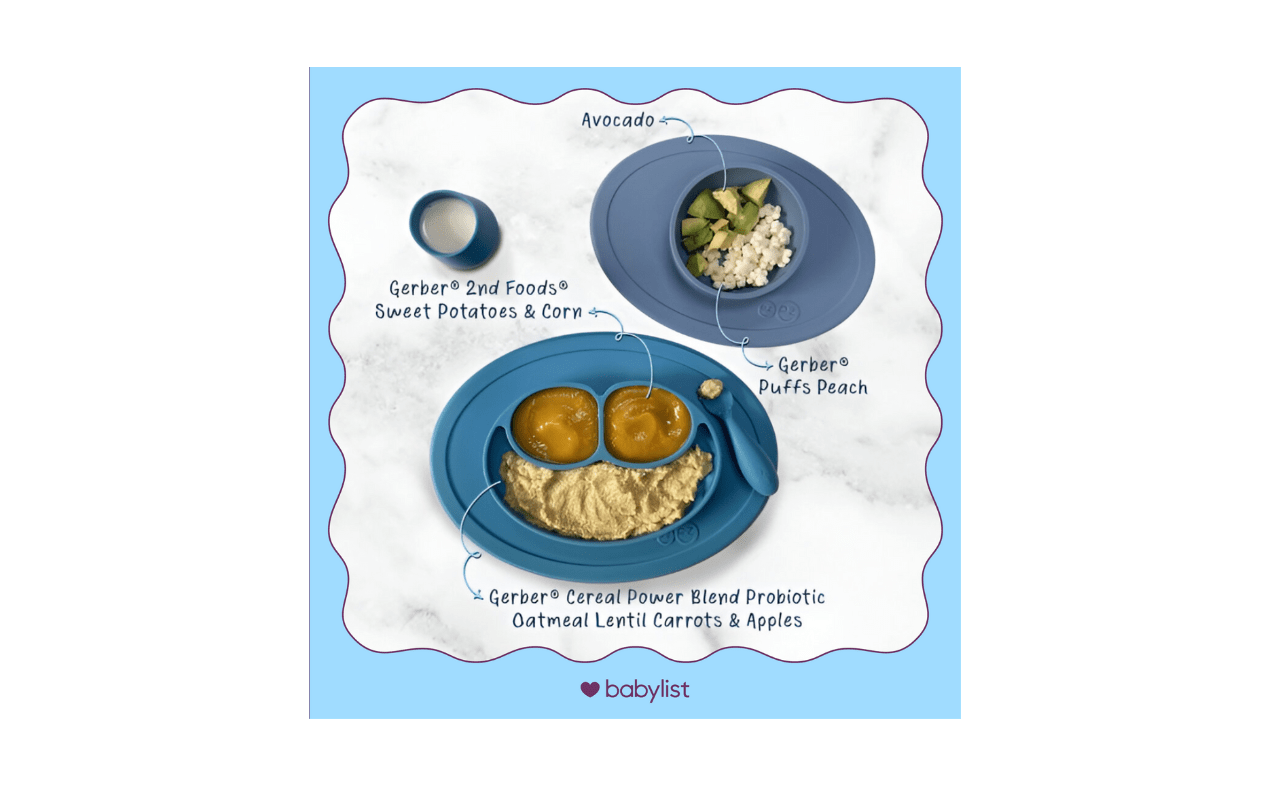
Crawler Breakfast


Stage 4: Toddler (12+ Months)
What to look for: Welcome to the toddler phase, where “no” might just be your kiddo’s favorite word. They’re starting to eat more like the rest of the family now, and though their appetite can swing wildly from “bottomless pit” to “air and crackers” in a single day, try not to fret—it’s totally normal.
Where to start:
Serve modified versions of what the family’s eating so they feel included, and try to stick to a regular routine with meals and snacks. Keep offering new foods, even if they get a dramatic rejection. Exposure to new foods over time really does help.
Serving size: A portion the size of the child's fist or half their palm from each food group
Solids feeding schedule: Three meals and 1-2 snacks
Food texture: Soft and cut into small pieces, soft and large to encourage biting and tearing practice, thinly sliced or shredded if the food requires a lot of chewing (such as cooked meat)
Sample Day of Meals:
Breakfast: Organic Scrambled Egg, quartered Organic Cherry Tomatoes, Organic Whole Wheat Toast with Gerber Banana Blueberry, Organic Milk
Mid-morning Snack: Organic Milk and Gerber Natural Banana Pear Whipped Melts
Lunch: Organic Whole Grain English Muffin with Organic Peanut Butter & Organic Banana, and Gerber Chicken Parmesan Ravioli Pick Ups
Afternoon Snack: Gerber Strawberry Banana Soft Baked Grain Bars
Dinner: Organic Chicken, Organic Brown Rice, Organic Peas, Organic Dipping Sauce, and Milk
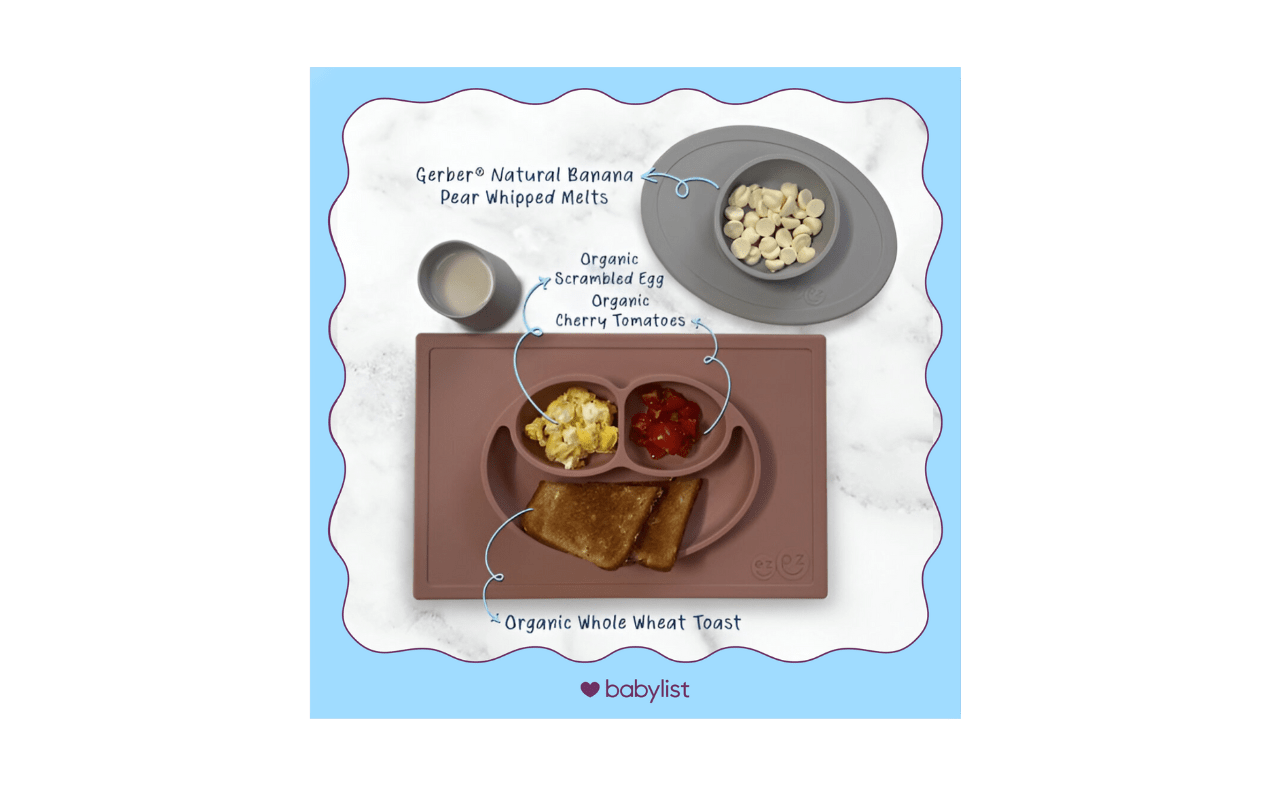
Toddler Breakfast


When it comes to feeding your baby or toddler, try to follow their cues—they’re surprisingly good at letting you know what they need (and don’t need). Skipped meals, thrown spoons and dramatic refusals are all completely normal, so try not to stress. Keep the mood light by talking about the food you’re serving; describe colors, textures and tastes to make it more engaging. And if you’re so inclined, get in on the fun of food with them and throw a little spaghetti yourself.
This article is sponsored by Gerber. Babylist’s free site, apps and emails are made possible by our sponsors. We limit our sponsored content to relevant partners that offer products and services we believe in and use ourselves.

;)
;)
;)
;)
;)
;)
;)
;)
;)
;)
 ","url":"https://www.gerber.com/simply-pick-upstm-chicken-parmesan-ravioli-2","source":"hello_baby"});)
;)