
We Tried ALL the Baby Wipes (So You Don’t Have To)
13 different brands, weeks of testing and hundreds of wipes later, these are the four worth buying.

By
If there’s one item you can never have enough of as a parent, it’s the baby wipe. From diaper blowouts and sticky fingers to messy faces and dirty restaurant tabletops, there’s not much the baby wipe can’t tackle. A pack stashed in your home, car or bag is a universal declaration: “I am officially a parent now.”
But do you know how many different types of baby wipes there are in this world? (Seven pages full of them, the last time I checked Amazon.) And while it’s easy to randomly click and buy, the last thing you want to discover is that you’re now the proud owner of an 800-count value pack of wipes that don’t actually wipe much of anything at all.
That’s where I come in. As an expert in the baby space since 2019 and a mom of two (very messy) little boys for over a decade, I’ve wiped a whole lot of butts, faces, hands and countertops in my day. But I’d never formally put baby wipes to the test—until now.
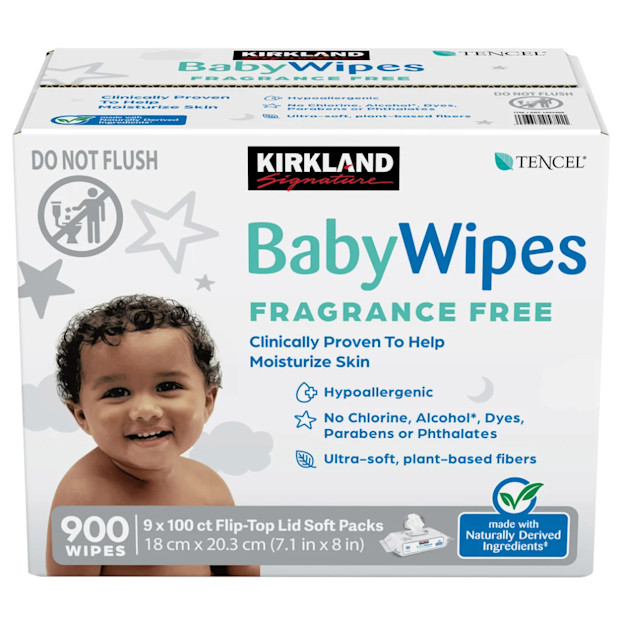
After weeks of research and testing 13 different brands of popular wipes, I can confidently say that Kirkland's Signature Baby Wipes are the best baby wipes for most families. There's nothing these wipes can't tackle, from poopy bottoms to sticky faces—and they're some of the most affordable wipes on the market.
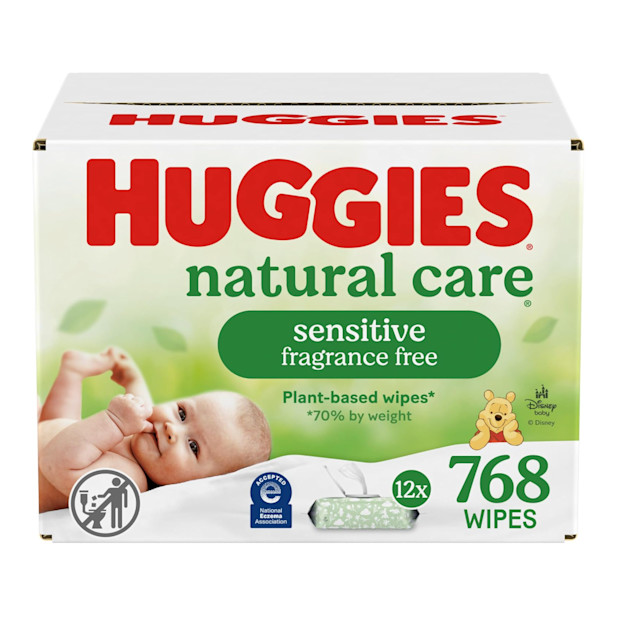
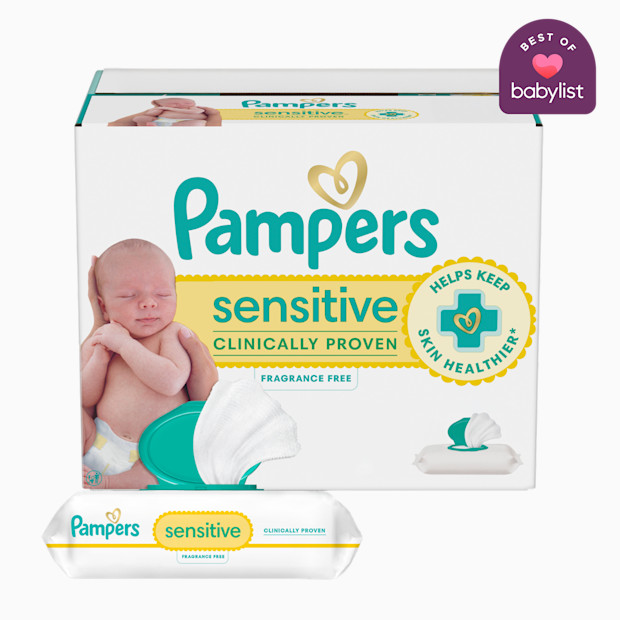
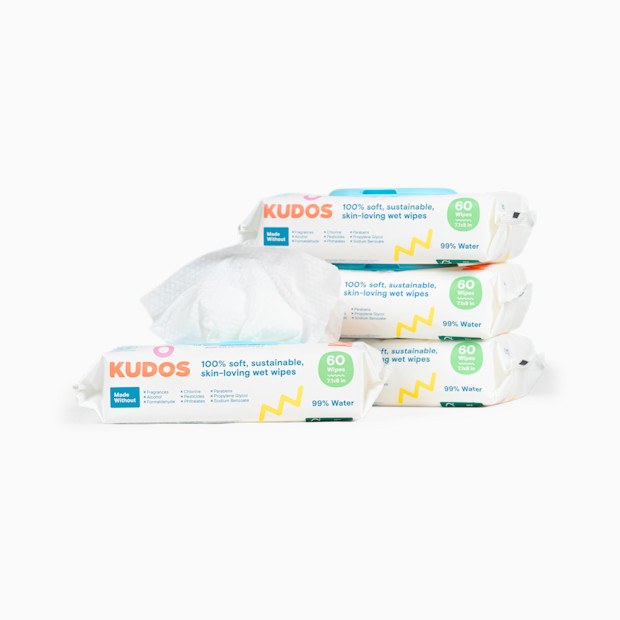
But there are more wipes to love! For honorable mention picks, I recommend Huggies Natural Care Sensitive Wipes and Pampers Sensitive (both also among the top five parent favorites in our poll) and, for a level-up pick, Kudos, an eco-conscious favorite.
How We Judged Baby Wipes
Best Baby Wipes Overall
Pros
- Top performer across all wipes tested
- Thick, strong and large
- Affordable
- No fragrance
Cons
- Costco membership required for best price
- Not biodegradable or compostable
As a longtime fan of all things Costco, I’m embarrassed to admit how long it took me to give their in-house brand Kirkland’s baby wipes a try. When I finally did, I was immediately impressed, and they became my go-to for all of my baby wipe needs. But how would they stack up when I officially put them to the test? Amazingly, that’s how.
Kirkland wipes topped my list for performance after weeks of testing, with a cumulative performance score of 19 out of a possible 20 points. These wipes truly have (and do) it all. The wipes are water-based and fragrance-free and never irritated my little one’s skin. Thickness-wise, they’re some of the strongest and thickest on our list. I never tore one, even when I really tugged.
Kirkland baby wipes won't tear
They’re also some of the largest wipes that I tried, with a huge surface area that comes in handy when it’s time to tackle a big mess. They’re wet but not too wet and feature a slightly patterned texture that, combined with the wipes’ thickness, makes them extremely “grippy” and absorbent. They were no match for any number of (really) dirty diapers, and I used fewer wipes per diaper change than I did with any other wipe on my list. That means I’m saving money by buying fewer wipes and putting less trash into landfills, two big positives in my book.
A Kirkland wipe next to a wipe by Eco by Naty, one of the smallest wipes I tested, with an iPhone 14 Pro tossed in for scale.
Last but definitely not least is cost. Like many warehouse products, cost savings is a key feature of these wipes. At the time of writing, Kirkland’s wipes came in at $23.99 for 900 wipes—a unit price of under three cents a wipe. Top performance + incredible affordability equals a wipe that’s tough to top in my book.
Keep in mind that you’ll need to be a member of the warehouse club Costco to get the best price on these wipes or to stock up in person, which means paying a membership fee. (At the time of this writing, a basic membership costs $65 annually.) You can purchase them online as a non-member, but you’ll need to create a (free) online account and you’ll pay a five percent surcharge for each order. While this isn’t ideal, the wipes are still quite affordable even considering the surcharge, so I don’t see this as too big of a detractor. And environmentally speaking, Kirkland’s wipes aren’t biodegradable or compostable, so they’re not at all eco-friendly.
Editor's Note:
We're aware of the class action lawsuit against Costco which claims the brand's Kirkland Signature Baby Wipes contain unsafe levels of PFAS, per independent research conducted by the plaintiffs. (Polyfluoroalkyl substances, also called PFAS or "forever chemicals," are long-lasting chemicals that may be linked to harmful health effects.) We spoke with Mark Jones, Ph.D., a chemistry consultant with 30+ years of experience, who didn't see a cause for concern at this time. "PFAS are everywhere—if you look hard enough, you'll find them," he said. "You have to focus on the hazard versus the risk. Even if I know something is hazardous, that doesn't mean it can't be used within your risk tolerance," he explained. Emily Oster also weighed in on the suit and advised parents not to panic.
(Almost) Just As Good: Honorable Mention Picks
Honorable Mention
Pros
- Affordable
- Large + textured for easy wiping
- No fragrance
Cons
- Thinner than our other best-of picks
- Not biodegradable or compostable
Truthfully, I didn’t have high hopes for these wipes right out of the package. I’d heard from other parents that they tear, and a baby wipe that tears is generally not one I’d put on any best-of list. They also looked a little thin to me. But I’m always up to be proven wrong…and here we are.
Yes, when I pulled on these wipes really hard from either side, they did tear. But they didn’t tear once as I used them many, many times over several weeks—so it didn’t impact their performance one bit. (They scored a 16 on my overall rating scale.) They’re fragrance-free, made from 99% purified water and pH balanced. And they did an excellent job of wiping everything from poop-filled diapers to sticky fingers. They’re large (not *quite* as large as Kirkland’s wipes, but really close), but don’t lose their wetness and feature a texture that helps them grip onto and remove whatever they’re wiping.
A close-up view of the texture pattern on Huggies Natural Care wipes.
The best part? Huggies Natural Care wipes tie for the cheapest on our list, and they’re fast and easy to order from major online retailers. At the current time of writing, the unit cost per wipe works out to about 2.8 cents each. If you go through a ton of wipes, have multiple kids or simply don’t want to spend a lot on wipes, these make a great pick.
In terms of cons, I wouldn’t call these wipes flimsy, but they are a bit flimsier than some of the other top picks on our list. I found myself reaching for an extra wipe here or there at especially messy diaper changes, but overall, it didn’t seem to have a huge impact on their performance. They’re also not very eco-friendly, as they are not biodegradable or compostable.
Honorable Mention
Pampers Sensitive Baby Wipes - 588
From $12.99Pros
- Large, thick
- Textured for tough messes but still gentle on sensitive skin
- No fragrance
Cons
- More expensive than other top picks
- Dry out faster than other top picks
- Not biodegradable or compostable
With over 233,000 reviews on Amazon (almost 90% five-star) and nearly 21,000 five-star Target customer reviews, these bestselling wipes from Pampers caught my eye as soon as I began researching baby wipes. They performed well during testing (15 out of 20 points) and I agree with the overwhelmingly positive reviews from so many users; they’re thick, moist and absorbent.
Just about the same size as Huggies Natural, these wipes are able to cover a lot of real estate. I used an average of four at each diaper poopy diaper change, fewer than most other brands on our list. There’s no fragrance, and the wipes are really soft and gentle on the skin, just as advertised. They were some of the best baby wipes for sensitive skin that I tried; I felt comfortable using them both on my toddler’s bottom and his face. I also really liked the thickness and the overall absorbency. The wipes easily handled even the yuckiest of diapers.
Pampers Sensitive Baby Wipes are large, thick and absorbent.
Cost-wise, Pampers Sensitive is the most expensive of my favorite picks, with a unit cost of about 3.3 cents each. But that’s still very much in line with a lot of the high-performing, more affordable wipes on the market, so I don’t see cost as a huge negative here. And unfortunately also just like my other top picks, they’re not environmentally friendly.
These wipes are textured, but if I had to find a knock against them, it’s that the texture isn’t quite as good as in Kirkland wipes, my top pick. It didn’t have a huge impact on how well the wipes performed on a really poopy diaper, but it did have a minor one. I also found that in some instances, the wipes started out pretty wet and then dried out faster than other brands. Again, it wasn’t all that big of a deal and Pampers Sensitive still did a great job of cleaning, but it was noticeable when I compared these wipes against others head-to-head.
Upgrade Pick
Pros
- Compostable and biodegradable
- High-performing across all testing categories, especially thickness and absorbency
- No fragrance
Cons
- Very expensive
- Limited retailers
If you’re in the market for a baby wipe with fewer ingredients and a less harmful impact on the environment—and are willing to pay for it—Kudos Premium Wet Wipes are an excellent choice. Ingredients-wise, these wipes are plant-based and made from 99% purified water along with a few other simple ingredients. But unlike some other popular water-based wipes, this doesn’t impact their performance. Kudos were part of the highest-performing group of wipes on my list and were no match for a poopy diaper. Their quilted surface and slightly raised edges easily wiped up messes and never ripped or tore.
Environmentally speaking, I think that’s where these wipes really shine. They’re made from a special type of fiber made from sustainably managed trees and are completely compostable and biodegradable. (I spoke with the brand’s founder just to make sure.) They biodegrade in multiple environments including home and industrial composting, soil and marine. (Kudos recommends composting over landfill, but the wipes will degrade in a landfill—it will just take a bit more time. The brand also recommends tossing a wipe with poop on it into the trash or disposing of it via industrial composting as opposed to at-home composting.) The thought of them degrading in a landfill rather than sitting around for years made me feel a lot better every time I tossed one in my diaper pail. (They’re also EWG-certified, if that’s something that matters to you.)
Keep in mind that Kudos wipes are 100% an upgrade pick. With a unit cost of 10 cents per wipe, they’re almost five times as expensive as some of the other highly performing wipes on our list such as Kirkland and Huggies. They’re also on the thinner side, although I didn’t find that this affected performance much.
Why Trust Babylist?
Babylist is the expert in baby; we know baby gear inside and out. We talk with parents face-to-face in our showroom and on our user panels and hear from thousands annually via our Best Baby Products online survey. We know what items millions of expecting parents are adding to their baby registries.
-
Professional and personal experience. I’m an experienced writer who’s worked in the baby space since 2016. I’ve written about baby gear at Babylist for six years and have been the gear editor for four, writing hundreds of gear guides on everything from the best strollers and car seats to how to build a baby registry. I’m also a mom of two boys, a preschooler and a middle schooler. I’ve tested countless baby products over almost a decade, including dozens of baby wipes.
-
Research and firsthand testing. I spent weeks researching the most popular baby wipes across all top retailers. I also read reviews, analyzed data and feedback from Babylist’s annual Most Loved Baby Products survey of thousands of parents and spoke to coworkers, parents and friends about the baby wipes they’ve loved (and hated) and why. I then spent weeks testing each brand of wipes with my toddler, analyzing overall performance and more specific metrics like wetness, absorbency, texture, size, cost, ingredients, fragrance and environmental impact.
-
Baby wipes data. As Babylist’s gear editor, I regularly analyze which baby products our users are adding to their baby registries the most (and which ones they aren’t) and what our team of Merchandising experts—our buyers who are responsible for ensuring the Babylist Shop is stocked with the best and newest gear—is excited about. Studying this kind of data helped me decide which baby wipes to test and which ones to recommend to new and expecting parents.
The Research
I started by researching the most popular baby wipes across a wide swath of retailers, including Amazon, Target, Walmart and the Babylist Shop. I noted the bestsellers across all sites and read countless user reviews. I researched direct-to-consumer and subscription-based wipes brands like Kudos, Coterie and Dyper and what’s available at warehouse clubs like Costco and Sam’s Club. I combed results from the Babylist Most Loved Baby Products survey and noted which wipes rose to the top and the brands that parents mentioned again and again. And I talked to countless coworkers, parents and friends about the baby wipes they’ve used and loved over the years—and the ones they’ve hated.
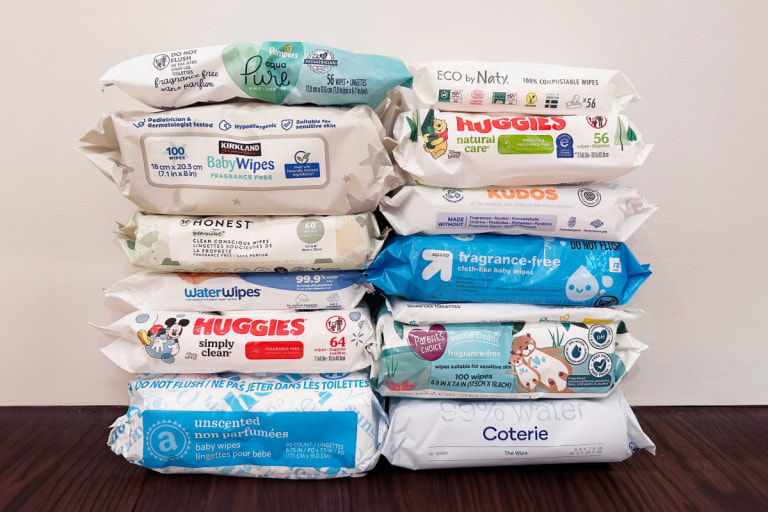
After sifting through everything above, I narrowed down my list to 13 wipes for testing:
Editor's note: During my initial testing for this guide, I included Target's Up & Up Fragrance Free Baby Wipes. (They did not score very high, and I did not include them in any of my top recommendations.) Since then, Target has issued a recall on Up & Up Fragrance Free and Fresh Cucumber wipes due to potential bacterial contamination that can cause serious infection in infants. We've removed our commentary on this product and don't recommend buying it until the recall is fully resolved. If you own these wipes, please stop using them immediately and return them to any Target store for a full refund or contact Target Guest Relations at 1-800-440-0680.
Next, I started thinking through this question: What makes a good baby wipe? At its core, the best baby wipe should do one thing and should do it well: make cleaning dirty butts as easy as possible. But there are quite a few factors that go into a wipe’s performance and quality.
-
Thickness. This is a biggie, because thickness generally correlates with how many wipes you’ll need at each diaper change. It also determines how easily a wipe will tear (important for lots of reasons, but especially when you’re trying to pull one out of the package) and can impact how well the wipe actually does its job. A good baby wipe should be thick. If you’re using one, you may not even notice how thick it is—until you attempt a diaper change with a thinner one.
Coterie makes the thickest wipe that I tested. You can hardly see my hand beneath it.
Pampers Aqua Pure is one of the thinnest of the wipes I tested. You can easily see my hand right through it.
-
Wetness. This is another area where you don’t want your wipe to fall short. A wipe that’s too dry means you’re constantly grabbing for more to get the job done; a wipe that’s too wet can make an already messy task even messier (and can sometimes leave a weird foam on your hands). I was looking for a happy medium but erring on the side of too wet.
-
Absorbency and texture. A wipe’s makeup and texture (smooth, patterned, etc.) can determine absorbency—how well it “grips” and removes the poop rather than just pushing it around. It sounds a little weird, but I promise it’s a thing you’ll notice when you start using different brands of baby wipes.
-
Size. The more surface area the better when you’re talking baby wipes. A cheap wipe may save you money, but you’ll likely end up using so many at a time that the cost savings never pan out.
-
Cost. And speaking of cost, you’re going to go through a lot of wipes over lots of years—so it does matter. But you’ll also need to weigh cost against performance, as I mentioned above.
-
Ingredients and fragrance. What’s in the wipe? Ingredients matter more to some parents than others, but at a minimum, a good wipe should combine ingredients that are gentle on a baby’s delicate skin and are effective at cleaning it. (The cleaning agent in a wipe is called the surfactant. More on that below.) Also a matter of personal preference is fragrance, but most parents (including myself) generally prefer a wipe that’s fragrance-free, so those are the wipes I tested for this experiment.
-
Environmental impact. Most disposable wipes aren’t doing any favors for our environment. The most popular baby wipes on the market are not compostable or biodegradable. But the flip side is that many of the more eco-friendly wipes are expensive and simply don’t work as well. (More on that later.) For most parents, it’s about finding a balance that works for them. You may also want to consider reusable wipes, like these Esembly Wipe Ups or Green Sprouts Muslin Clothes. You’ll need to launder them after every use, but they eliminate the need for disposable wipes.
A quick note on ingredients: According to a study published by the National Center for Biotechnology Information, a division of the National Institute of Health, a baby wipe should be made mostly of water—but water alone isn’t enough to make an effective wipe. Feces is water-insoluble (meaning it doesn’t dissolve in water), so a purely water-based wipe won’t clean a dirty bottom. A water-only wipe also won’t prevent the growth of microorganisms or maintain a healthy skin pH. That’s why the study recommends that a baby wipe also contains a mild cleaner, called a surfactant, at a formulation that’s not more than one percent by wipe’s weight—and ideally less than that. Translation: I was on the hunt for a gentle wipe that won’t irritate a baby’s skin but also gets the job done when it’s time to clean up after a blowout.
The Testing
And then it was time to test, test, test. I tested all the wipes firsthand with my toddler over a period of a few weeks, mostly during diaper changes but on sticky hands and fingers, too. I also asked friends, family and coworkers for feedback on their experiences with various brands.
Thirteen is a lot of wipes, so I needed a big-picture way to capture and compare my first impressions of how each wipe performed. I created a points-based rating scale to use for this performance testing. I designated four different performance categories—thickness, size, wetness and absorbency—and assigned zero to five points to each based on the wipe’s performance, for a maximum score of 20 points.
The point system ranking was a good start, but it doesn’t tell the whole story. Beyond performance, I wanted to consider cost, as most families go through packs and packs of wipes over multiple years. I researched the lowest price for each brand of wipes across a few popular big box retailers and calculated the unit cost for each baby wipe I tested.
In addition to performance and cost, I also factored in the average number of wipes I used at each (poopy) diaper change, ingredients and environmental impact into my overall review.
The Baby Wipes Competition
Out of the 13 different wipes I tried, four clearly rose to the top. Here’s a quick breakdown of why the others didn’t make the cut.
Amazon Elements Baby Wipes scored 11 out of 20 on my performance scale, one of the lowest scores of any of the wipes I tested. They’re affordable-ish, but that’s about the only thing I liked about them. They’re thin and do a terrible job of actually cleaning anything, especially a poopy bottom.
Performance-wise, Coterie Baby Wipes are tough to beat. Right out of the package, they feel luxurious: they’re huge, extremely thick and oh-so-soft and gentle. They’re also biodegradable, a huge plus, decomposing in a landfill in about 12 weeks according to the brand. Parents agree—Coterie wipes dominated the write-in section of our wipes poll, with multiple parents calling them out as "superior." But all of that luxury comes at a steep cost. You’ll pay about 15 cents a wipe, far and away the most expensive wipe on the list. Even if you use half the number of wipes you’d use with a more affordable brand, you’re still in for a big chunk of change. I couldn’t get past it.
I had high hopes for Naty Baby Wipes because of their natural makeup and environmental benefits. And in those respects, the wipes did deliver; they’re 100 percent compostable, plant-based and were super gentle on my toddler’s sensitive skin. But when it came to wiping poop, they failed miserably, scoring an eight on my performance scale—the lowest ranking of any wipe on my list. They’re thin, flimsy and strangely narrow, so there’s not a lot of surface area to work with. I found myself reaching for at least six to eight wipes every time I needed to change a dirty diaper. And they’re expensive, with a unit cost of about six cents per wipe—double the cost of the other (better-performing) wipes on our list. I was willing to overlook the price for the environmental benefits, but the poor performance was just too much to ignore.
The Honest Company Baby Wipes had been my go-to for years and one of the best natural baby wipes until semi-recently when something about their formula changed. The wipes are thick and have a great raised texture that I love, but they are not nearly wet enough to get the job done. I was left with a dried-out wipe after just one or two swipes, and they scored a 13 out of 20 on my performance scale. They’re also fairly expensive at about six cents per wipe. Keeping all that in mind, many parents love Honest wipes, and they were a popular favorite in our poll. I'm going to give them another try and will update this guide accordingly.
Huggies Simply Clean Unscented Baby Wipes are actually pretty great, scoring high on my performance testing and ranking as one of the most affordable wipes on the list. The brand’s Natural Care Sensitive Wipes edged them out only because of softness and thickness, as they performed slightly better in each category than the Simply Clean wipes did.
Pampers Aqua Pure Sensitive Baby Wipes landed in the lower middle of my testing range, with a score of 13 out of 20. The biggest knock here is the wipes’ texture—or lack thereof. The smooth surface means less grip and that you’ll use more wipes at each diaper change. They’re also fairly thin.
Parent’s Choice Fragrance Free Baby Wipes are a pretty good deal at just about two cents per wipe, but that’s where my love for them ends. They scored near the bottom in my performance rankings with an 11 out of 20. Most tore before I could even get them out of the package. I also found them to be flimsy and not very moist.
WaterWipes Original Wipes get a lot of props in the parenting world for being 99.9 percent water-based and are often advertised as the best baby wipes for newborns. And while I love them for cleaning dirty faces, I do not love them for cleaning poopy butts. The other major complaint (from both me and the parents we heard from in our poll): they're hard to get out of the package. WaterWipes scored a 12 out of 20 on my scale and the wipes felt flimsy and lacking a good cleaning agent. They’re also on the more expensive side with a unit cost of around six cents each.
Wipes I'm Watching
I keep this guide as current as possible, updating pricing, ingredients, packaging and more whenever I can. But some time has passed since my original round of testing, and it's almost time for a big update (stay tuned!). Here are the newer wipes on my radar, along with a few brands that have gained real momentum since this guide first published:
-
Millie Moon, wipes from one of Target's fastest-growing diaper brands.
-
Momcozy Baby Wipes, a relaunched formula and XL surface size.
-
HealthyBaby Baby Wipes, a lab-tested favorite among eco-conscious parents.
-
Bc Babycare Cloud Moist Baby Wipes, a new-to-Target pick parents say lasts far longer per pack thanks to extra thickness and moisture.
-
Freestyle 99% Water Baby Wipes, free of over 1,500 chemicals of concern, with a jumbo size parents love for messy toddlers.
-
Parasol 99% Pure Water Baby Wipes, a reverse-osmosis water wipe that competes with WaterWipes on tear-resistance and purity.
-
Raan, 100% Cotton Baby Wipes, the first wipe made with unbleached cotton instead of synthetic or wood-pulp fibers.
-
Pura Natural Sensitive Baby Wipes, a plastic-free UK import made for eczema-prone skin.
-
Beyond Good 99% Purified Water Baby Wipes, a larger-than-average wipe designed to cut down how many you need per change.
The Wrap Up: How to Find the Best Baby Wipe for You
It’s pretty clear that a lot goes into a good baby wipe. It’s easy to rank a wipe by how it performs—and there is, of course, a huge benefit in relying just on that indicator alone. But there are other factors to consider, too. Things like cost, ingredients and environmental impact are all things to think through as you’re wading through the many options. Some families may be willing to pay a bit more for a wipe that’s a bit less effective but friendlier for the planet or gentler on their baby’s skin. Others may worry less about ingredients and more about how many wipes they’ll need to use at each diaper change. Just remember that most families use baby wipes for years, so while it’s a pretty basic item, it’s one worth putting a little thought into before you click buy.