
Ready, Set, Poop: Your Guide to the Best Newborn Diapers
Newborns average 8-10 diapers a day during the first month 🫢 You need one that’s gentle on skin—but that actually works.

By
Fun fact: your newborn will go through about 700 diapers during their first three months of life and 2,500 to 3,000 diapers in their first year.
“Newborn skin is incredibly delicate, so choosing the right diaper is essential to keeping your baby comfortable and rash-free,” says Jessica Chacko, MD, a board-certified pediatrician and founder of Blooming Bright Pediatrics. There’s also a diaper’s performance to consider, plus what ingredients and materials work for you and your baby.
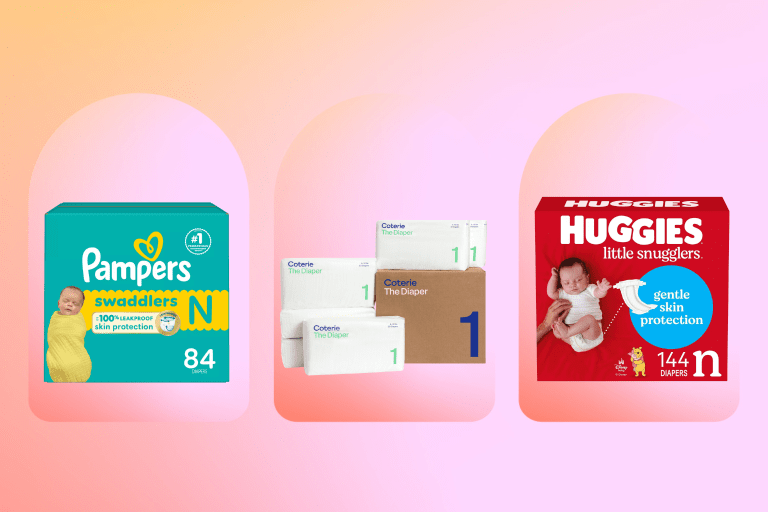
After spending a lot of time researching and testing newborn-friendly diapers—including conducting our own performance testing—we think Pampers Swaddlers are the best disposable diapers for most newborns. They’re absorbent, gentle on baby’s sensitive skin, easy to find at both online and brick-and-mortar retailers and are well-priced. If you want a similarly great newborn diaper but prefer an unscented option, Huggies Little Snugglers are our Runner-Up pick.
And since diapers can be pretty subjective, we chose several other best-of options that may be worth a try over your baby’s first few weeks and months.

How We Judged
Best Newborn Diaper Overall
Pampers Pampers Swaddlers - Newborn (140 Count)
From $34.18Pros
- Babylist parents’ favorite disposable diaper
- Top performer in our overall performance testing
- Designed to contain blowouts
Cons
- Strong fragrance
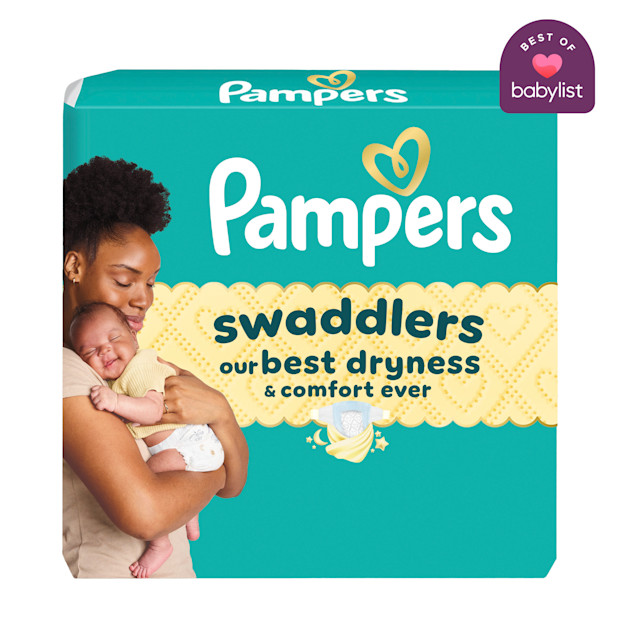
Named the favorite disposable diaper overall by thousands of Babylist parents and topping the list in our best disposable diapers showdown, it’s no surprise that Pampers Swaddlers also clinch the number one spot as the best diapers for newborns.
Two features of these popular diapers make them a great choice for any baby, but especially for newborns. The first is the built-in blowout protection. Swaddlers' back diaper panel is extra long, reaching well up baby’s back. Called a “Blowout Barrier” by the brand, this diaper feature does exactly what it promises: protects against the infamous newborn blowout. (The ruffles that line the edge of the inner and outer portions of the diaper help too, since they are thick and pleated, offering further protection against leaks.)
The second standout feature is absorbency. Swaddlers do a fantastic job of wicking moisture away from newborns’ delicate skin and locking it into the diaper’s core. Combined with these diapers’ standout softness, Swaddlers keep your baby clean and dry, decreasing the risk of diaper rash.
As a parent who prefers unscented diapers, I’m not a huge fan of Swaddlers’ fragrance; however, this is purely subjective, as some parents say the fragrance is one of the things they actually love the most about these diapers. For a just-as-great scent-free option, check out Pampers Pure Protection—they performed almost as well as Swaddlers in our testing and have zero fragrance. Also note that Swaddlers are available in preemie size for little ones up to about six pounds.
Runner-Up
Pros
- Second best diaper in our overall performance testing
- Top performer in our absorbency + dryness testing
- Babylist parents second-favorite diaper brand
- Unscented
Cons
- Not quite as soft as other brands
While Pampers Swaddlers holds a slight edge over Huggies Little Snugglers, it’s almost too close to call, narrowly putting Little Snugglers in our runner-up category. Absorbency and dryness are where these diapers really shine. Liquid literally seems to disappear the moment it touches the diaper’s core, meaning they’ll do a great job at keeping your newborn dry and comfortable. Unlike Swaddlers, Little Snugglers are fragrance-free, which some parents prefer. They’re also another favorite brand, with 23% of the thousands of Babylist parents we surveyed voting them as their top choice.
Dr. Chacko is also a fan. “Based on my experience, I’ve seen the least amount of skin issues with Huggies and Kirkland brand diapers,” she says. (Ed note: Our Kirkland review is below.) “Many parents report fewer rashes and sensitivities when using these two brands. While the exact reason isn’t entirely clear, it’s likely due to the materials and design of these diapers, which may be gentler on sensitive newborn skin.”
Little Snugglers have comparable inner and outer ruffles to Pampers Swaddlers for leak protection and offer a stretchy, customizable fit. The tabs are easy to handle; I had no problem opening and closing them again and again. And like Swaddlers, they’re also available in preemie sizing.
The one (slight) downside of these diapers is softness. The diaper’s back sheet—the part that faces the world—is hardly scratchy, but it’s not quite as soft as some other brands.
Best for Baby Registry
Pros
- Lets you try 3 different popular brands
- 104 diapers + 176 wipes in all
- All free of chlorine, fragrances and parabens
Cons
- All size 1 (no newborn or preemie sizes)
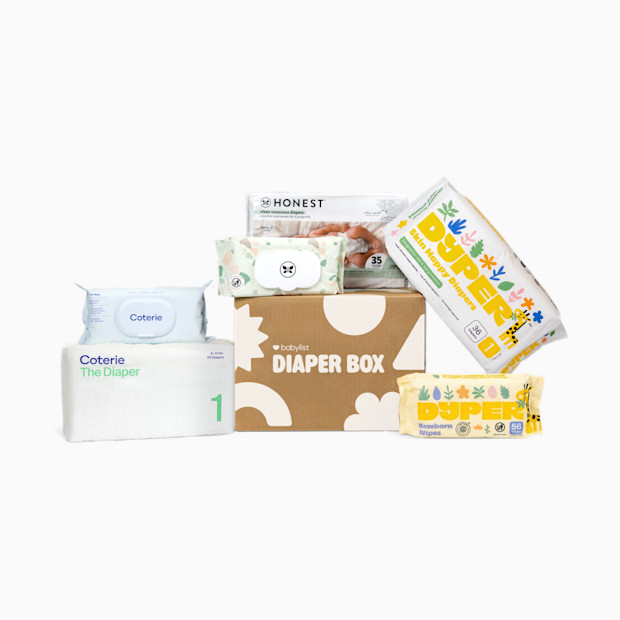
Almost 40% of Babylist parents we polled in our favorite products survey reported trying three to four different brands of diapers before settling on what ultimately worked best. The Babylist Diaper Box is the answer—and the perfect addition to any baby registry. This sampler bundle lets you try before you (over) buy. The box includes a pack each of size one diapers and wipes from The Honest Company, Kudos and Coterie—103 diapers and 176 wipes in all. All three brands are popular, eco-friendly and free of chlorine, fragrances, parabens and other stuff you don’t want touching your baby’s skin.
Softest Newborn Diaper
Coterie Newborn Diapers & Wipes Starter Bundle - 4 Pack Wipes
From $138.00Pros
- Softest. Diapers. Ever.
- Scored well in overall performance testing
- Made from 25% plant-based materials
Cons
- Very expensive
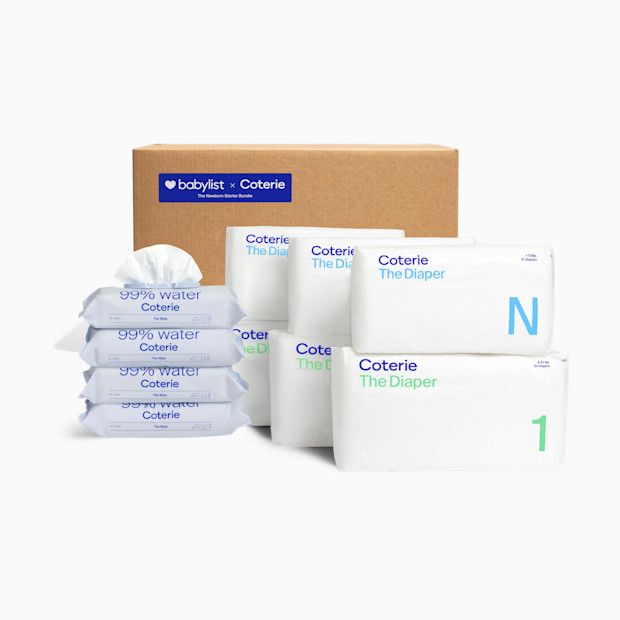
Coterie diapers are hands-down the softest disposable diapers you’ll find. They’re a dream for sensitive newborn skin and performed extremely well in preventing leaks and blowouts when I used them for almost two years with my second son. (They also scored well in my performance testing for my diaper testing guide.) The simple white design and zero fragrance are also a big draw for many new parents, myself included.
The major downside of Coterie is price: they're expensive. A monthly subscription carries a unit cost of 51 cents per diaper, and you’ll spend 56 cents per diaper if you don’t want to subscribe. And while they do come in newborn size, there’s no preemie option.
Best Sustainable Newborn Diaper
Pros
- Topsheet made from 100% sustainable cotton (no plastics)
- Cotton = hypoallergenic and less irritating on skin
- Easy-to-use tabs and wide inner/outer ruffles
Cons
- Cotton is biodegradable, but other diaper elements are not
- More expensive than other top picks
- Didn’t perform as well on dryness test
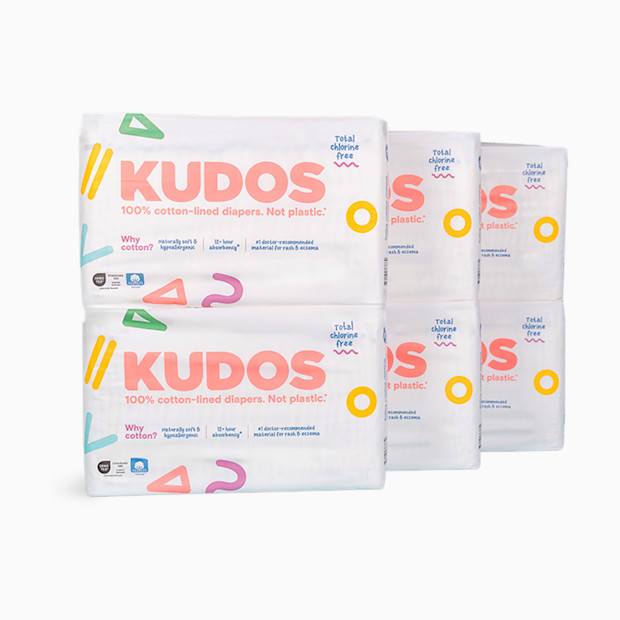
Kudos uses 100% cotton for its topsheet—the part of the diaper that’s closest to baby’s skin. (The cotton is 70% unbleached, which gives the lining a slightly speckled appearance.) Most other diapers use topsheets from polypropylene fibers, a type of plastic. If that’s a concern for you—or if you’re looking for a more natural option that works well for sensitive skin—Kudos is a good choice.
Kudos are expensive, though. For the best price, you’ll need to sign up for the monthly subscription box, which will get you 210 diapers at 40 cents each—about 8 cents more per unit than Pampers Swaddlers. If you prefer to buy one box at a time, you’ll pay about 41 cents per diaper. The other downside is dryness. While these diapers are super absorbent, they don’t wick away moisture quite as quickly as others on our list. They’re also not available in preemie size.
Also Worth a 👀
Affordable, But...
Pros
- Well priced
- Absorbent
Cons
- Costco recently changed suppliers, new diapers are noticeably different
- Rough feel
- Tabs are small and fairly flimsy
- Costco membership required for best price
Kirkland diapers have long been a parent favorite thanks to their unbeatable value (about 18 cents per diaper) and solid performance. But a recent supplier change—from Kimberly-Clark to First Quality in January 2025—means they’re not quite the same diapers many parents loved.
In our original testing, Kirkland was a top performer; the new version dropped the diapers a bit, landing in the middle of the pack. Absorbency held steady, but the diapers now feel thinner and rougher, with smaller ruffles and flimsier tabs that aren’t as easy to open or fasten. Parents noticed the shift, too. In a recent Babylist poll, about 60% of reviews were negative, citing more leaks, rash concerns, ripping and an overall cheaper feel.
All that said—the price is undeniably appealing. The diapers performed well in our absorbency testing. And many families still swear by them despite the changes. So, keeping affordability in mind, they're worth a try for most families.
One more note: you’ll need a Costco membership for the best pricing, and these diapers don’t come in newborn or preemie sizes, so they won’t fit the smallest babies right away.
Eco-Friendly
DYPER Skin Happy Diapers - Monthly Box - Newborn, 204 Count
From $116.99Pros
- Compostable through REDYPER service
- Transparent ingredient list
Cons
- Expensive (+ composting service adds additional cost)
- Some parents report frequent blowouts
Many companies advertise their diapers as eco-friendly, but most don’t live up to the promise. Dyper truly delivers. Soiled diapers—yup, even the poopy ones—can be returned for composting through the brand’s optional REDYPER service. (You can choose curbside pickup if you’re in select metropolitan areas or mail them back via a prepaid bag/box/label kit.)
The diapers are expensive to begin with, and composting does come at an additional cost, but it’s worthwhile if you’re looking to reduce your environmental impact and it fits into your budget. The diapers are made from bamboo viscose and are soft, absorbent and unscented. They’re also free of ingredients like chlorine, latex and alcohol. Some parents do complain about leaks, however. And note there’s no preemie size option.
Why Trust Babylist?
Babylist is the expert in baby; we know baby gear inside and out. We talk with parents face-to-face in our showroom and on our user panels and hear from thousands annually via our Best Baby Products online survey. We know what items millions of expecting parents are adding to their baby registries.
-
Firsthand professional and personal experience. If diapering were an Olympic sport, I might just medal. As a mom of two, I’ve spent more years diapering than I’d like to think about, trying countless brands of disposable diapers before landing on my favorites. I’ve also tested dozens of diapers in my role as Babylist’s gear editor, where I’ve been writing about all things baby gear (including diapers) since 2019. I’ve sampled countless diaper brands, both old and new, and spoken to a 35-year veteran chemist in the superabsorbent polymers space—AKA the stuff in diapers that allows them to absorb and retain a lot of liquid across a very small surface area. I once even ran a diaper testing lab in my dining room. (True story.)
-
Expert input. I consulted two experts for this story: pediatrician Jessica Chacko, MD, FAAP, founder of Blooming Bright Pediatrics, and Lori Langdon, MD, FAAP, Clinical Chair of Pediatrics at Campbell University's School of Osteopathic Medicine and a mom of six and grandmother of three. They weighed in on what to look for in a newborn diaper, what to avoid and how many diapers you can expect to use each day with your new baby.
-
Diaper data. I regularly analyze which baby products our users are adding to their baby registries the most (and which ones they aren’t) and what our team of Merchandising experts—our buyers who are responsible for ensuring the Babylist Shop is stocked with the best and newest gear—is excited about. Studying this kind of data helped us choose which diapers to narrow in on and which ones to recommend to new and expecting parents.
-
Feedback and reviews. I reviewed comments and feedback from Babylist’s annual product survey of thousands of parents, read customer reviews from hundreds of Babylist users and spoke to parents on our staff about their real-life diaper experiences.
What to Look for in a Newborn Diaper
Finding the best diaper for your newborn often involves a bit of trial and error. And what works for one baby (and one family) won’t necessarily work for another. But there are a few things to focus on when you’re diaper shopping, especially for an infant, according to Dr. Chacko.
-
Materials. A diaper made from hypoallergenic materials is best for a newborn’s sensitive skin. “Opt for diapers free from dyes, fragrance and perfumes to reduce the risk of irritation,” says Dr. Chacko.
-
Fit. A proper fit is essential both for your baby’s comfort and to protect against leaks and blowouts. “The diaper should fit snugly without being too tight or too loose,” advises Dr. Chacko. “Look for at least one inch of space between the tabs when the diaper is fastened. You should be able to slide two fingers at the waistband (perpendicular to the belly) to ensure it’s not too tight.” And always be sure the elastic ruffles around the diaper’s legs are gently pulled outward after every diaper change. They’re more than just cute—they help contain leaks.
-
Umbilical cord protection. “For our newest babies, we also have to be concerned about umbilical cord protection,” she explains. “While the belly button is healing, the top of the diaper should sit below it. If the diaper comes up too high, fold the top edge inward to avoid rubbing the cord stump and to help prevent leaks from the top.”
“Be careful not to overly stock up on diapers because your baby will grow so quickly,” adds Dr. Langdon. And don’t be afraid to do a little math. “Giant packs of diapers are not automatically cheaper, so do the math for the cost per diaper,” she advises.
How many newborn diapers do I need?
“In the US, it is estimated that a typical infant will use around 3,000 diapers in the first year of life!” says Dr. Langdon.
The number of diapers a newborn uses each day can also depend on their age and feeding pattern, explains Dr. Chacko. In the first few days, you can expect one wet diaper and usually one poop with each wet diaper per day of age. “That looks like day one, expect about one wet diaper and one poop; day two, two wet diapers; day three, three wet diapers, and so on.”
By day five, assuming a baby is feeding well, there should be at least five wet diapers per day and usually a poop with every feeding. “After that first week and up to about two to three months of age, babies eat about eight to 12 times a day, which means they’ll likely go through eight to 12 diapers daily.”
Things do slow down a bit as babies age. (Phew.) By around four months, babies often have fewer poops—sometimes just one per day, according to Dr. Chacko—so your overall diaper count may decrease. By a year old, most babies use around three to six diapers each day.