
Scheduling Your Baby's Doctor Visits for the First 12 Weeks
Those first few pediatrician appointments are important to check on baby’s development and get any of your questions answered.

In This Article
Your baby spent nine months being cared for in the womb and having their development tracked by your ob-gyn or midwife. But once they’re born, a whole new care team enters your life. Your pediatrician will be your go-to resource for baby’s physical and cognitive development, preventing and treating illnesses and answering any questions you might have as a new parent (and trust us, you’ll have a lot of questions).
In order to make sure your baby gets the best care in their earliest weeks, including all their immunizations, your pediatrician will schedule newborn checkups (also called “well-baby visits”) at specific intervals. Here’s what you can expect from pediatrician visits from birth to three months old.
Newborn well-baby appointment schedule
Your baby will have four regular checkup appointments during the first 12 weeks (not counting any extra appointments if they’re sick). All pediatricians follow this general schedule, and you may be able to book them all at the same time as soon as your baby is born.
One day old
Your baby’s very first doctor visit happens the day they’re born, some time within the first 24 hours. If you’re giving birth in a hospital, it may be a different pediatrician doing the first exam, especially if your regular pediatrician isn’t affiliated with that hospital, but you’ll still be able to set up the rest of the well-baby appointments with the pediatrician of your choice.
If you’re giving birth at home or at a birthing center, you can try to get your preferred pediatrician to come check your baby, but if they’re unavailable, it’ll likely be a certified midwife or a postpartum doula who gives your newborn their first exam.
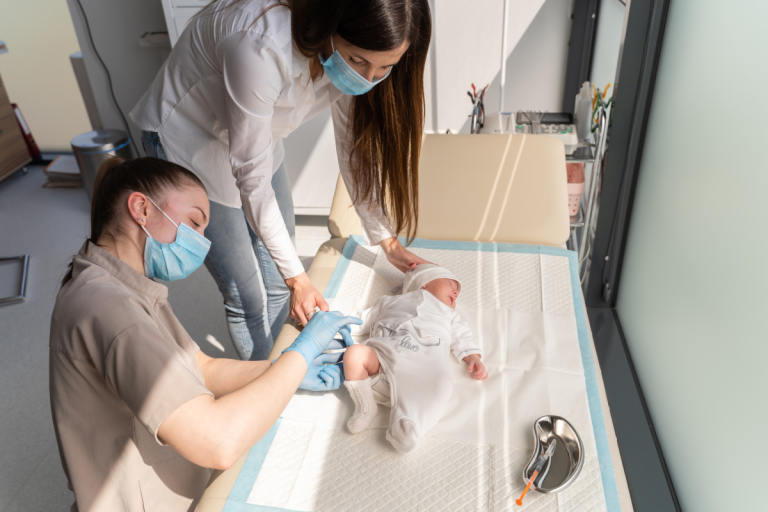
During this first checkup, your baby is eligible for three vaccines:
Hepatitis B
Vitamin K, to help boost baby’s ability to form blood clots and stop bleeding
Antibiotics, given as an eye ointment to protect against bacteria that may have transferred during delivery
(Want to learn even more about what baby's first 24 hours look like? Check out our podcast, Birth with Babylist, where doctors and experts talk all about the birth, delivery and recovery experience.)
Three to five days old
If your baby saw the hospital pediatrician the day they were born, then this will be their first appointment with their regular pediatrician. There aren’t any vaccines scheduled for this checkup, so the main focus will be checking on how baby is doing in their first few days of life.
This will be your baby’s second official weigh in, and don’t be surprised if they weigh less than what they did at birth. Most babies actually lose about five to 10 percent of their birth weight—they’ll lose a little less if they’re formula fed, a little more if they’re breastfed. If your baby has lost more than 10 percent of their birth weight in the first week, your pediatrician will check for any major concerns and provide guidance for how to get baby’s weight back up.
One month old
The well-baby checkup at one month is going to look a lot like the previous one, with your baby gaining a little bit in both weight and height. No vaccines typically happen at this appointment, though you may have the option to get baby’s second dose of the Hepatitis B vaccine early.
Two months old
The final checkup of the newborn weeks is the biggest one, with all the regular developmental checks being accompanied by six immunizations (usually administered as three shots and one small vial of oral drops).
Your baby will receive their first dose of:
Diphtheria/Tetanus/Pertussis (DTaP)
Haemophilus influenzae type b (Hib)
Polio (IPV)
Pneumococcal (PCV13)
Your baby will also be eligible for these additional vaccines:
Rotavirus (RV), given as mouth drops, not a shot
Hepatitis B (second dose)
Exceptions to the schedule
While pediatricians strongly encourage sticking to the appointment schedule so they can best monitor baby’s development, it’s not unusual for the one- and two-month appointments to be off by a few days.
The immunization schedule is also really important to make sure your baby is protected from certain diseases, and those immunizations typically need to be given at particular intervals in order to be most effective. But if your baby is sick or has a medical condition, your pediatrician may adjust the schedule until baby is well enough to receive vaccines, says Dr. Joel “Gator” Warsh, an LA-based pediatrician and author of Parenting at Your Child's Pace: The Integrative Pediatrician’s Guide to the First Three Years.
What happens at the first few pediatrician appointments
You probably have some idea now of what your baby’s first few appointments will look like, but these early appointments are more than just tracking baby’s height, weight and immunizations. Pediatricians evaluate a variety of things, Dr. Gator says, including:
Assessing the baby’s growth in terms of weight, length and head circumference
Observing feeding and sleeping patterns
Tracking developmental milestones
Conducting physical examinations to identify congenital conditions and monitor jaundice
Reviewing newborn screenings for metabolic and genetic disorders
Performing hearing tests
For a more in-depth look at what these physical evaluations entail, check out our detailed article on baby’s first physical exam.
“Additionally, pediatricians offer guidance on feeding practices, sleep safety precautions and overall care for newborns,” Dr. Gator says. Your pediatrician wants to ensure that, along with your baby, you as the parent are set up for success.
And setting you up for success also means checking in on you. At each of these early appointments, your baby’s pediatrician will screen your mental health to check for signs of postpartum depression, postpartum anxiety and any other postpartum mental health concerns. You’ll likely receive a survey at the beginning of the appointment with questions about your moods and feelings, whether you’ve felt the need to cry more often than usual and whether you’re overwhelmed. If you don’t receive a mental health screening by the time your baby is two months old, you can ask your pediatrician or your ob-gyn to give you the Edinburgh Postnatal Depression Scale survey, which is the standard postpartum mental health screening tool.
What to ask about during these appointments
While your baby’s pediatrician isn’t technically your doctor, these early appointments (and any of your child’s appointments over the upcoming years) are the perfect time to ask questions about caring for your little one or bring up any concerns you may have.
According to Dr. Gator, the most common concerns new parents discuss with their pediatrician in the first 12 weeks include:
Feeding issues, such as breastfeeding difficulties or formula intolerance
Sleep patterns
Diaper rash occurrences
Signs of colic or excessive crying
General newborn care worries including weight gain and growth
Dr. Gator emphasizes that these concerns should be addressed “with practical advice and reassurance, underscoring the message that every baby progresses at their individual pace.” It’s completely normal to have any of the above concerns for your baby and to talk to your pediatrician about them—and also, the majority of the time, your baby is going to be just fine. Your pediatrician will guide you on how to help your baby develop in the way that works best for your baby.
Babylist content uses high-quality subject matter experts to provide accurate and reliable information to our users. Sources for this story include:
Dr. Joel “Gator” Warsh, pediatrician and author of Parenting at Your Child's Pace: The Integrative Pediatrician’s Guide to the First Three Years
Lancaster General Health: "Your Newborn’s Weight Gain"
BlueCross BlueShield: "Pediatricians screen new moms for postpartum depression"
HealthyChildren.org (American Academy of Pediatrics): "AAP Schedule of Well-Child Care Visits"
