
What To Look For On Baby Formula Labels—And Why It Matters
Learn what ingredients, certifications and labels really mean before you compare your options.
By
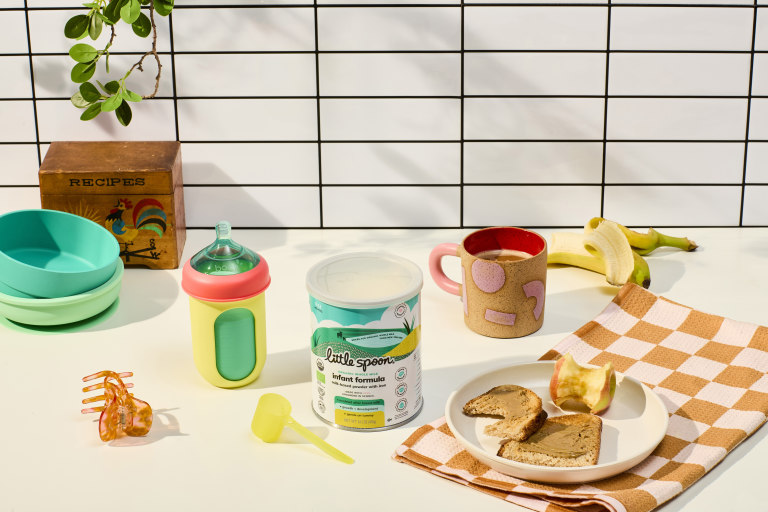
Formula labels pack a lot of information into a tiny space. Whether you're planning to formula feed, combo feed or simply want to have a can on hand just in case, you're likely to come across plenty of unfamiliar terms.
The good news? All infant formulas sold in the United States are required to meet the U.S. Food and Drug Administration's (FDA) nutritional requirements, so you can feel confident they provide complete nutrition for your baby. That means you don't have to decode every ingredient before you can make an informed decision.
That said, brands can differ in areas like ingredient sourcing, certifications, transparency and additional nutritional components. Understanding those differences can help you decide which formula best fits your family's priorities. To help make sense of some of those differences, we'll use Little Spoon Organic Whole Milk Formula as an example throughout this guide. Here's a closer look at some of the details you may come across and what they actually mean.
Start with the basics
First things first: the type of milk, carbohydrate and fat a formula uses matters because these ingredients make up much of its nutritional foundation. Like with breastmilk, they provide the protein, energy and essential fats babies need, while also shaping how a formula is sourced and formulated.
Little Spoon Organic Whole Milk Formula, for example, starts with organic grass-fed whole milk sourced from New Zealand, where cows pasture graze for more than 350 days each year, well above the USDA Organic minimum of 120 days. Because it starts with whole milk, more of the formula's fat comes naturally from the milk itself, so according to the brand, it relies less on added oils.
Whole milk also contains naturally occurring MFGM (milk fat globule membrane), a component researchers have studied for its potential role in supporting healthy brain development. When it comes to carbohydrates, Little Spoon uses lactose (the primary carbohydrate naturally found in breast milk) as its primary source.
What do those extra ingredients actually do?
Beyond the nutrients required by the FDA, many formulas include additional ingredients that support different aspects of infant nutrition. Becoming familiar with some of the most common ones can make formula labels a little easier to understand. Here are some you might see on the shelves:
DHA and ARA: Fatty acids that support brain and eye development during infancy. Many infant formulas include them, making them one of the most common ingredients you'll notice when reading labels.
Prebiotics (FOS): A type of fiber that helps nourish beneficial bacteria in the gut. Some formulas include prebiotics to support the development of a healthy gut microbiome.
Nucleotides: Naturally found in breast milk, nucleotides are building blocks of DNA and RNA and play a role in immune function and healthy growth. According to the brand, Little Spoon includes all five nucleotides found in breast milk.
Naturally occurring MFGM (milk fat globule membrane): A component naturally found in whole milk fat and breast milk. Formulas that begin with whole milk naturally contain MFGM as part of the milk fat, while some other formulas may add MFGM as a separate ingredient. Brands may highlight its presence as part of their nutritional profile.
L-carnitine: A nutrient that helps the body convert fat into energy, which is especially important during the first year, when babies rely on fat as a primary energy source and don't yet produce all the L-carnitine they need. It's also one of the nutrients required under European infant formula standards.
Heads up: not every formula contains all of them, but Little Spoon Organic Whole Milk Formula includes all five nucleotides, a prebiotic and naturally occurring MFGM.
Look beyond the Nutrition Facts panel
Reading the ingredient list is only one way to evaluate a formula. Many parents also consider where ingredients come from, what certifications a product carries and how transparent a company is about its manufacturing and testing practices. These details can provide additional context about a brand's approach, though some companies make it easier than others to learn how their formulas are sourced, produced and tested.
Little Spoon publicly shares batch-level testing results for every production run as part of its transparency efforts. Each batch is tested for more than 550 potential contaminants, including heavy metals, pathogens, pesticides, hygiene indicators and plasticizers, using published testing standards. Parents can look up batch-specific results using the lot code on the package, too.
The formula has earned USDA Organic and EU Organic certifications, as well as the Purity Award, Pesticide-Free certification and the First 1,000 Days Promise Award. For parents who prioritize third-party certifications, these can provide another point of comparison when evaluating formulas.

Questions to keep in mind as you compare formulas
Choosing a formula is a personal decision. If your baby has specific feeding needs, their healthcare provider can also help guide your choice. As you begin shopping, consider questions like:
Does it start with whole milk or skim milk?
Where are the ingredients sourced?
What certifications does the formula carry?
What additional ingredients does it include beyond the required nutrients?
How transparent is the brand about its sourcing, manufacturing and testing?
Does the information provided help you feel informed and confident in your choice?
Having plenty of formula choices is ultimately a good thing. While no one formula is right for every family, understanding what labels, ingredients and certifications mean can help you choose the option that best fits your family's priorities.
Still need some help choosing a formula? Our guide on How to Choose Baby Formula explores the different types of infant formula, along with practical considerations like cost, availability and preparation, to help you choose the option that's right for your baby.
This article is sponsored by Little Spoon. Babylist’s free site, apps and emails are made possible by our sponsors. We limit our sponsored content to relevant partners that offer products and services we believe in and use ourselves.

;)