
7 Hacks for Tough Toddler Transitions—from Parents Who’ve Been There
Potty training? New bedtime routine? Adding a baby to the family? Read this first.

By
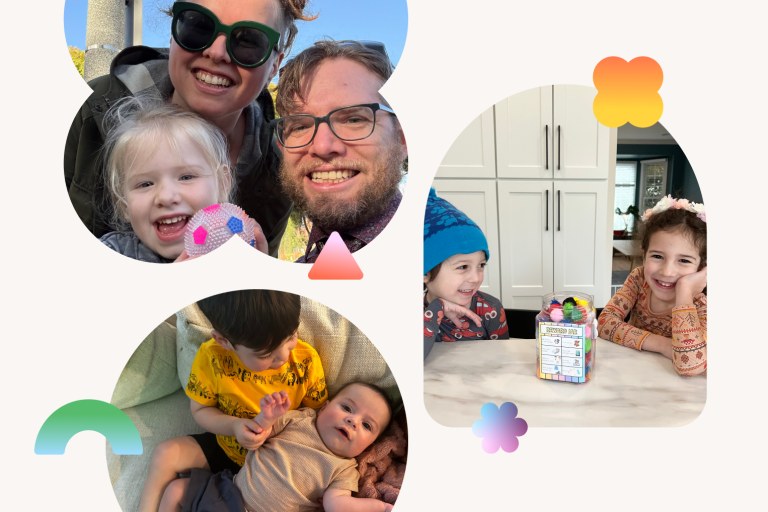
Right around the time you’re introducing new habits and routines to your kiddo, their toddler brains are hardwired to test their physical and emotional independence. That can look like a lot of repetition (and coaxing and begging) to build the foundation for long-term habits like healthy eating, potty training, toothbrushing and sharing with friends.
These tough transitions are hallmarks of the toddler stage, but the good news is that tough doesn’t mean impossible—you will get there. You just might need to get creative with your methods. And while we love parenting experts and their tips, sometimes, the best advice comes from people in the trenches, so we partnered with CoComelon (they recently launched a new platform called CoComelon Can Help to help parents through tough toddler transitions like these) to ask seven Babylist parents how they made it through their own toddler transitions.
From acting out new behaviors with songs and dances to going anti-underwear to help with potty training, these tips can help make things easier—borrow what feels right for your family. And remember: however you approach teaching them, patience and persistence are key to helping your toddler adopt new ways of doing things.
Toddler Hack #1: Let them have some control
Toddlers don’t typically have lots of control over their day-to-day routines (a frustrating thing for a little person developing their preferences), but that doesn’t mean they can’t have a say in them. Dawn Ferguson, Babylist mom of 3, has used this principle through many of her kids’ big transitions.
“Starting preschool was one I knew would be hard for all three of my kids, so I made sure to take some extra steps to make it easier,” she said. “I took each kid on a tour of their school, set up playdates with future classmates over the summer, and did back-to-school shopping together—letting them pick out their own backpacks, lunch bags and water bottles.”
By giving them an element of control, children can feel more comfortable with their new routines and might even begin to look forward to them.
“I used the same approach for things like brushing teeth and potty training—letting them choose their own toothbrush and toothpaste, pick out their new underwear or decide what color potty they wanted,” Ferguson said. “I think parents tend to [choose] for their kids because they are excited and want to be prepared, but it can also feel very overwhelming to kids. My kids thrive when they are included in the process and have some say in how things go.”
Toddler Hack #2: Give them characters to mimic
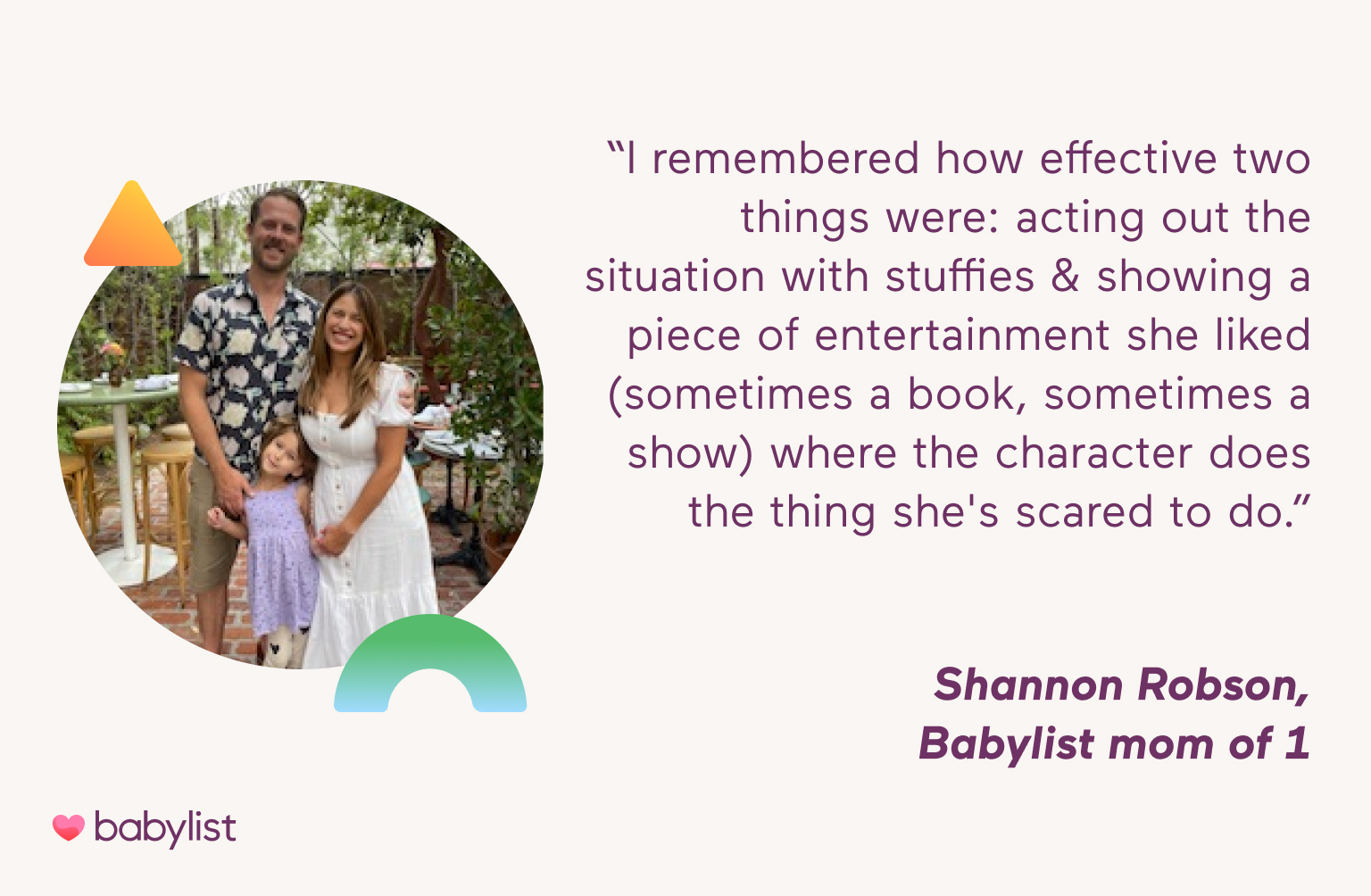
Toddler independence means your little one will simply start refusing to do things. That’s fine when you’re offering them a cup of milk, but sometimes “no” can’t be an answer—like when they’re sick. For Shannon Robson, that looked like her 3-year-old daughter Nora saying “no” to taking antibiotics for a pneumonia infection.
“We cajoled her,” Robson said. “We begged. We told her how important it was. She didn't care.”
After the first few unsuccessful attempts to convince Nora to take her medicine, they tried a different route.
“I remembered how effective two things were: acting out the situation with stuffies and showing a piece of entertainment she liked (sometimes a book, sometimes a show) where the character does the thing she's scared to do. We found a CoComelon video with a song about taking medicine and how important it was, and that finally convinced her. I think kids have a lot of fears of the new, but the lesson to me was to demonstrate how it's going to go, in this case, using a show.”
Toddler Hack #3: Remove potential barriers
Potty training is one of the biggest toddler milestones—and often, it can be one of the most agonized over. Should you try the scheduled method? Or let your kid guide the process? Emily Levada, a Babylist mom of twins, used the “bare bottom” or “go naked” method, where she let her two-year-old boys go without underwear as they transitioned out of diapers.
“I think underwear was very confusing from a sensory point of view. It felt like wearing a diaper. And having them go commando seemed to make a big difference. They didn't want to have an accident in their pants!”
Instead of introducing a new element (underwear) to an already new experience (potty training), Leveda found it made for a more straightforward process. If you go for a similar method, there’s one thing to know: she did have to get their school on board with the method, too. But once daycare gave her the okay, they practiced this method for two weeks until it finally stuck.
“After about a week, I was getting very frustrated and starting to wonder if we should just wait a few more months, and my husband told me not to give up, and I'm so glad he made me push through,” she said.
Need more potty training support? Try a tune like the Potty Training Song that teaches your kiddo what body signals to look for so they know when to go.
Toddler Hack #4: Introduce a support item
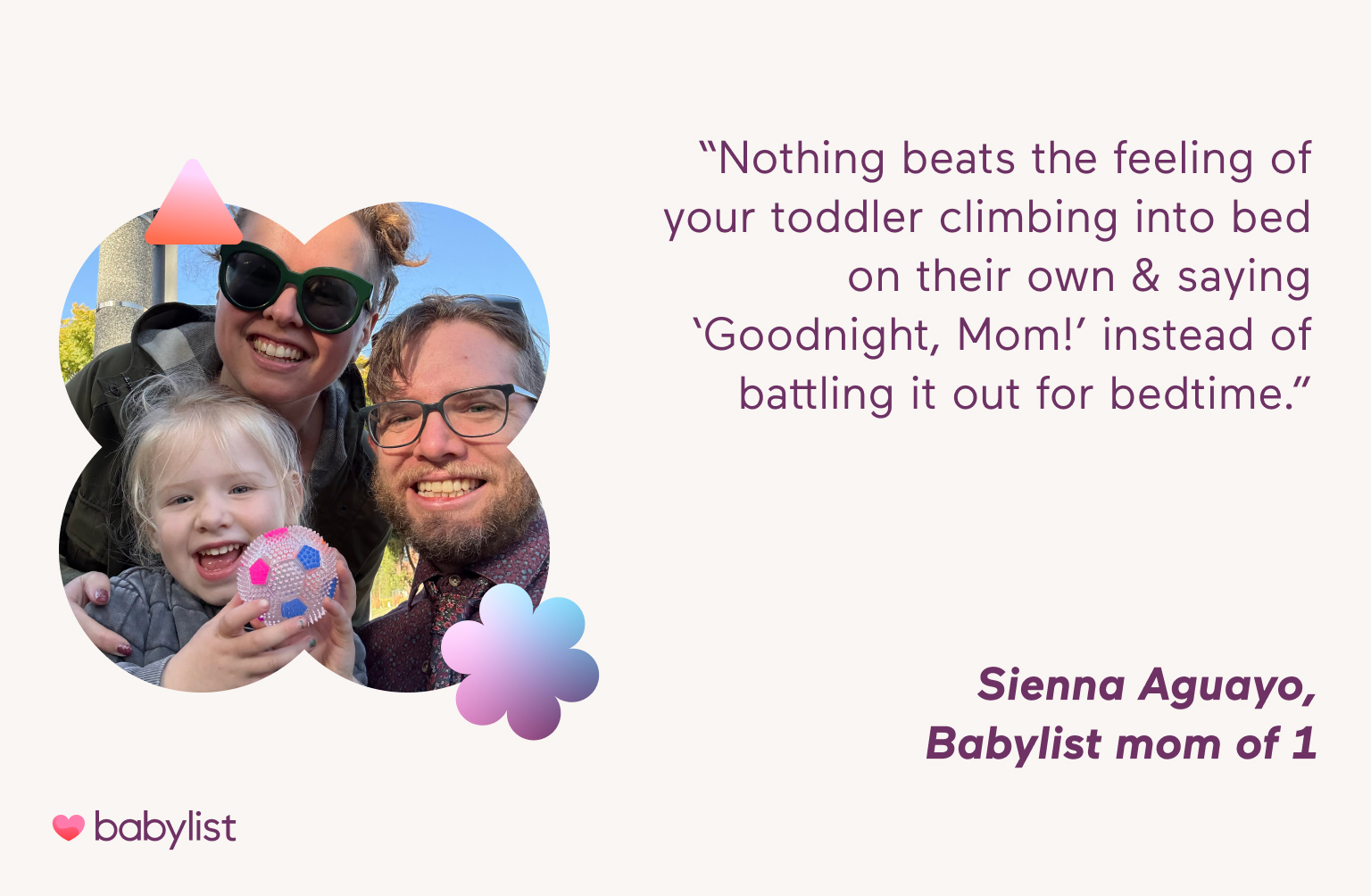
Getting a baby to sleep is not always an easy task (hello, sleep regression), but getting a toddler to stick to a new bedtime routine, well, that’s another thing. For Babylist mom Sienna Aguayo and her family, that meant a drawn-out bedtime where she and her husband ended up staying in their two-year-old’s room longer and longer each night. That’s when they decided to turn to their trusted sleep consultant.
“She recommended we add to our Hatch/programmable nightlight bedtime schedule in order to add clear demarcations to the process that would help everybody move things along: green means time for PJs, brushing teeth and reading books (15 minutes), pink means time to turn off the lights and snuggle a bit with some songs (10 minutes) and yellow means time to get in bed and for Mama or Dada to leave. This helped us gradually ease into the different stages of bedtime and get us out on time, without a lot of room for ‘one more story’ or ‘stay with me a little bit longer.’”
With something that reinforced the new schedule they established, her daughter Ivy had a way to anticipate and understand what part of the routine they were in. After about five days, she got accustomed to their new color-coded routine, and now they don’t do bedtime without it.
“Nothing beats the feeling of your toddler climbing into bed on their own and saying ‘Goodnight, Mom!’ instead of battling it out for bedtime,” she said.
Not enough budget for a sleep consultant or fancy tech? You can try a lo-fi version of this hack with the Yes, Yes Bedtime Song you can sing together to get through each step of your updated bedtime routine.
Toddler Hack #5: Create a simple reward system
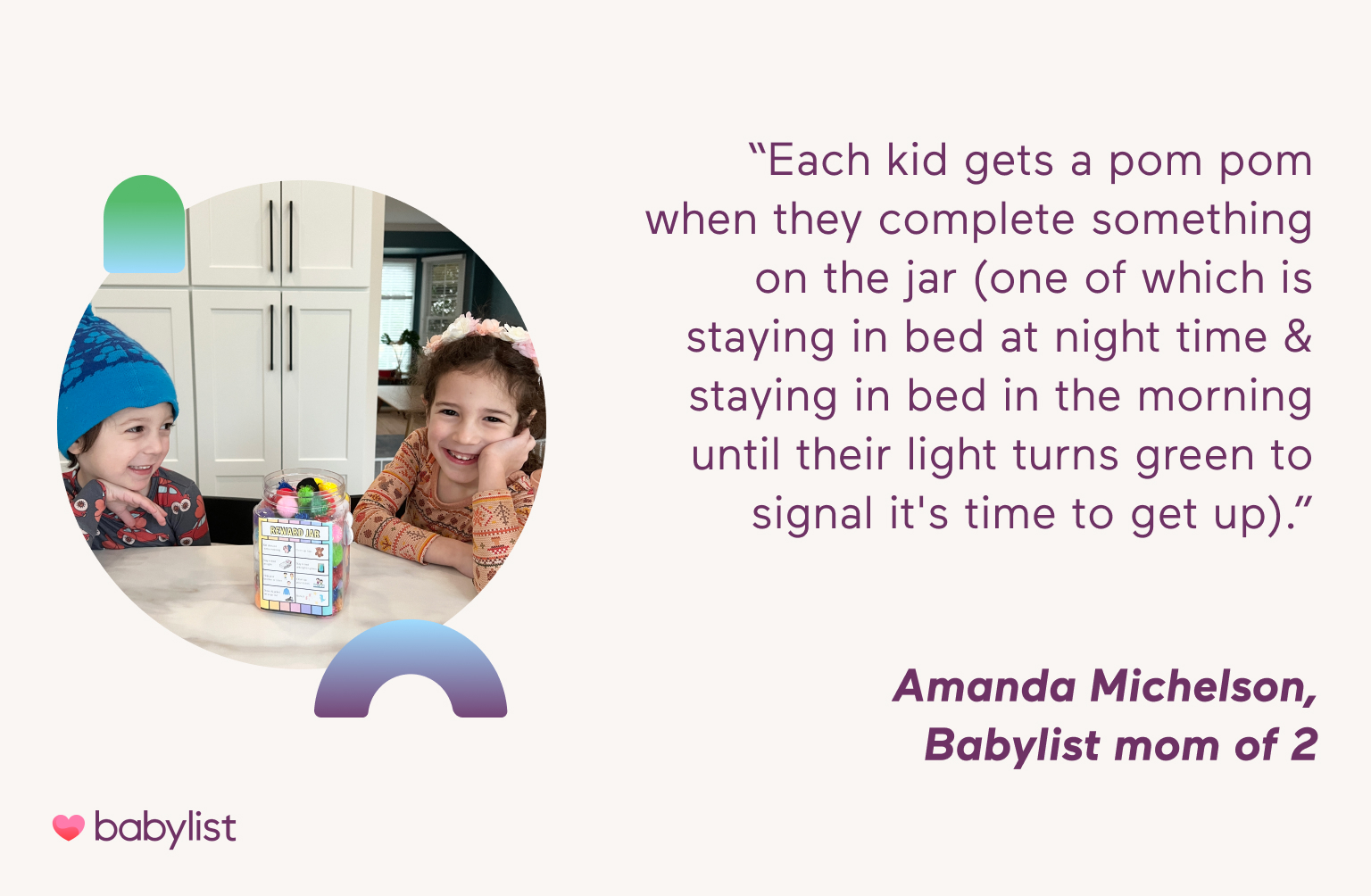
Positive reinforcement is a great way to convince your toddler that something is worth doing. But for some parents, the idea of giving their kid a treat each time they do something can seem indulgent. Instead of going for big rewards, Amanda Michelson, Babylist mom of two, went for something simpler: a Reward Jar.
“Each kid gets a pom pom when they complete something on the jar (one of which is staying in bed at night time and staying in bed in the morning until their light turns green to signal it's time to get up),” she said. “Once the jar was filled, we took the kids to Target, and they each got to pick out a toy. I liked this process because they worked together to fill the jar (not competing with each other), and it really kept them excited and engaged over the course of two months that it took to fill it!” This approach can be used for almost any new toddler habit; Michelson has used it to encourage getting dressed in the morning, cleaning up toys and helping each other around the house.
“We've since emptied it and started over,” she said. “The jar reward items include many of the tough transitions kids go through so it has helped across many parenting challenges. There is even a bonus for when they do something great that's not on the list but we want to acknowledge and appreciate it.”
Toddler Hack #6: Start with small changes first
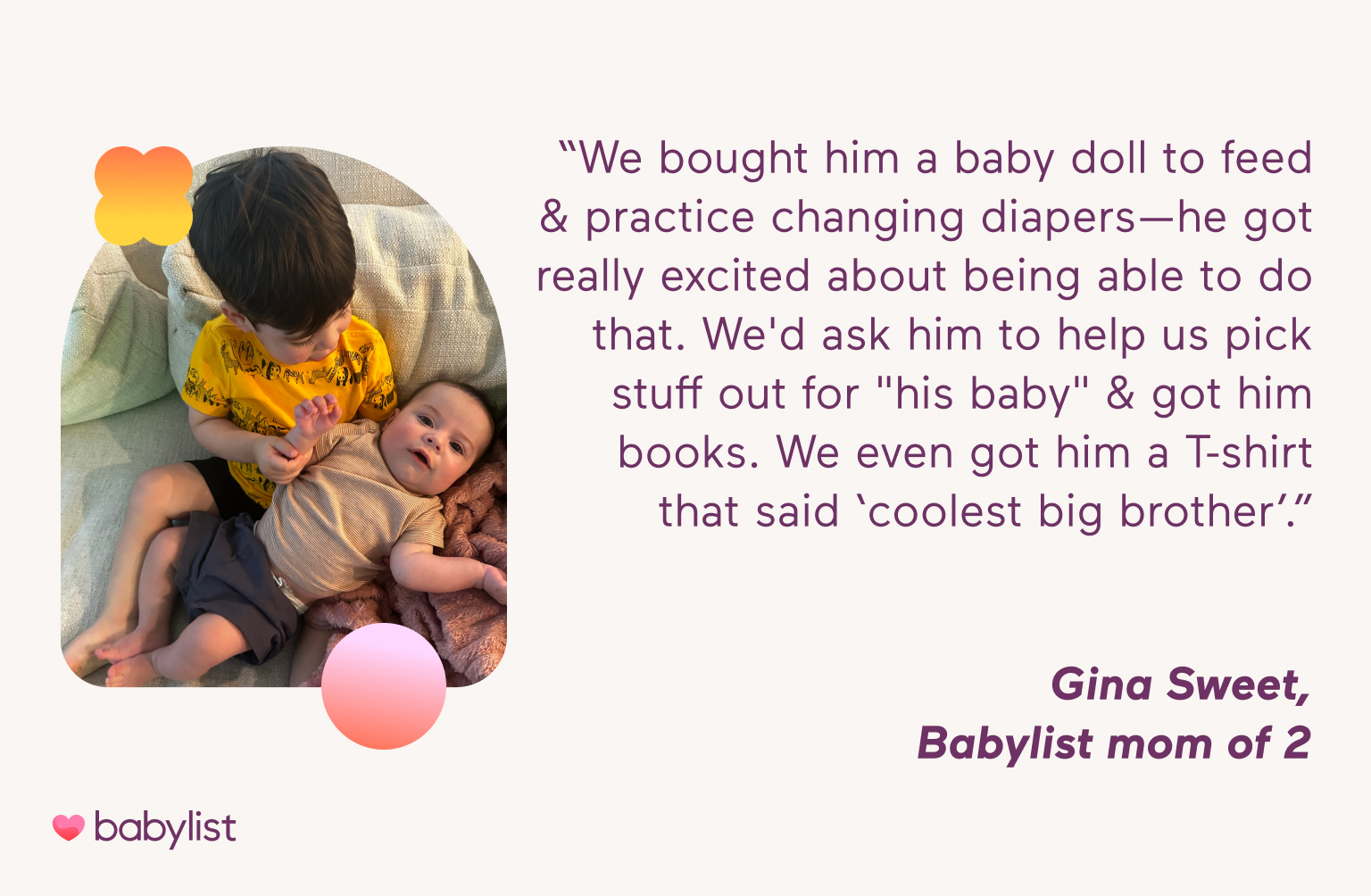
One of the biggest adjustments for a toddler is becoming an older sibling. In addition to having a new baby around, they have to get used to what it means for their place in the family and how that might change, too.
To prep her 15-month-old son Leo for the arrival of his little brother, Babylist mom Gina Sweet started introducing the idea of a new baby early on in small ways as a way of easing him into it.
“We did a lot of talking about the baby and involved him as much as we could,” she said. “We used terms like “your baby" to make him feel less inferior to this new person. We bought him a baby doll to feed and practice changing diapers—he got really excited about being able to do that. We'd ask him to help us pick stuff out for "his baby" and got him books. We even got him a T-shirt that said ‘coolest big brother’.”
With small introductions to his new role that made it seem special, Sweet said she could see her son was getting excited to be a big brother. When it came time for the first big change—moving out of the nursery—they followed the same model.
“In order to avoid any feelings of ‘the new baby took over my stuff,’ we gave him his big boy room about 3 months before my due date,” Sweet said. “This way he got used to it and became more comfortable and could disconnect from his old room. By the time the baby came, it was the baby's room and we had zero issues with that.”
Another small yet effective way to introduce your toddler to the concept of becoming an older sibling is by showing them characters who also have siblings. This can help them see 1) how fun it can be to have a brother or sister and 2) know what kind of behaviors are expected of siblings.
Toddler Hack #7: Get #influenced
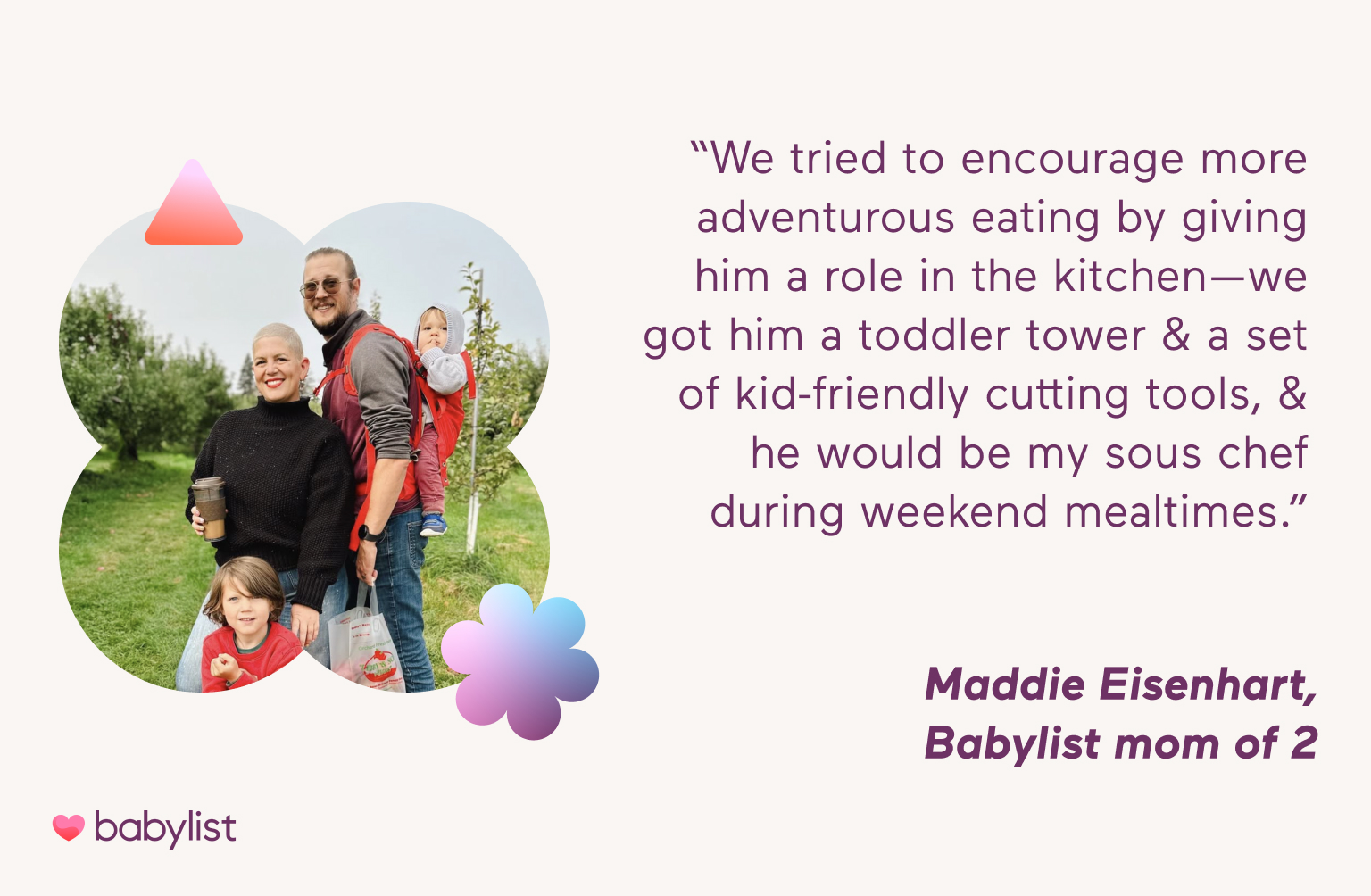
Toddlers are known for being picky eaters. Maddie Eisenheart, a Babylist mom of two, said her boys are on what she calls an “all-beige diet.”
“When my now seven-year-old was a toddler, we tried to encourage more adventurous eating by giving him a role in the kitchen—we got him a toddler tower and a set of kid-friendly cutting tools, and he would be my sous chef during weekend mealtimes.”
This approach gave him more confidence in the kitchen, but what really got him to try new foods was having someone else recommend them.
“He was obsessed with the ‘Yes, Yes Vegetables’ song as a baby,” she said. “And then as he got a little older, he started showing a curiosity for the foods we saw on TV. So we would watch whatever movie or video was the obsession of the week, and if it showed someone making food we hadn’t tried yet, we’d look up the recipe and recreate it together.”
While her son is out of the stubborn toddler stage, this hack still works. She said he’s way more likely to try new foods at a friend’s house or as part of our school lunch menu, and she’s even enrolled him in a local cooking class for kids. Now that they have a new toddler in the house, he gets to be the influencer for his younger brother.
CoComelon Can Help is a one-stop resource for parents to get a little extra support while teaching their toddlers new habits and helping them adjust to different routines. With kid-appropriate songs and friendly characters that model healthy behaviors for mealtime, playtime, bedtime, bathtime and beyond, it can help make those common toddler transitions feel less intimidating. Watch now to see how CoComelon can help your kiddo hit their own toddler milestones.
This article is sponsored by CoComelon. Babylist’s free site, apps and emails are made possible by our sponsors. We limit our sponsored content to relevant partners that offer products and services we believe in and use ourselves.
