
What Your Baby’s Diaper Is Made Of—and Why It Matters
Parents are paying closer attention to diaper ingredients, absorbency and skin safety. Here’s why.

By

When you become a parent, suddenly you’re reading ingredient labels for everything: baby wash, lotion, wipes, even laundry detergent. And for good reason. Babies have delicate skin, and the products we use on them every day matter.
Considering your baby may wear thousands of diapers before potty training, what those diapers are made of—and how they perform—can have a big impact on your little one’s comfort. From overnight leaks and diaper rash to ingredient transparency and skin safety, more parents are realizing that not all diapers are created equally.
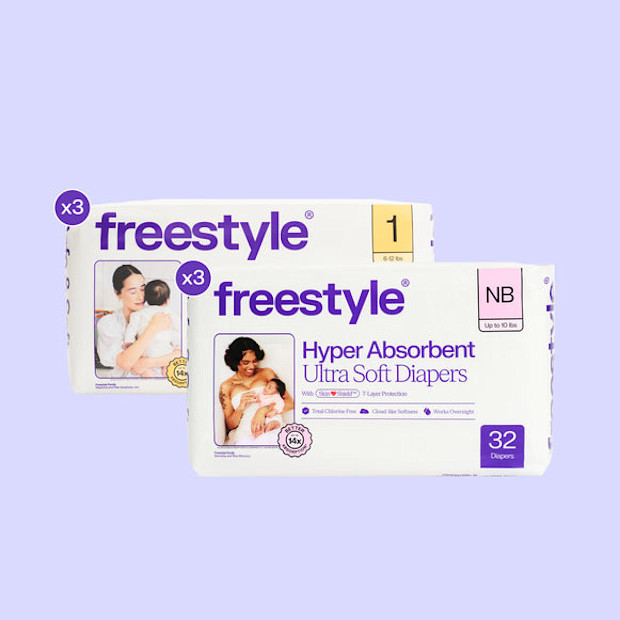
The good news? You don’t have to become a diaper materials expert overnight. We teamed up with Freestyle (their diapers have seven layers of wetness protection) to break down what’s actually inside a diaper, why it matters and what to look for if you want something that feels safe, comfortable and reliable for your baby.
What’s inside a diaper?
A diaper’s performance comes down to two things: how it’s built and the materials used to make it. Most diapers are made up of a few key layers working together to absorb moisture, protect skin and prevent leaks. Here’s a quick breakdown:
Topsheet: The soft inner layer that sits against your baby’s skin and helps pull moisture away quickly.
Absorbent core: The middle layer designed to trap liquid and keep it contained.
Backsheet: The outer waterproof layer that helps prevent leaks onto clothing or bedding.
Stretch panels and leg cuffs: Flexible areas that help create a secure fit around your baby’s waist and legs.
Adhesives and elastics: Small but important components that help the diaper stay in place comfortably.
While most diapers follow this general structure, the materials and manufacturing processes can vary widely between brands. And that’s where ingredient-conscious parents are starting to pay closer attention.
Why are parents looking more closely at diaper ingredients?
A baby’s skin is thinner and more sensitive than an adult’s, which means prolonged exposure to moisture, friction or irritating materials can sometimes contribute to discomfort or diaper rash.
Because of that, parents are looking for diapers made without certain chemicals or harsh processing methods. You may have seen terms like Total Chlorine Free (TCF), PFAS-free or EWG Verified on diaper packaging. These labels are meant to help parents better understand how products are made and whether they’ve been independently tested for safety and transparency.
Total Chlorine Free: Some diaper materials are processed using chlorine bleaching methods, which can create trace byproducts during manufacturing. Total Chlorine Free diapers are made without chlorine processing, which many parents prefer as part of a gentler, more ingredient-conscious approach.
PFAS, Phthalates and BPA: These are chemicals parents may already recognize from conversations around plastics, cookware and household products. Many families choose to avoid prolonged exposure to them whenever possible, especially in products that touch their baby’s skin for hours every day.
EWG Verified: This third-party certification means a product meets strict standards for ingredient transparency and has been screened for thousands of chemicals of concern—giving parents extra confidence in what’s touching their baby’s skin.
What else to look for in your baby’s diaper
Of course, ingredients are only part of the equation. Parents also need diapers that actually perform—especially overnight. While night wakings are part of life with a baby, an uncomfortable or overly wet diaper can sometimes make sleep disruptions worse. And when moisture sits against a baby’s skin for too long, it can also contribute to irritation and diaper rash.
That’s why many parents are looking for diapers designed with both high-performance absorbency and thoughtfully selected materials. Here are a few features that can make a difference:
Moisture-wicking absorbency: Highly absorbent diapers help pull wetness away from your baby’s skin quickly, which can help keep them drier and more comfortable overnight.
Multi-layer protection: Freestyle SkinShield Diapers are engineered with a proprietary seven-layer system (many diapers have closer to three to five layers) designed to distribute moisture evenly and reduce rewet against the skin.
High overnight performance: With up to 14x better absorption than a leading brand, Freestyle diapers are designed to help reduce leaks and support longer stretches of dry comfort.
Carefully selected materials: Freestyle diapers are made with Total Chlorine Free materials and are lab-tested to be free from PFAS, BPA, phthalates and more than 1,500 chemicals of concern through EWG Verification.
Sensitive-skin support beyond diapers: Freestyle Ultra Clean 99% Water Wipes are made with 99% water, fragrance-free and plastic-free fibers, making them a gentle option for diaper changes and everyday cleanups.
In other words: the right diaper isn’t just about leak protection. It’s also about helping your baby stay comfortable, dry and supported throughout the day—and night.
One last thing to consider before choosing a diaper
For many parents, diapers are no longer just about convenience; they’re about finding a product they can feel good about using every single day. The right diaper can offer a little extra reassurance during a stage of life that already comes with tons of decisions and a whole new mental load. Ideally, a diaper should make everyday parenting feel a little easier and give you one less thing to worry about.
Ready to stock up? Freestyle Skin Shield Diapers and Ultra Clean 99% Water Wipes are available at Target and Walmart.
This article is sponsored by Freestyle. Babylist’s free site, apps and emails are made possible by our sponsors. We limit our sponsored content to relevant partners that offer products and services we believe in and use ourselves.

;)