
Are Car Seat Accessories Safe?
If they don’t come with your seat, nope. We’ll explain why, + what’s safe to use and what isn’t.

By
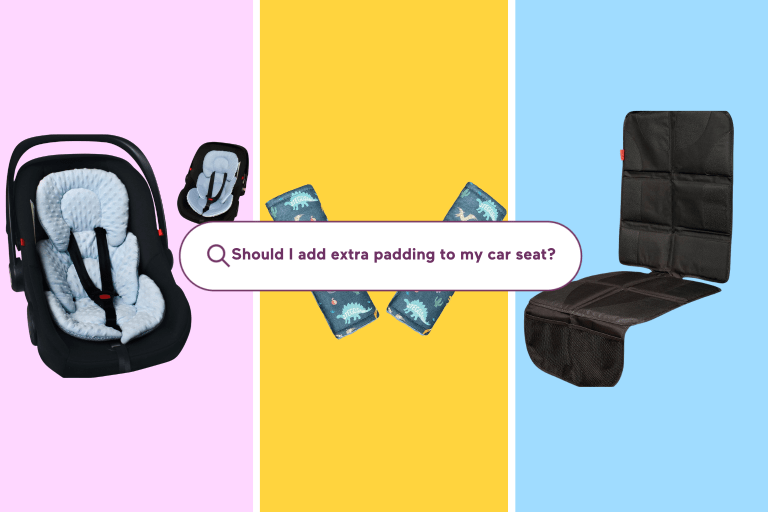
Car seat accessories can look helpful. Extra padding, seat protectors and even mirrors promise comfort and peace of mind. But using accessories that didn’t come with your car seat or aren’t specifically approved by the seat’s manufacturer can put your baby at risk.
As a Child Passenger Safety Technician (CPST), one of my biggest goals is to educate families on how to keep their children safe while riding in the car. I see how common—and tempting—these products are. That’s why I’m breaking down the most popular car seat accessories, the risks they pose and safer alternatives.
What Is a Car Seat Accessory?
A car seat accessory is anything added to your child’s car seat that isn’t part of the seat itself. This can include items that come with the seat (like newborn inserts, harness pads or cup holders) as well as products sold separately. Car seat accessories fall into two categories:
Accessories from your seat’s manufacturer: things like a newborn insert or harness pads that come with your seat (or are sold separately by the same brand).
Accessories from third-party companies: often called aftermarket products.
Why Car Seat Accessories Are Unsafe
Not all car seat accessories are unsafe. That first group—products made by your seat’s manufacturer and intended for use with your specific seat—are safe, as long as you follow your manual’s usage guidelines.
The second group is where the problem lies. Aftermarket products are never safe, and the reason is simple: they haven’t been crash tested with your car seat. There’s no way to know how they’ll impact your seat’s performance in a collision, and that puts your child at risk.
“It’s only safe to use an accessory that was crash tested with your car seat by the car seat manufacturer and is approved for use with that specific seat,” explains Lani Harrison, a CPST with over a decade of experience. “Otherwise, the crash testing results of the seat could be altered, and a seat that would pass testing without the accessory may not pass with it.”
It’s also important to remember that, above all, car seats are safety devices. All seats sold in the US must meet the same federal safety standards and pass the same crash tests.
Bottom line: If an accessory didn’t come with your car seat, or isn’t specifically approved for it by the manufacturer, it’s not safe to use.
The Most Common Unsafe Car Seat Accessories
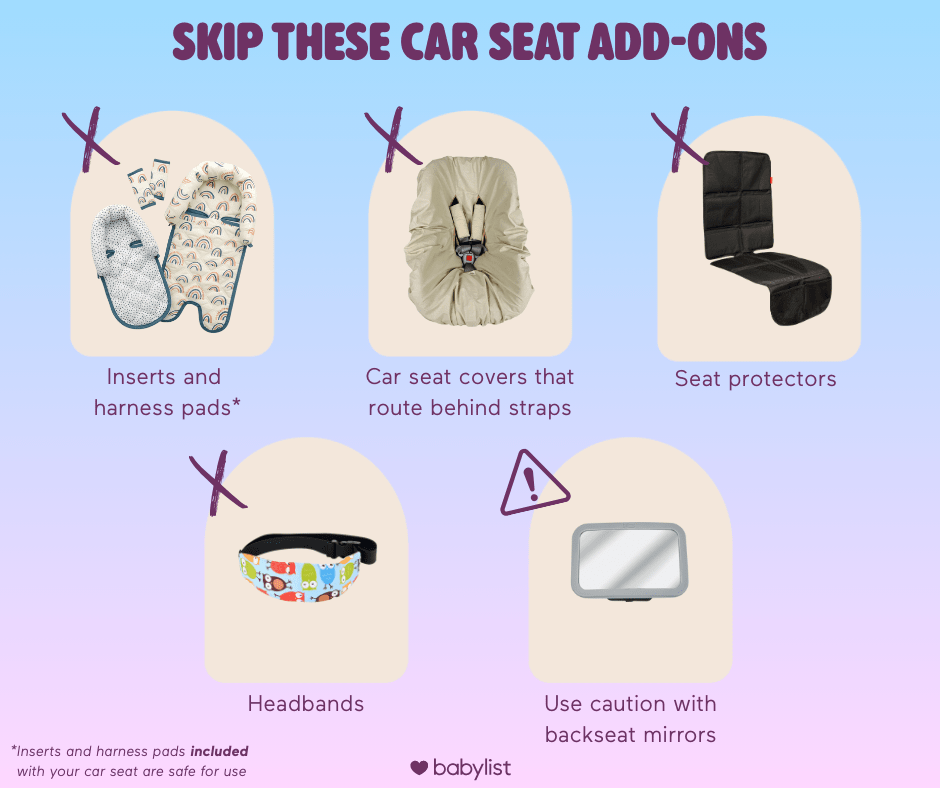
Unfortunately, there are many unsafe car seat accessories currently on the market. These are the most common ones, the risks they pose and safer alternatives.
Head and body inserts
➡️ The accessory
Head and body inserts are removable padding meant to cradle a baby inside the car seat. They’re one of the most common aftermarket products parents are drawn to, especially during the newborn stage when babies feel particularly floppy and lack head and neck control. It’s easy to think these inserts will make a seat safer or more comfortable, but that’s not the case.
🚫 The risk
Extra padding can affect harness placement or push a baby’s head or body into an unsafe position. And contrary to how it may look, it can actually cause more movement in a crash. “An aftermarket insert will compress during a collision, and the child’s head could bounce around,” explains Harrison. “The Styrofoam under the cover of a car seat and the insert that came with the seat are perfectly calibrated to cushion a baby’s head while absorbing crash forces.”
💡 The fix
Only use the inserts that come with your car seat, and always follow the instructions in your manual, as many need to be removed once your baby reaches a certain weight. Otherwise, avoid them.
If your baby’s ear tips toward their shoulder, that’s perfectly safe. What you want to avoid is their chin resting on their chest (what CPSTs call “chin to chest”). “This can be dangerous as it can impact the baby’s airway,” says Harrison.
If you’re worried about your baby’s position or have any concerns about how your seat fits, reach out to a CPST or your car seat manufacturer’s customer service. They can help make adjustments to ensure your baby is harnessed safely.
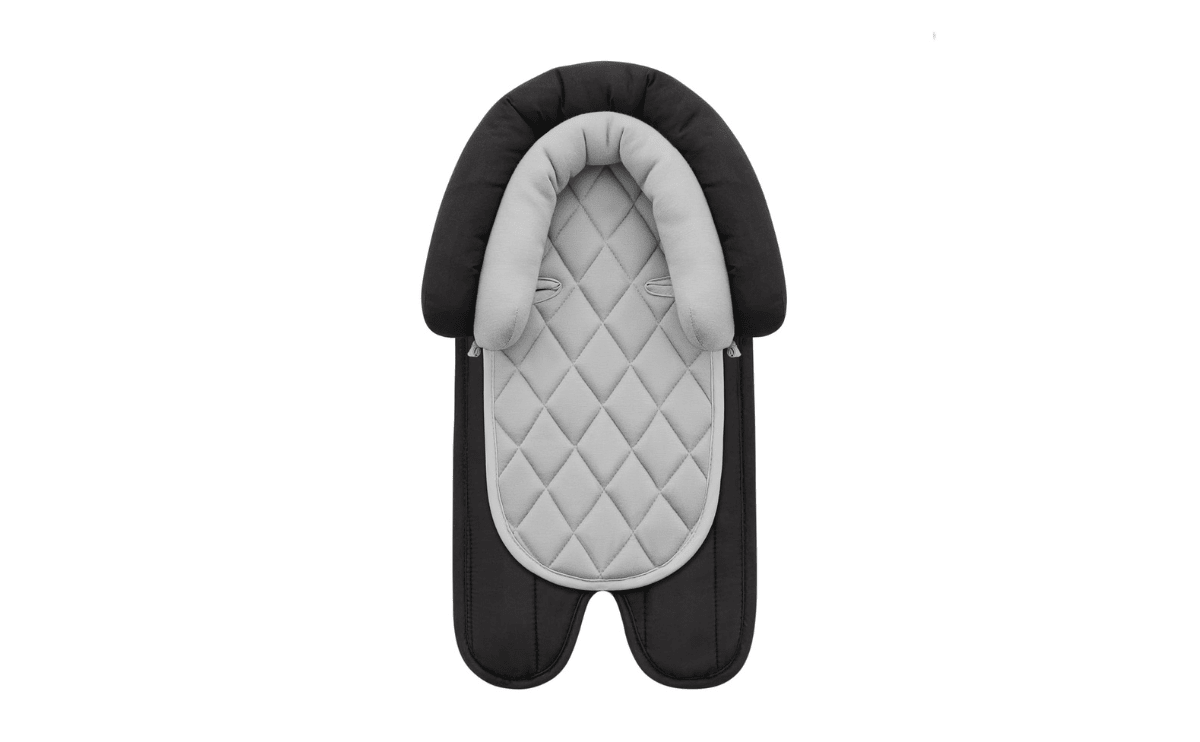
An unsafe, aftermarket car seat insert.
Harness pads
➡️ The accessory
Harness pads are soft covers that wrap around the shoulder area of a car seat’s straps to make them more comfortable. Many seats come with them, but some don’t. Whether or not you need to use them depends on your specific seat’s manual.
🚫 The risk
Like inserts, aftermarket harness pads can change how the harness fits and keep you from getting the straps tight enough.
“The harness pads that come with your seat are crash tested with that seat to allow the child to move the correct amount and/or to help absorb crash forces,” explains Harrison. “When a different pad is added, it could actually cause a child to move more as they lurch forward toward the straps, leading to injury.”
💡 The fix
Use only the harness pads that come with your child’s car seat. If you’re having fit issues and your manufacturer allows for it, consider removing the pads altogether; you’ll often get a better fit without them, especially with an infant.
For comfort, make sure the harness is snug but not overtightened. (You shouldn’t be able to pinch the strap fabric at the shoulder, but it also shouldn’t be digging into your child). You can also pull your child’s shirt fabric up toward the neck so it sits between the straps and their skin.
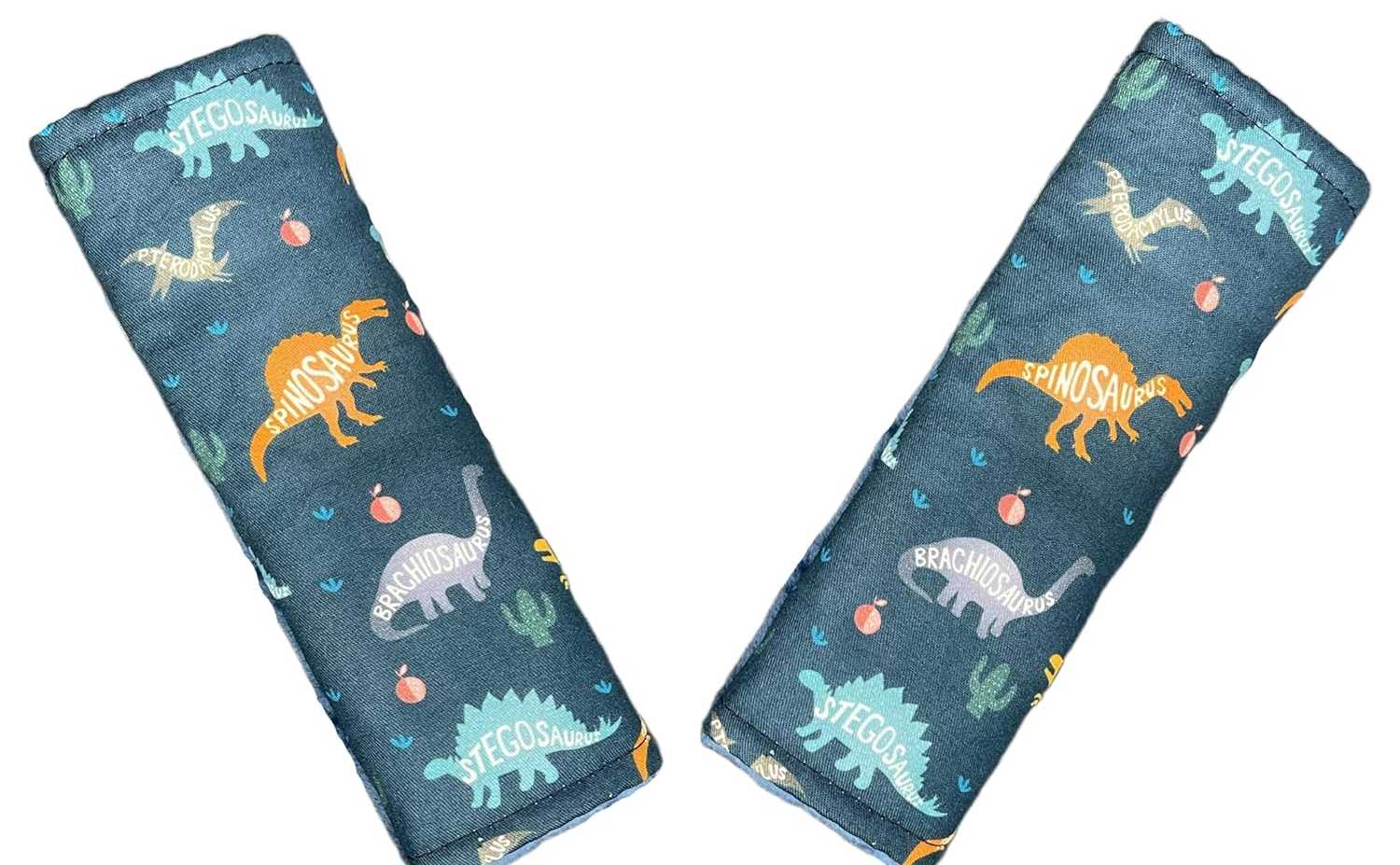
These aftermarket harness pads aren't safe for use.
Seat protectors and mats
➡️ The accessory
Many families worry about a messy car or possible damage to their back seat as a car seat presses into it year after year. A seat protector is a pad that sits on your vehicle’s seat pan (where your butt goes) and sometimes the seat back to guard against dents, rips or spills.
🚫 The risk
There are two big concerns with seat protectors: fit and grip.
“If a car seat is installed too loosely, shoving a mat under it might take up the extra room. But that mat will compress or move in a collision, which leaves a loose car seat,” explains Harrison.
“The second issue is that car seats are tested gripping a vehicle seat,” she says. “Some even have rubber or a similar material on the bottom to help grip the seat in a collision. When you put a mat under the seat, that advantage is now gone. The seat may grip the mat, or it may not, but the mat will move in a collision.”
💡 The fix
Many manufacturers prohibit seat protectors entirely. Certain manufacturers do allow them, but most CPSTs advise to simply skip them altogether. “It’s always safer just not to use one,” says Harrison.
The good news: car seat damage to vehicle seats is rare, and dents usually fade over time. If you’re really worried, you can use a receiving blanket or a very thin towel beneath the seat, as long as it doesn’t interfere with installation. (Check out Car Seats for the Littles’ seat protectors guide for a detailed how-to and some helpful visuals.) Just be sure to test for tightness after you install your seat while the blanket is in use; the seat shouldn’t move more than an inch side-to-side or front-to-back when tested at the belt path.
For mess control, consider taking off your child’s shoes before rides or keeping messy snacks out of the car altogether.
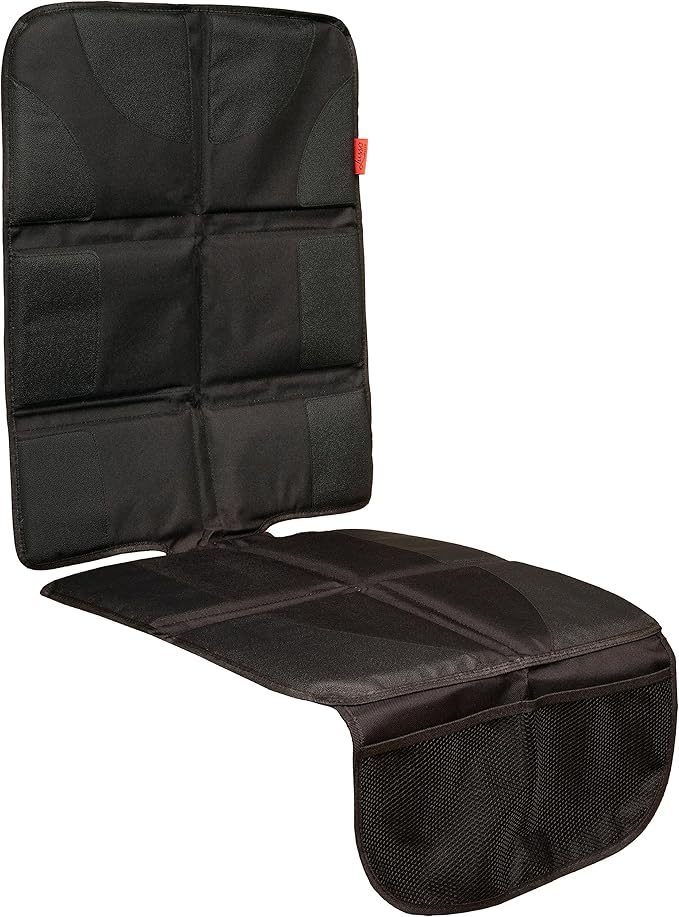
A car seat protector can mask a loose install or inhibit the car seat from gripping the vehicle seat properly.
Car seat covers
➡️ The accessory
Since bulky winter coats aren’t safe in a car seat (they add padding that compresses in a crash and prevents a snug harness fit), many parents turn to car seat covers instead. These are fabric or fleece covers that slip over an infant car seat to keep your baby warm when the temperature dips.
🚫 The risk
There are two types of car seat covers: ones that slip over a car seat and covers that go behind the baby and the car seat. The second type is unsafe.
“If the cover goes behind the baby, it can cause the harness straps to route differently, and it gives the baby room to move within the straps, because it will compress in a collision,” explains Harrison.
💡 The fix
Skip any cover that goes between your baby and the seat. If you want to use one, stick with the slip-on style that fits over the top of the seat (like the UPPAbaby CozyGanoosh). Always be sure it’s not interfering with your seat’s harness straps, and remove it when the car is in motion. (It’s
The safest choice for chillier temps is to dress your child in snug, warm layers, like a thin, fitted fleece, and then add a blanket over your child once they’re buckled.
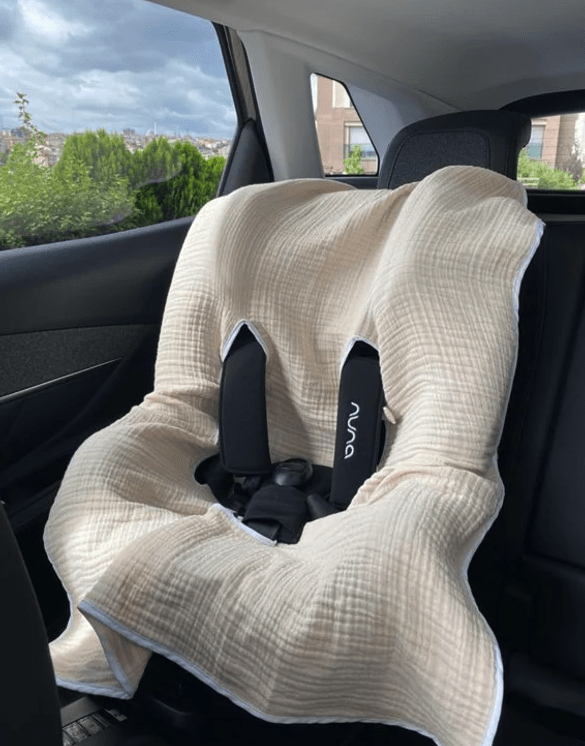
This car seat cover goes behind the child and isn't safe.
Headbands and head supports
➡️ The accessory
Called a car seat headband, head support or strap, these stretchy fabric bands wrap around the top of a car seat and hold a child’s head upright, preventing it from falling forward or sideways if they fall asleep.
🚫 The risk
Any type of headband-style accessory is not safe for use. “Because the head is being held back, the brunt of the collision force transfers to the spine,” explains Harrison. “They can lead to neck or spinal cord injury.”
💡 The fix
For forward-facing kids, it’s safe if their head slumps forward while sleeping—they’ll be able to lift it if needed.
“Rear-facing seats should be reclined correctly, and as long as the child has the neck strength to lift their head and torso in their sleep, it’s no problem if it droops forward in the car,” she explains. If you notice a smaller infant without strong head and neck control falling into a chin-to-chest position, reach out to your car seat manufacturer or a CPST for guidance.
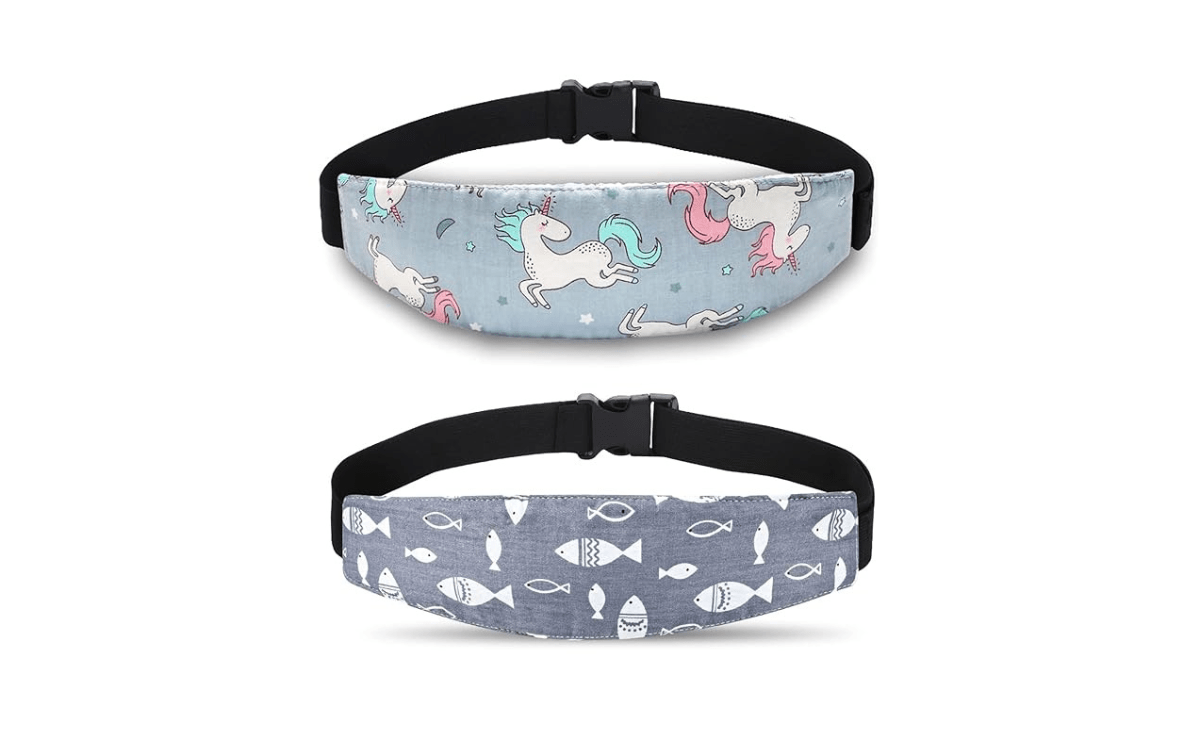
Headbands are very dangerous and should never be used.
📣 A note on backseat mirrors
Backseat mirrors sound convenient; they let you keep eyes on your rear-facing baby without having to turn your head while driving. But there are a few important safety concerns to consider.
The first is distracted driving. Even a quick glance at the mirror takes your eyes off the road, and it’s easy to get caught up checking on a crying or fussy baby.
The second is crash safety. During a collision, anything in your vehicle can become a potential projectile. “The mirror could come off and impact the baby,” explains Harrison. And while several manufacturer-specific mirrors have been crash tested, there’s no crash test standard for the bulk of the mirrors on the market.
All that being said, we realize mirrors do offer peace of mind to new parents and that many choose to use them. “My advice would be that if the parent wants to use a mirror, they should get the lightest one possible or use one made by a car seat manufacturer,” advises Harrison. “And be sure to install it tightly and correctly.”
“What I tell parents to do is to challenge themselves to only look at the mirror at red lights,” she adds. “If they find themselves glancing in the mirror as they are driving, I suggest taking a break from it for a bit.”
Expert Sources
Babylist uses high-quality subject matter experts to provide accurate and reliable information to our users. Sources for this story include:
Lani Harrison is a CPST based in Scottsdale, Arizona, the founder of Lani’s Car Seat and the moderator of three online car seat safety groups.
