
Car Seat Safety Checklist: 6 Things to Do Before Baby Arrives
Get car seat ready! This 6-step checklist breaks down exactly what to do before baby’s first ride home.

By

Preparing for a new baby means checking a lot of boxes—but one of the most important things you’ll do before your little one arrives is making sure their car seat is ready to go. As a Child Passenger Safety Technician (CPST), someone who’s specially trained in car seat use and education, I know firsthand how overwhelming car seat safety can feel for parents-to-be. This checklist can help.
These six steps will help you get your seat safely installed and ready before baby arrives—and will help you feel more confident (and less stressed) about car seat safety along the way. It walks you through the essential safety tasks you should tackle now and where to turn if you need additional guidance.
For an additional perspective, I also spoke to Lani Harrison, a CPST with over ten years of experience helping families install and use their car seats, for her advice and about the common pitfalls she sees parents commonly run into.
Preparation matters when it comes to car seats. These steps can help you avoid the most common mistakes, get expert-level guidance and keep your baby safe from day one.
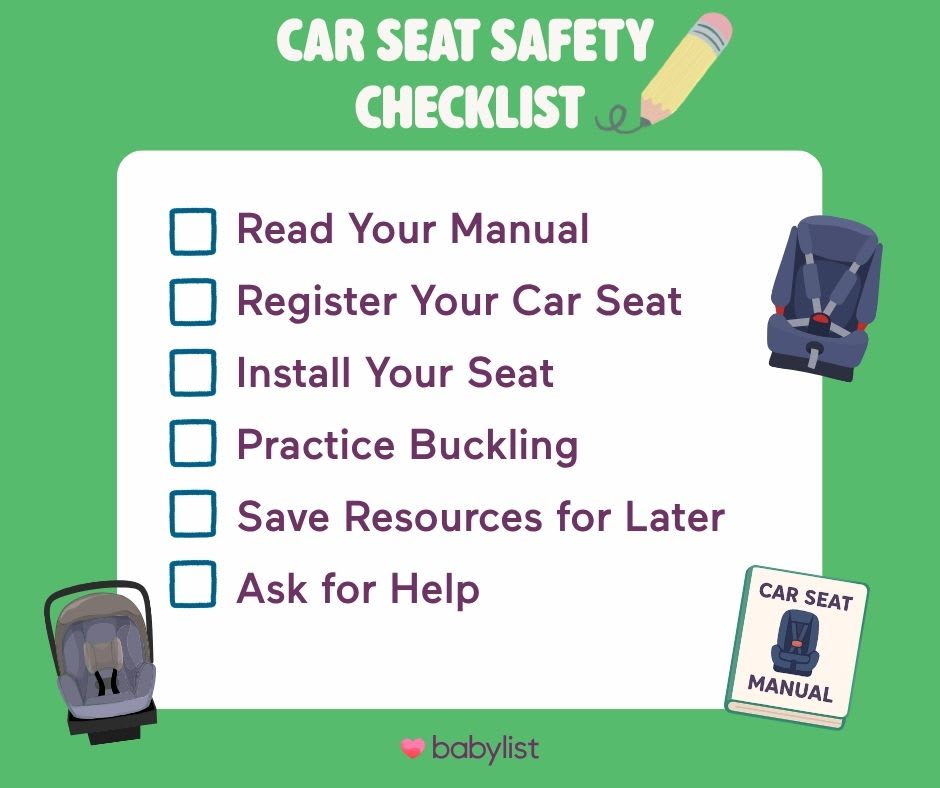
✅ 📖 Read Your Manual
Every car seat comes with a user manual. The first thing you should do after you unbox your seat—before playing around with the straps, before trying to install it, and before putting your baby in it—is to read the manual. Read it slowly. Read it carefully. And then read it again 😄.
Your car seat’s manual is the key to using your car seat safely and properly. It covers:
An overview of the seat’s features
Height and weight minimums and maximums
Step-by-step installation instructions
How to secure your child safely in the harness
Care and maintenance instructions
“As a CPST, I hear from so many people who are confused about things like when to remove an insert or whether LATCH and a seat belt can be used together,” says Harrison. “The manual describes all facets of this.”
Read the entire manual, not just the part you think you need right now. This can help you better understand how the seat works overall and help you uncover issues you may not have anticipated.
“For example, some forward-facing seats are incompatible with fixed headrests that protrude forward in a car,” explains Harrison. “If you’ve just purchased a seat and see that in the manual and you have such a vehicle, that would alert you that maybe you need a different seat and save you a headache down the road.”
If you have a question about your specific vehicle, you can always turn to your vehicle’s owner’s manual as well. Look for the “Child Restraints” section to find exactly what you need without flipping through the whole book.
✅ 🖊️ Register Your Seat
Registering your car seat isn’t for marketing spam—it’s actually one of the most important things you can do before you begin using your seat.
Just like all car seats sold in the US must come with manuals, they’re also required to provide a registration card. Most registration cards ask for your name, address and an optional email address and phone number. Companies can’t use this information for spam; instead, they’ll use it to notify you of a recall or a safety issue.
Most car seats come with a postage‑paid registration card. (Often there’s also a QR code, or sometimes a label with online instructions.) Register your seat before your baby arrives so you’ll be notified right away if there’s ever an issue.
✅ 🚙 Install Your Seat (Before You Need It!)
Next: installing your car seat. (Pro tip: Don’t wait until your baby is about to arrive to figure this out 😉. A few weeks prior to baby’s expected arrival is generally a good timeframe.)
First up: choosing where to install the seat in your vehicle’s back seat.
The good news? While the middle spot can be safest in a side-impact crash, all back seat positions are safe as long as your vehicle allows it, you can get a safe, secure installation and the position works for your family.
“What I tell parents is that the middle seat is safest, all things being equal—but that’s a big caveat,” explains Harrison.
Many vehicles lack lower anchors in the center seating position. “Additionally, so many middle seats have a hump or are tiny or have difficult seat belts with hardware at the bottom,” explains Harrison. “All of these factors can make it impossible to install many seats correctly.”
Here’s what you should consider when deciding where to install your seat:
Check your car seat manual. It explains if there’s a preferred installation method (LATCH or seat belt) and other intricacies of the seat.
Consider fit. Not every car seat will fit properly in every seating position.
Consider other passengers. Think about who else needs to sit in the car. Most of the time, the driver’s seat gets priority. “Because many infant seats and rear-facing convertible seats are large enough front to back that the front seat needs to be pushed forward a bit, it’s best to install behind the passenger seat so that the driver can sit where they need to to brake safely and be far enough away from the airbag,” advises Harrison.
After your seat is installed, double-check to be sure you’re not making any of these common car seat installation mistakes:
Loose installation. The seat shouldn’t move more than one inch side-to-side or front-to-back. Test this by using moderate force at the seat’s belt path. (Just the belt path—not the top, back or side of the seat).
LATCH errors. While it may seem more secure, almost all car seats require you to pick either LATCH or the seat belt for installation—not both. And don’t “borrow” anchors from the sides for a center install unless your car and seat both allow it.
Recline errors. Newborns need the right recline angle so their airway stays open. Use the manual and the seat’s built‑in indicator (if your seat has one) to check.
✅ 👶🏽 Practice Buckling In Your Newborn
Newborns are tiny, wiggly and floppy; getting them buckled correctly takes practice. Before your baby arrives, learn how to put your newborn safely in their seat—and practice, practice, practice.
“It’s always a good idea to practice. Use a stuffed animal or a doll! I’ve even seen some creative parents who have called their cats into service. Whatever works!” says Harrison.
Follow these steps to avoid harness errors:
Harness straps at or just below the shoulders when rear-facing
Chest clip at armpit level
Straps tight enough to pass the pinch test (you can’t vertically pinch any extra material between your fingers at the shoulder area)
Straps flat and untwisted (Pro tip: try the triangle trick for twisted straps)
✅ 📱Save Resources for Later
Your manual is essential, but it’s not your only resource. Many car seat brands have YouTube channels, TikToks and video library tutorials showing installation tricks and harness tips. (Nuna, Graco and Joie Baby USA are just a few examples.)
Bookmark them now. Future you will be super thankful that past you saved a video on how to adjust your seat’s harness straps when you’re standing in your driveway, sweatily clutching your three-day-old baby.
✅ 🆘 Ask for Help
You’ve dutifully checked off all the tasks above, but you still have questions. You’ve done everything right, but something still seems off about your car seat installation. Now what?
You have several options to get the help you need before your baby arrives:
Find a CPST. Many offer free checks and hands-on help. Use the Find a CPST Directory to find one in your area.
Contact your seat’s manufacturer. Their customer service team is the gold standard for questions about your specific model.
Use trusted online groups. CPST-staffed Facebook groups like CarSeat Safety and Car Seats for the Littles and the CPST SubReddit can help troubleshoot.
And be cautious about advice from well-meaning friends. “Although fellow parents are an invaluable source of information regarding newborns, proceed with caution when asking your friends about your car seat,” warns Harrison. “Every car seat is different, and although fellow parents always want to help, they are likely unfamiliar with your specific seat.”
