
Magnetic Baby Products Are Handy—Here’s What to Know About Safety
Magnets can make car seats, strollers and baby clothes easier to use, but they come with a slight safety learning curve.

By
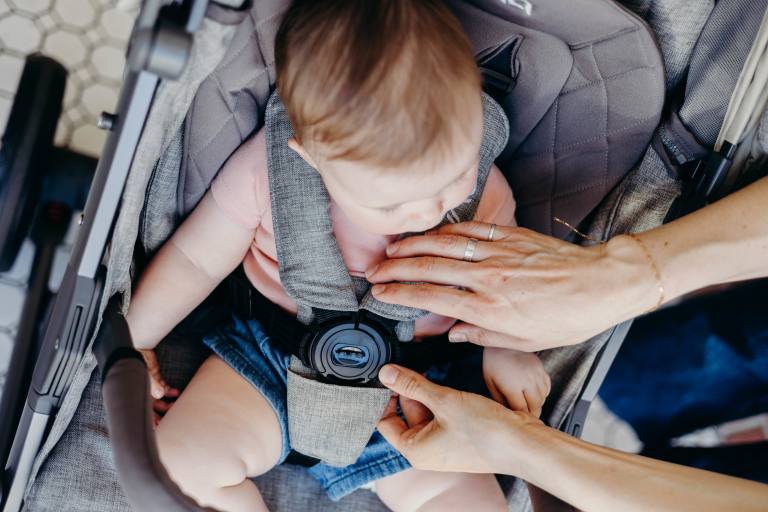
Magnetic closures are a hot feature in baby gear right now. You can find them in clothing (say hello to silent nighttime changes), bibs, sunshades and even bigger gear like car seats and strollers, where magnetic harness buckles let you strap baby in one-handed. They’re convenient, fast and often easier to manage, especially for parents with disabilities. But as magnets show up in more and more products, some parents might be wondering about how safe they actually are.
According to Dr. Scott Macicek, a pediatric cardiologist at Manning Family Children's Hospital, when it comes to magnets and babies there are three different safety hazards to keep in mind: choking, pinching and cardiac devices. Here’s everything you need to know to minimize risks and use magnetic baby products safely.
Magnets & Choking Hazards
For most babies, the main concern with magnets is the size; specifically, the risk of swallowing small ones. Just like with anything else of similar size, coin-sized magnets or smaller pose a significant choking hazard for babies and any children under three years old, Dr. Macicek says.
Those choking hazards typically present themselves in baby items that have been damaged in some way. That’s why it’s really important to regularly check your baby’s clothes, toys and gear that contain magnets—torn clothing with magnetic closures or broken magnetic toys can cause the tiny magnets to come loose, which then becomes a choking risk if your little one gets hold of them.
If your baby does happen to swallow a magnet, keep in mind that choking isn’t the only symptom and complication. If a magnet is small enough, there’s a chance it might pass right through baby’s esophagus and out the other end. But the Consumer Product Safety Commission (CPSC) warns caregivers that “if two or more magnets or magnetic components or a magnet and another metal object (such as a small metal ball) are swallowed separately, they can attract to one another through intestinal walls.” This can cause other potential complications further in, including intestinal blockage, internal injuries or tissue damage, the CPSC reports.
Symptoms aren’t always obvious, so if you suspect your baby has swallowed a magnet, call their pediatrician right away.

Magnets & Pinch Hazards
Another everyday hazard to be on the lookout for—mostly when it comes to stronger magnets like in car seat and stroller buckles—is the potential for baby to get pinched, Dr. Macicek says. The magnets on gear restraint harnesses can sometimes be strong enough to close from an inch or more away, leaving plenty of space for tiny fingers to get caught in the middle.
While pinches are fairly uncommon according to parents who regularly use magnetic baby products, the best way to prevent pinches is to ensure baby’s hands and tummy are clear of any magnetic closures when you’re buckling and unbuckling them from their car seat, stroller or even some structured carriers. The good news is that, while these magnets are strong enough to keep harnesses and straps intact, they’re typically not strong enough to cause much harm beyond a red mark or a small bruise if baby does happen to get pinched—but it can still hurt.
Magnets & Cardiac Devices
A small number of babies born in the US each year (about 0.2%) have heart issues that require implanted cardiac devices, including pacemakers, defibrillators and loop recorders. And since these devices use electricity to help manage or monitor heart rhythm, parents and caregivers might wonder whether even the tiniest, weakest magnets in baby products can cause problems.
In general, Dr. Macicek says, “infants and children who have a problem with their heart are at risk for effects of external magnets,” but it all depends on the proximity. “Everyday magnets, like those of clothing closures and stroller buckles, are generally safe and less likely to have significant effects, but when right on top of the device there is definitely concern that even the everyday-size magnet could potentially affect an implanted device.”
So while the magnets you’ll find in baby gear, clothing and toys aren’t considered to be especially strong, they’re not considered 100% harmless in extremely close proximity. Distance is key. “The current recommendation is to keep everyday magnets at least six inches from an implanted rhythm management device,” Dr. Macicek says.
If an everyday magnet gets too close to your baby’s cardiac device, Dr. Macicek says it can:
-
Switch a pacemaker into a backup mode
-
Temporarily turn off defibrillator therapies
-
Erase stored data on a loop recorder
Keeping all of this in mind, if your baby has a cardiac device, it’s best to avoid products like magnetic-closure clothing and gear with magnetic harness buckles, since these items sit right up against baby’s chest. If you’re not sure how everyday magnets might interact with your baby’s unique cardiac needs, it’s important to talk to their pediatrician and cardiac specialist before using any magnetic products on your baby.
(And it’s not just baby products you need to be aware of, Dr. Macicek says. If you have a magnetic cell phone, like a MagSafe-charging iPhone or a MagSafe case, you’ll need to keep it at least six inches away from your baby’s chest at all times.)