
I Tested 18 Postpartum Pads—These Top 5 Will Keep You Dry
After multiple brands, tests and two liters of fake blood, these are the pads you can count on after birth.

By
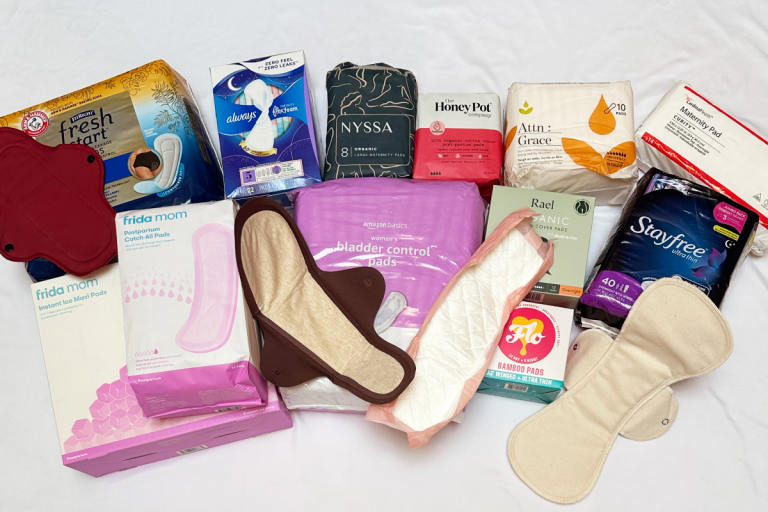
You probably already know you’re going to bleed after giving birth, but you may not know for sure just how much (and for how long). Postpartum bleeding is much heavier than your regular period—and regular period products won’t cut it.
That’s why I tested a whole bunch of different postpartum pads, so you can be certain you have the most absorbent, safest and comfiest pads added to your stash of postpartum supplies. I’ve been through my own postpartum recovery twice now, and I can tell you it’s uncomfortable enough as it is; no need to add on the discomfort of bleeding through your clothes/sheets/mattress/everything else. Besides, there are bigger things to focus on (like that brand new baby!).
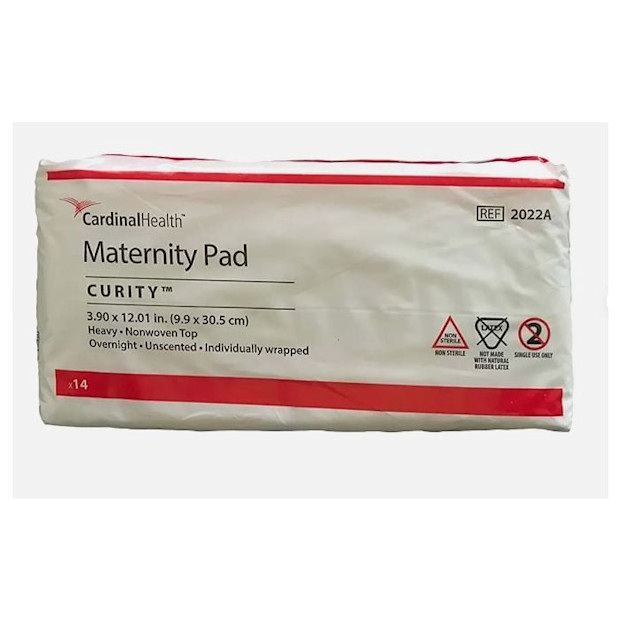
After so much testing and enough fake blood to stock a Spirit Halloween store, I found the best postpartum pad brand to be the Curity Maternity Pads from Cardinal Health—the exact same pads you’re given at the hospital after you give birth. That’s right, the freebies from the hospital are the most absorbent and most leak-free out of all the postpartum pads out there, and they were the only ones I tested that got a perfect score in all the criteria, including capacity, leak prevention, absorbency and weight.
But not everyone gives birth at the hospital, and your hospital may even have different pads available. (And to be honest, they can feel a bit more bulky than some of the other options.) That’s why I rounded up a few other top picks in different categories, so you can choose the brand and style that works best for your own comfort and needs.
Keep in mind: this roundup is just for postpartum pads. If you’re looking for disposable or reusable underwear to insert the pads into, check out my roundup of the best postpartum underwear.


How We Judged The Best Postpartum Pads
Best Overall Postpartum Pad
CARDINAL HEALTH Curity Maternity Pads, 14-Pack
From $10.95-
Capacity: 5/5
-
Leak Prevention: 5/5
-
Absorbency: 5/5
-
Weight: 5/5
The only pad that got a perfect score, these ultra-basic maxi pads are actually the exact same ones used in most hospitals. After testing them (and having used them myself after giving birth), I can see why they’re the hospital go-to. Your hospital is likely to load you up with a few packs before you head home, but just in case you want extras—or if you’re giving birth at home or at a birthing center—you can buy them online too. The only thing I didn’t like about these pads is the size; they’re bulkier and slightly shorter than most of the other top picks.
Best Postpartum Incontinence Pads
Amazon Basics Incontinence Bladder Control & Postpartum Pads - 39 count
From $11.53-
Capacity: 5/5
-
Leak Prevention: 5/5
-
Absorbency: 5/5
-
Weight: 4/5
These may be labeled as incontinence pads, but don’t let the idea of adult diapers scare you off! Not only can these heavy-duty pads hold up to the high volume of postpartum bleeding, they’re also perfect for postpartum bladder leaks. An estimated 40 percent of people experience incontinence after childbirth thanks to all that strain on your pelvic floor, leading to pelvic floor dysfunction. So incontinence pads keep you dry in two different ways!
The two brands below also tested really well and make great alternatives to Amazon Basics. Vakly pads are also often available in hospitals!

Best Thin Postpartum Pads
-
Capacity: 5/5
-
Leak Prevention: 5/5
-
Absorbency: 3/5
-
Weight: 5/5
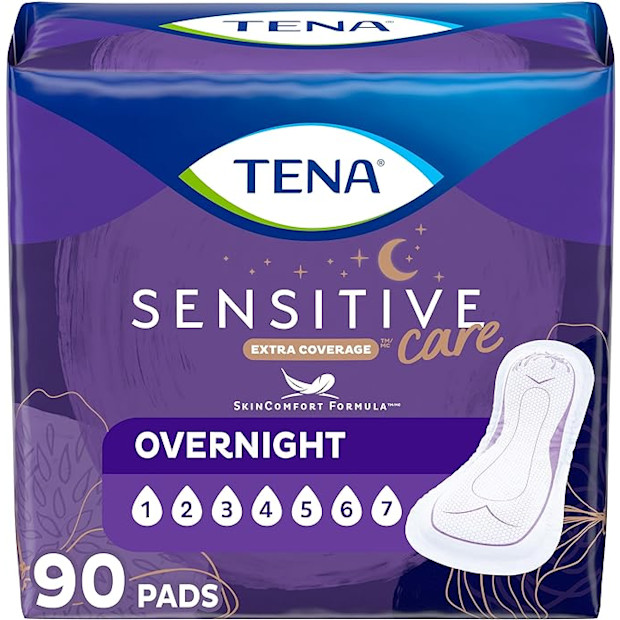
Maxi pads are typically the only recommended style for postpartum bleeding since the volume and flow are so heavy, but once you’re past that first week and the bleeding slows down a bit, you can switch to a thinner style—it’s a good idea to stick to the “overnight” size though, since the volume is likely to still be somewhat heavy. Out of all the thin pads I tested, organic brand Rael held onto liquid the best and soaked in the fastest.
One thing to note: During testing, it got real close to leaking out the front, so be mindful of capacity with this one (and with any “thin” pad). And while all 50mL of liquid soaked in quickly, the pad still felt quite wet to the touch, even after several hours.
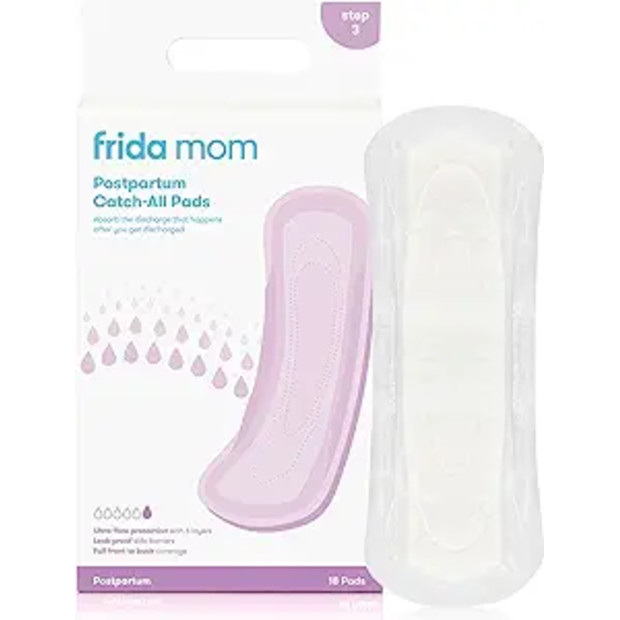
Another high performer for thinner options was the Frida Mom Postpartum Pad, which was great for capacity and leak prevention but did feel pretty heavy after being only halfway full.
;)
;)
;)
Best Cooling Postpartum Pad
-
Capacity: 5/5
-
Leak Prevention: 5/5
-
Absorbency: 5/5
-
Weight: 4/5
No matter how you give birth, you can count on being pretty sore down there for at least a week or two, usually due to stretching, perineal tearing or hemorrhoids. That's where these cooling, soothing pads come in.
These postpartum pads from The Honey Pot Company are infused with a small amount of essential oils (lavender, rose and mint) plus aloe vera to help reduce inflammation and soothe any sore spots. I tested these pads with fake blood kept at body temperature, and almost immediately after soaking everything in, the top layer of the pads felt cool to the touch while still remaining dry. No weird wet sensation, just pleasant cooling—just slightly less cool than a traditional padsicle.
As nice and chill as these pads were, there were two downsides: the weight and the scent. After 50mL of liquid soaked in, they were slightly heavier than other absorbent picks, which can contribute to the uncomfortable diaper feeling after a couple hours.
And since they're infused with essential oils and aloe vera, there's a distinct scent that lingers, even after several hours. I found it to be a medicinal smell that gave me a bit of a headache (though, to be fair, I was smelling it over and over again in a short amount of time). This shouldn't be confused with scented pads though, which use synthetic fragrance chemicals that can irritate sensitive skin and shouldn't be worn during the postpartum healing stage (more on that below).
Best Reusable Postpartum Pad
-
Capacity: 5/5
-
Leak Prevention: 4/5
-
Absorbency: 4/5
-
Weight: 4/5
-
Easy to clean: 5/5
If you’re going to go with a reusable pad during the postpartum weeks, this one from Knix performed the best out of all the reusables. It’s thin and soft (not at all like the diaper feel of maxi pads), and it cleans up really easily with no staining—just make sure you rinse and soak it in cold water before running it through the laundry.
One thing to keep in mind is that it did leak during testing, both before and after being washed and dried. The absorption couldn’t keep up with the more rapid flow of a heavy bleed. Also, one end of the pad is pretty narrow, so it’s most likely to leak at that end.
The leakage problem was true for all the reusable pads I tested (which is why you won't find any other recommended options below)—even more reason to go with disposable options for those first two weeks. After that, you might consider switching to a reusable pad when the flow is lighter and there's less of a chance for leaks.
Why Trust Babylist?
Babylist is the expert in baby; we know baby gear inside and out. We talk with parents face-to-face in our showroom and on our user panels and hear from thousands annually via our Best Baby Products online survey. We know what items millions of expecting parents are adding to their baby registries.
-
Firsthand professional and personal experience. As a mom of two and professional editor at Babylist for over six years, I’ve tested hundreds of products related to pregnancy, postpartum and baby health. I tried out lots of different brands of pads during my own personal postpartum journeys, and then I tried a lot more in a professional capacity in preparation for this product guide.
-
Feedback and reviews. I read thousands of customer reviews from parents and spoke to parents on our staff about their real-life product experiences.
Disposable Pads Vs Reusable Pads
In my testing, the disposable pads far outperformed the reusables. While I think reusable pads are a suitable option for regular periods (especially if you’re not a heavy bleeder) and they may be better for the environment, they just didn’t stand up to the volume and viscosity of heavy postpartum bleeding. Rather than deal with leaks, frequent pad changes and constant washing, it’ll cause you less headache in the long run to just stick to disposable pads for the first two weeks postpartum.
Disposable pads, especially maxi styles and pads labeled for incontinence, can easily withstand the heavy volume of those first few days post-childbirth. They also soak in really fast, so you aren’t left feeling swampy.
Once bleeding has slowed down, usually about two weeks in, that’s a good time to switch from maxi pads to thin disposables, reusables or period underwear. Not only will the volume be more like a regular or light period, you’ll also see fewer clots, so volume capacity and leaks aren’t as much of a concern.
Why You Should Avoid Scented Pads
Some brands offer lightly scented pads using artificial fragrances, and while it may be tempting to use those to conceal the smell of blood, it’s best to only use unscented pads while your body is healing. Your body—and especially your vaginal area, regardless of how you delivered—is extra sensitive after giving birth, and scented products may irritate your vulva. All the products I tested were unscented and chosen with non-irritating materials in mind.
Frequently Asked Questions About Postpartum Pads
How long will I be wearing postpartum pads?
On average, postpartum bleeding (also called lochia) lasts about four to six weeks, regardless of how you gave birth, how far along you were, how many babies you had or whether you opted for pain medication.
How often should I change my pads?
It’s totally normal to fill a maxi pad (as much as 50mL of blood) every two to three hours for those first few days after giving birth, so you’ll need to change them fairly frequently at first. Bleeding slows down around day three or four, at which point you can expect to change your pads three to four times a day.
Bleeding is heaviest during your first week or two postpartum; after that, you might be able to get by with one or two pads per day or use lighter pads.
Can I use regular period pads, tampons or menstrual cups?
At least for the first two weeks, don’t bother with your go-to period stash. That kind of volume would soak right through a regular pad and leave you with an uncomfortable mess.
Tampons and menstrual cups are a definite no for all postpartum bleeding, since they could increase your risk of infection. Nothing should be inserted into your vagina until you’re fully healed and have the go-ahead from your doctor.