
The Best Ring Slings for Newborns, Toddlers and Everything Between
Lightweight, stylish and easy to adjust, these ring slings are made for busy parents and babies who don’t want to be put down.

By
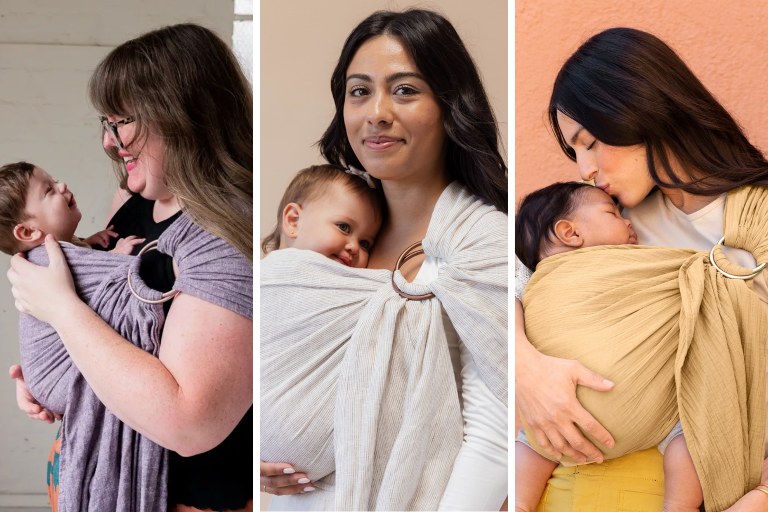
Most babies prefer to be snuggled up close. But life also has to happen, so if you're looking for a carrier, ring slings are a well-loved pick for many Babylist parents and babywearing experts—and I'm right there with them as a mom of two.
Ring slings strike a perfect middle ground between a snuggly wrap and a more supportive structured carrier. When my second baby got too heavy for me to comfortably wear in a wrap, our ring sling was the natural next step for keeping her close and happy and my arms free.
They’re also super portable—folding easily to stash in your diaper bag—and come in a ton of gorgeous colors and prints that’ll make you feel a little more like yourself while keeping baby close. Laura Brown, a babywearing educator and founder of MamaBird Los Angeles, likes to think of them as the sandals of baby carriers—quick to slip on and off, lightweight and compact enough to toss in your diaper bag. Veteran birthworker and babywearing educator Adriane Stare of MostPartum agrees, noting they're a favorite among her postpartum clients.
Our top pick, the Hope & Plum Ring Sling, is a parent favorite for good reason—it's beginner-friendly, size-inclusive and stylish enough that you'll actually want to wear it. But since every family has different needs (and budgets), we've rounded up several other ring slings, including picks for warmer weather, older babies and more.
How We Judged the Best Ring Slings
Best Ring Sling Overall

Pros
- Soft, breathable, high-quality fabric
- Size-inclusive; available in 3 lengths
- Extensive selection of prints and colors
- Free fit check with a babywearing educator
Cons
- Expensive
The Hope & Plum ring sling strikes the ideal balance of comfort and support, making it a favorite among Babylist parents and babywearing experts alike. The carriers are handmade in the US by a team of women using high-quality materials like breathable hemp and organic cotton.
It's also an under-the-radar fave among Babylist parents—kind of like the carrier brand you find after you've tried a bunch you didn't love. "I went down the baby carrier hole and found Hope and Plum, and now I have so many carriers!" one Babylist parent raved.
What really sets the Hope & Plum ring sling apart is how seriously soft it is from the jump, making it much easier to use, adjust and tighten, particularly for beginners. "Sometimes new slings can be a bit stiff or crunchy and need breaking in," notes Brown. And although it's soft, it's still strong and supportive enough to comfortably hold larger babies and toddlers too.
This ring sling is size-inclusive, available in three different lengths so all parents and caregivers can find their perfect fit. It comes in tons of colors and patterns, so it's easy to snag one that suits your personal style. There's also a tutorials section on the brand's website with tons of babywearing basics and how-to's and complimentary virtual fit checks with a babywearing educator so you can learn how to comfortably and safely use your sling, a huge perk.
Though it's pricey, the quality construction means it'll last through multiple kids—making it a solid investment if you plan to use it long-term.
Additional Specs
Sizes: 74”, 84”, 94”
Weight Guidelines: 7-35 lbs
Fabric: Hemp/organic cotton
Care: Machine wash on cold, gentle cycle. Tumble dry on low or hang dry.
Runner-Up
Pros
- Lightweight and breathable
- Beautiful designs
- Versatile
- Well-priced
Cons
- Single-layer linen not as supportive for heavier babies/toddlers
- Can’t be tumble-dried
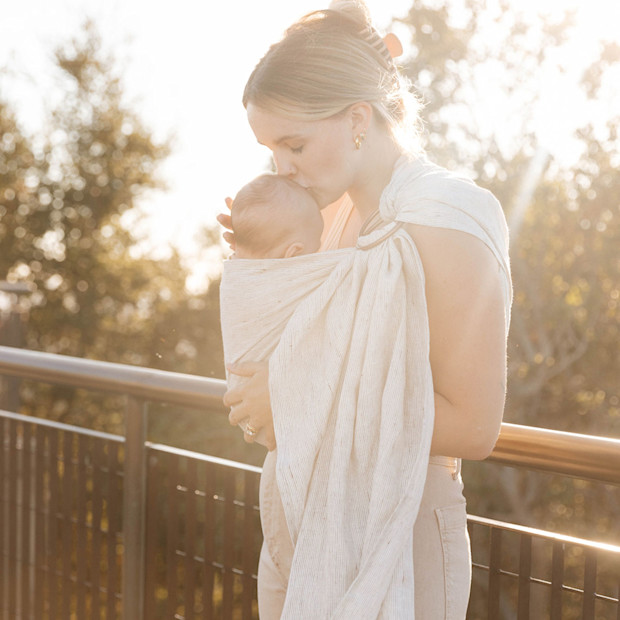
WildBird carriers are a Babylist parent and editor favorite—including their linen ring slings. This one is made from luxe, 100% natural European linen that’s light, airy and breathable. It comes in a range of neutral, modern designs that work with most parents' aesthetics.
Many parents love how convenient it is for quick carries around the house. One shared in our most-loved product survey, “It took a while to figure out, but now it’s one of my favorite ways to baby carry. It’s easy to put on and take off, it’s lightweight and pairs well with many of my outfits making me feel very ‘mom-chic’.”
Wildbird’s ring sling comes pre-washed, so right out of the box it’s soft and ready to use. It’s also made using all-natural dyes which is a plus for something that comes in close contact with baby’s skin. “Thin cotton and linens are both breathable and washable, making them great for everyday use and humidity,” says Stare.
One thing to keep in mind: the WildBird sling is made of a single layer of breathable linen, so while it’s great for warm weather, smaller babies and babywearing newbies, it may not be as comfortable or supportive for heavier toddlers or longer periods of wear.
Additional Specs
Sizes: Standard, 74” and long, 90”
Weight Guidelines: 8-35 lbs
Fabric: 100% natural linen
Care: Machine wash on gentle cycle; hang dry or dry flat
Best Ring Sling for Extra Support
Pros
- Luxuriously soft yet strong
- Comfortable and easy to use
- Heirloom quality
Cons
- Expensive
- Must be hand-washed
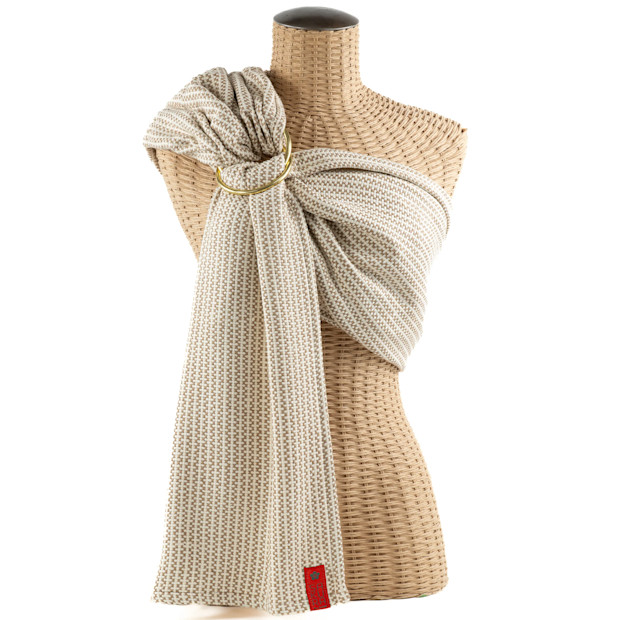
Sakura Bloom makes gorgeous ring slings that can be passed down for generations. That same heirloom quality fabric includes options that are super supportive—like this silk version.
“Families who love slings and have older kiddos will usually opt for a thicker and wider sling, or a strong silk sling, both of which more ergonomically distribute the heavier weight onto their shoulders and backs,” explains Stare. It's designed for babies as small as seven pounds all the way up to 35 pounds and comes in two sizes: a standard 75-inch length and a longer 82 inches to accommodate different body types.
I tested out their Maven sling in raw silk, and though it was a bit stiff out of the box (and noticeably thicker than the other options on this list), it's a material that'll just get better with time. Parents mention how comfortable the silk is, for themselves and their baby, which is key when your little one wants to be held constantly and you’ve got things to do.
The only downside is it's a bit more high-maintenance, requiring handwashing with vinegar (instead of detergent) and it's definitely one of the more expensive options out there. If you need one-on-one support, Sakura Bloom offers free “office hours”—you can reserve a time here.
Additional Specs
Sizes: Standard, 75”
Weight Guidelines: 7-35 lbs
Fabric: 100% Silk
Care: Hand wash cold with vinegar and hang to dry
Best Ring Sling for Warm Weather

Pros
- Budget and breastfeeding-friendly
- Lightweight and breathable
- Minimalist, gender-neutral design
- Free 1:1 support with a certified babywearing educator
Cons
- Only available in one length/size
- Not ideal for heavier babies and toddlers
Made of airy double gauze cotton, this minimalist ring sling is lightweight and ultra-breathable so you and baby stay cool. It comes in gender-neutral colors and is one-size-fits-all so multiple caregivers can wear and adjust for a custom fit. It accommodates babies from the newborn stage (eight pounds) through the toddler years, though it’s best suited for smaller babies, as it may be tough to comfortably wear them for extended periods as they reach the upper end of the 33-pound weight limit.
Many Babylist parents and reviewers praise how breastfeeding-friendly the Moby ring sling is, with one calling it “effortless to nurse in” hands-free, and noting how “the tail fabric can be lightly draped over for privacy if desired.” (You can even use the tail as a sun shade, burp or drool rag in a pinch.) Because it only comes in one size, petite caregivers may find the excess fabric cumbersome to manage or adjust, while taller and plus-parents may have trouble finding a comfortable fit. Like the other brands on this list, Moby also offers complimentary one-on-one support—you can find more details on their website.
Additional Specs
Sizes: One size (84.25”L x 25.6”W)
Weight Guidelines: 8-33 lbs
Fabric: 100% double cotton gauze
Care: Machine wash on gentle and hang dry or use the lowest dryer setting
Why Trust Babylist?
Babylist is the expert in baby; we know baby gear inside and out. We talk with parents face-to-face in our showroom and on our user panels and hear from thousands annually via our Best Baby Products online survey. We know what items millions of expecting parents are adding to their baby registries.
Firsthand professional and personal experience. As Babylist’s associate editor and mom of two (who are 23 months apart), I’ve tested many different carriers over the last six years. And ring slings were a go-to when my second was born. I’ve also taken babywearing courses to learn about the history and safety of babywearing, and leaned into the initial research and insight of Elizabeth Kadar, the original author of this guide.
Expert POV. For this piece, we tapped two certified babywearing experts for the lowdown on the best ring slings. We spoke with certified babywearing consultant Laura Brown of MamaBird Los Angeles and veteran birthworker and babywearing educator Adriane Stare of MostPartum—both of whom are also parents themselves.
Ring sling data. At Babylist, we regularly analyze which baby products users are adding to their baby registries the most (and which ones they aren’t) and what the team of Merchandising experts—buyers who are responsible for ensuring the Babylist Shop is stocked with the best and newest gear—is excited about. Studying this kind of data helped us determine which products to test and the best ring slings for new and expecting parents.
Feedback and reviews. We reviewed comments and feedback from Babylist’s annual product survey of thousands of parents, read customer reviews from hundreds of Babylist users and spoke to parents on staff about their real-life product experiences.
How to Use a Ring Sling
Every ring sling comes with its own set of specific instructions and size requirements, so always defer to those before using your sling. Keeping this in mind, these are some basic guidelines on how to use a ring sling.
#1 Thread Your Sling
Many ring slings come ready to use, but some need to be threaded (which just means getting the fabric through the rings). To thread your sling, push the fabric over the first ring and under the second to create a secure loop. (If you’re still unsure, check YouTube or TikTok; there are lots of how-to videos available.)
Hold your sling in front of you with the rings in one hand and the fabric tail toward the shoulder your sling will rest on. Pass your other arm through the loop and over your head and position the rings just below your shoulder.
I also love this helpful tutorial from Hope & Plum.
#2 Position the Sling
Spread the fabric wide across your back. “Make sure there is zero slack in the fabric behind your back, as slack behind you can be tricky to tighten out once your baby is in the sling,” says Stare.
You also want to get it as ready for baby as possible during this step. Brown says, “I'm a big fan of tightening up as much as possible to give yourself a headstart and prevent having to do tons of adjustments and tightening.” Some babywearing educators call this “creating a pocket”—think of it like a little hammock that’ll support your baby’s bum and knees.
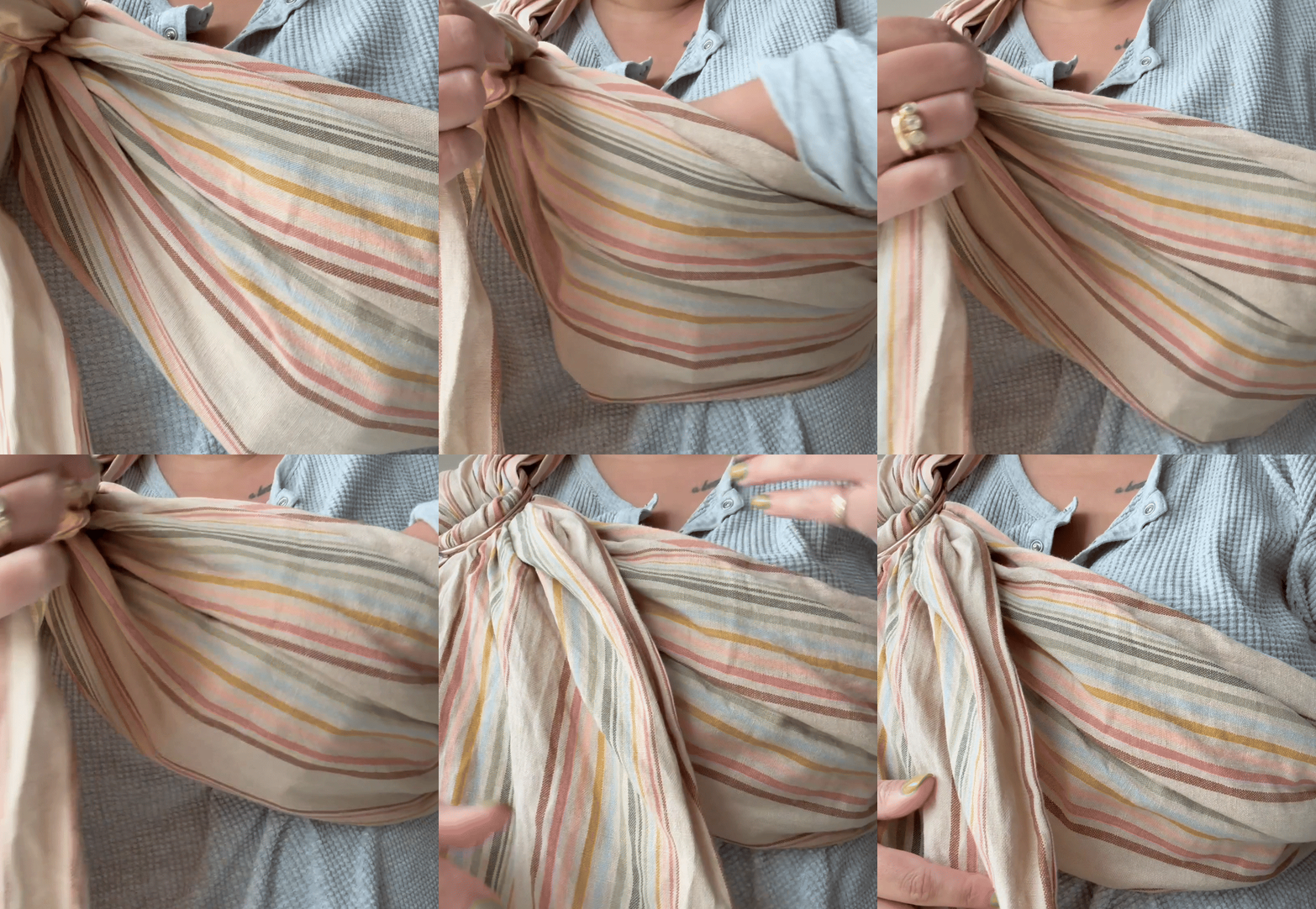
Brown says one of the most common things she sees new ring sling wearers do is leaving too big of a pocket before putting baby in. It’ll take some practice to get a feel for how much space baby needs. Brown promises it gets easier with time, “once you figure out how much room you need for baby, it becomes much easier to slip them in and only do a little adjustment.”
#3 Load the Baby In
Rest your baby on your opposite shoulder and guide them into the sling. Adjust the fabric around baby’s bottom by creating a seat that goes from knee to knee. (Tuck the bottom part of the sling between you and your baby to make this “deep” seat. It will help prevent the fabric from loosening when your baby straightens their legs.) Then spread the fabric up to the nape of their neck.
Tighten the sling slowly until your baby is secure. Be sure to pull the tail of the fabric across the top, middle and bottom so your baby is positioned snugly in the sling. “The sling should be adjusted to be snug but not constricting,” says Stare. “You should be able to slide no more than the width of your fingers between your baby's body and yours, so that their spine is well-supported.”
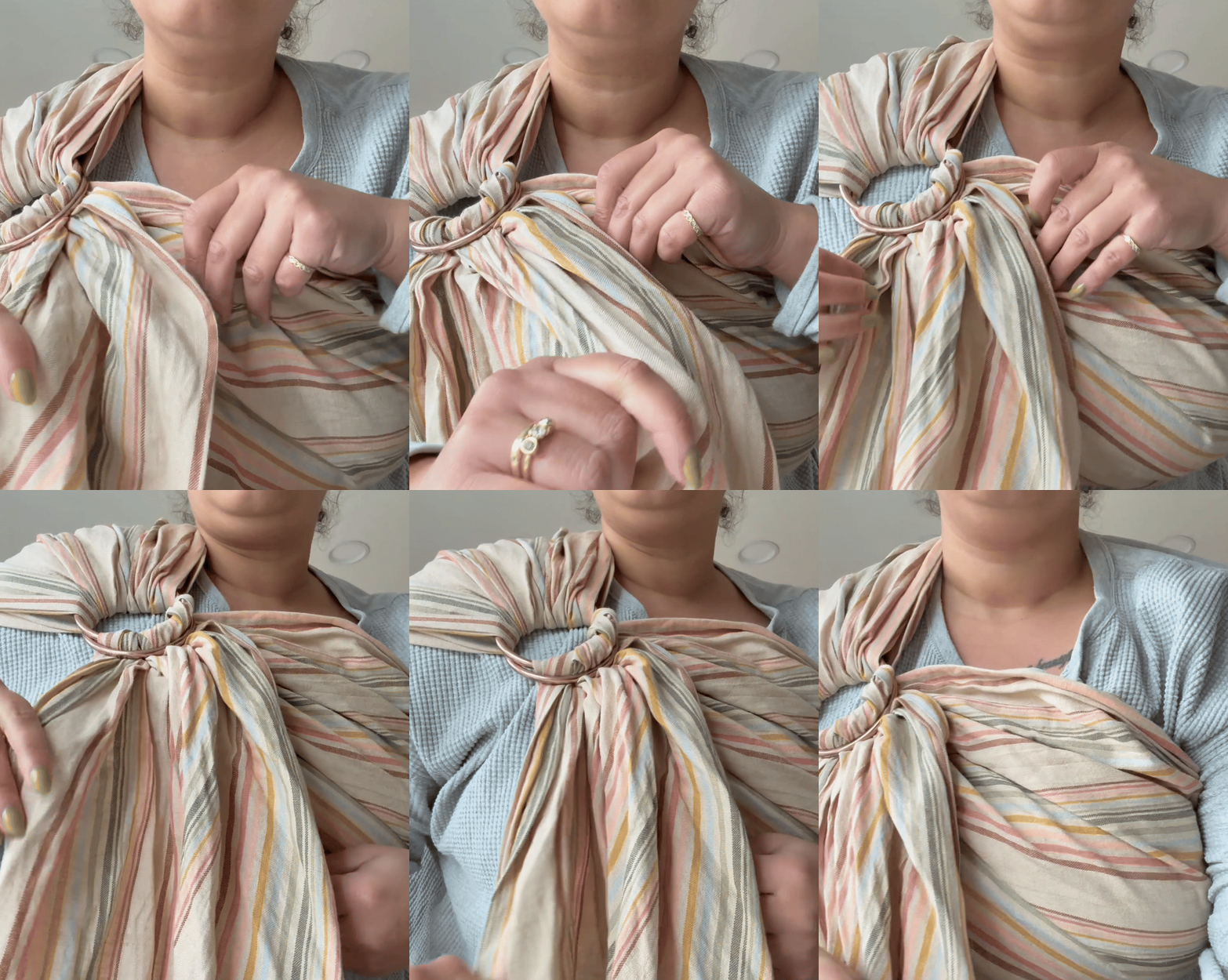
You can also try pre-tightening the sling before placing your baby in it. “Hold your baby in your arms and note where their bottom sits on your torso, as it's higher than you might expect,” notes Stare. “Then, put your sling on without your baby and tighten it to the height of where you'd naturally carry them, leaving just enough slack in the fabric to slide their body inside. This minimizes the need for adjustments afterward and helps keep the rings in a comfortable position near your collarbone.”
#4 Double Check the Fit
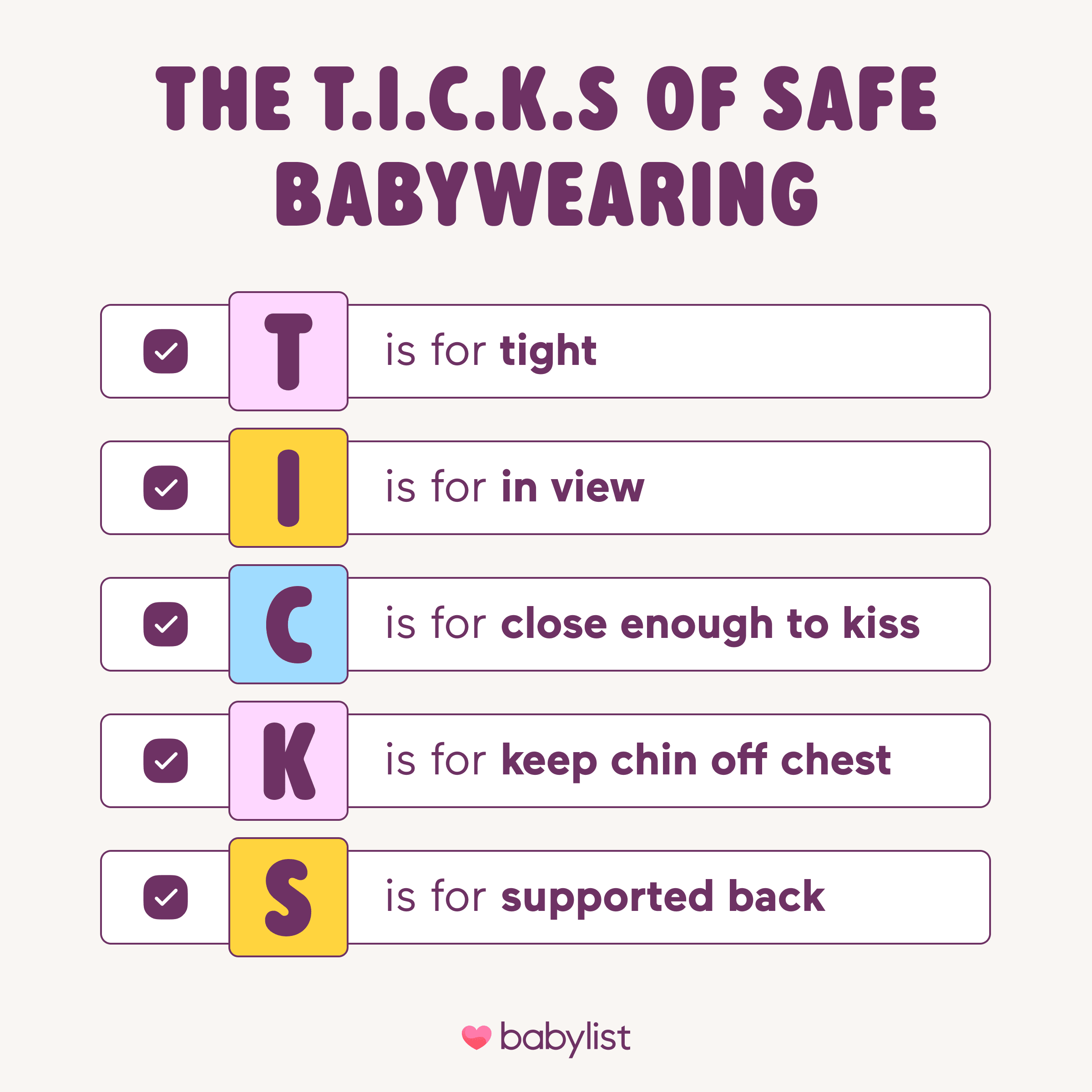
Once your baby is secured in the ring sling, use the T.I.C.K.S. acronym to check for a safe carry:
And remember, all babywearing can be frustrating at first, so wait until your baby is calm the first few times you try your ring sling, and practice, practice, practice.
What Is a Ring Sling?
A ring sling is a type of baby carrier made from one long piece of fabric and two rings sewn on the end. The cloth is worked through the rings to create a secure pouch for your child to sit in—no snaps, buckles or ties needed. “It is the easiest to wear with different positions, and it is the most sleek carrier I have used. I probably have about six different carriers and I will always resort to my ring sling,” one Babylist parent shared in our annual product survey. Another parent raved about how versatile and easy to pack for traveling they are.
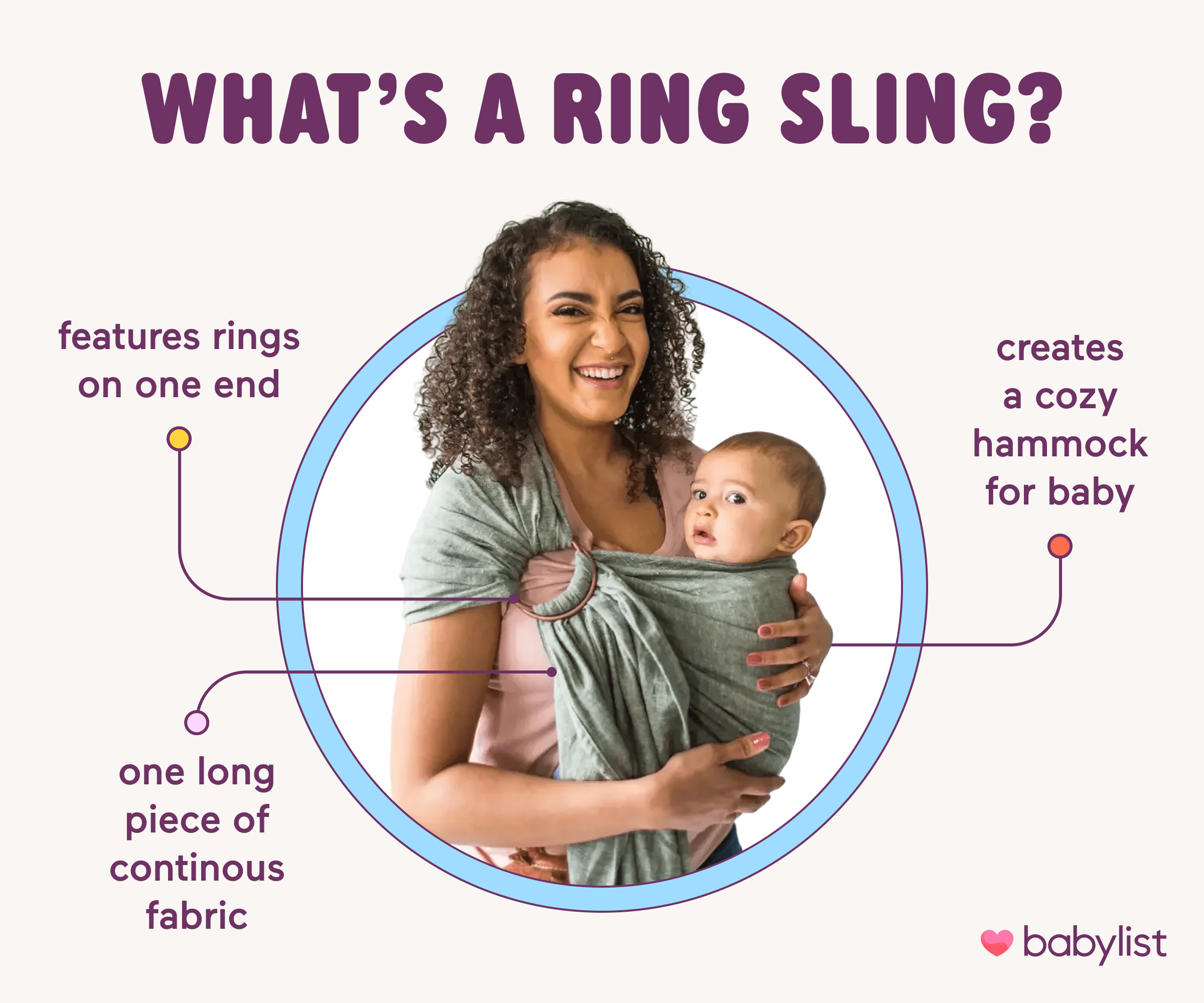
“The sling adjusts similar to a cross-body bag, with the fabric tightening through the rings to fit snugly around a baby or toddler,” explains Stare. “This design helps distribute a child's weight to a caregiver's back and torso, which are stronger than their arms and hips alone.”
Parents love ring slings for their simplicity and adjustability. They usually work best with babies, but can accommodate toddlers too. Generally, “wider, longer slings are ideal for taller or plus-size caregivers or for carrying toddlers, whereas shorter or narrower slings might be more comfortable for shorter and petite caregivers, or those with very young infants,” says Stare.
A ring sling is one of many carrier options, including baby wraps, babywearing shirts and soft structured carriers. If you’re looking for something that provides the closeness of a wrap without actually having to do all of the wrapping, a ring sling is a great choice.
The downside? They’re a bit labor-intensive to keep clean. Most slings require either hand washing or machine washing on a gentle cycle with cold water. Using the dryer is a big no-no for many brands; lots of ring slings must be air-dried so they don’t shrink. Some parents find they’re a bit uncomfortable for long-term babywearing, especially with heavier babies.
Ring Sling vs Wrap Carriers
Because they both use one huge swath of fabric, baby wraps and ring slings are similar, but there are a few key differences.
Baby wraps tend to be a bit more complex. They go over both shoulders and around your waist, distributing your little one’s weight more evenly across your body than a ring sling. While this is great for making longer periods of babywearing more comfortable, the origami-like configurations can make wraps a bit tougher to get on and off.
Ring slings are best suited for shorter stints of babywearing. They’re far easier to get on and off than a baby wrap, which can be a big plus for some parents who need to use the sling multiple times a day. Brown loves them for quick ups and downs and says they can “make babywearing while sitting much easier, which is why many use them around the house.”
She loves them for the support they offer a newborn, ease of adjustment for breastfeeding and their compactness. They also fit all body types and baby ages. However, because all the weight rests on one shoulder, they aren't as comfortable as baby wraps and aren't recommended for long-term wear.
How To Choose The Best Ring Sling For Your Baby And Body
Choosing a ring sling is pretty straightforward, but here are a few features you should consider:
Fabric: Ring slings come in a variety of materials, including cotton, linen and silk blends. All serve the same purpose by might feel different on the body, and some tend to be easier for new ring sling users to adjust. “Thinner slings can be cooler and easier to tighten, but may be less supportive,” says Brown, while, “Thicker slings can be tough for new users, but can offer some amazing support, particularly if you'd like to carry through toddlerhood or have heavier babies.”
Length: The standard ring sling length for most brands is around 72”, and some offer a longer length (close to 90”) for parents with larger frames. For example, Hope & Plum offers not two but three different lengths—74”,84”, 94”—allowing parents to find the perfect fit balance.
Weight limits: While most ring slings are suitable for babies 7-35 lbs, if you think you’ll still be using your ring sling into toddlerhood, consider one made of thicker fabric (like Sakura Bloom’s Maven or a linen option).
Frequently Asked Questions
Are ring slings safe for newborns?
Yes, ring slings are actually a great option for newborn babies. “If baby is under the minimum weight limit or has underlying health issues, please check in with your medical provider that babywearing is an option,” says Brown. And once you’ve done that, she says finding a local babywearing educator for some hands-on tutorials can be really helpful.
Do ring slings hurt your shoulder?
With a proper fit, a ring sling should not hurt your shoulder. If it’s digging in at your neck, you might need to make sure that the fabric is capped over your shoulder, which helps evenly distribute your baby’s weight and also prevents the fabric from riding up.
Can you breastfeed in a ring sling?
Ring slings are actually really great for nursing in. As with any baby carrier, you just need to make sure you get baby back in the proper position—specifically back at the right height—before you go on about your day.
How long can baby stay in a ring sling?
Like all carriers, there isn’t a hard and fast time limit for babywearing. The most important thing to consider is balancing baby’s time in the carrier with time on the floor to stretch out and explore what their body can do. Yay for getting things done around the house and carrier naps!
Are ring slings good for plus-size parents?
Most ring sling brands offer at least two different lengths, which makes them ideal for parents with a larger frame or breasts. And getting them on and comfortable might also look a little different—especially if you fall into the later camp. While you typically want your baby centered on your chest, Brown says it’s okay for them to be a little off to the side of one breast, “As long as baby is on your general front and is at the correct height or kissable height.”
Expert Sources
Babylist content uses high-quality subject matter experts to provide accurate and reliable information to our users. Sources for this story include:
Certified babywearing consultant Laura Brown of MamaBird Los Angeles
Veteran birthworker and babywearing educator Adriane Stare of MostPartum
