
Baby Fever: How to Take Your Baby’s Temperature
Everything you need to know about fever and babies.

By

No parent likes to see their little one dealing with a cold or a virus. And along with a stuffy nose, a cough or an extra dose of cranky, there’s unfortunately one other reality that often comes along with a sick baby: a fever.
Although they're not ideal, fevers are pretty common when it comes to all things baby + toddler, and there’s a good chance that as a new parent, you’ll be dealing with one eventually. Learning how to take your baby’s temperature safely and accurately, as well as what’s normal and when it may be time to call the doctor, can help you feel a little less panicked the next time the thermometer starts creeping up.
Why do babies get fevers?
Fevers are associated with lots of different illnesses, both common and more severe, from colds and croup to pneumonia and ear infections. A fever itself isn’t an illness—it’s actually a symptom of one. It’s the body’s way of fighting off infection, kicking off things like the production of more white blood cells to increase the body’s bacteria-fighting powers.
What is a normal baby temperature?
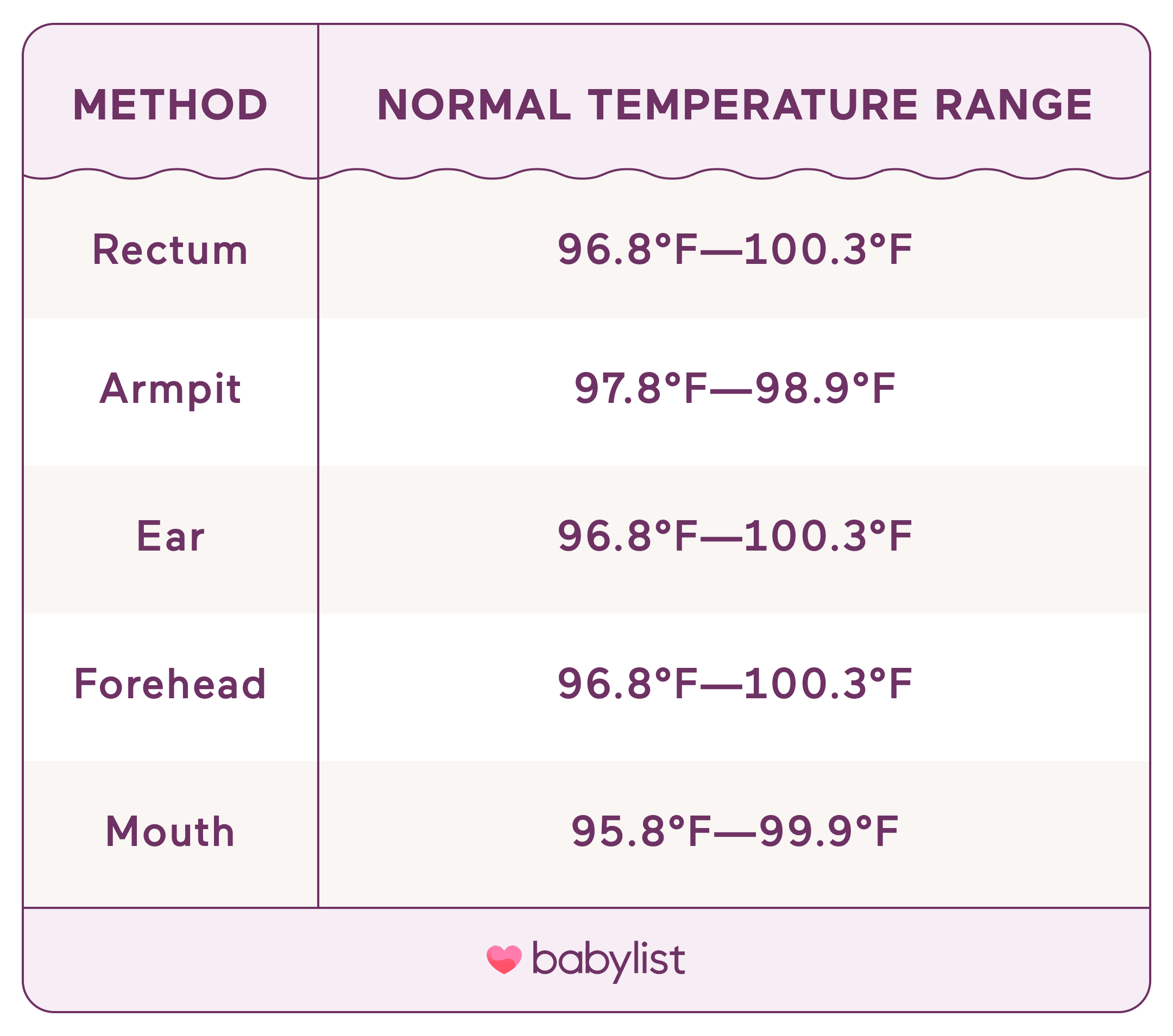
Just like your body, your baby’s body temperature will fluctuate depending on activity or time of day. Additionally, different temperature-taking methods have different ranges for what's considered normal—rectal temperatures are the most accurate method for babies under two years old. According to the American Academy of Pediatrics, a normal rectal temperature for a baby ranges from 96.8 degrees Fahrenheit to 100.3 degrees.
Baby Thermometers 101
If your baby feels warmer than usual or isn’t acting like their usual self, it’s probably time to break out the thermometer.
What types of baby thermometers are there?
There are three basic types of thermometers available:
Oral/armpit/rectal thermometers. These multi-use thermometers can be used under the tongue, under the armpit or in the rectum—just be sure to give it a thorough cleaning after every use.
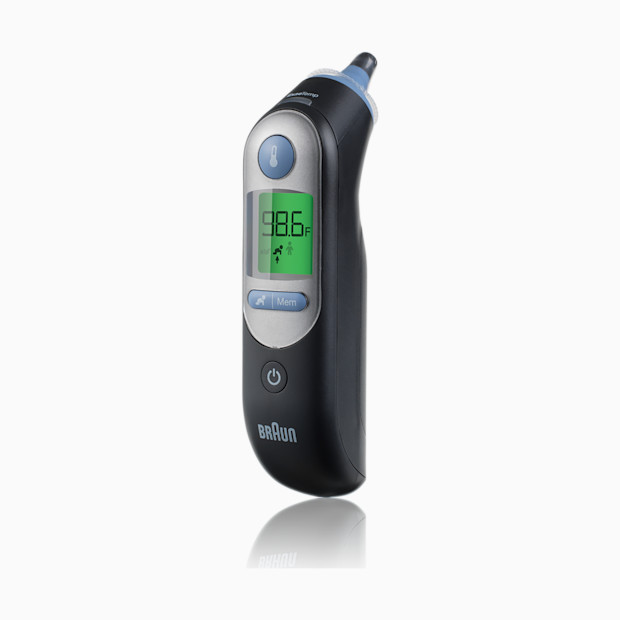
Ear thermometers. Also called tympanic thermometers, these measure temperature inside the ear.
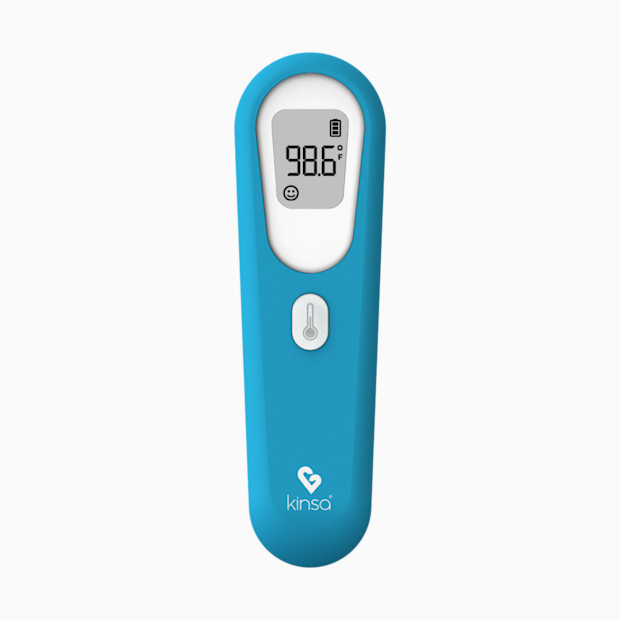
Forehead thermometers. These types of thermometers, officially called temporal artery thermometers, are swiped across the forehead to read the temperature of a major vein that’s located there. Some forehead thermometers are capable of no-contact readings to help limit the spread of germs.
What type of baby thermometer is best?
Your little one’s age determines which type of thermometer you should use.
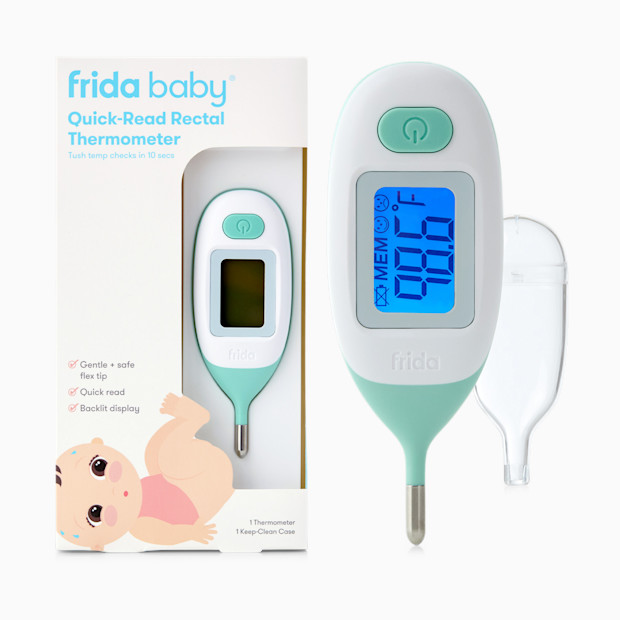
For babies under one year old, rectal thermometers are the gold standard. "It's really best and most accurate to perform a rectal temperature on infants 0-12 months,” says Dr. Christina Johns, pediatric emergency physician and Senior Medical Advisor at PM Pediatric Care.
Once your little one gets a little older, Dr. Johns says that "after one year it’s not unreasonable to switch to an ear or temporal thermometer." And it's best to save oral temperature reading for when your kiddo reaches the preschool years, since babies and toddlers are usually too wiggly for that method.
How to Take Baby’s Temperature
You’ll need to follow a different set of instructions depending on how you’re taking your little one’s temperature. Be sure to read the directions that come with whatever thermometer you’re using to ensure you’re operating it correctly.
And with every thermometer type, before each use, be sure to clean the end of the thermometer with soap and lukewarm water or alcohol, then rinse it with cool water and dry.
Rectal Temperature
Dab a tiny bit of lubricant, like petroleum jelly, on the tip.
There are two ways you can lay your baby to make the insertion more comfortable. “I suggest performing the rectal temperature while an infant is lying on their back, and then flexing the knees and hips while holding the legs together so that you can help your child hold still while the thermometer is calibrating,” Dr. Johns says. Alternatively, you can place your little one on their belly and hold them down lightly but firmly by putting your palm lightly against their lower back.
Use your free hand to turn the thermometer on and insert it into the anus—no more than about 1 inch. Many rectal thermometers have a short tip and a flared base to prevent you from inserting it too far.
Listen for the beep, then remove.
Always be sure to clean the thermometer again after each use.
Underarm Temperature
Turn on the thermometer and place it under your child’s bare armpit. Always make sure it’s touching skin, not clothing.
Gently hold your child’s arm in place until you hear a beep.
Ear Temperature
Place a clean cover over the end of the thermometer.
Pull your baby’s ear back slightly and gently place the thermometer in the ear canal. Aim the probe slightly forward to match the angle of the ear canal. Keep in mind that getting the angle right here for an accurate reading can be tough—that’s why using an ear thermometer isn’t recommended for younger babies.
Turn on the thermometer and wait for the beep, then remove.
Oral Temperature
Always wait 15 minutes after your little one has been eating or drinking before taking their temperature orally.
Turn on the thermometer and place the tip under your child's tongue toward the back of their mouth. Hold it in place until you hear a beep.
Forehead Temperature
If using a regular forehead thermometer: Place the sensor gently but firmly on the center of your child's forehead, press the button to turn it on, then wait for the beep. Some forehead thermometers require you to slowly sweep the thermometer across your child's forehead. Make sure your child stays still the entire time (luckily the readings only take a few seconds).
If using a no-contact thermometer: Point the sensor toward the center of your child's forehead, about one to two inches away (the exact distance depends on your thermometers instructions). Press the button and hold the thermometer in place—making sure your child doesn't move, either—until the reading registers.
When To Call the Doctor
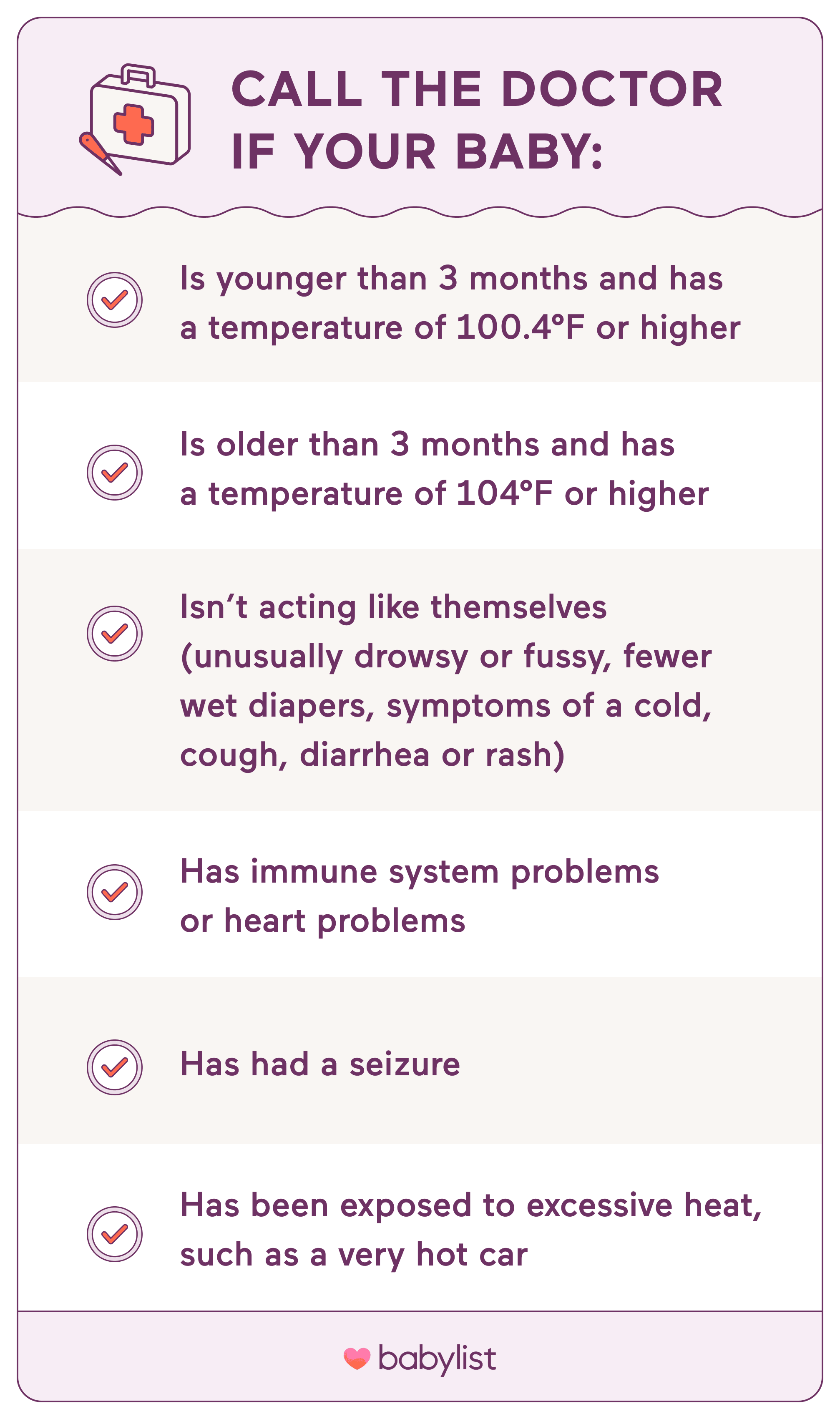
A fever is often a good sign that your little one’s body is fighting their infection, but there are a few things to look for if you’re trying to assess whether or not to call the doctor.
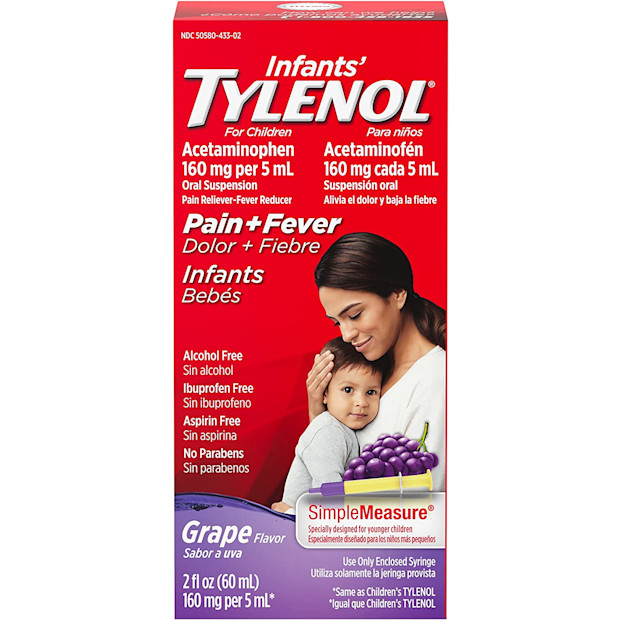
If you decide to give your little one some fever medicine, keep in mind that you won't see a dramatic improvement in their temperature. "When we talk about a fever 'coming down' with Tylenol or Motrin, we only expect to see the temperature go down by about a degree," says Dr. Lisa Di Enno, Board-Certified General Pediatrician and Chief Medical Officer of XpertCare. "Parents often think the temp should go back to 98.6F, resulting in lots of worried visits to the ER in the middle of the night."
Infant Fever Relief Products


;)
;)
;)
;)
;)