
Understanding Baby Cues: What to Look For and How to Respond
Babies can’t talk yet—but they are telling you something. Here's how to listen, watch and support.
By

Babies might not speak our language (yet), but they’re incredible communicators. From the moment they’re born, infants rely entirely on their bodies to express what they need using subtle movements, facial expressions, cries and cues that pediatricians often refer to as a baby’s early communication system. The challenge? For new parents, learning that system can feel like trying to solve a puzzle without the picture on the box.
Hunger, gas, overtiredness, discomfort—many of these needs can look and sound surprisingly similar in the early weeks. It’s completely normal to feel frustrated or unsure when your baby is fussy and you’re not certain why, especially when they can’t yet tell you what’s wrong. Pediatric experts reassure parents that this learning curve is expected: understanding your baby’s nonverbal cues takes time, practice and a little patience (with them and yourself).
The good news is that babies tend to repeat the same signals again and again. Once you start recognizing those patterns, responding becomes easier and more intuitive. Whether it’s noticing the early signs of hunger, understanding when tummy troubles might be at play or supporting overall comfort and development.
Here’s how to read some of your baby’s most common signals and where simple tools, like Ddrops, may fit naturally into your day-to-day care routine as you support your baby’s growth and well-being.
Hunger Cues: What to Look For
When we’re hungry, we raid the fridge. Babies, on the other hand, rely on subtle cues to let us know they’re ready to eat, often before they start crying. Look for:
Smacking or licking lips
Opening and closing their mouth
Rooting (turning their head side to side)
Sucking on hands, fingers or clothes
If you notice these signs, it may be feeding time.
While breast milk or formula provides most of your baby’s nutrition, it typically doesn’t have enough Vitamin D. That’s why the American Academy of Pediatrics recommends a daily 400 IU supplement for breastfed and combo fed babies to help support healthy bones, muscles and immune functions. Baby Ddrops helps make this part easy: one drop of Vitamin D3 on your nipple while breastfeeding, or on a freshly washed finger for baby to suck. It’s a tiny step that can make a big impact.

Gassy Baby: Here’s What They Might Be Telling You
Gas is common in newborns, and some babies are more sensitive than others. The cues for a gassy baby might look like:
Pulling knees up to chest
Arching their back
Squirming or clenching fists
Grunting sounds
A solid burp after feeding can often provide quick newborn gas relief, but if your baby still seems uncomfortable, try:
Bicycle legs: Gently pedal their legs toward the tummy to move gas along.
Tummy massage: Lightly rub their belly in a clockwise motion.
Beyond burping and gentle movement, some parents speak with their pediatrician about clinically studied probiotics to help support baby digestion. Baby Ddrops Probiotic + Vitamin D includes both probiotic strains and the daily recommended Vitamin D in one drop, making it easier to cover multiple needs without adding extra steps to your routine.

Teething Troubles: What to Watch For
Just when you’re getting the hang of hunger and gas cues, teething may make an appearance. While every baby is different, teething symptoms often begin between 3–6 months.
The tricky part? Teething cues can look a lot like other needs, especially hunger.
If you have a teething baby, you might notice:
Excessive drooling
Chewing on hands, toys or whatever’s in reach
Irritability or extra fussiness
Swollen or tender gums
Changes in feeding or sleep patterns
If you’re not sure, try checking their gums. Swelling, redness or sensitivity can be signs that a tiny tooth is getting ready to pop through.
For teething relief for babies, many parents use techniques like:
Chilled (not frozen) teethers to help calm inflamed gums
A clean, damp washcloth: light pressure combined with a cool temperature can be especially comforting
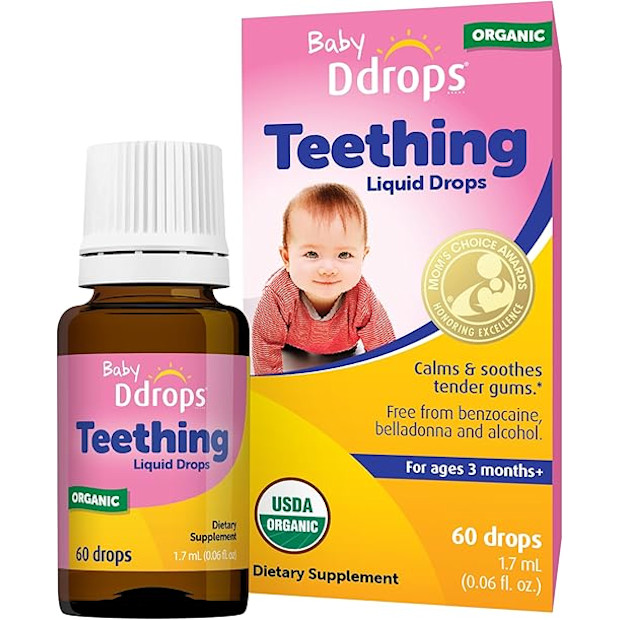
For added relief, Baby Ddrops Teething drops is a gentle, organic formula that can be massaged directly onto the gums or applied to the tip of a teether. It’s one more tool to help make this stage a little easier.
Sleepy Signals: When It’s Time to Wind Down
After a day full of eating and growing, your baby will eventually hit a wall. Sleepy cues include:
Staring off or zoning out
Eyelid rubbing or fluttering
Yawning or ear pulling
Some parents find that adding a consistent calming routine, like a warm bath before bed, can help signal sleep time. If you need additional support, there are bedtime-specific Ddrops designed to promote a sense of calm—without melatonin or added sugars. Just a drop on a clean finger or pacifier before bed can become a quiet part of your wind-down ritual.

Learning your baby’s cues is a journey, not something you’re expected to be an expert at overnight. Every baby is different, and what matters most is showing up, paying attention and responding with care, even when you’re not always sure you’re getting it “right.” Over time, those small moments of observation add up to confidence.
Also: If you ever have questions about your baby’s comfort, feeding or overall development, your pediatrician is your best resource. They can help you understand what’s normal, address concerns and offer guidance on supplements like Vitamin D. And with the right support (and a few simple tools), you can feel more confident meeting your baby’s needs, one cue at a time.
This article is sponsored by Ddrops. These statements have not been evaluated by the FDA. This product is not intended to diagnose, treat, cure or prevent any disease. US Patent 9066958. Babylist’s free site, apps and emails are made possible by our sponsors. We limit our sponsored content to relevant partners that offer products and services we believe in and use ourselves.

;)
;)
;)
;)