
Baby Refusing the Bottle? Here Are 6 Things to Try
From timing to nipple feel, a few small changes may help your baby get more comfortable with bottle feeding.

By
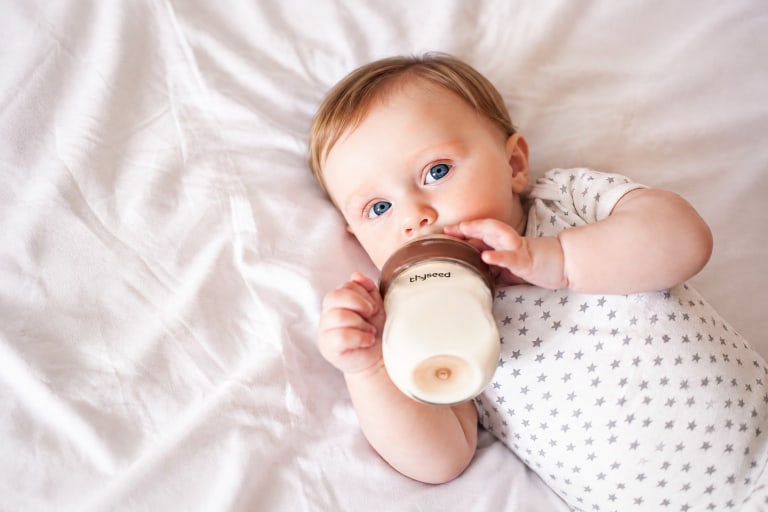
There are plenty of reasons to introduce bottles into your baby’s routine. Maybe you’re heading back to work, want to share feeding duties with your partner or would just like to leave the house without planning everything around the next feed. Whatever the reason, having another way to feed your baby can give you a little breathing room.
This transition can be pretty effortless for some babies. Others may need more time (after all, drinking from a bottle is a new skill for a tiny person who just got here). And if that’s your baby, it doesn’t mean you’re doing anything wrong. A few adjustments to when you offer it, how you feed or which bottle you use may help.
We’ve partnered with Thyseed to share six things to try if your baby isn’t taking a bottle. You don’t need to try them all at once. Sometimes, one small adjustment is a good place to start.
1. Rethink the timing
Think about what it’s like to be really hungry. Learning something new probably isn’t high on your to-do list when you’re starving, right? The same goes for your baby.
Introducing a bottle at peak hunger might be more frustrating, so try offering it when they’re calm and showing early signs of hunger, before they’re crying with hunger. Start with a small amount of milk, then offer more if they want it. The goal is to give them a chance to explore something unfamiliar without the pressure of a full feeding.
2. Take a closer look at the nipple
If your baby is used to breastfeeding, a bottle nipple is going to feel different. And while “breast-like” often describes a nipple’s shape, it’s worth looking at how soft and flexible it is, too. Think about the breast itself: Baby’s mouth rests against a soft surface, not just the tip of a nipple.
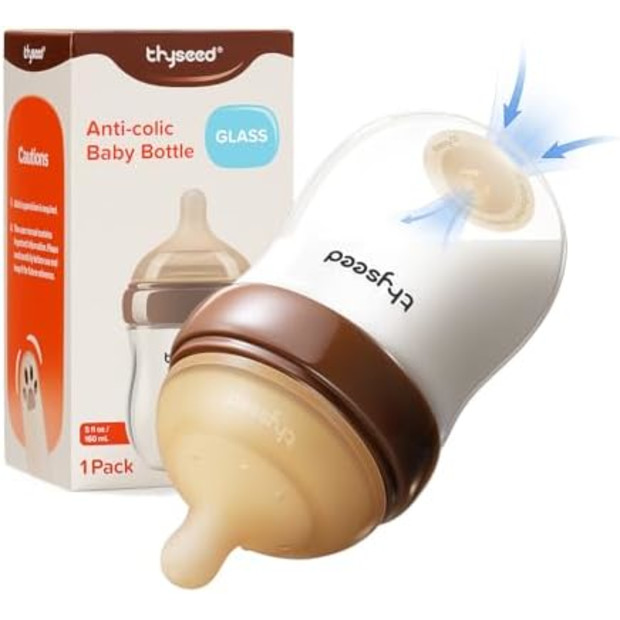
The Thyseed Glass Natural Feeding Anti-Colic Baby Bottle takes both shape and feel into account, with a soft, flexible silicone nipple and a wide, breast-shaped base. That softness extends across the base, giving baby a cushioned surface to settle against while feeding. Here’s what parents who’ve switched to Thyseed are saying about it:
3. Find their flow
Getting comfortable with a bottle isn’t just about how the nipple feels—it’s also about how the milk comes out. When your baby breastfeeds, the flow varies throughout the feeding. With a bottle, the nipple’s design helps determine the pace, and a flow that’s too fast or too slow can make feeding harder.
Thyseed’s nipple uses multiple small openings to deliver a steady flow, with six flow options to help you find a pace that suits your baby. Watch how they feed: Gulping, coughing or milk spilling from their mouth may mean the flow is too fast, while lots of sucking with few swallows or unusually long feeds may suggest it’s too slow.
4. Give another caregiver a turn
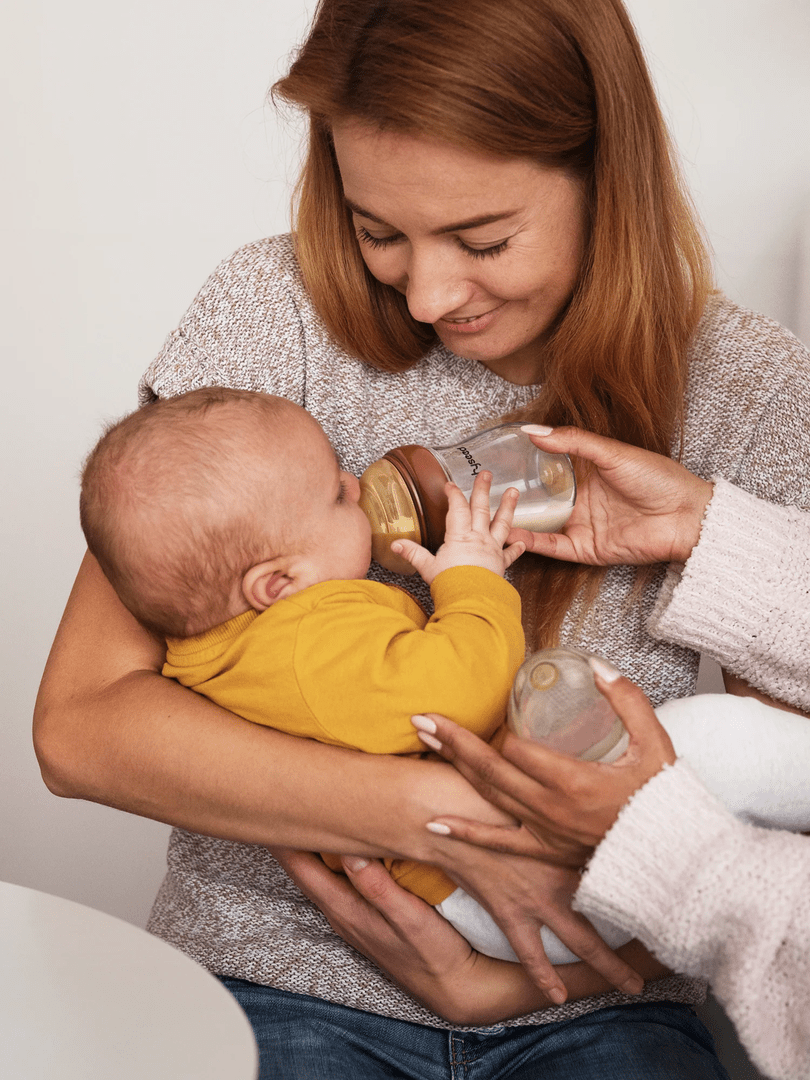
If you’re usually the one breastfeeding, being held by you can be baby’s cue that it’s time to nurse. So when you offer a bottle instead, they may be confused. Next time, have your partner, a grandparent or another familiar caregiver offer the bottle while you step into another room.
Some babies are more willing to try a different way of feeding with someone they don’t associate with nursing. It may take a few tries, so give them time to find their own rhythm together.
5. Make comfort part of the equation
When your baby seems uncomfortable during a feed, it’s hard to focus on anything else. For general comfort, hold them close in a semi-upright position with their head supported, and keep the bottle tilted horizontally, angled up just enough to keep milk in the nipple.
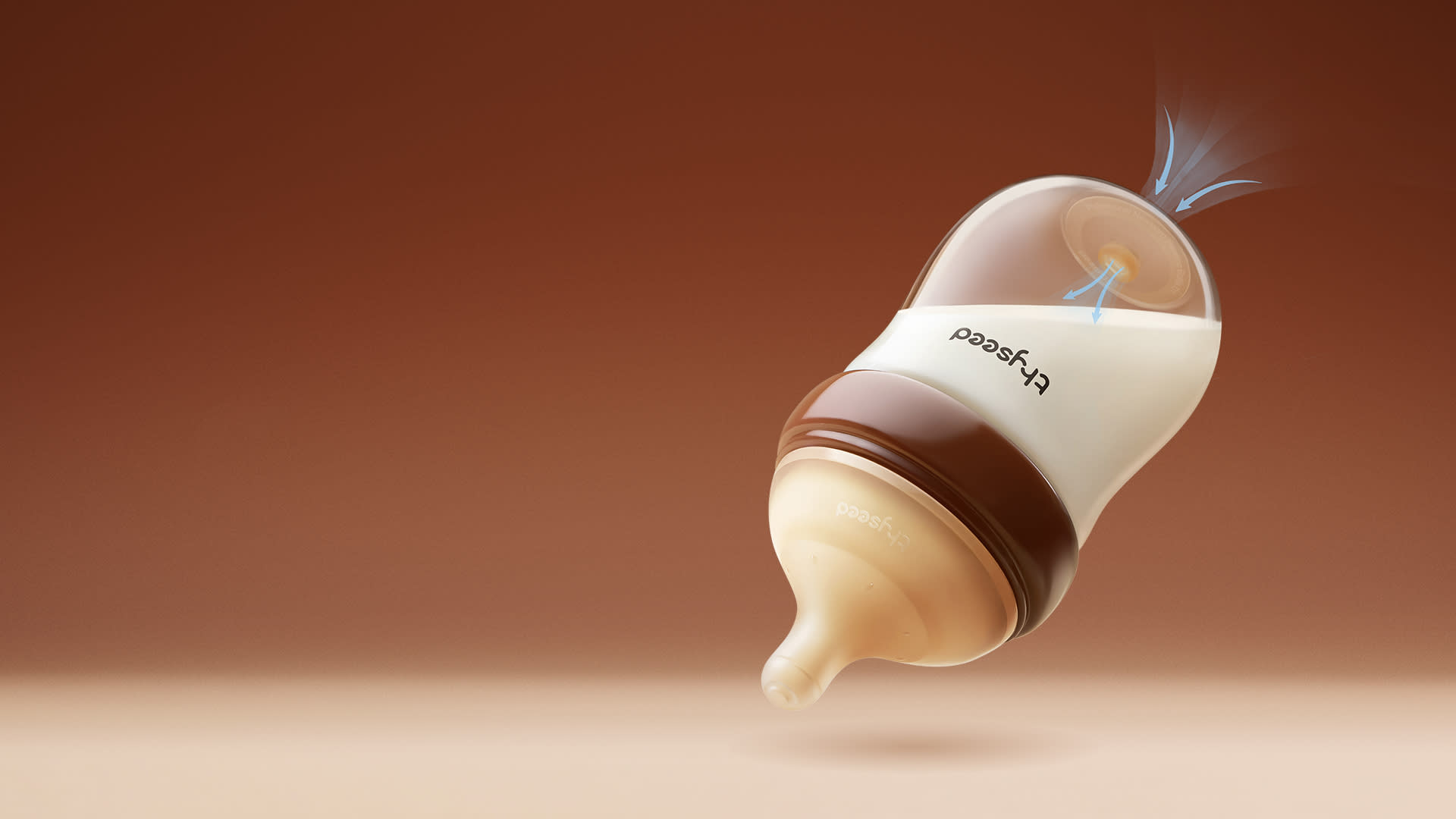
If you’re also navigating colic, looking at how a bottle manages air is one feeding adjustment worth considering for baby’s comfort. Thyseed’s anti-colic vent sits at the bottom of the bottle and is designed to separate air from milk, reducing the bubbles during feeding that can lead to a gassy, fussy baby.
6. Take the pressure off
When you’re hoping your baby will take a bottle, it’s easy to find yourself trying for just one more sip. But if baby turns away, pushes the nipple out or gets upset, it’s okay to pause.
Offer the nipple gently and let them draw it into their mouth rather than pushing it in. If they’re not interested, take a break, offer comfort and try again another time. Getting familiar with a bottle can happen gradually; every attempt doesn’t need to become a full feeding.
If refusal continues, feeding seems uncomfortable or you’re worried about how much milk baby is getting, check in with your pediatrician. You don’t have to figure it all out on your own.
This article is sponsored by Thyseed. Babylist’s free site, apps and emails are made possible by our sponsors. We limit our sponsored content to relevant partners that offer products and services we believe in and use ourselves.

, 5 oz, 1 Pack","url":"https://www.amazon.com/dp/B0F5B9CVVQ?lv=shuf\u0026channelId=500\u0026plpRedirect=mhFallback\u0026th=1","source":"hello_baby"});)