
The Best Car Seats for Small Cars
Short on space? These seats are compact front-to-back + built to fit tight spots without compromising safety or comfort.

By
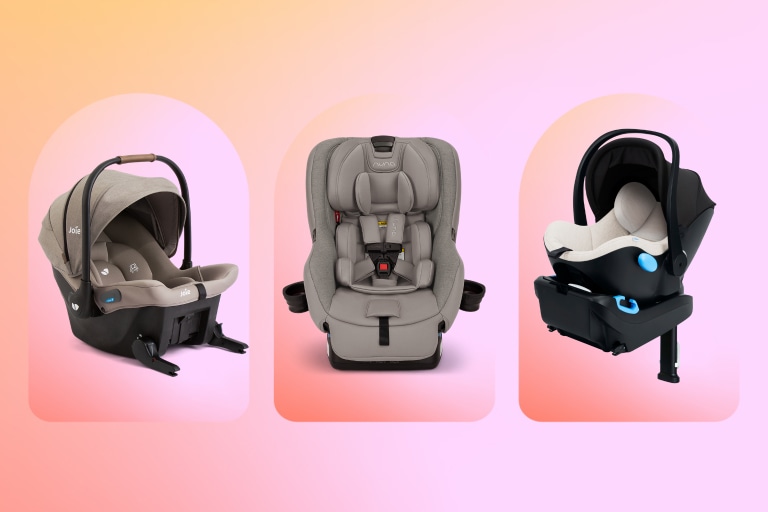
As a Child Passenger Safety Technician (CPST), I’m specially trained in car seat education and usage. One of the most common questions I field from both expecting and seasoned parents is, “Will this car seat fit in my car?”
The frustrating truth is that not every car seat fits in every vehicle. And if you drive a car with a compact back seat—a back seat that’s short on space front-to-back—that’s something you’ll want to think about before you buy.
A compact car seat takes up less room front-to-back when installed, making it a better fit in vehicles where space between the front and back seat is limited. Smaller cars often have tighter back seats, but bigger vehicles aren’t exempt from this issue, either—some large cars actually have surprisingly cramped back seats. Finding a compact car seat is important for families with taller drivers and front seat passengers, too.
I leaned on my own experience as a CPST and consulted with Lani Harrison, a fellow CPST with over a decade of hands-on experience helping families find the right car seat for their needs, to vet this list. We chose a selection of both infant car seats and convertibles across three price tiers: affordable, mid-range and premium.
Save yourself the stress of a seat that won’t fit—these compact car seats are made for tight spaces.
Why Trust Babylist?
Babylist is the expert in baby; we know baby gear inside and out. We talk with parents face-to-face in our showroom and on our user panels and hear from thousands annually via our Best Baby Products online survey. We know what items millions of expecting parents are adding to their baby registries.
Firsthand and professional experience. As a Child Passenger Safety Technician, I’m trained in car seat installation, usage and education. I stay up-to-date on car seat education through continuing education classes, seminars and CPST education groups. I’m also Babylist’s gear editor; I’ve been writing about baby gear since 2019 and have been the gear editor since 2021. I’ve personally reviewed and tested dozens of car seats during this time, including many compact seats. I’m also the mom of two boys (and the owner of one vehicle with a compact back seat and non-removable, protruding headrests!), so I have a decade of hands-on car seat experience, too.
Expert POV. In addition to my own knowledge and experience as a CPST, I spoke extensively with fellow CPST Lani Harrison for this guide. Harrison has been working closely with families for over a decade, helping them select the best car seat for their needs and teaching them proper installation and usage. During this time, she’s worked with hundreds of compact cars and compact car seats.
Car seat data. I regularly analyze which baby products our users are adding to their baby registries the most (and which ones they aren’t) and what our team of merchandising experts—our buyers who are responsible for ensuring the Babylist Shop is stocked with the best and newest gear—is excited about. Studying this kind of data helped us choose which car seats to narrow in on and which ones to recommend to new and expecting parents.
Feedback and reviews. I reviewed comments and feedback from Babylist’s annual product survey of thousands of parents, read customer reviews from hundreds of Babylist users and spoke to parents on our staff about their real-life product experiences.
The Best Infant Car Seats for Small Cars
Affordable
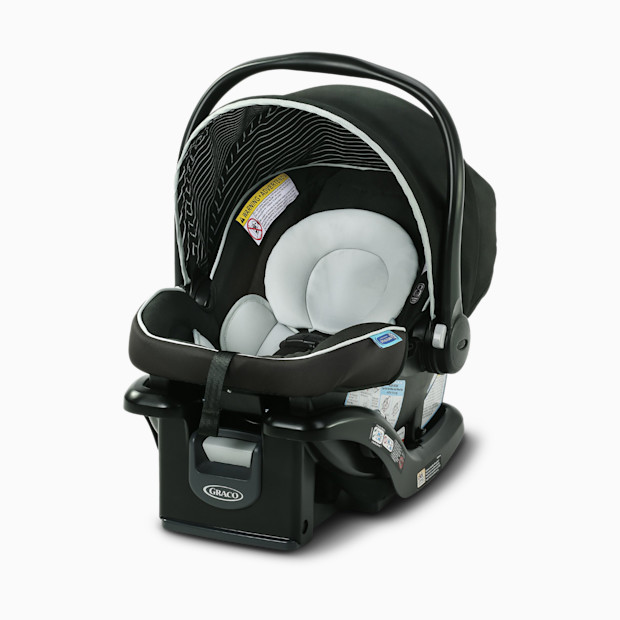
Graco SnugRide Lite LX Infant Car Seat - Studio
From $139.97Pros
- Compact front-to-back and narrow side-to-side
- Affordable
- Lightweight
Cons
- Harness straps need manual rerouting as baby grows
- May not fit smaller newborns well
- Some parents note the canopy is loud
You don’t have to spend hundreds of dollars on a compact car seat; the SnugRide Lite LX is a good value that works well in smaller cars. It has a slim front-to-back profile and a narrow width, so it also works well three-across. And it’s incredibly lightweight (especially considering the price), weighing in at just over seven pounds.
The base features four recline positions to ensure a good fit in most cars, but the seat does lack higher-end features like plush padding and a no-rethread harness. Parents also note that the canopy is noisy when adjusted.
Additional Specs
Car Seat Dimensions: 26.5”D x 15.5”W x 27.4”H
Car Seat Weight: 7.2 lbs
Child Weight and Height Guidelines: 4-32 lbs, up to 32”
Mid-Range
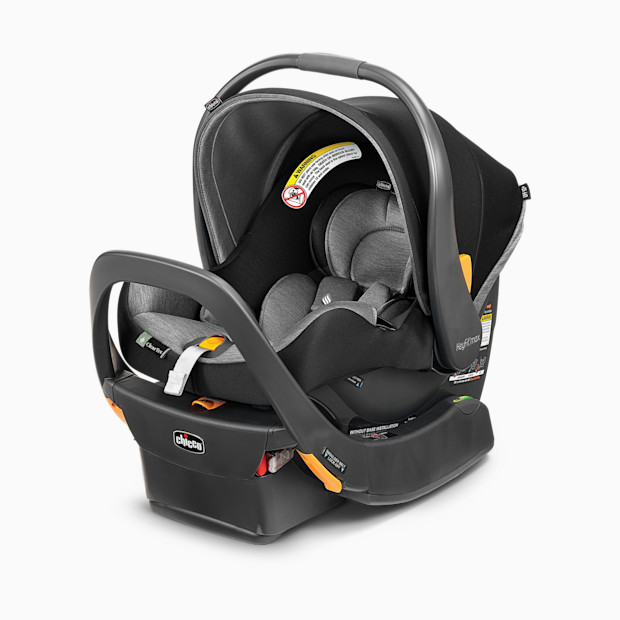
Chicco KeyFit Max ClearTex Infant Car Seat - Legend
From $199.99Pros
- Compact front-to-back and narrow side-to-side
- Parent and CPST favorite
- Excellent newborn fit, even for smaller babies
Cons
- Heavier than some infant seats
Our top choice for the best infant car seat and a consistent parent favorite, the KeyFit Max is also an excellent choice if you need a small-space-friendly seat. It’s not only compact front-to-back—a must for a good fit in a smaller back seat—but it’s also narrow, so it will work well if you’re trying to go three-across in most vehicles.
Other features to love include exceptional support and positioning for babies of all sizes (it fits even the tiniest newborns really well), a quick, easy installation and both GREENGUARD Gold Certified and flame retardant-free fabrics. The anti-rebound bar adds a layer of safety by absorbing energy in the event of a collision.
Just note the seat’s weight; at just about 10 pounds, it’s a few pounds heavier than some similar infant seats.
Additional Specs
Car Seat Dimensions: 28”L x 16.5”W x 23.5”H
Car Seat Weight: 10 lbs
Child Weight and Height Guidelines: 4-30 lbs, up to 32”
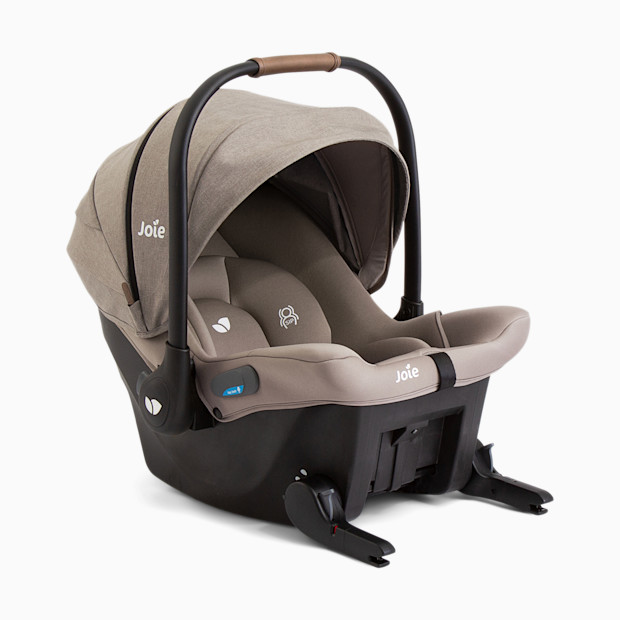
Joie Mint Latch Baseless Infant Car Seat - Mocha
From $299.99Pros
- Baseless = super compact
- Installs quickly and easily
- Good choice for ride shares and travel
Cons
- Harness straps need manual rerouting as baby grows
- Only compatible with Joie strollers
All infant car seats can be installed without a base using your car’s seat belt, but baseless seats up the convenience factor by skipping the base altogether—and saving serious space in smaller back seats.
The Mint Latch has lower anchor attachments built right into the back of the seat that click directly into your car’s LATCH system. This makes installation more convenient and reduces the size and bulk of the car seat, so it’s ideal for smaller vehicles where space is at a premium. It also frees up space in your car when baby isn’t riding in it.
“I drive a Beetle, which is very compact,” one parent told us in our favorite products survey. “This car seat is small enough and easy to move in and out of the car without the bulky base attachment.”
The Mint Latch is only compatible with Joie strollers, which is a downside. You’ll also need to manually reroute the harness straps as baby grows.
Additional Specs
Car Seat Dimensions: 23.25”H x 17.75”W x 27.75”D
Car Seat Weight: 9.2 lbs
Child Weight and Height Guidelines: 4-30 lbs, up to 30”
Premium
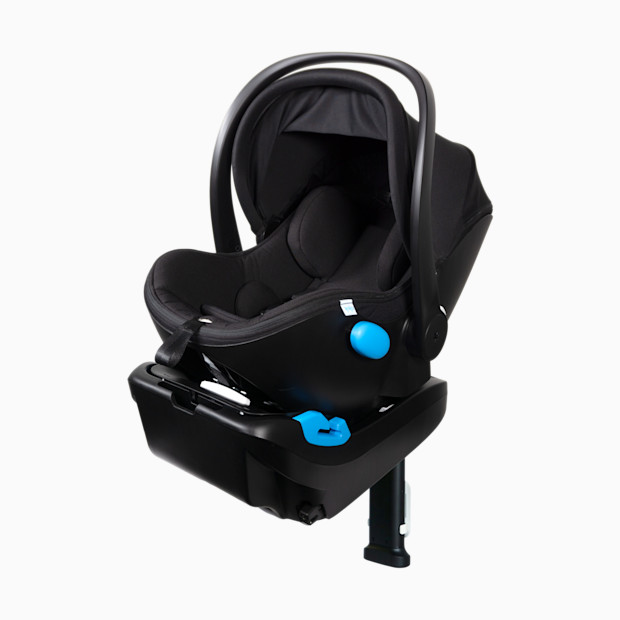
Clek Liing Infant Car Seat - Railroad Ziip (Flame Retardant Free)
From $499.07Pros
- Compact front-to-back and narrow side-to-side
- Good newborn fit
- Extra safety features
Cons
- Expensive
- Harness straps need manual rerouting as baby grows
For an upgrade pick, Clek’s Liing infant car seat is the go-to for smaller back seats. The compact front-to-back profile allows for a good fit in most cars with limited back seat space. It’s also one of the narrowest infant car seat options and works very well three-across.
The Liing has a few notable safety extras, including rigid LATCH and a load leg. Seven recline positions help you achieve the best positioning despite the angle of your vehicle’s seat, and, unlike many infant seats, you can adjust the recline after you install it. It is pricey, though, and doesn’t feature a no-rethread harness.
Additional Specs
Car Seat Dimensions: 26.8”H x 27.7”D x 16.9”W
Car Seat Weight: 9 lbs
Child Weight and Height Guidelines: 4-30 lbs, up to 32”
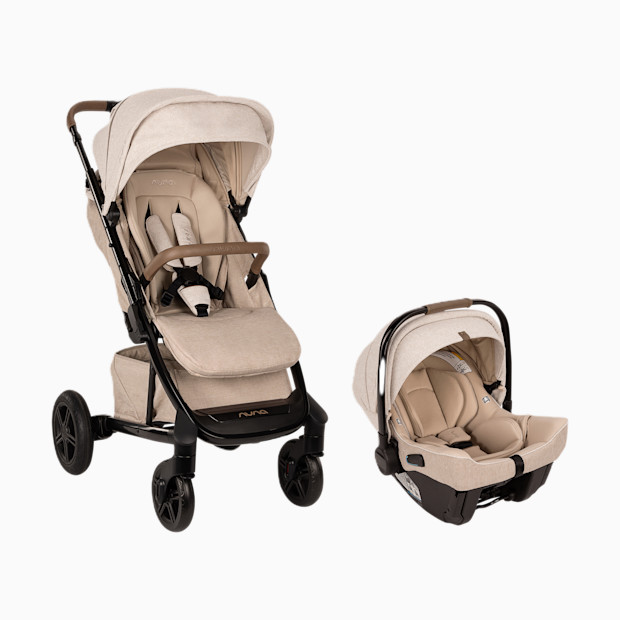
Nuna PIPA urbn & Nuna x Babylist TAVO next Travel System - Macaron
From $900.00Pros
- Travel system (car seat + stroller combo)
- Baseless car seat = super compact
- Installs quickly and easily
- Stroller is packed with premium features
Cons
- Must purchase as a travel system; urbn infant seat not sold on its own
- Expensive
- Infant seat has low weight limit (22 lbs)
Although it’s only available as part of a travel system (a car seat and a stroller that attach), the Nuna Pipa urbn deserves a spot on this list. It’s an ultra-compact baseless car seat that installs in seconds with rigid LATCH that’s built right into the seat. It’s narrow, compact front-to-back and weighs just seven pounds—an excellent option for any type of vehicle that’s short on space in the back.
The Tavo Next is just as impressive. Built with front and rear suspension, a compact fold-away axle and luxe extras like a leatherette pushbar and one-handed recline, it’s smooth, sleek and surprisingly compact for a full-size stroller. It also reclines flat and includes an infant insert, so it’s newborn-friendly right out of the box, even without the car seat.
Like many premium travel systems, this one is pricey. And the weight limit on the urbn is 22 pounds, a lot lower than many other infant seats.
Additional Specs
Car Seat Dimensions: 22”H x 25”L x 17.5”W
Car Seat Weight: 7 lbs
Child Weight and Height Guidelines: 4-22 lbs, up to 29”
Stroller Weight: 23.2 lbs
Stroller Dimensions: 28.35”L x 22.44”W x 43.7”H (unfolded)
The Best Convertible Car Seats for Small Cars
Affordable
Pros
- Ultra lightweight
- Budget-friendly
Cons
- Thin cushioning may not be comfy for longer rides
- Wide
- Takes practice to install correctly
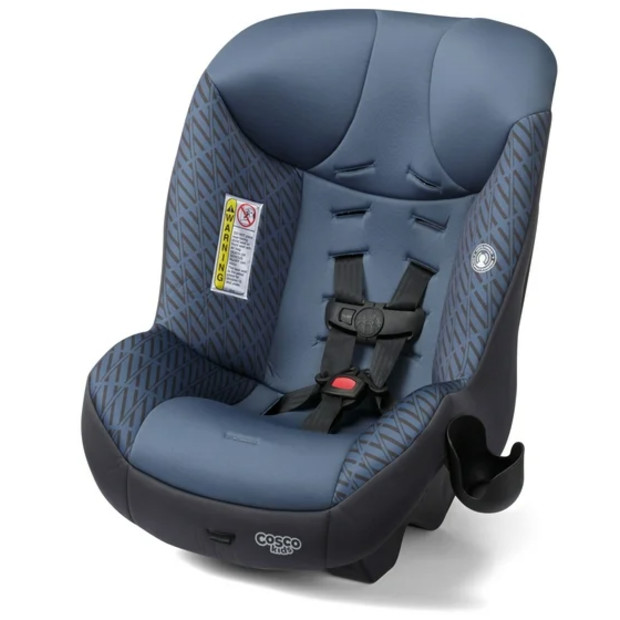
At under nine pounds, the Scenera is a popular car seat for travel—but it’s also fairly compact front-to-back. While it’s a no-frills seat, it’s a good pick for a small back seat. It’s also extremely affordable, another big plus.
The Scenera has a low top harness height, so many kids outgrow it quickly forward-facing. (My very tall toddler outgrew it by the time he was two and a half.) Installation can take some practice, but gets easier after a few tries.
Additional Specs
Car Seat Dimensions: 25.63”H x 18.88”W x 20.13”D
Child Weight and Height Guidelines: Rear-facing: 5-40 lbs, 19-40”; forward-facing: 30-50 lbs, 34.4-43” and at least 1 yr old
Mid-Range
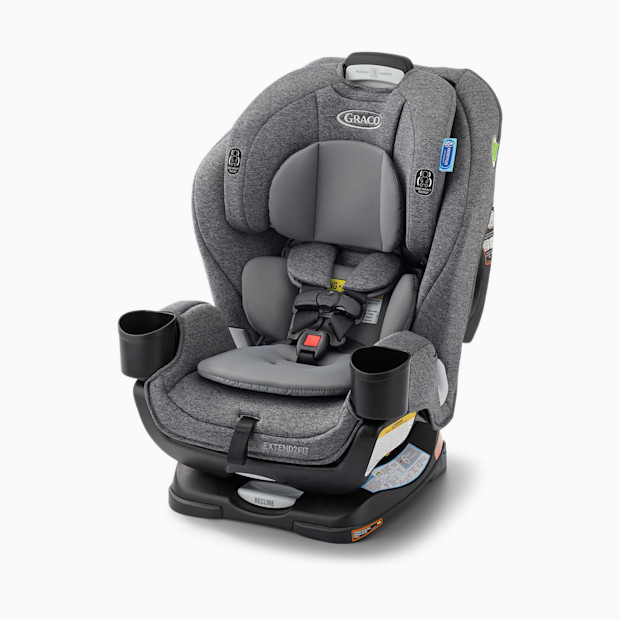
Graco Extend2Fit 3-in-1 Car Seat - Cullen
From $269.99Pros
- High rear-facing weight limit
- Extra legroom
- Good value
Cons
- Wide
- Poor fit for some newborns
- Some parents say harness is difficult to tighten
Babylist’s top pick for the best convertible car seat for most families, the Extend2Fit is also a compact seat front-to-back. It can sit nearly upright when rear-facing, which helps it fit better behind taller drivers or passengers.
Built for extended rear-facing, this three-in-one seat supports up to 50 pounds rear-facing and includes a leg rest that adds five extra inches of space. Just keep in mind: it’s wide, especially with the required cup holders, and some parents find the harness tricky to tighten. It also has a lower top harness height, so kids with longer torsos may outgrow it a bit sooner.
Additional Specs
Car Seat Dimensions: 25.16”H x 19.25”W x 21”D
Child Weight and Height Guidelines: Rear-facing: 4-50 lbs, top of head must be 1" below headrest adjustment lever; forward-facing: 26.5-65 lbs, up to 49"; high-back booster: 40-100 lbs, 43-57", at least 4 yrs old
Graco SlimFit 3-in-1 Car Seat - Jarret
From $172.49Pros
- Easy install
- Good value
- Good booster fit
Cons
- Poor newborn fit
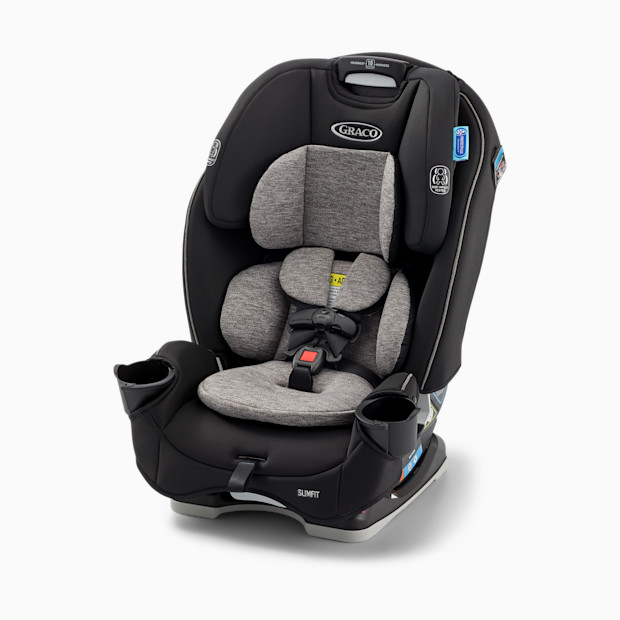
The multimode SlimFit 3-in-1 is Babylist’s pick for best all-in-one car seat and a good value. While not the narrowest option, it’s fairly compact front-to-back and works well in many smaller vehicles. It also offers a good booster fit, which isn’t the case with many all-in-one seats.
The big downside of this seat is newborn fit, which isn’t great (this is fairly common in all-in-ones). It’s also easy to confuse with another Graco seat with a similar name, the SlimFit3 LX 3-in-1—but don’t! The LX is super narrow but not compact front-to-back, so it doesn’t fit well in all smaller back seats.
Additional Specs
Car Seat Dimensions: 20.8”L x 19”W x 25.5”H
Child Weight and Height Guidelines: Rear-facing: 5-40 lbs, head must be at least 1” below handle; forward-facing: 26.5-65 lbs, up to 49”; high-back booster: 40-100 lbs, 43-49”, min 4 yrs old
Pros
- Compact front-to-back and narrow side-to-side
- Easy to install
Cons
- Uncomfortable fit for some kids
- Limited legroom rear-facing
- Straps are tough to adjust + shoulder pads are not removable to wash
- Incompatible forward-facing in many cars with non-removable headrests
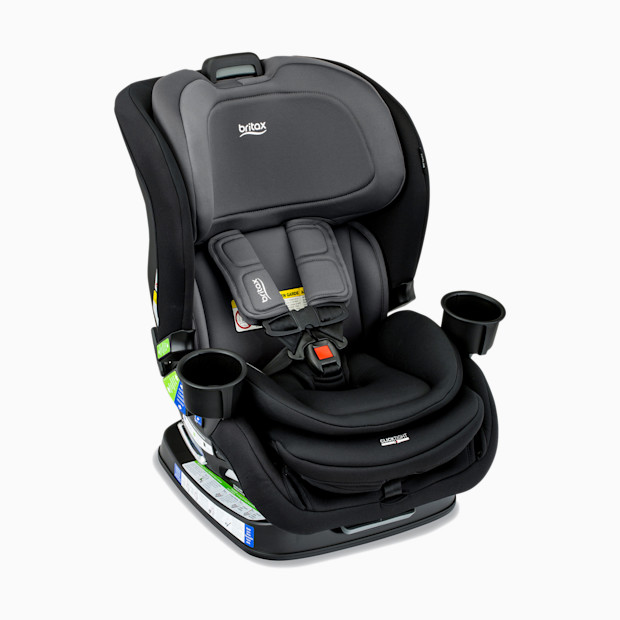
If you’re looking for a compact seat that’s also easy to install, the Poplar fits the bill. It’s both compact and narrow and features Britax’s ClickTight Technology that makes installation simple and straightforward. There’s also a no-rethread harness and multiple recline options.
This seat does have a few notable downsides. It doesn’t fit newborns well, and the seat’s shape and positioning make it uncomfortable for some older riders, too. The straps are hard to adjust, and the shoulder pads aren’t completely removable for washing. It’s also not a good choice if your car has non-removable headrests. And despite its high rear-facing height and weight limits (49 inches and 50 pounds, respectively), there’s not a lot of legroom rear-facing, making extended rear-facing difficult for many families.
Additional Specs
Car Seat Dimensions: 23.5”H x 17”W x 20.5”D
Child Weight and Height Guidelines: Rear-facing: 5-50 lbs, up to 49”; forward-facing: 22-65 lbs, up to 49”
Premium
Pros
- Quick, easy install
- High rear-facing limits
- Modern, stylish
Cons
- Wide
- Expensive
- Kids with long torsos may outgrow it forward-facing sooner than other seats
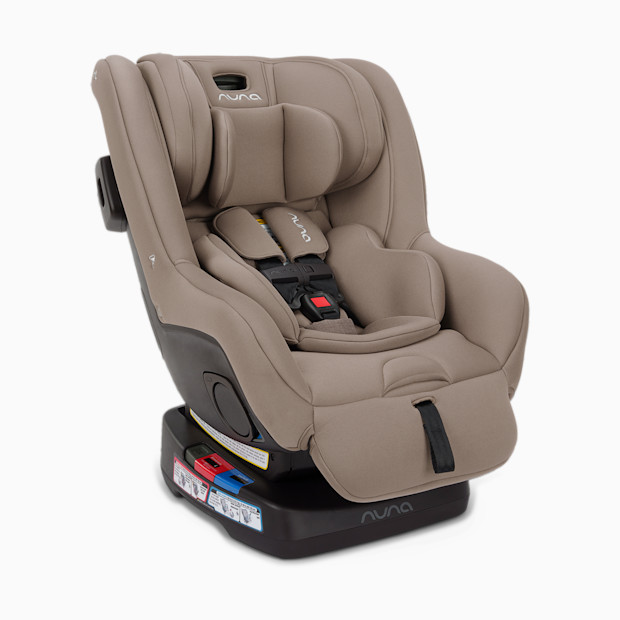
Another Babylist favorite (it’s the runner-up pick in our Best Convertible Car Seats guide), the Nuna Rava Next is a beautiful seat that’s expensive but worthwhile if your budget allows. It’s the best premium option if you need a compact front-to-back seat. (And even if you don’t, it’s still an excellent choice.) Standout features include its sleek, modern style, of course, but also a high rear-facing limit (with an extendable calf rest for added comfort), plush padding with breathable fabrics and seamless installation.
Like a few other seats on our list, while the Rava is compact, it’s on the wider side, so it’s not the best option for three-across. (The top is wider than the bottom, so it will often work rear-facing if it’s next to a narrow forward-facing seat or a booster, but it’s definitely on the wider side when forward-facing.) It has a lower top harness height so may be outgrown on the earlier side forward-facing if your child has a long torso. And it’s expensive.
If you’re looking for a compact seat with more longevity (and you can up your budget even more), check out the Nuna Exec Next; it’s also compact front-to-back and transitions to a high-back booster seat.
Additional Specs
Car Seat Dimensions: 26”H x 19”W x 21.5”D
Child Weight and Height Guidelines: Rear-facing: 5-50 lbs, up to 49”; forward-facing: 30-65 lbs, up to 49”
Small Cars + Car Seats: What’s the Deal?
If you found your way to this guide, you might already understand why small cars + car seats can be pretty challenging (😬). But if you’re just starting your research, here’s what you need to know.
The car + car seat puzzle, explained
Car seat + vehicle compatibility is tricky: the size of a vehicle doesn’t always correlate with the size of its back seat. Many compact cars (think sedans, for example) have smaller back seats, but not all do—while some large, luxury cars and even some SUVs are actually pretty cramped in the back.
“When cars are designed, the manufacturer can allocate a certain amount of space to the front row, back seat, third row (if present) and trunk,” explains Lani Harrison, a CPST who’s been helping parents install car seats for over a decade. “There are some cars, like Fiats, for example, where it’s so small that there’s really no choice —the back seat is just going to be tiny no matter what the intentions of the manufacturer.”
“But there are some huge cars—Mercedes comes to mind, for example—where the second row or back seat is not allocated much space at all,” she says. “Conversely, there are some small cars like small Nissan sedans where the car itself is tiny, but the back seat is actually fairly spacious.”
There’s also seat shape to contend with. A huge amount of variation exists across vehicles in the size and shape of their back seats. There are varied comfort and design features, too, like the shape and height of side bolsters, seat depths and angles and headrest design.
So why does this matter when it’s time to install a car seat? Fitting a vehicle + car seat together in any situation is a bit of a puzzle, but it’s a particular challenge in vehicles with compact back seats that are short on space front-to-back. You can make postpartum jeans fit, but you can’t make a massive plastic shell of a car seat fit in your back seat if there’s not enough room; it’s just not going to happen.
Sooo…how do I know if I have a compact back seat?
Before becoming a parent, there’s a good chance you never rode in the back seat of your own car. There’s an even better chance that the thought that all car seats don’t fit in all cars never even crossed your mind.
“When parents buy an infant seat, they almost never realize there could be an issue in this area,” explains Harrison.
There’s also height to consider. If you’re tall, you’ll need to push your seat back more, both as a driver or a passenger—and that means less room in the back seat for a car seat.
Unfortunately, due to all of the complicating factors mentioned above, there’s no easy way to measure your car’s back seat and get on with your day. Instead, Harrison recommends sitting in your vehicle’s back seat with the front seat adjusted as it would be.
“Seeing how much room is in front of your knees is a good start,” she says. “If there’s not much, you’re going to need a compact seat,” she says.
She compiled a short list of vehicles that are most common offenders with compact back seats short on front-to-back space and often require a compact car seat:
Mercedes
Audi (minus the Q7)
Toyota RAV4
Lexus NX
Jeep Wrangler
BMX X series
Fiat
Tesla (compact, but not as much so as the vehicles listed above)
Some third-row vehicles also pose an issue. “In some cars like the Mercedes EQB or the VW Tiguan, the back of the second row will hit the legs of the person in the third row,” Harrison explains. “This is not safe for anyone in the third row, and it often cannot accommodate any car seat, even forward-facing.”
What to Look for in a Compact Car Seat
A compact car seat is compact front-to-back. Some compact car seats are also narrow, but not all are, which is why we made a point to distinguish between the two in our car seat reviews above. (If you drive a compact car that also has a narrow back seat, or if you need to fit multiple car seats across your back seat, you’ll want to pay attention to the seat’s width, too.)
Here’s what else to consider if you’re registering or shopping for a compact car seat:
Trust a tech. Many infant seats are long front-to-back. Since there are so many complicating factors, taking your own measurements can be tricky. Focus on infant seats specifically recommended by CPSTs, like our picks above, so you can be confident you’re choosing a compact car seat that is likely to fit in a smaller car. Still aren’t sure? Find a CPST in your area through the Safe Kids website or consider joining a Facebook group staffed with CPSTs like Car Seats for the Littles where you can get answers on how a particular seat might work in your specific vehicle.
Skip the base, or consider baseless. The bases of most infant seats extend beyond the seat itself, meaning they’ll take up more precious front-to-back room in a compact car. If you’ve already purchased an infant seat and are having trouble installing it in your compact car, skip the base and use your vehicle’s seat belt to install the seat instead for a much smaller footprint. You can also consider a baseless car seat like the ones we reviewed above.
Think beyond the infant seat. If you’re thinking ahead and adding a convertible car seat to your registry, be aware that these types of seats take up a substantial amount of space, too, especially when rear-facing. If you drive a car with a compact back seat, be sure to research convertibles before you buy, too.
Pay attention to recline. All car seats have recommended recline angles to keep a child safely positioned in a car seat based on their age and size. All rear-facing seats have specific reclines for newborns (since they don’t have head or neck control), while older children with head and neck control can handle a wider range of recline positions. However, some convertible car seats also have required reclines when forward-facing. (The Graco Extend2Fit and the Britax Poplar are two common ones, according to Harrison.) This means these seats will take up more room front-to-back, even when in the forward-facing position.
Expert Sources
Babylist uses high-quality subject matter experts to provide accurate and reliable information to our users. Sources for this story include:
Lani Harrison, a CPST with a decade+ of experience helping educate parents on car seats and car seat usage
