
The Best Travel Systems for Parents Who Want a Car Seat + Stroller Combo
Confused about travel systems? We break down what they are, and which combos are actually worth it.

By
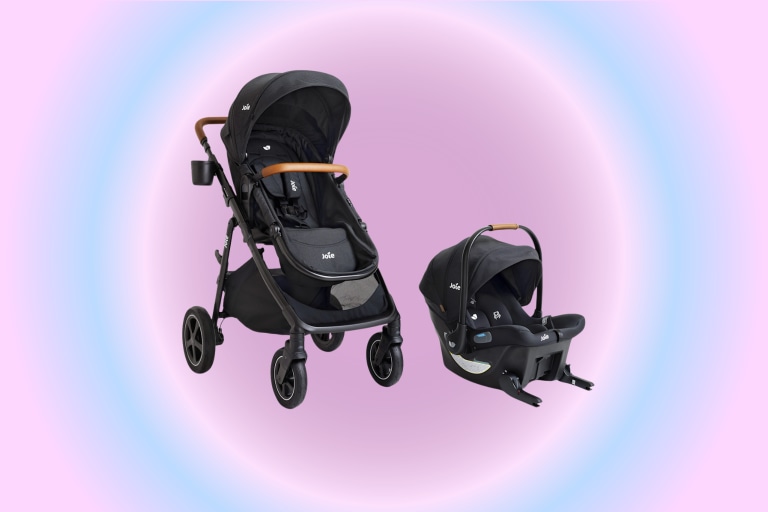
When you’re building your registry, “travel system” is one of those terms that sounds important, but also slightly mysterious. Is it just a stroller? Just a car seat? Where does the "system" factor in? Do you actually need one?
Here’s the simple version: a travel system is an infant car seat and a stroller designed to work together. You pop the seat out of your car, click it onto the stroller frame and you’re off—no unbuckling, lifting or transferring required. In those early months, when getting out the door can already feel like a production, that seamless switch makes new parent life a lot easier.
The best travel system overall for most parents is the Joie Ginger DLX + Mint Latch, thanks to a newborn-ready pramette stroller and a baseless infant car seat that skips the extra step of installing a base. If you want a stroller that prioritizes an easy fold (and can handle more varied terrain), the Nuna PIPA urbn + TRIV lx takes seconds to break down and handles gravel and uneven sidewalks better than anything else we tested, and if you're looking for value, the Evenflo Pivot Modular Travel System delivers real functionality for about $300.
As a CPST (Child Passenger Safety Technician, someone who's trained in car seat use and safety) and Babylist's senior gear editor, I've tested dozens of travel systems over the years, and they're not all created equally. Some have great car seats but mediocre strollers, while others push smoothly but include a car seat that's harder to install or doesn't fit newborns very well.
For this guide, I zeroed in on travel systems that deliver on both fronts: a stroller that pushes well, folds easily and works for most families' everyday lives, and an infant car seat that fits babies properly and is straightforward to get into a car.
How We Judged Travel Systems
Best Travel System Overall
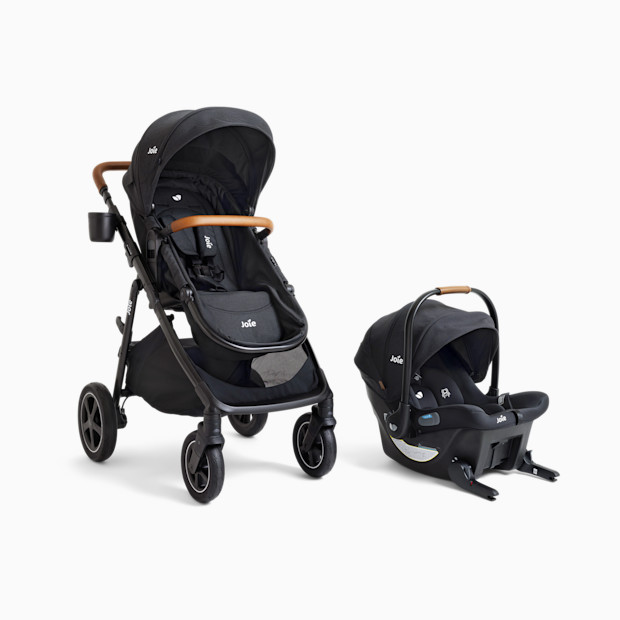
Joie Ginger DLX And Mint Latch Travel System - Shale
From $679.99Pros
- Stroller is newborn-ready with pramette mode
- Includes baseless car seat
- Impressive performance for the price
Cons
- Baseless car seat is convenient, but you'll need to uninstall and reinstall each time
- Car seat harness straps must be manually rerouted as baby grows
TL;DR
A thoughtfully designed travel system that balances convenience, performance and price. The baseless car seat and newborn-ready stroller make everyday life simpler without pushing into premium pricing.
The Joie Ginger DLX + Mint Latch is the best travel system overall because it balances convenience, value and performance better than any other system we tested—and it's thoughtfully designed, easy to use and feels like it should cost more than it does.
The Ginger stroller is newborn-ready thanks to the lie-flat pramette mode—so you can use it from day one without needing a separate bassinet add-on. (A big perk, as not all strollers can be used from birth.) The ride quality is also a standout for the price. The DLX features puncture-proof all-terrain rubber tires and suspension, making it feel smoother and much more stable than other travel systems at this price point. There's also an adjustable handlebar and legrest, a large storage basket and an included cup holder. And one more noteworthy feature: the stroller seat has three different height positions so you can bring your baby closer to you (great for the newborn days) or farther away to see the world (for curious toddlers). The fold is quick and easy, and the stroller is really compact when it's broken down—I liked how it didn't take over the entire trunk of my SUV.
The included Mint Latch infant car seat (one of Babylist’s top infant car seat picks) is just as impressive. It’s baseless, which means there’s no separate base to install (or reinstall) in your car. Instead, you click the seat directly into your vehicle’s lower anchors using the built-in connectors. Once you get the hang of it, it’s fast, secure and a huge win for families who switch cars a lot, rely on rideshares or just don’t want to mess with extra pieces of gear.
“This travel system is so easy to use and the baseless car seat is CLUTCH,” one parent said in our annual Most Loved Baby Products survey.
Worth noting:
Baseless car seats are super convenient, but if you prefer a “set it and forget it” base setup, this system requires a bit more routine—so know the tradeoff is flexibility.
The car seat harness straps need to be manually rerouted as baby grows.
At about 26.7 pounds, the stroller is on the heavier side. It’s in line with other similar full-size strollers, but it’s something to keep in mind if you’re frequently lifting it in and out of a trunk.
Additional Specs
Car Seat Weight: 9.2 lbs
Car Seat Child Guidelines: 4-30 lbs, up to 30”
Stroller Weight: 26.7 lbs
Stroller Child Guidelines: Birth up to 50 lbs
Best Travel System for All Terrains
Pros
- Smooth ride on all types of terrain
- Stroller is light for a full-size + folds easily
- Baseless car seat
Cons
- Baseless car seat is convenient, but you'll need to uninstall and reinstall each time
- Car seat harness straps must be manually rerouted as baby grows
- Expensive
TL;DR
If you want a travel system that can handle all types of terrain, this is it. It’s premium-priced, but the ride quality and baseless convenience are hard to beat.
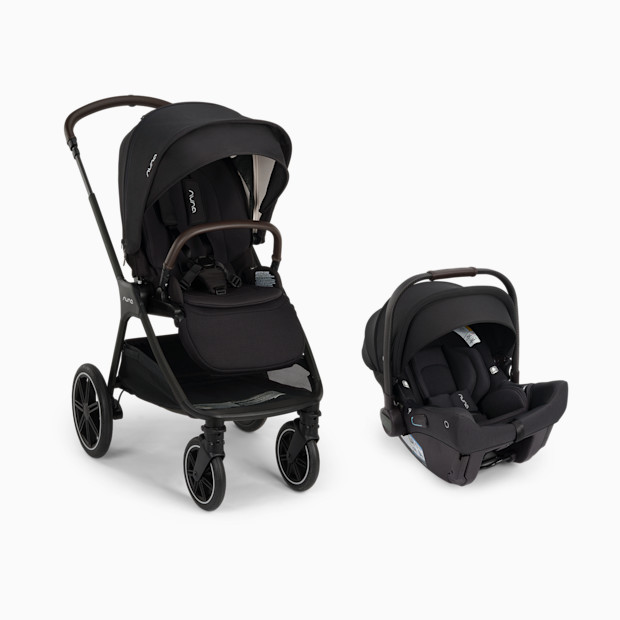
The Nuna PIPA urbn + TRIV lx is the best travel system for all-terrain use because its extra-large wheels and suspension smooth out rough pavement and park paths better than any other system we tested.
When you’re choosing a travel system, both components matter, but your stroller will be with you much longer than your infant car seat (most babies outgrow infant seats around their first birthday). If you live somewhere with uneven sidewalks, grass or simply want a stroller that feels steady and smooth no matter the surface, this is the travel system I’d point you toward first.
The ride quality is the standout here. The all-terrain wheels and excellent suspension (in both the wheels and the seat) smooth out rough pavement and park paths in a way most travel systems simply can’t. If long walks are part of your daily routine, that matters.
The stroller seat reclines completely flat and converts to bassinet mode, so you can use it from birth even without the car seat. That flexibility is something I always appreciate in a higher-end system. There’s also an adjustable handlebar (a big win for taller parents) and lots of storage. And unlike many similar full-size strollers that weigh close to 30 pounds, the Triv weighs just over 20—a huge difference when you’re lifting it on the regular. (The fold is quick and easy, too, especially impressive for a stroller of this size.)
The included PIPA urbn infant car seat brings the convenience factor. Like the Mint Latch, it’s baseless, clicking directly into your vehicle’s anchors in seconds. “I love being able to move the car seat in and out of any car without worrying about a base,” one Babylist parent told us. And at just seven pounds, it’s one of the lightest infant car seats on the market.
Worth noting:
Like the Mint Latch, you’ll need to uninstall and reinstall this baseless car seat at every ride.
Additional Specs
Car Seat Weight: 7 lbs (without canopy/insert)
Car Seat Child Guidelines: 4-30 lbs, 16-29”
Stroller Weight: 23.7 lbs
Stroller Child Guidelines: Birth to 50 lbs
Best Value
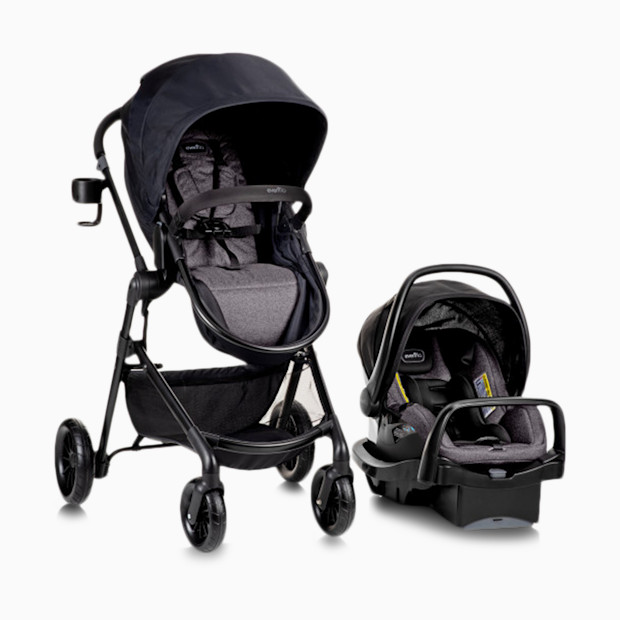
Evenflo Pivot Modular Travel System with LiteMax Infant Car Seat - Casual Gray
From $312.62Pros
- Strong value for the price
- Includes bassinet (pramette) mode
- Lightweight infant car seat with excellent newborn fit
Cons
- Plastic wheels, minimum suspension
- Ride can feel bumpy on uneven terrain
The Evenflo Pivot is the most affordable travel system on this list, but what I appreciate about it is that it doesn’t feel bare-bones. It offers a true car seat + stroller system with flexibility built in.
“I love that it is a full system,” one Babylist parent said. “Car seat, base, stroller that fits the car seat, and stroller with a bassinet that transforms into an outward-facing seat for older babies! It has grown with us this first year and will go beyond.”
The included LiteMax infant car seat is a standout at this price point and a favorite among CPSTs, myself included. It’s lightweight and fits smaller newborns particularly well, something I always look for. It also includes an anti-rebound bar, a safety feature that helps absorb crash energy and isn’t common in travel systems at this price.
Versatility is where the stroller shines. The modular frame can be configured in six different ways, including a pramette mode. While babies can sleep in an infant car seat, the American Academy of Pediatrics’ safe sleep recommendations advise transferring them to a firm, flat sleep space as soon as possible. The bassinet mode in this stroller lets you stroll safely while your baby snoozes and not worry about moving them from a car seat.
Worth noting:
Where this system shows its price is in ride quality. There’s minimal suspension and the wheels are plastic, so it can feel bumpy on cracked sidewalks or rougher terrain. If you’re strolling mostly indoors or on smooth pavement, it’s fine, but if you live somewhere with uneven streets or gravel paths, you may want something more robust.
Some parents also report that the wheels may start to squeak over time.
If you’re able to up the budget, check out the Shyft Intuiti Travel System, also from Evenflo. The included stroller has rubber tires and all-wheel suspension for a smoother ride. And while the infant car seat often doesn’t fit smaller babies well, it does feature a 180° rotation, spinning at its base for easier ins and outs.
Additional Specs
Car Seat Weight: 8.17 lbs
Car Seat Child Guidelines: 3-30 lbs, up to 32"
Stroller Weight: 29.8 lbs
Stroller Child Guidelines: Birth up to 50 lbs
Also worth a 👀
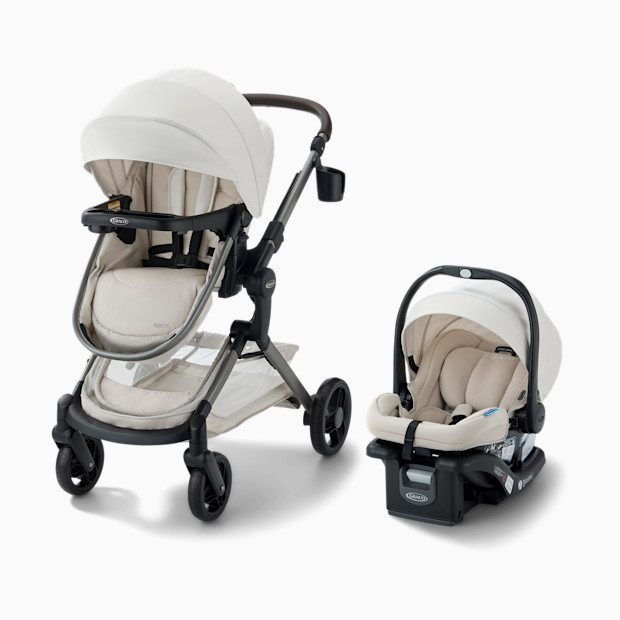
The Graco Modes Nest is another solid value pick. It includes the SnugRide DLX infant car seat and a stroller that converts from car seat carrier to pramette to toddler seat, so you get a lot of flexibility for the price.
In addition to the built-in bassinet feature, another standout feature is the stroller’s Slide2Me height-adjustable seat, which lets you raise the stroller seat or car seat closer to you for easier interaction in those early months. The stroller can be parent- or world-facing, folds in one step and includes practical extras like a large canopy, cup holders and a snack tray. It’s not the most compact or lightweight option, but for families who want a traditional, full-featured travel system at a mid-range price, it’s a reliable choice.
Best Travel System for Growing Families
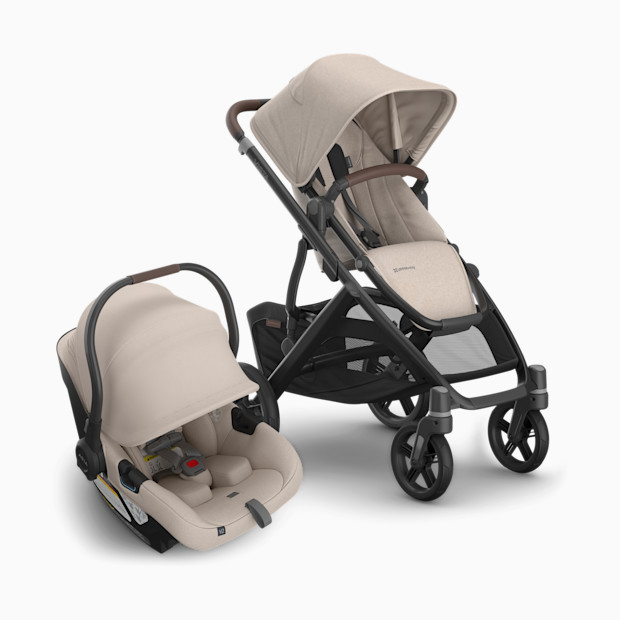
UPPAbaby Vista V3 Stroller & Aria V2 Lightweight Infant Car Seat Travel System - Ada
From $1,449.98Pros
- Stroller accommodates up to 3 kids (with attachments)
- Great suspension and huge storage basket
- Very lightweight car seat
- Infant seat has anti-rebound panel and load leg
Cons
- Very expensive
- Stroller has a bulky fold
- Infant car seat tends to be outgrown earlier than many others
TL;DR
If you want a travel system that truly grows with your family from newborn through toddler and beyond, the Vista V3 + Aria V2 is an investment that delivers long-term usability, excellent ride quality and thoughtful design.
UPPAbaby’s Vista V3 stroller consistently makes it into our best strollers guide. Almost 30% of the 10,000+ Babylist users who took our Most Loved Baby Products survey voted it as their favorite stroller—the highest percentage for any stroller on the list—calling it “worth every penny” and praising the quality as “amazing.” If you’re shopping for a travel system that can grow with your family, this car seat + stroller combo is an excellent choice.
The Vista is a pleasure to push. It steers effortlessly with one hand, turns smoothly and handles rougher terrain like cracked sidewalks and gravel with ease thanks to its FlexRide suspension. It’s designed to expand as your family does, accommodating two infant car seats, two bassinets and countless other configurations. Parents also love the modular seat (baby can face you or face out), the easy-to-use magnetic harness, the oversized storage basket with a 30-pound weight limit and the adjustable handlebar.
The Aria V2 is just as impressive. It weighs just six pounds without the canopy and inserts, making it one of the lightest infant car seats on the market—and four pounds lighter than UPPAbaby’s Mesa V3. Even (I was surprised at how light it felt when I picked it up, and I’ve tested a lot of car seats.) Safety features include an anti-rebound panel, a load leg and an easy-to-install LATCH system.
Worth noting:
The Vista V3 is a large stroller that’s not for everyone. If you need something travel-friendly or want a stroller that’s easy to pop in and out of your trunk every day, the Vista probably isn’t for you.
Because the Aria is so compact, babies tend to outgrow it by height sooner than they would with other infant seats. The V2 does offer more legroom than its V1 predecessor, a definite improvement, but it’s still something to note.
This travel system is expensive, especially once you start adding on accessories and other extras. But if you’re planning on using it over the long haul with several kids, it’s a good investment.
Additional Specs
A Few Other Travel Systems We Love
Nuna TRVL lx + PIPA urbn - Cedar
From $800.00If you’re planning on doing a lot of traveling over baby’s first year, don’t have space for a full-size stroller or just prefer a lighter, more compact option, this travel system is the perfect pick. It combines the urbn baseless infant car seat with the Trvl, Nuna’s 16-pound lightweight stroller, a bit of a stroller “middle ground”—it’s small enough to easily take on the go but substantial enough to also use in everyday life.
Evenflo Evenflo Shyft Intuiti+ Travel System featuring Revolve180 LiteMax NXT with SensorySoothe - Jasper Black
From $779.99The Shyft Intuiti Travel System combines innovation and performance at an approachable price point. The Revolve180 is a rotating car seat, meaning it spins at its base, and makes loading and unloading your baby significantly easier, especially in tight spaces. The Shyft Intuiti stroller has large rubber tires and all-wheel suspension for a cushioned ride over uneven terrain, and the modular frame lets baby parent-face or forward-face across all three modes (infant car seat, toddler seat and lay-flat carriage), so you can use the stroller from birth.
Why Trust Babylist?
Babylist is the expert in baby; we know baby gear inside and out. We talk with parents face-to-face in our showroom and on our user panels and hear from thousands annually via our Best Baby Products online survey. We know what items millions of expecting parents are adding to their baby registries.
Firsthand professional and personal experience. I have over a decade of experience with baby gear of all types, especially car seats and strollers. I’ve tested countless travel system combos both in my role as Babylist’s gear editor and as a mom of two young boys, seven years apart. I'm also a Child Passenger Safety Technician (CPST), a specially trained car seat educator.
Expert input. I spoke with many industry and safety experts while writing this guide, including Joe Colella, the Director of Child Passenger Safety at the Juvenile Products Manufacturers Association and 2020 Child Passenger Safety Hall of Fame Inductee, pediatrician Kelly Fradin, MD, FAAP and Courtney English, a pediatric occupational therapist. I also talked to CPST Samantha Taylor of Mama Knows Car Seats. And I interviewed Babylist Showroom Registry Consultants Tatyanna Hunter Jones and Pateel Markaradi, part of a trained team of experts who work on the Babylist Showroom floor, answering questions daily about baby gear and helping parents-to-be build their baby registries.
Travel system data. I regularly analyze which baby products our users are adding to their baby registries the most (and which ones they aren’t) and what our team of Merchandising experts—our buyers who are responsible for ensuring the Babylist Shop is stocked with the best and newest gear—is excited about. Studying this kind of data helped us choose which travel systems to test and recommend.
Feedback and reviews. I reviewed comments and feedback from Babylist’s annual product survey of thousands of parents, read customer reviews from hundreds of Babylist users and spoke to parents on our staff about their real-life product experiences.
Do you find this content helpful? Let us know!
What Is a Travel System?
A travel system is an infant car seat and stroller designed to click together, so you can move your baby between car and stroller without unbuckling or lifting them. You'll typically find travel systems sold two ways:
Same-brand travel systems (the type reviewed in this guide) come as a package deal from single brand. They guarantee car seat and stroller compatibility with no adapters needed, cut down on decision fatigue and are often more cost-effective than buying each piece separately.
Build-your-own travel systems pair a stroller and car seat from different brands using adapters. This route gives you more flexibility to mix and match based on what you like best from each brand, but not every car seat and stroller combo is compatible, and the ones that are usually require a separate adapter. Check Babylist's Infant Car Seat and Stroller Compatibility guide before you buy pieces separately.
Do You Need a Travel System?
You don't technically need a travel system, but you do need a safe way to get your newborn from car to stroller, and a travel system makes that transition seamless.
Most strollers aren't safe for newborns until they can sit up unassisted, usually around six months, unless the stroller includes a bassinet attachment or fully reclines for newborn use. A travel system solves this by letting you stroll with your newborn from day one, and skips the need to disturb your baby every time you switch between car and stroller.
“Parents are shopping for and prioritizing travel systems because they like the convenience of taking baby from stroller to car and vice versa,” says Hunter Jones, a registry consultant in Babylist’s Beverly Hills showroom. “Guests will come in looking for an infant car seat that will click onto the stroller,” Markaradi, another showroom consultant, echoes.
Since you'll need an infant car seat for driving with your baby regardless, a travel system just ensures your stroller works seamlessly with it from the start. As your baby grows and can sit up independently, you can transition to using the stroller seat alone and keep using it well into toddlerhood.
Want to skip the travel system altogether? You have a few other options for newborn transportation.
A stroller frame is a bare-bones frame with the sole job of wheeling around your infant car seat. They’re typically inexpensive but stop being useful once your baby outgrows the infant car seat at about a year old, and most lack some of the nice-to-have features you’ll find on a standard stroller.
You can wear your baby in a baby carrier until they’re old enough to sit up unassisted and graduate to a stroller. But this can be tough on some parents’ backs, and you’ll lose the convenience of the car-seat-to-stroller-and-back-again transfer.
How do you use a travel system safely?
Travel systems are safe for newborns when used correctly, but a few guidelines matter.
The AAP’s safe sleep guidelines recommend against using car seats for sleep outside of a car. If your baby falls asleep in their car seat, they should be removed and placed in a crib, bassinet or other safe sleep space as soon as possible.
“However, many parents, myself included, will want the child to finish their nap for a brief period. If you choose to do this to reduce risk, be sure the baby is not overheating by removing hats, blankets and ventilating the car. Also, keep the straps snug and place the car seat on the floor under your direct supervision.”
“If babies are in an approved stroller with the car seat properly restrained, I think of it the same as being in a vehicle,” explains Dr. Fradin. “Keep them cool and supervised.”
Because travel systems make it easy to use your infant car seat more often, keep the two-hour rule in mind: limit car seat use to no more than two hours in any 24-hour period. "Research shows that when a baby is positioned in a semi-upright position for longer durations, it can restrict airflow to baby's lungs, resulting in breathing issues," explains pediatric occupational therapist Courtney English. "Additionally, it puts baby's spine in a stressful position when semi-inclined for longer durations."
How do you choose a travel system?
Since a travel system includes two products, an infant car seat and a stroller, you need to think through the features of each (and how you’ll use them), both separately and as a pair.
How do you choose an infant car seat
An infant car seat faces the rear of the vehicle and is built for younger babies, typically usable from birth until your baby hits the seat's height or weight max, usually around 30 pounds and 30-32 inches.
All car seats sold in the US must meet the same NHTSA safety standards, but a seat's real-world safety comes down to three things: how well it fits your child, how easy it is to install and how consistently it's used correctly on every ride. A seat loaded with safety features doesn't help if it doesn't fit your car or if you make an installation mistake.
When comparing infant car seats, look at:
Size and weight, and how it fits in your vehicle
Child height and weight minimums and maximums
Safety add-ons like an anti-rebound bar/panel or load leg
Fabric type and ease of cleaning
Canopy size
For more information on how to choose an infant car seat, including the features to prioritize and why, safety information, determining car seat fit and our expert-recommended seat picks, check out our Best Infant Car Seats guide.
How do you choose a stroller
You'll use your stroller far longer than your infant car seat, and your family's lifestyle usually shapes the right stroller choice more than the car seat does.
Evaluate your lifestyle. “Just because one stroller worked for a family member or your bestie doesn’t mean it will be the perfect stroller for you,” stresses Hunter Jones. Think through your lifestyle and your daily needs to narrow down your pick.
Think through features. Things like a modular seat, fold, wheel type and suspension, an adjustable handlebar, a storage basket, fabric type and canopy size are features that can affect how you use your stroller day-to-day.
Factor in family size. If you’re planning on multiple children close in age, you may want to consider a convertible stroller from day one instead of registering for a single stroller and then having to purchase a double shortly after.
Consider safety. Look for a five-point harness, an easy-to-operate brake and a good fit.
Keep cost in mind. Strollers range widely in cost. More expensive models will often have all-wheel suspension, better maneuverability, modular seats, high-end fabrics or the ability to convert to a double, but there are high-quality, more affordable stroller options, too. It’s all about finding what works for you and for your budget.
How to Choose a Stroller walks you through the decision-making process step by step. You can also consult our Best Strollers guide for a deeper dive into all things strollers and our most-loved product picks.
Once you’ve narrowed down your stroller and car seat options, you can decide whether a travel system is best for you and which one meets your family’s specific needs.
