
Why Hip Sling Carriers Are Everywhere Right Now
Not quite a structured carrier, not quite a hip seat—here’s where hip sling carriers fit in and why they’re suddenly everywhere.

By

There are a ton of ways to carry your baby: ring sling, wrap, soft structured carrier, onbuhimo, hip carrier. And there’s no one “best” carrier for every family, because different types of carriers come in handy for different scenarios. But what about when your little one is old enough to want to be held and also explore? Enter the hip sling carrier.
Hip slings are another option whose popularity is on the rise, and after testing a few out and learning more about them this year, it’s not hard to see why. They're a convenient option to have stashed in your diaper bag for little ones who are in the “pick me up, no put me down” phase of development (usually around 6-9 months and up, essentially the time they become mobile). So what are they exactly, how do you use them and most importantly, do you need one? We’re digging into all things hip slings and chatted with Jordan Morillo, an occupational therapist and babywearing expert for how to use them safely.
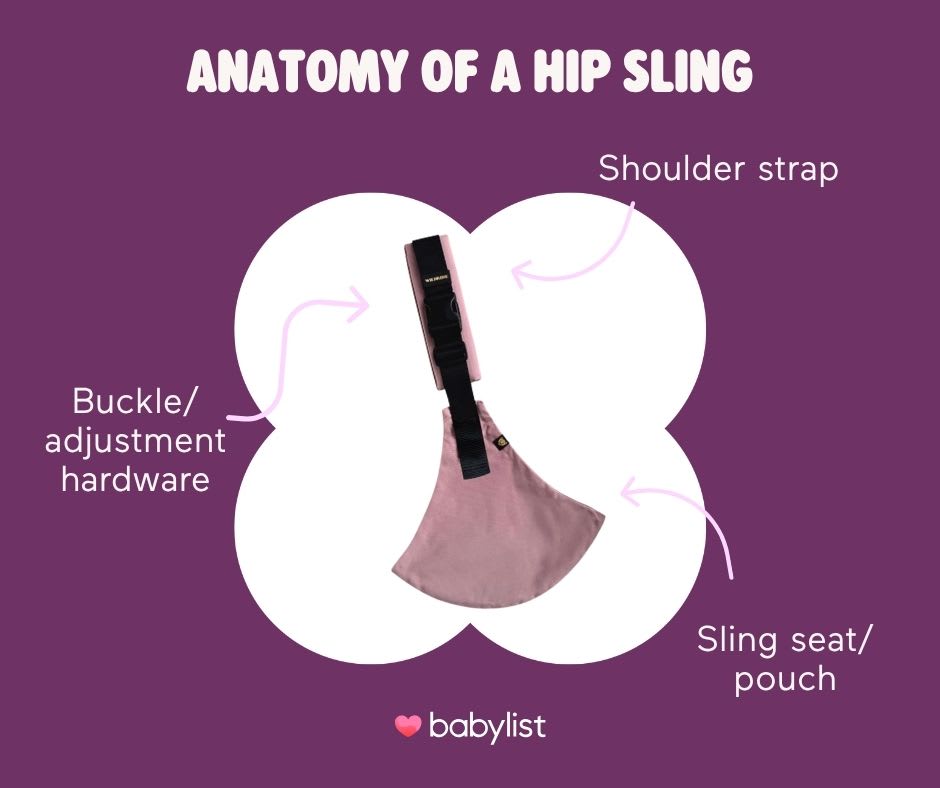
What is a hip sling carrier?
Unlike other baby carriers, a hip sling is meant to be more of a “carry assist” for parents and caregivers. They’re very similar to a hip seat carrier in that it takes some of the load off holding your baby or toddler in your arms. “I think these carry assists shine the most once baby is mobile and in that stage of wanting constant up/down and is being carried for shorter periods of time,” says Morillo. In general, they’re meant for babies at least six months old and up, but the specific age and weight range varies by brand.
Hip sling vs. hip seat carrier: what’s the difference?
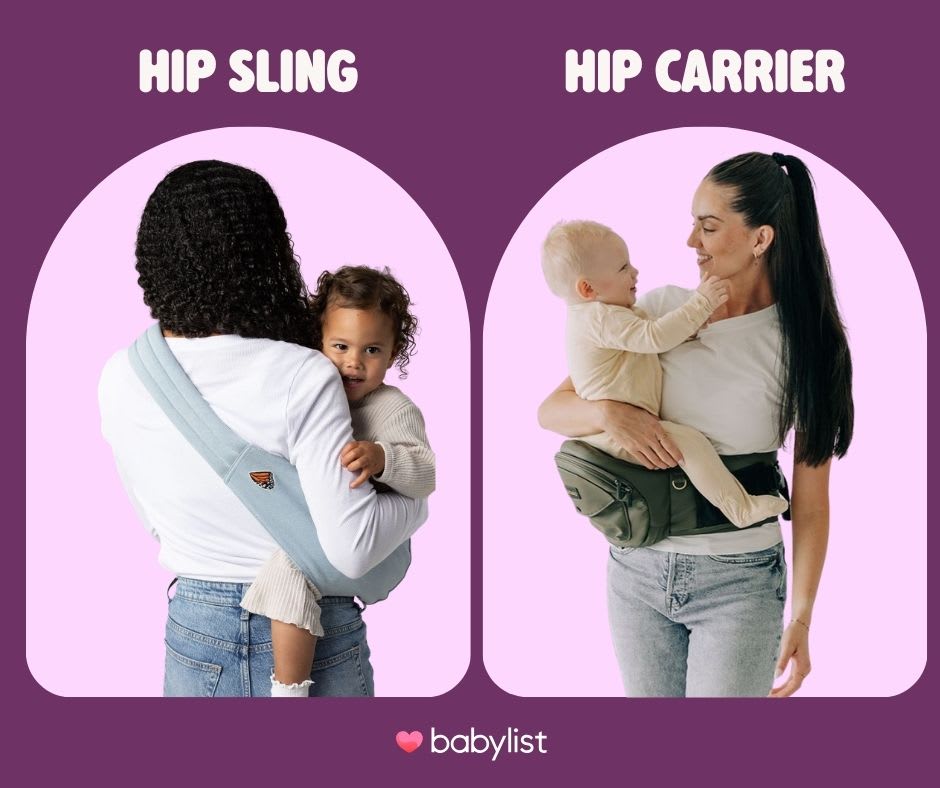
Hip slings and hip seat carriers are designed to solve a very similar problem: carrying a baby who wants to be held constantly...until they suddenly don’t. They let you skip the extra step of unstrapping and unbuckling before setting them down. Both styles help take some pressure off your arms and hips during all those quick up-and-down moments, especially once your little one is older and more mobile.
The biggest difference comes down to structure:
A hip seat carrier usually has a padded waistband with a built-in seat that baby sits on. Some styles—like the Tushbaby—also offer the option to attach a carrier panel for more support and a more hands-free fit.
A hip sling, on the other hand, is generally more minimal. They’re often fabric-based and work more like a carry assist than a fully structured carrier.
Hip slings tend to be lighter and less bulky, making them easy to stash in a diaper bag or throw on for quick errands. Hip seat carriers may offer a bit more support for longer carries, but they’re usually larger and more structured (aka not as portable).
Keep in mind: neither option is really designed for extended babywearing sessions or hands-free naps the way a soft structured carrier or wrap might be. Instead, they’re especially helpful for short carrying support—think airport lines, neighborhood walks or carrying a toddler who’s suddenly too tired to walk another five feet.
Do I Need a Hip Sling Carrier?
You don’t need multiple types of baby carriers, but many parents find having a few different options makes a lot of sense for them.
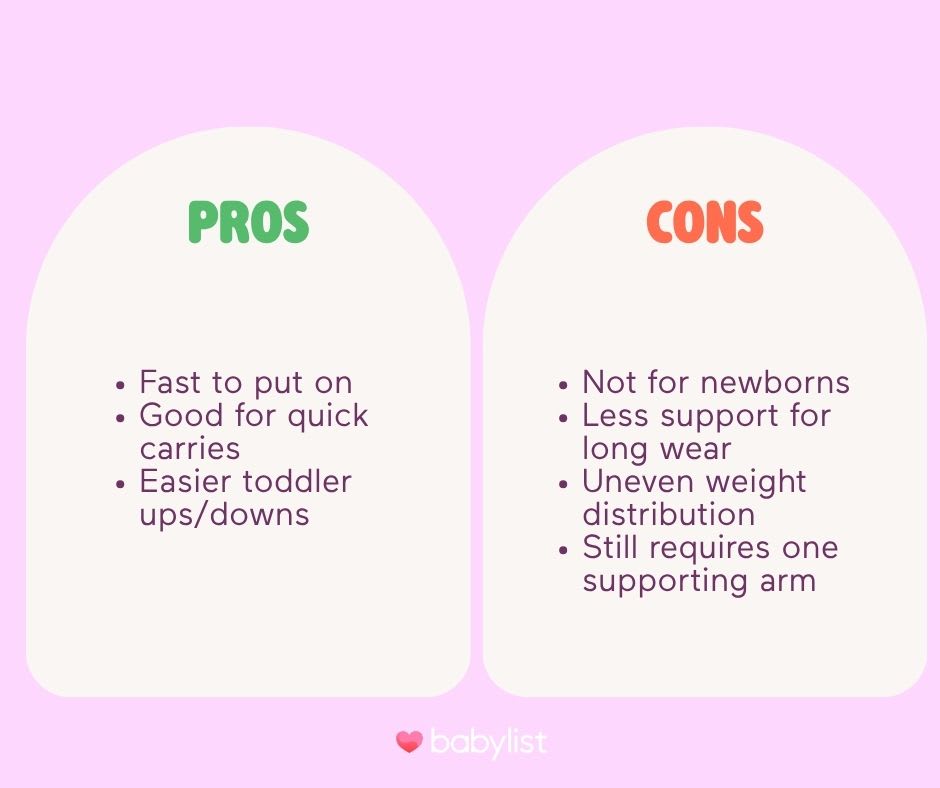
One of the advantages of a hip sling is that you can easily get your little one in and out. Older babies and toddler are notorious for being busybodies, and wrangling them in and out of the carrier each time they want to get down and explore can be a lot of work. The beauty of a hip sling is that you can easily scoop them in and go, with minimal adjustments.
One thing to keep in mind is that they’re not a fully hands-free option. While the hammock supports their bum, you still need to keep at least one hand on them; they’re a “carry assist”, not a full carrier. It’s also important to read through your particular hip sling’s entire user manual to be sure you’re using it correctly and safely (more on that next!).
Here are a few things to consider that can help you decide which hip sling might be best for you:
How To Use a Hip Sling Carrier Correctly and Safely
Hip slings are a great carrier to have in your lineup, as long as you know how to use them correctly. Morillo says hip slings are suitable for babies who are at least six months old. And it’s not just based on age alone—baby should also have good head, neck and trunk control. In other words, you’ll know they’re ready for a hip sling carrier when they can sit unassisted.
Morillo says the two keys to a proper fit are seat depth and snugness. Baby should be centered in the panel with their knees higher than their bottom—that knee-to-knee support is what makes the carry ergonomic. From there, tighten the sling so baby's weight stays close to your body rather than pulling down and away. If you’re having trouble getting it right, she says “sometimes it is a positioning issue and can be easily fixed by centering baby in the panel and providing a pelvic tuck.”
Most brands offer helpful tutorials and free fit checks if you need any support.
Our Favorite Hip Sling Carriers
If your baby is in their ‘up, down, up again’ era, a hip sling can be a surprisingly helpful middle ground between carrying them entirely in your arms and buckling into a fully structured carrier. We gathered a few hip slings worth checking out. Each option has different features that might make more sense for you and your baby. One thing to note: there is quite a bit of variation in age and weight ranges, so be sure to double check.
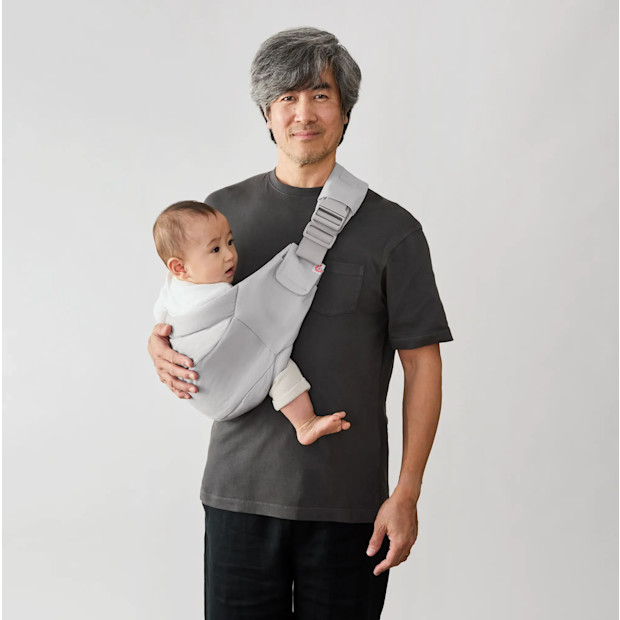
Ergobaby
Upsie Sling Carrier

Firstride
Toddler Carrier

Qookie
Go Hip Carrier


;)
;)
;)
;)