
How to Use an Infant Lounger: The Safety Basics
What parents need to know.

In This Article
The reality of parenting is that as much as some would love (or don’t—which is also valid) to hold their baby 24/7, it’s not possible. Where do you put your baby when you have to go to the bathroom, wash the dishes or make a meal? Infant loungers have been marketed as a cozy place to put down babies, but how safe are they?
To be clear, when it comes to a sleeping baby you want to leave unsupervised, infant loungers are not the place to set them down. That would be a crib or a bassinet. “Infant loungers are safe only when baby is awake and alert and when a parent is awake and supervising,” says Arielle Greenleaf, Certified Pediatric Sleep Consultant and Owner of Expect to Sleep Again Sleep Consulting. “If a baby falls asleep in the lounger, they should immediately be moved to a firm, flat surface per safe sleep guidelines.”
It's a different story when it comes to a baby who’s awake and will be supervised. Let’s break it down.
But First: What Are Infant Loungers, and How Are They Used?
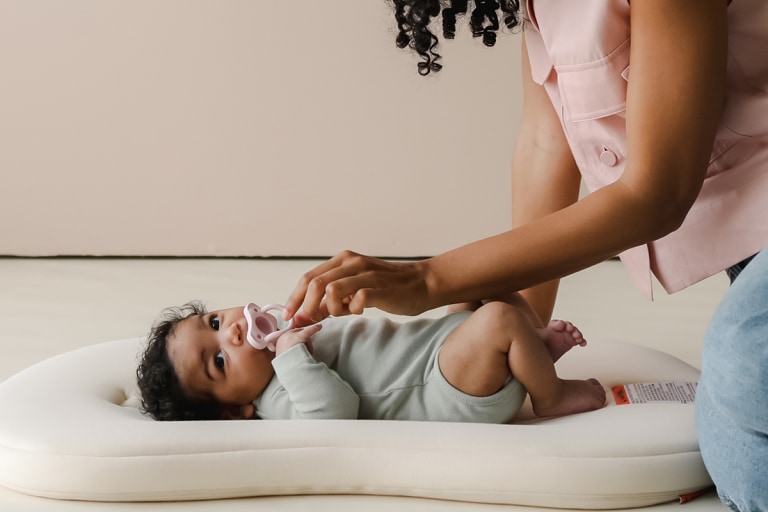
An infant lounger looks like a flattened-out pillow with an indent in the middle for the baby to lie in. They’re generally meant for babies under 9 months old, but different brands vary, with some having an age limit of 6 months. They’re usually used as an alternative to putting the baby down on a playmat or blanket.
New 2025 Guidelines: What’s Changing (and Why)
In 2025, the Consumer and Safety Products Commission (CPSC) introduced new safety standards for infant support cushions, which include loungers. These updates were driven by the need to reduce the risk of suffocation, especially if a baby turns their face into the side of a plush cushion or rolls over.
Here’s what the new rules mean for parents:
Many legacy products don’t meet the new requirements and are being discontinued.
New loungers must meet stricter design standards. These include firmer surfaces, better stability, and clear labeling that they’re not for sleep.
Inclined or super-soft designs are out. If a lounger lets baby sink or slump, it’s a no-go under the new guidance.
Are you wondering about what the product changes are like? Here's the updated Snuggle Me Curve, which was redesigned to align with the updated safety rules.
What’s different:
A firmer center helps keep baby on their back.
The oval shape and low sides are meant to reduce rollover risk.
The entire lounger is designed with supervised awake time in mind, not napping or overnight sleep.
What Should Parents Do Now?
This can feel like a lot. Here’s what to keep in mind:
If you have an older lounger, you can keep using it—the products have not been recalled as of now. But be sure to follow the safety guidelines outlined in this article, and don't use them for sleep.
If you're registering or buying new, look for products made after May 2025 that specifically say they follow the new CPSC standard.
The Safety Risks
There are several risks to be aware of, but the largest is suffocation. “When infants roll or are moved after being placed in a lounger, this can cause obstruction of the airway, particularly if the surface is soft bedding or a pillow. The airway can become ‘kinked,’ causing the baby to asphyxiate or not have enough oxygen,” says Dr. Gayathri Kapoor, a pediatrician with Orlando Health Physician Associates. “In addition, sometimes they can also roll out of these devices and become trapped under them.”
Entrapment and a fall hazard are additional safety risks. As noted above, the CPSC updated the safety standards required to sell an infant lounger for this very issue. If a baby rolls out of the lounger, they could become trapped underneath it, and if the lounger is placed on a surface that’s up high (a couch or bed, for example) and the baby rolls out, they will get hurt.
“Now, this is where many parents (myself included) say something like, ‘Well, my baby isn’t rolling yet, so it’s not an issue.’ But remember that there is always the first roll—and it inevitably happens when you least expect it,” says Diana Spalding, MPH, MSN, Certified Nurse Midwife.
The last risk is related to “container baby syndrome.” Containers are generally defined as devices that inhibit a baby’s free movement, like car seats, strollers, bouncy chairs or infant loungers. Spending too much time in one “places babies at higher risk for a variety of issues, such as plagiocephaly, decreased strength and delayed motor milestones,” according to the American Academy of Pediatrics (AAP).
“The use of ‘container’-like products has led to a decrease in tummy time, which is an important practice for overall development but also for sleep safety,” adds Greenleaf. “Tummy time helps babies strengthen neck and core muscles necessary for rolling and repositioning during sleep.”
How to Use Infant Loungers Safely
To ensure your baby’s safety, parents should:
Never use an infant lounger for sleep. “If you’re using an infant lounger, your baby should be awake and alert, and parents/caregivers should be supervising at all times,” says Greenleaf. If your baby falls asleep, always move them to a crib or bassinet and away from the lounger. “Regarding sleep safety, always put your baby to sleep on their back, on a firm sleep surface, without any blankets and pillows," says Dr. Rebekah Diamond, pediatrician, professor of pediatrics at Columbia University, and author of Parent Like a Pediatrician. Remember the ABCs.
Babies should sleep Alone, on their Backs, in a Crib or bassinet with a firm sleep surface and covered in a fitted sheet with no other bedding.
Always supervise babies placed in infant loungers. This means parents are awake and nearby. “The baby should never be left alone in a lounger … This includes walking away from baby and leaving them in the lounger for more than a few moments,” says Greenleaf.
Always place the lounger on a firm, flat surface, preferably down low, like the floor. And don’t use the lounger in a crib, bed or any other sleep surface, or move the lounger while baby is in it.
Try to limit the time spent in the lounger. To prevent “container baby syndrome,” experts recommend limiting usage to 15-20 minutes at a time, twice a day.
So, Are Infant Loungers Worth It?
The only person who can answer that for your family is you. “As a midwife, and especially as a mom of three, I understand the siren call of the infant lounger. Sometimes, you just need a minute (or several) to put your baby down so you can take a break or even (gasp) go to the bathroom in peace,” says Spalding. If you follow the safety guidelines above, it will minimize the risks. “I always recommend talking to your pediatrician because they can give you personalized advice that works best for your family and child,” adds Spalding.
If you want to look for an alternative to a baby lounger, “playards and pack ‘n plays are safe alternatives,” says Greenleaf. “If supervised, other ideas include swings or bouncy seats. But again, these should be used with supervision, and if baby falls asleep, baby should be moved to a firm, flat surface.”
