
How to Clean Baby Products to Keep Little Ones Healthy & Safe
Expert-approved methods to keep your baby's everyday items clean, safe and germ-free.

In This Article
As a parent, you're likely vigilant about protecting your little one from germs, and that includes the germs on all the items your baby uses every day. Baby products, including feeding essentials to toys and even your car seat, can become breeding grounds for bacteria, mold and mildew, so keeping baby’s stuff clean is important for their health.
With the help of product safety experts—including a pediatrician, a Child Passenger Safety technician and a certified lactation counselor—we’ll break down how to properly clean and maintain everything in your baby arsenal.
Cleaning Tips for Baby Products
Before you get started on a cleaning spree, there are a few general guidelines experts say to keep in mind:
Always follow manufacturer instructions.
Use cleansers that are free from harsh chemicals—baby-safe options include mild unscented dish soap, diluted vinegar and cleaning products designed specifically for baby items.
Avoid bleach, ammonia, antibacterial products with triclosan and strong scented cleaners.
When in doubt, mild soap and water is usually safest.
Make sure items dry completely to prevent mold and mildew.
Replace items when they show signs of wear or damage.
Cleaning vs. Sterilizing
You want your baby’s things to be dirt- and bacteria-free, but how clean is clean? Do you really need to sterilize everything?
Dr. Chris Klunk, a board-certified neonatologist at Pediatrix Medical Group, says it’s important to understand the difference. “Cleaning is the removal of visible grime and grossness, a process that will probably remove a few germs. Disinfecting [and sterilizing] is a whole additional level of germ destruction that involves the use of even stronger germ-crushing solutions and products." Some baby items can (and should) be sterilized, but some can’t—it all depends on the manufacturer’s instructions. To help, we’ve got expert guidance on when to sterilize certain baby products in the sections below.
With those expert tips in mind, here’s a deep dive into how to safely clean all your most-used baby products—from bottle parts all the way to the crustiest crevices of your car seat.
How to Clean Baby Feeding Products
Bottles & Bottle Parts
Whether your baby drinks breast milk or formula, whether they go through eight bottles a day or only have one every once in a while, bottles need to be thoroughly cleaned after every use. Bacteria thrives in milk residue, so you want to clear out every drop from every part of the bottle, including nipples, collars, caps and any anti-colic pieces.
Washing: Once fully disassembled, bottles and all their parts can be washed a few different ways.
Handwashing with warm, soapy water and a dedicated bottle brush helps ensure you reach all areas, especially the small crevices, but it can be time and energy consuming.
Many bottles are dishwasher-safe (top rack only), and using a dishwasher basket helps keep small parts secure.
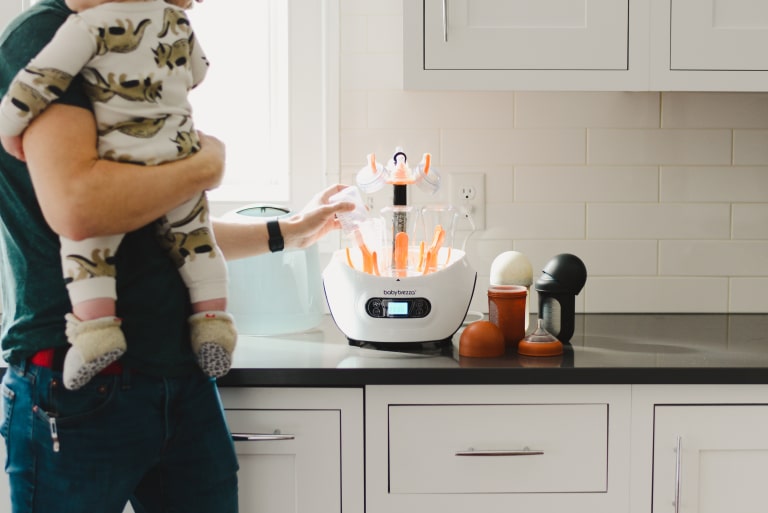
Bottle washers can save a ton of time and often include sterilizing and drying functions, but they can be pretty pricey.
Sterilizing: While sterilizing isn’t an absolute must for everyday use once your baby is past the newborn stage, you may consider sterilizing new bottles, after your baby’s been sick or if you use well water to wash bottles.
Baby bottles and most parts (double check manufacturer instructions) can be sterilized by boiling disassembled parts in a large pot for five minutes, using countertop or microwave steam sterilizers or microwave sterilizer bags (which are great for sterilizing on the go).
When to replace: Replace bottles and parts when they start to look cloudy (especially if they’re plastic) or if they get cracked. Bottle nipples may need to be replaced every two to three months (or however often the manufacturer says to replace) or when showing signs of wear like tears or discoloration.
Breast Pump Parts
Just like with bottles, breast pump parts can house bacteria if not cleaned properly. “While breast milk is super nutritious, it can also become a breeding ground for bacteria and even mold if left on your parts and not washed properly,” says Briana Engelbrecht, a certified lactation counselor and associate editor at Babylist. That mold and bacteria could make your baby sick, she says, but “regular, thorough cleaning reduces this risk.”
And “regular cleaning” here means every. single. time. you use your pump. "Pump parts should be cleaned after each and every use, including between sessions,” Engelbrecht says. “Previously, the CDC said it was okay to use the 'fridge method' where you wipe everything down and store in a clean plastic bag in the refrigerator, but it's no longer advised due to potential bacterial growth." Here’s her recommendation for how to ensure your breast pump parts get totally clean, while also avoiding accidentally damaging them:
Washing: “After every use, take apart all pump parts that come in contact with breast milk (including bottles, valves, flanges and membranes) and rinse each part under running water.
“Wash each part using a clean basin—not the sink, which is full of germs—and scrub parts with a clean brush used only for your pump parts, bottles or feeding items. If your pump parts are dishwasher-safe, you can put them on the top rack.
“You want to allow all parts to thoroughly air-dry on a clean surface like a dedicated drying rack or clean paper towel (avoid using cloth towels because, germs). If parts don't dry all the way, it introduces the potential for mold and other yucky things.”
Sterilizing: “For extra protection, sanitize your parts daily if your baby is younger than two months, was born prematurely or has a compromised immune system. For older babies without health concerns, thorough washing with hot water and dish soap is typically sufficient.”
When to replace: “Replace membranes and valves every one to three months, and flanges when they lose their shape or have tears.”
How to Clean Baby Gear
Car Seats
Between road trip snacks, sippy cup spills and the potential for motion sickness, car seats can get downright nasty. It can be tempting to want to pull the whole thing apart and thoroughly sanitize it piece by piece, but car seats require more care than your average baby product, as improper cleaning could compromise safety features.
"The most important thing to remember when cleaning your car seat or booster is to always follow the instructions in the car seat manual,” says Jen LaBracio, a certified Child Passenger Safety technician (CPST) and senior gear editor at Babylist. “A car seat is first and foremost a safety device; its number one job is to protect your child in the event of a crash. But it can't do its job unless you carefully follow the usage and care guidelines, including cleaning." Here’s what she recommends:
Washing the fabric cover: "Whether or not a car seat cover can go in the washing machine varies by car seat brand and model. Pay attention to drying instructions, too—some covers can go into the dryer on a low heat setting, but many are hang-dry only.
“Manufacturers will instruct you on what type of soap to use (usually a very mild one, or sometimes no soap at all) versus which ones to avoid and how to clean the seat’s crotch buckle and plastic parts.”
Washing the harness straps: “There will also be specific instructions around how to clean your seat’s harness straps since these straps hold your child in place in the event of a crash and can’t be compromised. Most manufacturers recommend avoiding soap and using only a damp cloth, but even this varies seat by seat. Never submerge your straps in water unless specifically allowed by your manufacturer.”
Cleaning the plastic shell: When it comes to cleaning the plastic parts of your car seat, especially underneath the fabric cover where grime can hide, you have a few options. If you’re able to pick the whole thing up, LaBracio says, “it’s totally fine to shake the crumbs out of your car seat.” Gently shaking it won’t compromise the safety. LaBracio also recommends using a vacuum to get into the crevices, and if it’s really grimy or sticky, you can use a damp cloth or wet wipes.
Reassembling: After removing the cover and maybe a few buckles, putting your car seat back together can be tricky—especially since it needs to be properly reassembled for safety reasons. To help make sure you’re doing it right, LaBracio has this pro tip: "Take a short video and a few photos of your car seat before you disassemble it for cleaning. You'll thank me later." Your car seat manual should also give you instructions on how to reassemble after cleaning, so be sure to check there too.
When to replace: Car seat parts don’t need to be regularly replaced, but you may consider replacing any parts that have gotten extra disgusting. “There are times when cleaning your car seat just won’t cut it (looking at you, vomit),” LaBracio says. “In those cases, contact the manufacturer of your car seat and ask about replacement parts.”
Strollers
If your stroller gets a lot of miles, you can be sure that it’s collecting dirt, crumbs and germs along the way. If you’ve noticed your stroller’s fabric or frame getting a little grimy, here’s how to get it looking like a fresh new ride:
Washing the fabric cover: First, check if your stroller’s seat covers are removable and machine washable. There aren’t many that are, LaBracio says, so you’re likely going to have to spot clean. Be sure to follow the manufacturer’s instructions closely, but many recommend mild soap and water.
Cleaning the frame: Stroller frames are made of plastic and/or metal, so they’re easy to wipe down with a damp cloth or disinfectant wipes. You’ll want to pay special attention to all the places germs collect the most, like handles and food trays. Dirty wheels can be sprayed off with a hose and scrubbed with a cleaning brush (much like the tires on your car).
When to replace: Just like with car seats, if the grime is just too much, then you might consider requesting a replacement part from the manufacturer. Aside from that, you should also replace parts on the frame or wheels if there are any cracks or other signs of damage, since that compromises your stroller’s safety.
How to Clean Baby Toys
Plastic & Silicone Toys
Most of your baby’s toys are going to go straight into their mouth at some point (or fairly often, if we’re being totally honest), so you want to make sure they’re as clean as possible.
Washing: Luckily, many plastic and silicone toys are pretty easy to clean. "Plastic and silicone toys can often be cleaned in the dishwasher on the top rack, but it is important to make sure they don't contain batteries or fabrics,” Dr. Klunk says. But like all the other baby products we’ve talked about so far, the most important thing is following the manufacturer instructions.
For toys that need to be handwashed, use hot, soapy water and rinse thoroughly. And if you don’t feel like removing batteries or if a part of the toy can’t be washed, then regular disinfectant wipes will do the trick.
Cleaning dirty toys is a no-brainer, but do you also need to clean new toys before your baby plays with them? "It's definitely a good idea,” Dr. Klunk says. “Who knows what happened to it on the way through the factory, into a crate and onto the shelf you picked it off of. That said, I'm sure we all chewed on a toy or three that wasn't washed and look how we turned out." So if you can’t get to cleaning new toys, don’t sweat it. But anything meant for baby’s mouth, like teethers and pacifiers, should probably get at least a quick rinse first.
When to replace: Plastic and silicone toys should be discarded at the first signs of deterioration. If you notice any cracks, tears or changes in texture—especially if small pieces are beginning to break off—then it’s time to toss it.
Stuffed Animals & Fabric Toys
These cozy companions may be great for snuggling, but they can also collect dust mites, allergens and (unfortunately quite often) bodily fluids.
Washing: As always, check labels—many stuffies, lovies and fabric books can be tossed in the washing machine on a gentle cycle. Non-washable fabric toys can usually be spot cleaned with mild soap and water.
But figuring out how often to clean your little one’s stuffed animals may not be straightforward, Dr. Klunk says. "Exactly how often to do this is not perfectly clear, but some rough rules exist. First, if it’s visibly gross…clean it! Second, not everything in your house needs to be sanitized or disinfected if it is cleaned regularly, but toys are a bit of an exception. This is especially true for toys that are likely to be placed in the mouth or touched by little hands that have been crawling all over the floor." So while you definitely don’t have to wash all your baby’s stuffies, it may be a good idea to regularly wash their most favorite ones more often, especially if baby likes to gnaw on them.
When to replace: Fabric toys with stuffing should be sewn up or thrown out whenever the stuffing starts to come out, since that can be a choking hazard for babies. And if any threads come loose, be sure to snip it off as soon as possible so that it doesn’t end up wrapped around baby’s finger.
Wooden Toys
Wooden baby toys are made to last a really long time. And whether they’re beloved hand-me-downs or brand new, they really don’t need to be cleaned that often—and they don’t take a lot of work, either.
Washing: Wooden toys really only need to be wiped down with a wet cloth and mild soap. Wood naturally collects less bacteria than materials like plastic and fabric, so there’s no need to wash it the same way you would your baby’s other toys. The most you’ll ever need to do for a wooden toy is take an antibacterial wipe to it.
A wipe-down is usually only necessary if the toy is visibly dirty or dusty or if your baby is playing with it while sick.
When to replace: Wooden toys should be repaired or replaced if there are any chips or splinters, which pose an injury risk. And those with paint should be repaired or replaced whenever the paint starts to chip (don’t try to clean it, as that’ll only make the chipping worse).
Bath Toys
Bath toys are in water all the time, so you may think they stay fairly clean, but bath toys can actually be some of the grimiest of all. “Toys that can fill with water and aren’t easily drained are prone to growing mold and are difficult to clean,” Dr. Klunk says.
Cleaning: First and foremost, once your baby’s bath is done and drained, squeeze or dump out all the water from every toy. They need to be completely drained of all water after every bath. Then leave them out to air dry for at least a few hours, and always check to make sure there’s not even a single drop of water left before you store them away.
The easiest bath toys to clean are ones without holes. Traditional squirt toys are notorious for trapping water and getting moldy, so opt for squirt toys that can be disassembled so they’re much easier to get completely clean (many are even dishwasher safe!).
When to replace: Toss your baby’s bath toys as soon as you see mold growing, especially if it’s a squirt toy that can’t be taken apart. The only way to get the mold out of those is to cut them open, which doesn’t make for a very fun bath toy in the end.
Play Mats & Activity Centers
Like your baby’s other toys, these surfaces get a lot of contact and are prime locations for collecting drool, spit-up and diaper leaks. But how you clean it depends on the material and whether or not the product can be disassembled.
Washing fabric play mats: Many fabric play mats are machine washable, but the drying instructions can vary. Some can go straight into the dryer while others need to be air dried to prevent getting misshapen. If your baby’s play mat or play gym connects to a frame, be sure it can be disassembled—some frames are permanently attached to the mat, so you’ll need to spot clean instead. Wooden and plastic frames can be wiped with a damp, soapy cloth.
Washing foam play mats: Foam play mats are super easy—just wipe with a damp cloth and mild soap or a disinfectant wipe. Just make sure to let it air dry completely before storing it away to prevent mildew.
Washing activity centers: Wipe down plastic components with disinfectant wipes or a mild soap solution, paying attention to textured areas and tiny crevices where grime can hide. Some fabric parts may be machine washable, but check the manual first.
Remember that while cleanliness is important, you don't need to achieve a perfectly sterile environment. Regular cleaning with safe products will keep your baby's gear in good condition and help protect your little one from unnecessary germs—without driving you crazy in the process.
