
The Best Pacifiers to Soothe Your Baby—According to Experts & Real Parents
You can soothe a fussy baby fast with the right pacifier, but there are a lot to choose from. We’ll help you decide.

By
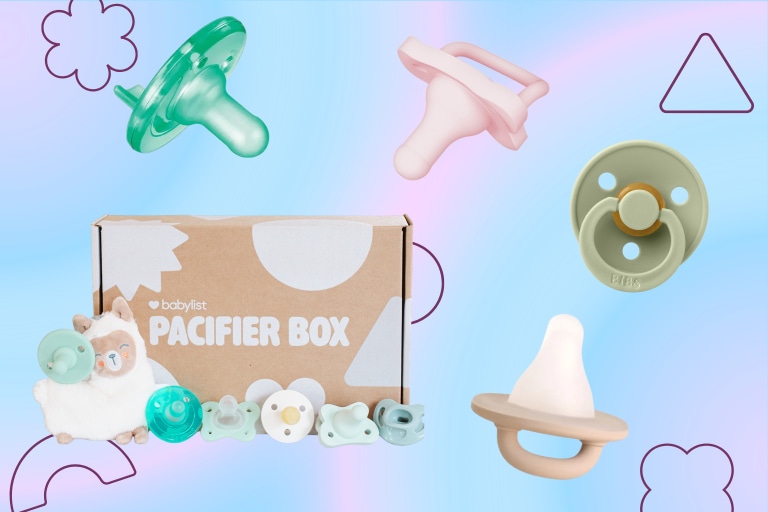
There’s a lot of confusion around pacifiers: which shape is best, when’s the best time to introduce one and whether size matters. After researching pacifiers, talking with six feeding and oral-health experts and analyzing Babylist registry data and parent survey responses, the Philips Avent Soothie is our best overall pacifier.
Then there’s paci pickiness to contend with, because it turns out pacifiers are one of those things babies have a lot of strong opinions about. I’ve done a ton of research on pacifiers in my role as Babylist’s associate editor, and as both a certified lactation counselor and a mom of two. I also talked to a handful of experts, from international board-certified lactation consultants to pediatric dentistry professionals and speech-language pathologists. One thing they all agreed on: pacifiers can be useful, baby preference matters and how long and how often a pacifier is used matters more than finding a supposedly perfect nipple shape.
Because figuring out which pacifier your baby will prefer can take some trial and error, we rounded up a few other picks—including the Babylist Pacifier Box and Dr. Brown’s HappyPaci—to help you find the right one for your baby.
How We Judged the Best Pacifiers
Best Pacifier Overall: Philips Avent Soothie Pacifier
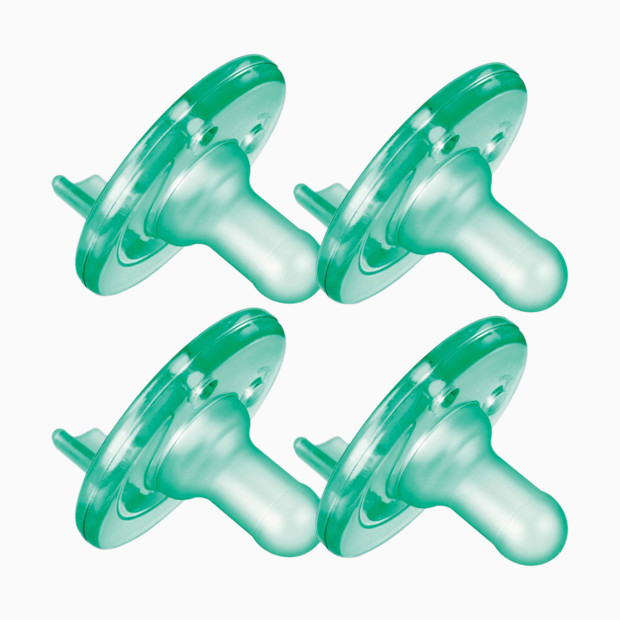
Philips Avent Soothie Pacifier (4 pack) - Green, 0-3 Months, 4
From $9.51Pros
- Medical-grade silicone
- Affordable (about $3 a piece)
- Symmetrical nipple shape
- Durable
Cons
- Bulky + firm
- Can be hard for some babies to keep in their mouth
- Can't attach to pacifier clips
The Philips Avent Soothie is the best overall pacifier because it checks all of the boxes we think matter the most when choosing one: easy to clean, a cylindrical nipple, budget-friendly and widely available.
Experts recommend symmetrical nipple shapes over those with an asymmetrical or bulb-shaped nipple because it puts less pressure on baby’s tongue and developing palate. The Soothie’s long, cylindrical shape fits those symmetrical criteria. It also encourages baby to extend their tongue while sucking—as they naturally do at the breast and bottle—rather than holding on with their top gums (and later teeth).
The Soothie is also made of one piece of medical-grade silicone—a preferred pacifier design by the American Academy of Pediatrics since there’s less of a risk of the pacifier coming apart, which can be unsafe. It also makes it super easy to clean; the Soothie is top-rack dishwasher safe, and you can also toss it in your bottle washer or sterilizer. You might even get a Soothie during your stay if you deliver in a hospital.
Although I bought upwards of 15 BIBS in all of the cute colors, the Soothie was the only pacifier my super particular first baby ever kept in his mouth longer than five seconds.
Worth noting:
This pacifier’s material is a bit thick; great for durability, but it’s a bit firmer than other pacifiers. While this isn’t inherently a bad thing, it does make it hard for some babies to keep it in their mouth.
The thickness also makes it one of the more bulky options on the market. One Babylist parent said it was “Too big for my baby’s face and kept falling out.” (It’s definitely not heavy, though.)
The clear green color featured in this guide is the original material, but they also offer Soothies in matte, opaque colors. Some parents note their babies didn’t like the texture difference of the latter. One wrote in their review, “While these are super adorable, the texture on these pacifiers compared to the clear ones is off-putting to my little one, so they didn't end up using these. We went back to the originals.”
If you think you’ll want to use a pacifier clip, this one isn’t compatible. The two holes on the shield are for breathability. If you like the overall design and material of this one, some parents say they also liked the Soothie Heart version—because it gives baby’s nose more space—and that one does have a little hole for attaching pacifier clips on the tab.
Best Pacifiers for Baby Registry: Babylist Pacifier Box
Pros
- Seven different pacifiers to try
- Cuts down on guesswork
Cons
- Only newborn sizes included
- Pricey
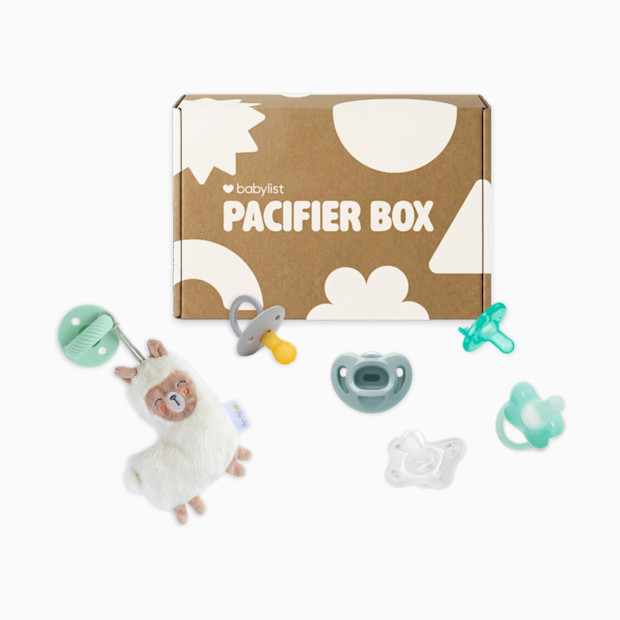
Sometimes finding the right pacifier takes a bit of trial and error, and that’s why the Babylist Pacifier Box, which features a variety of pacifier brands, is the best pick to add to your baby registry.
At the end of the day, the best pacifier for your baby is the one that they’ll actually take—and that means you won’t know what that is until they arrive. “[Our baby] wouldn’t take the hospital paci they give, so coming home to this box was so nice!” one Babylist parent shared.
The Pacifier Box includes a selection of popular pacifiers—like the Soothie, Dr. Brown’s and Itzy Ritzy—so your baby can test a few out and choose their favorite. That means you’ll save precious resources—like time and money—and avoid the frustration of buying separate packs and ending up with a bunch of rejected pacis left over. As someone who went all in on one aesthetically cute pacifier as a first-time parent, I wish I’d added this to my own registry way back when!
Worth noting:
While a try-it kit helps take away some of the guesswork (and last-minute Amazon orders), some parents said it felt a bit too pricey for what you get.
The box only contains newborn-size pacifiers (think sizes like 0+, 0-3 months and 0-6 months) since it’s aimed at helping brand new babies figure out what they prefer. If your baby chooses a winner, you’ll still need to buy a few more (and remember to size up as they grow).
Some parents mentioned in their reviews that they wished the box included some lesser-known pacifier brands, since they received a few of these free from other retailers during their pregnancy. “Great concept, but 3 out of 6 of these I had already received as free gifts. I ended up buying other pacifiers to try because I wanted to make sure baby got to try them all,” one Babylist parent wrote.
Best Budget Multipack: Dr. Brown’s HappyPaci Silicone Pacifier
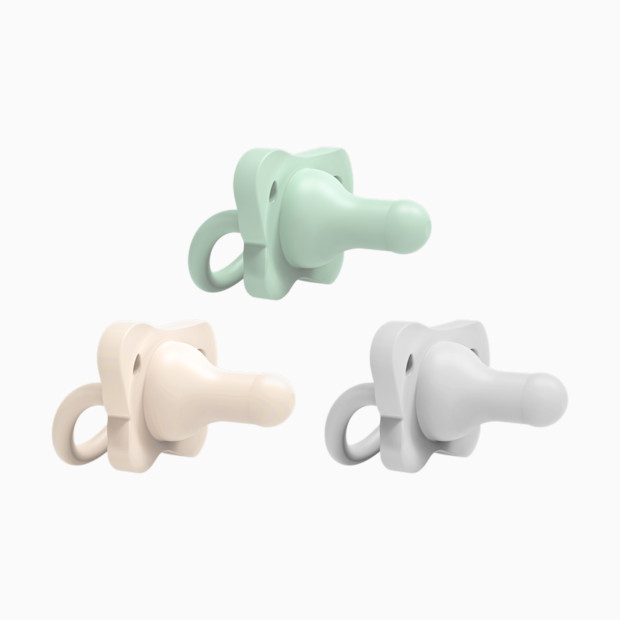
Dr. Brown's HappyPaci One-Piece Silicone Pacifier (3 Pack) - Green, Gray, Ecru
From $4.97Pros
- One-piece soft silicone design
- Encourages cupped tongue shape
Cons
- Only for babies up to 6 months old
Dr. Brown’s HappyPaci pacifiers are the top budget-friendly pick because they break down to about $2 each, and lots of babies love them.
Once your baby finds a pacifier they like, you’ll want to have a few extras on hand. Between getting lost and needing replacement due to normal wear and tear, restocking pacifiers can add up. These ones most often come in a pack of three, and the cost breaks down to about $2 each. You can even find them in a pack of eight on Amazon for a little under $15 if they end up being baby’s fave.
In terms of design, we also like that these have a one-piece silicone design and a long, symmetrical nipple that’s ideal for healthy sucking mechanics. They also encourage the “cupped” shape baby’s tongue takes when nursing at the breast.
In fact, many parents say these are a hit with babies who also use Dr. Brown’s narrow bottles (the top pick in our Best Baby Bottles guide). "We use Dr. Brown's bottles, so I figured these pacifiers would help him because he would be familiar with the nipple shape, as they are the same as the bottle nipples,” one Babylist parent wrote in their review. “While they are kind of big for his tiny face and mouth, I do see where he mimics the same sucking and pulling on these pacis as he does on the bottle and latching has been easier for him too. And there were a ton of others with the same sentiment:
“Baby loved that it was shaped like his milk bottle. Knew how to hold on to it right away.”
“My daughter, who was not a pacifier fan, took to this one right away. My daughter drinks from Dr. Brown's bottles, so it was nice that this pacifier is in the same shape as the bottle nipples.”
“When my daughter was in the NICU, the doctors recommended Dr. Brown’s bottles for the best feeding practices. Since she takes Dr. Brown’s bottles, she dislikes any pacifier that is not similar to her bottles.”
HappyPaci pacifiers are made from lightweight silicone, which makes them easier for babies to hold in their mouth and dip below their nose for more comfortable breathing. Some parents say the little handle allows their baby to grab it themselves, too. It also gives you a spot to attach a pacifier clip. The material is also easy to clean and holds up well to regular use.
Worth noting:
The biggest complaint among parents is that this pacifier comes in only one size (0-6 months), meaning they’ll have to find a new preferred pick once they outgrow this option. This isn’t a deal breaker for most parents, as experts don’t recommend long-term pacifier use (more on that below), but if you don’t want to deal with weaning so early, you might want to go with something else.
Quite a few parents also found these pacifiers too long for their baby’s mouth, triggering their gag reflex. “Our one-month-old found the length of the paci’s nipple to be too long, and would gag when she tried to use it as intended,” one parent wrote in their review. (For what it’s worth, this can also happen with any pacifier that’s new to them.) I had my friend’s one-month-old test these out for this update, and it was an immediate no. For reference, my friend uses Pigeon bottles and the Soothie as her preferred pacifier; those nipple shapes are definitely different than the HappyPaci’s.
Best Pacifier for a Deep Latch: Itzy Ritzy Latch & Soothe Pacifier
Pros
- Wide-base nipple encourages deep latch
- A good option for breastfed babies
- Flexible food-grade silicone material
Cons
- Frequently out of stock
- Neutral colors can be hard to find at night
- Material is thin
- Only sized for babies 0–6 months
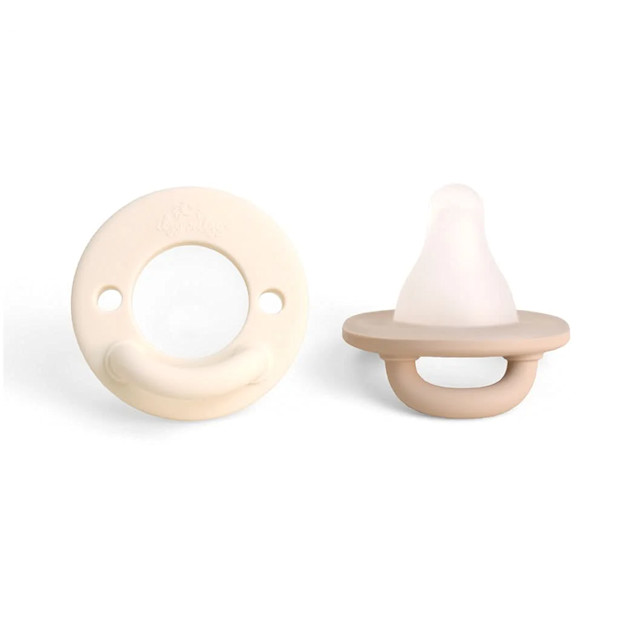
Itzy Ritzy Latch & Soothe Pacifier is the best pick for supporting a deep, breast-like latch due to its soft-touch nipple and gradual slope—making it a great option for babies who are primarily breastfeeding.
While nothing can completely mimic a breastfeeding latch, this pacifier gets pretty close. The Latch & Soothe is a newer pacifier on the market, but many lactation professionals have praised the design. It features a soft-touch silicone nipple that has a gradual slope. This allows baby to get more of the nipple in their mouth, like they do when nursing at the breast.
“My baby was notorious for a shallow latch; this pacifier has helped. I’m glad I found a pacifier that I can confidently use while breastfeeding,” a parent wrote in their review. It also encourages a cupped tongue and is flexible, similar to breast tissue. “My newborn refuses pacifiers up until this one!! It’s the only one she takes & love that it passes the triangle test! 10/10 we love it & can’t wait to order more once in stock lol just wish they were in store,” one parent wrote in their review.
Like the other pacifiers on this list, you'll want to sterilize it before giving it to your baby (the brand recommends boiling it in water for five minutes). After that, wash by hand with a non-abrasive sponge and dish soap for longer-lasting quality. It’s also top-rack dishwasher safe in a pinch.
Worth noting:
The biggest downside is that since babies seem to love them so much—and they’ve sort of gone viral in the lactation community—they’re often out of stock. If you’re still in the registry-building phase (or not frantically searching for THE ONE right this moment), be sure to sign up for restock notifications on their website and check Amazon occasionally for small restocks. For an immediate alternative, consider Ninni Co, which is also well-liked by lactation professionals. I offered that one to my second baby a few years ago and found it was too soft for her to keep in her mouth, but many parents swear by them.
The material is quite thin, and while it’s only meant for babies 0-6 months, it probably wouldn’t hold up to much wear and tear (especially with a teething baby).
Some parents note this pacifier falls out more easily if baby isn’t actively sucking: “Just keep in mind they are wide neck, so unless he is really sucking on it it easily falls out.” This can be annoying for parents, but it’s actually a good sign that baby’s really using proper mouth mechanics when it’s plugged in.
Lastly, a small but not insignificant gripe is that they only come in neutral colors right now. One parent said, “I keep losing them [in] the crib and can’t seem to find it at night while [trying] to soothe my baby.”
Best Lightweight Pacifier: Tommee Tippee Ultra-Light StayPut Pacifier
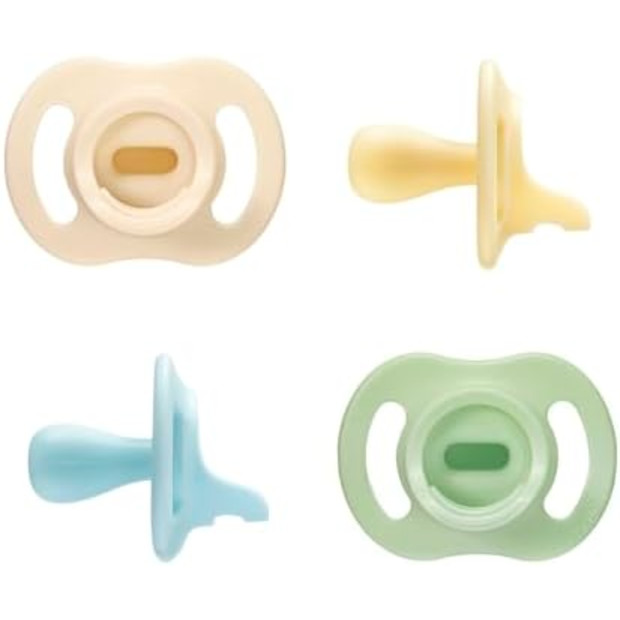
Tommee Tippee Ultra-Light StayPut Pacifier, 0-6 Months, Pack of 4
From $23.99Pros
- Lightweight material
- Symmetrical shape
- One-piece design is easy to clean
- Available in three sizes
Cons
- Nipple runs larger than other symmetrical designs on this list
Tommee Tippee’s Ultra-Light StayPut Pacifiers are the best lightweight option thanks to their unique silicone design. According to the brand, it’s 20% lighter than the original Ultra-Light and 50% lighter than the leading one-piece silicone pacifier brand.
Sometimes babies have a hard time keeping a pacifier in their mouth, and it can be due to a few reasons. But one thing parents frequently repeat in real reviews of the StayPut is that it does just that—stays put. “They stay in place 75% of the time and my son rarely spits them out or has a hard time keeping them in,” one parent raved in their review.
It features a soft, matte, skin-like material that isn’t slippery when wet, which may also help babies hold on to it. Tommee Tippee has an original version of this pacifier (without the “stay put” in its name), and the difference is in the shield design. This one features a contoured, curved shape shield that is meant to nestle more easily between baby’s note and chin. And that, combined with the nipple shape, is what keeps it in baby’s mouth and off the floor. One parent wrote in their review, “They’re the perfect fit for a newborn too! So many marketed for [newborns] still seem so big.”
And on the topic of nipples, we also want to point out that the StayPut has a different nipple design than the other pacifiers on this list; it’s symmetrical but not a perfect cylinder like the Soothie or HappyPaci, and it’s a bit more bulb-like and “flatter” horizontally. (Weight aside, it might be worth giving these a try if your baby didn’t seem to like the other shape!)
The one-piece design is also easy to clean, and means you won’t have to worry about parts separating. It also has a dedicated spot to attach a pacifier clip, so you won't have to scramble to find it. And unlike the other pacifiers in this guide, these come in three different sizes (0–6 months, 6–18 months and 18–36 months) so you have a little more breathing room when it’s time to wean.
Worth noting:
The biggest complaint about these pacifiers is that although the nipple is symmetrical, it’s quite large. As a CLC, this is my main reservation about them. Dr. Ben Dancygier, board-certified pediatric dentist and founder of Valley Pediatric Dentistry and Orthodontics, says, “I generally prefer something that doesn't unnecessarily fill the mouth or put excessive pressure against the palate, but I wouldn't want parents obsessing over finding one 'perfect' shape.” Over time—with frequent and extended pacifier use—you can typically see some changes in palate shape and teeth. While it's not so black and white, it is worth knowing that it's possible. We'll get into it in more detail down below!
Best Natural Rubber Pacifier: BIBS Natural Rubber Pacifier
BIBS Natural Rubber Pacifier (2 Pack) - Sage / Ivory, Size 1
From $12.76Pros
- Natural rubber
- Cute colors + styles
Cons
- Rubber smell may be a deterrent
- Material expands over time, so it needs frequent replacement
- Large, bulb-shaped nipple
If you prefer natural baby products, the BIBS Natural Rubber Pacifier is our best natural rubber pick because its flexible nipple offers a distinctly different feel from silicone, while its classic design and wide color selection appeal to style-conscious parents.
Designed and manufactured in Denmark, these pacifiers have a natural rubber nipple and are made without BPA, PVC or phthalates. These pacifiers come in a wide range of colors that’ll coordinate with any outfit or swaddle blanket. (Just don’t be like me and buy ten before you know if your baby will take to them). They also make versions with different shield and nipple shapes, if your baby doesn’t vibe with this model but you’d prefer to try another rubber option. BIBS also has a try-it kit that’ll let your baby test-drive a few different shapes, too.
Worth noting:
Since this is a two-piece pacifier, make sure you regularly inspect it for wear and tear—if it breaks apart, it could be a choking hazard. Some parents note that water can get inside the nipple when washing.
Parents’ biggest gripe is that these need to be replaced rather frequently. Natural rubber also expands over time, so after regular use you might notice the nipple appears larger. And they’re not cheap—costing between 7-9 dollars each depending on where you buy them. “They do go bad after a couple of months and are too expensive,” one parent wrote in their review. The brand recommends replacing it every 4-6 weeks, but you’ll definitely want to replace sooner if it becomes really large.
According to the experts I spoke with, the cherry-like bulb is not the best pacifier shape. Dr. Singh says that “cherry-shaped pacifiers can exert uneven pressure on the teeth and jaw, potentially leading to issues like an open bite.” On the flip side, some parents noted their baby had an easier time holding these in. “My baby couldn't keep any pacifiers in unless I held it for her... until these! They don’t pop out unless she wants it to,” said one Babylist parent.
BIBs pacifiers aren’t dishwasher safe. You’ll need to hand wash and sterilize following the brand’s specific directions (BIBS recommends pouring boiling water over the pacifier in a bowl and letting it soak for five minutes).
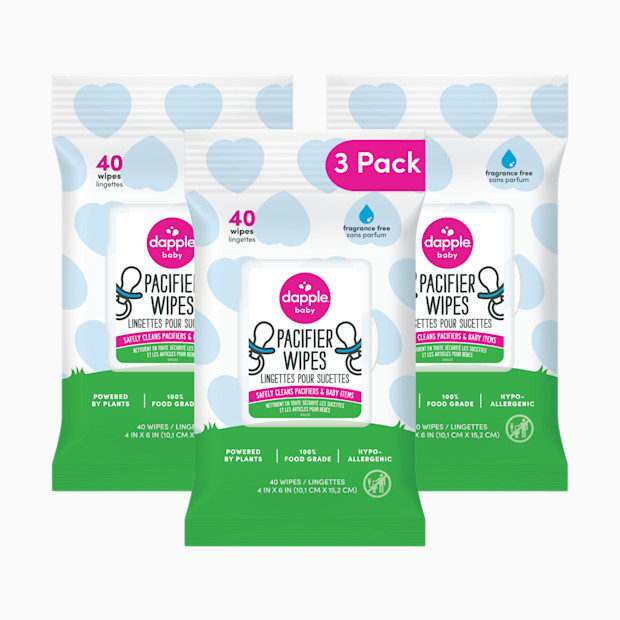
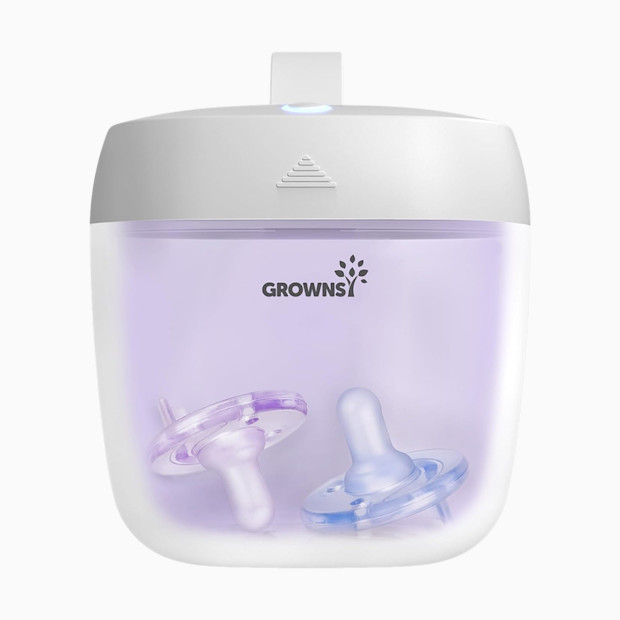
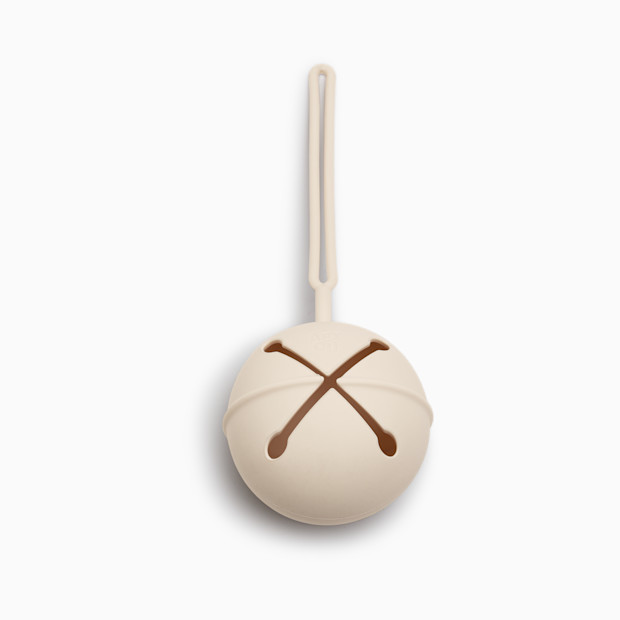
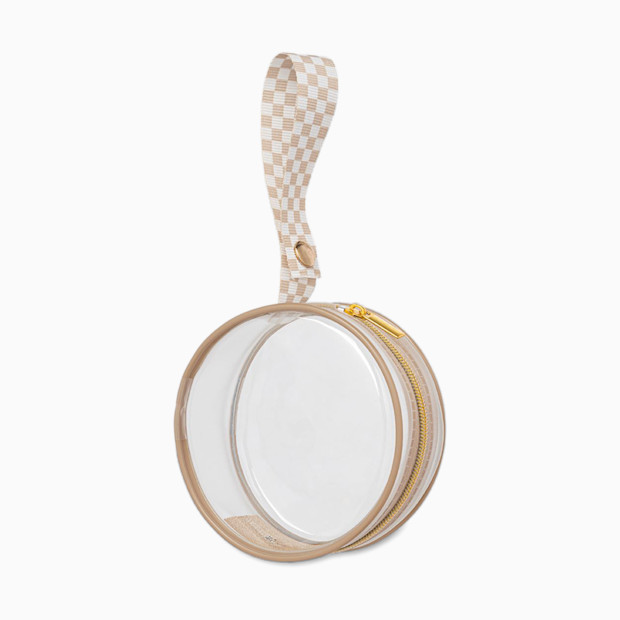
Best Pacifier Clips and Accessories
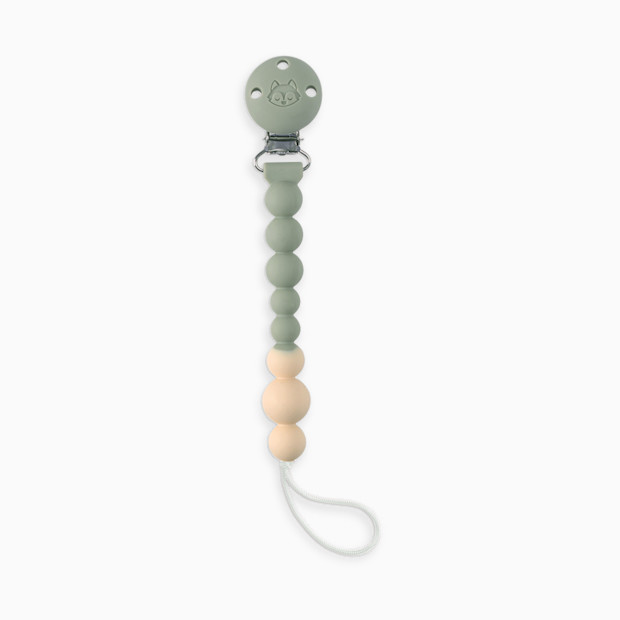
And we can’t forget the paci accessories. From clips and pouches to cleaning helpers, here are the extras to add to your registry.
Why Trust Babylist?
Babylist is the expert in baby; we know baby gear inside and out. We talk with parents face-to-face in our showroom and on our user panels and hear from thousands annually via our Best Baby Products online survey. We know what items millions of expecting parents are adding to their baby registries.
Firsthand and professional experience. As Babylist’s assistant editor and a mom of two, I’ve personally tried many different pacifiers in my quest to get my babies to take them (neither did, and that’s ok, too). I used my insight from that experience and from what I learned after becoming a certified lactation consultant (CLC) to choose the pacifiers and categories on this list. I also leaned on insight from Jen LaBracio, Babylist’s senior gear editor, who has a decade of experience in the world of baby products and is also a parent of two young boys, ages ten and three.
Expert POV. I spoke with six professionals: pediatric dentists Dr. Jasveen Singh of Pediatric Dentistry and Beyond and Dr. Ben Dancygier, founder of Valley Pediatric Dentistry; pediatrician Dr. Whitney Casares of Modern Mommy Doc; Cindy Herdé, SLPD, CCC-SLP, CLC, a feeding and swallowing specialist at Nicklaus Children’s Hospital; and international board-certified lactation consultants Ruth Hale, founder of Birth to Breast, and Demi Lucas, PMH-C, a doula. Their expertise helped me understand what parents need to know about pacifiers, including how pacifier use may affect oral development, feeding and breastfeeding.
Pacifier data. I regularly analyze which baby products our users are adding to their baby registries the most (and which ones they aren’t) and what our team of Merchandising experts—our buyers who are responsible for ensuring the Babylist Shop is stocked with the best and newest gear—is excited about. Studying this kind of data helped us choose which pacifiers to narrow in on and which ones to recommend to new and expecting parents.
Feedback and reviews. I reviewed comments and feedback from Babylist’s annual product survey of thousands of parents, read customer reviews from hundreds of Babylist users and spoke to parents on our staff about their real-life product experiences.
When is the best time to introduce a pacifier?
If you’re breastfeeding, the AAP and lactation professionals recommend waiting to introduce a pacifier until feeding is going well. That means your milk supply is sufficient, feeding is comfortable and consistent, your baby is latching effectively and they’re gaining weight as expected. This often takes about three to four weeks, but the timeline varies. Will you ruin your chances of breastfeeding if you offer it sooner? Not necessarily. As with most things in parenting, it’s not so black and white; some breastfeeding parents start sooner than four weeks and have no issues.
The biggest thing to watch for is missing your baby’s hunger cues—which can be tricky when you’re still learning each other. Your milk supply works on supply and demand, so regularly replacing a feeding with a pacifier can mean less milk is removed from your breasts, signaling your body to make less. The same goes for pumping: if your baby gets a bottle of expressed milk or formula, pumping around that time can help maintain your milk supply.
If you’re unsure, it’s a good idea to work with a lactation professional early on in your feeding journey, and this is something they can help you figure out. If you aren’t breastfeeding, You can generally introduce one right away but it’s still important to pay attention to hunger cues, diaper output and weight gain to make sure your baby is getting enough milk.
What are the benefits of pacifiers?
Babies suck to eat, but sucking can also comfort them when they aren’t feeding. This is called non-nutritive sucking, and a pacifier gives some babies another way to do it.
Lower SIDS risk: The American Academy of Pediatrics (AAP) recommends offering a pacifier when you put your baby down for naps and bedtime because pacifier use is associated with a lower risk of sudden infant death syndrome (SIDS). Researchers don’t yet know exactly why. If the pacifier falls out after your baby falls asleep, you don’t need to put it back in. Never use a clip, cord or stuffed attachment with a pacifier during sleep.
Comfort and pain relief: Non-nutritive sucking can help soothe babies and may ease discomfort during brief medical procedures, such as a heel prick or vaccination. A pacifier is one option; feeding and holding your baby can provide comfort, too.
A pacifier may also be handy during a flight: sucking during takeoff or descent can help some babies with changes in ear pressure.
How to Choose a Pacifier
There are a few factors to consider when choosing the best pacifier for your baby.
Start by choosing a pacifier size based on your baby’s age range. Then, look for a firm, ventilated shield that’s large enough to keep the entire pacifier from entering your baby’s mouth. A one-piece design has fewer parts that could separate and may be simpler to inspect and clean.
Nipples come in round, cylindrical, flattened and other shapes. There’s no one shape that every baby will accept or that has been proven best for breastfeeding. As pediatric dentist Dr. Ben Dancygier explains, shape can change how a pacifier sits in the mouth, but how long a child uses it matters more than small differences between designs. Try one style or a small variety before buying multiples.
Shield shape and weight may also affect comfort. A contoured shield leaves more space around the nose; a lighter pacifier may be easier for some babies to keep in place. Check how the pacifier fits your baby.
Pacifier Safety Tips to Keep In Mind
Here are the safety considerations to keep in mind when letting your baby use a pacifier:
Never attach a pacifier around your baby’s neck or hand (pacifier clips that attach to their clothing are okay to use while baby is awake and being supervised).
Never use a bottle nipple as a pacifier; only give them actual pacifiers from reputable brands.
Frequently check your baby’s pacifier for signs of wear or deterioration and replace at the first sign. Dr. Casares says replacing every four to six weeks is best practice.
Look for a pacifier that’s dishwasher-safe for easier cleaning. Dr. Casares says it’s not necessary to sterilize your baby’s pacifier beyond the first time before initial use. During your baby’s first six months, clean your pacifier frequently. (You can boil your pacifier if you don’t have a dishwasher.) After baby reaches six months of age, cleaning your paci with soap and water is fine.
Never force a pacifier on your baby. Some babies love pacis and take to them quickly and easily, and others don’t.
Frequently Asked Questions
What’s the best pacifier for a newborn?
Choose a pacifier labeled for newborns and check that it meets current safety requirements. (If you’re breastfeeding, follow the introduction guidance above.)
As your baby grows, check the product’s age range rather than assuming every brand changes size at the same age. An older child may be able to fit an entire newborn pacifier in their mouth.
What if my baby refuses a pacifier?
That’s normal. You can try offering it again later or try a different shape, but you don’t have to keep buying pacifiers if your baby isn’t interested. If refusal comes with trouble feeding, swallowing or gaining weight, ask your pediatrician for an evaluation.
What pacifier shape is best?
Pacifiers come in different shapes. Some are more rounded, while others look more square. The AAP doesn’t recommend one shape over another; they encourage trying different kinds of pacifiers until you find one that your baby likes. You will find that pediatric dentists and lactation consultants do have preferred shapes, keeping healthy oral development and breastfeeding success in mind. Our best advice is to consider all of the information provided and make a choice that feels right for you and your baby.
What is an orthodontic pacifier?
“Orthodontic” usually describes a flattened or angled nipple shape. It doesn’t mean the pacifier holds a baby’s jaws in a guaranteed correct position or prevents dental changes. Some research suggests certain designs may be associated with less open bite, but the American Academy of Pediatric Dentistry (AAPD) says the evidence is insufficient to recommend orthodontic pacifiers over conventional ones to prevent malocclusion. Choose a safe, age-appropriate pacifier your baby accepts, and pay attention to how long the habit continues.
Are silicone or natural-rubber pacifiers better?
Neither material is best for every baby. Silicone generally holds its shape longer; natural rubber has a softer feel but can change with use and may need more frequent replacement. Check the care and replacement directions for the specific product, and avoid latex if your child has a known sensitivity.
How often do pacifiers need to be replaced?
Pacifiers have an important job (soothing and comforting babies when we’re needed elsewhere), and all of that work causes them to wear down over time. Dr. Casares says to replace your baby’s pacifier “every four to six weeks, or sooner if you notice any damage.”
Pacifiers also need to be replaced periodically if your baby has outgrown them, according to the brand’s age recommendations, for a few different reasons. It’s also important to size up since smaller pacifiers pose a potential choking hazard for older babies and toddlers if they get the whole thing in their mouth.
When is the best time to wean off a pacifier?
There isn’t one date that fits every family. The AAPD notes that reducing or ending use in the second six months of life may help lower the risk of ear infections. Continued use after 12 months raises that concern, and use beyond 18 months can affect the developing mouth and bite. The guidance is to end nonnutritive sucking habits by 36 months. A pediatric dentist can help you make a plan if you’re seeing changes in your child’s bite or having trouble with the transition.
How do you wean from a pacifier?
Start gently: offer other ways to soothe your child, use praise for times they go without the pacifier and avoid shame or punishment.
The AAP recommends these pacifier-weaning tips:
Use praise and rewards like star charts or daily rewards, but try to keep the process low pressure and shame-free.
Keep your child busy with other things in lieu of using a pacifier to relieve boredom.
Talk with your pediatrician or pediatric dentist for other tips and recommendations or if you’re struggling with the transition.
Sources
Babylist content uses high-quality subject matter experts to provide accurate and reliable information to our users. Sources for this story include:
Dr. Ben Dancygier, board-certified pediatric dentist and founder of Valley Pediatric Dentistry and Orthodontics.
Cindy Herdé, SLPD, CCC-SLP, CLC, clinical specialist in feeding and swallowing at Nicklaus Children’s Hospital.
Demi Lucas, IBCLC, PMH-C, doula and head of care at Clementina Health.
Dr. Whitney Casares, a pediatrician and the voice behind Modern Mommy Doc.
Ruth Hale, a board-certified lactation consultant (IBCLC) and founder of Birth to Breast.
Dr. Jasveen Singh, a pediatric dentist who treats tiny patients at Pediatric Dentistry and Beyond.

;)
","url":"https://www.babylist.com/gp/dapple-pacifier-wipes-3-pack/87425/3695793","source":"hello_baby"});)
;)
;)
;)
;)