
We tried one of the newest sensory toys for babies. Here's our take. 👀
From tummy time to imaginative play, we cover what makes a great sensory toy for babies starting at six months.

By
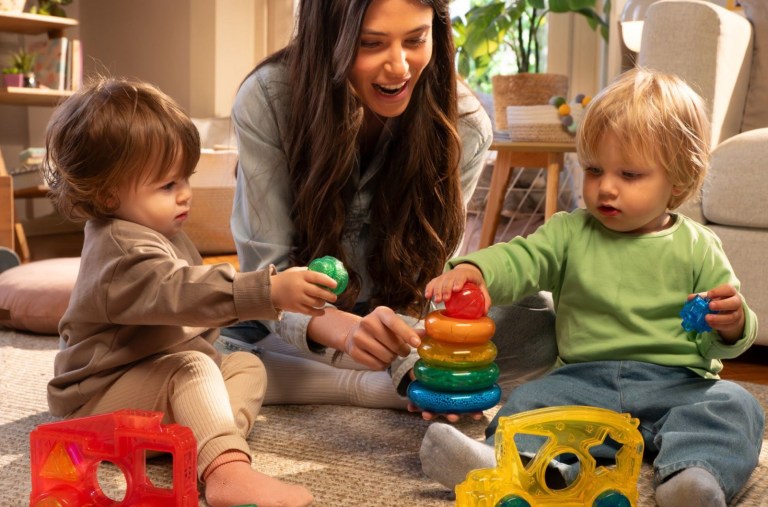
Squishy dumplings, soft cubes and jelly tear drops might be all over your feed right now, but sensory toys have long been a favorite for kids and parents alike. While you might not think of "sensory" as its own category of baby toys, sensory development is a huge part of why babies play in the first place. The best toys for your little one encourage sight, touch and sound while supporting gross motor skills (like pulling up to stand) and fine motor skills (like picking up a small piece of food).
After testing Lil’ Jellies with my eight month old baby and with some Babylist parents in the video above, here are a few things that make these toys stand out.
1. They encourage baby to touch, explore and move
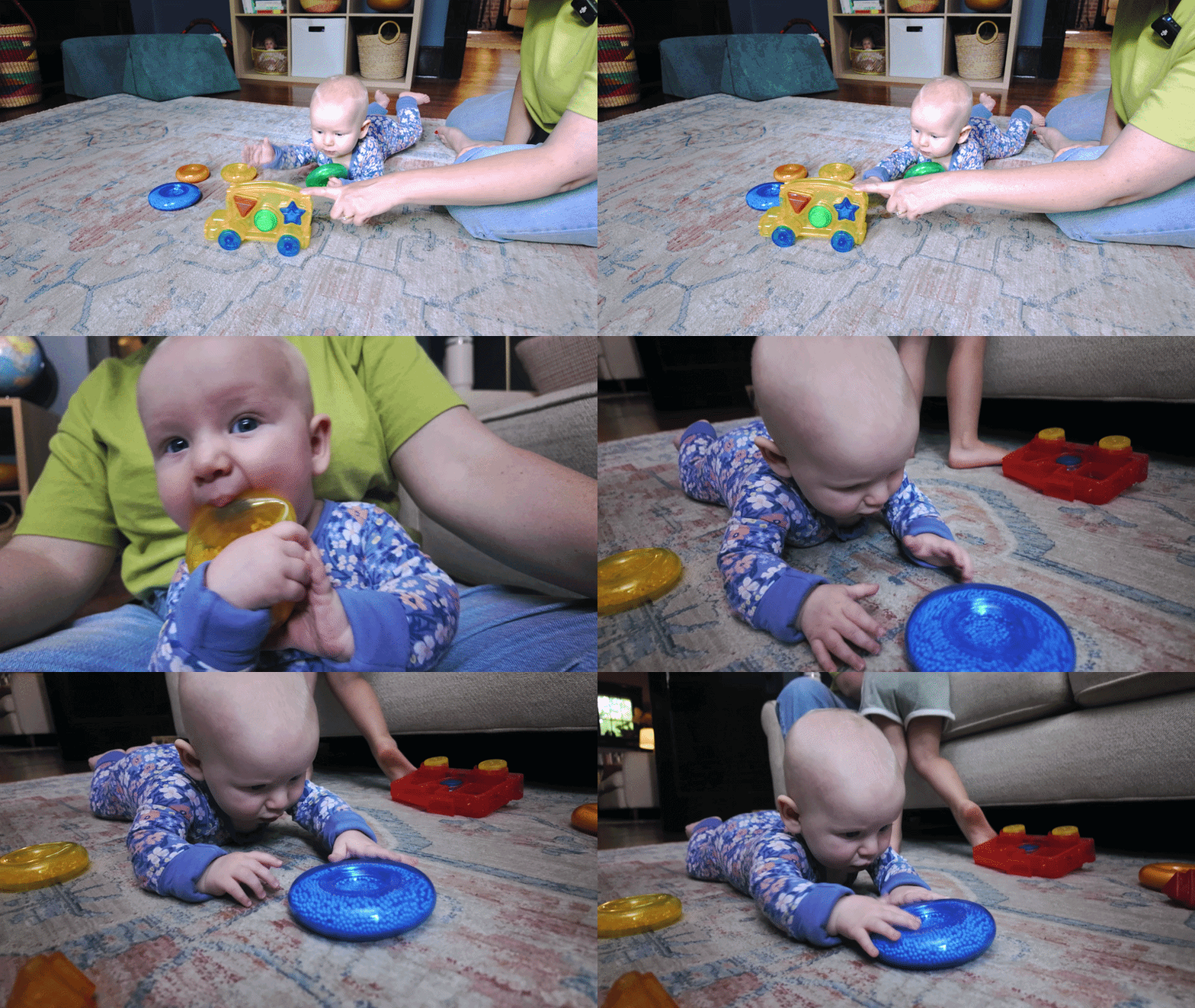
Grasping, tracking and reaching for toys during baby's first year all help build the skills they'll use for bigger milestones later on. During tummy time, placing a toy just out of arm's reach can motivate babies to stretch, pivot and inch a little closer.
Lil' Jellies help support these early skills. Made for babies starting at six months, they encourage exploration through sight, touch and sound. Jelly Stackers may remind you of the classic stacking rings you grew up with, but these soft, squishy shapes have a sensory twist: each one is filled with materials like kinetic sand, tinsel, beads or foam balls, giving every piece a different look and feel.
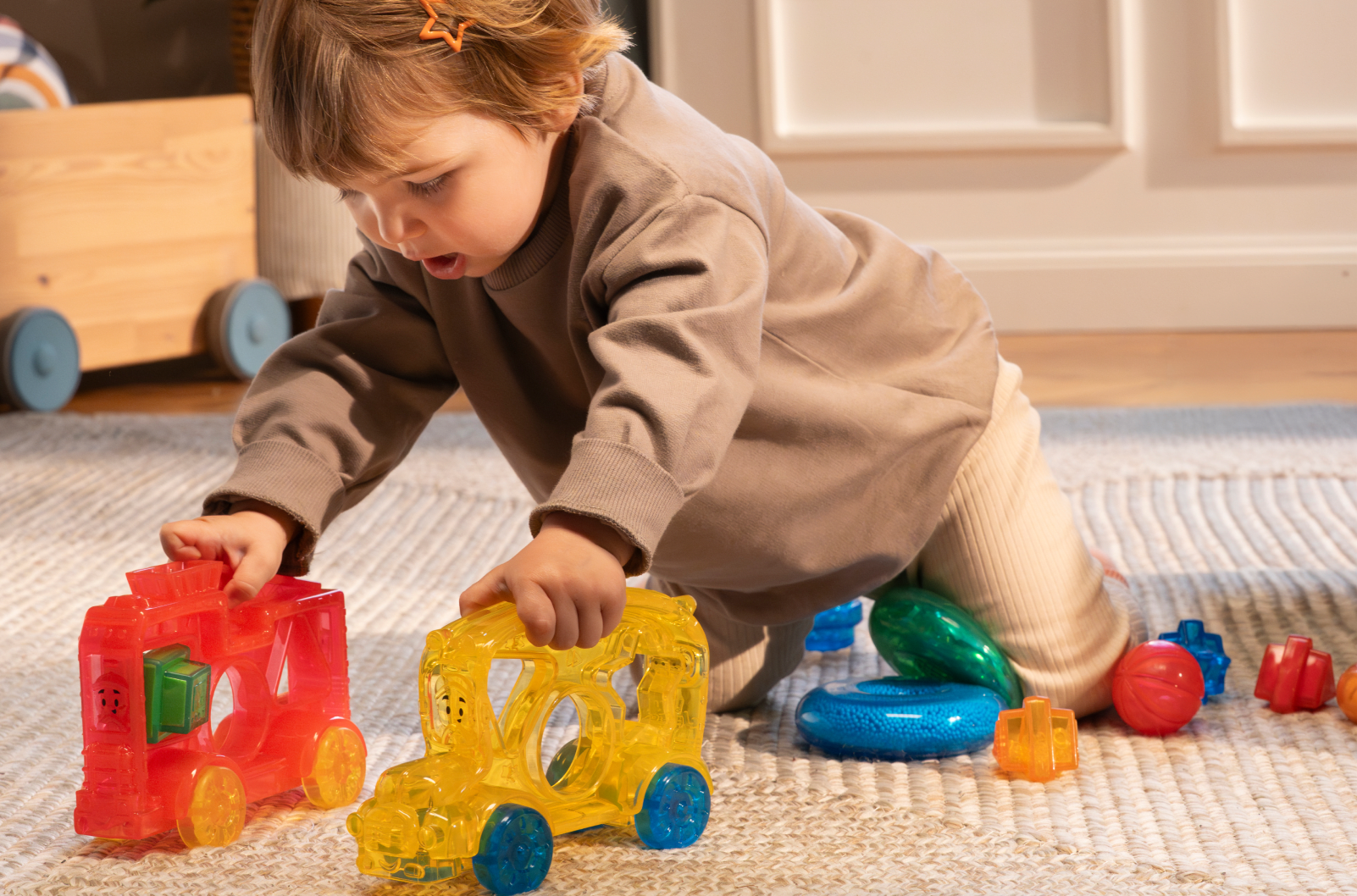
The jelly bus and fire truck add another layer of discovery with pop-out shapes and surprise fillings while helping babies practice fine motor skills. And because the wheels really roll, they're fun to chase across the floor when babies begin scooting and crawling.
2. They grow with baby (and big kids like them, too!)
Some toys hold a child's attention for a few days. Others become favorites because kids keep finding new ways to use them. While my eight-month-old kept reaching for these in his playard, it was his eight year old sister who couldn’t wait to rip open the box when they arrived. (And “borrowed” some of the pieces to keep on her desk.)
As babies get older, simple sensory exploration often turns into stacking, sorting and pretend play. Toddlers might build towers, organize toys by color or create imaginative stories using the same pieces they once simply shook and squeezed. You could use the Jelly Firetruck and School Bus to encourage roleplay and storytelling about community helpers.
3. They’re washable, soft and durable
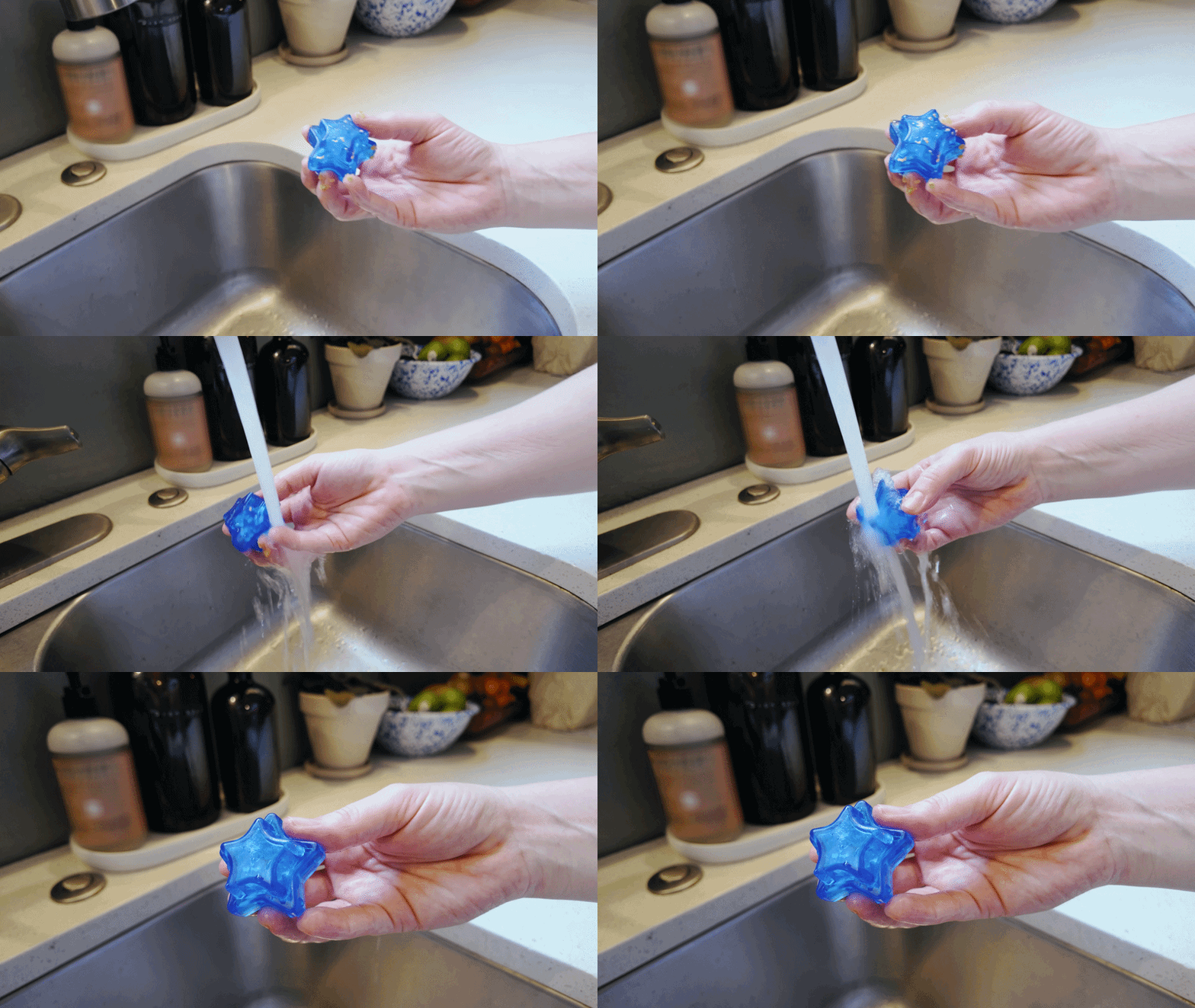
Choosing toys that can handle everyday life with kids means: can it be washed? Can it be dropped and not break? Yes, and yes. Whether it’s dog hair or baby drool, Lil' Jellies can simply be rinsed with water, making it easy to get them ready for the next round of play. I have two large dogs and two cats, and after a few play sessions on the floor, it was easy to just run them under the tap and they were good as new.
Their soft construction is another bonus, especially for babies who are still figuring out how to hold and wave toys without accidentally bonking themselves or someone else. And that means less ouch for you when you step on one in the middle of the night.
4. Our verdict: worth the shelf space
The best sensory toys do more than keep little hands busy. They encourage babies to explore through sight, touch and sound while growing with them through different stages of play. After testing Lil' Jellies with my own eight-month-old and seeing how Babylist parents used them, it's easy to see why these toys have staying power.
One question that's easy to overlook when shopping for baby toys: Will you enjoy playing with it, too? As a parent of three, I appreciate that Lil' Jellies don't require batteries, make electronic sounds or come with a million pieces to keep track of. And the fact that they're fun for me to play with, too? Even better.
This article is sponsored by Lil' Jellies. Babylist's free site, apps and emails are made possible by our sponsors. We limit our sponsored content to relevant partners that offer products and services we believe in and use ourselves.
