
How to Use a Sound Machine: The Safety Basics
What parents need to know.

In This Article
It’s almost like a mantra other parents repeat to each other when they hear that one of their own has a baby who won’t sleep. “Have you tried using a sound machine?”
For the uninitiated, a sound machine can seem like the silver bullet for soothing a crying baby and ensuring they get their Zzz’s.
“From a behavioral sleep perspective, white noise machines might be helpful as they muffle other sounds in the household or adjoining households that might startle a sleeping infant,” says Dr. Carolyn E. Levers-Landis, Ph.D., Professor of Pediatrics, Case Western Reserve University School of Medicine. One parent on Reddit called theirs a “sleep game changer,” and another called it a “godsend.”
But you might have also seen the 2023 American Academy of Pediatrics warning about excessive noise exposure and how it can pose a risk to your baby’s hearing. Does this, you might think, apply to our beloved sound machine? As with all things parenting, nuance is key. Let’s break it down.
But First, What Are Sound Machines, and How Are They Used?
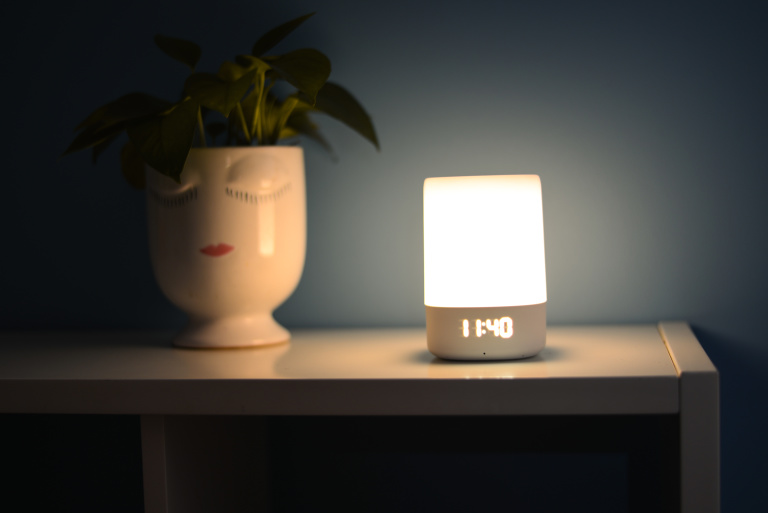
Sound machines or white noise machines can be as basic as a machine that plays one sound continuously—usually a noise reminiscent of old-school TV static (tell me you’re a Millennial without telling me you’re a Millennial…)—or a multifunctional gadget that offers different sleep sounds, timers, a night light option and “okay to wake” functionality. They’re often used at nap times and bedtime to help soothe babies (mimicking sounds they might be familiar with from the womb) and keep distractions from other noises in the household at a minimum.
The Safety Risks
The AAP’s warning focuses on how “children have smaller ear canals than adults, which intensifies higher-frequency sounds.” When it comes to sound machines, the risks are related to the volume of the white noise, how long your baby is exposed to the sound and if sound machines could create a dependency that may be hard to break as infants grow older.
Volume levels
Anyone who’s gone to a live music event has probably felt their ears ringing when they step outside the venue doors. That’s a warning sign that the music was too loud. “When played at high volumes, especially for extended periods of time, sound machines have the potential to cause Noise Induced Hearing Loss (NIHL),” says Emily Kukla, MA, CCC-SLP, speech therapist and founder of Moms Teach Speech.
“NIHL is permanent hearing loss and can occur when you listen to sounds of 85 decibels (dB) for more than 8 hours at a time. The louder the sound, the more quickly hearing loss can occur. Sounds of 100 dB can damage hearing in just 15 minutes,” adds Kukla. To contextualize this, 85 dB is about as loud as a blender or a noisy restaurant, while 100 dB is that loud concert we just mentioned.
Chances are you're not going to be playing your baby's sound machine at that level.
Length of exposure and distance to the sound
Not only does volume matter, but how long your baby hears it matters, too. “Prolonged exposure to any loud noise can increase the risk of noise-induced hearing loss,” says Sydney Bassard, CCC-SLP, a speech-language pathologist who specializes in hearing loss and literacy. In this instance, prolonged means about 8 hours of continuous exposure to sounds that are 85 dB or higher. “Having a degree of hearing loss can impact a baby’s ability to detect speech sounds, which is a crucial step for early speech and language development. Babies learn by listening to speech, so ensuring a quiet environment during wakeful periods is important,” adds Bassard.
How close your sound machine is to your baby is important, too. “The decibels reaching your child's ears will be different if the sound machine is right next to them vs. on the other side of the room,” says Kukla.
Possible dependency
Like adults with their sleep routines, babies link certain actions or conditions with falling asleep. These sleep cues or associations can be positive, like cuddling with a parent, hearing a bedtime lullaby or having a dark, cool sleeping environment. Some sleep associations may become negative if you think they will affect your baby’s ability to fall asleep independently now or as they get older. For example, always needing white noise, movement or a bottle to fall asleep.
If your baby’s sleeping over at Grandma’s and you’ve accidentally forgotten the white noise machine, this could cause a disruption. But “everyone is different, and some infants might easily adapt to changes in their sleep environment, whereas others might be less flexible,” says Levers-Landis. “If [parents] would like to change the routine, for some infants, this might need to be done gradually with one factor changing at a time.”
How to Use Sound Machines Safely
You can take simple steps to lessen any sound machine risks for your baby. Here’s what you can do:
Keep the volume down. “The goal is for the sound machine to be at a conversational level, which is around 50 dB,” says Bassard. You can determine this by downloading a free sound level meter app on your phone. Kukla recommends the National Institute for Safety and Health’s (NIOSH) app, but there are plenty of free options available in app stores. “Put your phone in your baby's crib and test your sound machine at different noise settings and places around the room so you know exactly how loud they'll be for your baby,” says Kukla. “Look for features like volume limits or timers to help keep the noise within safe ranges,” adds Kukla.
Keep the sound machine at a good distance. “As a general rule, don't put a sound machine in your baby's crib,” says Kukla. “One study found that placing the sound machine at least a foot away from your baby kept the noise from exceeding dangerous levels with all the devices they tested.” The AAP recommends that sound machines be placed at least 7 feet away from baby.
If you want to wean your baby off of a sound machine, play it more softly and for shorter periods of time each night, advises Levers-Landis. This can be easy if your sound machine has an automatic timer. You can set it to turn off after 2 hours the first night, 1 hour the second night and 30 minutes the third night, for example.
So, Are Sound Machines Worth It?
The answer to this is up to you. If you go with a sound machine, look for one with volume control and a timer, says Bassard. “It would be ideal for the sound machine to shut off automatically after a certain time or once the child has fallen asleep.” And if you’re looking for alternatives, you can try shushing or talking softly to the baby, singing lullabies or having a fan on, says Levers-Landis.
