
Your 9-Week-Old Baby
Turns out, it's normal to feel sort of bored with your baby. Plus, we’ve got hacks to make early parenting a little bit easier.

By
At nine weeks, baby’s world is expanding. As their vision continues to develop, you might notice them watching your movements a little more closely, offering smiles to more people and things and getting more interested in color images over their usual black-and-white. Dr. Chris Klunk, a board-certified neonatologist at Pediatrix Medical Group, has advice on how to make baby's world visually fascinating to help encourage their eyesight development.
Meanwhile, you’ve spent nine straight weeks deep in the daily rhythm of feedings, naps and diaper changes—and now you may be wondering: Is it normal to feel a little bit...bored? Or maybe even a little guilty whenever you sneak away for some time to yourself? Both are totally normal, and ob-gyn Dr. Faith Ohuoba has some advice for dealing with these feelings.
We’ve also got IBCLC Krystal Duhaney’s guidance on balancing your breast milk supply as baby’s needs (and your schedule) change, a realistic look at what it means to "sleep through the night" and a list of new parent life hacks straight from real Babylist parents.
🚼 Baby’s Development
👁️ Eye Tracking
When your baby was first born, their vision was pretty underdeveloped—they couldn’t see more than 10 inches away. But over the past nine weeks, and continuing over the next several months, your baby’s vision will keep getting better.
By about week nine, one of the biggest improvements in baby’s vision is their ability to track moving objects, a skill you can help encourage. "The goal here is to make the world around them as fascinating as possible," Dr. Klunk says. "Get your face in close, remember they can only focus on things within about a foot and make different faces and expressions. Try having them track objects with high contrast colors or play in front of a mirror."
Baby's ability to follow along with all those visual stimuli is a clear sign that their vision is sharpening, and it’s the start of spatial awareness, depth perception and hand-eye coordination. Those are key parts of learning how to reach and grasp—which we’ll talk about in a couple weeks—as well as learning to crawl.
😊 Recognizing Faces
Baby’s cognitive abilities are getting better too, and this is right around the time when you might notice them smiling more at other familiar voices and faces besides yours. That’s right: baby is starting to recognize more of the people (and animals and objects) that are consistently around them—while also starting to understand when they don’t recognize someone.
Studies have shown that babies are able to recognize their parents’ faces as soon as they’re born, but they don’t start to gain an interest in people’s faces in general until right around now. So don’t be surprised if you catch your baby staring at everyone they meet. How do you know if your baby recognizes someone? "They will let you know with smiles, a light of recognition in their eyes or a change in demeanor," Dr. Klunk says. "Just like grown-ups without all the small talk!"
💡 Try This with Baby: Introduce Color Images
Your baby’s eyes have largely only been able to focus on high-contrast, black-and-white images for the past couple of months, with only certain extra-saturated colors (like red) catching their attention. "Baby color vision is often thought to be muted or blunted," Dr. Klunk says. "Meaning, we think they can see color, but probably not very well, and it is likely difficult to tell the difference between many color pairings."
But research shows that right around week nine, babies’ eyes can start to clearly distinguish between red and green (and potentially blue and yellow too), as long as the colors are saturated.
So now is a great time to introduce picture books and toys with bright colors, both to hold baby’s attention and encourage their visual development. Keep items 8–12 inches from their face to make sure they can see them clearly, and keep any pictures on the simpler side. A brightly colored, patterned playmat can also be a big help right now, especially to keep baby interested during tummy time.
Whether your personal aesthetic leans more toward neutral tones or you’ve already got a pretty colorful space, a few brightly colored things in each room can give baby more things to look at in their daily environment. And keep in mind that faded, low-contrast colors will still be hard for baby to focus on for at least a few more months.
💗 You, 9 Weeks After Baby
🥱 Fighting Boredom as a New Parent
Your nine-week-old has already hit so many tiny milestones since they were born, and while you might be marveling at each one, the routine might also be feeling a bit monotonous by now. Let’s face it: babies can be boring—your baby is still at least somewhat in the blob stage, and it’ll be a few more months before they start playing more interactively. So how do you keep yourself entertained?
“I recommend that you delve into self-care,” Dr. Faith says. “Shift the focus on you for a moment.” That could mean doing something solely for yourself (remember those “me time” moments we talked about last week?), or finding other little ways to break up the routine with baby. Try having tummy time at the park, doing storytime at the library or taking babywearing adventures to a museum.
Boredom doesn’t mean you’re ungrateful—it means you’re human. Take a look at parenting forums online and you’ll see hundreds of other new parents facing the same thing. And while it’s true that this stage is temporary, that doesn’t mean it isn’t painfully dull sometimes. Seeking out small joys can help.
😔 “Mom Guilt”
At the same time, when boredom does strike, it’s common for new parents to sometimes feel a little bit guilty about taking time for themselves. It’s that worry that you’re not doing enough as a parent when you rely on other caregivers to help out or when you just want some time away from being a parent.
But contrary to how it might feel, that guilt is actually a good sign, Dr. Faith says, since it’s proof that you’ve bonded with your baby enough to worry whether you’re doing enough for them. And you are doing enough for them—it’s totally normal to want a break now and then, and it’s also really beneficial for baby to spend time with other caregivers.
If the guilt starts to feel overwhelming, especially if it keeps you from taking time away for yourself, consider talking to your doctor about it. “Although [ob-gyns] don’t specifically use the term ‘mom guilt,’ it’s an opportunity for mental health conversations and awareness,” Dr. Faith says.
🧑🍼 Feeding Baby
🍼 Week 9 Feeding Guidelines
3–4 fluid ounces per feed, every 3–4 hours; 6–8 feedings per day for a total of 24–30 fluid ounces per day.
⚖️ Balancing Your Breast Milk Supply
Whether you’ve been breastfeeding the past nine weeks, bottle feeding, formula feeding or a combination of all types, baby’s eating routine has likely been gradually shifting over the past several weeks. While this transitional phase can be a little easier to adapt to with bottles, breastfeeding during feeding transitions might be trickier to track.
“As your baby exits the newborn stage, they'll likely stop nursing as often, but will become more effective at removing milk,” says Krystal Duhaney, an IBCLC and founder of Milky Mama. “Those every one-to-two-hour nursing sessions will gradually change to every three hours or so.”
If you’re concerned about whether your breast milk supply will be able to keep up with baby’s changing needs, Duhaney says to keep an eye on diaper output. “Remember, if baby’s having plenty of wet and poopy diapers and steady weight gain, you’re doing great,” she says.
Duhaney says that continuing to nurse on-demand will help your supply stay in sync with baby. If you're pumping, she says to aim for about seven to eight sessions per day. And as always, she says that “if your supply suddenly takes a dip, or something just feels off, be sure to reach out to a lactation consultant for help.”
😴 Sleep
🛏️ Total Sleep: 12–16 Hours
Naps: 2–3 per day for 2–3 hours each
🌙 “Sleeping Through the Night”—or Not
You might’ve heard well-meaning people ask, “Is your baby sleeping through the night yet?” And you may be wondering what kind of fantasy they’re living in if they think a nine-week-old baby can sleep eight to nine hours straight.
"Truth is, [babies] probably aren’t sleeping through the night at this age, but they may give you a good five to six hours of quiet," Dr. Klunk says. So not a full, uninterrupted night like adults are used to.
Since their stomachs are still so tiny, babies this young still need to wake up for at least one middle-of-the-night meal. And even if you’re doing daily outdoor walks with plenty of sunshine, your baby’s circadian rhythm still isn’t perfect. So cut them (and yourself) some slack, and keep in mind that a five-to-six-hour stretch of sleep is actually really good right now.
"I find it important to remind parents to take advantage of those moments," Dr. Klunk says. "It's tempting to use it to tidy the house, watch a movie or play some video games...but this is your time to sleep, too!"
✅ Little List: Early Parenting Hacks
We asked real parents on the Babylist team for some of their favorite tried-and-true parenting shortcuts during those early weeks. From bottle prep to doubling up on gear, these small things can make a big difference when you're short on time, energy or hands.
Formula feeding? Prep a full day's worth. Use a large formula mixer or pre-measure bottles to prepare batches of formula in advance. The CDC says mixed formula is good in the fridge for up to 24 hours, so that’s less work for you throughout the day.
Babywear while doing chores. If your baby gets fussy in a bouncer chair, playard or on the floor, a carrier lets you keep them close while you still go about your day—folding laundry, doing the dishes, cleaning or running errands. All the movement keeps them soothed, and the carrier keeps your hands free.
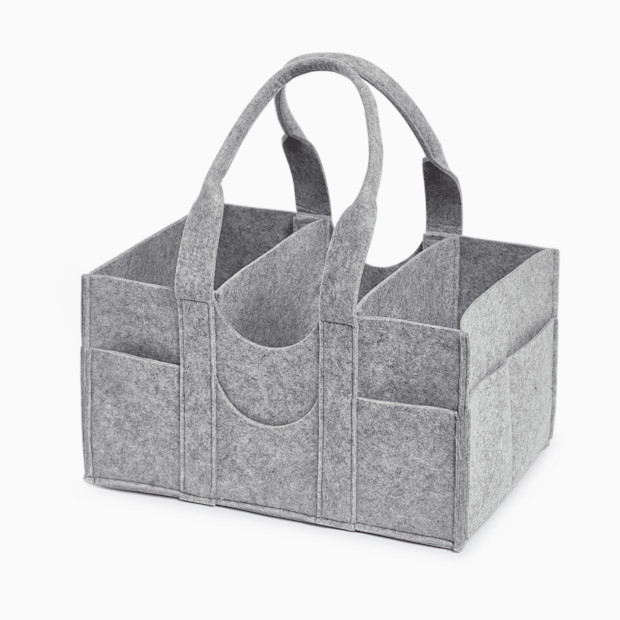
Create a "station" system. Set up mini supply zones for diapering and nursing around your home—bedroom, living room, kitchen, office—so you’re never far from the essentials. A diaper caddy comes in handy for a quick-grab set of diapers, wipes, burp cloths, nipple shields or anything else you might need on-demand. Keep one in the trunk of your car, too, along with a blanket for quick diaper changes or as a nursing cover on the go. “I kept my feeding and pumping supplies in one of those little rolling art carts,” says Emily L., mom of three (including twins) in Boston. “Then I could just roll it from living room to kitchen to dining room—wherever I need to be sitting.”
Have a feeding checklist. Sometimes baby’s feeding sessions can last 20 to 30 minutes, and once you get settled in, it can be hard to get up again if you need something. That’s why Mary K., mom of 1 in Maryland, recommends having a go-to checklist of everything you’ll need before sitting down to feed baby. The items on her checklist include:
Water bottle
Snack
Phone
Hair tie
TV remote
Making sure the dog is in the crate (or at least indoors and calm)
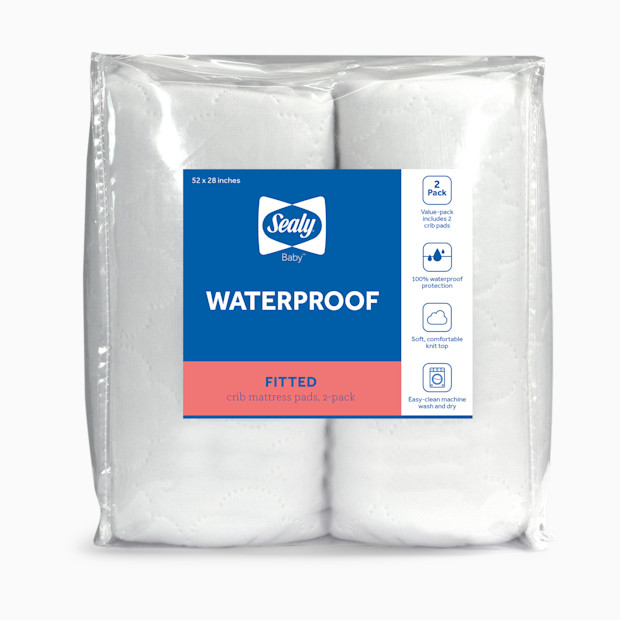
Double up on crib sheets: Diaper leaks and spit up can happen during naps and overnight, so to save time and energy, layer multiple crib sheets and waterproof pads over the mattress. (So it’ll look like mattress -> waterproof pad -> crib sheet -> waterproof pad -> crib sheet.) That way when a mess happens, just pull off the top sheet + pad and you’re good to go. No middle-of-the-night mattress wrangling necessary.
Keep a reusable list for outings. No need to create a fresh list any time you pack your diaper bag or luggage, and no need to keep it all in your head, either. “I kept a template for ‘day outing’ and ‘overnight outing’ checklists on my phone,” says Cassie K., mom of two in New Jersey. “Then I just copy and paste it into a new note for each event so I’m not starting my list from scratch each time.”
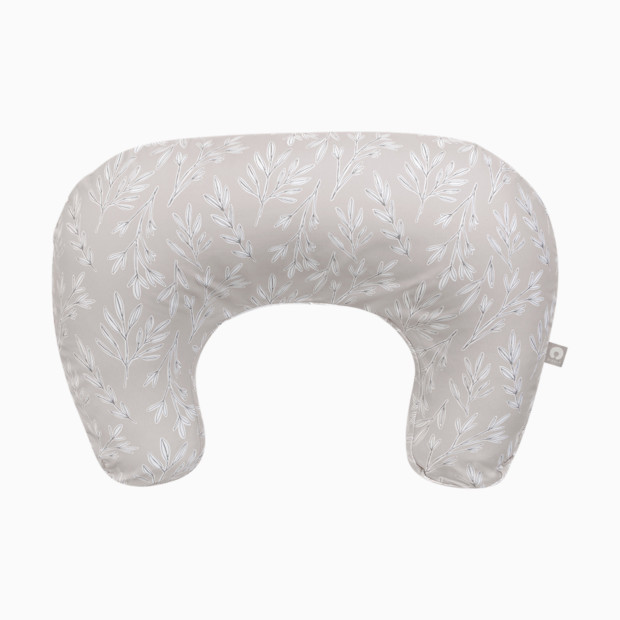
Double up on certain gear. Some baby items are worth having multiples of, especially if you have a larger house or frequently take baby to a grandparents’ house. For one example, Becky L., mom of 2 in California, recommends having “a boppy in every room”—which can especially come in handy for parents who are nursing on-demand. You might also consider having a bouncer chair or playmat in all the main rooms, or a playard on each floor if you live in a multi-story home.
Wear open-backed workout shirts for nursing. Those open-backed shirts are great for getting airflow during a workout, but they also work wonders for breastfeeding...if you turn them around. “I would wear them with a nursing bra, and when it was time to breastfeed, I’d just turn the shirt around so it's open in the front instead of the back,” says Cathleya, mom of one in Minneapolis. “It felt more stylish than official nursing clothes and had longevity. I still wear that stuff.”
Make a template for additional caregivers. If you’ve got a nanny, babysitters, grandparents or any other additional caregivers helping take care of your baby, don’t write separate instructions from scratch for each person. Instead, “make a [template] of baby's sample schedule with any notes about what they need or extra care considerations, so you can easily print and update for each new babysitter to reference,” says Alainna W., mom of 2 in Virginia.
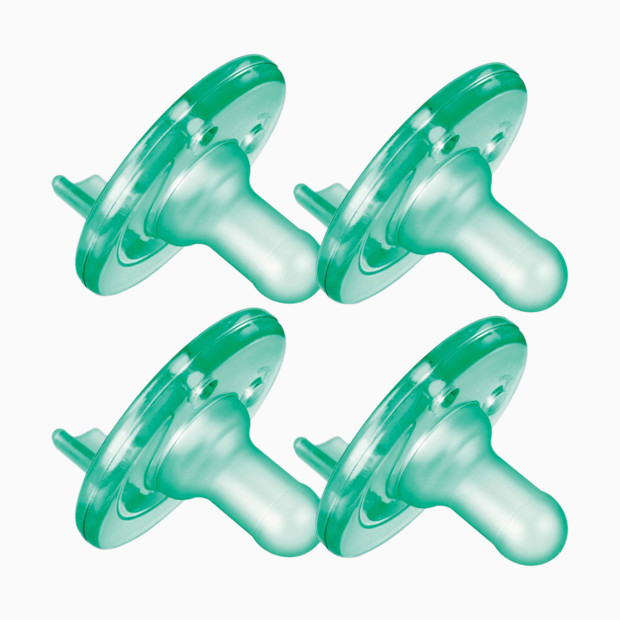
Stock up on soothers. Pacifiers get lost, stuffies need at least semi-regular washing...and a baby without their favorite comfort item can make for some major meltdowns. Alainna’s advice: stock up! “Our friend has six of the same little Jellycat piggy.” It’s a move that might seem excessive, but not when you need to make a sneaky replacement.
👀 Looking Ahead
Stretching & uncurling: After two-plus months in a mostly tense, curled-up posture, your baby’s hands, arms and legs are finally starting to relax a bit as their nervous system matures a little more.
Fewer jerky motions: Also thanks to a slightly more mature nervous system, baby’s movements are smoothing out. You’ll notice fewer startle reflexes and more intentional waving or kicking.
🛍️ Panic Order
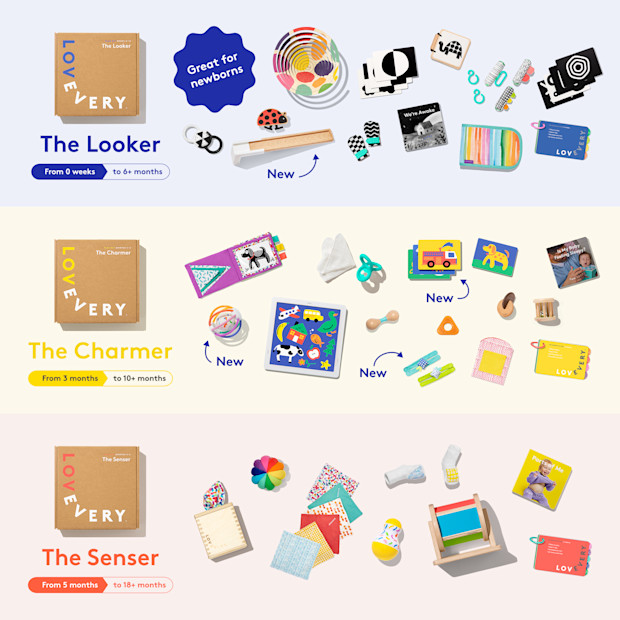
Lovevery
The Play Kits (3-Kit Gift)
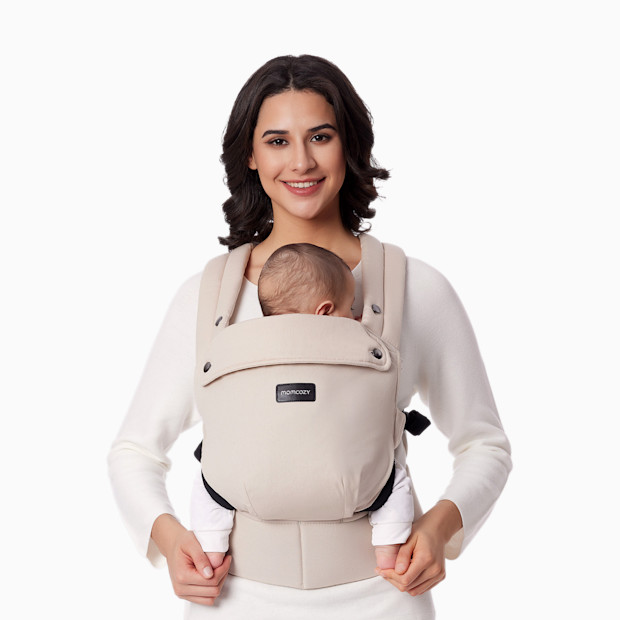
Momcozy
PureHug Baby Carrier
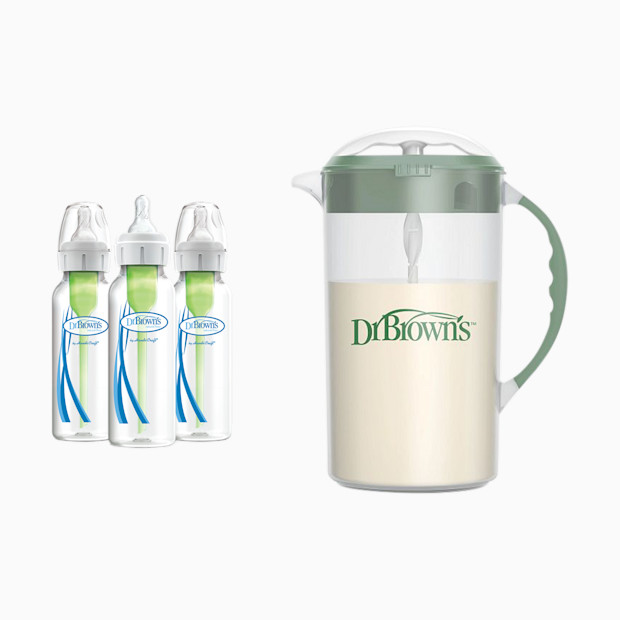
Dr. Brown's
Formula Mixing Pitcher
Sprucely
Felt Diaper Caddy

Simple Houseware
3-Tier Heavy Duty Metal Utility Rolling Cart

hahaland
Baby Visual Stimulation Cards for 0-36 Months
Sealy
Waterproof Fitted Crib Mattress Pad (2 Pack)
Boppy
Boppy x Babylist Nursing Pillow

Athleta
With Ease Open Back Tank
Philips Avent
Soothie Pacifier (4 pack)
Expert Sources
Babylist content uses high-quality subject matter experts to provide accurate and reliable information to our users. Sources for this story include:
Dr. Chris Klunk, board-certified neonatologist at Pediatrix Medical Group
Dr. Faith Ohuoba, Houston-based ob-gyn
Krystal Duhaney, IBCLC, registered nurse and founder of Milky Mama

","url":"https://www.babylist.com/gp/lovevery-the-play-kits-3-kit-gift/15570/291476","source":"hello_baby"});)
;)
;)
;)
;)
;)
","url":"https://www.babylist.com/gp/sealy-waterproof-fitted-crib-mattress-pad-2-pack/20907/3360","source":"hello_baby"});)
;)
;)
 - Green, 0-3 Months, 4","url":"https://www.babylist.com/gp/philips-avent-soothie-pacifier-4-pack/55652/864671","source":"hello_baby"});)