
The Best Bottle Washers of 2026, Tested by a Mom of 3
Less scrubbing, more snuggling! We tested popular bottle washers to find out if they’re worth the counter space.

By
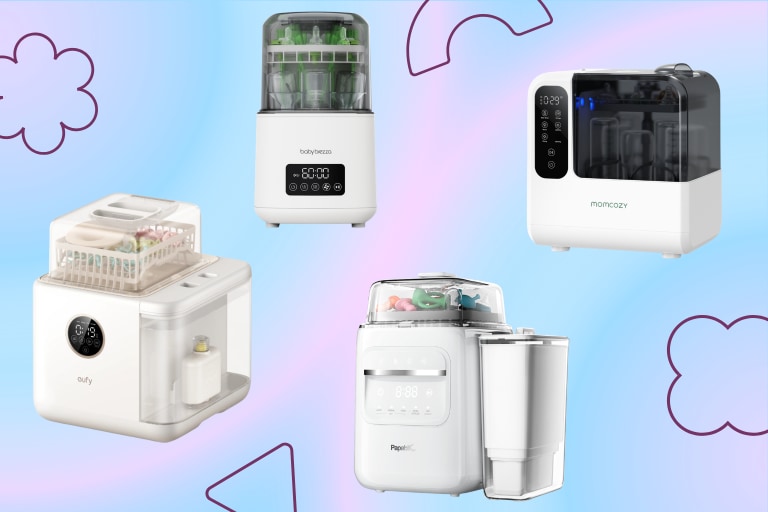
Bottle washers are relatively new to the baby space, but they’re one of those products that we’ve seen explode in popularity over the last year. They were one of the most-mentioned product categories in our annual Most Loved Baby Products Survey, with parents saying things like they were a “game-changer” and the number one product they registered for. Many added it thinking it was a luxury, only to find out how helpful it was.
As a mom of three, I have used a bottle washer since there were just a few on the market. I tested five bottle washers with bottles, pump parts and feeding accessories, including bottles left with formula residue for more than 24 hours. After each load, I paid close attention to how well they cleaned and dried, what actually fit inside and how easy they were to load and maintain.
Our top pick for the best overall bottle washer, the Momcozy DeepClean Bottle Washer, stood out for its thorough cleaning and flexible loading options. Its adjustable rack and extra attachments make it easier to accommodate different bottles and pump parts—a helpful feature if you’re still figuring out your feeding setup. Three other washers earned a spot on our list, with different advantages depending on your counter space, daily loads and water needs.
How We Judged the Best Bottle Washers
Best Bottle Washer Overall: Momcozy DeepClean D8 Bottle Washer
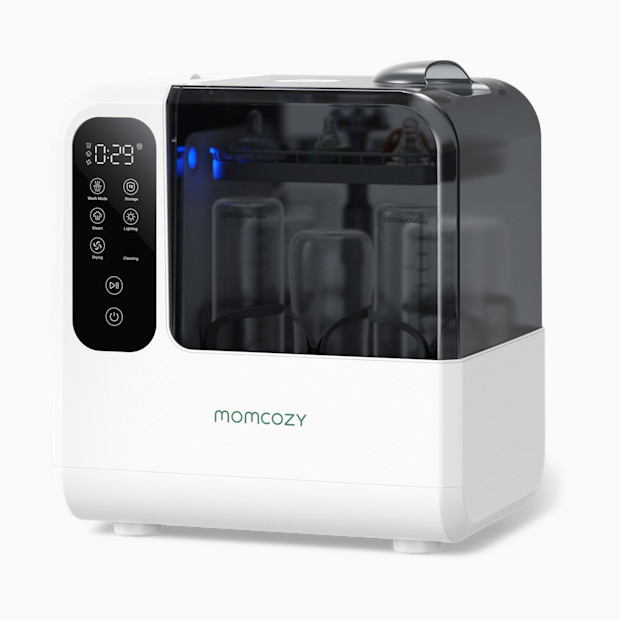
Momcozy DeepClean Baby Bottle Washer - White
From $269.99Pros
- Turns out squeaky-clean bottles, pump parts and accessories
- Adjustable top rack accommodates various bottle and accessory sizes
- Extra attachments offer flexibility for cleaning a combination of products
- Wheels make it easier to move around the counter
- Auto-clean mode simplifies maintenance
Cons
- A bit louder than other machines
- Requires additional overhead clearance
The Momcozy DeepClean is our best bottle washer overall because it combines thorough cleaning with flexible loading options for bottles, pump parts and smaller feeding accessories.
In our testing, bottles came out clean without water spots or detergent residue—even after sitting with formula residue for more than 24 hours. Pump parts came out just as clean. Drying wasn’t quite as complete: a little water remained in recessed areas of bottles and parts, but that’s something we noticed with every washer we tested.
The DeepClean’s flexible loading options was one of the reasons it earned the top spot in this guide. I could raise the top rack to fit taller bottles below or lower it to make room for larger accessories above. The included attachments also let me switch between loading bottles and pump parts. It’s designed to hold up to eight bottles in a bottle-only load. When washing bottles and pump parts together, I comfortably fit two or three bottles alongside the pump parts on the bottom rack.
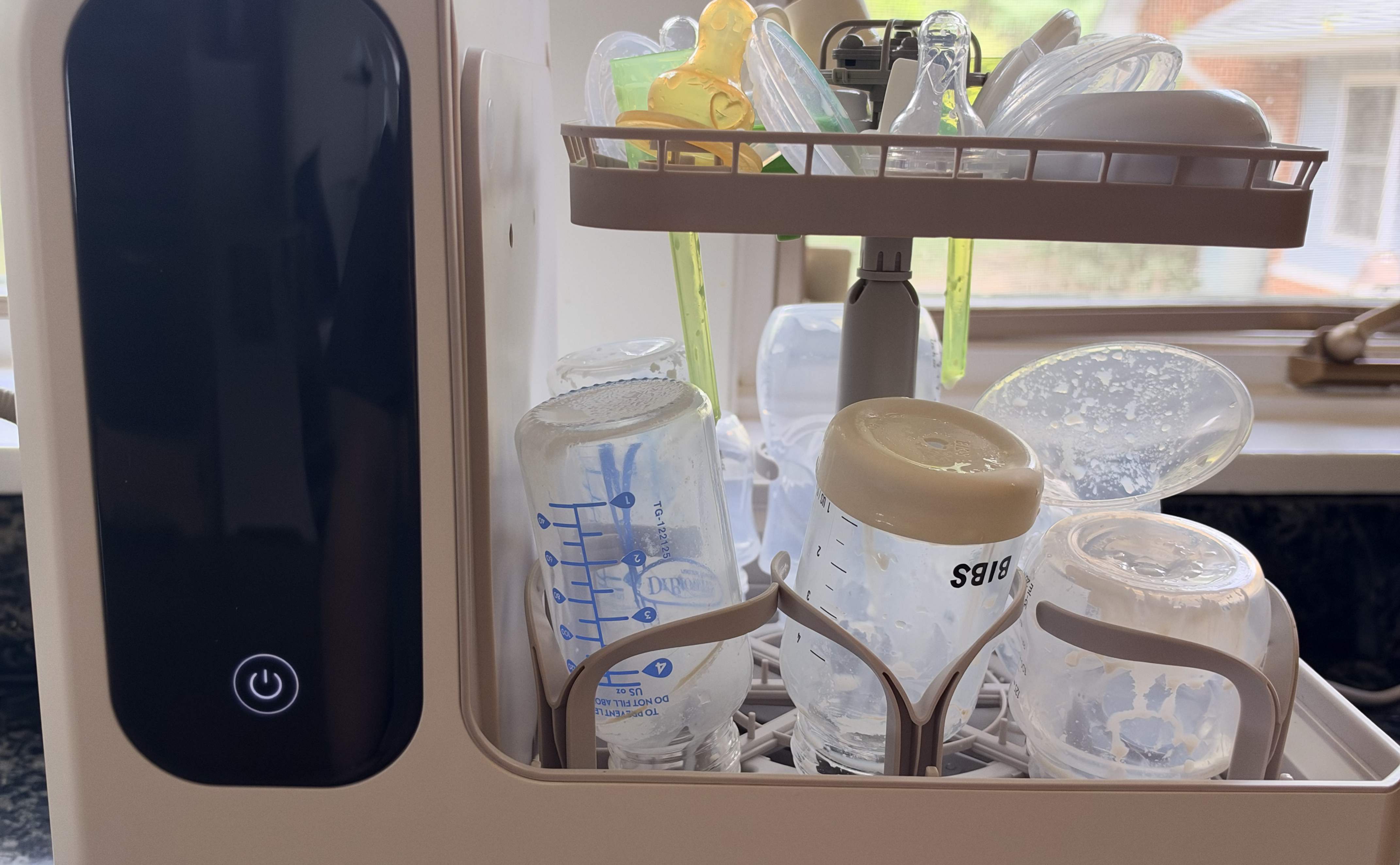
Momcozy DeepClean shelf configuration
The wheels are another useful touch. They make it easier to turn or reposition the machine without lifting it—helpful if you want to reclaim some counter space between loads. Setup is straightforward; the controls were intuitive, and a dedicated auto-clean mode makes it easier to maintain.
Worth noting
Like all four picks in this guide, the DeepClean needs to be close to a sink for draining.
This machine is high capacity, and the size reflects that—it’s big. You’ll need to consider clearance above the machine, and make sure it has enough breathing room to prevent overheating. Check the manual’s placement requirements before choosing a spot beneath cabinets.
It makes a specific sound, and reviews of it are mixed: one tester found it soothing, while another found its higher pitch distracting.
Additional Specs
Size: 15.0" W × 17.3" D × 17.68" H
Bottle capacity: Up to 8
Cycle duration: full normal cycle (wash, dry, sterilize) is 1:33
Includes 60 detergent tablets ($19.99 for 120 additional tablets) and 4 descaling tablets ($24.99 for 30 additional tablets)
Honorable Mention: Looking for a lower-priced option? The Momcozy KleanPal Pro was our previous best overall pick, and it’s still worth considering if you don’t need the DeepClean’s larger capacity. In our earlier testing, we liked its thorough cleaning, flexible loading and easy-to-use design. The DeepClean earns our top spot in this update, but the KleanPal Pro is also a parent and editor fave and offers a more affordable way to take bottle washing off your hands!
Best Bottle Washer for Smaller Spaces: Baby Brezza ProWash 360 Bottle Washer
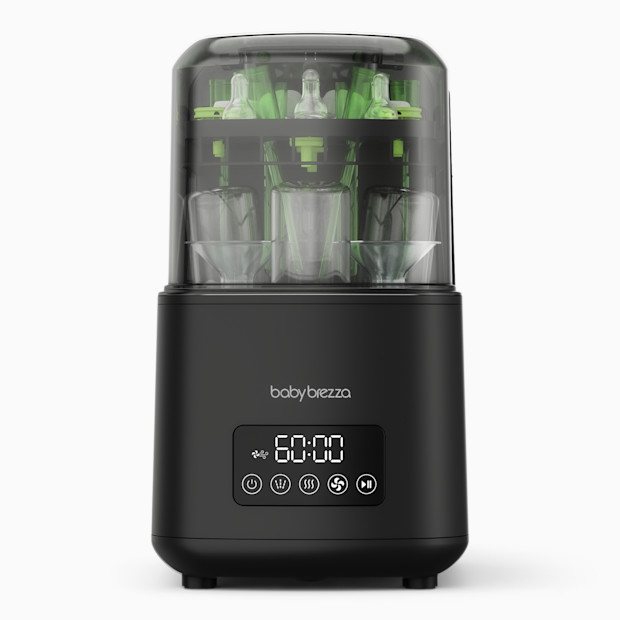
Baby Brezza ProWash 360 Bottle Washer - Black
From $329.99Pros
- Narrow design takes up less space on the counter
- SuperQuick Dry mode offers a 30-minute drying option
- Water tank is easy to remove, refill and replace
- Cleans without leaving greasy residue or detergent spots
- Dedicated spaces for Dr. Brown’s anti-colic parts
Cons
- Wider bottles reduce capacity
- Footprint is still deep from front to back
- Water-level sensor can cause errors
- Top rack must be removed to access the bottom rack
The Baby Brezza ProWash 360 is our best bottle washer for smaller spaces because its narrow design leaves more room across the counter while still accommodating up to eight bottles, depending on their size and shape.
In practice, that capacity depended on what we loaded. Narrower Dr. Brown’s bottles fit neatly into the lower holders, with dedicated spaces for their anti-colic parts above. Wider bottles, like Pigeon or Philips Avent, were a tighter squeeze: we could comfortably fit four to six alongside accessories. If you regularly wash bottles and larger pump parts together, the Momcozy or eufy have more room.
The cleaning results were strong, with no greasy residue or detergent spots. Like the other washers we tested, though, the ProWash 360 left some water in recessed areas of bottles and pump parts after drying. Its SuperQuick Dry mode gives you a shorter option—30 minutes instead of the regular 60-minute drying cycle.
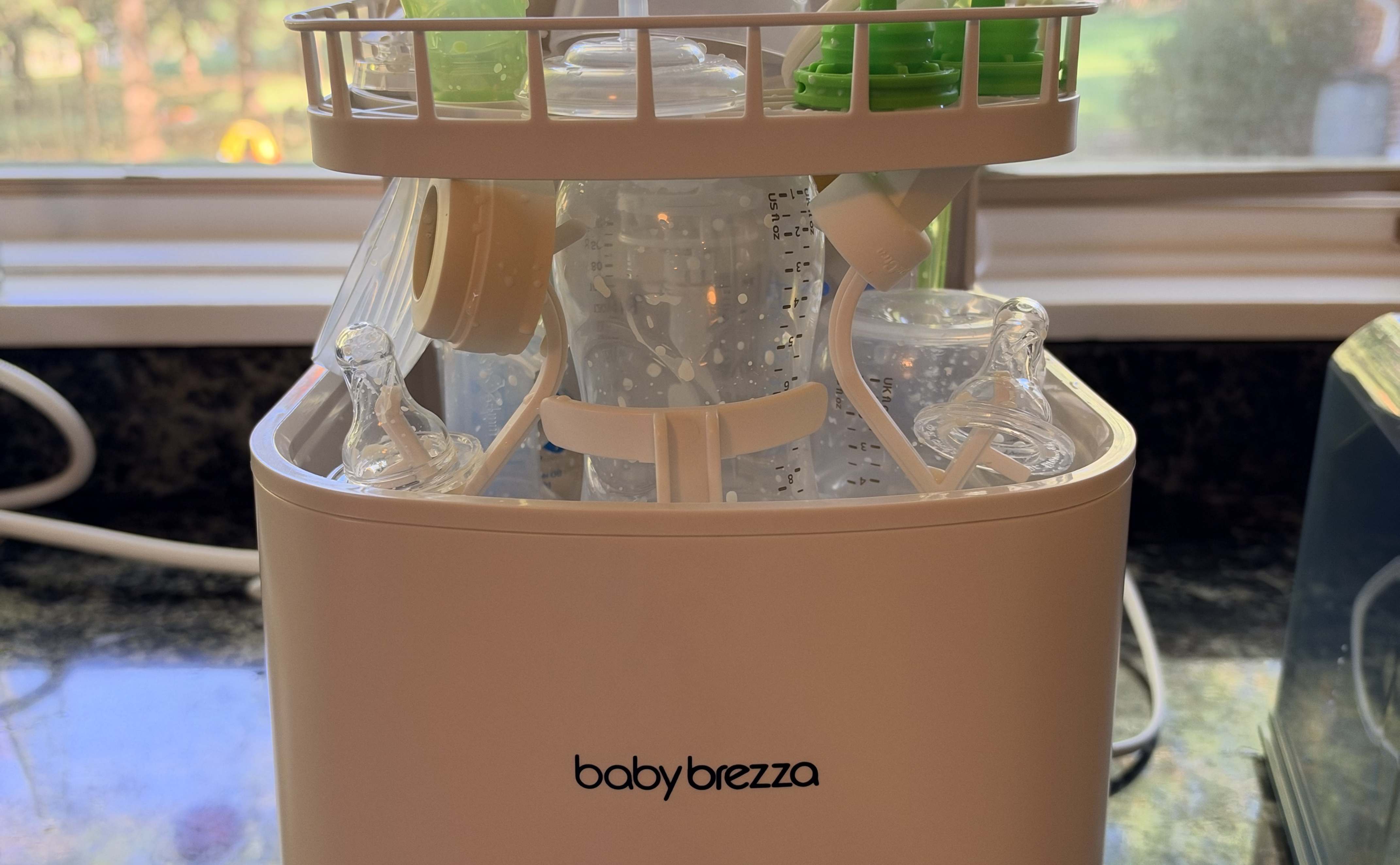
Baby Brezza ProWash 360 loaded with bottles and pump parts
One everyday detail we especially appreciated was the water tank. Of the machines we tested, it was the easiest to remove, carry to the sink and replace without spilling. That’s a small convenience that matters when you’re refilling it regularly.
Worth noting
The ProWash 360 is narrow, but it still extends considerably from front to back. We recommend measuring your counter’s depth as well as its width.
During testing, the machine displayed a water error after the wash cycle despite the tank having been filled near the fill line. We needed to add water and restart the cycle. (We didn’t notice this in other parents’ reviews, so this may have been a one-off.)
The top rack locks firmly into place and needs to be removed to reach the bottom rack, which adds a step when loading or unloading.
Like the other picks in this guide, it drains through a hose into the sink.
Additional Specs
Size: 16" x 10" x 16"
Bottle capacity: Up to 8
Cycle duration: full normal cycle (wash, dry, sterilize) is 1:30
Includes 60 detergent tablets ($41.92 for 240 additional tablets)
Best Large-Capacity Bottle Washer: eufy S1 Pro Bottle Washer

Pros
- Largest capacity on the market: up to 10 bottles
- Roomy racks make mixed loads easier
- Built-in water softener helps reduce mineral residue
- App lets you start cycles and check progress
- Display shows time remaining for the full cycle
Cons
- Bulky design takes up considerable counter space
- Large water tank can be awkward to refill
- Requires overhead clearance
- Replacement water softeners add to cost
The eufy S1 Pro is our best large-capacity bottle washer because its roomy interior holds up to 10 bottles and makes it easier to load bottles, pump parts and accessories together.
That extra room was the biggest advantage in testing. Both racks had space to work with, so loading a mix of items took less rearranging than in the smaller machines. If bottles and pump parts pile up throughout your day, that flexibility may be more useful than the bottle count alone.
We also appreciated that the lower rack sits inside the wash compartment. Bottles and parts stayed contained while loading, rather than slipping off the sides onto the counter. And the display shows the time remaining for the entire cycle, so there’s no adding up separate wash, sterilize and dry stages to figure out when everything will be ready.
eufy S1 Pro Bottle Washer's top section for smaller parts and nipples
The included water softener made a noticeable difference in the results. Without it, we saw spots on washed items; with it installed, bottles and parts came out spotless. Some moisture remained in recessed areas after drying, as it did with every washer we tested.
Its accompanying app lets you start the machine and check a cycle’s progress remotely. It’s a useful extra, but the spacious racks and easy loading are what earned the S1 Pro its place on our list.
Worth noting
The extra capacity comes with a bulky footprint. Measure your available counter space and check the manual’s overhead-clearance requirements before buying.
The water tank barely fit in my sink and was cumbersome to carry when full. It‘s easier to fill it in place with a pitcher.
The water softener needs regular replacement, which adds an ongoing expense when you factor in detergent and other maintenance supplies.
Like the other picks in this guide, the S1 Pro drains through a hose into a sink or bucket. If you have the space, it’s probably more convenient to keep it next to the sink.
Additional Specs
Size: 13.6" W × 14.7" D × 17.0" H
Bottle capacity: Up to 10
Cycle duration: full normal cycle (wash, dry, sterilize) is 1:34
Includes 60 detergent tablets ($24.99 for 60 additional tablets) and 1 water softener
Best Bottle Washer for Hard Water: Papablic SafeguardPlus Bottle Washer
Pros
- Built-in water filtration system
- Shortest full cycle of our picks
- Thoroughly cleans bottles, pump parts and accessories
- Reminders help you keep up with cleaning and filter changes
Cons
- Separate water tank adds to the overall footprint
- Shallow upper rack limits room for accessories
- Replacement filters add to ongoing costs
- Some moisture remains after drying
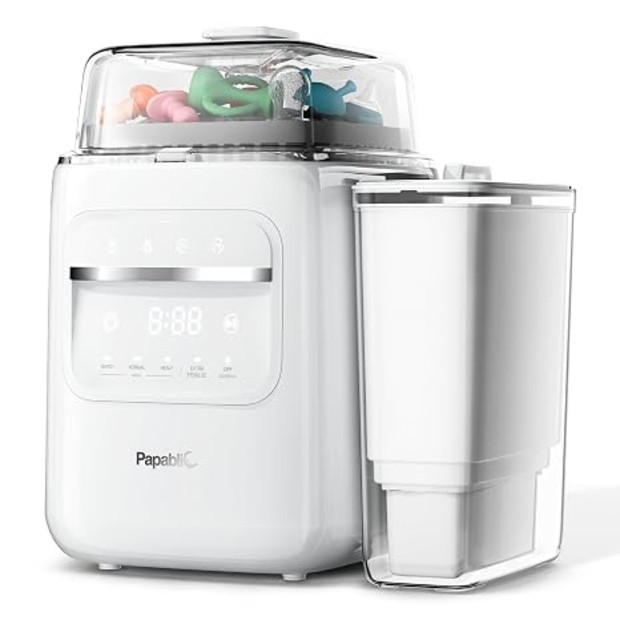
The Papablic SafeguardPlus is our best bottle washer for hard water because its built-in filtration system treats water before washing, and bottles and pump parts came out spotless with the filter installed during testing.
The difference was noticeable: without the filter, we saw water spots; with it, washed items came out clean without spots or detergent residue. The eufy also includes water treatment, but the Papablic offers an alternative if you don’t need that machine’s extra-large capacity.
Speed is another advantage. At one hour and 14 minutes, the SafeguardPlus had the shortest full wash, sterilize and dry cycle of our four picks—20 minutes quicker than the eufy. It didn’t leave everything completely dry, though. As with the other machines, some water remained in recessed areas of bottles and parts.
Papablic SafeguardPlus Bottle Washer
Loading the lower rack was straightforward, but the shallow upper rack took more planning. With some bottle brands, nipples reached the lid, leaving limited room for collars, caps and other accessories. If you regularly wash bottles and pump parts together, the more flexible Momcozy or roomier eufy may be an easier fit.
For everyday use, we appreciated the reminders to run the self-clean mode after 15 cycles and change the water filter after 30 cycles. The sound was another welcome detail: it has a soothing swish (preferred to the higher-pitched noise of the Momcozy).
Worth noting
The separate water tank sits beside the washer and adds about four inches to its width. Include both pieces when measuring your counter.
The upper rack’s limited height can make it difficult to fit all the accompanying accessories.
Replacement water filters add an expense alongside detergent and descaling supplies.
Like the other picks in this guide, the SafeguardPlus drains through a hose into a sink or bucket.
Additional Specs
Size: 17.1"D x 12.2"W x 17.1"H
Bottle capacity: Up to 8
Cycle duration: full normal cycle (wash, dry, sterilize) is 1:14
Includes 60 detergent tablets ($25.99 for 120 additional tablets), 2 descaling tablets ($19.99 for 25 additional tablets) and 1 water filter ($59.99 for 3 additional filters)
Why Trust Babylist?
Babylist is the expert in baby; we know baby gear inside and out. We talk with parents face-to-face in our showroom and on our user panels and hear from thousands annually via our Best Baby Products online survey. We know what items millions of expecting parents are adding to their baby registries.
Firsthand professional and personal experience. As a Babylist associate editor and mom of two, I spend a lot of time researching baby gear and helping families figure out what’s worth adding to their registries. For this update, I worked with contributor Alainna Wurfel, a mom of three who has used and reviewed bottle washers since the category first emerged. Alainna conducted the hands-on testing of five machines; the first-person testing observations throughout this guide are hers. Together, we used her findings and Babylist’s previous testing to select the recommendations.
Expert POV. To gain a deeper understanding of how bottle washers can benefit families, and what to know about using them to clean feeding gear, we spoke with board-certified pediatrician, founder of Calabasas Pediatrics and mom of three, Dr. Tanya Altmann.
Bottle washer data. At Babylist, we regularly analyze which baby products users are adding to their baby registries the most (and which ones they aren’t) and what the team of Merchandising experts—buyers who are responsible for ensuring the Babylist Shop is stocked with the best and newest gear—is excited about. Studying this kind of data helped us determine which products to test and the best bottle washers to recommend to new and expecting parents.
Feedback and reviews. We reviewed comments and feedback from Babylist’s annual product survey of thousands of parents, read customer reviews from hundreds of Babylist users and spoke to parents on staff about their real-life product experiences.
What Is a Bottle Washer?
Bottle washers are like mini dishwashers. They’re small(ish) countertop appliances designed to tackle the tasks of cleaning, and often sterilizing and drying, bottles, nipples, pump parts, pacis, sippy cup lids and other small feeding accessories for you.
Do You Need a Bottle Washer?
A bottle washer is a convenience, not a feeding essential. If you wash several bottles and pump parts throughout the day, it may take a repetitive chore off your plate. If you only use an occasional bottle, washing by hand or using a dishwasher may fit your routine just fine.
Consider the trade-off: a bottle washer saves hands-on scrubbing, but you’ll still need to take bottles apart, load and unload the machine, refill its water tank and keep up with maintenance. There’s also the upfront price, ongoing supplies and counter space to consider.
“If it doesn’t interfere with your budget, it’s something that can make a parent’s new life less overwhelming,” notes Dr. Altmann.
How to Choose a Bottle Washer
The best bottle washer for your family depends on what you wash, where you’ll put it and how much upkeep you’re comfortable with. Here’s what to consider:
What you’ll wash together. An advertised eight-bottle capacity doesn’t necessarily mean eight bottles plus every nipple, collar and pump part. Look for loading instructions that match your bottle brand and the mix of items you use. Check that both the washer and feeding-item manufacturers allow machine washing.
Your available space. Measure width, depth and overhead clearance, including room to open the machine and remove its tank. All four of our picks drain through a hose into a sink or bucket; the Papablic also has a separate water tank that sits beside it.
Your water and maintenance needs. Check the manufacturer’s water recommendations and descaling instructions. Hard water may make a model with built-in water treatment appealing, but filters and softeners bring their own replacement costs.
The full cycle time. A quick-wash setting isn’t the same as a complete wash, sanitize and dry cycle. Compare the settings you’ll actually use. None of our picks left every bottle and part completely dry during testing.
The ongoing cost. Alongside the purchase price, account for approved detergent, descaling supplies, replacement filters or softeners and any recommended distilled water.
Frequently Asked Questions
Can you wash baby bottles in the dishwasher?
Yes, if the bottles and their individual parts are dishwasher-safe. Take everything apart before loading and place small pieces in a closed basket or mesh bag so they don’t fall into the dishwasher’s filter.
According to the CDC, a dishwasher that uses hot water and a heated drying cycle—or a sanitizing setting—doesn’t require a separate sanitizing step. Let everything dry completely before storing.
A dedicated bottle washer may be more convenient if you frequently need clean bottles or pump parts between dishwasher loads. “A bottle washer makes life convenient because it can wash a small amount of bottles as often as you’d like,” says pediatrician Dr. Altmann.
Can I use my own dishwasher detergent?
Use the detergent type and amount specified in your bottle washer’s instructions. Don’t substitute regular dishwasher pods, liquid dish soap or other cleaners unless the manufacturer explicitly allows them.
Check before switching tablet brands, too. A detergent marketed as universally compatible may still conflict with your machine’s instructions or warranty. For example, Baby Brezza’s warranty policy states that using another manufacturer’s detergent tablets voids coverage.
Do you need to sterilize bottles after each use?
Bottles need cleaning after every feeding, but they don’t necessarily need sanitizing after every use. Cleaning removes milk residue and germs; sanitizing is an additional step that reduces remaining germs.
“Complete sterilization isn’t usually needed unless there are other infection risks,” says Dr. Altmann. For everyday care, the CDC recommends daily sanitizing for babies younger than two months, babies born prematurely and babies with weakened immune systems. For older, healthy babies, daily sanitizing may not be necessary when feeding items are carefully cleaned after each use.
If your baby has specific medical needs, ask their pediatrician which cleaning and sanitizing routine to follow.
Are there long-term risks associated with heating plastic bottles?
Heat can cause some chemicals in plastics to migrate into food or liquids. To reduce exposure, the American Academy of Pediatrics recommends avoiding heating breast milk or formula in plastic when possible and keeping plastic food containers out of the dishwasher.
“If you do prefer plastic bottles since they’re lighter and not breakable, or you’re using them for travel or convenience, wash by hand or infrequently in the dishwasher and replace them if any part looks damaged, discolored or worn out,” says Dr. Altmann.
If you prefer machine washing, glass bottles may be an alternative, provided both the bottle and washer manufacturers confirm compatibility. Check the care instructions for nipples, collars and other parts separately.
If your baby needs daily sanitizing, ask their pediatrician how to balance that need with your bottle material and cleaning method. A rinse-only cycle doesn’t replace proper washing.
What’s the difference between a bottle washer and a sterilizer?
A bottle washer cleans milk and formula residue from compatible bottles and feeding parts. All four washers in this guide also have sanitizing and drying functions.
A standalone sterilizer treats items you’ve already washed; it doesn’t replace cleaning. Some models, like the GROWNSY Electric Baby Bottle Sterilizer and Dryer, also dry items afterward. If you’re happy washing bottles by hand but want help with sanitizing and drying, this type of appliance may better fit your routine.
Expert Sources
Board-certified pediatrician, founder of Calabasas Pediatrics and mom of three Dr. Tanya Altmann
