
The Best Glass Baby Bottles of 2026
Retro? Maybe. Practical? Definitely. Here are the glass baby bottles we recommend most.

By
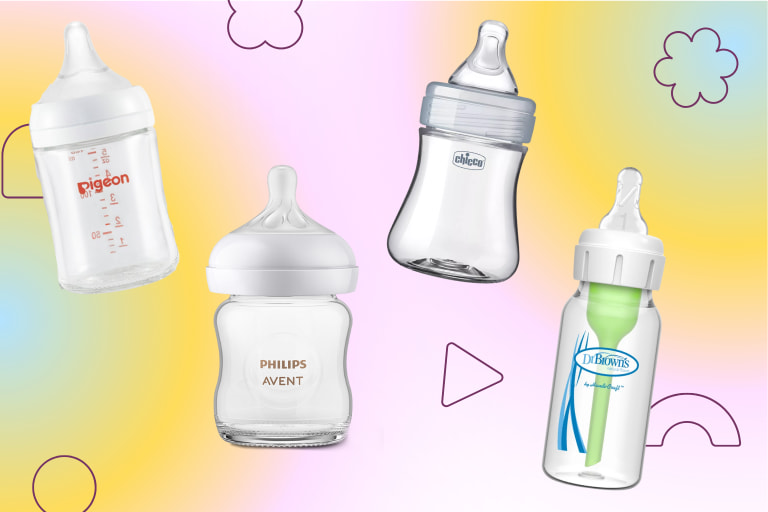
Glass baby bottles may seem retro, but they're making a comeback. In our annual survey of thousands of Babylist parents, 41 percent said they prefer glass bottles over plastic. Some parents like avoiding plastic, while others appreciate the durability and sustainability of glass.
After testing, research and consulting with experts, Dr. Brown's Anti-colic Options+ Narrow Glass Baby Bottles are our top pick for most families because they're durable, widely available and relatively affordable. But since bottle preferences are highly personal, we also rounded up several other standout glass options to help you find the right fit for your baby.

How We Judged the Best Glass Baby Bottles
Best Glass Bottle Overall
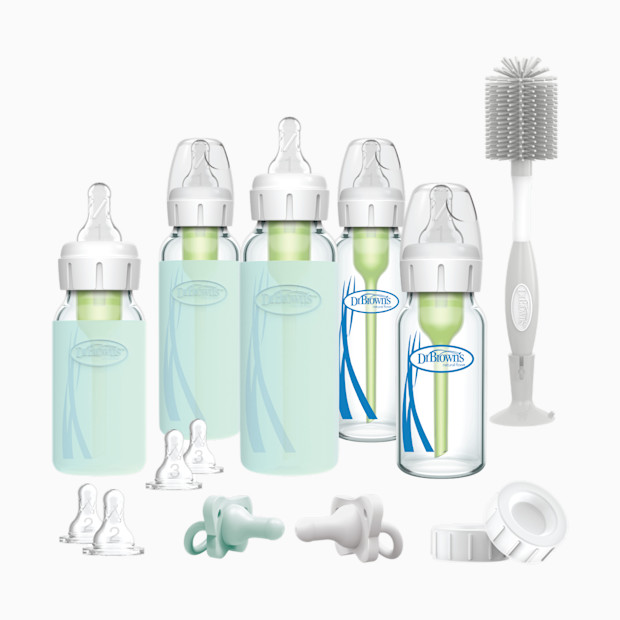
Dr. Brown's Options+ Narrow Glass Baby Bottle Starter Gift Set - White
From $54.99Pros
- A parent + lactation consultant fave
- Can also be used without the venting system
- More affordable than most glass bottles
- Anti-colic venting system
Cons
- Nipples can leak
- A lot of parts to clean
- Longer nipple may cause gag reflex for some babies
Dr. Brown’s plastic version of this bottle is well-known for its unique venting system and is consistently a top pick in our best baby bottles guide. Their glass option features the same winning features, including the anti-colic feature parents have come to love. “I found that it has the same reliability of all Dr. Brown's products,” one Babylist parent wrote in their review.
The nipple and venting system are designed to aid in digestion and reduce feeding issues like colic, spit-up, burping and gas. Dr. Brown’s bottles are also a great option whether you’re exclusively bottle feeding or doing a combination of breastfeeding, too. The heat-resistant glass is built to withstand temperature changes, and it has a nice, solid feel.
Worth noting:
-
The biggest complaint about these bottles is that it’s tough to get the nipple just right so milk doesn’t leak out. “These bottles leak! We have tried tightening harder and not so hard...Nothing seems to work,” one Babylist parent shared.
-
The second biggest gripe is that these bottles have a lot of pieces, which can be cumbersome to clean. Dr. Brown’s does say they’re dishwasher safe (top rack only).
-
Some parents also say they’re heavy: “The only downside is that it is thicker and heavier than the plastic bottles, which is probably no issue if you are specifically looking for glass bottles,” another Babylist parent said.
Runner-Up
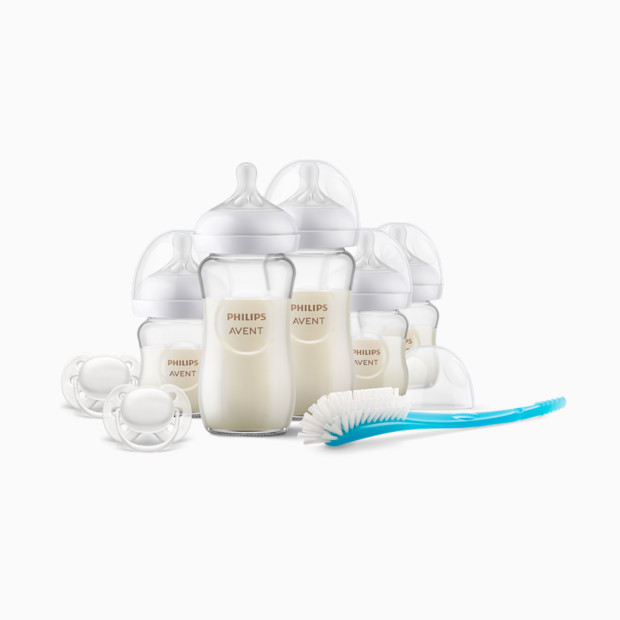
Philips Avent Glass Natural Bottle Gift Set - 8
From $57.99Pros
- Thermal shock-resistant glass
- Included silicone sleeve helps to reduce breaking
- Anti-colic venting system
Cons
- Heavy
- Some parents report leaking
- Nipple not ideal for breastfed babies
It’s tricky to name the best glass bottle overall, since babies and families are all unique—so we chose a runner up. According to our yearly most loved products survey, Philips Avent bottles are a parent favorite in general, and the glass version features all of the components they love but in a plastic-free version. When we polled Babylist parents about their favorite baby products, many called out these particular glass bottles.
They’re also super durable, something many parents mentioned in their reviews. “I was a little nervous to use glass bottles in case I accidentally dropped one, but I have to admit these bottles are extremely sturdy. The glass is very thick and with the sleeve that was provided in this set I have had no close calls,” one Babylist parent mentioned. Speaking of that silicone sleeve, it not only protects the bottle in the event of an accident drop, it also makes it super comfortable for you to hold. And when it comes to warming up your baby’s pumped breastmilk or formula, “I also love that they're glass so I'm not heating plastic up!” another parent mentioned. The glass is also thermal-shock resistant, meaning it can transition between hot and cold without an issue.
They have a wide, flexible nipple that allows baby to control the flow of milk, and an anti-colic venting system helps reduce the chance your baby will swallow air (which can lead to gas and spit up). One Babylist parent shared, “There's no extra parts or crevices for milk to get stuck in and get gross.” Few parts make these pretty easy to clean and they’re also top rack dishwasher safe.
Worth noting:
-
The main downside to these bottles is that they’re quite substantial. “The overall weight of the bottle is heavy and I think it would be difficult for an older baby to manage [on their own],” one parent said in their review.
-
If your baby primarily breastfeeds, note that the nipple shape doesn't closely mimic the breast—sometimes causing a more straw-like latch—which can make switching between bottle and breast harder over time. For a smoother transition, check out our Best Bottles for Breastfed Babies guide. If you're formula-feeding or exclusively pumping, this isn't a concern.
-
A few parents also mention leaking at the collar, even when assembled correctly. One parent wrote in their review, “You’d have to be a freaking rocket scientist to screw the lid on in a way where it doesn’t leak all over you and your child constantly.”
-
👉 The trick is to screw the collar on only until you feel slight resistance—overtightening warps the rim and breaks the seal. Also, make sure the nipple is fully pulled up through the ring (not pushed down) until it sits flush and clicks into place. Assembling the parts while still slightly damp from washing helps the rubber create a tighter seal, too.
Best Multi-Use Glass Bottle
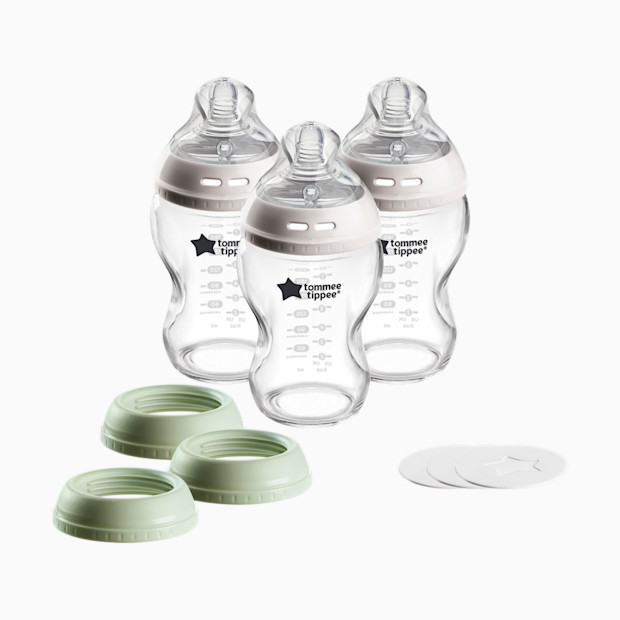
Tommee Tippee Natural Start 9 oz Glass Baby Bottles - 9oz, 3
From $17.99Pros
- 3-in-1 design
- Durable
- Easy to clean
Cons
- Cap leaks if not threaded exactly right
- Wide shape doesn't fit standard bottle washers
- Some parents say nipples are too slow/too fast
Glass bottles usually cost more upfront, but this set is one of the better arguments for the investment. Parents are buying second sets to use as baby food storage, converting them to open cups once the bottle stage ends, and using the leakproof caps to store pumped milk on the go. Most reviewers say they've gotten well over a year of use out of a single set of three, just by swapping nipple flow rates as their baby grew.
The glass is borosilicate, which means it's scratch and stain-resistant, heats more evenly than plastic (and without the fat film that can stick to plastic walls—something parents who pump are quick to point out), and looks like new long after plastic would have clouded over. The wide neck makes it easy to get a bottle brush all the way in, and there's a built-in self-sterilizing feature: add 50 ml of water, rest the nipple assembly on top without screwing it down, and microwave for three minutes. The slow-flow, breast-shaped nipple has a built-in anti-colic valve to reduce air intake during feeds—a bonus for parents managing gas, though not the reason most parents choose this over other options.
Worth noting:
-
The cap leaks if the collar isn't threaded on perfectly—a consistent enough complaint that it's worth the extra second to check the thread before handing baby the bottle.
-
The wide shape doesn't fit most standard bottle washer baskets, though the self-sterilizing microwave method and top-rack dishwasher compatibility cover most people.
Best Hybrid Glass Baby Bottles
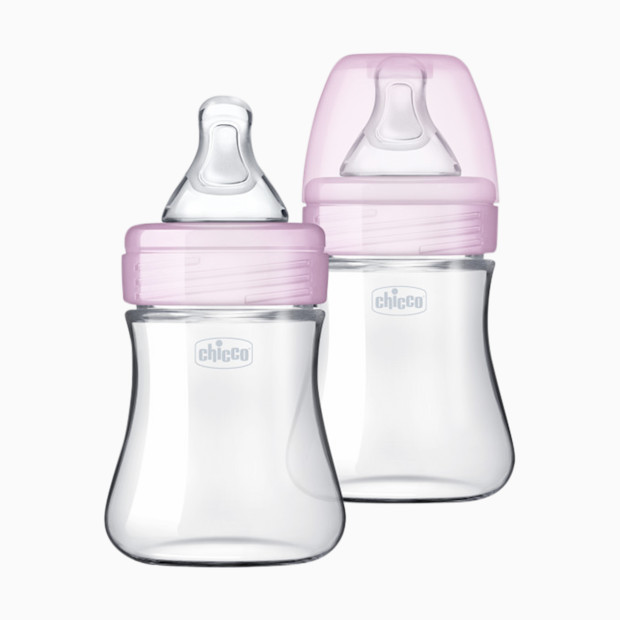
Chicco Duo Hybrid Baby Bottles with Invinci-Glass - Pink, 5 Oz
From $22.99Pros
- Lighter, due to material mix
- Durable
Cons
- Pricey
- Some parents say the nipple leaks easily
The Chicco Due Hybrid bottles feature an innovative pure glass inner layer and a plastic outer layer—meaning your baby’s milk only actually touches the inner glass layer. And since they’re not fully made of glass, they’re extremely lightweight. For parents who are hesitant to use glass out of fear of breaking, these are sort of the best of both worlds. “I highly recommend the Duo Hybrid Baby Bottles. They offer peace of mind with their glass interior, while still being practical for everyday use,” one Babylist parent said.
If you’re planning to return to work, navigating glass bottles and daycare can be a toss up, as some daycares won’t allow them. However, one Babylist parent said the Duo bottles are the “perfect option for parents who have a baby in daycares that do not allow fully glass bottles.”
The nipple shape is another thing parents appreciate. It features a gradual slope (making it a good choice for babies who are also breastfeeding) and has an anti-colic valve to help with air intake. “My son went through a lot of brands and this is the only bottle he will take!!! I breastfed him and sometimes I wanted to sub a bottle. He was very picky but this one he loved from [the] first try,” one parent said. Another mentioned these were “Everything I was looking for in a bottle, perfect for my breastfed baby who goes back-and-forth between the breast and bottle.”
The bottle has a wide enough opening that makes it easy to clean and that inner glass layer helps prevent the yellowing that can sometimes happen with plastic bottles over time. (And yes, they’re dishwasher safe for even more convenience.)
Worth noting:
-
One of the most common complaints is that the nipple leaks easily when tipped—and this is something I personally noticed when using these bottles with my baby. They’re also a bit expensive, costing around $12 or more per bottle, depending on where you buy them from.
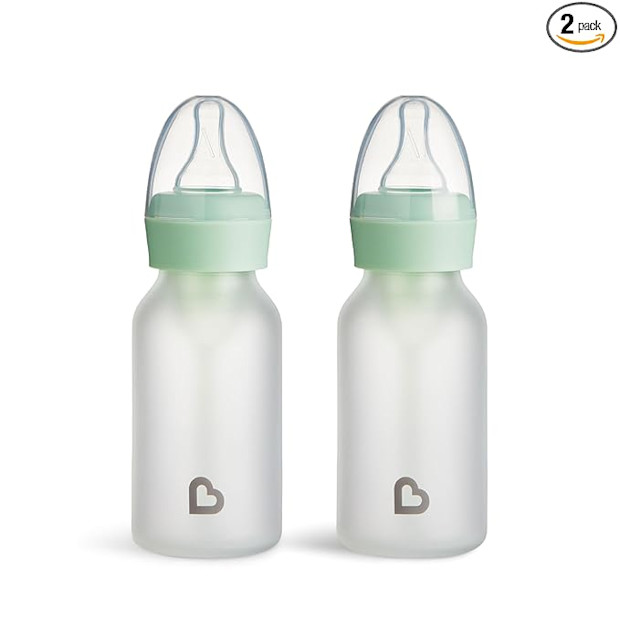
Here are a few more hybrid glass bottles if you’re worried about durability:
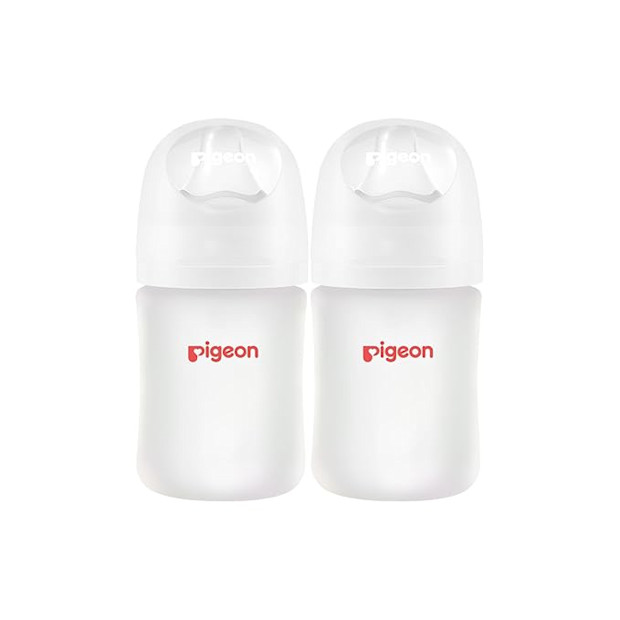
Best Glass Bottles for Breastfed Babies
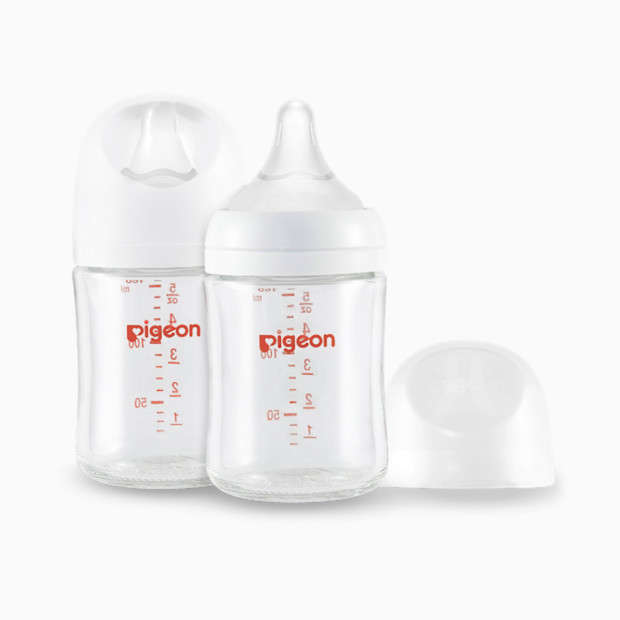
Pigeon Glass Anti-Colic Nursing Bottle Wide Neck - 5 Oz, 2
From $34.99Pros
- Sloped nipple great for breastfed babies
- Easy to clean
- Anti-colic vent system
Cons
- Pricey
- Different nipple flow rating scale
Pigeon bottles are a popular bottle pick for breastfed babies, and they’re also available in a glass for parents who want to avoid plastic feeding materials. The gradual nipple shape mimics the latch mechanics babies use while nursing, which is one of the reasons Pigeon is so highly recommended by lactation professionals. “Great option for avoiding plastic and proper latching for anyone still wanting to breastfeed as well,” one parent raved in their review.
The flow rate of the nipples is also conducive for paced bottle feeding, which is an important part of getting baby to seamlessly transition between breast and bottle. Many parents note finding success with this bottle for babies who’ve been particularly picky when introducing a bottle or switching back and forth from the breast to bottle. There are only a few parts to keep track of and clean and the nipples can be used on some other bottle brands (like Lansinoh).
Worth noting:
-
Pigeon bottles used to be much harder to find, though they’re now more widely available online and in stores like Target.
-
They also come at a higher price tag, costing around $15 per bottle.
-
The nipple flow tends to run on the slower side—ideal for paced feeding and breastfed babies, but something to keep in mind if you have an older baby or notice some frustration during feeds.
If you’re planning to combo feed, or occasionally go between breast and bottle here are a few more options with sloped nipples to promote similar mouth mechanics:
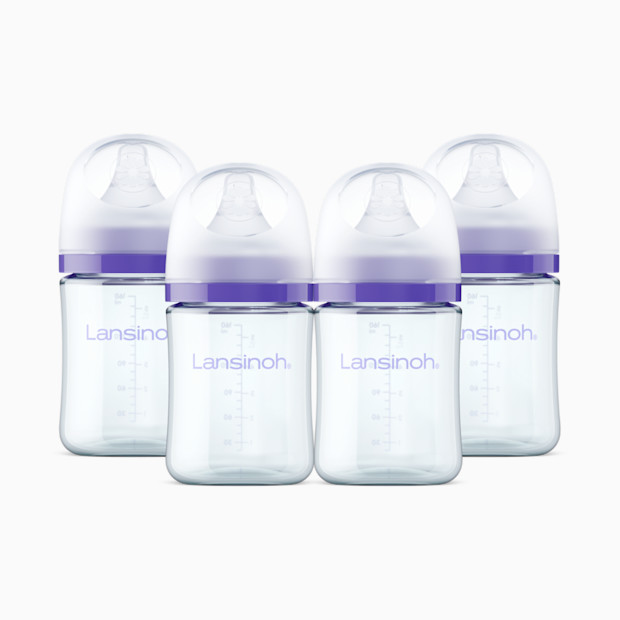

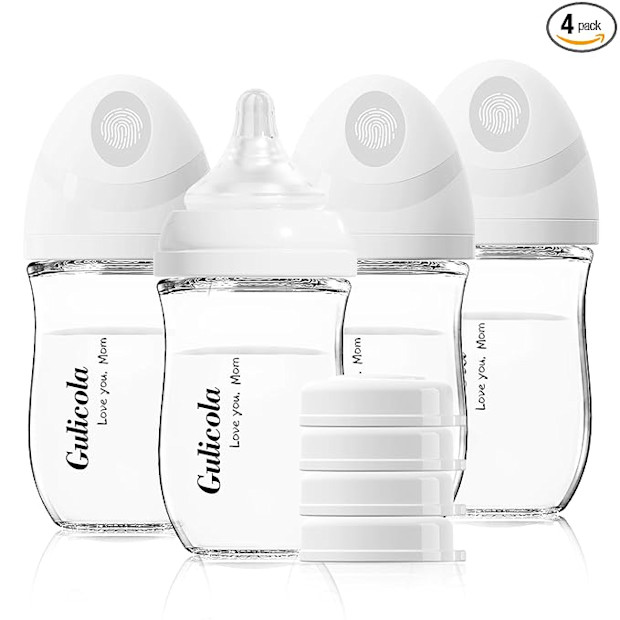
Best Budget-Friendly Glass Bottle
Pros
- Great value (<$3.00 per bottle)
- The ergonomic-twist design makes them easy to hold
- Lightweight
Cons
- No anti-colic system
- Not as durable as other glass baby bottles
Looking for an affordable glass bottle? Look no further than Evenflo’s glass version of their classic bottle. They’re the most affordable glass bottle on our list by far—breaking down to about $3 a piece—and we love the simple, no-frills design. One parent raved, “These bottles are a steal for a pack of six!”
They’re super lightweight compared to the other glass options out there and the unique twist design makes them easy to grip and hold on to. “Despite being glass, they’re not too heavy, and my baby can handle them comfortably because she is 15 months,” one parent mentioned in their review. Since there are only four pieces (the lid, nipple, collar and bottle) there aren’t a lot of pieces to keep track of and clean. The bottles are also dishwasher safe, though top rack is recommended.
Worth noting:
-
The trade-off for that lighter weight is that Evenflo Classics use standard tempered glass rather than borosilicate, which is why they feel less substantial than other options on this list—and why parents report them as more prone to breaking on impact.
-
The most common gripe when it comes to these bottles has to do with the nipple and the lack of anti-colic venting features. “They don't vent well and end up causing a vacuum in the bottle. I have to keep pulling the bottle out of the baby's mouth to let air get inside,” one parent said. Though quite a few parents mention they’ve been able to use Dr. Brown’s nipples (which do have air valves) with these bottles to solve for that.
Best Glass Baby Bottle Bundle
Pros
- Allows you to try 5 popular baby bottles before committing
- Four different glass bottles
Cons
- No plastic options
- Can’t select nipple size
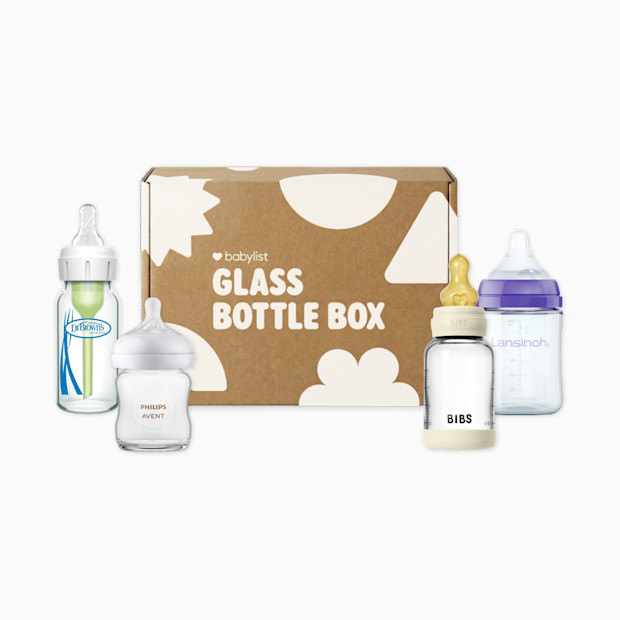
While not all babies are picky about the bottles they love, many are, and you run the risk of ending up with a whole lot of wasted bottles (and wasted money) if you register for or buy a large set of bottles to only find out your baby won’t take them. This Glass Bottle Box is a game-changer in that regard. It features four popular glass bottles (and two are on this list!), allowing you to test out a variety of shapes, sizes and styles to see what your baby prefers before you go all in. And the specific assortment in this try-it kit is something many parents appreciate. “I bought so many individual bottles when my girl was first born just to have her not like any of them, so this would have been a lifesaver and a money saver if I had got these to begin with,” one Babylist parent said in their review.
Not only is the Glass Bottle Box helpful in figuring out which bottle your baby prefers, it’s also great for parents who are interested in trying out glass versus plastic in general. One Babylist parent shared, “I would definitely recommend this box to someone looking at glass bottles to try before splurging on a whole set of a certain brand.”
Worth noting:
-
Some parents mention in their reviews that they wish there were a way to choose different nipple flows—each pick in the box comes with a slow flow nipple—so they may not be ideal for older babies.
-
While this set only includes glass bottle options, there’s also the original Babylist Bottle Box if you’re interested in testing out some plastic and silicone options.
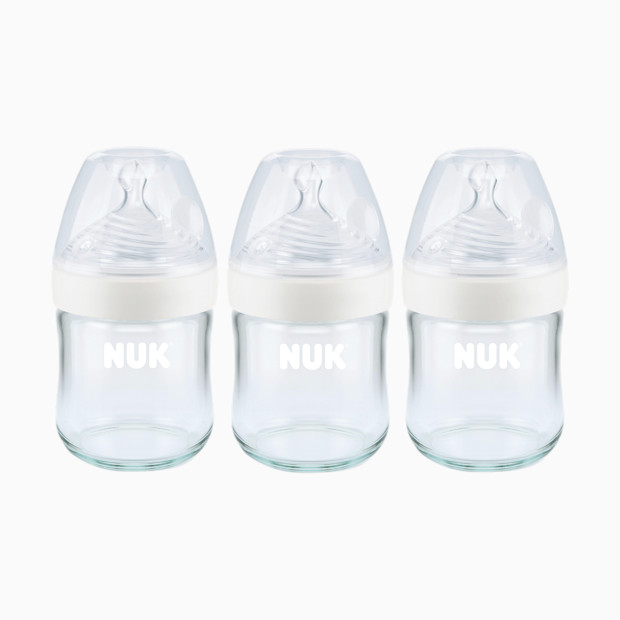
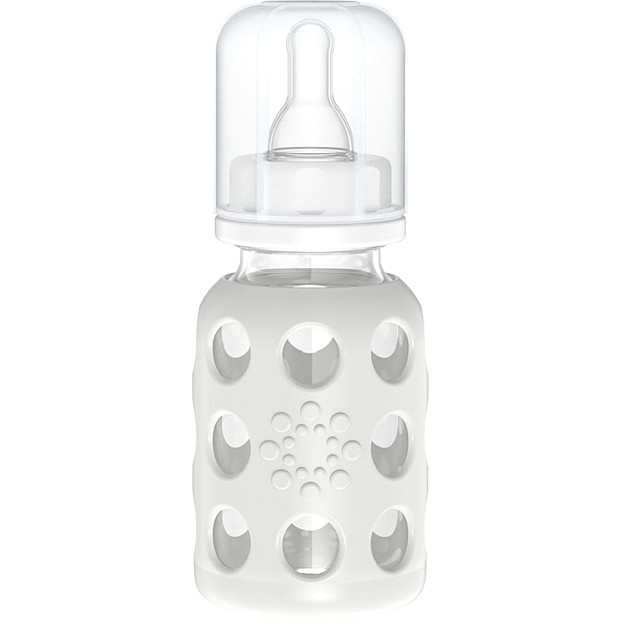
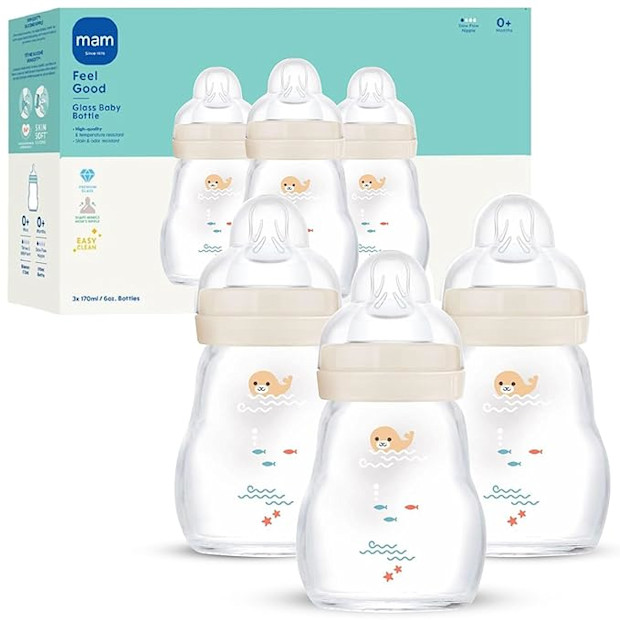
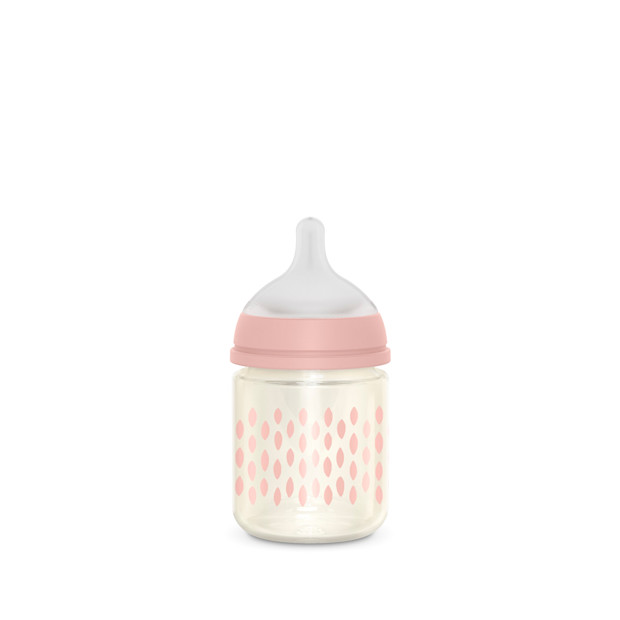
Babies + bottles can be a tricky thing to figure out. Here are a few more recommendations in case none of the picks above seem like the right fit.
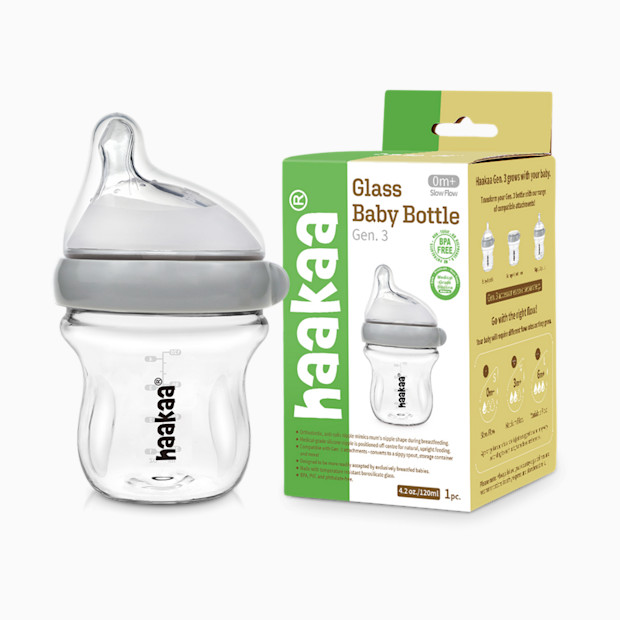
;)
 Baby Bottles (2-Pack)","url":"https://www.amazon.com/dp/B0G6K249YY?th=1","source":"hello_baby"});)
;)
 0+ Months, 5 oz 4-Pack","url":"https://www.amazon.com/dp/B0CCRXS265?th=1","source":"hello_baby"});)
;)
;)
;)
","url":"https://www.amazon.com/dp/B0D142BDFX?th=1","source":"hello_baby"});)
;)
;)
Why Trust Babylist?
Babylist is the expert in baby; we know baby gear inside and out. We talk with parents face-to-face in our showroom and on our user panels and hear from thousands annually via our Best Baby Products online survey. We know what items millions of expecting parents are adding to their baby registries.
-
Firsthand and professional experience. As a mom of two and Babylist’s associate editor, I’ve spent a lot of time researching bottles, including glass options. I am also a certified lactation counselor and used all of these experiences to help choose the bottles on this list. Jen LaBracio, Babylist’s senior gear editor, is the original author of this guide; I leaned into her initial research and expertise.
-
Expert POV. For an expert POV, I spoke with Jessica Madden, board-certified pediatrician and neonatologist, and an International Board-Certified Lactation Consultant (IBCLC) at Aeroflow Breastpumps.
-
Baby bottle data. I regularly analyze which baby products our users are adding to their baby registries the most (and which ones they aren’t) and what our team of Merchandising experts—our buyers who are responsible for ensuring the Babylist Shop is stocked with the best and newest gear—is excited about. Studying this kind of data helped us choose which glass bottles to narrow in on and which ones to recommend to new and expecting parents.
-
Feedback and reviews. I reviewed comments and feedback from Babylist’s annual product survey of thousands of parents, read customer reviews from hundreds of Babylist users and spoke to parents on our staff about their real-life product experiences.
Should I use glass bottles for my baby?
There are pros and cons to both glass and plastic baby bottles. Deciding which type of bottles are right for you is a matter of personal preference. A few reasons parents may gravitate toward glass include:
How many bottles do I need?
The number of bottles you'll need depends on how you plan to feed your baby and how frequently you want to wash bottles. Most parents find that 8–12 bottles is a good starting point if they're bottle feeding full-time. If you're breastfeeding and only plan to offer the occasional bottle, you may only need 4–6 bottles.
Keep in mind that babies can be surprisingly opinionated about bottles. If you're just getting started, you might want to buy a few bottles first to make sure your baby likes them before stocking up on a full set.
A helpful starting point:
-
Occasional bottle use: 4–6 bottles
-
Combination feeding: 6–8 bottles
-
Exclusive bottle feeding: 8–12 bottles
That said, there's no magic number. Some parents prefer to wash bottles throughout the day, while others like having enough on hand to get through a full day (or night) before tackling the sink. A bottle washer is a game-changer for parents who regularly use bottles, too!
Is it safe to give my baby a glass bottle?
If the idea of giving a baby something made of glass doesn’t sound like the best decision, we get it. But not to worry, because glass baby bottles have some unique features that set them apart from everyday glass. Here’s what makes them a safe bet:
They're made with ultra-durable glass. Most glass baby bottles are made from borosilicate glass—a type of glass that's stronger and more heat-resistant than standard tempered glass. Borosilicate contains boron trioxide, which makes it significantly more resistant to thermal shock. That means they can handle being dropped or banged around. It’s also lighter.
Both are safe options, but if thermal resistance is a priority, look for borosilicate on the label. And if either kind do break, they'll shatter into pebble-like pieces instead of sharp shards (more like a car window than a wine glass).
They’re designed to be thermal-shock resistant. Glass bottles can go from the fridge to a bottle warmer without cracking. This is especially useful if you’re storing breast milk in the bottle and then heating it up for feeding time.
Easier to clean. Many glass bottles have a simpler design and fewer parts than plastic ones, making them easier to clean. And by design, glass doesn’t absorb odor or stains the same way plastic or silicone bottles might. Plus, they're dishwasher safe (top rack only for the ones in our guide) and don't come with concerns about chemical leaching. Always check your bottle specifics, but this also means you can put them in bottle washer and sterilizers without that leaching concern, too.
Are glass bottles safer than plastic bottles?
“Glass bottles are safer in that they can be heated up and put into a dishwasher without a risk of chemical or microplastic exposure to baby,” says Dr. Madden, a board-certified pediatrician, neonatologist and IBCLC.
The initial concern over plastic baby bottles was because of bisphenol A, commonly referred to as BPA, an industrial chemical used to make certain plastics. Studies have shown that BPA can leach into food or beverages, potentially causing negative health effects. Because of this, the FDA banned BPA from all sippy cups and baby bottles in 2012.
Removing BPA from plastic bottles was a definite step in the right direction. However, according to the American Academy of Pediatrics, the jury’s still out on health and safety concerns around plastics, especially in children. It’s recommended to avoid excessive heat if you’re using plastic baby bottles—and this goes for both warming milk and sterilizing. That’s because of the potential risks for shedding microplastics.
Another concern some parents have is whether glass bottles contain lead in the paint used on the labels and measurement lines. Most modern glass baby bottles use food-safe enamel or ceramic paint that doesn't contain lead, but if this is a concern for you, look for bottles with etched or molded measurement markings rather than painted ones. Under the Consumer Product Safety Improvement Act, the legal limit for lead in surface coatings on children's products is 90 parts per million, and this includes baby bottles.
Dr. Madden explains that the best way to mitigate the risk—and exposure to microplastics and chemical leaching—is to hand-wash plastic bottles. In terms of warming up milk, she says parents should never put any bottles in the microwave. If your baby prefers their milk served warm, use a bottle warmer or you can also place the bottle in a warm bowl of water.
If you’re still on the fence, be sure to check out our article on the safety of plastic bottle where we take a deeper dive into the commonly asked questions—complete with insight from an environmental chemist—plus tips and best practices for lowering the risks.
Can I send glass bottles to daycare?
This really depends on the daycare center your baby will attend. It’s a good idea to ask ahead of time about their policies. Some centers will be okay with them if they have a sleeve, others may not. If your particular center doesn’t allow them, Chicco Duo Hybrid, Pigeon Nurture & Nest Silicone Coated Glass Bottles and Munchkin Bond are great alternatives.
Expert Sources
Babylist uses high-quality subject matter experts to provide accurate and reliable information to our users. Sources for this story include:
-
Dr. Jessica Madden, Medical Director, board-certified pediatrician and neonatologist, and an International Board-Certified Lactation Consultant at Aeroflow Breastpumps.