
The Best Car Seats for Fitting Three-Across in Your Back Seat
“Three-across” = 3 car seats in 1 back seat. These are the best seats to solve that puzzle 🧩—plus expert tips for installation.

By
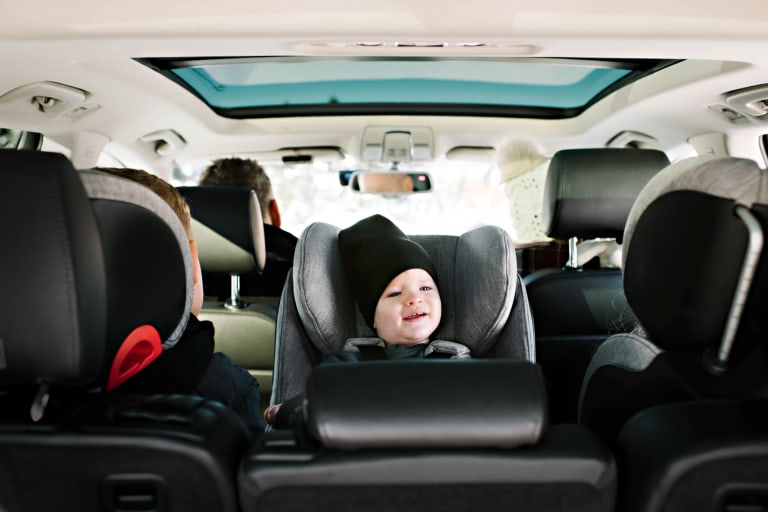
Trying to fit three car seats across your back seat is one of the trickiest car seat puzzles many families face.
Some families see it coming. Three kids close in age + the realization that kids use car seats for a long time makes three-across almost inevitable. Others are surprised: even with bigger age gaps, older grade schoolers often still need a booster to ride safely, and many back seats (even in roomy vehicles) are narrower than they look.
But don’t stress—the right car seats can help. As a Child Passenger Safety Technician (also known as a CPST, someone who’s been specially trained in car seat education and usage), I’ve seen firsthand that finding the right fit and the safest options often comes down to choosing seats with slimmer profiles and knowing the tips and tricks for a successful install.
I leaned on my own expertise as a CPST and Babylist’s senior gear editor and consulted with Lani Harrison, a fellow CPST with more than a decade of hands-on experience helping families with three-across installs, to build this list. We’ve included infant seats, convertibles and boosters that stand out for their narrow width and three-across compatibility—plus practical tips for pulling it off in your own car.
Infant Car Seats
Pros
- Narrow base
- SnugLock base helps keep it in place
- Easy to install
Cons
- Heavier than some infant seats
- Harness straps need manual rerouting as baby grows
- May not fit smaller newborns well
Many infant car seats have wide bases. While you can skip the base and install the seat using just your vehicle’s seatbelt (which is the case for all infant car seats), using it makes taking your seat in and out much faster and a lot more convenient.
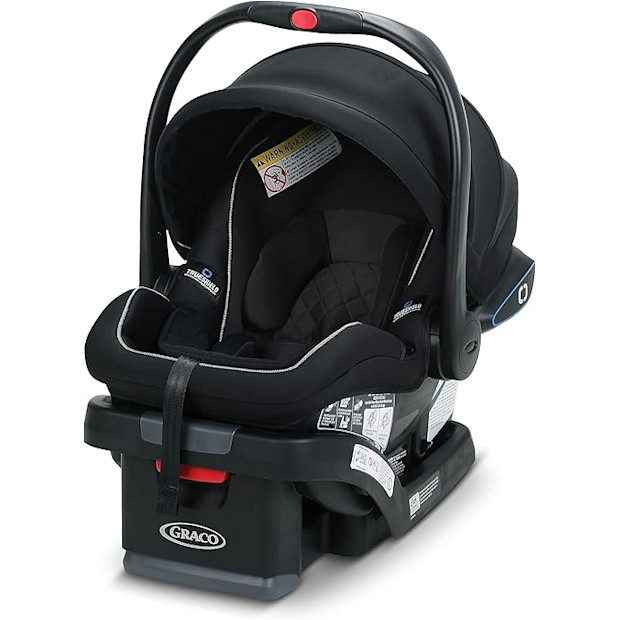
The bottom of the SnugRide LX’s base is one of the narrower options around, making it a good choice for a three-across situation. The seat also features Graco’s patented SnugLock technology. This makes installing the seat less of a hassle than many other seats; simply lift the SnugLock arm, thread the belt underneath, then push the arm back down to lock the belt into place. This seat belt lock-off also helps secure the seat—a helpful feature when you’re short on space and need your car seat to be installed exactly where you need it (and make sure it stays there).
Additional Specs
Car Seat Dimensions: 15.5” W x 19.7” H x 30.9” D
Car Seat Weight: 9.8 lbs
Child Weight and Height Guidelines: 4-30 lbs, up to 32”
Chicco KeyFit 30 Infant Car Seat - Orion
From $229.99Pros
- Narrow base (also compact front-to-back)
- Excellent newborn fit
- Easy to install
Cons
- Heavier than some infant seats
- Harness straps need manual rerouting as baby grows
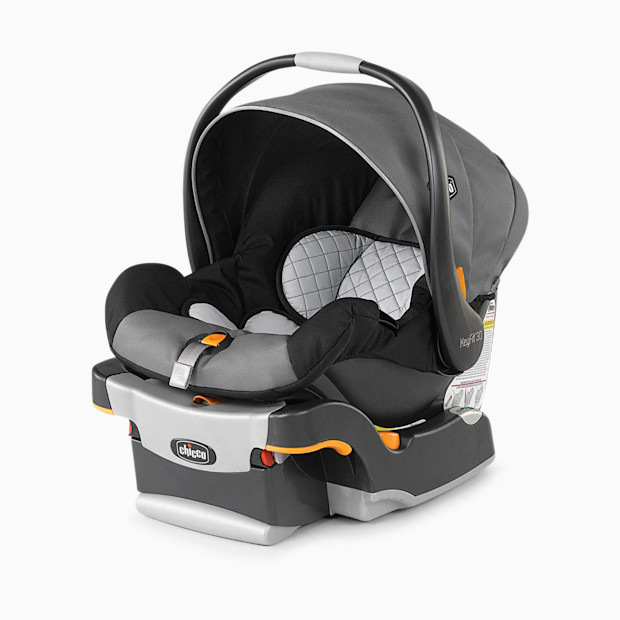
The KeyFit 30 has been a parent favorite for years, and it’s easy to see why. It’s an excellent all-around seat, including for those families who need a narrow option for three-across.
The KeyFit 30 is moderately priced, easy to install and reliably fits infants of all sizes, even smaller babies—something that isn’t the case with all infant car seats. At just 17 inches wide, the narrow base makes it a solid three-across option, and the built-in seatbelt lock-off helps you secure it tightly in a cramped spot. It also pairs with Chicco strollers and many other popular brands like BOB, Baby Jogger, Mockingbird, and Zoe.
On the flip side, it’s not heavy, but it’s not the lightest infant seat, either. And the harness requires manual rethreading as your baby grows.
For a GREENGUARD Gold Certified option with no added chemicals, check out the KeyFit 30 ClearTex. (Car seat flammability FYI: all car seats must pass the same flammability standards. Some manufacturers use natural materials to meet this standard, while others use synthetic flame retardants.)
Additional Specs
Car Seat Dimensions: 22” x 24” x 17” W
Car Seat Weight: 9.5 lbs
Child Weight and Height Guidelines: 4-30 lbs, up to 30”
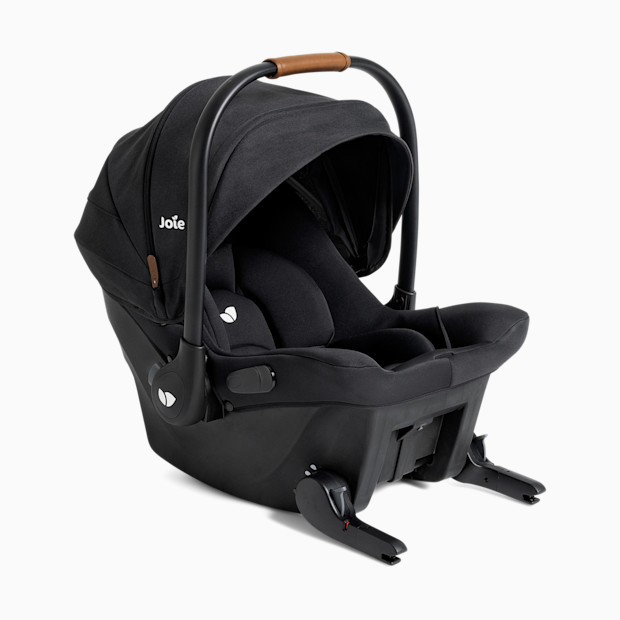
Joie Mint Latch Baseless Infant Car Seat - Shale Dark
From $299.99Pros
- Baseless = compact
- Installs quickly and easily
- Good choice for ride shares and travel
Cons
- Harness straps need manual rerouting as baby grows
- Only compatible with Joie + Mockingbird Single-to-Double 2.0 strollers
Unlike most infant seats that come with a base, the Joie Mint skips it altogether. Instead, it uses built-in rigid LATCH anchors that flip out from the seat and attach directly to your car’s lower anchors. The result is a lightweight, compact seat that’s quick to install—perfect for rideshares, travel or small cars with limited space.
The rigid LATCH connectors on the Joie Mint Latch Baseless Infant Car Seat. (Video: Jen LaBracio, Babylist Gear Editor)
For three-across, the Mint can be a good option, but not always. Installing with LATCH is the fastest and easiest method, but it centers the seat on your car’s anchors, which limits how much you can shift it side to side to fit next to other seats. (More on that at the end of this guide.) A seatbelt install, which is also possible with the Mint, gives you more flexibility, but takes away the main advantage of a baseless seat: the quick, hassle-free LATCH setup.
The Mint works with nearly all Joie strollers and just one outside brand—the Mockingbird Single-to-Double 2.0. You’ll also need to manually reroute the harness straps as your baby grows.
Additional Specs
Car Seat Dimensions: 23.25”H x 17.75”W x 27.75”D
Car Seat Weight: 9.2 lbs
Child Weight and Height Guidelines: 4-30 lbs, up to 30”
Pros
- Excellent newborn fit
- Lightweight
- Premium safety features, including rigid LATCH and stability leg
- GREENGUARD Gold Certified, flame retardant-free
Cons
- Expensive
- Harness straps need manual rerouting as baby grows
- Longer seat front-to-back
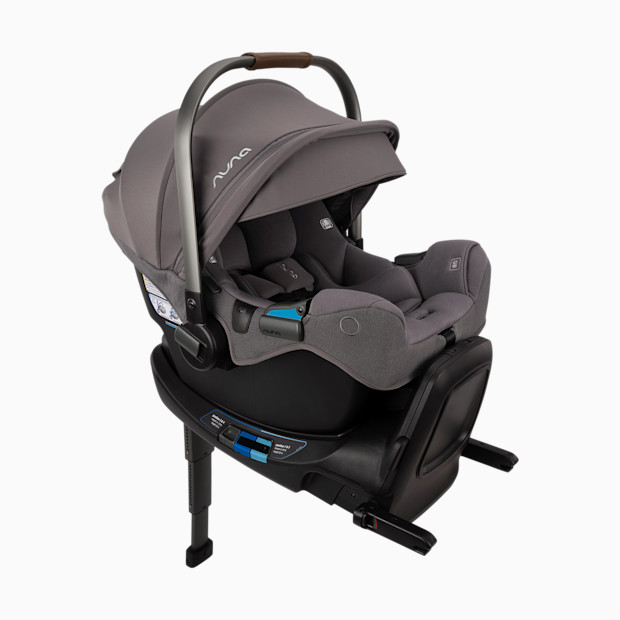
The Nuna Pipa Rx is slim enough for most three-across setups and loaded with premium features. Weighing just over eight pounds with the canopy and inserts, it’s lightweight and easy to carry. Safety extras include an anti-rebound panel, stability leg and a rigid LATCH base for a secure, straightforward install. It fits newborns exceptionally well—even smaller babies—and pairs with both Nuna strollers and many other brands like UPPAbaby. It’s also flame-retardant-free and GREENGUARD Gold Certified.
“The Nuna Pipa Rx car seat is absolutely worth the splurge,” one parent said in our annual survey. “It’s incredibly lightweight and easy to carry. The extendable sun shade is amazing for keeping baby in the shade on walks. It has given us such peace of mind to know that our little one is in such a safe and secure car seat.”
On the downside, the seat is expensive. It lacks a no-rethread harness, so you’ll have to reroute the straps as your baby gets taller. And while it’s narrow, it is a longer seat front-to-back, so it’s not a good option if you need to go three-across in a compact car that’s short on space between the front and back seats.
Additional Specs
Car Seat Dimensions: 25.2”L x 17.5”W x 23” H
Car Seat Weight: 7.6 lbs (without canopy and inserts)
Child Weight and Height Guidelines: 4-32 lbs, up to 30”
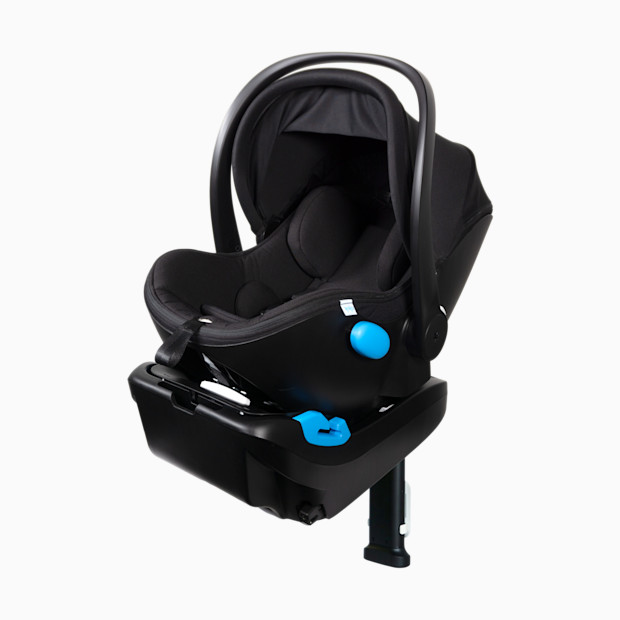
Clek Liing Infant Car Seat - Railroad Ziip (Flame Retardant Free)
From $499.07Pros
- Narrow and compact front-to-back
- Excellent newborn fit
- Premium safety features, including rigid LATCH and stability leg
- GREENGUARD Gold Certified, flame retardant-free
Cons
- Expensive
- Harness straps need manual rerouting as baby grows
The Clek Liing is our other top recommendation for families looking for a premium car seat that works well three-across. It’s both narrow side-to-side and front-to-back, so it works in all types of compact scenarios. “We drive a small sedan with a tight backseat and the Clek Liing fits well,” one parent noted.
Like the Pipa, it’s packed with safety extras: a load leg, rigid LATCH and multiple recline positions (which you can adjust after you install it, just like the Pipa, which isn’t the case with most infant seats). It’s also flame-retardant-free.
All of these features come at a price, however. Like the Pipa, the Liing is expensive, and it also lacks a no-rethread harness.
Additional Specs
Car Seat Dimensions: 26.8”H x 27.7”D x 16.9”W
Car Seat Weight: 9 lbs
Child Weight and Height Guidelines: 4-30 lbs, up to 32”
Convertible Car Seats

Graco SlimFit3 LX 3-in-1 Car Seat - Kunningham
From $224.99Pros
- Narrowest convertible car seat on the market
- Fits three across in almost any configuration
Cons
- Limited recline options
- Cover is tricky to put back on after cleaning
Convertible car seats—seats that start rear-facing and then convert to forward-facing—aren’t known for their compact size. And that’s why the SlimFit3 LX is such a standout. At 16.9 inches wide, it’s currently the narrowest convertible car seat on the market—and our top choice for families who need to fit multiple car seats across their back seat. It’s also relatively affordable, another perk.
This 3-in-1 works rear-facing, forward-facing and eventually as a booster seat. Like many of the seats on our list, it features a belt lock-off in forward-facing mode, allowing you to best position the seat to maximize space for three across. It also has some helpful convenience features like a no-rethread harness and a machine-washable Rapid Remove cover for easy cleaning.
The big downside of this seat is newborn fit, which isn’t great—but that’s the case with many convertible car seats. You’ll also want to pay attention before you add this seat to your cart; it’s easily confused with Graco’s SlimFit 3-in-1 Car Seat, which is relatively compact front-to-back but much wider than the SlimFit 3LX and isn’t a good choice for three-across.
Additional Specs
Car Seat Dimensions: 24.5”H x 16.7”W x 20.7”D
Child Weight and Height Guidelines: Rear-facing: 5-40 lbs, 49"; forward-facing: 26.5-65 lbs, up to 49"; high-back booster: 40-120 lbs, 43-57", min 4 yrs
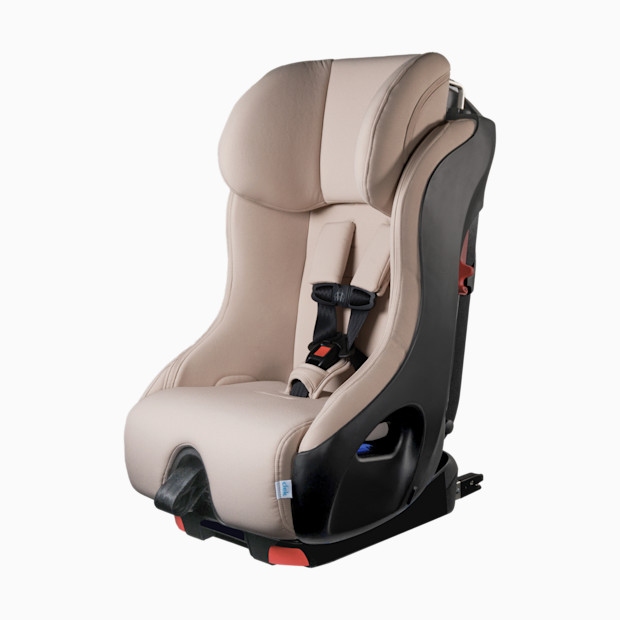
Clek Foonf Convertible Car Seat - Latte Ziip (Flame Retardant Free)
From $559.99Pros
- Narrow
- Premium safety features, including rigid LATCH forward-facing and anti-rebound bar
- GREENGUARD Gold Certified
- Flame retardant-free
Cons
- Very heavy
- Tall; can block your rear/side view if you’re a shorter driver
- Low rear-facing height limit
Looks can be deceiving. The Clek Foonf is built like a tank: tall, sturdy and heavy. But it’s also one of the slimmest convertible car seats available, measuring under 17 inches across fitting three-across in many vehicles.
Other than its narrow width, safety features are what draw most parents to the Foonf. It features rigid LATCH installation forward-facing and an anti-rebound bar, among other things. “For my infant, I wanted something that had really amazing safety [features],” one Babylist parent said. “The Clek had exactly what I needed to feel comfortable driving my little one around.” It’s GREENGUARD Gold Certified and is made from materials without synthetic flame retardants.
There are a few particulars to this seat. While almost all convertible car seats are heavy, this one is really heavy, so don’t buy it if you plan on moving it around a lot. And while it does have a high rear-facing weight limit, it has a low height limit at 43 inches (many seats that promise extended rear-facing go up to 49 inches), so most kids outgrow it by height first.
Additional Specs
Car Seat Dimensions: 21.5”-26”H x 16.9”W x 12.5”D
Child Weight and Height Guidelines: Rear-facing: 14-50 lbs, up to 43” (from 5 lbs with Infant Thingy insert); Forward-facing: 22-65 lbs, up to 49”
Pros
- Quick, straightforward installation
- 50-pound rear-facing limit
Cons
- Poor newborn fit
- Comfort can be an issue for bigger kids
- Straps are hard to adjust
- Limited legroom for extended rear-facing
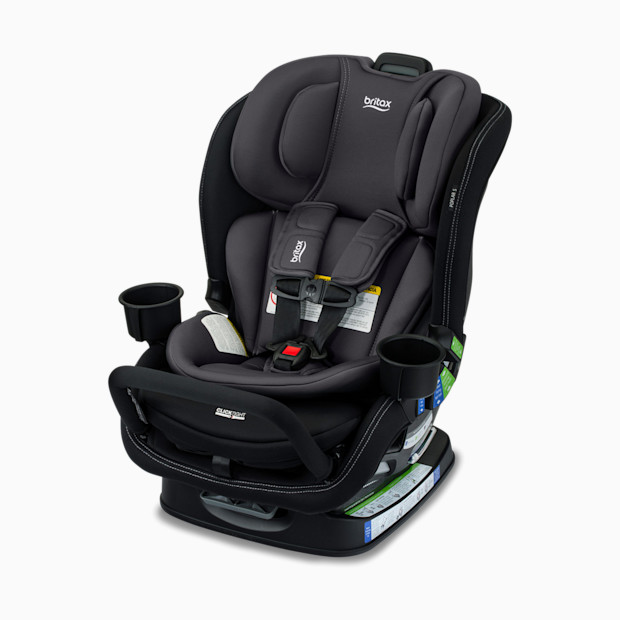
The Britax Poplar earns a spot in the three-across conversation thanks to its slim 17-inch width and Britax’s ClickTight Technology, which makes installation incredibly straightforward. It’s moderately priced, offers multiple recline options and allows rear-facing up to 50 pounds.
That said, it’s not without its drawbacks. The newborn fit isn’t great, and some bigger kids may find it less comfortable because of its shape and recline angles. The straps can be tricky to adjust. And despite its high rear-facing limits, limited legroom makes extended rear-facing tough for many families.
Additional Specs
Car Seat Dimensions: 23.5”H x 17”W x 20.5”D
Child Weight and Height Guidelines: Rear-facing: 5-50 lbs, up to 49”; forward-facing: 22-65 lbs, up to 49”
Combination Car Seats and Booster Seats
Since most families need to go three-across with kids of different ages, you might also be shopping for a combination car seat (a forward-facing car seat that transitions from a harnessed seat to a booster) or a booster seat. You have a few narrow options.
The Graco Tranzitions 3-in-1 Harness Booster is a combination seat that’s fairly affordable, lightweight and, most importantly, narrow. It converts from a harness booster to a highback booster and eventually to a backless booster.
Two other combination seats that sometimes work three-across are the Chicco MyFit Harness + Booster Car Seat and the Cosco Finale DX 2-in-1 Booster Car Seat. However, they don’t work in all vehicles, so try to test them out before you buy or be sure you purchase them from a retailer with a good return policy.
“The MyFit and the Finale are hit or miss,” explains Lani Harrison, a CPST with over a decade of experience helping families select and properly install their car seats. “They are relatively narrow, but they have wider bottoms, and the Finale has armrests. They really don’t fit in the tightest situations.”
Chicco MyFit Harness + Booster Car Seat - Iron
From $239.99Once it’s time to transition to a booster (don’t rush this transition—most kids aren’t ready until anywhere from five to seven years old), there are several narrow options across a range of price points.
The Peg Perego Viaggo Flex is expensive but super slim. The ultra-narrow seat and lack of armrests help it work in even the tightest of situations.
For a few more affordable options, check out the Graco Turbobooster 2.0, the Cosco Rise or the Bubble Bum.
There’s one more option to consider. Unlike booster seats that raise the child up to fit the seatbelt, the RideSafer Vest brings the seat belt down to fit the child.
While it can be a good space-saving option for specific situations (it’s also a good travel option for certain kids), many CPSTs advise against it for everyday use. Although it’s approved for use with children as young as two, most children that age will not be able to sit properly in it. There’s a steep learning curve to getting a proper fit, and if you’re using it in three-across situations as an option for the middle seat, it’s very tricky to buckle.
“I’m generally hesitant to recommend the RideSafer Vest for everyday use,” explains Harrison. “The child has to sit up and sit still, so it’s still like a booster in that way. And it takes quite a bit of effort to get the belt threaded through, not to mention if you are leaning over doing this between two car seats.”
Why Trust Babylist?
Babylist is the expert in baby; we know baby gear inside and out. We talk with parents face-to-face in our showroom and on our user panels and hear from thousands annually via our Best Baby Products online survey. We know what items millions of expecting parents are adding to their baby registries.
Firsthand and professional experience. I’m a CPST, which means I’ve been trained in car seat usage and education and need to stay up-to-date on the industry via continuing education classes, seminars and CPST education groups. I’m also Babylist’s gear editor; I’ve been writing about baby gear—including many car seats—since 2019. I’ve personally tested, used and reviewed dozens of seats during this time. And I’m the mom of two boys, ages 11 and four, who owns a large-but-deceptively-compact vehicle.
Expert POV. Lani Harrison, a fellow CPST with over a decade of experience, also contributed to this guide. She’s worked with countless families to help solve three-across car seat puzzles during her many years as a car seat tech.
Car seat data. I regularly analyze which baby products our users are adding to their baby registries the most (and which ones they aren’t) and what our team of merchandising experts—our buyers who are responsible for ensuring the Babylist Shop is stocked with the best and newest gear—is excited about. Studying this kind of data also influenced which car seats made this list.
Feedback and reviews. I reviewed comments and feedback from Babylist’s annual most loved baby products survey of thousands of parents, read customer reviews from hundreds of Babylist users and spoke to parents on our staff about their real-life product experiences.
Why Three-Across Is Tricky
Wondering how you’re going to fit three kids across your back seat? You’re not alone; many parents with multiples or kids close in age face this common car seat conundrum. Car seats are big, and many back seats aren’t—even in larger vehicles that seem roomy at first glance.
“The first challenge people face is not realizing it will be an issue!” says Harrison, who’s worked with hundreds of three-across families. “I’ve met with so many families who realize after the baby is born that they can’t fit all three seats.”
For many families, this is when reality comes knocking: you’re going to need specific, narrow seats, which often means parting ways with a current seat you love. Or in rare cases…sometimes even a new car 😯. (Deep breaths, this doesn’t happen very often!)
“Sometimes growing the family means replacing the vehicle,” explains Harrison. “It’s an expensive solution, and I try to avoid recommending it at all costs, but sometimes it’s necessary.”
Tips for Installing Car Seats Three-Across
Fitting three car seats across a back seat is one of the toughest installation challenges families face. The right seats—and the right setup—can make it possible, but it often takes some strategy, patience and a bit of trial and error.
Start with the right seats
If you’re on the hunt for infant or convertible car seats to go three-across your back seat—or need a combination of both—there’s one big feature to look for: width. A narrow car seat is critical for three-across. But it’s not always that straightforward.
“In general, the width of the entire seat usually needs to be considered,” says Harrison. You’ll want to focus on the width of the bottom of the car seat, but consider the top measurement, too.
“There are some seats which are quite narrow on the bottom but quite wide at the shoulders,” she explains. “This will work well if one is rear-facing next to a forward-facing one, but if they are both forward-facing side by side, then you get into trouble.”
Also, keep in mind that a car seat’s bottom width measurement is not always available. (Many manufacturers publish the width of a car seat at its widest point.) You may have to look at the seat IRL, reach out to a brand, ask a CPST or ask fellow parents in an online car seat safety group.
Check your vehicle
Your car’s manual is the first step in figuring out which car seat can go in which seating position. (Example: forward-facing car seats require a top tether, but not all vehicle seating positions have a tether anchor.) Start there as you begin to map out your seats.
Use LATCH
All car seats can be installed in one of two ways: with a vehicle seatbelt or with the LATCH system. (LATCH stands for Lower Anchors and Tethers for Children. It’s an anchor system made up of built-in straps and hooks on a car seat and anchor hardware in your vehicle, designed to make car seat installation safer and simpler.)
When installing three car seats across your back seat, using your vehicle's seatbelt is often the best option. That’s because it allows you to position the seat exactly where you need it to complete the three-across puzzle.
“When LATCH is used for installation, the car seat must be centered in the vehicle seat for the installation to be correct, as long as the latch is centered, which it is in the vast majority of cars,” says Harrison. “So sometimes it will be advantageous to use the seatbelt, which lets you move the seat over a little bit.”
Alternate seat direction
Alternating seat direction usually works better when installing car seats three-across.
“If somebody has two rear-facing kids and one forward-facing, the forward-facing kid will work best in the middle,” explains Harrison.
Don’t hesitate to use your third row
If your vehicle has a third row, don’t be afraid to use it; it’s often the only way three-across will work in some vehicles.
“Many families are hesitant to use the third row because they are so used to having the child in the second row or because they need the trunk space. But very often it’s necessary to fit all the kids in,” she notes.
Check for independent tightness
Each car seat needs to be what CPSTs call “independently tight”: tight enough to stand alone if you remove the seat next to it. This means your car seats can’t be braced against each other to prevent them from moving; they need to be independently secure.
“By far, the most common mistake I see is trying to cram the seats in and not install them correctly,” says Harrison.
When car seats are installed next to each other, it’s okay if they touch or “puzzle” together—as long as the contact doesn’t push, bend or distort either seat. And while it’s fine for seatbelts and lower anchors to be close, they can’t overlap or interfere with each other’s proper function.
When in Doubt, Get Help
Three-across can be one of the trickiest installs. If you’re having issues—or just want to brainstorm some three-across seat ideas for your particular vehicle, you have several options.
Reach out to a CPST via the CPST Directory.
Contact your car seat’s manufacturer; they know their seats best.
Join a CPST-staffed online car seat safety group, like CarSeat Safety and Car Seats for the Littles. The CPST SubReddit can also offer help.
Expert Sources
Babylist uses high-quality subject matter experts to provide accurate and reliable information to our users. Sources for this story include:
Lani Harrison is a CPST based in Scottsdale, Arizona, the founder of Lani’s Car Seat and the moderator of three online car seat safety groups.
