
Meet the Doona X: The Biggest Updates to the Iconic Car Seat + Stroller
The first new Doona in nearly a decade is here. We tested the biggest updates to see which ones actually make a difference.

By

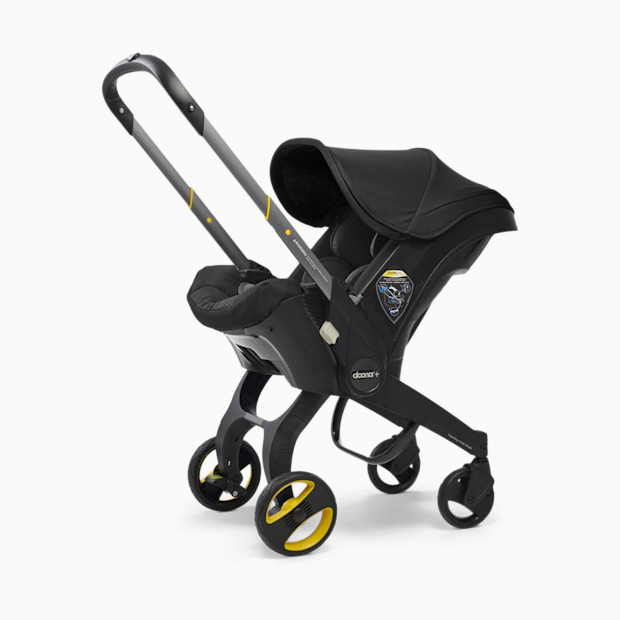
The Doona is one of the most iconic—and most innovative—baby products on the market. This car seat + stroller hybrid solves a problem that no other baby product does: getting your baby from the car to the sidewalk with less gear and less stress. For the right family, it’s a true game-changer—a word I don’t throw around often as an editor who’s been testing baby gear for almost a decade.
But, like a lot of baby gear, it's not perfect. As both a parent and a Child Passenger Safety Technician (CPST), I've had a running list of things I wish were a little different: a taller handlebar, a smoother ride and better storage, just to name a few. Babylist parents have shared many of those same frustrations with me over the years.
That's why I was so intrigued when Doona announced its first new model since the seat hit the US market in 2015: the Doona X. I got an early look at it at a trade show this spring, and after spending time with it in person, it was clear that Doona tackled many of the biggest pain points of the original.
But it's not just about what's new. The original Doona (now the Doona +) isn't going anywhere—so the real question isn't just whether the X is an improvement, it's whether those improvements are enough to justify the upgrade for your family. And before you get to that question, there's a bigger one worth answering first: do you even need a Doona at all? Let's break down both.
Doona X: The updates that matter most
After seeing and trying the Doona X in person, I was impressed by how many of the updates address the biggest pain points I had with the original. Here are the changes I think parents will appreciate most.
The adjustable handlebar
As a 5'10" parent, my biggest complaint about the original Doona has always been the handlebar height. At 39 inches—and with no way to adjust it—it feels noticeably low compared to most strollers. If you're tall or regularly share stroller duty with another tall caregiver, it can make for a pretty hunched-over stroll.
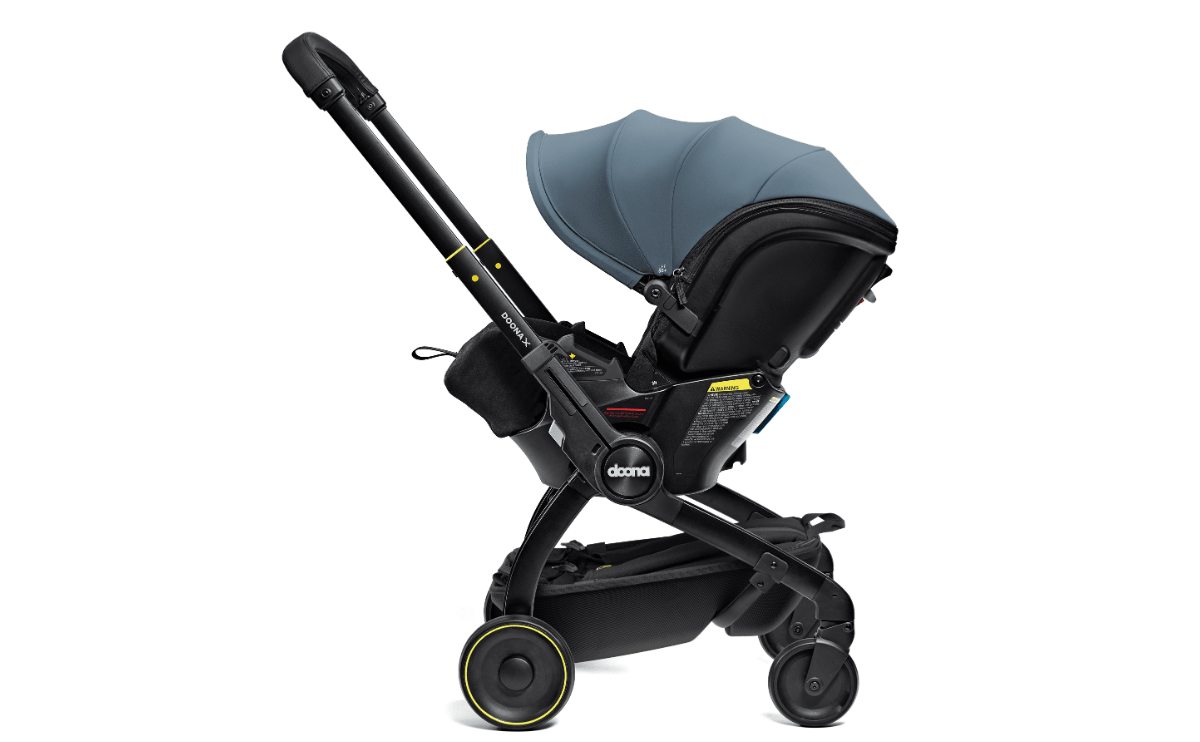
Enter my favorite Doona X upgrade: the adjustable handlebar (cue the tall person applause 👏). It now extends up to 41.5 inches, and I noticed the difference immediately. It's a small change that makes the stroller feel much more comfortable—and more like a full-size stroller.
Smarter storage
Storage has always been one of the Doona's biggest trade-offs. Since the wheels fold into the car seat, there's no room for the large under-seat basket you'd get with a traditional stroller. While the original Doona offers a few add-on storage accessories, they're fairly small and not particularly easy to reach.
The Doona X's new removable storage basket is a much more practical solution. It fits neatly beneath the frame, pops on and off easily and even converts into a backpack for carrying. I also like that it's made from a structured material, so it better protects whatever you're carrying.
The recline
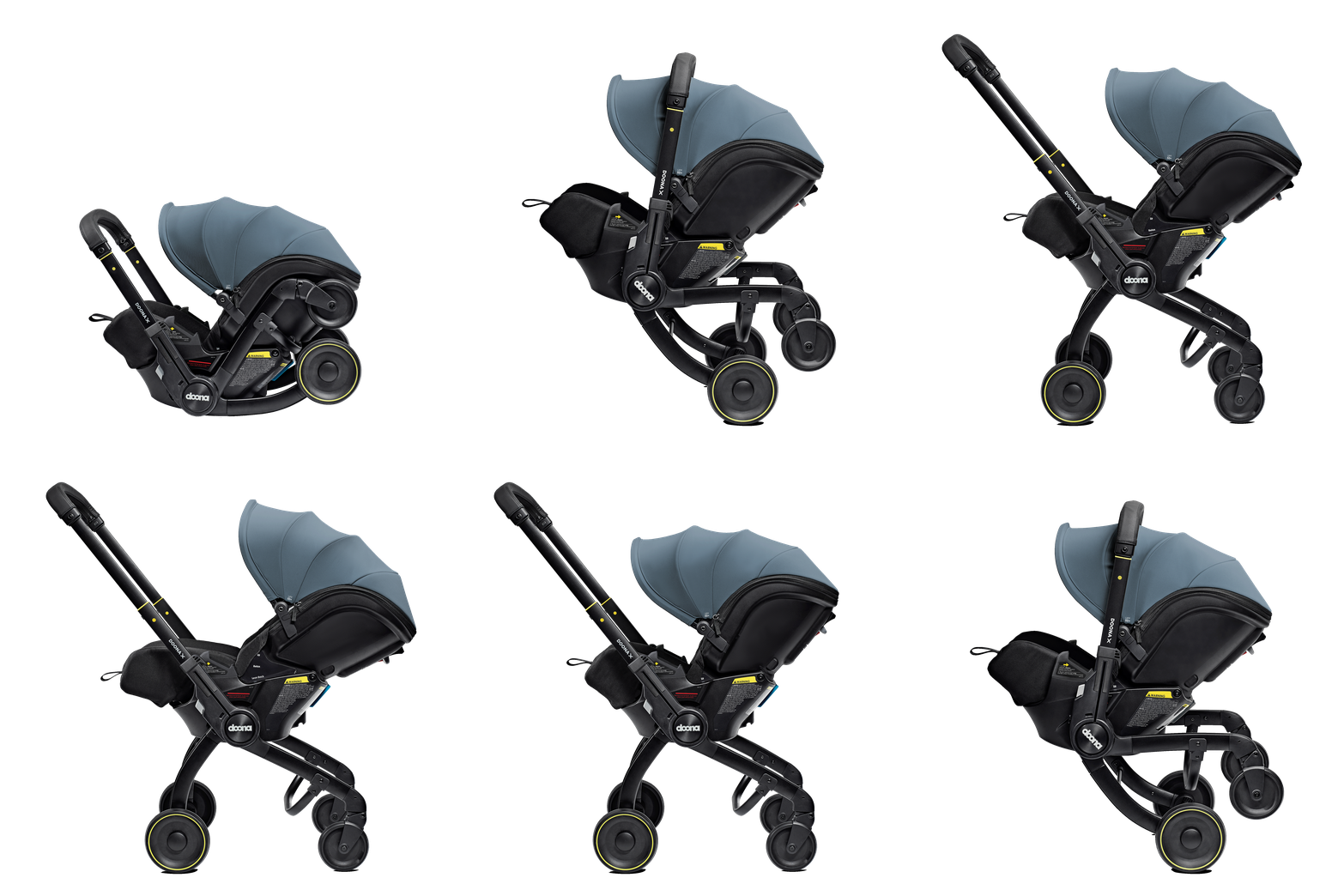
As a CPST, I'm always reminding parents about the American Academy of Pediatrics' recommendation not to leave babies in a car seat for more than about two hours at a time. Car seats are designed for crash protection, not extended lounging or sleep, and while that recommendation hasn’t changed, the Doona X introduces three recline positions: Sit, Relax and Lean Back. (The original Doona has a fixed seating position with no recline options.) These options let you recline baby once you're out of the car, creating a more comfortable position for strolling.
Just remember: the recline feature is for stroller mode only—the seat must remain fully upright whenever it's installed in the car.
A smoother ride
At its core, the Doona is a car seat; I always tell parents to think of its stroller capabilities as a nice-to-have add-on, not its strongest feature. The original model has no suspension, so sidewalk cracks, curbs and uneven pavement can feel especially bumpy.
The Doona X adds front-wheel shock absorbers, and while it still doesn't ride like a full-size stroller, I noticed an improvement right away. Bumps and uneven pavement felt noticeably smoother, making everyday strolls more comfortable for both baby and whoever's pushing.
Easier harness adjustments
This might not be the flashiest update, but as a CPST, it's one of my favorites.
The original Doona requires you to manually rethread the harness straps as your baby grows. The Doona X switches to a no-rethread harness, so the harness and headrest adjust together with the push of a button.
Besides being more convenient, it also makes proper harness adjustments more intuitive. As a CPST, I'm always a fan of features that make it easier for parents to get the fit right as their child grows.
There are a few other upgrades worth mentioning, too.
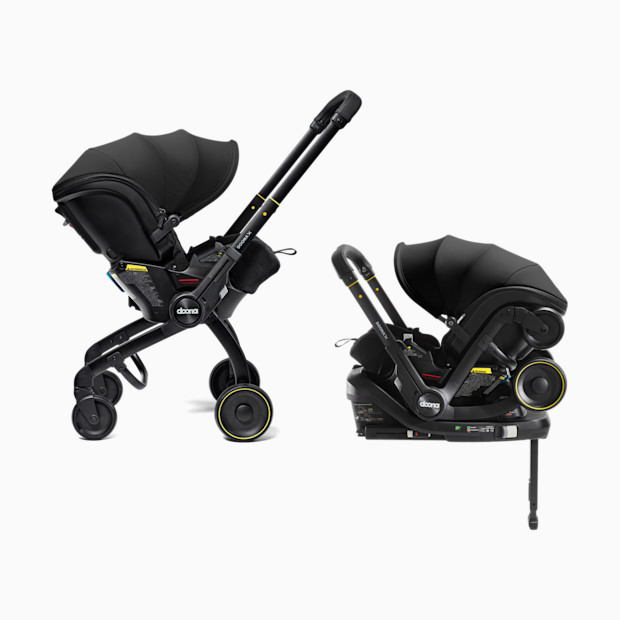
The Doona X adds a load leg (a metal leg that extends from the Doona base to the vehicle floor and helps stabilize the seat and absorb crash forces in certain crashes), along with enhanced side-impact protection and compliance with the newest federal side impact car seat safety standard. It also gets a smoother stroller-release mechanism that creates a smoother transition when moving between car seat and stroller mode, a larger canopy and quick-release wheels that pop off for easier cleaning.
A few not-so-great changes worth noting?
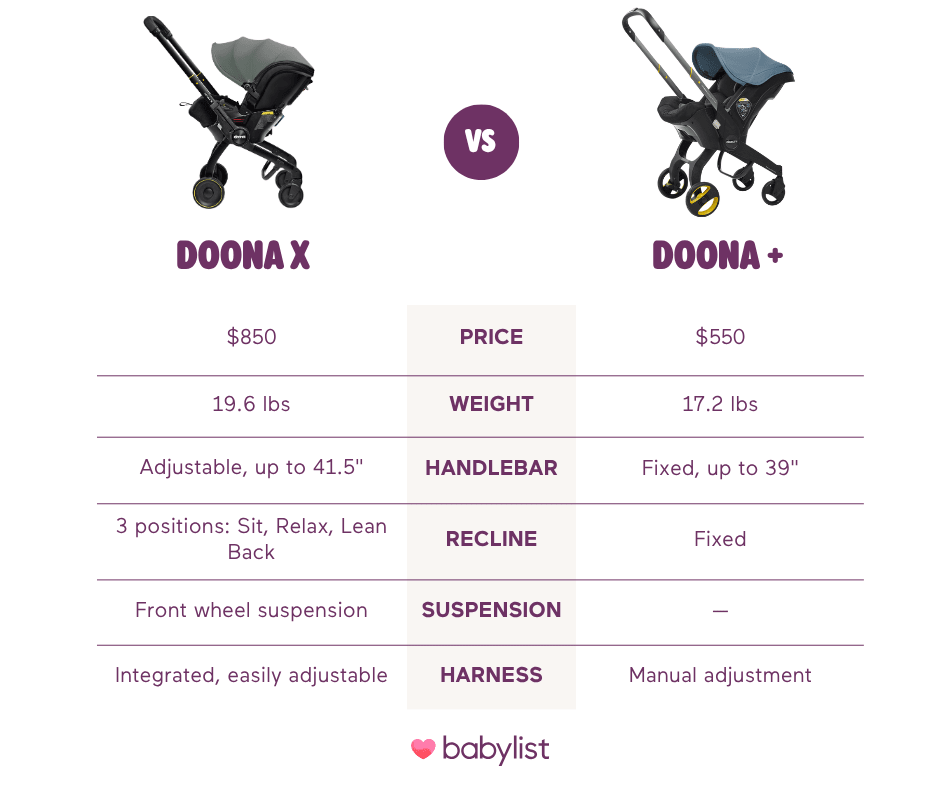
The original Doona was already heavy, weighing in at about 17 pounds. (As a comparison, a typical infant car seat weighs about eight to 10 pounds, while most mid-size strollers come in around 18-22 pounds.) The new Doona X weighs almost 20 pounds. Add a growing baby to that—plus the fact that you’re going to be lifting the X in and out of a car a lot if you plan on using the Doona every day—and it’s definitely something to consider.
The Doona X is also more expensive than is predecessor, coming in at $850 versus the $550 price tag for the Doona +.
Doona X vs. Doona +: How they compare
If you’re wondering exactly what changed or trying to decide whether the upgrades are worth it, this chart breaks down the biggest differences between the original Doona + and the new Doona X.
Is the Doona X right for your family?
Before you start thinking through which Doona is right for you, you need to answer a bigger question: Do you even need a Doona at all?
The Doona has never been a baby product I recommend to every family—but for the right family, it's one of the smartest pieces of baby gear you can buy. I love it for:
City families who rely on rideshares, taxis or public transportation, or who have a long walk between their home and where they park.
Frequent travelers who want one less piece of gear to lug through the airport.
Suburban families constantly in and out of the car, like parents juggling preschool drop-off, school pickup and activities with an older child (or two) and a baby in tow.
Parents who plan to babywear often, since you won't be relying on a full-size stroller for long walks.
Keep in mind: most families own another stroller in addition to the Doona. Many families end up getting a full or mid-size stroller for longer walks or rougher terrain. And even if you rely solely on a Doona, your baby will outgrow it long before they’re past their stroller days (usually between 12-18 months or so), so you’ll need to purchase a second stroller eventually.
I’d choose the Doona X if…
You're planning to be a Doona power user. If you fit into one of the categories above and anticipate you’ll rely heavily on your Doona almost every day, I think the X is worth the investment.
I’d choose the original Doona if…
You love the Doona concept but don't need all the bells and whistles, budget is your priority or if you don’t think you’ll use your Doona that frequently. The Doona + still nails the thing it does better than any other baby product: making quick trips with a baby incredibly easy. If the upgraded features aren’t must-haves for your lifestyle, the Doona + is still an excellent option.

;)
;)