
7 Things to Know Before You Start Breastfeeding
The first few weeks of lactation are crucial. It’s all about supply and demand. Here’s how to get that supply going.

By
Breastfeeding is often described as natural, but that doesn’t mean it always comes naturally. After your baby is born, your body is incredibly busy—healing, bonding and figuring out how to make milk. Sometimes that can mean hiccups that prevent you from reaching your feeding goals. If you’re wondering how to set yourself up to successfully make enough milk for your baby, we’ve partnered with Medela in the video above to share the most important things to know about the early days of breastfeeding.
If the name sounds familiar, Medela has been in the feeding game for over 60 years, using science to make pumping easier. They’re probably best known for their hospital-grade pumps (if you’ve seen one in a NICU or hospital lactation room, there’s a good chance it was a Medela). But most importantly, they are obsessed with breastmilk science. Here’s what you need to know before you try breastfeeding.
1. Who are the key players?
Part of setting yourself up for breastfeeding success is simply knowing what the heck is going on inside your body. For example, lactation actually starts before your baby is born. During pregnancy, hormonal changes trigger your breasts to grow and start developing the tissue needed to make milk. If you’ve noticed your breasts suddenly feel humongous, or your chest is sore and tender, that’s what’s going on there (you can check our video at the 0:35 mark for a close-up of what it all looks like). By the time your baby arrives, your milk-making system is already in place, complete with:
Alveoli: tiny sacs where milk is made and stored
Myoepithelial cells: muscle-like cells that squeeze the alveoli to move milk out
Milk ducts: the tubes that carry milk to your nipple
This early breast development is the first stage in a four-part process that gets your body ready to feed your baby around the clock. Those four stages are: Develop, Activate, Build and Sustain. But this pre-baby portion is called the Develop stage, and it’s pretty much the only part of breastfeeding that doesn’t require any extra work from you.
2. The first few days after birth are crucial to kick-starting lactation
Almost immediately after your baby arrives (usually within the first few days), your body makes an important decision—should it keep producing milk or start getting ready for your next pregnancy? (Too soon, hormones!) That’s why the next stage, Activate, is so important.
If milk is not being removed during this time, your body will stop making as much. So you’ve got to tell it what to do. When your baby suckles (or your breast pump applies suction), it triggers nerves in your nipple and areola that tell your brain to release two important hormones:
Prolactin: This signals your body to make milk
Oxytocin: This hormone causes the milk to be pushed out
This hormone release is what’s happening during the "let-down" reflex—some people can actually feel it when it happens.
At first, the only thing you’ll produce is colostrum, also known as liquid gold (think: thick and yellow). Packed with antibodies, colostrum is made for a few days after birth, and you might be surprised at how little comes out. Your baby’s newborn stomach is around the size of a marble, so they only need about a teaspoon of colostrum per feed. And once that colostrum is gone? That’s it. Your body doesn’t make any more. Pretty soon, it’s going to switch to making transitional milk, at which point you’ll be headed into the Build stage.
3. Things might not go according to plan
You may have heard from people who planned to breastfeed, and then switched gears after it didn’t work out and wondered to yourself…what happened there? There are lots of things that can impact your body’s ability to lactate, such as:
Medical concerns like diabetes or thyroid disorders
Prolonged or stressful labor
Postpartum hemorrhage
Delayed first feed or delayed skin-to-skin bonding
Extended separation, like due to a NICU stay
Or you might just not get the hang of it at first! Any of these things can stall activation. But that doesn’t mean you can’t still breastfeed or pump (if you want to). If your baby isn’t able to latch right away, introducing a pump in the first few days following birth can help bridge the gap so you don’t miss out on your window to activate. But which pump you introduce can make a big difference.
4. Not all pumps are created equally
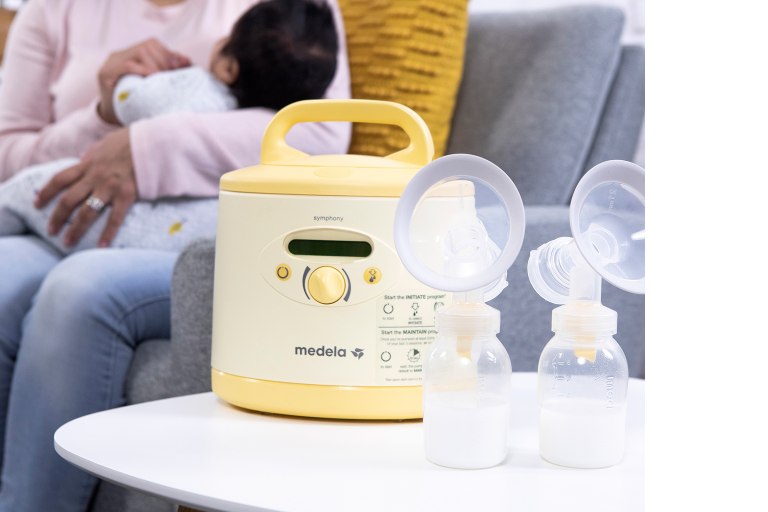
Breast pumps are usually designed to support feeding after you’ve already got a supply going. But if activation is stalled, you may need something more specialized to help get your milk flowing, like the Medela Symphony Plus.

Unlike most standard pumps that just aim to remove milk, the Symphony Plus is designed to help your body start making it. Its patented Initiation Technology is clinically proven to support milk production in those earliest days by mimicking the irregular, rapid suckling of a just-born baby. This specific pattern is what triggers your brain to flip the milk-making switch. Regular pumps don’t replicate that early newborn rhythm, which means they might not be as effective at getting your supply started from scratch.
That’s why the Symphony Plus is the go-to in many hospitals and NICUs. Pump efficacy isn’t just about suction, it’s also about speaking your body’s specific hormonal language at the right time.
5. You need to feed (or pump) early and often.
Once your body is in “go” mode and milk production has been activated, it’s time to build up your supply. The Build stage—starting around day three—is when milk volume increases and your body starts learning just how much to make (based on how much is being removed).
To keep the momentum going, frequent and consistent milk removal is key. That means nursing or pumping every 2–3 hours, including overnight. (Pro tip: there are 21 seasons of Grey’s Anatomy, and tablets work really well in bed. Just saying.) If your baby can’t latch, or if you’re separated or things are off to a slower start, a pump can step in to keep the signals going until you’ve got a more confident rhythm.
This is when the Medela Symphony Plus switches from Initiate to Maintain Mode, changing from the fast-paced newborn suckling style to the slower, steadier rhythm of a baby who’s already getting milk. The goal of this Maintain Mode is efficiency and consistency. (See the 2:42 and 3:22 marks for a look at how the Initiate and Maintain modes differ.)
Initiation:

Maintenance:

6. It’s not just on you
You can do all the “right” things and still face supply issues—it doesn’t mean you’re doing anything wrong. So many factors can impact how much milk your body makes: latch challenges, medical conditions, stress, sleep deprivation, returning to work or even just not knowing how often you’re supposed to be feeding.
It’s important to remember that your mental health is equally important during this stage, and you don’t have to go it alone. Whether it’s a lactation consultant, a partner who’s washing pump parts or a pump like the Symphony Plus that’s specifically built for the most complex days of milk production, support can come in lots of shapes and sizes.
7. You don’t have to buy a hospital-grade pump to use a hospital-grade pump
Because hospital-grade pumps like the Medela Symphony Plus are on the more premium end of the spectrum, most people rent them instead of buying. And for that, you’ve got options:
Rent from your hospital or a medical equipment supplier
Rent online directly from Medela
Buy it for yourself online directly from Medela or from Amazon.
And if you have insurance, be sure to check your coverage—many plans cover part or all of the rental cost.
Once your supply is more established, and depending on how often you plan to pump, you might decide to switch to something more portable like the Medela Pump in Style Pro, or Freestyle Hands-Free. Though if you’re exclusively pumping, the Symphony Plus could still be helpful to ensure you’re able to pump enough to feed your baby breastmilk full-time.


Understanding how your body makes milk—and what it needs to keep doing it—can make those early days of feeding a lot less overwhelming. Whether your baby nurses, you pump or you do both, knowing the science behind milk supply (and the tools that can support it) can help you feel more confident and in control. Watch the full breakdown of how milk production works in our video.
This article is sponsored by Medela. Babylist’s free site, apps and emails are made possible by our sponsors. We limit our sponsored content to relevant partners that offer products and services we believe in and use ourselves.

;)
;)
;)