
Your 27-Week-Old Baby
Sitting up is a big milestone, and stronger core muscles and steadier balance set the stage.

By
By 27 weeks, you may be able to clearly see just how much stronger and more coordinated your baby is, especially with their upper body. That’s all leading up to one of the biggest milestones of this stage: sitting up. You’ll know it’s coming when baby has longer stretches of upright balance (and fewer wobbles).
It’s an exciting time for both your baby and you, now that being able to sit up allows them to do more. To help you understand what’s typical, what’s helpful and what’s safe during this developmental stage, we spoke with Dr. Chris Klunk, a board-certified neonatologist with Pediatrix Medical Group, and Dr. Gabriella Dauer, pediatrician and author of Beyond the Basics: A Pediatrician’s Newborn Guide, about ways to support your baby’s growing strength and balance.
🚼 Baby’s Development
Sitting Up
Some babies show early signs of sitting as young as four months, while others reach this milestone closer to seven or eight months. Wherever your baby’s development is, the process follows a similar path, and it all starts with good neck strength and head control. Before baby can sit up without support, they need to be able to hold their head steady without swaying or wobbling.
A big thing to keep in mind about this milestone is that it’s a gradual process, and baby’s progress might look different day to day. At first, your baby may only stay upright for a few seconds before toppling over (be sure to keep them on a lightly padded surface to prevent head bonks). Over time, usually a course of a few weeks, they’ll build the balance and core strength to stay up longer. Both Dr. Klunk and Dr. Dauer agree that the key here is practice.
The best foundation, Dr. Klunk says, is good ol’ tummy time. If you’ve fallen behind on having a regular tummy time habit, don’t stress. Get your baby into it now, and they’ll still have an opportunity to build all the necessary skills.
Once your baby shows interest in being upright, give them plenty of (supported) opportunities to explore. “Supported sitting with your baby between your legs or your hands under their arms gives them an opportunity to practice,” Dr. Klunk says. “Make it fun and interesting. When you have them practicing supported sitting or doing tummy time, break out the toys and point out interesting things around the room. Give them the motivation to do it!”
If you want to use a prop like a nursing pillow to help hold baby up, Dr. Klunk says to just be careful and watch your baby closely, “as they can, and will, fall over headfirst.”
And what about those popular hard-plastic baby seats? Both experts caution against relying on them. “Providing the surrounding support for baby to sit can actually change the way their muscles feel they need to develop,” Dr. Dauer says. “If something is supporting them, why should their body put in the work?”
If you do use a baby floor seat, be sure to limit the amount of time baby spends there. Experts recommend no more than 10–15 minutes per day to ensure they still have plenty of time to practice using their muscles outside the seat. And only ever use baby seats on the floor; never place a seat on an elevated surface, since that poses a dangerous fall risk.
What Sitting Unlocks Next
Mastering sitting paves the way for lots of exciting things, largely because safety regulations and manufacturers require that baby can sit up independently before using certain products.
Most strollers (except those that lay flat) list six months as the age for transitioning to the upright seat, but age alone isn’t the deciding factor; it’s more about whether they can safely physically use the seat. “For a baby to safely use a regular stroller, they need to have pretty solid control of their head and trunk,” Dr. Klunk says. So as long as baby is still wobbly and prone to toppling over when they sit, keep them in the bassinet or car seat attachments.
And even when your baby becomes a pro at sitting independently, Dr. Dauer reminds parents to keep up with safety, and to keep baby plugged in at all times, meaning harnessed securely, no exceptions—even when the stroller is stationary.
It’s probably not surprising that new upright vantage points are very exciting for baby, which encourages them to be more engaged with their surroundings. “Around the time that babies learn to sit, they are becoming more vocal with babbling, more interactive with you by laughing and more able to hold and play with their toys,” Dr. Dauer says. This stage feels like a sweet spot for some parents; baby is engaged, curious and delighted…but not quite mobile enough to zoom away just yet. (Enjoy it. Crawling is coming!)
Try This with Baby: Activity Centers
Sitting also gives baby the opportunity to experience the joy of activity centers, those swiveling seats surrounded by toys, textures and built-in entertainment. This upright play station gives your baby a whole new way to explore and work on hand-eye coordination.
Activity centers can be especially helpful during this in-between phase when your baby wants to interact more but isn’t fully mobile. They offer a safe, supportive spot for practicing balance, but make sure your baby is still getting plenty of unsupported sitting time, too, so they can keep building the muscles needed for independent sitting. As Dr. Klunk and Dr. Dauer both emphasize, limiting babies to rigid infant seats can delay their physical development, so think of activity centers as brief, fun play rotations, not all-day hangouts.
And good news: you don’t have to retire the table once your baby starts moving. Many babies love cruising around the outside for a fresh angle on their favorite toys. Some activity centers even convert into toddler tables for crafts, blocks and snacks, extending their usefulness for years.
👀 Looking Ahead
Transferring from hand to hand: Soon you might notice baby intentionally passing objects between their hands. It’s a big coordination leap that also supports skills like self-feeding.
Sippy cups: Hand-eye coordination makes it easier for baby to self feed, and that includes drinks, too. Sippy cups are a great bridge between bottles and open cups.
🛍️ Panic Order
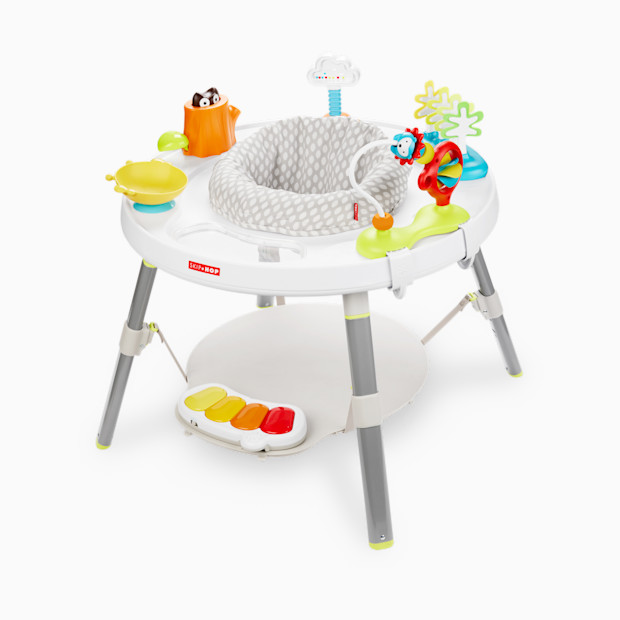
Skip Hop
Explore & More 3-Stage Activity Center

Tiny Love
5-in-1 Stationary Activity Center
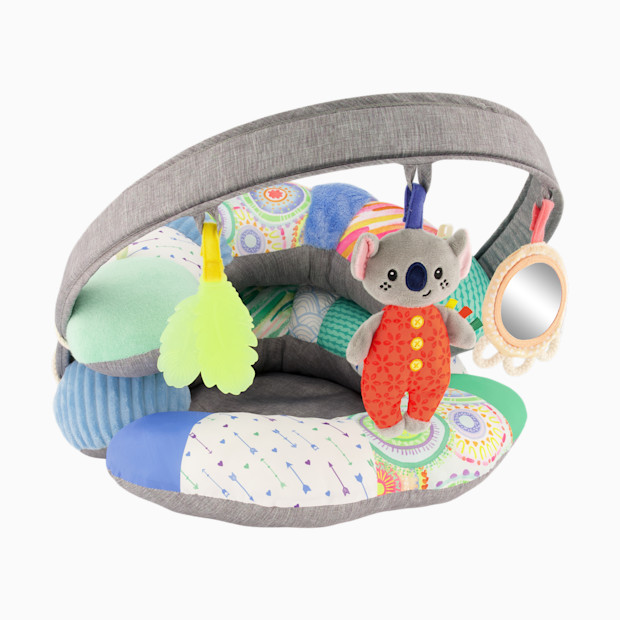
Infantino
3-in-1 Tummy Time, Sit Support & Mini Gym
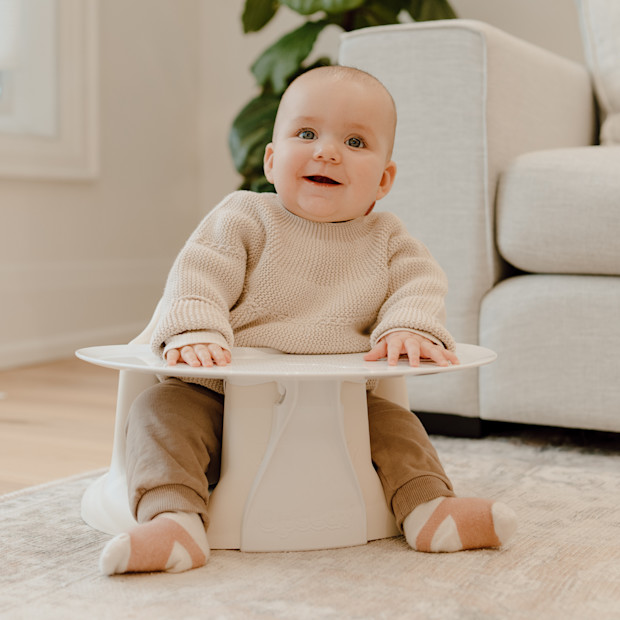
Upseat
Baby Floor & Booster Seat with Tray
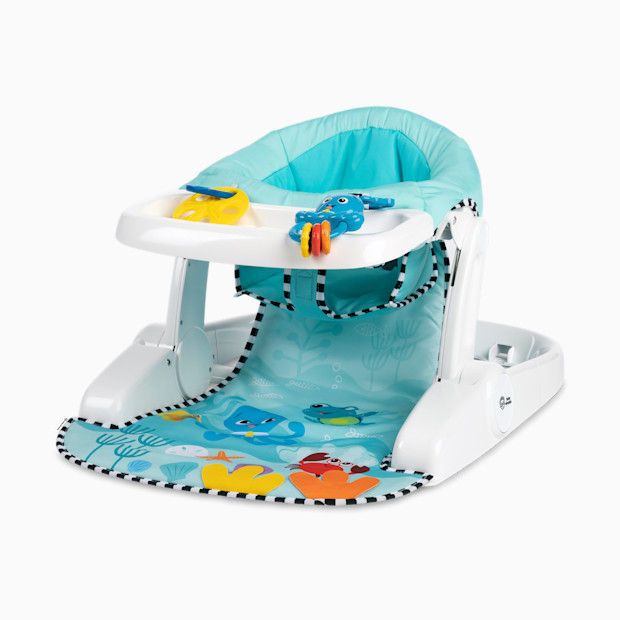
Baby Einstein
Sea of Support 2-in-1 Sit-Up Floor Seat
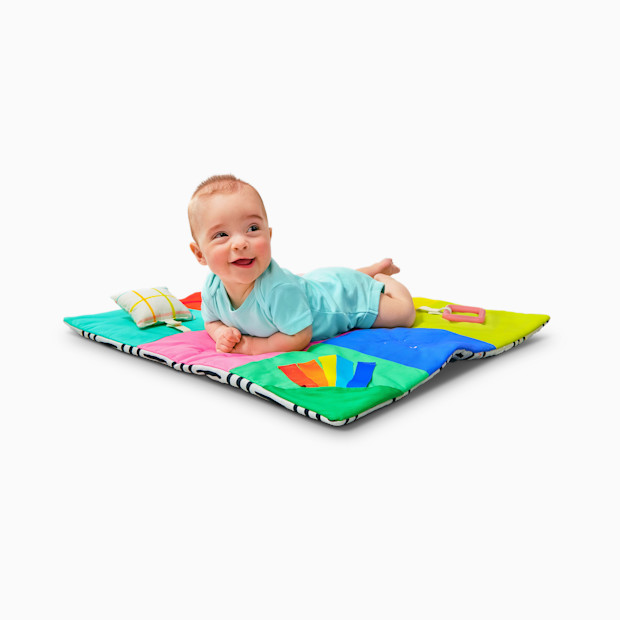
Lovevery
Anytime Activity Mat
Expert Sources
Babylist content uses high-quality subject matter experts to provide accurate and reliable information to our users. Sources for this story include:
Dr. Chris Klunk, board-certified neonatologist with Pediatrix Medical Group
Dr. Gabriella Dauer, pediatrician and author of Beyond the Basics: A Pediatrician’s Newborn Guide

;)
;)
;)
;)
;)
;)