
The Best Push Toys to Get Your Baby Moving
These push toys give babies the support they need to explore safely—and have fun doing it.

By
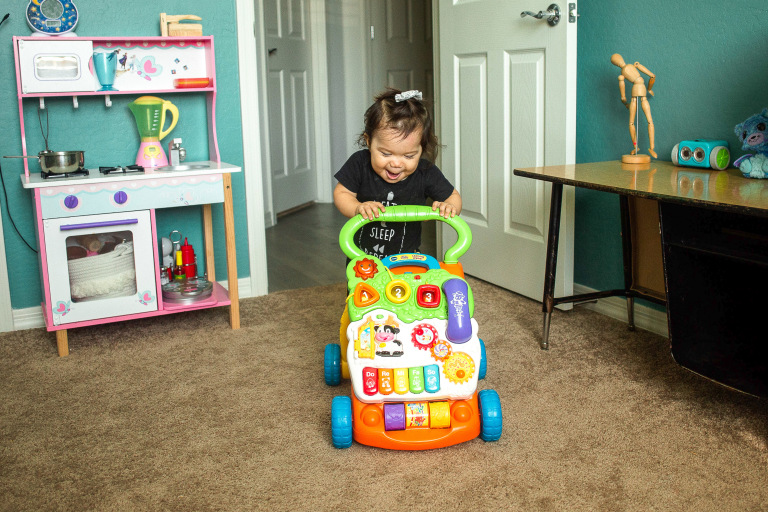
When babies start cruising around with a push toy for the first time, it's a big milestone for their development—and pretty exciting for parents to watch, too.
It's a major step in your baby's development of balance, coordination and motor skills that eventually will lead them to walking all on their own. But these aren't your typical baby walkers, which experts say are no longer safe (more on that below).
A push toy—which baby stands up and cruises with on their own—can help your baby get their footing once they've mastered standing (with support) and pulling themselves up. In fact, it can be a tool they need to help them get moving. "Push walking toys are a good way to encourage muscle development, coordination and activity. The whole body is involved in making the push toy 'go' and is done on the child's individual development 'schedule'," Dr. Christina Johns, a pediatric emergency room physician and spokesperson for the American Academy of Pediatrics (AAP), explains.
Here are some of our favorite push toys to help your little almost-walker get moving.

Most Versatile Push Toy
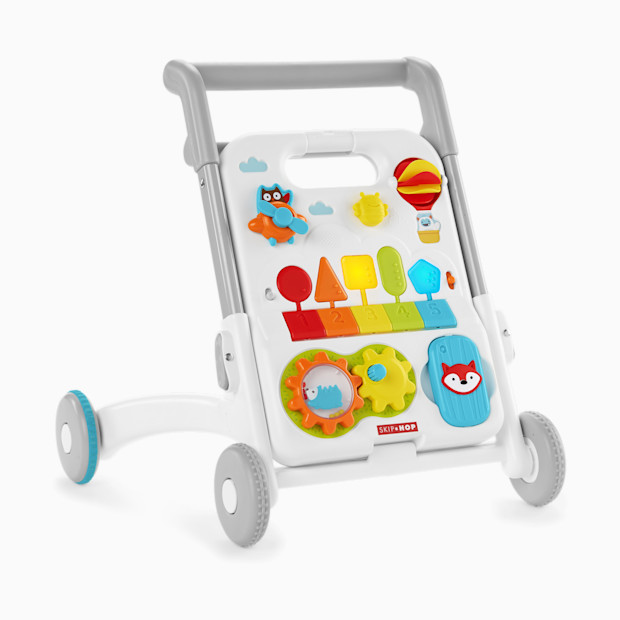
Skip Hop Explore & More 4-in-1 Toy Walker
From $66.97We love baby gear that goes the distance, and this 4-in-1 push toy lives up to that definition. The Explore and More has four different configurations, and is suitable for babies six months up to four years old. Stage one allows younger babies to play with the activity panel while seated. And when they’re ready to start cruising, simply convert it into a push toy walker. Once they’re really on the move—and ready for some pretend play—the walker converts into both a shopping cart and a stroller.
We also appreciate the speed control feature, which gives your baby more control over maneuvering (and prevents it from rolling away too quickly). Not only does the toy convert, the handle is also adjustable (with three different settings) as your little one gets taller. One Babylist parent wrote in their review, “My seven-month-old loves sitting up and playing with the front activity center, and my two year old loves to push it around and use the cart for pretend play. Love how it can be used for any age group!” It's a super versatile, open-ended pick, and at just under $60, it won’t break the bank.
Additional Specs
-
Age range: 6 months to 4 years
-
Dimensions: 16.3” x 18.5” x 18”
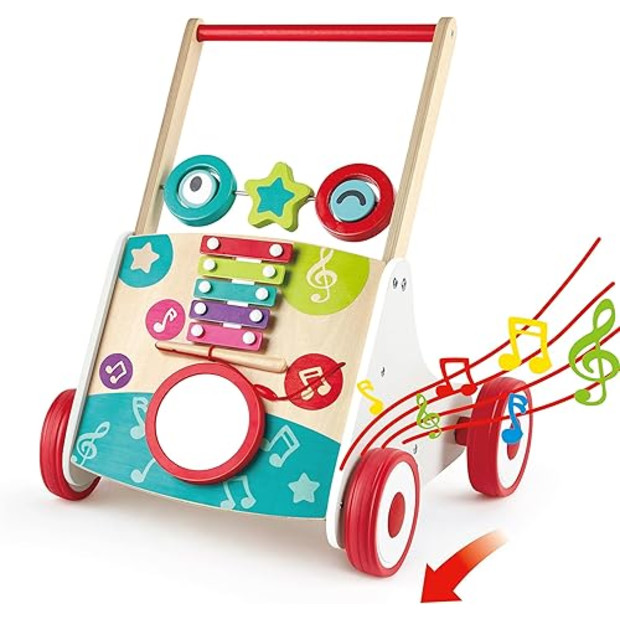
Best Wooden Activity Walker
Best Minimalist Activity Walker
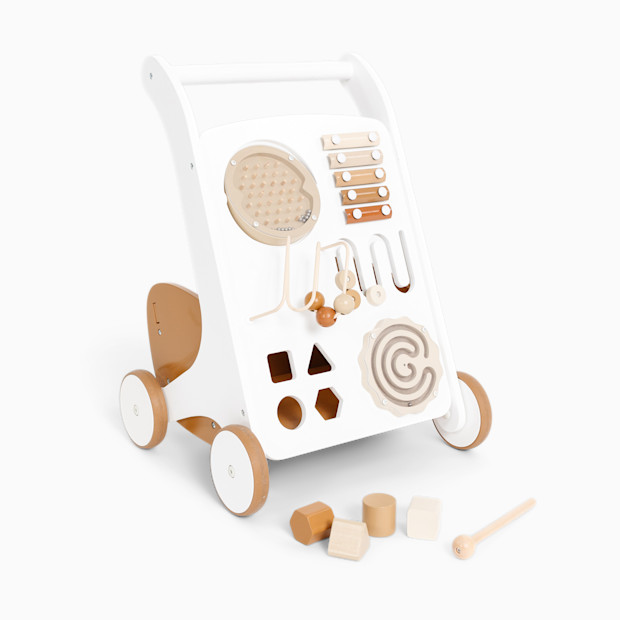
If you’re someone who prefers baby gear that doesn’t really look like baby gear, this aesthetic activity walker from Gathre may be right up your alley. It’s made out of sturdy wood and quiet colors that’ll blend into your home. It features sensory activities like a metal bead maze, a spinning mirror and rain maker combo, a shape sorter and a little xylophone and mallet. There’s also a little basket on the back for that collect-everything-in-sight phase.
Additional Specs
-
Age range: 9+ months
-
Dimensions: 20” x 13” x 12.5”
Most Affordable Push Toy
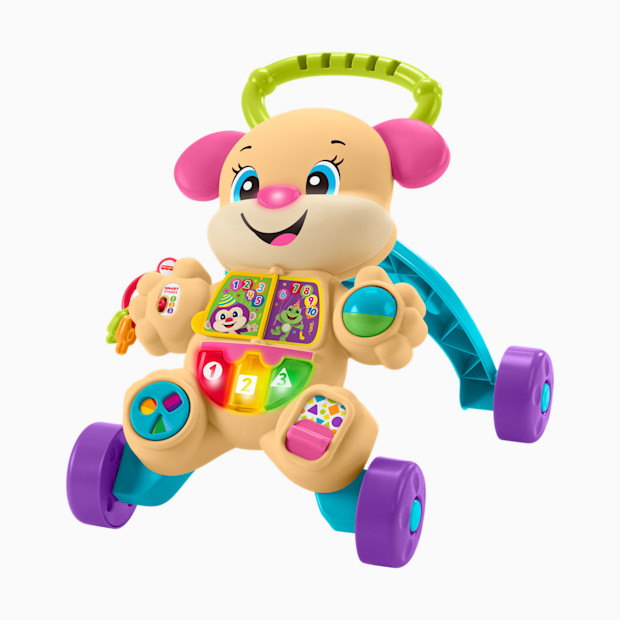
Fisher-Price Laugh & Learn Smart Stages Learn with Sis Walker
From $26.99This fun pushy puppy has two ways to play as baby grows—sit and play or stand and walk. It has seven hands-on activities for little ones to play with while seated, and when they’re starting to toddle along, they can push the toy along for fun music and encouraging phrases. There are a ton of sounds (over 75), including words in Spanish. And there are three different stages to teach letters, colors and shapes.
Additional Specs
-
Age range: 12 months to 4 years
-
Dimensions: 22.44” x 14.57” x 17.13”
Best Popper Push Toy
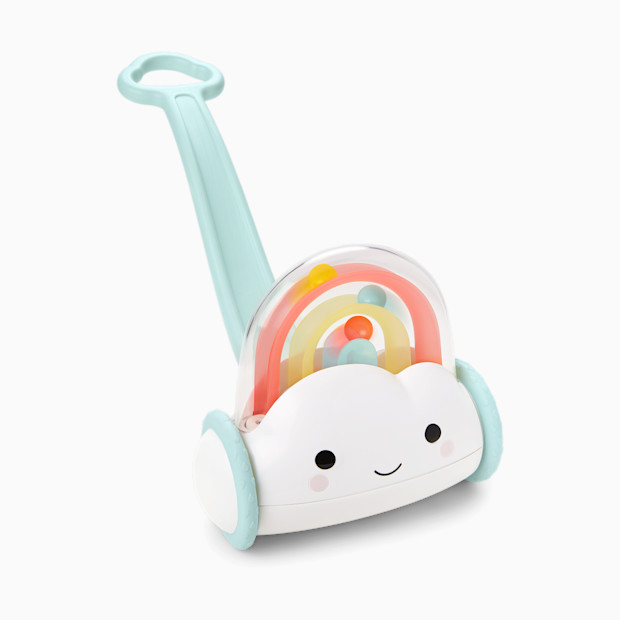
Skip Hop Silver Lining Cloud Rainbow Push Toy Walker
From $19.99Inspired by the classic popcorn popper toy, this modern take from Skip Hop adds a dreamy twist to a nostalgic favorite. As your toddler pushes, colorful balls bounce and pop under a cloud-shaped dome—encouraging cruising with sensory fun. With its soft color palette, easy-to-grip handle and smooth-rolling wheels, it’s a fun update for a classic milestone moment. One thing to note: this isn’t going to provide support for early walkers—it’s meant for babies 12 months and up.
Additional Specs
Age range 12+ months
Dimensions 15” x 9.25” x 7.5”
Best Wagon Push Toy
Radio Flyer Classic Walker Wagon
From $86.99The Radio Flyer Classic Walker Wagon is a favorite among parents for the classic look that reminds them of their own childhood. But this wagon-shaped push toy is more than just a walk down memory lane—it's smartly designed with push-resistant controls to help your walker-in-training build the balance and confidence they need to take those first steps. Little ones can load the wagon up with toys and push them across the room. The straight-line design helps make sure they don't veer off course, while built-in bumpers protect your furniture. Note that the removable sides aren't that sturdy, so be aware if your child is a climber.
Additional Specs
-
Age range: 1-4 years
-
Dimensions: 22”L x 15”W x 12”H
Other push toys worth considering:

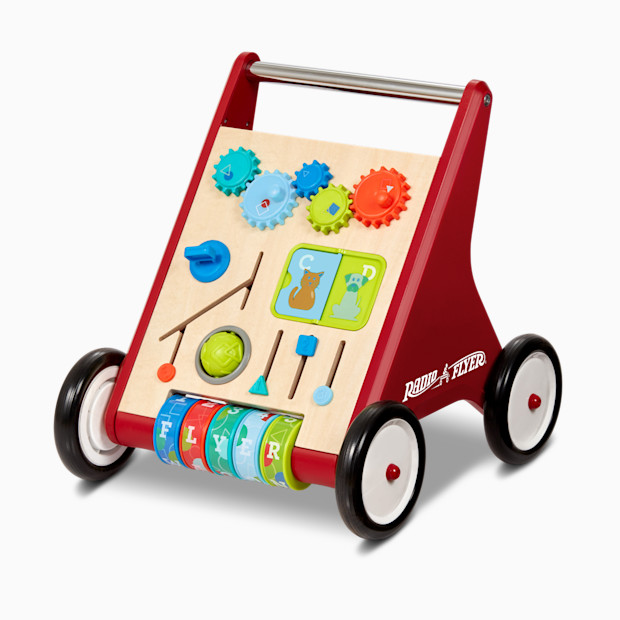
Radio Flyer
Classic Push & Play Walker

;)
;)
;)
;)
;)
;)
What to Look for in a Push Toy
There are a few things to consider when picking a push toy that works best for you, your baby and your home. First, make sure the push toy is age appropriate (generally they're a good toy choice for nine-month-olds and up, as long as baby can stand up and push without falling over).
A few other things to consider include:
-
Height and width: You don't want it too tall or too short for your baby.
-
Sturdiness: Consider the material—wooden push toys are typically more durable and stable, while plastic ones may be lighter but less sturdy.
-
Wheels: Good traction is important. Also consider your flooring—will the tires work with carpet, tile or hardwood floors?
-
Speed control: Can the wheels be tightened or loosened to change the speed as your baby grows into the push toy? Is there a brake?
-
Fun extras: Some push toys come with built-in activity panels, shape sorters or blocks—great for engaging your baby beyond just walking.
Push Toy Safety
A quality push walker should have a wide, stable base, adjustable speed settings for the wheels and rubber wheel grips to prevent sliding on smooth floors. Always remember that babies shouldn't use a push toy without supervision. And, even if supervised, never let them use push toys near stairs, fireplaces or other potentially dangerous obstacles in your house. You never know when your stumbler will turn into a sprinter and dart away.
Are baby walkers safe?
Those traditional walkers that babies sit in to cruise around are no longer recommended by the AAP and most professionals.
Dr. Johns says, "While walkers can potentially enable a child to learn to walk earlier, there is data showing that poor walking habits and an unbalanced gait can develop because a walker can interrupt the typical progression of crawling, pulling to stand, and then walking."
She also says that traditional baby walkers pose safety risks, "mostly due to the risk of incurring some type of trauma—whether it's tumbling down a flight of stairs in the walker, or overturning the walker and sustaining a head injury to a young skull whose bones are still strengthening."
Frequently Asked Questions
When is the best age to introduce a baby push walker?
Push toys are a major step in your baby's development of balance, coordination and motor skills that eventually will lead them to walking all on their own. Babies are typically ready for a push walker around nine to 10 months old, when they can pull themselves up to stand and take supported steps along furniture.
What surfaces can push walkers be used on?
Push walkers work best on flat, firm surfaces like hardwood floors or low-pile carpet—avoid thick carpets, uneven surfaces or outdoor terrain.
How long do babies typically use push walkers?
Most babies use push walkers from around nine months until they’re confident independent walkers, typically between 12-15 months old. But most activity walkers can be used past that timeframe thanks to additional features, especially those that double as a wagon.
Expert Sources
Babylist content uses high-quality subject matter experts to provide accurate and reliable information to our users. Sources for this story include:
-
Dr. Christina Johns, a pediatric emergency room physician and spokesperson for the American Academy of Pediatrics.