
The Best Bassinets for Small Spaces
Short on space? These bassinets will fit your bedroom. (We promise.)

By
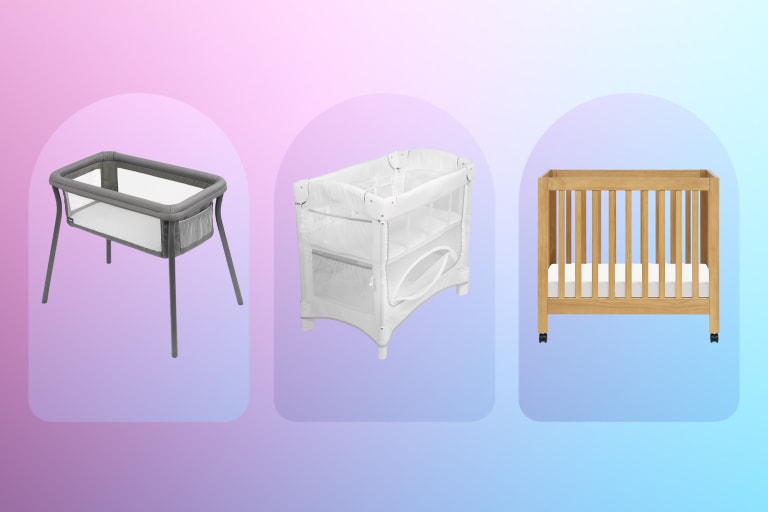
Small space living has its perks: less furniture to buy, less square footage to keep clean and less clutter overall. But when you’re adding a baby to the mix, that limited space can suddenly feel…really limiting. Finding a place for baby to sleep is often one of the trickiest pieces of the puzzle.
The good news: there are plenty of compact bassinets that really do work well in tight spaces—you just have to know what to look for.
This guide focuses specifically on bassinets and mini cribs for small spaces: think smaller footprints, smarter bases and features that actually help in tight quarters, like wheels and built-in storage.
Our top pick for smaller spaces is the Chicco LullaGo Anywhere Portable Bassinet. It has a simple, streamlined design that tucks neatly beside your bed without hogging the room, and it’s lightweight and packs down into a travel bag for easy portability.
If you’d like to browse a few other options, including a mini crib, we have three other options we also recommend, plus info on how to think about footprint versus longevity and answers to the most common questions parents have about small space sleep solutions.
How We Judged the Best Compact Bassinets
Best Bassinet for Small Spaces
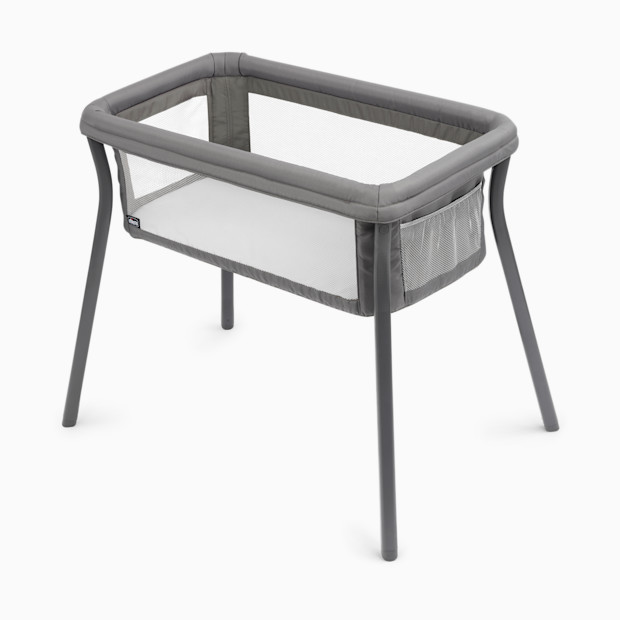
Chicco LullaGo Anywhere Portable Bassinet - Sandstone
From $79.99Pros
- Compact, streamlined design
- Lightweight
- Portable (folds flat)
Cons
- Smaller sleep space; outgrown sooner than some bassinets
- Limited storage
Whether you have a tiny bedroom or a dedicated sleep nook, the Chicco LullaGo is the MVP of small-space sleep. This simple, streamlined bassinet has a much smaller footprint than most full-size bedside sleepers, so it tucks neatly beside your bed, in a corner or along a narrow wall without dominating the room. And what’s just as important is what this compact bassinet doesn’t have: splayed legs to trip over or a wide base that sticks out from your bed.
“It’s small enough to fit in our tiny bedroom to keep the baby right by my side,” shared one parent in our annual Most Loved Baby Products survey.
At just about 12 pounds, it’s easy to pick up and move—ideal if you’re in an apartment or smaller home and want one sleep space that can bounce between your bedroom and the living room. It also breaks down quickly into an included tote, so it doubles as a travel bassinet for tight hotel rooms or overnights with family. It also comes with a fitted sheet and a mesh pocket on the side for a few essentials like pacifiers or burp cloths.
Like many compact bassinets, the tradeoff with the LullaGo is the smaller sleep space; it’s roomy enough for most newborns through the first few months, but definitely outgrown sooner than larger bassinets. “We used this as our main bassinet, but our daughter grew out of it fairly quickly. What we traded for portability, we lost out on in longevity,” noted one parent. There’s also no storage underneath, which can be an issue for some small-space dwellers.
One quirk: the mattress folds in half when you pack the bassinet, creating a ridge down the center when you unfold it. Most babies don’t seem to notice, but parents sometimes call it out. And unlike some larger bassinets, there are no wheels; instead, the lightweight frame is meant to be picked up and moved as-is.
Additional Specs
Dimensions: 30” x 18” x 28”
Child Guidelines: Designed for infants up to 20 lbs or until baby begins to push up on hands and knees (whichever comes first)
Honorable Mention
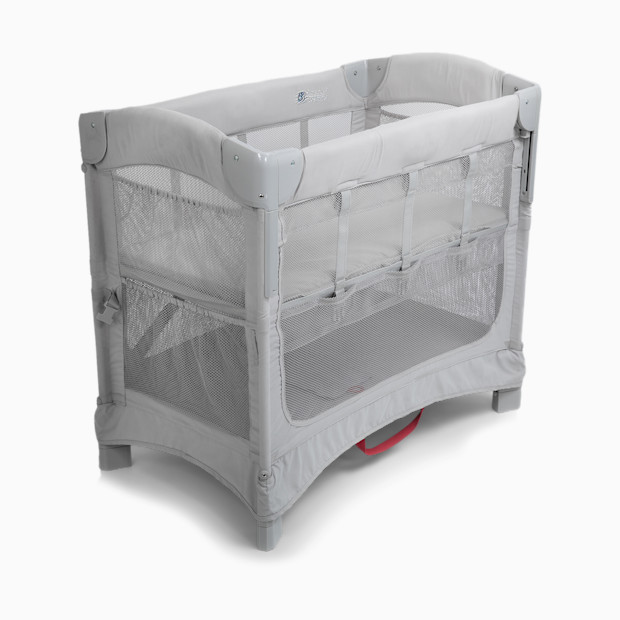
Arm's Reach Mini Ezee 2 in 1 Co-Sleeper Bassinet - Grey
From $240.00Pros
- Small footprint
- 2-in-1 design: bedside sleeper + freestanding bassinet
- Built-in storage (side pockets + bottom compartment)
Cons
- Heavy
- Bed height compatibility may require a separate leg extension kit
If you have a higher budget and are looking for a few more features—but still want a compact, small-space-friendly bassinet—the Arm’s Reach Mini Ezee is our Honorable Mention pick. It works as both a bedside sleeper (a bassinet that attaches to an adult bed and features a retractable side for easy access to your baby) and a standalone bassinet, all within a narrow, compact footprint.
Because they line up snugly alongside your bed, bedside sleepers are often a good option for small spaces. But not all cosleepers are created equal; many have bases or legs that jut out and take up way too much room if you’re in a small space. That’s not the case with the Arm’s Reach, as the legs are directly under the bassinet. “It fits perfectly next to my bed,” one parent commented in our survey.
Where this bassinet really shines for small-space dwellers is storage. The side pockets and roomy bottom compartment act like a built-in nightstand for baby gear, so you may be able to skip a separate cart or caddy if your room is tight. You can stash diapers, wipes, swaddles and burp cloths right where you need them, instead of adding another piece of furniture to an already-small bedroom. Breathable mesh sides help with airflow and make it easy to peek at your baby from bed.
At 22 pounds, the Mini Ezee is more substantial than ultralight travel-style bassinets. It’s still portable—there are two wheels for rolling it around your room, and it comes with a carry bag—but it’s better suited to staying set up in your bedroom than being moved multiple times a day. It’s designed for bed heights starting at 24 inches (measured from the floor to the top of your mattress); if your bed is taller, you’ll need to buy a leg extension kit separately to get a safe, level fit.
Additional Specs
Dimensions: 34” x 20.5” x 32”
Child Guidelines: 0-5 months or until baby is able to push up on its own
Upgrade Pick
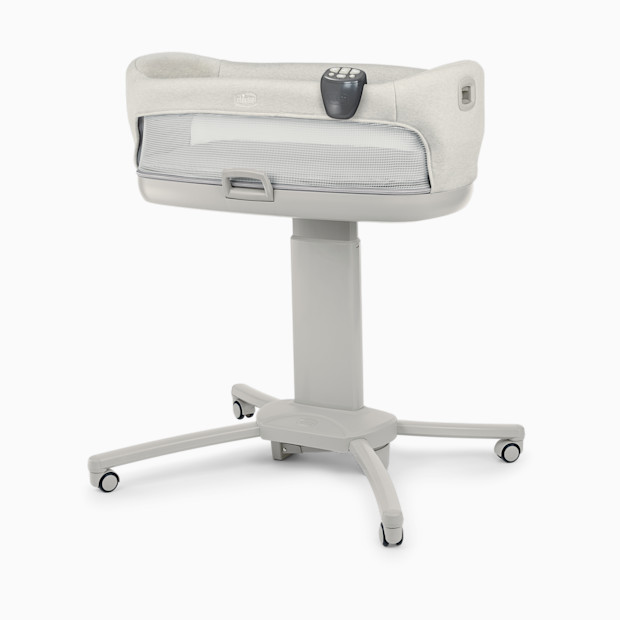
Chicco Close To You 3-In-1 Bedside Bassinet - Dove
Pros
- Bedside sleeper, portable bassinet + changer
- Plays music + vibrates
- Nightlight
Cons
- Heavy
- Legs protrude slightly from under bed
- No storage
Most parents use their bassinet for a short amount of time, which is why I don’t often recommend expensive models. However, if you plan on having multiple kids, want something with multiple functions and high-end features or simply don’t need to stick to a budget, the Chicco Close to You is my go-to pick.
The Close to You is a multi-tasker; it works as a bedside sleeper, a mobile bassinet and a height-adjustable changer, all within one footprint. (A win overall, but even more so if you’re short on space.)
As a bedside sleeper, it pulls right up to your bed, positioning baby close while still in their own safe sleep space. Mesh side panels help with visibility and airflow, and the height adjusts to align with many standard bed heights. There’s also built-in soothing features like melodies and vibrations, and a nightlight for middle-of-the-night wakeups.
During the day, you can use it as a portable bassinet. Rubberized casters and a dual-function handle/brake make it easy to glide from room to room (no lifting required), which is especially helpful if you’re in a smaller home and rely on one main sleep spot that moves with you.
The changer mode is where the space-saving really kicks in. When it’s time for a diaper change, you flip the mattress to the waterproof side and lower the bassinet walls to bring baby up to a comfortable changing height, then flip it back when you’re done. And the bassinet and mattress fabrics zip off and are machine washable.
This bassinet’s footprint is slightly larger than the other compact bassinets on our list. And yes, it does have splayed legs 🫢. BUT, they’re short and wide, and they barely stick out from most beds, so I’ll allow them.
At about 33 pounds, the Close to You is definitely on the heavier side and doesn’t fold compactly, so it’s not a good pick if you want something for travel. There’s also no storage. or frequent storage.
Additional Specs
Dimensions: 33.5” x 28” x 46”
Child Guidelines: Bedside sleeper and bassinet designed for infants up to 20 lbs or until infant begins to push up on hands and knees, whichever comes first; changing table is designed for children up to 35 lbs
Best Mini Crib for Small Spaces

babyletto Origami Mini Crib - Light Sage
From $299.00Pros
- Longer lifespan than a bassinet
- Compact footprint compared to a full-size crib
- Folds flat for storage
- Locking wheels make it easy to move
Cons
- Larger footprint than a bassinet
- Shorter lifespan than a full-size crib
- Doesn’t convert to a toddler bed
I had my first baby in New York City, where space is at a premium, and many of my friends opted for a mini crib in lieu of a bassinet or a full-size crib. A mini crib is essentially a scaled-down version of a traditional crib: same basic structure and feel, just smaller. Many are more portable, more compact and fold for storage. If you live in a small space and can swing the footprint, a mini crib can be a great choice because it often lasts much longer than a bassinet.
Babyletto’s Origami Mini Crib is a parent favorite and my top pick for small spaces. It has a compact, small-space-friendly footprint that works especially well in primary bedrooms or small nurseries where a full-size crib just isn’t realistic. “It fit our apartment bedroom beautifully and kept baby cozy,” one parent shared.
The wheels and fold are also ideal for small-space living. Locking casters make it easy to roll around your room, scoot away from the bed during the day or move it into another room without a major furniture shuffle. When you’re done using it—or if you want to reclaim your space between kids—it folds flat so you can tuck it into a closet or against a wall. Parents also love that it looks like a “real” crib, just smaller. “It’s beautifully designed, space-saving, and grows with our child—honestly, it’s one of our favorite pieces of gear overall,” said another parent.
The mattress adjusts to two heights and uses a standard mini crib mattress. Because it’s a crib, not a bassinet, you’ll likely get significantly more use out of it—many families use a mini crib well into toddlerhood, depending on their child’s size and how active of a climber they are. The tradeoff, of course, is that the Origami doesn’t convert; once your child outgrows the mini crib, you’ll still need to move on to a full-size crib or toddler bed.
It’s also important to note that while the Origami has a smaller footprint than a standard crib, it does take up more space than a bassinet. If you’re working with a truly tiny sleep nook, a compact bassinet may be a better fit.
If you like the concept but prefer a slightly different style, the Bloom Alma Mini Crib + Mattress is another mini crib we love for small spaces; it’s similarly compact and designed with compact living in mind.
Additional Specs
Dimensions: 39.25” x 25.75” x 36”
Child Guidelines: Max weight 45 lbs; stop using when child begins to climb or reaches 35” or starting to climb
Also Worth a 👀
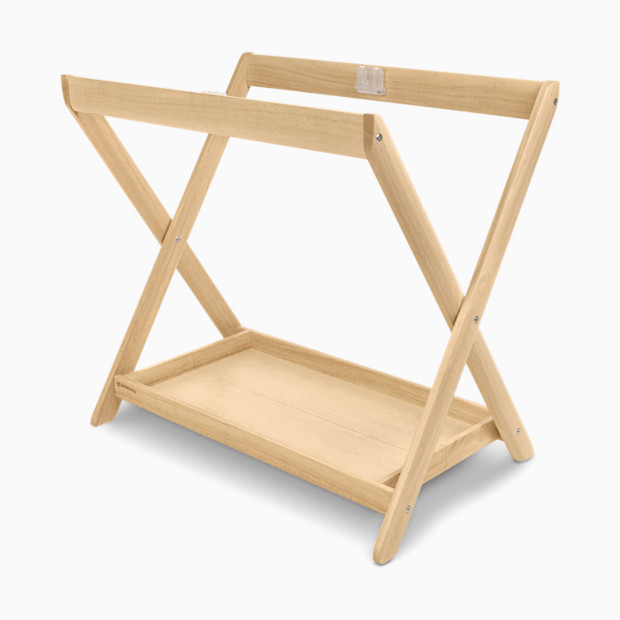
UPPAbaby Vista V3 Bassinet Stand - Natural
From $199.99If your stroller comes with a bassinet, a bassinet stand is another idea that’s extremely small-space-friendly. This one works specifically with UPPAbaby bassinets, but brands like Mockingbird, Nuna and others make similar options. Just be sure the bassinet you’re using specifically states that it’s approved for overnight sleep.
Why Trust Babylist?
Babylist is the expert in baby; we know baby gear inside and out. We talk with parents face-to-face in our showroom and on our user panels and hear from thousands annually via our Best Baby Products online survey. We know what items millions of expecting parents are adding to their baby registries.
Firsthand and professional experience. As Babylist’s gear editor, I’ve been testing and writing about baby gear since 2019, including bassinets of all sizes. I’m also a mom of two and brought my first baby home to a tiny New York City apartment, so I’m well acquainted with which bassinets work in small spaces—and which ones definitely don’t.
Bassinet data. I regularly analyze which baby products our users are adding to their baby registries the most (and which ones they aren’t) and what our team of merchandising experts—our buyers who are responsible for ensuring the Babylist Shop is stocked with the best and newest gear—is excited about. Studying this kind of data also influenced which bassinets made this list.
Feedback and reviews. I reviewed comments and feedback from Babylist’s annual Most Loved Baby Products survey of thousands of parents, read customer reviews from hundreds of Babylist users and spoke to parents on our staff about their real-life product experiences.
Why Space Matters When Choosing a Bassinet
Most families are already thinking about safe sleep when they’re shopping for a bassinet, but where that bassinet is going to live matters just as much as the bassinet itself. The American Academy of Pediatrics’ safe sleep guidelines recommend room-sharing—keeping your baby in the same room where you sleep, not in the same bed—for at least the first six months. In a smaller bedroom or apartment, that can be easier said than done.
A bassinet that takes up half the room or has legs that just out from under your bed is going to make moving around your sleep space nearly impossible. Space also matters for logistics. If your bassinet is blocking drawers, the closet or the bathroom door, you’re going to get frustrated pretty quickly.
A bassinet with a smaller footprint is a must-have if you’re short on space.
Key Features to Look for in a Bassinet for Small Spaces
If you live in a small space, just get a small bassinet. Sounds pretty easy, right? While that’s true, it’s not quite that simple. These are the features to look for when you’re shopping for a small-space-friendly bassinet, including a few things you may not know to think about as a first-time parent.
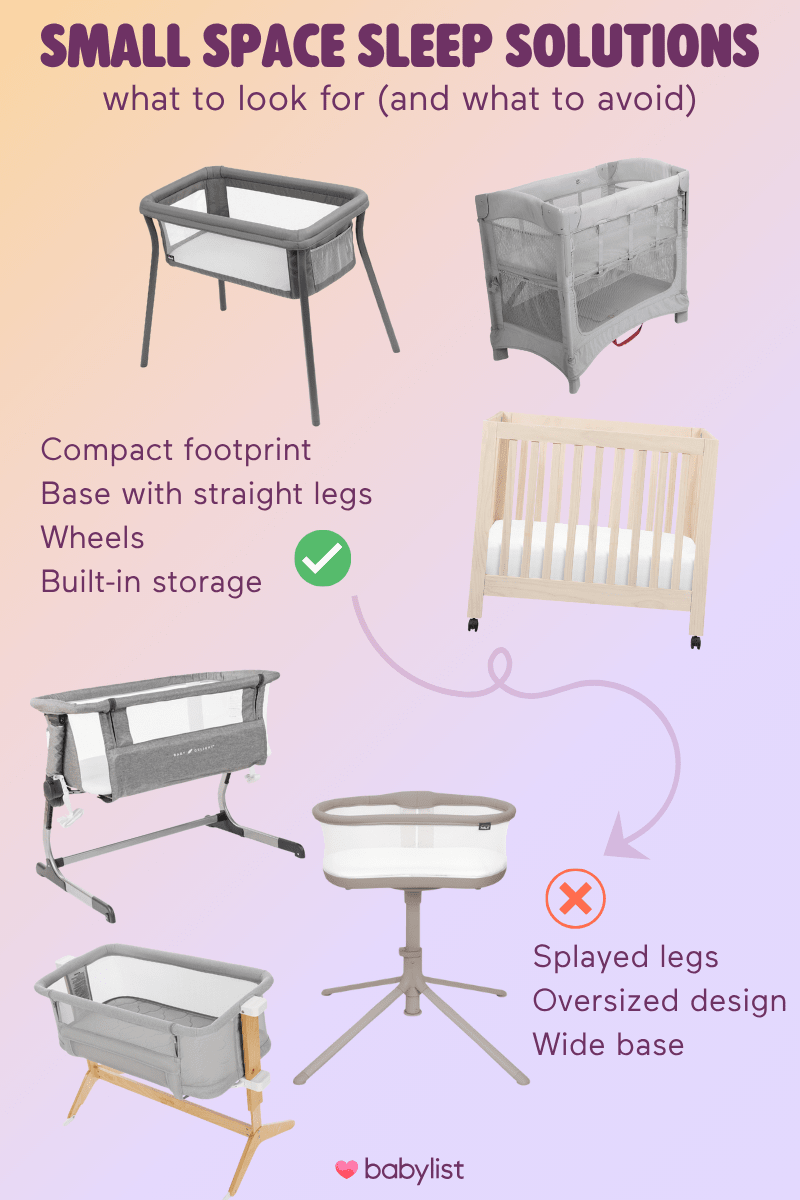
A compact footprint
Look at the bassinet’s length and width measurements and compare them to the area next to your bed or in your sleep nook. You’ll want something that fits comfortably with a bit of clearance so you can still move around the room and open drawers or doors.
Legs and base that don’t get in the way
Here’s one you might not think about as a first-time parent: In small spaces, a bassinet’s base design matters just as much as the sleep surface. Straight legs that sit directly under the bassinet (like the Chicco LullaGo or the Arm’s Reach Mini Ezee) or a base that rolls mostly under the bed are often easier to live with than wide or dramatically splayed legs that stick out and become trip hazards.
Portability that works for your space
Think through how you’ll move the bassinet. If you’re in a small apartment and want one sleep space that can move between rooms, wheels (like on the Chicco Close to You or Babyletto Origami) are really useful. If you’ll be traveling often or visiting family, a lightweight, foldable bassinet like the LullaGo that packs into a bag may be a better match.
Built-in storage (or not)
In some small rooms, storage under or around the bassinet is a lifesaver—especially if it can replace a separate cart or nightstand. In others, that extra bulk makes the room feel too crowded. Think about whether a roomy storage basket is helpful in your space or whether a more minimal silhouette works better for you visually.
Longevity vs. footprint
Generally, the smaller a bassinet’s footprint, the shorter its lifespan. Compact bassinets are easier to fit into tight spaces, but babies usually outgrow them sooner. Mini cribs and multi-function options take up more room, but often last longer or replace multiple pieces of furniture. Decide which tradeoff makes the most sense for your space and your budget.
⚠️ Pay attention to your bed’s frame before committing to a bassinet. This is important for any parent, but especially if you live in a small space. If you have a floor bed or a frame that sits particularly low to the ground, a bassinet with splayed legs—even low profile ones—likely isn’t an option. Also keep in mind your bed’s height if you’re looking at a bedside sleeper-style bassinet that attaches to the bed. If you have a particularly high or low bed, double-check the height range and any bed-height requirements before you buy.
Frequently Asked Questions
What size bassinet fits next to a queen bed in a small room?
Every room is different, but a good starting point is to look for a bassinet that’s around 20 inches wide or less and about 30 inches long or less if you’re trying to fit it next to a queen bed in a tighter space. That’s roughly the range for most “compact” bassinets.
Before you buy, measure:
The space between your bed and the wall (or dresser/door).
How far any legs or base will jut out into that space.
You’ll want enough clearance to walk past the bassinet safely at night and to open doors or drawers at least partway. If you truly only have a few inches to spare, a bassinet with straight legs, a narrower base or one that rolls partially under the bed can make a big difference.
Can I use a bassinet in my living room instead of a bedroom if space is tight?
Yes, you can use a bassinet in the living room as long as it’s used according to the manufacturer’s instructions and follows safe sleep guidelines (firm, flat surface; baby on their back; no loose bedding, pillows or bumpers). But if you’re able to, the AAP still recommends room-sharing at night—meaning baby sleeps in the same room where you sleep, just in their own safe sleep space.
If your bedroom truly won’t fit a bassinet, consider a portable option with wheels or a lightweight frame that can live in the living room during the day and be rolled or carried into your room at night.
Are foldable bassinets as safe as the larger ones?
Foldable or travel-friendly bassinets can be just as safe as larger, more traditional models—as long as they:
Meet current safety standards and are sold by a reputable brand.
Have a firm, flat sleep surface with no incline.
Lock securely into place when set up (no wobbling or partial folds).
Are used with the included mattress and fitted sheet only.
Where you need to be extra careful is setup and wear-and-tear. Always follow the manufacturer’s instructions, double-check that every leg and locking mechanism is fully engaged and stop using the bassinet if anything feels loose, bent or unstable. Don’t prop foldable bassinets on other furniture or use them partially folded, even if it seems convenient in a small space.
Does a smaller footprint bassinet mean less height or fewer features?
Not necessarily, but there are tradeoffs. Many compact bassinets still offer height adjustability, mesh sides and even small storage pockets. Where compact bassinets tend to scale back:
Sleep space length and width: Smaller interior means baby will outgrow it sooner.
Storage: You may get a pocket or two instead of a large under-bassinet basket.
Extra features: Some ultra-compact or travel styles skip built-in sound, motion or lights to stay lightweight and packable.
If you’re in a very tight space, prioritize fit and safety first (will it actually work in your room, and does it meet safe sleep guidelines?), then decide which extra features you truly need and which you’re okay skipping.
