
Breast Pump Parts: What to Replace, When & Why It Matters
Most pumping problems aren't pump problems—here's your guide to replacement parts, flange sizing, and insurance benefits.

By
You've got your breast pump. You've finally figured out how to use it, and now what? Most people don't consider pump parts until something feels like it's not working properly: output drops, sessions are taking longer or you feel like the suction isn’t as strong as it used to be.
The key to keeping things flowing well are the individual pump parts—flanges, membranes, tubing. The terminology might feel overwhelming (there’s a lot of it) but we're here to help you figure out how to keep your pump working as best as it can. And that means regularly replacing those hard-working parts. I talked to Nicole Butera, a certified breastfeeding specialist and founder of The Milk Nest, to learn more about replacement parts to keep your pump working efficiently.
Here's which pump parts need to get replaced, when certain parts need to be swapped out and how you can use insurance to help with the cost.
A Quick Guide to Breast Pump Parts
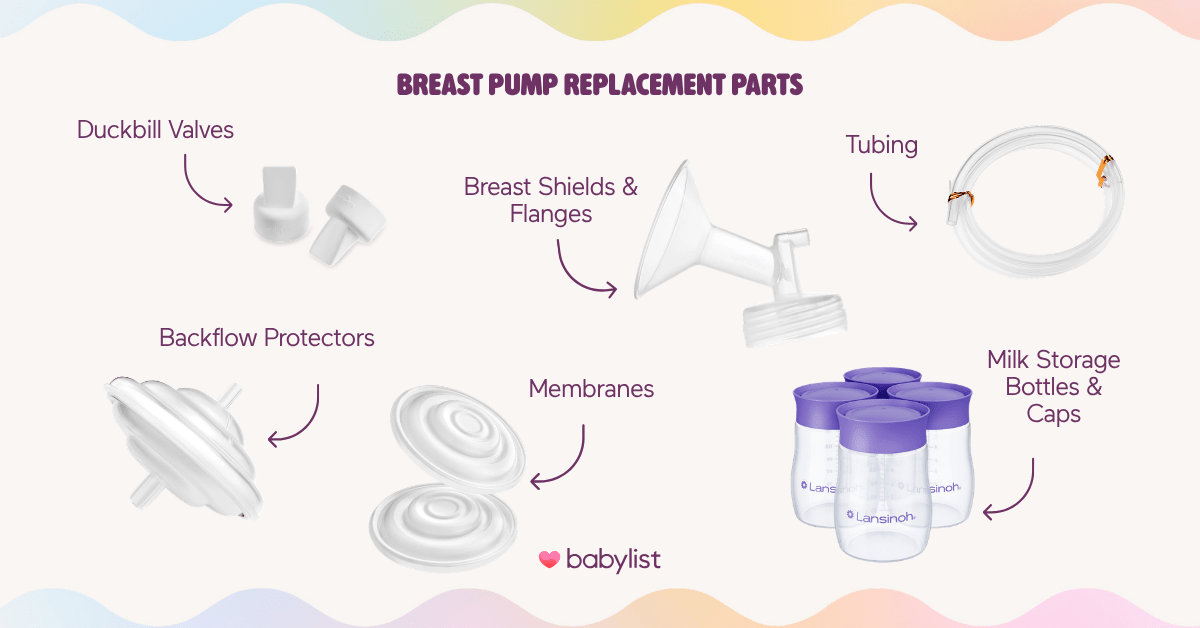
Getting familiar with the different parts of your pump makes it a lot easier to know what to reorder—and when. Here's a breakdown of the key parts:
Duckbill Valves: Small, beak-shaped silicone pieces that open and close with each suction cycle to pull milk into the bottle. They wear out faster than most other parts.
Membranes: Thin silicone discs that work with the valves to create suction. If your output has dropped unexpectedly, these are usually the first thing to check.
Backflow Protectors: A barrier that keeps milk and moisture out of the tubing and pump motor, protecting your pump and keeping things hygienic.
Breast Shields & Flanges: The funnel-shaped pieces that fit over your nipple and direct milk into the bottle. Fit really matters here—both for comfort and for how well your pump performs.
Tubing: The flexible tubes that connect your pump to the breast shields and create the suction pathway.
Milk Storage Bottles & Caps: The bottles that collect milk during pumping, plus the caps that seal them for storage or feeding.
Here’s an example of what they all look like:
How Often Should You Replace Breast Pump Parts?
Breast pumps have a lot of parts, and not all of them need to be swapped out on the same schedule. Parents who are exclusively or regularly pumping may need to replace their pump parts more frequently than the recommended timelines. “Think of it like tires on a car: the more you drive, the sooner they need to be replaced,” Butera says.
And if you ever notice a dip in output or suction strength (no matter how new or old your parts are) it might mean you need to replace certain parts sooner. Again, this can be totally normal and really depends on how often you’re pumping.
Pumps are doing a lot of work, so it’s expected the important parts like valves and backflow protectors (which are primarily responsible for suction strength) wear and tear easily. They also tend to be thin and easy to accidentally damage while cleaning—a great reason to follow your pump brand’s specific cleaning instructions.
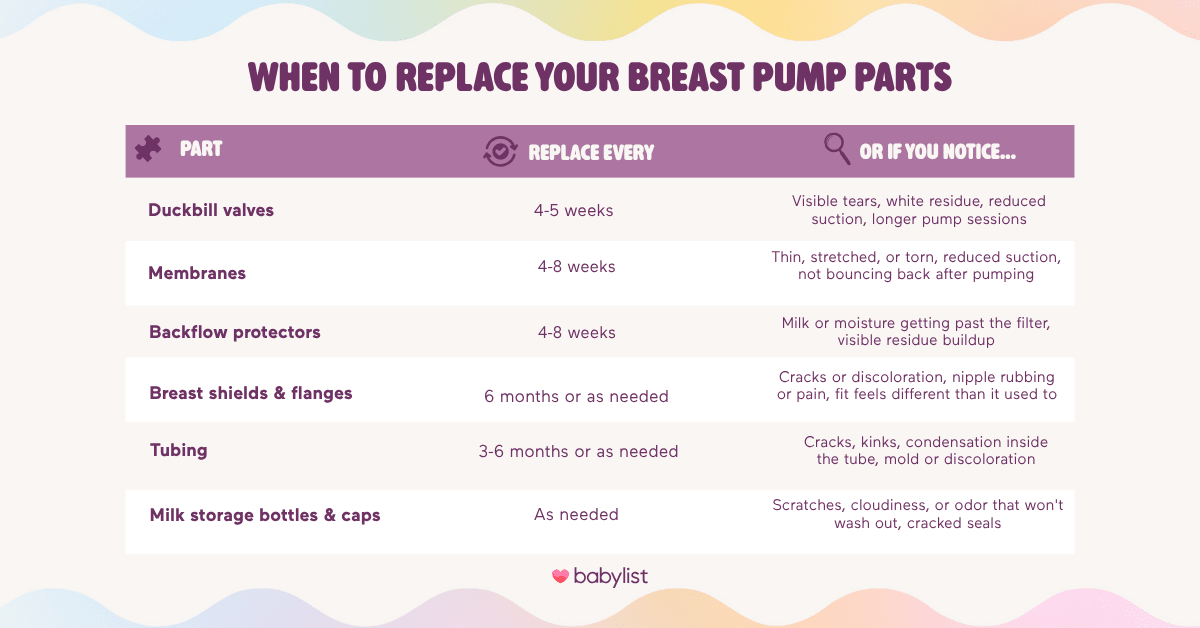
Here's a general replacement timeline based on the types of breast pump parts that’ll need routine replacing, generally (in order of frequency):
How to Troubleshoot Common Pump Issues
If you notice a loss in pumping power, it’s usually a pump parts problem. “A decrease in output is usually one of the top indicators that pump parts need to be replaced, and it tends to be a domino effect,” Butera says. There are two main things to check: your flange size and the condition of your parts.
Here are a handful of common performance issues pumping parents may experience, including what could be causing them and how to troubleshoot:
Suction feels weak → you likely need to replace your membranes or duckbill valves
Output has dropped → make sure you have the correct flange size
Milk in tubing → you’ll need to replace your backflow and tubing
Pain or discomfort → this is also tied to proper flange size
#1 Check your flange fit first
Proper flange size is a sneaky indicator of whether your pump will work to its best ability. There are a few signs to look for that’ll let you know you’ve got the wrong size, including nipple rubbing, areola pulling in, discomfort or a drop in your regular output. If you notice any of these things, reassess your flange size first and then consider replacing those hard-working parts.
Butera says it’s pretty common for flange size to change over time, and recommends measuring every three to six months to be sure you’re still in the right fit. “During pregnancy and early postpartum, there is a lot of edema, fluid, and engorgement that can affect sizing,” she explains. “As time goes on, many moms tend to go down in size the further they get from birth.”

For a more in-depth how to, check out our Breast Pump Flange Fit Guide.
#2 Then check your pump parts for wear and tear
Regular wear and tear is to be expected and it looks like silicone parts that have softened or lost their shape slightly, minor scratches or cloudiness on bottles and tubing that's become a little stiff or less flexible over time.
How does it affect your pump’s performance? Butera offers a great analogy to help parents understand how breast pump parts work together: “Think about drinking from a punctured straw. It works, but not as efficiently or as strongly. The same goes for duckbill valves and membranes. When there's no longer a tight seal due to wear or tear, the pump simply can't build strong suction.”
Where to Get Replacement Parts
You can find breast pump replacement parts at stores like Target and Walmart and online at Amazon and a few other retailers (like Maymom) but availability varies a lot by brand and part type. For most standard electric pumps, universal parts from brands like Maymom (valves, membranes, bottles) will work just fine. For wearable pumps or less common parts, the brand's website or a specialty retailer is usually your best bet.
The good news? You may be able to get replacements through insurance—more on how that works below.
How to Get Breast Pump Replacement Parts Through Insurance (For Free)
In addition to getting your primary pump through insurance, you can also get breast pump replacement parts, too. This includes all of the parts covered above—valves, membranes, flanges, etc.—plus milk storage bags and breast milk storage bottles and caps.
Babylist Health can help you set up replacement part delivery through your insurance so you’re never scrambling to find what you need. And you can get replacement parts even if you got your insurance covered pump elsewhere.
Expert Sources
Babylist uses high-quality subject matter experts to provide accurate and reliable information to our users. Sources for this story include:
Nicole Butera, a certified breastfeeding specialist and founder of The Milk Nest
