
The Best Manual Breast Pumps and Milk Catchers
Whether you’re breastfeeding or pumping, here’s why you might want to add these helpful tools to your registry.

By

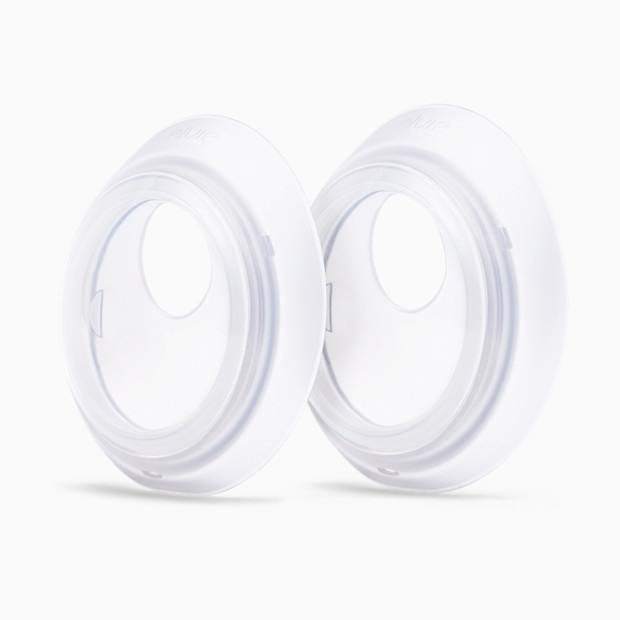
Manual breast pumps and milk catchers are two valuable tools that can support any feeding journey, each serving distinct but complementary purposes. A manual breast pump is a hand-operated device that uses simple mechanics (your hand movements combined with suction and gravity) to express milk. Milk catchers, on the other hand, are wearable cups that sit inside your bra to collect any milk that naturally leaks during feeding or throughout the day.
While they require more physical effort than electric pumps, manual pumps offer several advantages: they're typically more affordable, quieter and give you precise control over pumping rhythm and suction strength. However, both manual pumps and milk catchers can work alongside your primary electric pump, giving you flexible options for collecting milk in different situations.
After hands-on testing, talking to lactation professionals and poring through thousands of real parent reviews, the Medela Harmony Manual Pump is our best overall pick for manual breast pumps because it's easy to use, efficient and affordable. The Haakaa Silicone Breast Pump is our pick for the best milk catcher, because it’s simple to use with an impressive milk collection capability. It’s technically a manual pump as well—I’ll jump into more on that below. Like most baby and parenting-related things, manual breast pumps and milk catchers are subjective, so we picked a few others to help you find the best fit for your needs.
Why Trust Babylist?
Babylist is the expert in baby; we know baby gear inside and out. We talk with parents face-to-face in our showroom and on our user panels and hear from thousands annually via our Best Baby Products online survey. We know what items millions of expecting parents are adding to their baby registries.
Firsthand professional and personal experience. In addition to being Babylist’s assistant editor, I am also a certified lactation counselor (CLC); I’ve spent a lot of time researching and writing about all things infant feeding. I’ve tried out quite a few breast pumps in my own breastfeeding experience—as a mom of two, I exclusively nursed both of my kids for a total of three years and found a manual pump and milk collector to be valuable tools in my stash. I drew on all of these experiences to choose the top picks for this guide.
Expert POV. For an expert POV, I spoke to Hannah Varisano, a CLC who supports parents on their feeding journey at Latching With Grace.
Manual breast pump data. I regularly analyze which baby products our users are adding to their baby registries the most (and which ones they aren’t) and what our team of Merchandising experts—our buyers who are responsible for ensuring the Babylist Shop is stocked with the best and newest gear—is excited about. Studying this kind of data helped us choose the best manual breast pumps and milk catchers to narrow in on and which ones to recommend to new and expecting parents.
Feedback and reviews. I reviewed comments and feedback from Babylist’s annual product survey of thousands of Babylist parents, read customer reviews from hundreds of Babylist users and spoke to parents on our Babylist staff about their real-life product experiences using manual breast pumps and milk catchers.
How We Judged the Best Manual Breast Pumps and Milk Catchers
Best Manual Breast Pump Overall
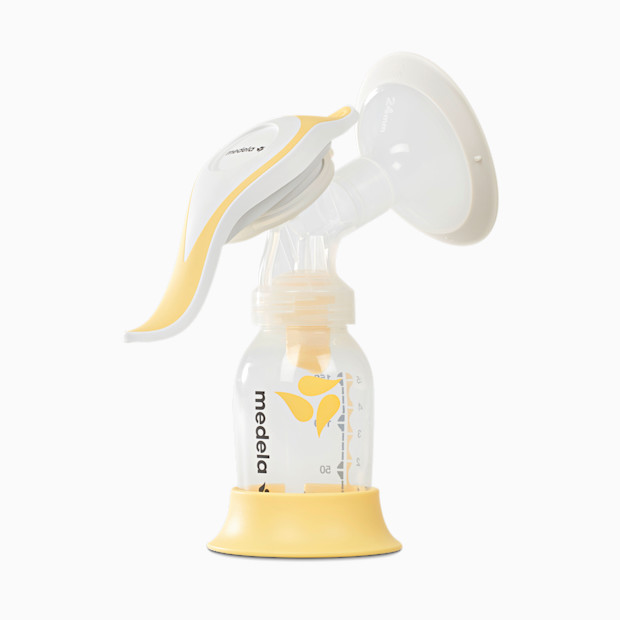
Medela Harmony Manual Breast Pump With Personalfit Flex
From $28.72Pros
- Portable
- Easy to use
- Affordable
Cons
- Finicky valve membrane
- Tricky to find replacement parts
The Harmony is a classic manual pump and a go-to for many new parents because it’s affordable, easy to use and super portable. In fact, 69 percent of Babylist parents who responded to our annual best baby products survey said the Harmony was their favorite manual pump.
“It’s so convenient to bring along with me and is now pretty much a part of my body!” one Babylist parent shared. It isn’t just helpful for those who are breastfeeding, either—both exclusively nursing parents and those who pump rave about it. “For 13 months I almost exclusively pumped, so I was always looking for anything to help make that easier. The Medela Harmony fit the bill,” another Babylist parent wrote in their review.
When using a manual pump, you control the rhythm. Just like electric pumps, there is a stimulation mode (to trigger your letdown) and expression mode (when milk is flowing). With the Harmony, it’s easy to switch modes—all you have to do is change where you’re compressing the handle. The shorter side mimics the short, quick rhythm babies use to trigger a letdown while the longer handle encourages expression with longer, stronger pulls.
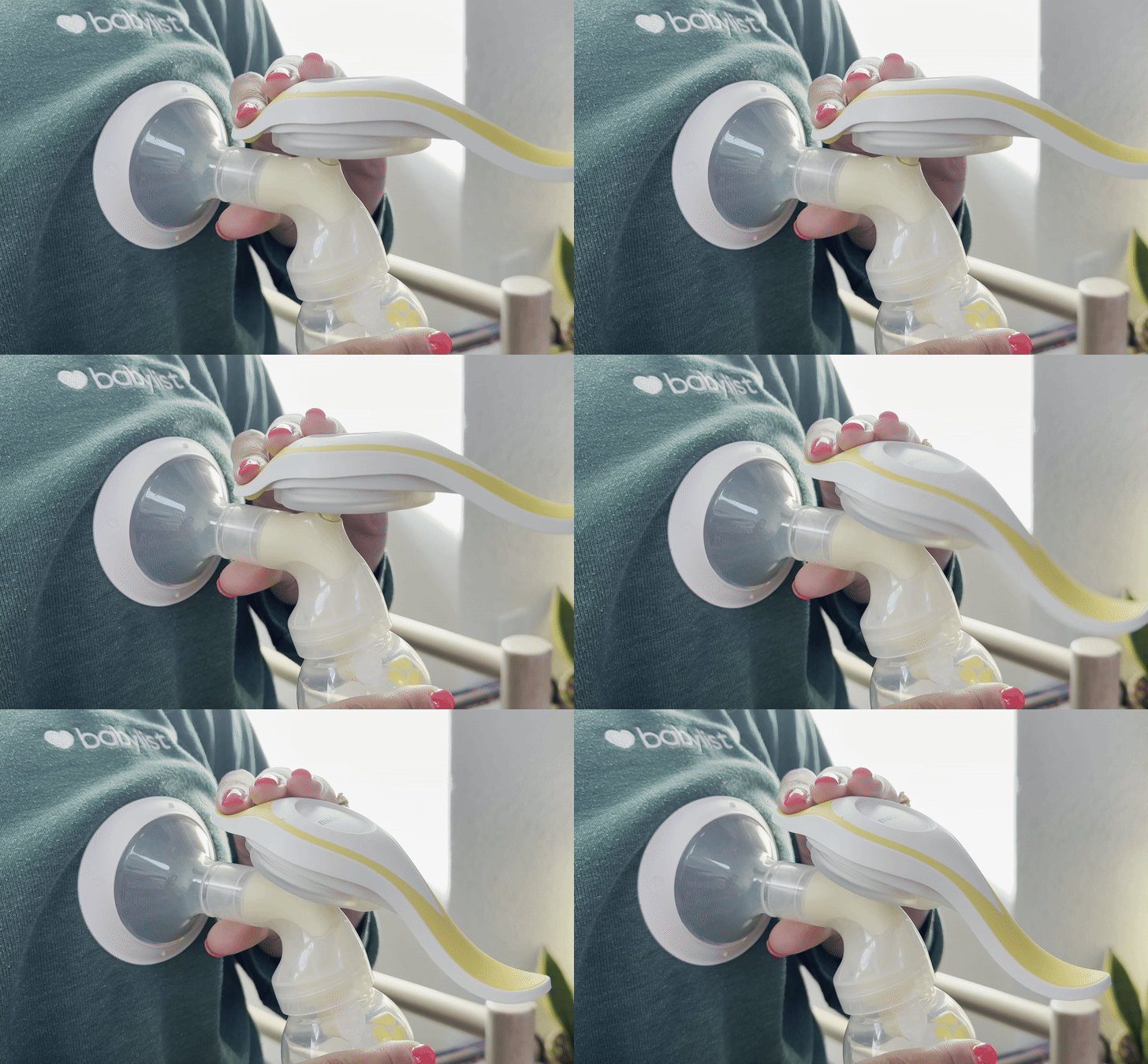
Medela Harmony Manual Pump stimulation mode
The flanges on this pump feature a soft outer rim, which many parents agree is comfortable. The pump attaches directly to collection bottles, which have secure lids, so you don’t have to transfer it into anything to store the expressed milk in your fridge or freezer.
There are a few things parents don’t love about the pump. There are a bunch of parts to disassemble when it’s time to clean the pump, and two parts in particular are very delicate: the O-ring and the valve membrane. Many parents (including myself) have noticed the O-ring pops off easily during washing if you’re not careful, and since it’s pretty small, it’s easy to lose. “If that is missing or cracked or compromised in any way, that'll greatly affect your suction,” says Varisano. “It's such a small piece, you would not think that it has any impact on the pump but it does.” (Medela doesn’t make replacement parts but a third party brand does. I purchased this set when I needed replacement parts.)
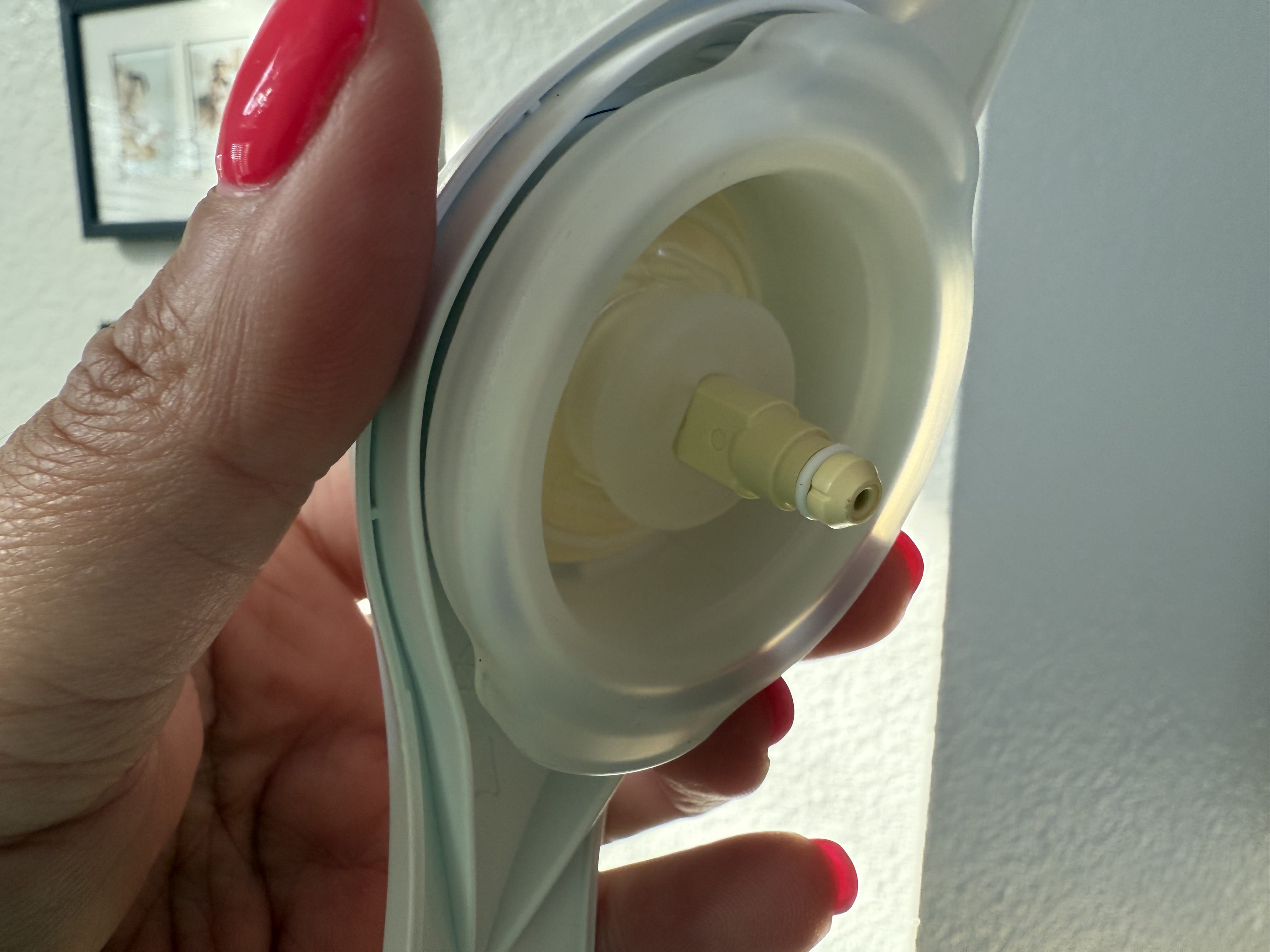
Medela Harmony pump handle + o-ring piece
Also, the pump’s suction strength can weaken if the pieces aren’t properly reassembled. The valve membrane is a very thin silicone flap that creates the vacuum suction needed to draw milk out. If it’s not attached just so, you may notice a decrease in suction strength. While inconvenient, you’ll get the hang of putting it together correctly pretty quickly. And despite these factors, the overall ease of use and convenience make this pump worth it for many parents.
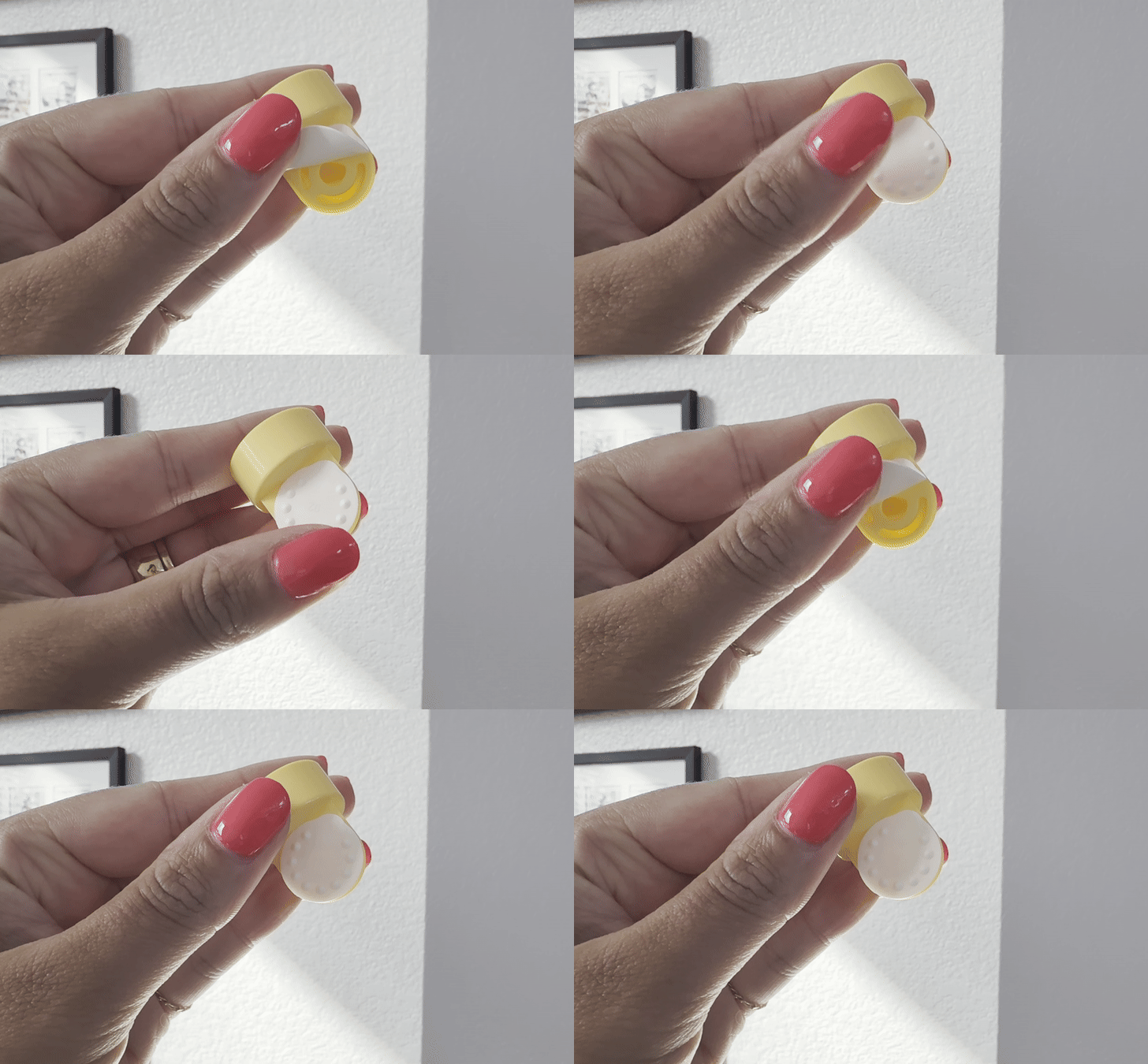
Medela Harmony valve membrane
Runner Up
Pros
- Comes with two flange sizes
- Can pump into milk storage bags
- Can feed baby from collection bottles
Cons
- Inconsistent suction strength
- Hard to find replacement parts
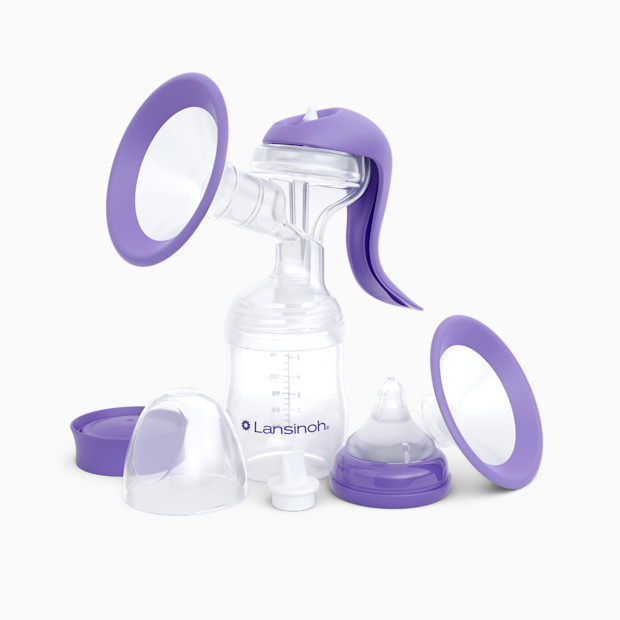
Lansinoh's manual breast pump is our runner up because it’s another great manual option that’s effective and relatively easy to use and assemble. We also love that it comes with two different flange sizes, standard 25mm and a large, 30mm (check out our flange guide if you’re not sure what size is right for you). The collection bottles can be used to feed baby with the nipple and ring attachments (which have one of the most ideal nipple shapes for correct latch, something that's important if you're switching between breast and bottle). You can even pump directly into the popular Lansinoh milk storage bags with this pump, making it super convenient. One Babylist parent wrote in their review, “This hand pump is the only hand pump I have been successful using.”
There are a couple of things that could be better when it comes to this pump, and ultimately they’re the reason it isn’t our best overall pick. The first being, it’s not as easy to use as the Harmony. In order to go from stimulation to expression mode, you have to adjust the white piece on the top of the handle.
Parents’ biggest gripe is the loss of suction after a few weeks or months of use. "It's been about two weeks and the pump has stopped suctioning as well as it did in the beginning. I’ve replaced the valve as recommended on [the] website and there’s still a hissing sound,” one Babylist parent said in their review. Another parent said, “I loved this pump at first. I felt like it emptied me out faster and with a higher output than my electric pump. I pump all the time. Little one was a NICU baby and never took to latching. Anyway, I am now very disappointed, it doesn't work right anymore. I even changed the valve but all it does is make a loud squeaking noise and barely any suction and dropping my supply.” (Note: I reached out to Lansinoh for advice to remedy this issue and will update this guide when I hear back from them.)
Other Manual Breast Pumps
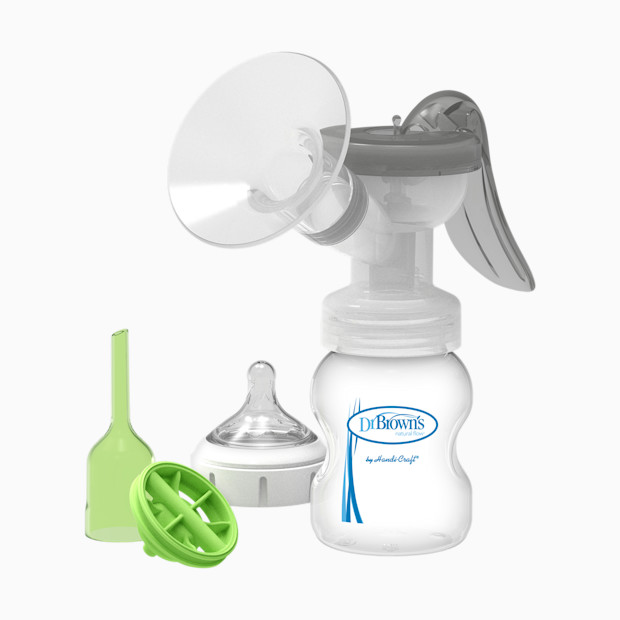
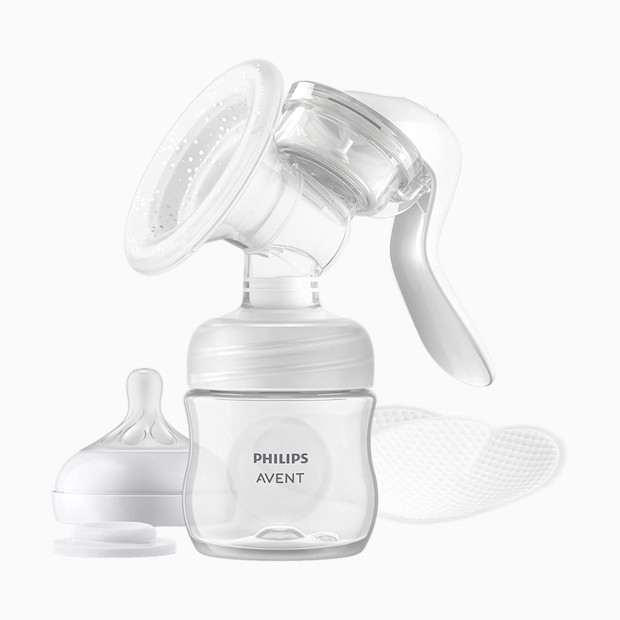
There isn’t one best manual pump for every milk-making person and not everyone responds to any single pump the same. Here are a few more to check out if the two above don't seem like the right fit for you:

Best Milk Catcher Overall
Pros
- Effective suction
- Different capacity options
- Convenient accessories
Cons
- Not hands-free
- Easy to spill
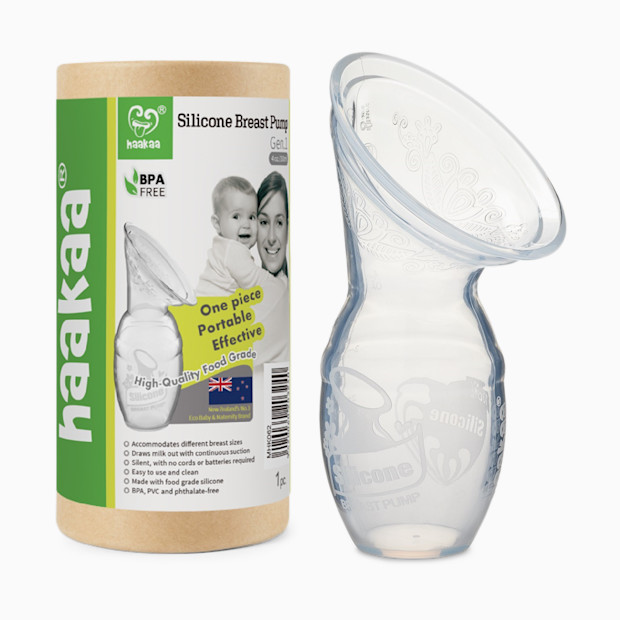
The Haakaa is a brilliantly simple tool for saving breast milk that would otherwise go to waste. It’s a one piece silicone pump though, it functions better as a milk catcher than a pump like the picks above (more on that in a bit).
Here's how it works: While you're feeding your baby on one breast, milk often leaks from your other breast—the Haakaa catches this milk instead of letting it soak into your nursing pad. Just suction the soft silicone cup onto the side you’re not pumping or feeding baby with, and it’ll gently draw out or catch the leaking milk. Many parents find it super helpful in building up a freezer stash without adding any extra pumping sessions. It's made from BPA-free silicone and is just one piece, meaning no complicated parts to clean or assemble (it’s also top-rack dishwasher safe).
Varisano says there are a few things to keep in mind when using the Haakaa, though. Since the suction can be pretty strong, you want to make sure you’re not attaching it so strongly that it becomes painful. It's meant to give just enough suction to encourage milk flow and stay attached. Be sure to reach out to a lactation consultant for support if you need help figuring it out. She also recommends using it as a tool to collect milk once your supply is well established, that way you’re not telling your body to make more milk than it needs, which can lead to an oversupply.
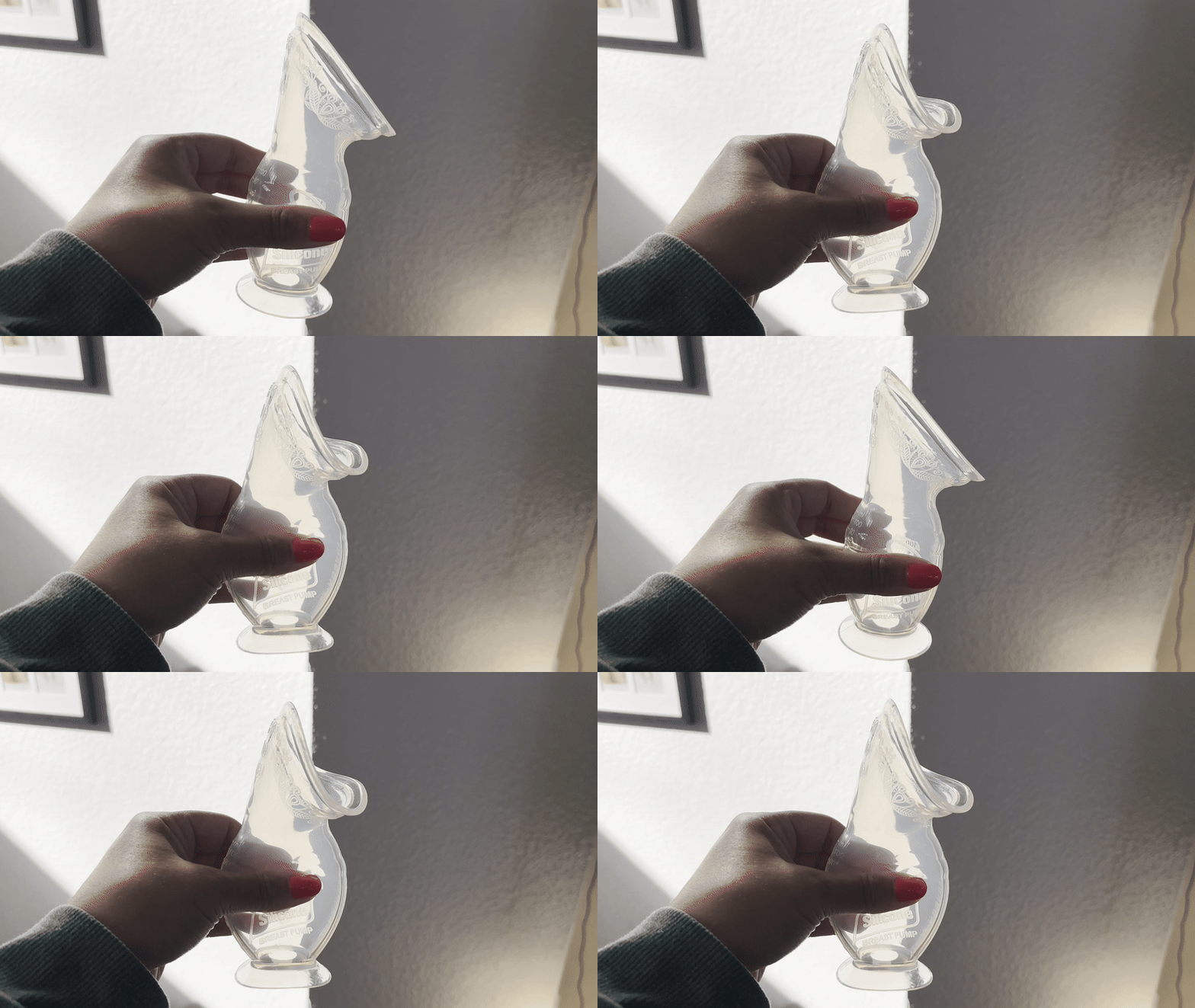
Although the Haakaa is called a pump, we think it's better used as an "active" milk collector. The Haakaa isn't as efficient at removing milk as manual pumps with handles (like the above picks), but can work in a pinch if it's all you have. The Haakaa's suction capability is what sets it apart from other milk collectors—it encourages more milk beyond catching what would already be leaking out. One Babylist parent wrote in their review about how pleased they were: “I was [amazed] at how much this [helped] me slowly build a breast milk supply for the freezer. It’s a small product but mighty with the output! It’s really effective and so easy to use.” Another Babylist parent said it was an essential for collecting their let down and they didn’t know they needed it until multiple friends told them about it. I too had this experience, not realizing how much use I’d get out of my Haakaa and pleasantly surprised by how helpful it was.
The biggest things parents say could be better is how spill-prone Haakaa is. One Babylist parent said the Haakaa’s design is, “Awkward and you risk leaking and spilling milk every time.” Because of its bulky design, babies have also been known to kick it off while nursing on the opposite breast. If you move a certain way, it’s also easy to break the seal, causing it to fall off and spill all over (speaking from experience here).
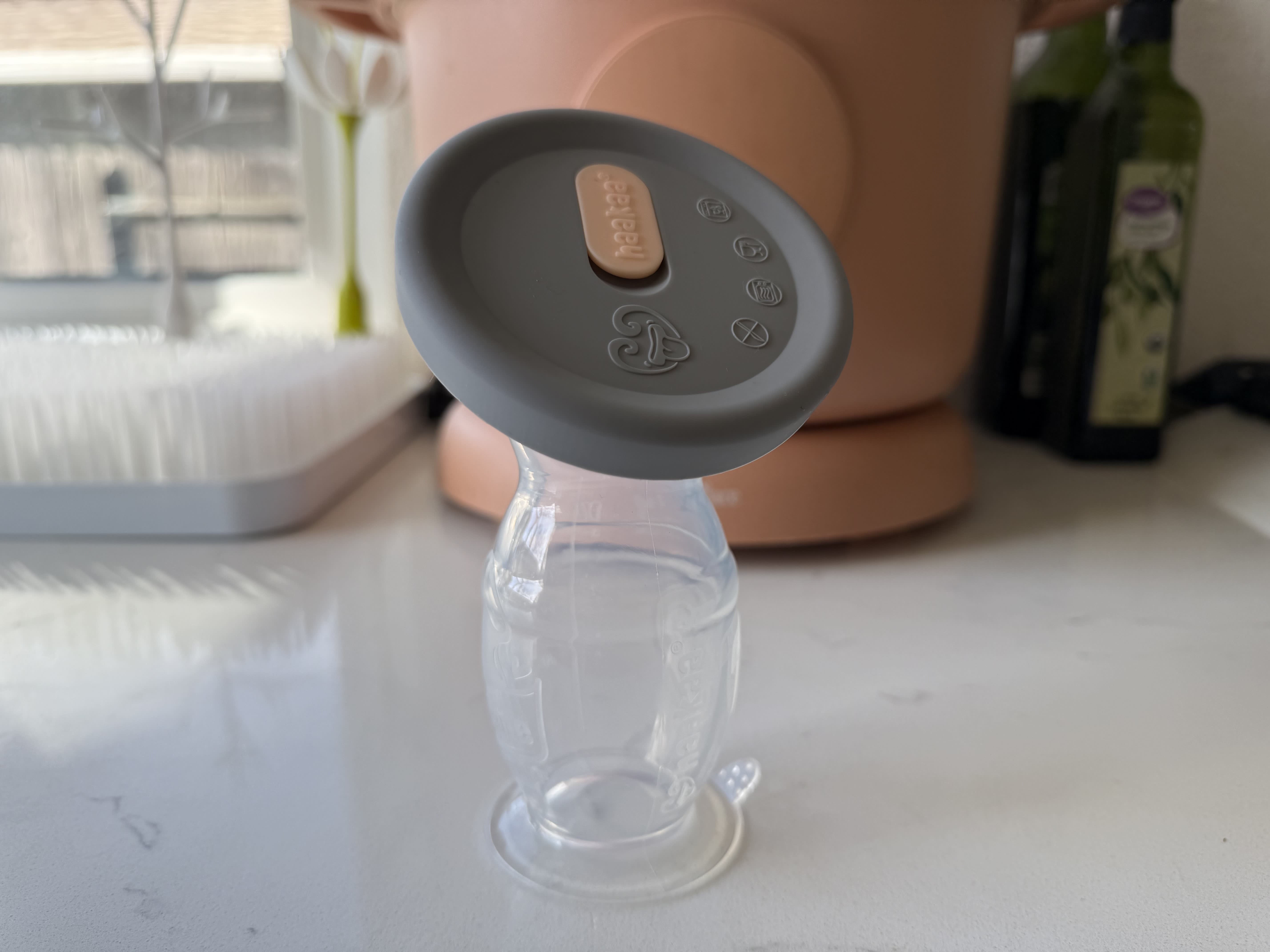
Although the newer visions feature a suction base meant to keep it upright when you set it on your counter or table, the Haakaa is top heavy. Many parents mention in their reviews they’ve accidentally tipped it over before they’re able to transfer the milk to a storage bag or bottle. Haakaa does sell a lid and a cute flower stopper to combat this, which I recommend going for if you want to try the Haakaa out. (The Haakaa linked here comes with a lid.)
Best Hands-Free Milk Catcher

Boon TROVE Silicone Breast Milk Collector - 2
From $25.25Pros
- Wearable
- Hands-free use
- Gentle suction
Cons
- Not the most discreet
- Smaller collection capacity
Anything that makes breastfeeding easier is a win, which is why we love these low-maintenance, wearable milk collectors from Boon. “I love how gentle and comfortable it is, allowing me to express milk effortlessly without any discomfort,” a Babylist parent said. The TROVE is designed to be worn inside of your nursing bra and is super helpful at catching your letdown on whichever breast you’re not pumping or feeding your baby from. It offers the slightest suction, which helps keep it in place and encourages a bit more milk to flow. (Thanks to that suction capability, this one wouldn't be considered passive collection, like the next pick). Parents also love that it’s super easy to clean—you can throw it in the dishwasher and the opening is big enough to get a brush in there when handwashing. It’s also a popular choice for parents who didn’t love the bulk of the Haakaa, since it can be worn inside of your bra. It's a great option for those looking for something they can use hands-free.
A few parents also mention how convenient these are when out and about: “Its compact size makes it perfect for on-the-go use, whether I'm at home, at work, or traveling.” They come in a single or double pack. I recommend going with the two-pack so you can keep one in your diaper or pumping bag for outings and one in your nursing cart at home. Since they fit directly in your bra, they’re not as likely to shift out of place, or completely pop off like other options. “Can’t be kicked off as easily by baby like a Haakaa,” one Babylist parent wrote in their review. They’re not the most discreet (see our next pick for that), so folks might be able to tell you’re wearing them, if that matters to you.
Unlike the Haakaa which offers a few different capacity options, these only come in one volume and can hold up to three ounces. That’s likely enough for most lactating parents, but if you tend to have a faster letdown or a more robust milk supply, you might find yourself filling them up quickly.
Most Discreet Milk Catcher
Elvie Catch Breast Milk Collection Cup
From $24.67Pros
- Passive collection
- Thin profile = discreet
- Larger breast friendly
Cons
- Only hold up to one ounce
- Not leakproof
If you’re looking for a truly passive milk collector that’s hands-free and perfect for wearing on the go, the Elvie Catch is for you. These collectors have a soft silicone inner surface that molds comfortably to your breast while the outside is a harder plastic material. You won't find any suction on these, which is why they're considered passive—you're only going to collect what would naturally leak out during feeding on or pumping the other side.
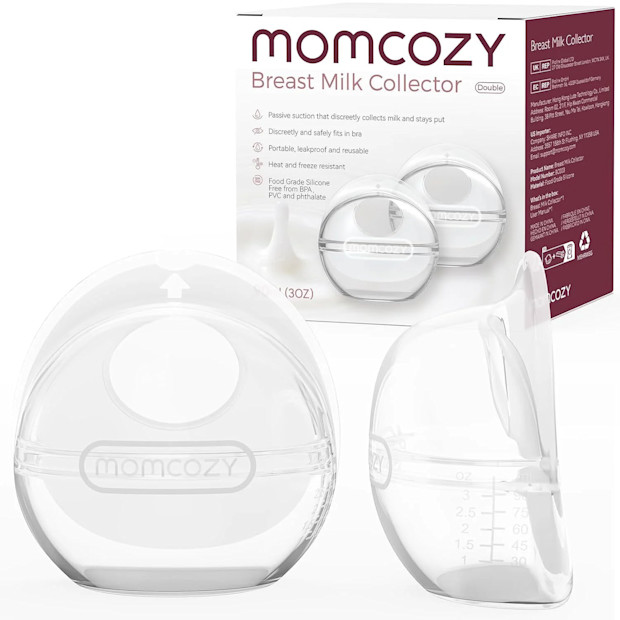
They’re much thinner in profile compared to the Boon TROVE, Momcozy cups and Haakaa Ladybug milk catchers. Quite a few Babylist parents mention in their reviews how well they fit in their nursing bras, even for those with larger breasts. “I can wear them out and I’m not self conscious about them being in my bras!” a Babylist parent wrote. It also makes them a nice alternative to nursing pads for those who tend to leak heavily when feeding or pumping—it’s a great tool to save milk that would otherwise go to waste.
The biggest complaint among parents—though it’s not a dealbreaker—is that these cups will leak. “I would recommend not bending over until after you have emptied them out,” one Babylist parent wrote in their review. Since these don’t have any suction, they rely on the gentle pressure of your nursing bra to keep them put. Each cup only holds about an ounce, which might not be enough for those with a fast or heavy letdown.
Other Milk Catchers to Try
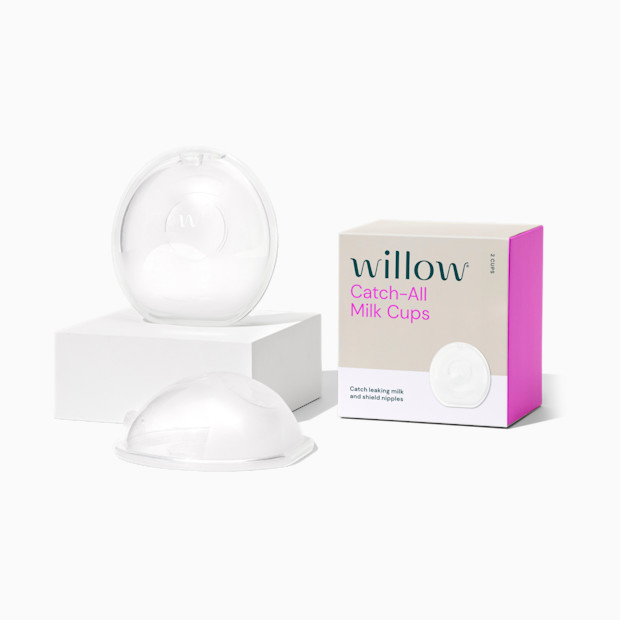
The best milk catcher is the one that fits most seamlessly into your lifestyle and meets your specific needs. Here are a few more to check out:
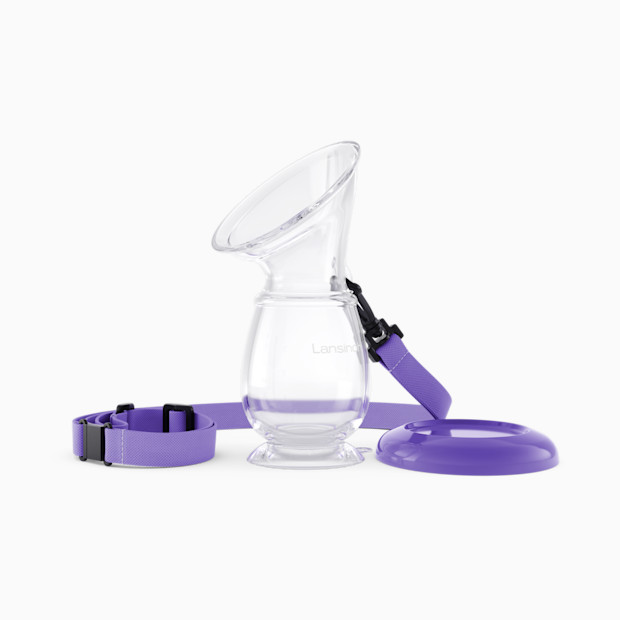

What’s the difference between a manual pump and milk collectors?
A manual breast pump actively removes milk through pumping action that you control—you're physically creating suction by squeezing a handle repeatedly to extract milk, similar to how a baby would nurse.
Milk collectors (like the Elvie Catch) are passive—they catch milk that naturally leaks or "lets down" from the breast you're not currently feeding or pumping from. Some milk catchers, like the Haakaa and TROVE, use gentle suction to encourage milk release that would already be flowing a little bit. But they're generally not actively pumping like a manual pump does.
The main benefit of milk collectors is they help you save milk that would otherwise be wasted, without the work of an extra pumping session. Manual pumps and milk catchers are complementary to each other, both helpful for expressing milk, which is why we included both in this guide.
Do I need a manual breast pump?
Manual pumps can be just as effective at removing milk as an electric option, if you’re using them properly, though they require more effort.
They’re great to have as a backup option and also be help for scenarios like:
Quick relief if you’re away from your baby and are feeling full
Pumping on the go, since they’re compact and portable
You’re an occasional pumper wanting to store a little just-in-case stash
Your baby only feeds on one side at night and you want to empty the other breast
You’re somewhere without access to an outlet
“I think it just depends on what you're using it for,” says Varisano, “I would include them on my nice to have [list] because they're fairly inexpensive and they're convenient.” While they’re helpful to have in your stash of pumping products, Varisano—and most lactation professionals—caution against using a manual pump as your main pump, especially if you’re trying to establish or increase your supply. With a manual pump, “You have to [pump one side] at a time, [and] it's a lot of work,” says Varisano. Electric pumps are a more efficient option in those cases for both time and milk removal.
Types of Manual Breast Pumps
Manual breast pumps come in a few different forms—here’s what you can expect to find when shopping for one.
Handle pumps. These are your typical manual breast pump and feature a lever or handle that you squeeze to create suction. They attach directly to a bottle or milk storage bags. Like electric pumps, they have most of the usual breast pump parts that need occasional replacing, depending on how often you pump.
Silicone pumps. Despite being called a pump, these single pieces of soft silicone don’t actually work the same as your standard manual pump. Instead of compressing a handle, it uses gentle suction and gravity to remove milk. These are best for catching milk from whichever breast you’re not currently feeding or pumping on, because letdowns happen simultaneously on both breasts. Unlike the milk collector type, these are not hands-free or meant to be worn while doing other things.
How to Use a Manual Breast Pump
When it comes to pumping effectively, there are a few things to keep in mind. Just like an electric pump, you want to mimic the natural rhythm of a baby’s nursing. This means you’ll need to spend a few minutes in stimulation mode to trigger a letdown, before moving into the slower, longer pulls of expressing your milk once it’s flowing. When you’re using the Haakkaa or other milk collectors, you’ll rely on your baby nursing or your pump on the opposite side to signal a letdown.
The optimal rhythm, strength and routine will different from individual to individual, so you may have to experiment a bit when you first start out. Unlike electric pumps, you are doing all of the work when using a manual pump. Most manual pumps are designed to let gravity assist (via a gentle slope from flange to bottle) so you don’t need to get into any wild positions while using one. It's also important to keep the flange securely on your breast tissue to create a vacuum, but you don't want to squish it too hard against your breast.
The duration of your pump session will also vary, but in general, Varisano says it shouldn’t take anywhere longer than 20 minutes to pump on each side. In fact, most parents notice they’re able to express a few ounces pretty quickly when using a manual pump. If your breasts aren’t responding to your manual pump, or it seems like it’s taking a long time, the suction could be off or you may have the incorrect flange size. It’s always a good idea to reach out to a lactation professional for support. You’ll know it’s time to switch sides when your milk flow slows and or your breasts start to feel empty.
How to Use a Milk Catcher
A milk catcher like the Haakaa, Elvie Catch or Boon Trove is a simple silicone device that attaches to your non-nursing breast to collect milk that would otherwise be lost to nursing pads. Some models (the Haakaa and Trove in particular) offer a little bit of suction to encourage more milk to flow. For those types, simply give it a gentle squeeze, center it over your nipple, and release to create light suction—it should feel secure but not uncomfortable. Truly passive collectors that do not have any suction capability, like the Catch, just sit in your bra. And that’s it! When you're done, simply pour the collected milk into storage and clean your catcher with warm soapy water. It's an effortless way to build your milk stash.
How do I know if I'm using the correct flange size?
Just like an electric breast pump, the flange (the funnel-shaped part) should fit comfortably around your nipple with slight space for movement. Your nipple shouldn't rub against the sides, and not too much areola should be pulled in when expressing milk. The proper flange size and fit is crucial for efficient milk removal when using a manual pump, especially since you don’t have the electric suction strength component.
My manual pump seems to have lost suction strength; what can I do to fix this?
One of the most common challenges parents have with manual breast pumps is the consistency of suction strength. If the pieces aren’t put together properly—particularly the valves, which help create a vacuum to remove milk—you may experience little to no suction. You also want to make sure the flange is placed securely on your breast. You shouldn’t push in so hard as to compress your breast tissue, but if there is any gapping, you’ll notice a weak suction and may even hear a whooshing sound from air passing through.
How often should I replace components?
It depends on how frequently you’re using your pump, and each brand has different recommendations (so be sure to double check your specific pump’s instruction manual). In general, you’ll want to replace the valves and membranes every two to three months. These are crucial components in creating the right suction when pumping—loss of suction is a huge indicator it’s time to replace these. O-rings, seals, shields and flanges can be replaced every three to six months, or sooner if you notice any sign of wear, like cracking, warping or residue buildup.
How long should each pumping session last?
Most parents pump for about 10-15 minutes per breast with a manual pump (about the same amount of time baby usually takes to nurse). You'll want to continue until milk flow significantly slows or stops. If you’re noticing it’s taking longer than 20 minutes or you’re not getting a lot of milk, you may need to check your pump’s suction. And as always, reach out to a lactation consultant if you have any concerns or need support.
How do I clean my manual pump between uses?
All parts that come into contact with breast milk should be thoroughly washed with hot, soapy water and rinsed well after each use, Varisano says, “especially for babies under three months old.” She also recommends using a dedicated brush specific for pump parts and bottles, a specific basin to wash your stuff in (not just your regular sink), and a clean surface for everything to air dry.
Most pump parts can also be sterilized in boiling water or a steam sterilizer, though expert opinions tend to vary on how often you need to do that. Daily sanitizing is not necessary once your baby reaches three months, but Varisano does recommend doing so after illness or if parts and bottles were left out a long time with milk in or on them.
Is the “fridge hack” safe?
You may have heard of some pumping parents wiping their parts down and storing in a clean ziploc in the refrigerator between uses. This isn’t recommended per the Center for Disease Control’s hygiene guidelines, who say you should wash your breast pump parts with soap and warm water in between each use.
How long can I leave breast milk collection cups in place?
While collection cups can be worn throughout the day, it's recommended to empty them every two to four hours in order to follow proper milk storage guidelines. Never save milk that's been sitting in collection cups for more than four hours at room temperature. You should also clean them regularly with soap and warm water.
How do I prevent leaks while using collection cups?
Position the cups securely within your bra, make sure the seal is properly aligned, and avoid bending forward suddenly. Some parents find wearing a slightly tighter bra helps keep collection cups in place.
Are manual breast pumps covered by insurance?
Yes, manual breast pumps are typically covered by insurance under the Affordable Care Act. Insurance companies are required to cover breast pumps, but coverage varies by provider. You can see what your specific plan covers by going to Babylist Heath.
Can you use your HSA/FSA to purchase a manual pump?
If your insurance plan doesn’t cover both a manual pump and an electric, and you’ve already used your benefits on the more expensive primary pump, you can use your FSA/HSA funds to buy one. Pro tip: many pump replacement parts are also covered by insurance, as well as FSA/HSA eligible. Just be sure to keep your receipts as most plans require them for reimbursement.
Expert Sources
Babylist uses high-quality subject matter experts to provide accurate and reliable information to our users. Sources for this story include:
Hannah Varisano, CLC, who supports parents on their feeding journey at Latching With Grace.

;)
;)
;)
;)
","url":"https://www.walmart.com/ip/Momcozy-Breast-Milk-Collector-Milk-Collectors-for-Breastfeeding-Reusable-Breast-Milk-Shells-3oz-90ml-2-Counts/11723756092","source":"hello_baby"});)
;)
","url":"https://www.babylist.com/gp/willow-catch-all-milk-cups-2-pack/46335/1879701","source":"hello_baby"});)