
Yes, Car Seats Do Expire
Here’s why—and how to know when it’s time to stop using yours.

By

Your baby may be done with the swaddle and grow out of their bassinet before you know it, but a car seat will be with you for the long haul, especially once your little one hits toddlerhood. But just how long, exactly? And will you be able to use your car seat with a second (or third) baby, or pass it along to a friend?
As a Child Passenger Safety Technician (a CPST, someone who's specially trained in car seat education and usage), this is one of the most common car seat questions I hear from parents. Understanding when a car seat is safe to use and when it needs to be replaced is essential for protecting your littlest passengers. This is especially important if you have multiple kids and want to use the same car seat over a period of several years, or if you're considering accepting a secondhand car seat.
The short answer? Yes, all car seats have an expiration date. This includes all types of seats: infant car seats (and their bases), convertible car seats, all-in-one seats, rotating car seats and booster seats. Here's more info and why, and what to do if you have an expired car seat.
How long are car seats good for?
Car seat expiration dates vary by manufacturer and model, but on average, most seats last between about six and 10 years. In general, manufacturers aim to set a car seat’s expiration date roughly to match the seat's designed length of use.
Why do car seats expire?
Car seats expire for a few different reasons:
Materials. Over time, the materials in a car seat, especially the plastic shell, can break down due to everyday wear and tear, temperature changes, sunlight and even humidity. This degradation isn’t always visible, but it can weaken the seat’s structure and potentially reduce its effectiveness in a crash. When a manufacturer sets an expiration date for a car seat, they use research to back up their decision and take a few different factors into consideration:
Technology. Just like other tech-based products improve and evolve over time—think your car, your laptop or even your phone—so do car seats. New technology may come along that makes a seat significantly safer, easier to use or easier to install.
Safety guidelines. Like technology, car seat safety standards also evolve over time. A car seat that was considered safe a decade ago may no longer meet current safety guidelines or include newer features that improve protection.
Replacement parts. Car seat expiration dates account for replacement parts and the lack of manufacturer support for older models.
How to check if your car seat is expired
You can check if your car seat is expired by looking for a sticker with the date of manufacture (DOM) and/or expiration date. Some seats have the expiration dates printed directly into the plastic of the shell, while others list the expiration date on the same sticker as the DOM.
If you can't find a specific expiration date, consult your car seat's manual for the expiration timeframe and do the math yourself using the DOM and the expiration timeframe.
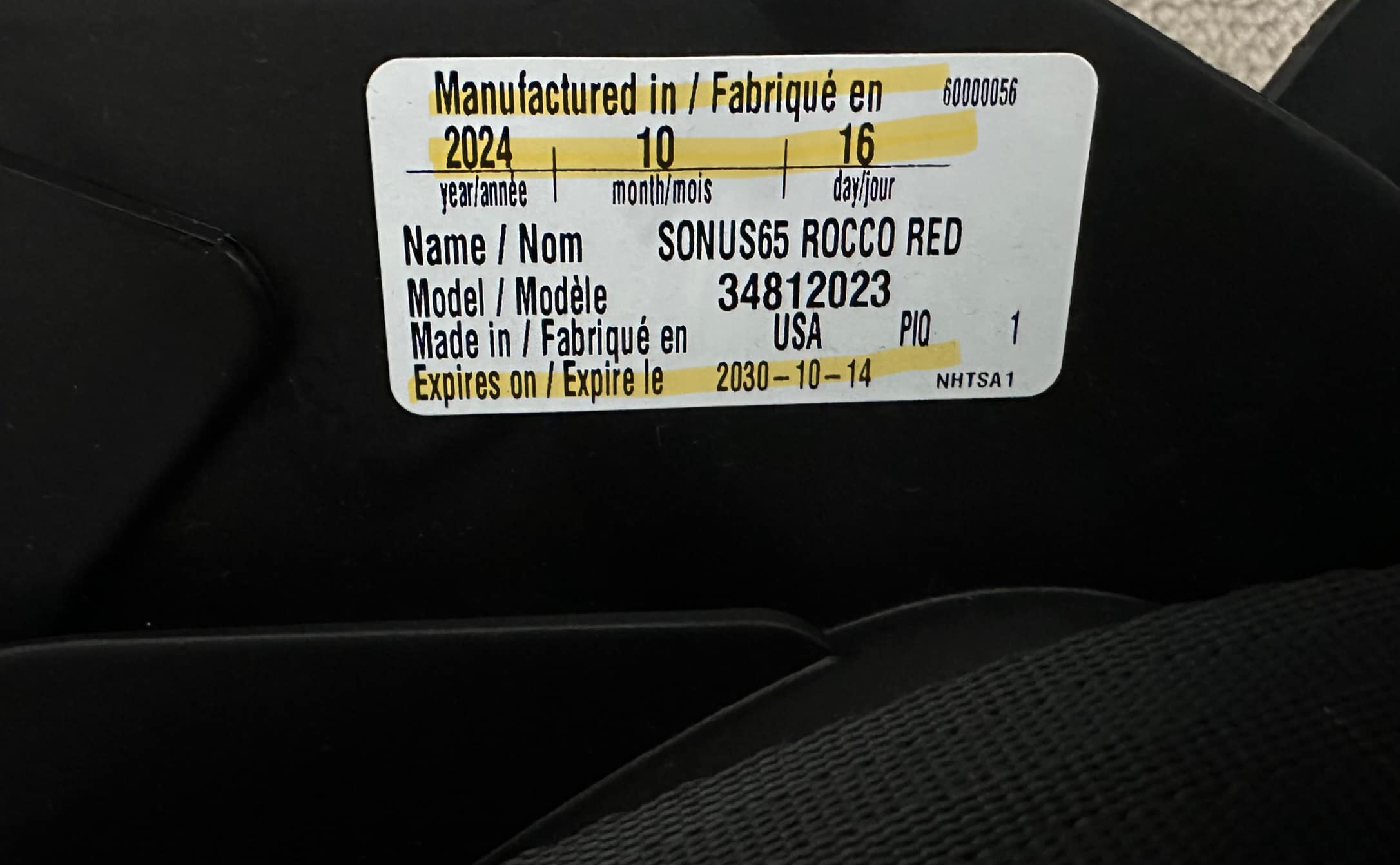
The date of manufacture (DOM) label on an Evenflo Sonus 65 Convertible Car Seat shows the date the seat was manufactured and the expiry date. (Photo: Jen LaBracio, Babylist Senior Gear Editor)
What should you do with an expired car seat?
The two most important things to do when your car seat expires are to make it unusable and to dispose of it properly. This includes:
Cutting the straps.
Removing any soft goods or fabrics.
Writing “expired do not use” somewhere on the shell of the seat.
Car seat recycling programs are another good way to dispose of your expired seat. Target's Car Seat Trade-In lets you bring an expired or damaged car seat and redeem it for a store coupon.
