
Best Baby Carriers of 2026, According to Parents and Experts
The best wraps, slings, structured carriers and hybrids, according to parents and experts.

By
Babies love to be held. But toting your little one around all day isn’t really feasible unless you have arms of steel and an army of helpers to do your daily tasks.
That’s where a baby carrier comes in. A good baby carrier does two key things: helps comfort and soothe a fussy little one and frees up your hands so you can get things done while still staying close to your new addition. Most parents-to-be add at least one carrier to their baby registry.
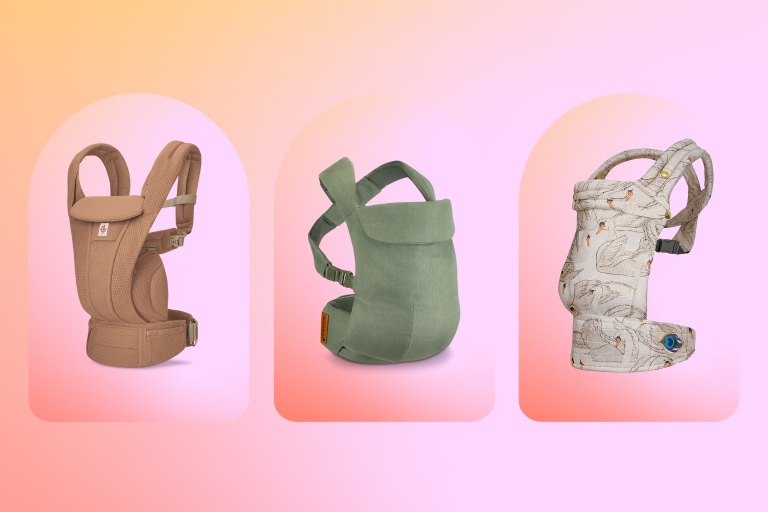
We waded through the wide world of babywearing and narrowed down the top three picks. If you’re shopping for a structured carrier, we think the Ergobaby Omni Deluxe Mesh is the best option. Looking for a wrap? We recommend the Solly Baby Wrap Carrier. And if a hybrid is on your must-have list, Wildbird’s Aerial Carrier is the best choice for most families. (You’ll be able to read all about the different types of baby carriers—and how to choose what’s best for you—later in this guide.)
And since babywearing is all about options, we also chose several other top picks in each of these categories for you to consider and shop.


Why Trust Babylist?
Babylist is the expert in baby; we know baby gear inside and out. We talk with parents face-to-face in our showroom and on our user panels and hear from thousands annually via our Best Baby Products online survey. We know what items millions of expecting parents are adding to their baby registries.
Firsthand professional and personal experience. In addition to being Babylist's associate editor, I'm also a mom of two who are under two years apart; a baby carrier was a non-negotiable. I tested a ton in my search to make life easier while wrangling a baby and a toddler. Babylist’s senior gear editor, Jen LaBracio, is the original author of this guide, with over a decade of experience in the baby gear industry. I also leaned on her initial research and expertise.
Expert POV. I spoke to a couple of experts while researching this guide for all things baby carrier safety, including Cassidy Eisenfeld, a certified babywearing educator and founder of Let’s Talk Babywearing, and Dr. Whitney Casares, a board-certified pediatrician who provides resources for new parents over at Modern Mommy Doc.
Baby carrier data. I regularly analyze which baby products our users are adding to their baby registries the most (and which ones they aren’t) and what our team of Merchandising experts—our buyers who are responsible for ensuring the Babylist Shop is stocked with the best and newest gear—is excited about. Studying this kind of data helped us choose which carriers to narrow in on and which ones to recommend to new and expecting parents.
Feedback and reviews. I reviewed comments and feedback from Babylist’s annual product survey of thousands of Babylist parents, read customer reviews from hundreds of Babylist users and spoke to parents on our Babylist staff about their real-life product experiences.
How We Judged Baby Carriers
Baby carriers are very subjective; what works for one parent might not work for another. Keeping that in mind, we considered the following features when testing and selecting the top choices for our best baby carriers list:
Structured Baby Carriers
When you picture a classic baby carrier, a structured style is likely what comes to mind. These carriers are among the most supportive options out there, often offering multiple carrying positions to grow with your baby. Here are our favorite picks for newborn readiness, ease of use, comfort and style.
Best Structured Baby Carrier Overall
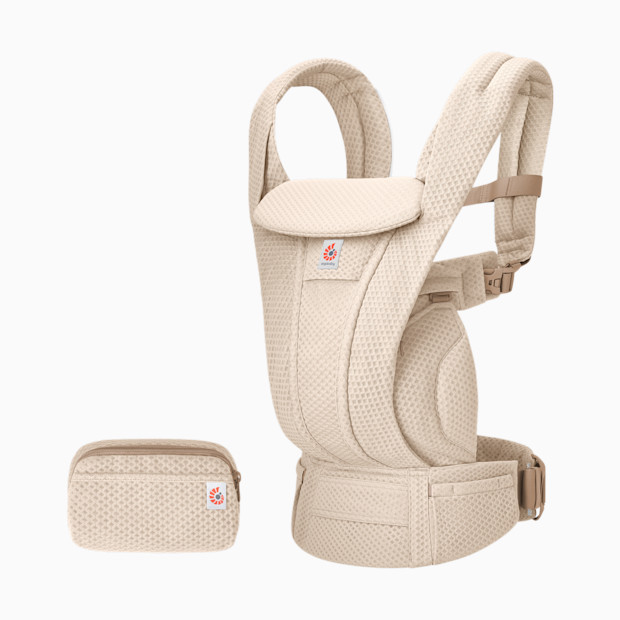
Ergobaby Omni Deluxe Carrier - Natural Beige Mesh
From $219.00Pros
- Lightweight and ultra-breathable
- 4 carry positions and lots of adjustment options
- Stays cool in warm weather
Cons
- Can be tough to put on/adjust in certain carry positions
- Some parents think shoulder straps are thin/uncomfortable
- Pricey
The Ergobaby Omni Deluxe is a standout favorite among Babylist parents—and it’s a team favorite, too. In fact, 20% of respondents in our most loved products survey named it their top baby carrier. With high praise like, “we use it almost every day and it keeps baby cool,” and, “The design is simple and comfortable, and the closeness is so soothing for baby,” this multi-position structured carrier is a great fit for a wide range of families.
One of the first things we noticed about the Omni Deluxe is the incredibly soft, lightweight fabric. The mesh design is more breathable than other soft-structured carriers we’ve tested, making it especially comfortable for warmer days or longer outings.
Versatility is another big plus. The Omni supports front-inward, front-outward, back and hip carries, and it offers ergonomic support at every stage—from newborn through toddlerhood. It also adjusts easily to fit different caregivers, which makes it a great shared carrier for partners with different body types or heights.
Like most soft-structured carriers, there’s a learning curve when it comes to getting it on solo, especially in a back-carry position. But with a little practice, the setup becomes second nature. We also love the detachable storage pouch—it’s just the right size to stash the essentials, which means one less reason to haul a full diaper bag.
Additional Specs
Weight limit: 7-45 lbs
Available positions for baby: front-inward, front-outward, hip, back
Best Structured Carrier for Newborns
Pros
- Super soft, newborn-friendly fabric
- 52” waist strap fits a wide range of adult sizes
- Slim and portable
Cons
- Won’t work with smaller newborns
- No pockets
- Low max weight
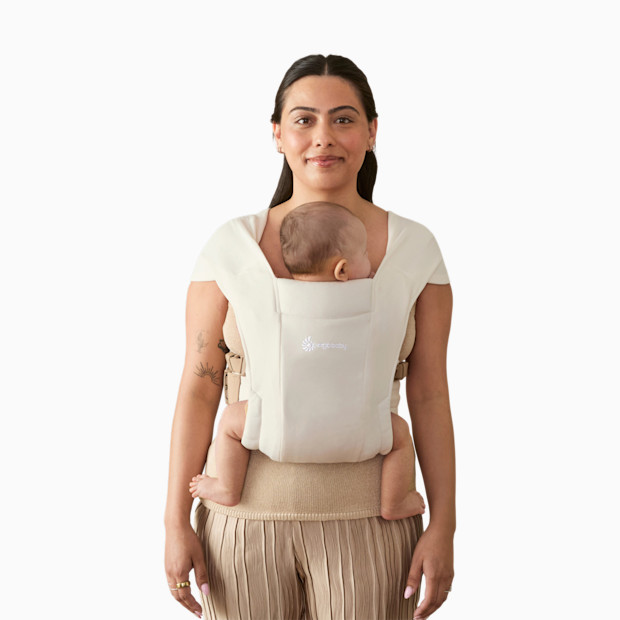
The Ergobaby Embrace is a go-to recommendation for first-time parents or anyone easing into babywearing. It’s also the carrier we reach for when someone says, “I don’t think babywearing is for me—it feels too overwhelming.”
A bit of a hybrid, the Embrace combines the softness of a wrap with the support and ease of a structured carrier. Think of it as “structured carrier lite”—it slips on in under a minute, has no back strap to wrestle with, and is comfy for both baby and caregiver. It’s a gentle, intuitive way to keep baby close and soothed, especially in the early weeks. As one parent shared in our Most-Loved Baby Products survey, “Ergo baby embrace makes getting out for a coffee a breeze and baby still likes napping in it at six months. I can put it on without help and baby can face front or inward.”
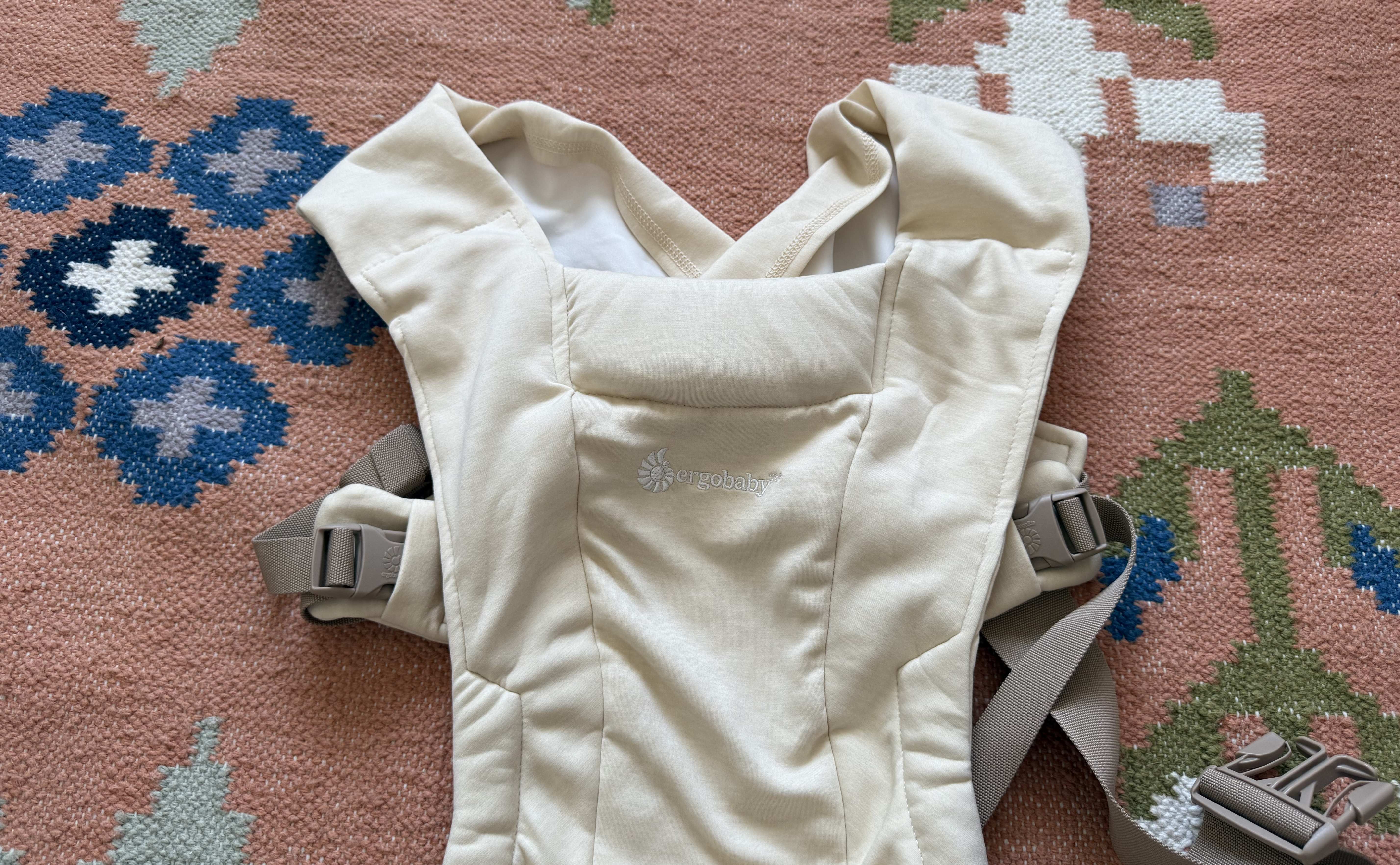
Front view of the Embrace carrier
Designed for use from birth (or seven pounds) up to 25 pounds, the Embrace really shines during the newborn phase when quick comfort is key. It’s also super adjustable, which is key if you’re sharing babywearing duty with your partner. “I am tiny, 5’ 100 lbs and it fits me as well as my husband, who is 6’ and 200 lbs,” one Babylist parent wrote in their review. It’s also compact enough to toss into a diaper bag or backpack and the whole thing is machine-washable.
The biggest downside to this carrier that parents mention is the lower weight limit. “It doesn’t support much weight," one Babylist parent said in their review. As your baby grows, you can switch to the outward-facing carry—but most families will eventually need a more robust carrier with a higher weight limit. Some parents also wish the Embrace included a storage pocket or hood, but for early-stage babywearing, it checks nearly every box.
Additional Specs
Weight limit: 7-25 lbs
Available positions for baby: Newborn, front-inward, front-outward
Most Affordable Structured Baby Carrier
Pros
- Extremely affordable
- Four carry positions
- Adjustable, including seat width
Cons
- Newborns and smaller babies often require more support
- Gets less comfortable as baby grows
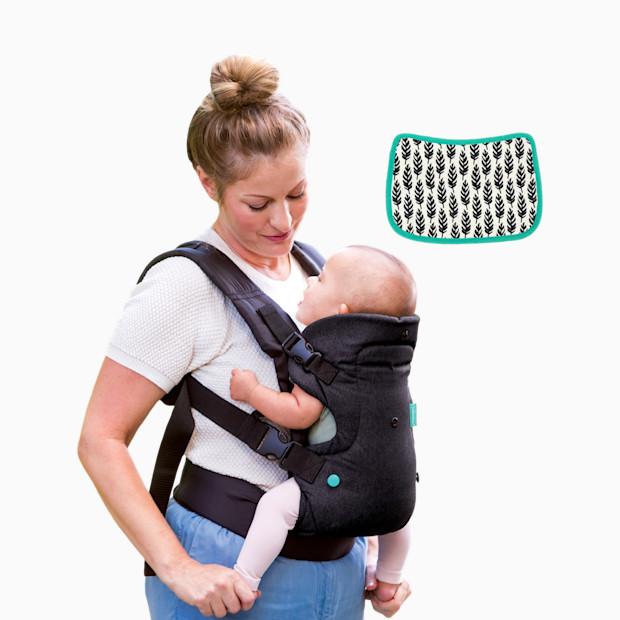
If you’re unsure how often you’ll babywear—or just don’t want to spend hundreds on a carrier—the Infantino Flip offers standout value. It’s one of the most affordable baby carriers on the market, and while it’s not as supportive or durable as higher-end options, it gets the job done surprisingly well.
The Flip adjusts easily to fit caregivers of different sizes, with multiple strap and buckle settings. The convertible seat can be narrowed for newborns or widened for older babies to help keep legs in a hip-healthy position. It’s also lightweight and breathable, making it a solid choice for warmer weather or quick errands.
One Babylist parent told us, “I received this off-registry and my baby and I LOVE it. We still use it frequently. It's a lifesaver to allow you to have your hands back while your baby relaxes.”
That said, this carrier may not hold up as well for older or heavier babies, and some parents say it fits newborns better with a bit of DIY help—like a rolled-up towel or blanket at the base of the seat to boost baby up into a higher position.
Additional Specs
Weight limit: 8-32 lbs
Available positions for baby: front-inward (narrow or wide), front-outward, back
Easiest Structured Carrier to Use
WildBird Aerial Carrier - Sparrow, XS-XL
From $124.60Pros
- 100% linen is soft, breathable and lightweight
- Padded straps and waistband
- Quick and easy to get on
Cons
- Sized for wearer (although size ranges are wide)
- Expensive considering only 2 carry positions
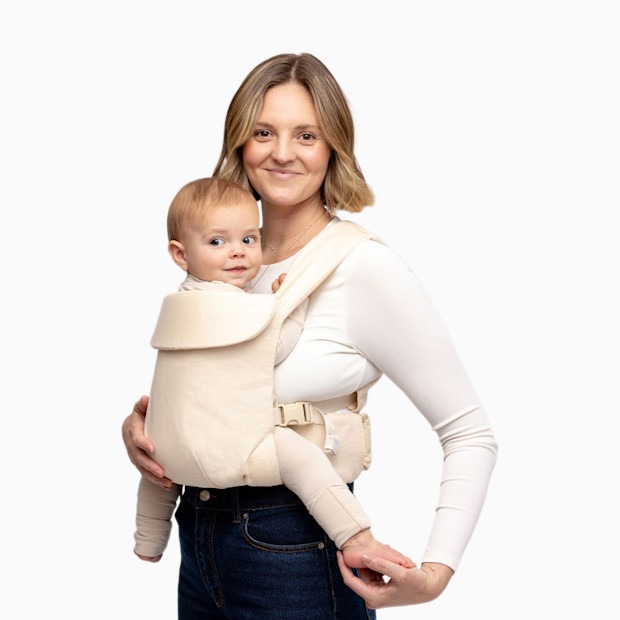
It’s not easy for a new baby carrier to break through in a crowded market, but the WildBird Aerial has quickly become a parent favorite. Babywearing can be intimidating for new parents, but there’s not much of a learning curve to this carrier. As one Babylist parent said, it’s “worth its weight in gold.” With its thoughtful design and beautiful aesthetic, this carrier strikes the ideal balance between form and function. Another Babylist parent said, “I ended up baby wearing a TON, especially as a work from home mom. It’s truly my favorite baby product ever. It’s so supportive that it keeps baby wearing comfy for so long. I even ordered a second one later as a back up cause I love it so much.”
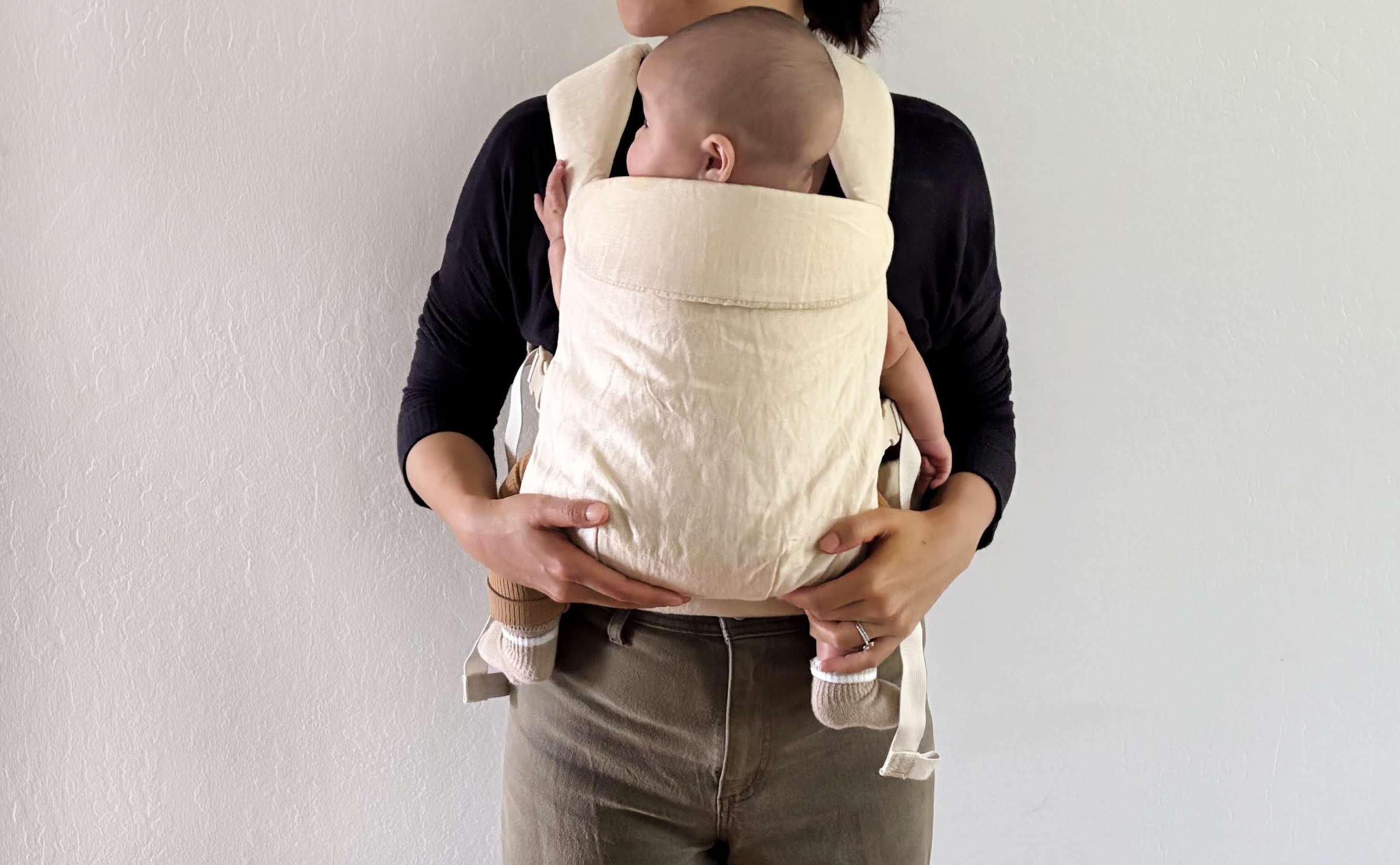
Parent wearing baby in the Wildbird Aerial Carrier
Made from 100% natural linen, the Aerial feels soft against the skin and offers great breathability—ideal for warm climates or active days. It’s also easy to put on solo, which is a major win for caregivers flying solo with a clingy (a.k.a. Velcro) baby. As Babylist commerce editor and mom of two, Latifah, says: “One of the most important features of a baby carrier for me is being able to put it on without help. The straps have a simple criss-cross attachment and are super easy to put on and tighten.”
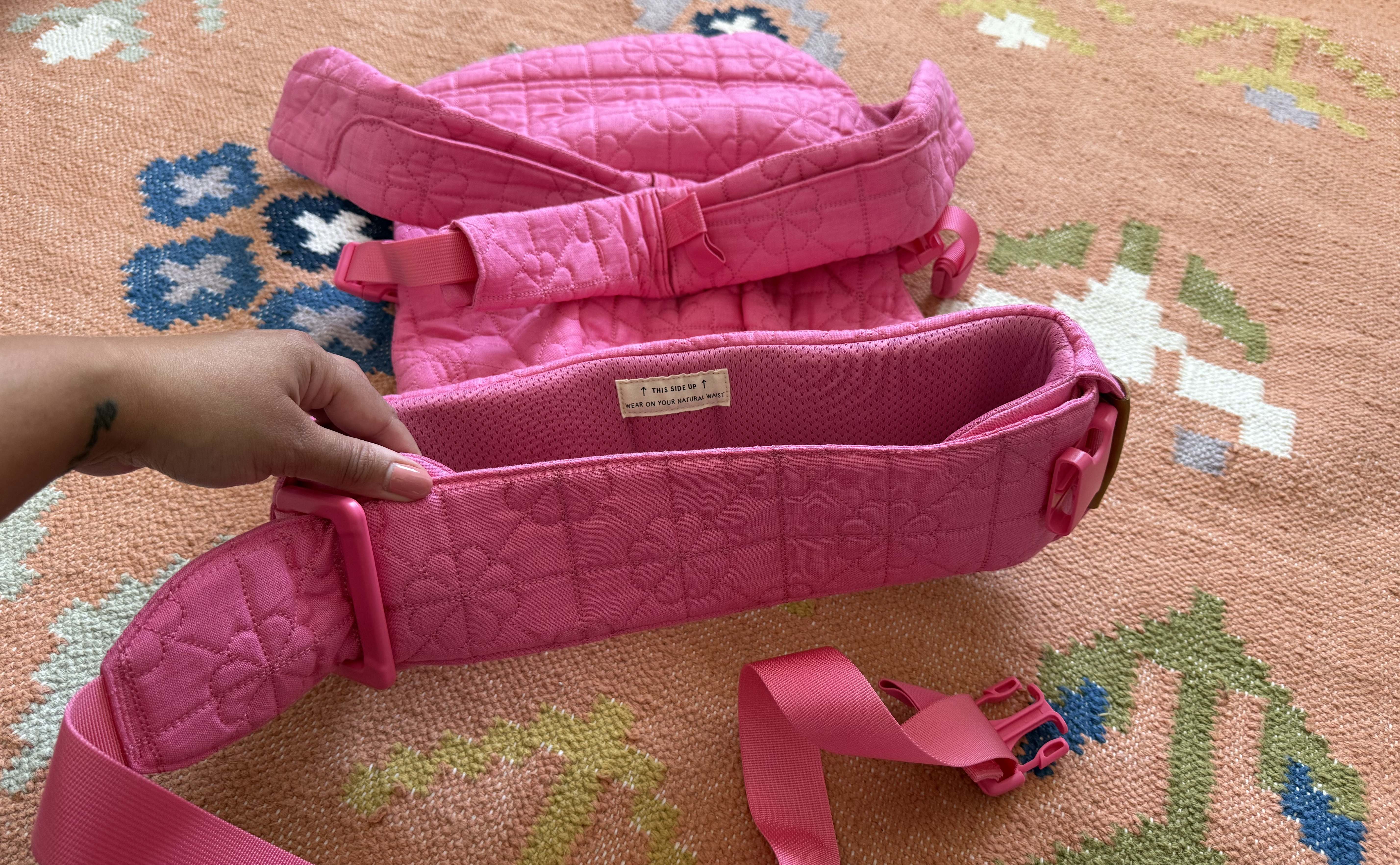
Belt buckle loops around
Parents love the padded straps and waistband, breathable mesh lining, and the fact that it works from the newborn stage through toddlerhood. The color options are another major draw—they’re just that good.
A few things to note: the Aerial comes in sizes, so it may not be shareable between caregivers unless you're similarly sized. Some parents say it runs a bit small (though we haven’t found that to be typical); WildBird recommends sizing up if you're between sizes. And while the Aerial covers a lot of bases, it’s limited to just two carry positions: front-inward and back.
Additional Specs
Weight limit: 7-45 lbs
Available positions for baby: front-inward, back
Most Stylish Structured Baby Carrier
Pros
- Beautiful, unique designs
- Comfortable and easy to put on
- Slim & lightweight
Cons
- Very pricey
- Not machine washable
- No pockets or hood
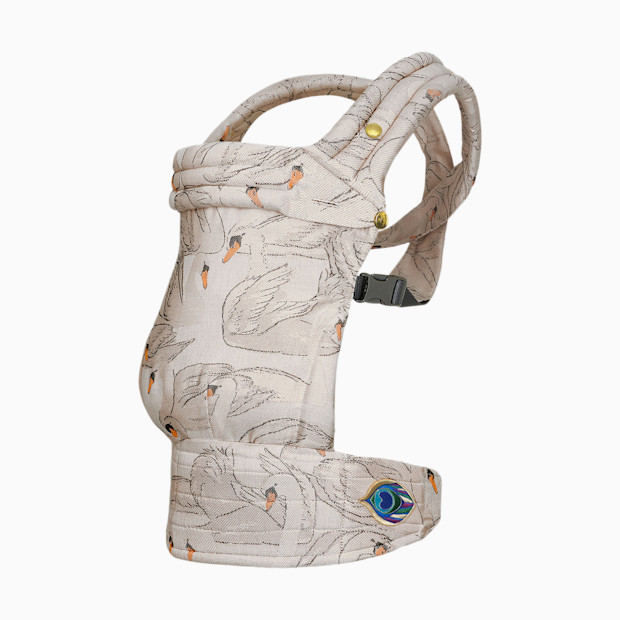
We get asked all the time: is the Artipoppe baby carrier really worth it? And the honest answer is—it depends! The Zeitgeist definitely stands out for its unique style, but it’s also a high-performing, well-designed carrier that checks a lot of boxes. If wearing it makes you feel more confident, more seen or just a little more “you,” that alone can make it worth the investment.
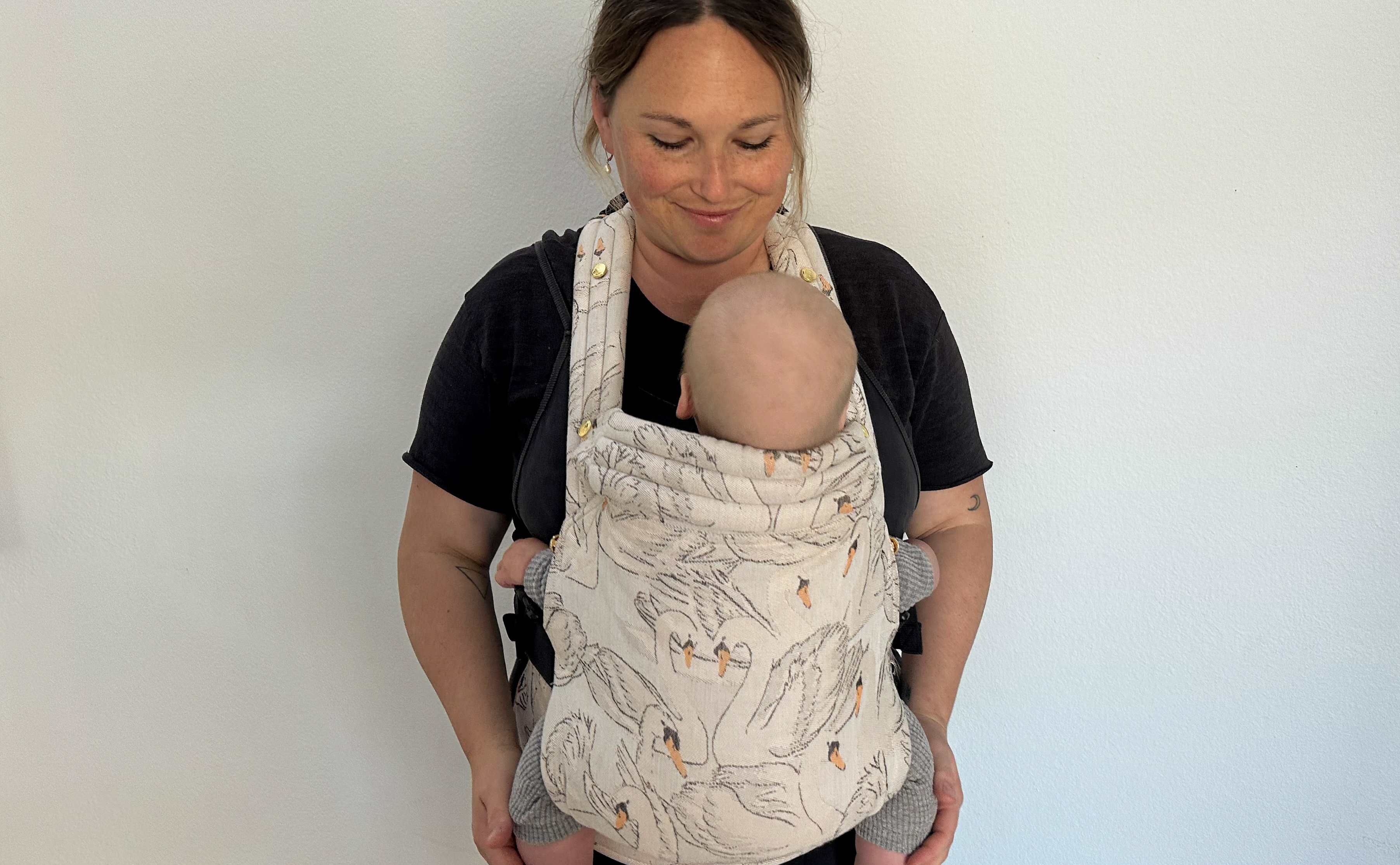
Front view of the Zeitgeist
And Babylist parents agree. “I just felt so luxe wearing it,” “It makes you feel glamorous as a mom,” and “I would get loads of compliments every time I wore it out,” were just a few of the rave reviews from our favorite products survey. From denim to clouds to leopard print, this carrier delivers on aesthetics like no other.
But it’s not all about looks. The Zeitgeist is easy to put on—even for new parents—and works from seven pounds up to about two years old. It’s also just as comfortable as it is stylish—for both baby and parent, with one raving: “My baby LOVES it. It alleviates any fussy feelings, and makes my daily four mile walks a breeze.” It supports three carry positions (front-inward, front-outward and back) and features padded shoulder straps, a structured waistband and leg openings that help keep baby comfortable.
Easy buckle
The one caveat? The price. “It is such a luxury purchase I wouldn’t have made for myself. I was so happy to get it as a gift and my baby and I love using it almost everyday,” one Babylist parent shared. This is a definite splurge, especially for premium fabrics or limited-edition prints. (Pro tip: this is the perfect thing to use the group gift feature on your registry!) Another parent acknowledged what a splurge it was, especially before realizing how much use they’d get out of it—so that’s something else to consider. Depending on the material, some styles can be tricky to clean, with one parent noting, “Although it is fun and fashionable, it is surprisingly hard to clean considering the price.” So it's worth factoring practicality into your decision, too.
Additional Specs
Weight limit: 7-45 lbs
Available positions for baby: front-inward, front-outward, back
Best Structured Carrier for Toddlers
Pros
- High weight limits (25-60 lbs)
- Extra padding for comfort
- Inclusive fit
Cons
- Tough to put on in back carry mode
- Back strap is tough to reach/buckle
Babywearing doesn’t have to end just because your little one is getting bigger—whether they want to stay close or you want to keep them close (and secure). “I have a two year old wild child. It got to a point that we could no longer take him to stores with us. This one product has completely changed our lives,” one parent shared in their review.
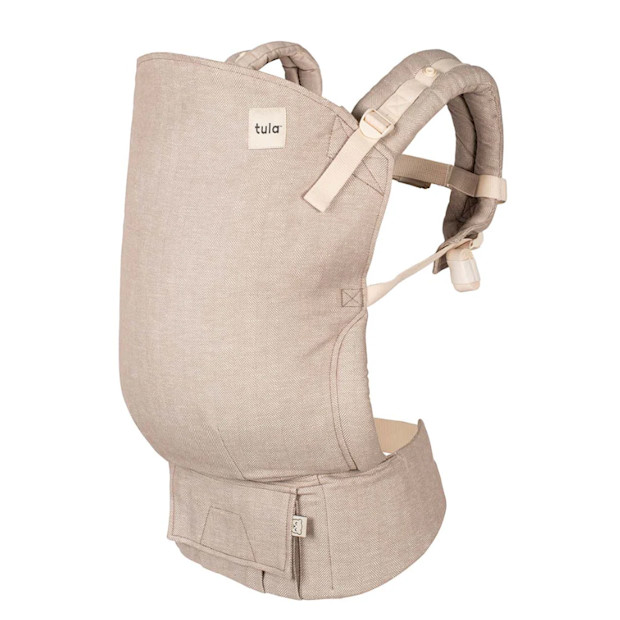
The Tula Toddler Carrier is specially designed to keep the comfort going—with thicker shoulder straps, added lumbar support and a higher weight limit. It’s built for kids starting around age two and can be used until your child reaches 60 pounds (that’s elementary school age for many).
Made from textured linen and available in a range of fun prints and colors, this carrier is as stylish as it is sturdy. Most parents prefer the back-carry position for older toddlers—it’s more ergonomic and keeps little legs from getting in the way. Just note that back carries take some practice, and you’ll likely need a second set of hands when you’re first learning. Once you get the hang of it, though, it’s a game changer for transporting a stroller-resistant toddler who isn’t quite ready for long walks on their own.
Quite a few parents also mention the inclusive sizing: “As a plus size mom I was very happy that I did not need an extender belt. The fabric was also very breathable.”
The biggest gripe is getting the back carry right. It can be tricky to figure out how to get your toddler in there when you’re first starting out. One parent shared, “The strap behind your upper back is so hard to do when your kid is squirming. I really wish it was criss crossed instead. If I’m not alone it’s easier to put on but I bought it to wear it alone, hence needing a carrier.”
Looking for something more casual for quick pick-ups and drop-offs? The Tushbaby is another parent-loved option. It’s a hip seat carrier—not hands-free, but perfect for those in-and-out moments and frequent up-and-downs. (And if you’re looking for a carrier for your older baby or toddler, check out our toddler carrier guide!)
Additional Specs
Weight limit: 25-60 lbs, 2-6 yrs old
Available positions for baby: front-inward, front-outward, back
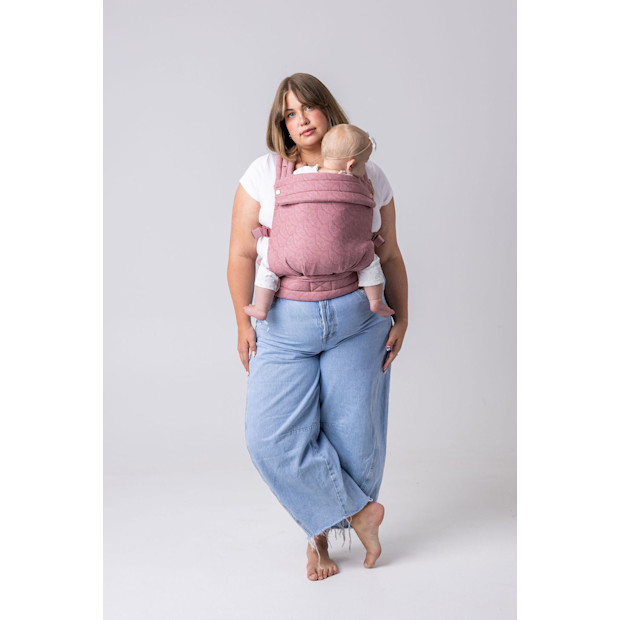
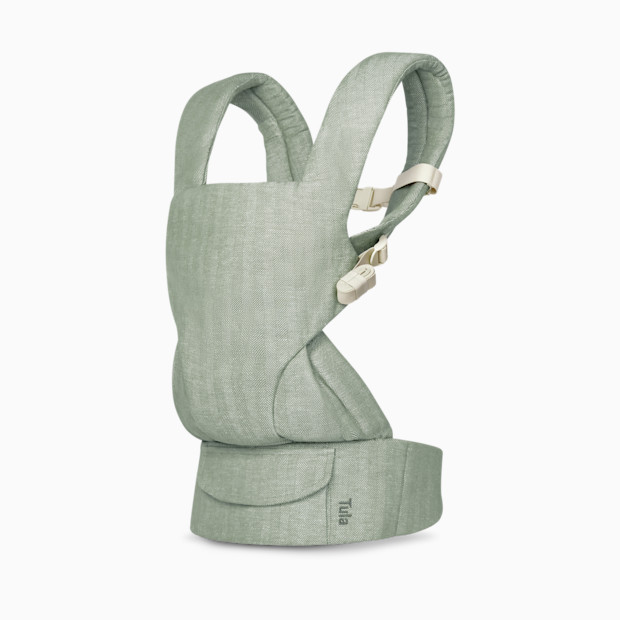
Other Structured Carriers We Love




Wraps and Slings
The next two types of baby carriers—wraps and slings—are unstructured, buckle-less options. A wrap is a long single piece of fabric that you wrap around yourself and baby. A ring sling is also a piece of fabric but worn across your body. It’s secured by threading the fabric through two metal rings at your shoulder, creating a sort of hammock for baby to sit in. Here are a few of our favorites.
Best Baby Wrap Overall
Pros
- Lightweight, breathable, super soft Modal fabric
- Universal fit (works great for petite and plus-size adults)
- Parent favorite
Cons
- Learning curve
- Fabric is really long, especially for petite adults
- Not a good option for babies smaller than 8 lbs or larger than 25 lbs
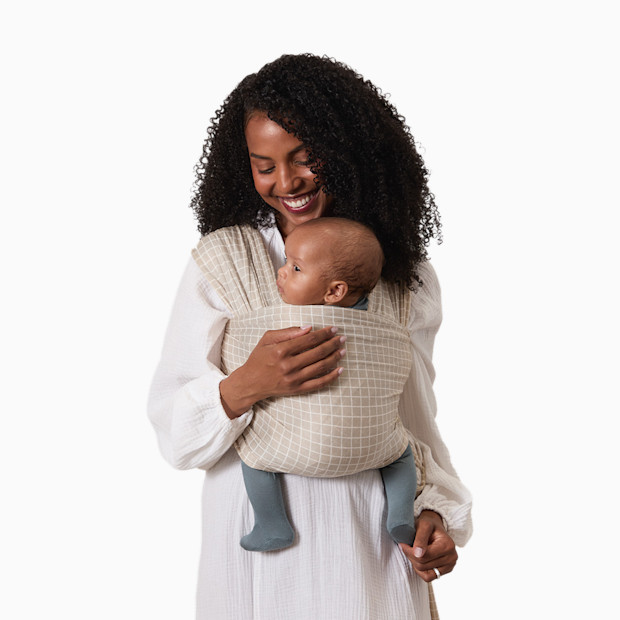
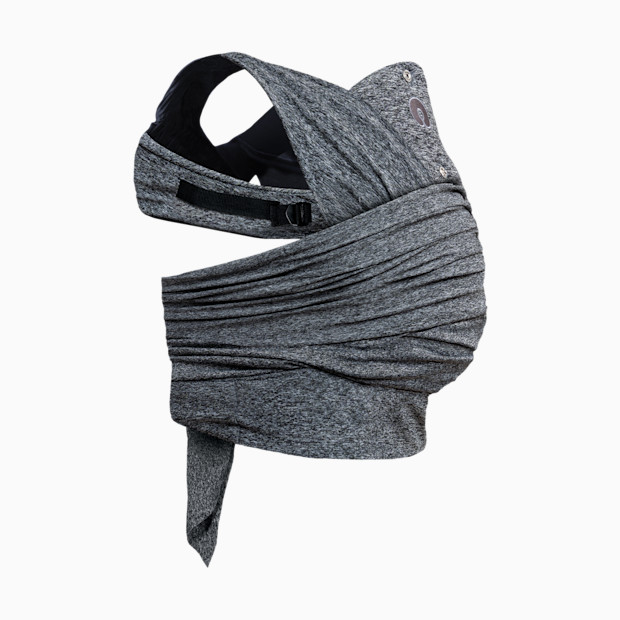
Over and over again we hear parents swooning over their Solly wrap. “So soft and easy to use,” “crucial in those first few weeks home with a newborn,” and “just makes life so much easier” are just a few of the I-can’t-live-without-it comments we heard from parents when we asked them about the Solly in our favorite products survey. “It’s one [of] the most useful things I registered for with my first and [I] will use the same one with my third,” another mom told us. “Most other things have changed but this has stayed a constant.” It’s also my number one recommendation for my first-time parent friends for the newborn period.
Buttery soft, breathable fabric
It’s easy to see why the Solly is a go-to choice for new parents. The wrap is made from ultra-soft, lightweight fabric that’s breathable and comfortable for both baby and caregiver—especially during the newborn months. Babies love feeling snug and secure, and parents love that they can keep baby close while staying hands-free. It's also made in the USA from sustainably sourced materials and folds compactly into its self-enclosing pocket, making it easy to stash in a diaper bag or stroller. Bonus: it’s machine washable and dryer friendly (just stick to the lowest heat setting), and it holds up well through repeated washes. It's also size-inclusive, a feature we love. (For more size-inclusive options, check out our Best Baby Carriers for Plus Size Parents.)
The biggest tradeoff? Like all wraps, the Solly comes with a bit of a learning curve. It takes some practice to get the hang of tying and adjusting it properly. How-to videos are a must—and many parents say it helps to put the wrap on at home before heading out, so you can pop baby in and make any final tweaks on the go.
The tag in the middle of the wrap goes across the front
The Solly supports only one carry position: front-inward. It can be used up to 25 pounds, but most parents find it especially useful during the early months before transitioning to a more structured carrier with additional carry options.
Additional Specs
Weight limit: Newborn to 25 lbs
Available positions for baby: Front-inward
Best Affordable Wrap
Boba Wrap Carrier - Grey
From $39.99Pros
- Affordable
- Universal fit
- Thicker fabric good for cooler climate, holds it shape well
Cons
- Heavier fabric can cause some wearers to overheat quickly
- Learning curve
- One carry position (front-inward)
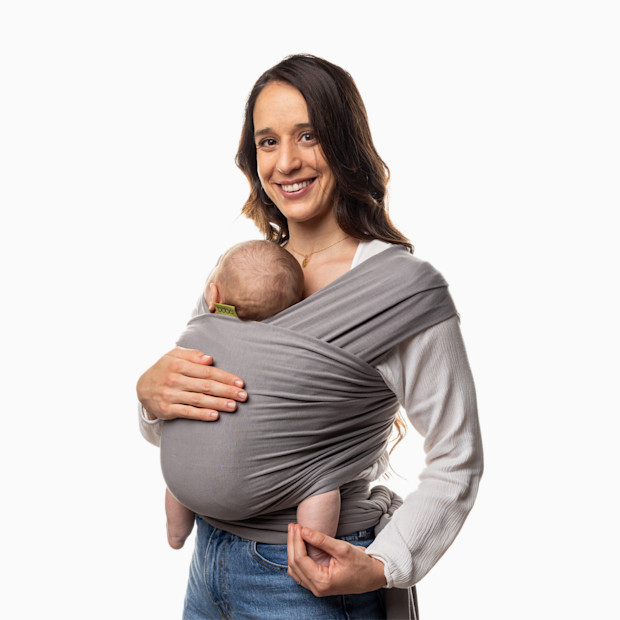
If you’re interested in babywearing with a wrap but want a budget-friendly option, the Boba Wrap is a solid pick. Like the Solly, it’s made from one long piece of fabric and supports a single front-inward carry position. It’s designed to fit parents of all sizes and grows with your baby up to 35 pounds—10 pounds more than the Solly's limit.
Thanks to a small amount of spandex in the fabric blend, the Boba offers a secure, stretchy fit that helps babies feel snug and soothed. It’s especially great for newborns and skin-to-skin contact. One parent told us, “We would not have survived the first two to three months without it. It was often the only way to calm [my baby] down and allow me to do anything.”
Made from thick cotton, the classic Boba wrap tends to hold its shape well and stays tight around baby longer than some lighter wraps. But that same sturdy material can also feel heavy—better suited for cooler temps. As one Babylist parent noted, “The material is thick, making it quite heavy. Definitely not good for summer, but I may pull this back out during winter/cooler months.”
If you live in a warmer climate or tend to run hot, the Boba Serenity Baby Wrap Carrier may be a better fit. Made from a soft, breathable bamboo blend, it's a lighter, more temperature-friendly version of the original. Just keep in mind that some parents say the softer fabric may require more frequent adjustments to maintain a snug hold around your baby.
Additional Specs
Weight limit: Newborn to 35 lbs
Available positions for baby: Front-inward
Best Ring Sling
Pros
- Stylish & heirloom quality fabric
- Easy to adjust on the go
- Fabric is thick, sturdy & gets softer with every wash
Cons
- Pricey
- Not a universal fit
- Can be tricky to put on the first few times
WildBird makes some of the most beloved—and beautiful—ring slings on the market. Made from premium Belgian linen, these slings get softer with every wash and are dyed using low-impact, all-natural, environmentally friendly dyes. They’re also available in two lengths: standard (74 inches) and long (90 inches), the latter being ideal for plus-size wearers or parents over six feet tall.
My ten month-old in our Wildbird sling
Ring slings are a popular choice for many babywearing parents because they’re adjustable, fit most body types and are pretty easy to get the hang of and wear comfortably. They also offer three carry positions: front, hip or back. “The wrap can be very easily adjusted via the ring loop, so I can loosen if I need to breastfeed without completely unwrapping and removing my youngest. The excess hanging material can also be used as sun/breastfeeding cover when on the go,” one Babylist parent raved in our Most Loved Products survey.
Wildbird Ring Sling
Like with all wrap-style carriers, they do take some practice. “I suggest watching their “how-to” video to get a better idea on how to use, as I was clueless and felt it wasn’t supportive at first. Baby took some time to get used to being carried this way,” one Babylist parent recommended. Wildbird has a great collection of video tutorials that will help you get the hang of wearing your baby in a ring sling. And because the sling only distributes weight to one side of your body, they may not be comfortable for parents wanting something for extended wear.
You’ll also want to pay attention to whether you’re choosing a single or double layer sling. The latter tends to take a bit longer to get that soft, worn-in feel, and some parents said the material felt itchy at first.
Additional Specs
Weight limit: Newborn to 35 lbs
Available positions for baby: Front, hip or back
Hybrid Baby Carriers
If you like the sound of a structured carrier’s support but want something a bit less…structured, a hybrid carrier gives you the comfort of a wrap and the ease of use, longer lifespan and increased support of a structured carrier.
Best Hybrid Carrier Overall
WildBird Newborn Aerial Buckle Wrap Carrier - Sparrow, Xs-Xl
From $83.99Pros
- Super soft fabric
- Combines the coziness of a wrap with the support of buckles
- More structure than a traditional wrap but less bulky
- Easy to put on solo
Cons
- Some parents say the fabric is too stretchy for a secure fit
- Only one carry position (front-inward)
- Not ideal for long-term use as baby gets heavier
Looking for the softness of a wrap but with a little more structure? The WildBird Buckle Wrap Carrier blends the best of both worlds. One Babylist parent raved, “I love that this carrier has the feel of a wrap carrier but the stability of buckles!” This hybrid design gives you the cozy, snuggly feel of a traditional wrap with the added ease and security of buckle fasteners—making it a great option for new parents who want less fuss but don’t love the bulk of a fully structured carrier.
It’s made from an ultra-soft, breathable fabric reminiscent of a buttery wrap material but secures with a simple waist buckle. Many parents find it’s easier to navigate on their own than a regular wrap.
Super soft padded belt and leg area
While the stretchy fabric works well for fresh babies, some parents note it’s not as supportive as they grow. We’d agree that this carrier is best for the newborn stage through the first six to nine months, depending on your baby’s size and weight.
Additional Specs
Weight limit: 7-15 lbs
Available positions for baby: Front-inward only
Another Great Hybrid Baby Carrier
Boppy ComfyFit Adjust Carrier - Heather Gray
From $54.99Pros
- Soft and comfy
- Supportive
- Adjusts quickly with waist clip
Cons
- May not fit well on more petite wearers
- Can be somewhat complicated to put on
- Older babies may grow out of it before hitting the max weight (35 lbs)
The Boppy ComfyFit Adjust is another great hybrid carrier option for parents who like the idea of a baby wrap but want something easier to manage. This hybrid-style carrier blends the softness of a wrap with the support and structure of a buckle carrier, offering closeness and comfort with added convenience—making it a go-to pick for the newborn stage.
“It feels very similar to carrying my baby in her wrap but it has the benefit of being much easier and quicker to get on and off. This is a huge plus when in a rush with a fussy baby!” one Babylist parent told us. Another added, “I loved the idea of a wrap but I don't have the patience for that. I also wanted something more structured. This is the perfect mix!”
The ComfyFit Adjust supports three carry positions and is made from soft, breathable, yoga-inspired fabric with built-in UPF 50+. It features a padded waist belt and wide shoulder straps to help distribute weight—offering more support than a traditional wrap or ring sling. A zippered pocket gives you just enough room for your phone, keys and a card or two.
The “Adjust” upgrade refers to its more size-inclusive design, with an adjustable waistband and arm straps to better fit a wider range of caregivers. It’s a welcome improvement over the original ComfyFit, especially for those who found the previous version too limited in sizing.
That said, the carrier isn’t perfect for every body or every baby. While it goes on in three steps, some parents say it takes a little effort to figure out at first. And because of its stretchy fabric, it may not offer enough support for bigger babies. “I used this carrier on my 18-month-old baby that weighs about 20 pounds and this carrier did not provide any kind of support,” one parent noted. Others flagged that the fit may feel tight on broader frames: “If you’re a bigger chested woman or even a father this won’t fit you,” and “it's just too tight on the shoulder/arm straps.”
Additional Specs
Weight limit: 8-35 lbs
Available positions for baby: Front-inward, front-outward
A few more hybrid carriers to consider:


Types of Baby Carriers
Baby carriers come in four styles: wraps, slings, hybrids and structured carriers. Each has its pros and cons, and not every style works for every baby—or every caregiver.
Structured Carriers
Also called soft structured carriers (SSCs), structured carriers are worn like a backpack with straps over the shoulder and a padded carrying “pack” that can be placed on your chest or back. SSCs are usually designed with older babies in mind but many can be worn with younger babies, too. They offer lots of support and carry options (front, back, hip, etc.) and many can be used well through toddlerhood.
Pros:
More supportive, multiple carry options
Higher weight limits
Easier to put on and adjust
Cons:
Pricier than other carrier styles
Not as soft or comfortable as wrap carriers
Tend to get hot and sweaty in warm weather
Wrap Carriers
A wrap is an extra-long piece of stretchy fabric you tie around your body, usually over your shoulders and around your midsection, to create a carrier for your baby. Wraps mimic the feel of the womb and are especially loved by newborns. Most come in one-size-fits-all and easily adjust to different body types, but can take a bit of practice to get the hang of. “I do recommend stretchy wraps, even though they can feel really intimidating,” says Eisenfeld. “I find if people start when they're pregnant, it can really help.”
Pros:
Work for a wider range of sizes and body types
Softer and more lightweight than other types of carriers
Cons:
May not feel like the most secure fit
Tend to stretch out over time
Steep learning curve
Ring Slings
A sling is a wide piece of fabric that goes over one shoulder and across your torso to create a pouch for your baby to sit in. Slings are generally easy to use. They’re also great for warmer climates thanks to their lightweight design. Since they rest on one shoulder, slings don’t distribute weight evenly, making them uncomfortable for long-term wear.
Pros:
Adjust to a variety of body types
Lightweight and breathable
Easy to put on
Cons:
Don’t distribute weight evenly
Not great for lengthy wear
Limited carry positions
Hybrid Carriers
Hybrid carriers provide the best of two baby-carrying worlds: a wrap and a soft structured carrier. These carriers combine the snug fit of a wrap with the convenience of buckles, making them ideal for new parents who want support without the bulk. Parents like hybrids because they are generally very easy to use and comfortable to wear, however, it can sometimes be tricky to find the right fit for every body type. Not all are size-inclusive, according to Eisenfeld.
Pros:
Great balance of soft + supportive
Not bulky
Easy to adjust
Cons:
Fewer carrying options than wraps
Can be complicated to put on
Do I Need a Baby Carrier?
A baby carrier isn’t a necessity. You can use a stroller when you’re out and about and a bouncer or swing at home. But if you ask parents, baby carrier quickly becomes a favorite piece of gear, regardless of brand or style.
Baby carriers free up your hands to do other things while your baby is safely resting against you. They’re great for calming down a fussy baby, especially during the first few months of your little one’s life when seemingly nothing else will do the trick, but many can work well into the toddler years, too. Carriers can help you keep your baby close while you navigate crowded spaces like airports, museums or stadiums. They’re also great if you like hiking and want to bring your little one along. And most are small enough to fit easily in a tote, under a stroller or even in a diaper bag.
How to Choose a Baby Carrier
Babywearing is intimidating, especially if you’re a first-time parent. There’s also no one-size-fits-all approach. “There are various baby carriers on the market,” says Dr. Casares. “Soft or hybrid models allow babies to snuggle up close to caregivers and can provide better mobility for the person wearing the carrier. For longer walks/hikes, I prefer structured carriers. Every caregiver is different and may prefer one style or another.”
If you’re trying to figure out how to choose a baby carrier or wondering which one(s) to add to your baby registry, here’s what to consider.
Longevity: How long do you plan to use your baby carrier? If you want a carrier that lasts through the toddler years, look for one with a high weight limit and multiple carry positions. If you plan to babywear mainly during infancy, consider one that’s easy to get on and creates a cozy environment for your little one.
Fit: Ensure the baby carrier you like fits your particular body. If you plan on sharing your carrier with a partner or caregiver, you’ll need one that easily adjusts to different body sizes.
Comfort: Be sure the seat of any carrier allows your baby’s legs to be in the hip-healthy “M” position. (More on that below.) For you, think about comfort features like back and shoulder support.
Ease of use: Putting on a wrap is a multi-step process, while a structured carrier is much more straightforward. Be sure you’re willing to put in the work if you choose a more complex wrap or carrier. Also, think about the size of your baby carrier. A wrap or a sling easily tucks into a diaper bag, while a soft structured carrier will take up more space.
Material: If you live in a warm climate, or just run hot, choose a baby carrier made from lightweight, breathable fabric.
Care: Babies are messy, but not all carriers are machine washable. Check labels for washing instructions.
Keep in mind that there is a learning curve with baby carriers, especially certain styles. Try not to get discouraged if you can’t figure things out on the first try (or two, or three). Get familiar with the world of babywearing, utilize your carrier brand’s video tutorials and practice, practice, practice—it will pay off. You can also check out our baby carrier FAQ and the baby carrier glossary for carrier and babywearing lingo.
Einsenfeld also recommends new parents start their carrier search by asking friends so they can see the carriers in person. “The hardest part when you're looking online is that there are so many options. And when you're looking at hundreds of images, it can get really, really stressful,” she says. If possible, try on your friends’ carriers, or find a store that has a few you’re considering. “Just go feel them, put them on your body. It can be really helpful.”
Baby Carrier Safety
Babywearing is one of the best ways to keep your baby calm and close to you. But it’s crucial to educate yourself on baby carrier safety and learn how to properly use whichever baby carrier you choose.
Remember TICKS
The acronym TICKS is a helpful place to start when you’re using a baby carrier.
T. Tight
I. In view at all times
C. Close enough to kiss
K. Keep chin off the chest
S. Supported back
Always be sure you’re using your baby carrier exactly as directed. (For example, ensure your baby is facing the correct direction for their age). Double-check that all buckles and knots are securely fastened. And, most importantly, be sure you’re monitoring your little one’s breathing at all times. Always keep your baby’s face in view and ensure their chin never touches their chest.
Learn about proper hip positioning
When done properly, babywearing can encourage your baby’s healthy hip development. But when done incorrectly, it can have the opposite outcome, causing hip dysplasia, a condition where your baby’s hip joint may become partially or completely dislocated.
The M-position is recommended for hip-healthy babywearing. Be sure your baby’s thighs are spread around your torso and baby’s hips are bent so that their thighs are supported and their knees are slightly higher than their bottom. Thighs should be:
Flexed
Supported
Spread apart
“One [thing to keep in mind] is ensuring they've got a good pelvic tuck, which tucks their body towards you,” explains Eisenfeld. “This will ensure they're in a good position for their hips.”
Less spread with more flex is healthy, and slightly more spread with less flex is fine as your little one grows. Consult the International Hip Dysplasia Institute for a list of all hip-healthy baby carriers.
Pay extra attention with newborns
Because newborns lack any head or neck control, you need to be very conscious about proper babywearing and ensuring they’re correctly supported in a carrier.
If you’re using a wrap-style carrier, be sure it’s tight enough and snug to your body, says Eisenfeld. “Lots of parents, especially when using stretchy wraps, end up wearing them really loosely thinking they don't want their baby to be too tight,” she says. “And that actually puts their baby at a lot of risk.” She compares a carrier to the feel of a well-fitted t-shirt.
Be sure your newborn’s head is upright and completely visible. “Your carrier should be supporting your baby in a way that their head is not flopping. And ensure that the carrier is not over their face, it's just over the back of their head.”
If you’re using a structured carrier, fasten the waist belt higher up on your body. “With a lot of the buckle carriers, you'll actually want to start with them sitting significantly higher when they're younger,” she explains. This will help ensure the correct pelvic tilt and make it easier for you to look down and keep an eye on them.
Don’t rush outward-facing
“Keep your baby inward-facing until they are five months of age and their neck muscles are strong enough to support them facing outward,” says Dr. Casares.
Eisenfeld echoes this recommendation. “The absolute minimum requirement is four to six months with strong head control,” she says. She also recommends not exceeding 15 to 20 minutes at a time. Front-outward facing can be overstimulating for a baby. It can also put added pressure on the birthing person’s pelvic floor and make it tough to see if your baby is getting tired. (Sleeping in an outward-facing position is not recommended because of the risk of asphyxiation.)
Watch the clock
“There's no official time limit for baby carrying,” says Dr. Casares. “That said, babies need plenty of different positions for healthy physical and social development. Parents should give their little ones plenty of opportunities to explore their environments outside of baby carriers.”
If your baby falls asleep in the carrier, watch them consistently to ensure they are positioned correctly and can breathe easily. “As soon as possible, transfer them to a safe, flat sleeping area,” she says.
Babywearing is one of the best ways to keep your baby calm and close to you. But it’s crucial to educate yourself on baby carrier safety and learn how to properly use whichever baby carrier you choose.
Baby Carrier Frequently Asked Questions
Are baby carriers good for newborns?
Baby carriers can be beneficial to children for years, but they’re especially good for newborns. Newborns love skin-to-skin contact and thrive off of feeling snug and secure—and a baby carrier is a safe and comfortable way for you to provide this. Baby carriers also give your arms a break and free up your hands if you need to get other things done. However, it is important to choose a carrier that is appropriate for your baby’s age and development and to follow safety guidelines when using it, especially with a very young baby. It is also recommended to consult with a healthcare professional before using a carrier with a newborn.
Which baby carrier is easiest to breastfeed in?
When looking for a breastfeeding-friendly baby carrier, focus on options that allow easy access to your breasts and are easily adjustable. Popular options include ring-sling or wrap-style carriers and certain structured carriers with adjustable straps or panels. And remember, nursing and babywearing may not be easy at first—try not to get too stressed out and practice, practice, practice.
Which baby carrier is safest for my back?
If you have a bad back or are concerned about putting too much stress on your back while babywearing, look for a carrier that distributes your baby’s weight over both shoulders and around your waist. Focus on features like wide, padded shoulder straps, an ample waist/hip support belt and plenty of adjustable straps and buckles. Avoid any baby carrier that doesn’t have a waistband or that only goes over one shoulder (such as ring slings, Onbuhimos or any hip carrier).
Stretchy wraps fit the bill for the newborn days because you can spread the fabric wide across your shoulders and back, which will help with weight distribution. However, once baby reaches about 15-20 pounds, stretchy wraps aren’t as supportive and it’s best to move to a well-fitting soft structured carrier.
How many baby carriers do I need?
How many baby carriers do you NEED? None. But how many will you WANT? That’s another story. Many parents start with at least one baby carrier on their registry. Some choose two—a soft wrap for the early days and a more structured carrier for toddlerhood and beyond. Many add two: a soft, stretchy wrap for the newborn days and a structured carrier for toddlerhood and beyond. And if you’ve completely fallen in love with babywearing? The world of baby carriers offers so many fabrics, colors and styles—have fun!
Expert Sources
Babylist uses high-quality subject matter experts to provide accurate and reliable information to our users. Sources for this story include:
Cassidy Eisenfeld, a certified babywearing educator and founder of Let’s Talk Babywearing.
Dr. Whitney Casaers, a board-certified pediatrician who provides resources for new parents over at Modern Mommy Doc.

;)
;)
;)
;)
;)
;)
;)
;)
;)
;)