
The Best Baby Monitors for Tracking Sleep, Breathing and More
Breathing and movement monitors track vitals, sleep and stats—but they’re not for everyone. Here’s what to know.

By
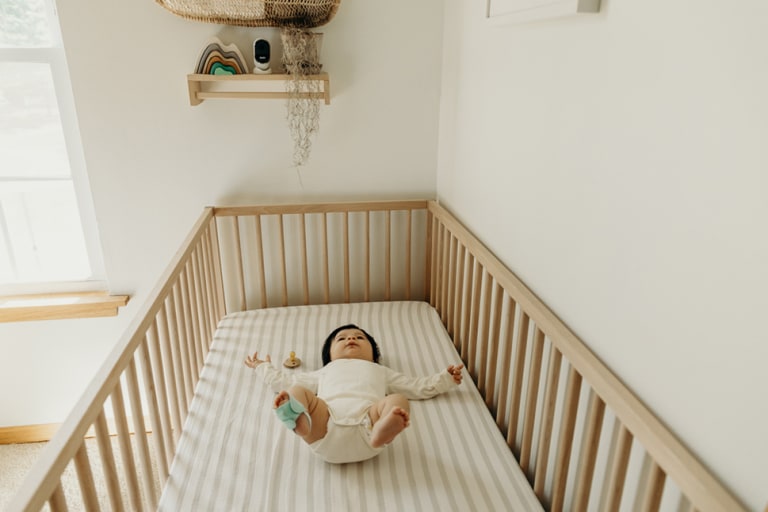
Worrying about your baby while they sleep is an almost universal part of new parenthood. Standard baby monitors can help you keep an eye (and an ear) on your little one—but movement monitors take the traditional baby monitor up a notch.
Baby movement monitors use sensors to track things like your baby’s breathing, body position, sleep patterns and more, alerting you if something is off. They’re not for everyone; some parents find they actually lead to more anxiety or information overload, and pediatricians are hesitant to recommend them as they’re not FDA-approved medical devices and haven’t been shown to reduce the risk of SIDS. Still, for some families, when paired with safe sleep practices, the added insight and peace of mind these monitors provide can be incredibly reassuring.
If you’re in that camp, we think the Nanit Baby Monitor System is the best overall baby movement monitor. It’s expensive, but it’s extremely reliable, easy to use and provides helpful sleep analytics for parents trying to crack the code of their baby’s sleep patterns in hopes of getting a better night’s rest.
If the Nanit Pro isn’t the right fit—whether you’re looking for something more affordable, simpler to use or just want to explore other options—we’ve rounded up additional top picks in a variety of categories. We also spoke with pediatricians and sleep experts to share what to consider if you’re thinking about adding a movement monitor to your nursery.
How We Judged the Best Baby Movement Monitors
Best Overall Baby Movement Monitor

Nanit Smart Baby Monitor System with Wall Mount
From $399.00Pros
- Tracks sleep, motion, vitals and growth
- Access live, high-def video from anywhere
- Split-screen option for multiple kids
Cons
- Expensive (annual membership for sleep data adds $50-300/year)
- Phone-only viewing right now; parent unit coming soon
Launched in 2016, Nanit is the best sensor-free breathing and motion-tracking monitor on the market thanks to its innovative design and unmatched functionality. It’s a Babylist parent favorite—it topped the list in our annual Most Loved Baby Products survey, with hundreds of parents naming it not only as their favorite baby monitor but as their favorite item on their entire baby registry. It’s also the monitor I’ve used (and loved) for the last four+ years.
The Nanit makes it easy to track sleep, movement and even growth with a crystal-clear 1080p HD camera, all from your phone. Setup is quick, and the Nanit Insights app is intuitive to use and shows daily sleep stats that many parents (myself included) rely on to build nap and nighttime routines.
Another standout is the Breathing Wear, a soft cotton band that fits over most pajamas and tracks breathing motions by reading subtle movements in the fabric’s custom pattern—no sock, clip or sensor needed. It’s not a medical device, but it is an extra layer of reassurance and something you can use either daily or if you’re feeling especially anxious. (I used it when my little one was sick.)
“This is the best baby monitor on the market for peace of mind,” one parent said in our annual survey. “It is so easy to use, tracks the baby’s sleep and progress and has such a clear view. I felt so much better putting my baby in the crib with this monitor, knowing it would alert me if his breathing level dipped or if the temperature changed from my preferred range.”
This bundle includes Nanit's newest add on, an eight-inch home display unit that addresses one of the monitor's most common complaints: always needing your phone to check on baby. Now a babysitter doesn't need access to your account, a grandparent who isn't comfortable with their phone has an easy option and you can step away from your phone if you'd simply rather station the home unit on your coffee table or nightstand. The display is large, easy to read and links seamlessly with your camera and app.
The biggest Nanit con is its price; it’s expensive, especially when you start adding on accessories like the breathing band or the travel stand. Nanit Insights will also cost you a subscription fee if you want to continue to use it beyond the first year. And if you love the idea of sleep info and stats but tend to be anxious, the Nanit may do more harm than good; it can feel like information overload for certain parents. (This is the case with most movement monitors, but especially so with the Nanit.)
Additional Specs:
Monitor Type: WiFi video, via smartphone; iOS and Android
What’s Included: Nanit Pro Camera and companion app, ASTM-certified wall mount, 8” Home Display, small sensor-free Breathing Band (0-3 mos), free trial of Nanit Insights Sleep Plan
Camera: Yes
Best Vitals Tracking Baby Monitor
Owlet Dream Duo (Gen 3) Smart Baby Monitoring Bundle - Mint
From $379.99Pros
- Vitals tracker + video monitor
- Tracks heart rate, oxygen level + sleep trends
- Free personalized sleep program
Cons
- Some parents experience connectivity problems
- App can be glitchy
- Need to pay a monthly fee for more in-depth sleep analytics
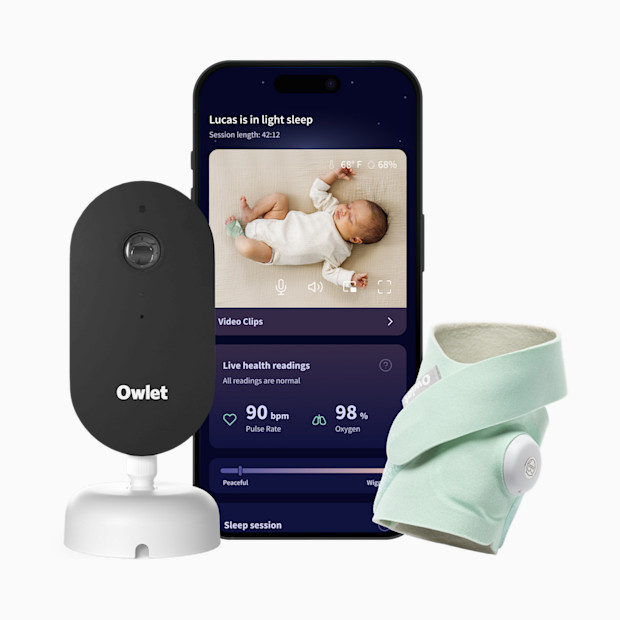
While Nanit led the way in non-wearable movement monitoring, Owlet was one of the first brands to offer a wearable tracking component for babies. This FDA-cleared monitor uses a wearable called the Dream Sock that slips over your baby’s foot and uses medical-grade pulse oximetry to track their pulse rate and oxygen levels in real time, sending an alert if something seems off. (Curious about what “FDA-cleared” really means? This FDA-approved vs. FDA-cleared explainer breaks it down.)
Beyond vitals, the sock also tracks sleep patterns—including wakings, quality of sleep and total hours slept—so you can get a clearer picture of your baby’s rest. The rechargeable battery lasts up to 16 hours and fully recharges on its base in about eight, and the sock fits babies from about six up to 30 pounds (about 18 months old).
“The Owlet gives me the most peace of mind at night and helped alleviate a lot of postpartum anxiety around bedtime,” one parent said in our annual survey. “[It] allowed me to sleep—as much as possible with a newborn!”
This bundle includes the sock + a WiFi camera that streams 2K HD video. The camera offers 4x zoom and a 130-degree wide-angle view, as well as temperature and humidity monitoring and two-way audio. You'll also get free access to predictive sleep technology; if you want to upgrade to deeper insights, you can subscribe to Owlet360 for a monthly fee.
There are a few things to be aware of if you’re considering the Owlet. The sock needs to be within 100 feet of its base station, so if your room is far away from baby’s, this may not be the wearable for you. The system can also sometimes be glitchy (both the sock and the WiFi camera/connection)—although not all parents experience this issue. And, like all movement monitors, you shouldn’t rely on it in place of safe sleep.
Additional Specs:
Monitor Type: WiFi video, via smartphone
What’s Included: Dream Sight Camera, Dream Sock Sensor, 4 Fabric Socks (fitting babies 1-18 months, 6-30 lbs), Base Station, Wall Mounting Kit, ASTM Safety Certified Cable Guards, Power Adapter + USB-C Cable. You'll also get free access to the Owlet Dream App.
Camera: Yes
Most Straightforward Baby Movement Monitor
Pros
- Budget-friendly
- Portable and lightweight
- Straightforward, no-frills setup and use
Cons
- No app, parent unit or video component
- Can’t be used once baby is rolling
- Short battery life
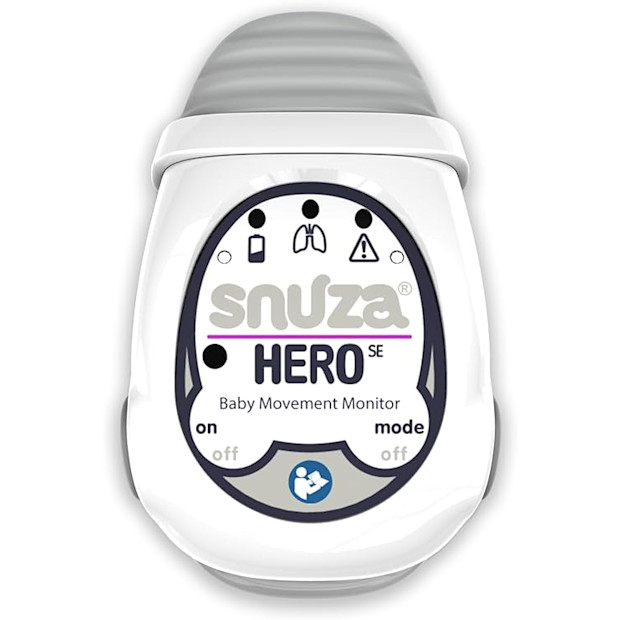
Most movement monitors come at a steep price and with lots of bells and whistles. If you don’t need (or want) a video component—or are already using a video monitor that doesn’t have movement tracking but want to pair it with something that does—check out the Snuza.
The Hero is simple, portable and more affordable than the Nanit and the Owlet. It clips directly onto your baby’s diaper and tracks abdominal movements while they sleep. If no movement is detected for 15 seconds, it activates a pre-alarm notification and vibrates to try to rouse your baby; if movement still doesn’t resume after five more seconds, an alarm sounds. It’s easy to use, travel-friendly and a great add-on if you already own a separate video or audio monitor.
One thing to keep in mind: you can’t use the Snuza once your baby starts rolling over or when they’re in motion, such as in a car seat or stroller. And many parents mention its short battery life, especially after consistent use.
Additional Specs:
Monitor Type: Battery-powered wearable
What’s Included: Clip-on movement monitor (medical grade plastic and silicone, BPA-free)
Camera: No
Best Affordable Baby Movement Monitor
Pros
- Budget-friendly
- Monitors breathing, temperature and rollovers
- Works with both parent unit and app
- Can also purchase bundle that includes camera
Cons
- App only works with one phone (no multi-user access)
- Some parents report connectivity and app glitches
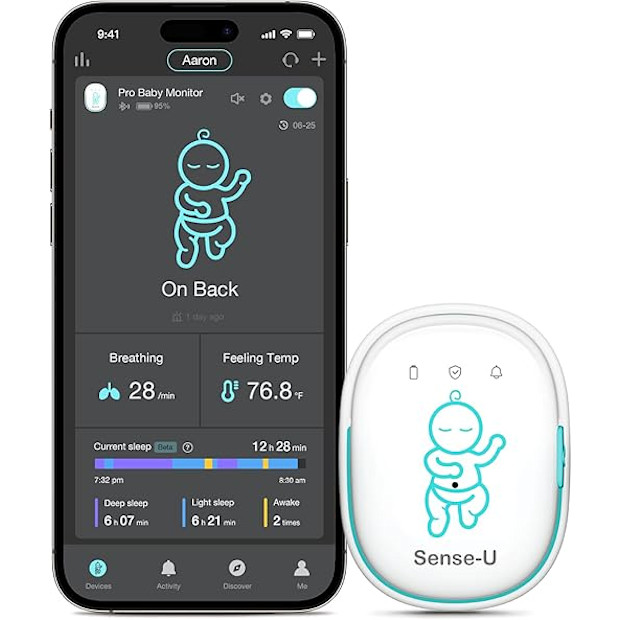
Like the Snuza, the Sense-U is a solid choice if you’re looking for a wearable that will monitor your baby’s breathing but doesn’t cost hundreds of dollars. The Sense-U is a compact wearable that clips onto your baby’s diaper and tracks breathing (it has an arousal vibration and alarm, similar to the Snuza). It also monitors your little one’s temperature (a helpful feature when your baby is sick or if you’re worried they're either over or underdressed) and will alert you if your little one rolls onto their stomach—two features you won’t get with the Snuza.
“It’s a major plus for peace of mind at night and works well,” one parent noted in our survey.
The Sense-U can be used on its own or alongside an app. And while there’s no built-in video monitor in this version, a different bundle—the Pro Baby + 2.5K PTZ Cam—does include a camera. (The brand also makes a Smart Sock Shoe.)
The Sense-U app only works with one phone; you can’t link multiple users. This can be frustrating for two-parent families who aren’t often home at the same time. Like other movement monitors, it’s not a medical device and isn’t intended to be used as one. Some users also complain about connectivity and app glitches, occasional false alarms if the sensor isn’t clipped properly to baby’s diaper and inaccurate temperature readings. (Adjusting the sensor clip and making sure it’s placed correctly near baby’s belly button can help.)
Additional Specs:
Monitor Type: Rechargeable battery-powered wearable (uses Bluetooth)
What’s Included: Clip-on movement monitor
Camera: No
Why Trust Babylist?
Babylist is the expert in baby; we know baby gear inside and out. We talk with parents face-to-face in our showroom and on our user panels and hear from thousands annually via our Best Baby Products online survey. We know what items millions of expecting parents are adding to their baby registries.
Firsthand and professional experience. As Babylist’s gear editor since 2021, I’ve tested a wide range of monitors, including several movement and vitals-tracking options. I’m also a mom of two, and I’ve used the Nanit as my primary baby monitor for almost four years.
Expert POV. I spoke with three experts while researching and writing this guide: Laura Steelman, MD, a pediatrician with Bluebird Kids Health; Dr. Jenelle Ferry, board-certified neonatologist at Pediatrix Medical Group; and Brittany Sheehan, pediatric sleep consultant and founder of Brittany Sheehan Sleep.
Monitor data. I regularly analyze which baby products our users are adding to their baby registries the most (and which ones they aren’t) and what our team of merchandising experts—our buyers who are responsible for ensuring the Babylist Shop is stocked with the best and newest gear—is excited about. Studying this kind of data helped us choose which movement monitors to narrow in on and which ones to recommend to new and expecting parents.
Feedback and reviews. I reviewed comments and feedback from Babylist’s annual most loved baby products survey of thousands of parents, read customer reviews from hundreds of Babylist users and spoke to parents on our staff about their real-life product experiences.
What Is a Baby Movement Monitor?
A baby movement monitor tracks your little one’s movements while they’re asleep and alerts you if there’s an issue. Some movement monitors use wearables like a sock or a band for tracking; others use a clip that attaches to your baby’s diaper.
In addition to tracking movement, many monitors also track vitals like breathing, heart rate, oxygen saturation levels and temperature. Some even provide sleep analytics to help you gain insights into your baby’s sleep patterns.
Some baby movement monitors work alongside a video monitor and are sold as a bundle. Others monitors function completely independently of video monitors.
Do Baby Movement Monitors Prevent SIDS?
Baby movement monitors may provide peace of mind to some parents—but they’re not recommended by most pediatricians, and there are several safety considerations to keep in mind if you’re thinking about adding one to your baby registry.
According to the American Academy of Pediatrics (AAP), movement monitors give little or no protection from SIDS. And while movement monitors alert parents to a temporary pause in a baby’s breathing (apnea), research hasn’t shown a clear link between apnea and SIDS.
"It is a misconception that baby movement monitors prevent SIDS,” explains Laura Steelman, MD, a pediatrician with Bluebird Kids Health. “There has not been any credible evidence or formal testing to see if they do so,” she says.
Movement monitors should also not take the place of practicing safe sleep with your baby.
“The most important way to reduce the incidence of sudden infant death is to ensure a safe sleep environment, which includes putting infants on their backs to sleep, on a firm surface clear of soft items and on their own,” says Dr. Jenelle Ferry, board-certified neonatologist at Pediatrix Medical Group in Tampa, Florida.
“Parents may get a false sense of confidence that these safety measures can be skipped if the baby has a monitor on,” adds Dr. Steelman. “It is much more important to create a safe sleep environment that IS proven to prevent SIDS: a crib with a firm mattress, a tight-fitting sheet (and nothing else: no blankets, bumpers, pillows, or stuffed animals) and to always place baby on his or her back to sleep.”
There are also false alarms to consider. “While I do advise against these types of monitors, if parents still feel the need to use them in their home, I want them to be aware that false alarms are VERY common,” explains Brittany Sheehan, pediatric sleep consultant and founder of Brittany Sheehan Sleep.
“And please make sure you're still also practicing safe sleep habits based on the AAP guidelines. That is the absolute best and safest thing you can do for your baby!”
Expert Sources
Babylist uses high-quality subject matter experts to provide accurate and reliable information to our users. Sources for this story include:
Laura Steelman, MD, a pediatrician with Bluebird Kids Health
Dr. Jenelle Ferry, a board-certified neonatologist at Pediatrix Medical Group
Brittany Sheehan a pediatric sleep consultant and founder of Brittany Sheehan Sleep
