
The Best Baby Wrap Carriers for Hands-Free Snuggles
Baby wraps are one of the snuggliest ways to wear your newborn. Here are the best options for comfort, safety and everyday use.

By
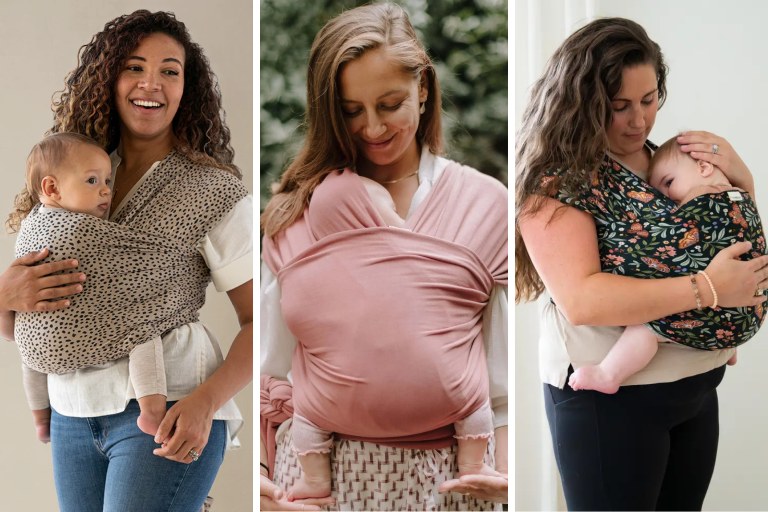
Babies love to be held, especially in the newborn days as they’re adjusting to life outside of the womb. Stretchy wraps are one of the snuggliest baby carrier options out there for this phase—they’re a fave among parents, babywearing experts and our editors.
A wrap is one long piece of fabric that you wrap around yourself and place baby in so they can stay close and you can have your arms free. They may look a bit intimidating at first, and there is definitely a learning curve, but with a little practice, a wrap may quickly become your go-to carrier.
As with most things in life, baby carriers are pretty subjective. After testing and researching dozens of baby wraps and poring through thousands of Babylist parent reviews, the Solly Wrap is our top pick that works for most parents. It’s buttery soft, breathable and comes in a bunch of colors that help you feel a little bit more like you in the fourth trimester. We also rounded up a few other great options out there to help you find the right wrap for you, including those from Moby, Boba and Hope & Plum.
How We Judged the Best Baby Wraps
Best Baby Wrap Overall
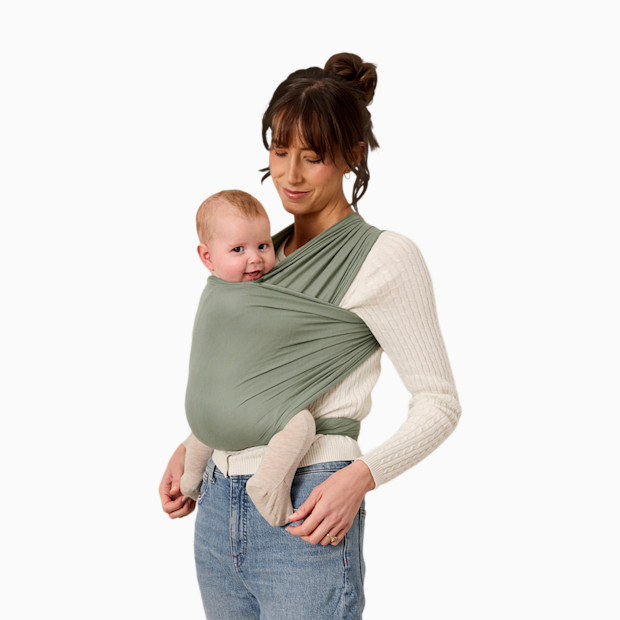
Solly Baby Wrap Carrier - Ivy
From $55.50Pros
- Breathable, super-soft fabric
- Easy to store
- Universal fit
Cons
- Lower weight limit
- Thinner fabric with limited stretch
The Solly Baby Wrap Carrier is one of the most-registered-for baby products on Babylist registries and a consistent top pick in our annual most-loved products survey of actual parents.
Made from thin, buttery-soft modal fabric, it genuinely feels like you and your baby are wrapped in a hug. “It supports the baby better than you think and it’s really comfortable,” one Babylist parent said in our survey. It also comes in a wide range of colors to match a variety of personal styles—a plus for parents who want gear that’s going to match their aesthetic.
Wraps like the Solly are ideal for the fourth trimester when babies crave closeness. It’s one of the few carriers that’s safe to use from birth (for babies eight pounds and up) and lets you get a snug, supportive fit right away. And most parents say it’s not too challenging to get the hang of wrapping: “I didn’t think it would be so easy to use and so comfortable for my baby. I felt very confident using it after just a few times and it’s a staple for us!” Solly’s video tutorials are super helpful and they also offer free 1:1 consults if you need more guidance.
The Solly has basically zero bulk and folds up nicely—tucking into its own built-in pouch on one tail end—making it easy to take on the go and fit into almost any size bag. While the wrap doesn’t come in sizes, most parents agree it’s got a pretty universal fit, measuring about five and a half yards long and 24-26” wide.
Like most stretchy wrap carriers, the Solly only supports a front, inward-facing carry, which makes it especially well-suited for newborns and smaller infants. I basically lived in this wrap when my second baby was born, but ended up switching to something more structured when she was around five months old (before she met the weight maximum but was a bit too heavy for the wrap to provide the support I was looking for). Its lower weight limit (25 lbs max) also means some babies may outgrow it sooner than with other wraps.
Additional Specs
Weight limits: 8-25 lbs
Fabric: TENCEL Modal
Available positions for baby: Front-inward
Easiest Baby Wrap to Use
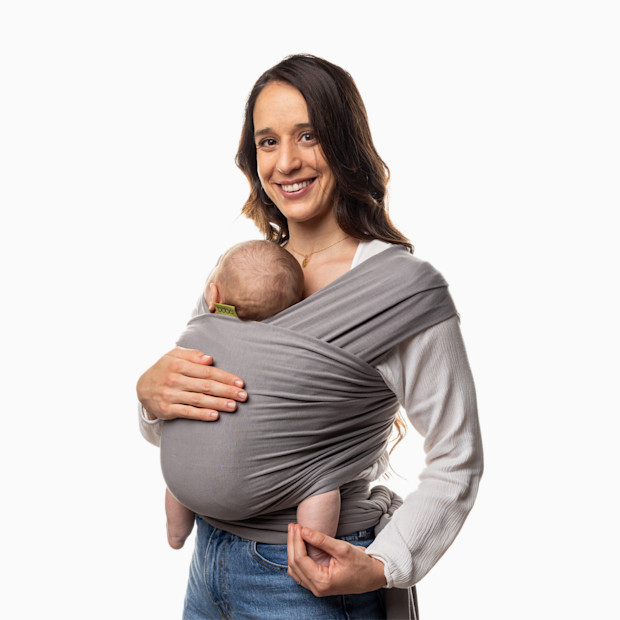
Boba Baby Wrap Carrier - Grey
From $34.99Pros
- Extra stretchy for easier wrapping
- Works well for a wide range of body types
Cons
- Fabric can be too long for some users
- Bulkier than some wraps
- Can get warm in hot climates
If the idea of learning to use a wrap feels a little intimidating, the Boba Wrap might be the one that helps you get over the hump. Of all the wraps I tried, it felt like the most forgiving when it came to getting a safe, snug fit—even if your technique isn’t perfect on the first try.
That’s mostly thanks to the fabric: it’s thick, soft and extra stretchy, which gives you more flexibility as you wrap. You can adjust and re-tie without feeling like you have to get it exactly right on the first go. And that same thickness also makes it a more supportive choice for heavier babies—it holds babies from seven up to 35 pounds (or about 18 months).
One trade-off is that the extra thickness means it can run a little warm. So, if you’re in a hotter climate or want something more breathable, you may want to explore a lighter-weight option like the Solly or Moby (we'll get to that one below).
Additional Specs
Weight limits: 7-35 lbs
Fabric: 95% Cotton, 5% Spandex
Available positions for baby: Front-inward
Cleaning/Care: Machine washable; tumble dry low
Best Wrap Carrier for Plus-Size Parents
Pros
- Supportive + durable fabric
- Comes in two sizes for a more personalized fit
Cons
- Stock fluctuations due to small-batch production
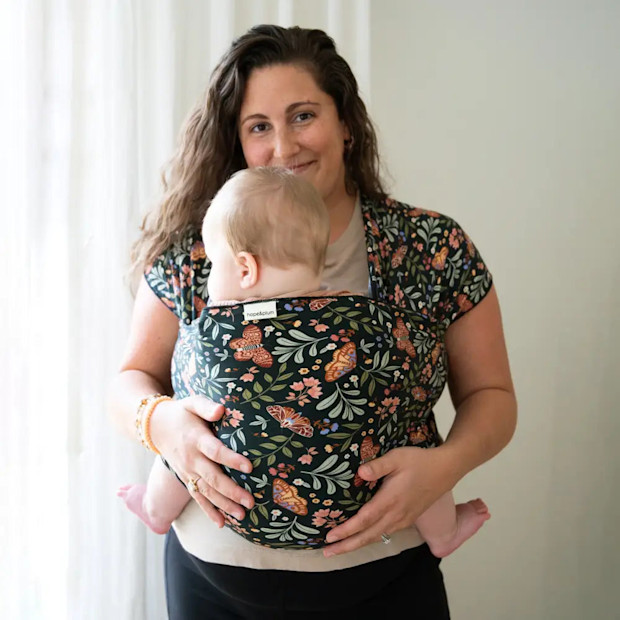
If you’re looking for a wrap that’s soft, supportive and size-inclusive, Hope & Plum might be your new go-to. The fabric has a good amount of stretch without feeling flimsy, and lots of parents say it keeps its shape—even after all-day wear and multiple washes. The fabric strikes a nice balance: soft and breathable, but still strong enough to keep things feeling snug and secure from day one.
What sets Hope & Plum apart is the sizing: it comes in two different lengths, which helps eliminate the all-too-common “too much or not enough fabric” struggle. That makes it easier to get a snug, secure wrap that feels just right, especially for caregivers who don’t fall into the one-size-fits-all category.
The brand is also a small, women-owned business making wraps in the U.S., so availability can fluctuate due to limited restocks. But if you spot one in stock in a color or print you love, it’s definitely worth grabbing.
Additional Specs
Weight limits: 7-35 lbs
Fabric: 70% Tencel Lyocell, 30% Organic Cotton
Available positions for baby: Front-inward
Cleaning/Care: Machine wash on cold; tumble dry low (hang to dry preferred)
Best Wrap Carrier Parents Can Share
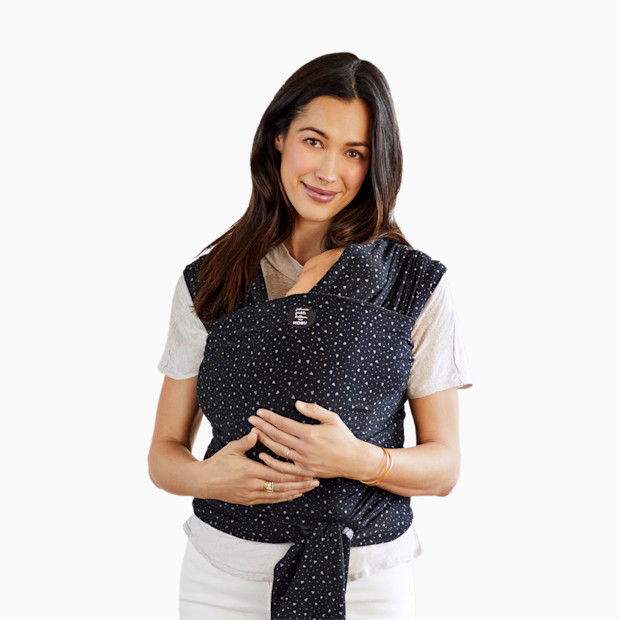
Moby Classic Wrap Carrier - Terrazzo Black
From $43.99Pros
- Generous length fits a wide range of body types
- Soft, supportive cotton jersey fabric
- Works for both front and hip carries
Cons
- Lots of fabric to manage
The Moby Wrap is a tried-and-true favorite, especially if you’re looking for something multiple caregivers can share. It’s made of stretchy cotton jersey that wraps securely around your shoulders, back and waist—creating a soft cocoon for your baby while evenly distributing their weight. At six yards long, the extra fabric is what makes Moby so shareable. It flexes to fit different caregivers, body types and carry styles, whether you're babywearing solo or swapping turns with your partner. That generous length helps create a snug, customizable fit—perfect if more than one person plans to babywear.
This wrap also grows with your baby: it’s designed for little ones from eight to 33 pounds, so it can stay in your rotation well beyond the newborn phase. And while most wraps only support a front carry, Moby also allows for a hip carry position—giving you more flexibility as your baby grows and becomes more curious about the world.
Like the others in this guide, the Moby takes a little practice—but after a few tries, it starts to feel like second nature. Moby also offers 1:1 consults at no cost if you need extra support and has a bunch of helpful tutorials on their website.
The Moby’s extra-long fabric can sometimes graze the floor while you’re wrapping, which may be less ideal in places like parking lots or public bathrooms. One Babylist parent shared in our survey, “I was worried about it being too long and too hard to figure out but it’s easy and keeps my baby nice and snug."
Additional Specs
Weight limits: 8-33 lbs
Fabric: 100% cotton
Available positions for baby: Front-inward and hip carry
Cleaning/Care: Machine wash cold (gentle or delicate cycle); hang dry or use the lowest dryer setting
Best Hybrid Baby Wrap
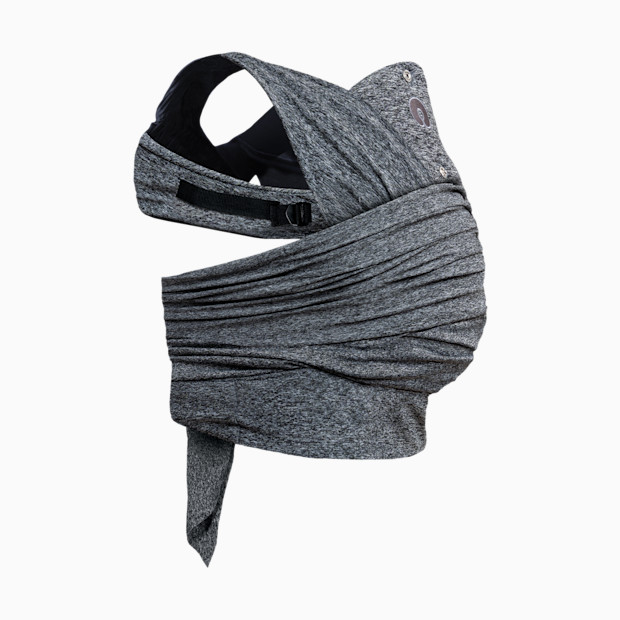
Boppy ComfyFit Adjust Hybrid Baby Carrier - Heather Gray
From $50.99Pros
- Easier to get on than a traditional baby wrap
- Soft material
- Adjustable for caregivers
- 3 carry positions
Cons
- Uncomfortable for long periods of time
- Bulky
Not quite a wrap and not quite a soft structured carrier, this hybrid option falls somewhere in the middle, and is a good alternative if you’re looking for a carrier with a little extra support that’s easier to get on and off than a traditional baby wrap. Babylist parents note that the combo option makes it easy to put on by yourself. “I use it all the time,” said one parent.
The Boppy ComfyFit Adjust Hybrid Baby Carrier is made from soft, lightweight yoga pants-inspired material with four-way stretch. The wrap is size-inclusive, with adjustable arm straps, wraps and belt, and can also be shared among caregivers. (The adjustable arm straps also mean you’re able to nurse your baby while wearing the wrap.) And there are three carry positions: newborn front-facing, baby front-facing and outward-facing.
But all this adaptability comes with a downside: parents complain that the wrap is a bit bulky. It can be tough to get all the settings just right. And most parents prefer it for shorter stints of babywearing; it can be uncomfortable if you're wearing it for a long period of time.
Additional Specs
Weight limits: 8-35 lbs
Materials: Polyester, spandex
Available positions for baby: Front-inward (2 positions, newborn and baby), front-outward
Why Trust Babylist?
Babylist is the expert in baby; we know baby gear inside and out. We talk with parents face-to-face in our showroom and on our user panels and hear from thousands annually via our Best Baby Products online survey. We know what items millions of expecting parents are adding to their baby registries.
Firsthand professional and personal experience. In addition to being Babylist's associate editor, I'm also a mom of two who are under two years apart; a baby carrier was a non-negotiable. I tested a ton in my search to make life easier while wrangling a baby and a toddler. Babylist’s senior gear editor, Jen LaBracio, is the original author of this guide, with over a decade of experience in the baby gear industry. I also leaned on her initial research and expertise.
Expert POV. I spoke with Jay McMillin, a certified babywearing consultant for safety tips and tricks.
Baby carrier data. I regularly analyze which baby products our users are adding to their baby registries the most (and which ones they aren’t) and what our team of Merchandising experts—our buyers who are responsible for ensuring the Babylist Shop is stocked with the best and newest gear—is excited about. Studying this kind of data helped us choose which wrap carriers to narrow in on and which ones to recommend to new and expecting parents.
Feedback and reviews. I reviewed comments and feedback from Babylist’s annual product survey of thousands of Babylist parents, read customer reviews from hundreds of Babylist users and spoke to parents on our Babylist staff about their real-life product experiences.
What Is a Baby Wrap?
Wraps are just one of several types of baby carriers, and unlike other options, it’s made out of one continuous, long piece of fabric—usually cotton or some kind of blend that has some stretch. There are no clasps, rings or buckles, but the fabric that you wrap around yourself and baby and secure with a knot.
They’re a popular pick for babywearing a newborn, as they’re usually too small to properly fit into a structured carrier (although they may meet the minimum weight limit). Many families start with a wrap during the newborn stage, then move to a soft structured carrier as baby gets heavier and they find all parties involved need more support.
Do You Need a Baby Wrap?
While a baby wrap isn’t necessarily a need, it’s one of the most popular items Babylist parents choose when building their baby registries. That’s because wraps have so many benefits both for parents and babies, especially during the fourth trimester (the first three months of your little one’s life). Wearing your baby in a wrap can help calm and soothe them, help them fall asleep (and stay asleep) and free up your hands so you can get other things done.
Many parents find that having both a wrap and a structured carrier or ring sling gives them more flexibility for different situations. Quite a few Babylist parents told us they didn’t register for a wrap—but once they were gifted one, they were surprised by how much they loved it.
How to Choose a Baby Wrap Carrier
The main consideration when choosing a wrap is fabric. They come in all types like cotton, linen, modal, bamboo and more. One type of fabric isn’t necessarily better than another; it’s more about what’s the most comfortable for you.
If you’re choosing a baby wrap or sling based on fabric, you’ll want to think about what type of climate you live in (a warmer climate means you’ll want a lighter, more breathable wrap to avoid overheating), what feels the most comfortable against your skin and how stretchy you want the wrap to be. Cotton is typically less breathable, while a fabric like linen, modal or bamboo will be more comfortable on hot days.
Are Baby Wraps Safe?
When used properly, baby wraps are safe. The American Academy of Pediatrics (AAP) recommends following certain baby carrier guidelines when babywearing, including these:
Ensure your baby’s mouth and nose are never blocked by the wrap’s fabric, and that their face isn’t pressed tightly against your chest.
Be sure your child’s legs are in an “M” shape, with knees elevated above their bottom and legs spread, to promote healthy hip development and reduce the risk of hip dysplasia. Their spine, on the other hand, should be in a naturally curved position with their tummy pressed against your body.
When reaching or bending while babywearing, always bend from the knees, not at the waist. And pay attention to your posture. Think about activating your core muscles (avoid arching your back) and keep the baby high and close near your center of gravity. Make sure the wrap distributes baby’s weight evenly across your shoulders and back.
Check your carrier periodically for rips, tears or other damage.
Always consult your pediatrician before babywearing with an infant born prematurely or with respiratory problems.
The T.I.C.K.S. acronym is an easy way to check for a safe carry any time you wear your baby in a wrap:
Tight: The wrap should be snug enough to hold baby close to your body, moving as one unit. Any slack can cause baby to slump, which can restrict their airway and strain your back.
In View at All Times: You should be able to glance down and see baby's face—including their mouth, nose and eyes—without adjusting any fabric.
Close Enough to Kiss: Baby's head should be high enough on your chest that you can tip your head forward and kiss the top of it without straining.
Keep Chin Off Chest: Baby's chin should never be pressed to their chest, which can block their airway. There should always be at least a finger-width of space between chin and chest.
Supported Back: Baby's back should be supported in its natural position, with their tummy and chest against the wearer. A loose carrier can cause slumping and compromise breathing.
Frequently Asked Questions
Can I breastfeed in a wrap carrier?
Yes—some wraps make breastfeeding on the go possible, especially once your baby has good head and neck control. It might take some practice to find the right position and adjust the fabric, so we recommend trying it at home first. Just make sure baby’s airway is always clear, and reposition them upright when you’re done.
Are baby wraps safe for newborns?
They can be, as long as they’re used correctly. Look for wraps that support babies from at least 7–8 pounds and always follow safe babywearing guidelines—like keeping baby’s face visible, their chin off their chest and their legs in the “M” position. When in doubt, check your wrap’s instructions or reach out to a local certified babywearing educator for some hands-on help.
How do I know the wrap is on correctly?
There are a few easy checks to make sure your wrap is snug and safe:
Baby should be high enough that you can easily kiss the top of their head.
Their body should feel secure—not slumped down or bouncing as you move.
If you find yourself needing to hold the back of baby’s head, that’s usually a sign the wrap is too loose or not spread properly.
“You and the baby should move together as one continuous unit,” says McMillian. “If they’re bouncing or pulling away from you as you walk, that’s a clear sign the wrap needs adjusting.”
How do I make sure baby’s hips are in a healthy position?
Look for what’s often called the “M” position: baby’s knees should be higher than their bottom, with their weight resting on their butt (not their thighs). Their legs should form a gentle squat, not dangle straight down.
“It’s not about forcing a baby’s legs into any specific position—it’s about respecting their natural positioning and supporting it with the carrier,” McMillian says.
My baby’s head seems unsupported when they’re sleeping—can I tuck one of the panels over their head to keep it secure?
Sometimes caregivers use one shoulder pass to gently support baby’s head if they fall asleep—but it’s important to be cautious. McMillian explains that while this is a common workaround, it’s often a sign that the wrap isn’t adjusted properly in the first place.
If you do use a pass for support, make sure it’s over the back of baby’s head, not covering their face, and that it allows for movement and airflow.
How long can I carry my baby in a wrap?
That depends on your comfort, your baby’s mood and the wrap’s weight limit. Most wraps are approved up to 25–35 pounds, but many caregivers switch to a structured carrier once their baby gets heavier.
In terms of wear time per session, there’s no set limit—if baby is safe, content and positioned well, you’re good to go. Just make sure they also get time for movement: think tummy time, playmat breaks, or time out of the wrap to stretch and explore.
What if my baby doesn’t like being in a wrap?
It happens! Some babies don’t love wraps right away, or only tolerate them at certain times of day. Try again when baby is well-fed and calm, or experiment with adding in a little movement. And if wraps just don’t work for you or your baby, that’s okay—there are lots of other carrier styles to explore. We’ve also got a whole article about tips and tricks to make babywearing more comfortable and enjoyable for both you and your baby.
What if my back hurts when I use the wrap?
If you’re experiencing back pain while babywearing—or recovering from a pelvic injury—you might need a more structured carrier. If wraps just aren’t working for you, try something like the Ergobaby Embrace, which is designed to offer newborn support with a little more structure.
Expert Sources
Babylist uses high-quality subject matter experts to provide accurate and reliable information to our users. Sources for this story include:
Jay McMillin, certified babywearing consultant who provides support to parents in the Bay Area, California.
