
Your 43-Week-Old Baby
Here's what actually helps babies learn to walk (hint: bare feet and a lot of practice)

By
Your baby is so close to walking independently. They're cruising along furniture, pulling up to stand, and maybe even letting go for a second or two before plopping back down. It's exciting to watch—and it's tempting to look for ways to help them get there faster, like putting them in a walker. But here's what you should know before considering one.
And those adorable tiny shoes? Your baby doesn't need them yet either. I talked to Dr. Chris Klunk, a board-certified neonatologist at Pediatrix Medical Group, about why walkers aren't recommended, what safer alternatives exist and what parents actually need to know about choosing first shoes for healthy foot development.
🚼 Baby’s Development
Why Experts Don't Recommend Baby Walkers
Baby walkers—those wheeled seats that let babies scoot around before they can walk—seem like they'd be helpful. They keep babies entertained, give them mobility and look fun. But here's the thing: baby walkers won't actually speed up the process, and the American Academy of Pediatrics (AAP) warns parents they aren't safe. (Note: these are different than a push toy—which is like an activity cube on wheels that baby stands behind.)
Dr. Klunk adds that the AAP’s stance on baby walkers is so firm they have called for a ban on their manufacture and sale, blaming their use for thousands of hospital visits per year.
Babies in walkers can move surprisingly fast (faster than most of us can react) and some allow them to reach things they otherwise couldn't—like hot stoves or stairs. Falls down stairs are one of the most common walker-related injuries, and even with gates, accidents happen. Dr. Klunk says the safety concerns, combined with no proven evidence that walkers help babies learn to walk, make them not worth the risk.
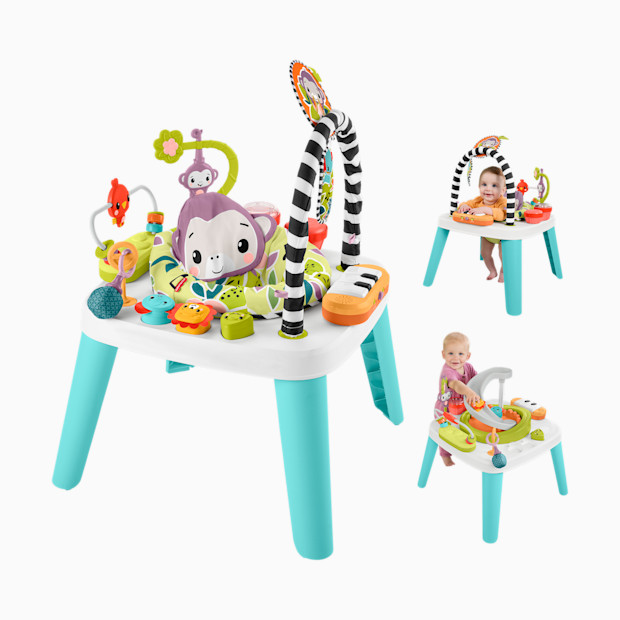
So what can parents use instead? Dr. Klunk suggests safer alternatives that still give babies a chance to play and build strength. "Consider stationary activity centers, basically walkers without wheels, or having them play in their high chair. Play yards/pens are also a good option as it limits their ability to find danger while giving them freedom to work on their sitting, crawling, and walking skills."
What actually helps babies learn to walk on their own? Safe floor time, opportunities to pull up and cruise and lots of practice.
When Baby Shoes Actually Matter (and How to Choose Them)
If you've been eyeing those tiny sneakers or soft leather moccasins, first keep this in mind: your baby doesn't need shoes yet—at least not indoors.
Dr. Klunk is pretty straightforward about this: "The first thing I would say is to just avoid shoes while you still can. Bare feet are easier to balance on, and little ones can use their toes to grip the ground."
Barefoot time helps your baby develop the foot strength, balance and coordination they need for walking. Their toes can spread, grip the floor and give them sensory feedback about the surface beneath them. Shoes (even well-fitting ones) add bulk and reduce that tactile connection, which can actually make learning to walk harder.
"At this age, shoes are for protection, like when they are outside or in a public place where they can't safely be barefoot or in socks, and are more likely to get in the way of walking than they are to help," Dr. Klunk explains.
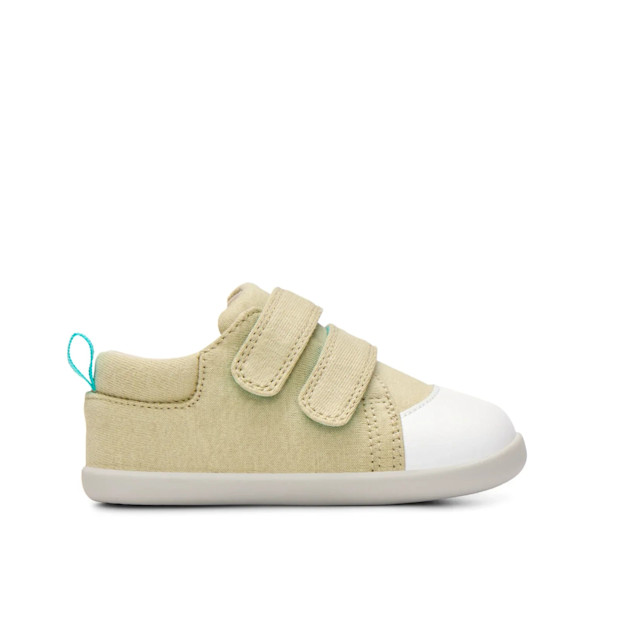
When you do need to buy shoes, we have a list of the best options for growing feet. for things like outdoor exploring, trips to the store or other situations where bare feet aren't ideal, Dr. Klunk recommends something light, flexible and with good traction. "There's also no need to worry about arch support as the arches haven't developed at this point."
Once your baby is ready for their first pair, Dr. Klunk has one more piece of advice: "The AAP recommends checking the fit at least once a month, because they are growing so fast.” He adds that the goal is to have the top of their big toe about a finger-width from the inside front of the shoe.
🛍️ Panic Order
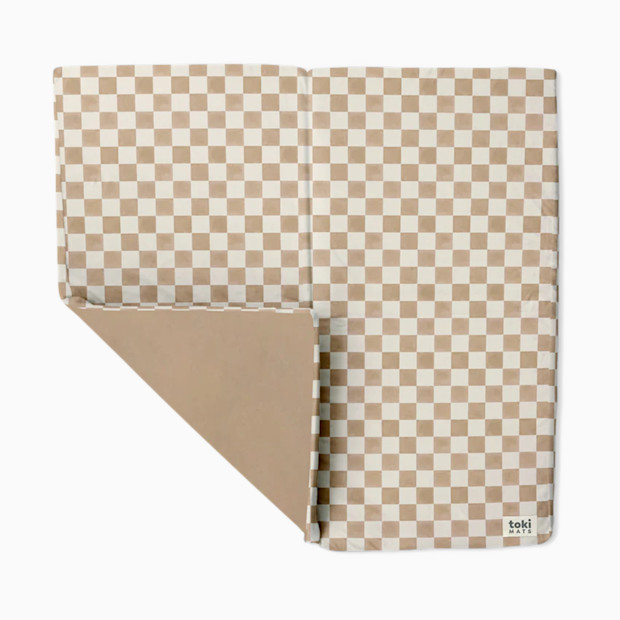
Your baby doesn’t need anything special to learn how to walk. But a padded floor mat and a stationary activity center give them a safe place to play and build strength. When outdoor shoes are necessary, look for lightweight, flexible options that protect without restricting their growing feet.
👀 Looking Ahead
Convertible car seat transition: As your baby grows, you might be wondering when to switch from an infant car seat to a convertible one. Next week, we'll cover the signs your baby is ready, common car seat mistakes to avoid, and why keeping them rear-facing longer is safe.
Expert Sources
Babylist content uses high-quality subject matter experts to provide accurate and reliable information to our users. Sources for this story include:
Dr. Chris Klunk, board-certified neonatologist at Pediatrix Medical Group

;)
;)
;)