
The Best High Chairs of 2026
A great high chair supports your baby at mealtime and makes cleanup a little less painful. These are our favorites.

By
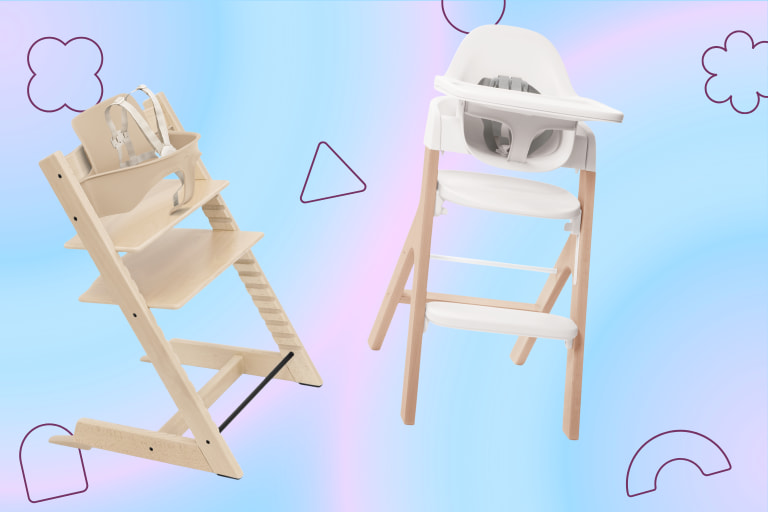
While it can feel like a long way off, starting solids happens sooner than you think, usually when your baby is around six months old. And unlike some baby gear that’s okay to skip, a high chair is a must-have for your little one to sit in when that time comes. After testing dozens of seats, talking with feeding experts and analyzing feedback from thousands of parents, two high chairs earn our best-of status: the Stokke Tripp Trapp and the Mockingbird High Chair. (They’re each so great that we declared a tie.) Both are top-rated for their ergonomic design, durability and ease of use. And they score high on the one thing parents told us matters the most when choosing a high chair—they’re easy to clean.
How We Judged the Best High Chairs
Best High Chair Overall: Stokke Tripp Trapp High Chair
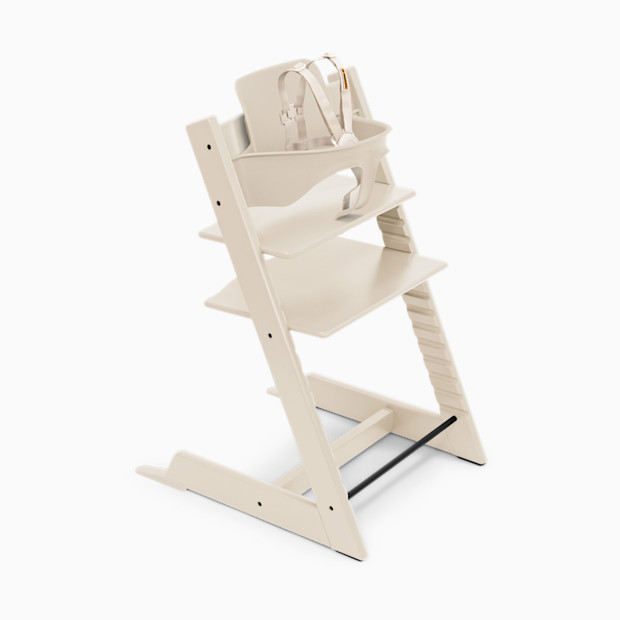
Stokke Tripp Trapp High Chair² - Vanilla White
From $349.00Pros
- Ergonomically designed to position baby safely for eating
- Grows with your child from birth through adulthood (300 lbs)
- Pulls directly up to the table
- Easy to clean
- New + improved harness straps
Cons
- Expensive, especially with add-ons
- Need Allen wrench to adjust
- Doesn’t fold
- Baby Set adds more areas to clean
TL;DR
An ergonomic, highly adjustable high chair that properly supports babies and kids at the table and can be used from birth through adulthood. It’s expensive and requires tools for adjustments, but its thoughtful design, durability and exceptionally long lifespan make it worth the investment.
The Stokke Tripp Trapp is our top overall pick for its ergonomic flat-back design, adjustable footrest and ability to grow with your child from birth to adulthood. I’ve spoken with at least a dozen feeding specialists about high chairs over the years—and heard from hundreds of parents—and the Tripp Trapp is always part of the conversation. Feeding experts love its supportive design and how it pulls directly up to the table, while parents appreciate that it’s easy to clean and looks more like furniture than baby gear.
The Tripp Trapp has a flat back, a depth- and height-adjustable seat and an adjustable footplate—all features the feeding experts I spoke with told me are essential in a good high chair. Both experts we spoke to—Katie Ferraro, MPH, RDN, CDE, dietitian, nutrition professor and mom of seven and speech-language pathologist and feeding specialist Dawn Winkelmann, MS, CCC-SLP—rank it among their top picks. “It needs no modifications,” says Ferraro.
It’s also one of the most versatile and longest-lasting high chairs you can buy. Add the Newborn Set to use the Tripp Trapp from birth, then adjust the seat and footplate as your child grows. Eventually, it converts into an adult chair that supports up to 300 pounds. “My ten-year-old still sits in their Tripp Trapp,” says Ferraro.
I count myself as one of the Tripp Trapp’s biggest fans. I used it daily with both of my children and remain impressed after more than a decade of use. The wood wipes clean in seconds (high chair cleanup ranks as one of my least favorite parenting tasks, so this is saying a lot), with few nooks or crevices to trap food, and the chair pulls directly up to the table. Both of my kids were able to join us at the kitchen table from the first day they started solids.
Babylist parents are fans, too. Fifteen percent of respondents in our annual Most Loved Baby Products survey chose the Tripp Trapp as their favorite high chair, making it the survey’s most popular pick. “I love that it isn’t a big piece of plastic that we will end up throwing out,” one parent told us. “It’s a real piece of furniture for our son!”
Worth noting:
Older versions of the Tripp Trapp had harness straps that were difficult to adjust, remove and clean. Stokke updated the Baby Set in 2024 with an easy-release button, smoother strap adjustments and a harness that’s much easier to remove for cleaning. The Baby Set still creates a few extra areas for food to collect, but cleanup gets much easier once your child no longer needs it.
The Tripp Trapp is expensive on its own, and accessories like the Baby Set, tray and Newborn Set increase the overall cost. The chair holds its value well on baby gear marketplaces, though, and it’s also safe to purchase used if a new one isn’t in your budget.
You’ll need an Allen wrench whenever you adjust the seat or footplate.
For a tool-free alternative, consider the Stokke Nomi. It has a more modern look and doesn’t require tools for assembly or adjustments, while offering similar ergonomic support.
Additional Specs
Weight: 15.4 lbs
Height: 31.1"
Usage: 6 mos up to 300 lbs; from birth with the Newborn Set
Height Adjustments: 3 seat positions, 5 footrest positions
Best High Chair Overall: Mockingbird High Chair
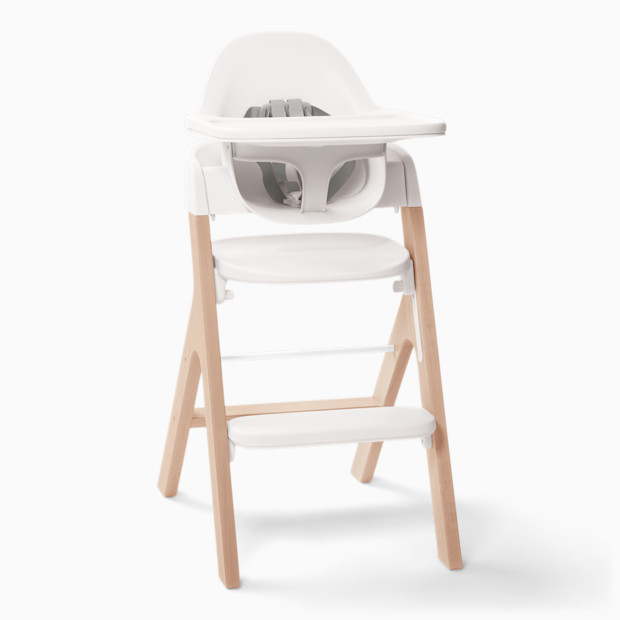
Mockingbird High Chair - Natural
From $249.00Pros
- Ergonomically designed to position baby safely for eating
- No tools needed for assembly or adjustments
- Grows from baby to big kid years
- Easy to clean + straps are easy to adjust
Cons
- Doesn’t fold
- Tray requires 2 hands to remove
TL;DR
An ergonomic, easy-to-clean high chair that requires no tools for assembly or adjustments and converts into a child seat that holds up to 150 pounds. It doesn’t fold, but its thoughtful design, easy-to-use harness and long lifespan make it one of our top overall picks.
The Mockingbird High Chair ties for our top pick because it’s a no-tools, easy-to-clean seat that grows from baby to big-kid years. I wasn’t sure what to expect when this direct-to-consumer brand behind one of my favorite strollers announced a high chair, but I was impressed almost as soon as I took it out of the box. I liked nearly everything about the seat during testing, and it continues to be a high chair I recommend again and again. Babylist parents are on board, too; it's neck-and-neck with the Tripp Trapp for top high chair, with 13% of parents voting it as their top choice in our annual survey.
Ergonomically, the Mockingbird High Chair passes the high chair safety test with flying colors. The adjustable tray and footrest made it easy to position my toddler safely and comfortably for eating. And although the seat itself isn’t adjustable like the Tripp Trapp’s, that doesn’t compromise the Mockingbird’s performance. “It’s the only high chair without an adjustable seat that I recommend because of the way it’s designed—you can make it safe for all ages,” Ferraro told me.
Ease of use is another standout. The Mockingbird doesn’t require tools for assembly or adjustments, something I always appreciate. The harness straps are coated in silicone, so they wipe clean easily and take very little effort to adjust. Ferraro called them “genius,” and I agree—they’re a true pleasure to use and a feature I think every high chair manufacturer should consider. (I was initially worried that the silicone coating would cause the straps to slip off my baby’s shoulders, but that wasn’t the case during testing.)
Mockingbird also recently updated the harness clasp with a magnet, making it extremely easy for adults—but not babies or toddlers—to open and close. And when things get really messy, especially during that first year of solids, you can remove the straps completely and toss them in the washing machine.
The Mockingbird High Chair also converts into a child seat with a 150-pound weight limit. I tested that mode, too, and my son loved being able to climb in and out independently. Between the child-seat conversion and the high weight limit, it’s a chair families can use for years.
Worth noting:
The tray is included, and you can use the Mockingbird with it or pull the chair directly up to the table. I don’t love that the tray requires two hands to attach and remove, though.
The Mockingbird High Chair doesn’t fold. That wasn’t an issue for me, but it may be a drawback if you have a small kitchen or need to store the chair between meals.
The harness buckles took me a little practice to get the hang of, although the updated magnetic clasp makes opening and closing them much easier.
Additional Specs
Weight: 16.5 lbs
Height: 35.5"
Usage: 6 mos up to 150 lbs
Height Adjustments: 3 seat positions, 4 footrest positions
Best Affordable High Chair: IKEA Antilop

Pros
- Costs under $25
- Easy to clean
- Lightweight, easy to move + break down
Cons
- Not supportive for younger babies
- No footrest
- Tray is difficult to remove
- Lower weight limit than many high chairs
TL;DR
A simple, easy-to-clean high chair that costs less than $25 and is lightweight enough to move around or keep at a grandparent’s house. It lacks a footrest and isn’t supportive enough for younger babies without modifications, but it offers impressive functionality for the price.
The IKEA Antilop is our best affordable high chair because it costs less than $25, wipes clean easily and is lightweight enough to move around the house. It isn’t perfect, especially when it comes to ergonomic support, but it’s a surprisingly functional high chair for the price—and an even better one if you’re willing to make a few modifications.
The brilliance of the Antilop lies in its straightforward design. It’s quick and easy to assemble, even easier to wipe down and simple enough to blend into most living spaces. “Our expensive high chair was hard to clean and cumbersome,” one parent commented in our annual survey. “The IKEA high chair ended up being perfect for us. I wish we would have started with that one.”
The Antilop is also lightweight and fairly compact. Some families use it as their primary high chair, while others keep one at a grandparent’s house or anywhere else they regularly need a simple place for their baby to eat. It doesn’t fold, but the legs pop off fairly easily for storage or transport.
Worth noting:
The Antilop doesn’t have a footrest, and the seat may not provide enough support for younger babies. For everyday use, Ferraro recommends adding IKEA’s support cushion to help keep baby’s back flat and a
Yeah Baby Goods footrest so their legs don’t dangle unsupported.
The tray is difficult to remove, so many parents leave it attached. That makes cleanup less convenient and getting baby in and out more time-consuming, which can pose a safety hazard in the event of choking.
The Antilop has a three-point harness (a buckle that only goes around baby's waist) rather than a five-point harness (a buckle that goes around the waist and shoulders), so it may not offer enough upper-body support for younger babies. It also has a lower weight limit than many other high chairs, which shortens its usable lifespan.
Additional Specs
Weight: 7.9 lbs
Height: 35 3/8"
Usage: 6 mos up to 3 yrs or 33 lbs
Height: N/A
Best High Chair for All Stages: Lalo 7-in-1 High Chair
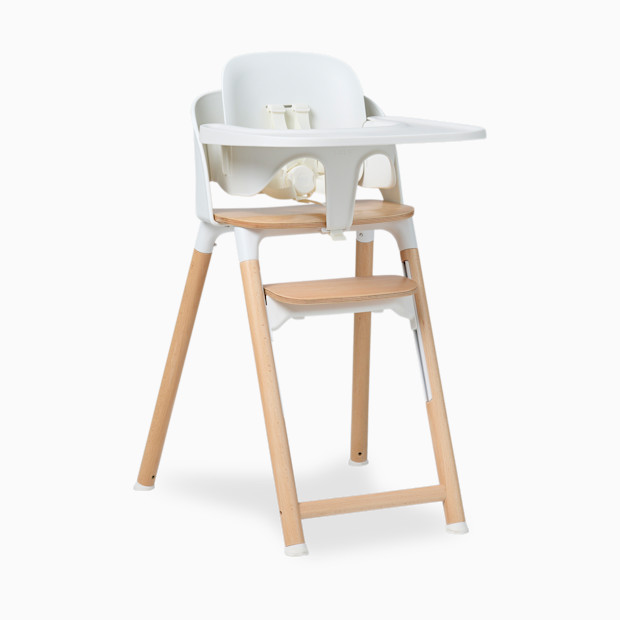
Lalo 7-in-1 High Chair - Coconut
From $249.99Pros
- New and improved design
- 7 configurations for baby through big-kid years
- 3-position backrest + 8-position footrest
- All conversion parts included
- Easy to clean
Cons
- Harness buckles can be annoying
- Slight movement where legs connect
- Grippy feet make child chair difficult to move
- Newborn attachment sold separately
TL;DR
A sleek, easy-to-clean high chair with excellent adjustability and seven configurations that grow with your child. The redesigned version is significantly more supportive and functional than the original—and all conversion parts are now included—but it has a few minor usability quirks.
The redesigned Lalo 7-in-1 High Chair is our pick for the best high chair for all stages. I’ve been testing the new version, also called the Chair II, and it’s a major improvement over the original. Almost every issue I had with the previous chair—from its splayed legs to its limited adjustability—has been addressed.
Right out of the box, the Lalo includes everything you need to adapt the seat from a high chair to a big-kid seat and all that comes in between—with no tools required. It converts from a high chair into a booster, elevated child chair, play chair and play stool. The play chair supports up to 250 pounds, so this is a seat your family can continue using well beyond the baby years. (If you want to use the chair from day one, that's an option too; you just need to add the Rocker, which you can purchase separately or as a bundle with the high chair. You can also use the Rocker on its own as a safe place for your baby to chill.)
Child fit is also significantly better than with the original Lalo. The footrest now adjusts to eight heights with a quick squeeze of two buttons, and it moves high enough to support even a smaller child’s feet. The backrest has three positions, so you can move it forward to reduce the gap between baby and the tray, then adjust it as your child grows. Together, the adjustable backrest and footrest make it much easier to achieve the supportive 90-90-90 position feeding experts recommend. And it's good for older kids, too; I tested the child-chair mode with my very tall five-year-old, and he was comfortable and loved using it.
The new leg design is another huge upgrade. The original Lalo’s wide, splayed legs took up a lot of room and were easy to trip over; they were probably my least favorite thing about the chair. The redesigned legs give the new Lalo a much more compact footprint while maintaining the sleek, modern look that made the original so popular.
The redesigned Lalo also remains exceptionally easy to clean, one of my favorite things about the original. The seat and tray wipe down quickly, the tray is top-rack dishwasher safe and it now removes easily with one hand. And the five-point harness has wipe-clean silicone straps and a magnetic buckle, a huge improvement.
Worth noting:
The redesigned Lalo is more expensive than the original, but since all high chair conversion parts are now included rather than sold separately, the new pricing makes sense.
The non-slip pads on the bottom of the legs provide excellent grip in high-chair mode. In child-chair mode, however, they make it extremely difficult for an older child to push the chair in or out from the table independently.
Assembly was straightforward, but it required a little more effort than I expected—I definitely worked up a sweat getting everything together.
There’s a small amount of movement where the legs connect to the chair. It was noticeable during testing, but the chair itself didn’t feel unstable.
Additional Specs
Weight: 14 lbs
Height: 33.6"
Usage: About 4-6 mos (once baby can sit up unaided); max weight 30 lbs as a high chair, 50 lbs as a booster, 250 lbs as a play chair
Height Adjustments: 3 seat positions, 8 footrest positions
Other High Chairs Worth a 👀
Best Folding High Chair: Maxi-Cosi Minla 6-in-1 High Chair

The Maxi-Cosi Minla is our best foldable high chair because it combines full-size versatility with a compact fold for storage. It’s a great solution if you don’t have room to keep a high chair out all the time—you can quickly fold it and stash it beside a counter or in a closet. It also converts into a booster that pulls up to the table. The tradeoffs: the highest footrest position is still too low to fully support some younger babies’ feet, though it’s better than most foldable options, and cleanup takes some effort. The fabric cushion spot-cleans well, but you’ll need to unzip and machine wash it for a deeper clean.
Another Space-Saving Option: Chicco Zest LE 4-in-1 Folding High Chair
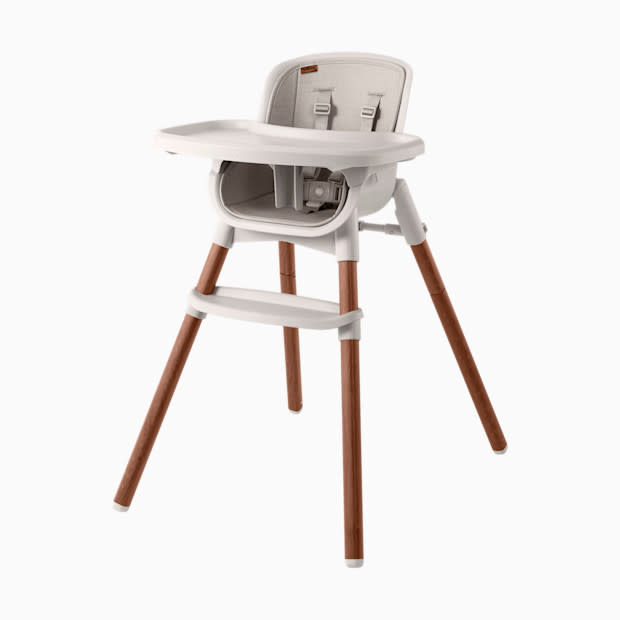
Another space-saving option to consider: Chicco's Zest LE. It's simple, stylish and space-saving thanks to the compact fold. It's also extremely budget-friendly. Keep in mind that it's not a great fit for younger, smaller babies (the seat is too large and the footrest is too low), but the leg holes are often too small for larger babies. Parents also complain that the fabric seat liner is hard to clean.
Best High Chair for Travel: Lalo High Chair
The Lalo Hook-On High Chair is our best high chair for travel because it weighs just over five pounds, folds compactly and includes a carry bag. It clamps to most tables and countertops, making it useful for restaurants, trips or homes without room for a full-size high chair. Its standout feature is the built-in adjustable footrest, a rarity among hook-on seats that helps keep little ones supported and properly positioned for eating. (Just note that some smaller babies may not always reach it at first.) Worth noting: the seat cover is removable and machine washable, but the fabric gets dirty easily and can be frustrating to spot clean between washes. Parents like how easily the silicone mat wipes clean, but it doesn’t sit flush against the seat, leaving a small gap that’s perfect for mashed-in food.
One to Watch: Graco Close2Baby High Chair
Graco Close2Baby High Chair - Rue, Close2Baby 3-In-1 Highchair With Newborn Secure Seat
From $299.99The new Graco Close2Baby is a high chair to watch because it addresses two of the biggest drawbacks I’ve found with many Graco seats: difficult cleanup and a less-supportive fit for smaller new eaters. An adjustable backrest and footrest help support proper 90-90-90 positioning, while the streamlined seat skips many of the food-trapping crevices Graco high chairs are known for. It also features wipe-clean silicone harness straps—a first for a Graco high chair. Add the optional newborn attachment to use the chair from birth; later, it converts into a child seat that supports up to 60 pounds. I haven’t tested the Close2Baby yet, but I’m excited to see how it performs and will update this guide once I’ve spent time with it.
Why Trust Babylist?
Babylist is the expert in baby; we know baby gear inside and out. We talk with parents face-to-face in our showroom and on our user panels and hear from thousands annually via our Best Baby Products online survey. We know what items millions of expecting parents are adding to their baby registries.
Firsthand professional and personal experience. I’ve been feeding kids for over a decade as the mom-chef-in-residence for my two boys, ages 10 and three. I’ve used classic wooden high chairs, modern options, travel seats and boosters; I’ve done baby-led weaning and served up purees; and I’ve wiped more food off of the floor than I care to think about. I’ve also tested dozens of high chairs over the years in my role as Babylist’s gear editor. All of this kid-feeding experience helped me choose the seats on this best-of list.
Expert input. I enlisted the help of two feeding experts for this guide: Katie Ferraro, MPH, RDN, CDE, a dietitian, nutrition professor and mom of seven who specializes in infant feeding, and speech-language pathologist and feeding specialist Dawn Winkelmann, MS, CCC-SLP, who is also ezpz’s Pediatric Feeding and Swallowing Specialist.
High chair data. I regularly analyze which baby products our users are adding to their baby registries the most (and which ones they aren’t) and what our team of Merchandising experts—our buyers who are responsible for ensuring the Babylist Shop is stocked with the best and newest gear—is excited about. Studying this kind of data helped us choose which high chairs to narrow in on and which ones to recommend to new and expecting parents.
Feedback and reviews. I reviewed comments and feedback from Babylist’s annual product survey of thousands of parents, read customer reviews from hundreds of Babylist users and spoke to parents on our staff about their real-life feeding experiences.
When can a baby sit in a high chair?
Babies can often begin short, supervised practice sessions in a high chair around four months old, as long as the chair is approved for their age and they have enough head, neck and trunk control to remain upright with support. Most babies should not use a high chair for eating solids until they’re developmentally ready, typically around six months.
That distinction matters. “Don’t have the first time the baby sits in the high chair be the day you decide to start solid foods,” says Ferraro. Sitting in the chair for a few minutes before meals begin can help your baby get comfortable in the seat and build high-chair stamina without introducing food early.
“I encourage parents to practice sitting their baby in a high chair for five minutes a day starting around four months of age,” adds Winkelmann. These brief sessions can help babies practice head and core control so they’re more comfortable and supported when they begin solids. Always use the harness, supervise your baby and follow the high chair manufacturer’s age and developmental guidelines.
Three signs of high chair readiness
A baby is ready to sit in a high chair for solid-food meals when they show all three of these developmental signs:
Age: Baby is at least four months old.
Head and neck control: Baby can keep their head and neck stable and upright without support.
Sitting Ability: Baby can sit with minimal support.
Proper high chair positioning
Proper high chair positioning means your baby is sitting upright with a flat back, their hips, knees and ankles bent at about 90 degrees and their arms supported. This stable posture supports safer swallowing and can help reduce choking risk.
Keep baby’s back flat. Ferraro says your baby’s back is one of the most important things to consider. “We want the back flat,” she explains. “If the back is flat and the baby is sitting on their own, then their airway is straight.”
Aim for 90-90-90 positioning. Also called a “three by 90” setup, this means your baby’s hips, knees and ankles are each bent at approximately 90 degrees. “A high chair should support a baby sitting with their hips, knees and ankles all bent at 90 degrees,” says Winkelmann. An adjustable footrest helps support this position, while a seat that’s too deep or has a large center post can prevent baby’s knees from bending naturally over the seat’s edge.
Support baby’s arms. Your baby’s arms should rest comfortably on the high chair tray or, if the tray is removed, on the dining table, says Winkelmann.
If the high chair alone doesn’t provide the right fit, small modifications can help. Winkelmann recommends using a rolled towel for a little extra comfort and support. If your baby needs multiple towels or pillows to remain properly positioned, however, they may need more time to build their high chair stamina before starting solids.
What are the different types of high chairs?
The three main types of high chairs are full-size high chairs, portable high chairs and booster seats. The right type depends on your baby’s age and support needs, your available space and whether you plan to use the seat primarily at home or on the go.
Full-size high chairs are standalone seats designed for everyday use at home. They’re typically made from wood, plastic or a combination of materials and usually have a larger footprint than portable options. Features may include an adjustable seat, tray and footrest; wheels; a harness; infant attachments; or a fold for storage.
Portable high chairs, also called travel or hook-on high chairs, are lighter and more compact than full-size seats. Hook-on models clamp to a compatible table or countertop, while chair-mounted models strap to a dining chair. Some portable high chairs also have pop-out legs for quick setup. They’re useful for travel, restaurants, small spaces or everyday use at home.
Booster seats attach to a dining chair and raise an older baby or toddler to table height. They’re best for children who can sit upright consistently and need less support. Some boosters include a removable tray, while others are designed to pull directly up to the table.
How do I choose the best high chair?
The best high chair fits your baby safely, supports an upright eating position and works with your space and lifestyle. Prioritize proper positioning, a secure restraint system, stability and easy access to your baby, then consider cleaning, portability and how long you want to use the chair.
High chair features
“It is not the baby’s job to grow into their high chair; it is our job to select a high chair that fits the baby’s safety needs,” explains Winkelmann. Here are the features to look for:
A seat with a straight, flat back. “You want a chair that keeps baby seated upright with no recline whatsoever, as this is important for reducing choking risk,” explains Winkelmann.
An adjustable footrest. “An adjustable footrest is essential so that baby can put their feet flat on it. Flat feet on a stable footrest allow your baby to swallow more easily and help maintain their posture to cough food out if it goes down the wrong way,” she says.
An easy-to-remove tray. Look for a tray that an adult can remove quickly and easily. This gives you faster access to your baby if they need help during a meal.
A secure restraint system. Choose a high chair with a three- or five-point harness and buckles your child can’t open. Always use the harness—the tray is not designed to restrain your baby.
A stable base. The chair should feel sturdy and resist tipping. If it has wheels, make sure they lock securely.
And while not a must-have, both Winkelmann and Ferraro prefer high chairs that pull up to the dining table so baby can join in on family mealtime. “If you have a regular height table and you want your baby to participate in mealtime, that’s tough if they’re sitting across the room with the tray on their high chair,” says Ferraro.
What else to consider
Beyond positioning and safety, consider how the high chair will fit into your everyday life.
Space. If you live in an apartment or have a small dining area, consider a high chair designed for small spaces, like a clip-on or booster-style seat, or a foldable option. If you have a larger table or live in a home with multiple eating areas, a standalone seat that includes a tray may be your best bet.
Lifestyle. If you’re a family who’s often on the go or who eats out regularly, consider adding a portable high chair to your registry in addition to one that stays only at home.
Cleaning. Solids are messy. Some parents don’t mind sacrificing form for function and prioritize aesthetics when choosing a high chair. But be realistic with yourself—if you know constant scrubbing will drive you nuts, stick with a smooth plastic or wipeable wood model.
Durability. If you plan to use the chair for multiple children, a well-made wooden or durable plastic seat may be worth the investment. Check weight limits and conversion options, too; some high chairs become booster seats, child chairs or even adult chairs.
Safety. Always choose a high chair that meets current federal safety requirements. Check for recalls and be sure to follow the manufacturer's age, weight and use guidelines.
