
The Best Gear for Baby-Led Weaning
Choosing the right gear for baby-led weaning can make starting solids a little easier—and a little less messy.

By
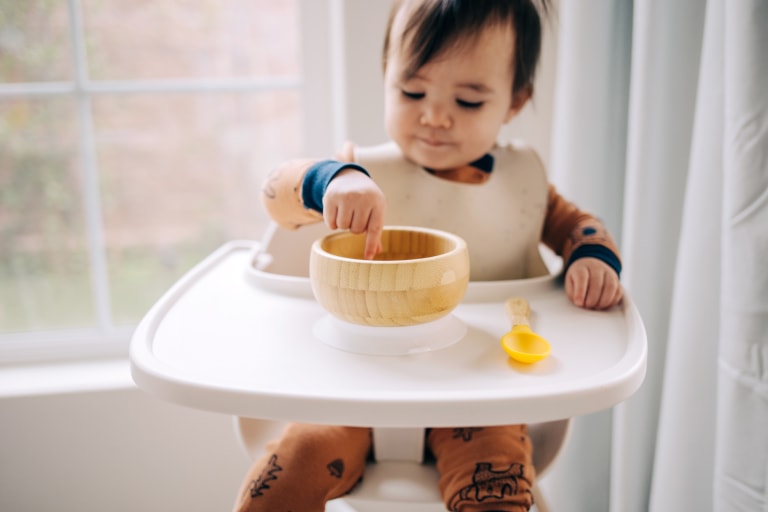
Baby-led weaning is a method of introducing solids to your baby that bypasses traditional purees and spoon-feeding. With baby-led weaning (aka BLW), you give baby whole foods prepared in a way that’s developmentally appropriate. For example, you can give your baby food like steamed broccoli florets and spears of ripe avocado without blending or mashing them up.
The theory is that this encourages babies to explore their food and learn how to feed themselves. And since the goal is to have baby feed themselves, the gear you’ll need differs slightly from what you’d need if you introduced solids the more traditional way. (We also have a super helpful baby-led weaning article that digs into the what, why and how to help you do it!) If you’re diving into baby-led weaning, you’re in for a fun—and very messy—ride.
We spoke with Katie Ferraro, a dietitian specializing in baby-led weaning and host of the Baby-Led Weaning Made Easy podcast, to find out the best products to help parents make baby-led weaning a success.
High Chairs for Baby-Led Weaning
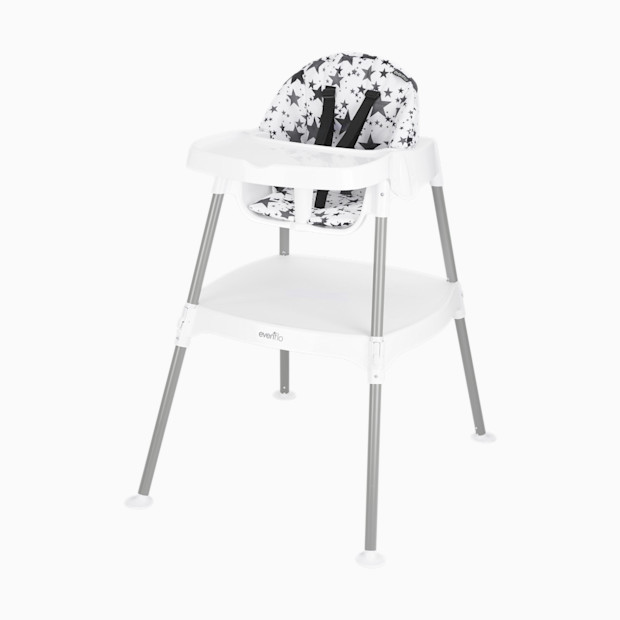
A high chair is one of the most important items you can invest in for baby-led weaning. The right chair ensures your little one is in the correct position for safe swallowing—a must not just for baby-led weaning but for introducing any type of solids to your baby.
The main things to look for are support for baby’s back and feet. When positioning your baby in their high chair, keep the phrase “three by 90” in mind. “We want baby’s positioning to reflect the 'three by 90' seating: 90 degrees at the waist, 90 degrees at the knees, 90 degrees at the ankles,” explains Ferraro.
“Steer clear of reclining chair seats and never feed a baby in a reclining position such as the car seat or stroller as this increases the risk of choking,” says Ferraro. Your baby’s feet should always be on a stable surface (like a footrest) while eating. “Having your baby’s feet resting flat on a solid surface is key to facilitating a safe swallow,” says Ferraro. The high chair you choose should come either with an adjustable footrest or be able to be modified to have one. Here are a few of our favorite high chairs that fit the bill.
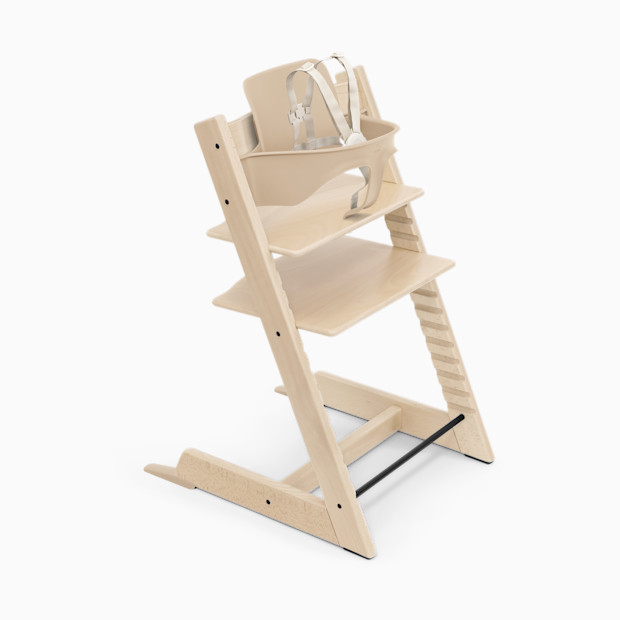
Stokke
Tripp Trapp High Chair²
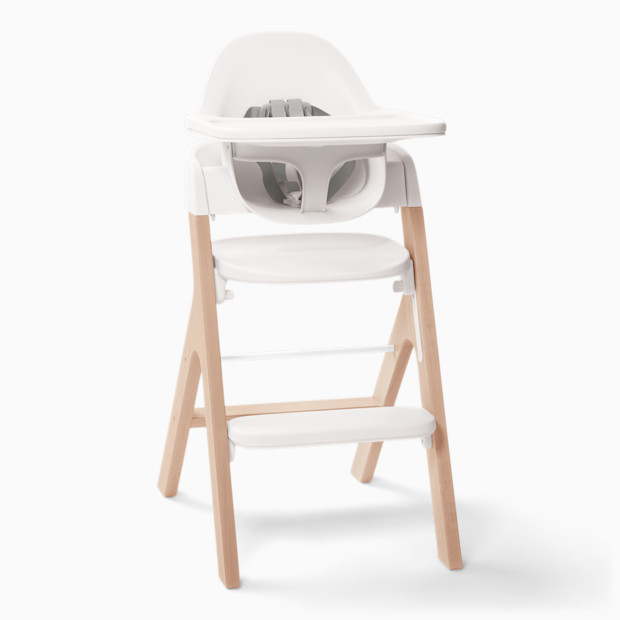
Mockingbird
High Chair
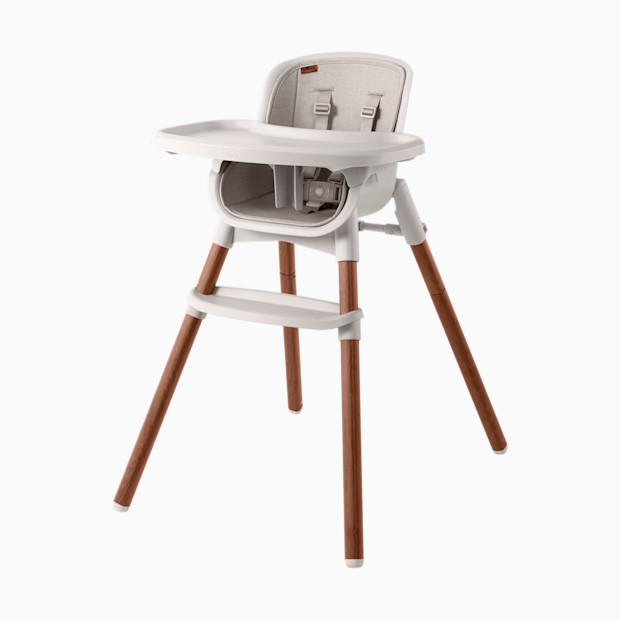
Chicco
Zest LE 4-in-1 Folding High Chair
Evenflo
4-in-1 Eat & Grow Convertible High Chair

Ingenuity
Proper Positioner 7-in-1 Deluxe Baby to Toddler High Chair
Portable High Chairs for Baby-Led Weaning
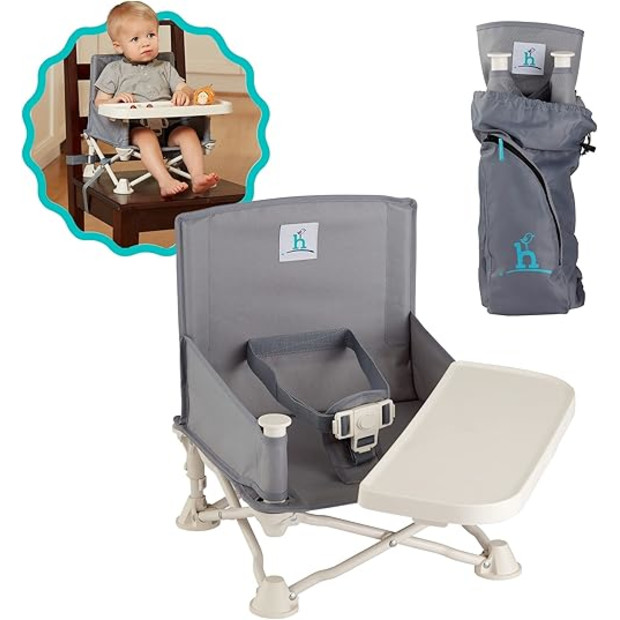
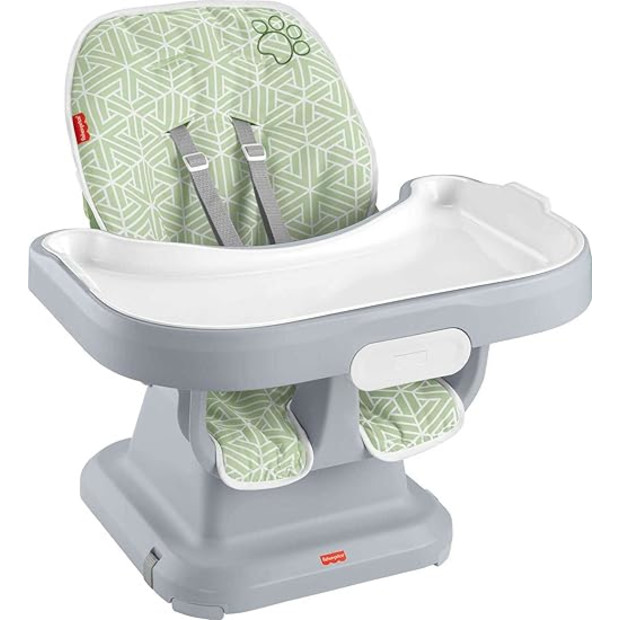
Portable high chairs are also an option for baby-led weaning and come in handy for visits to grandparents’ house, traveling or dining on the go; just be sure they provide as close to the same amount of support as a traditional high chair as possible. You might need to make some modifications to support their back and feet. For example, if your little one is leaning in their seat (which can sometimes happen with younger or smaller babies), consider adding support like a rolled-up towel or swaddle blanket at their back or on either side of them.


Bibs for Baby-Led Weaning
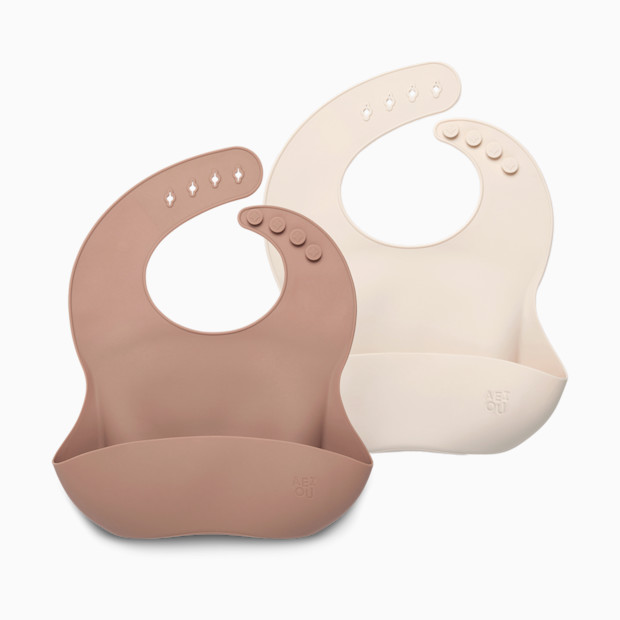
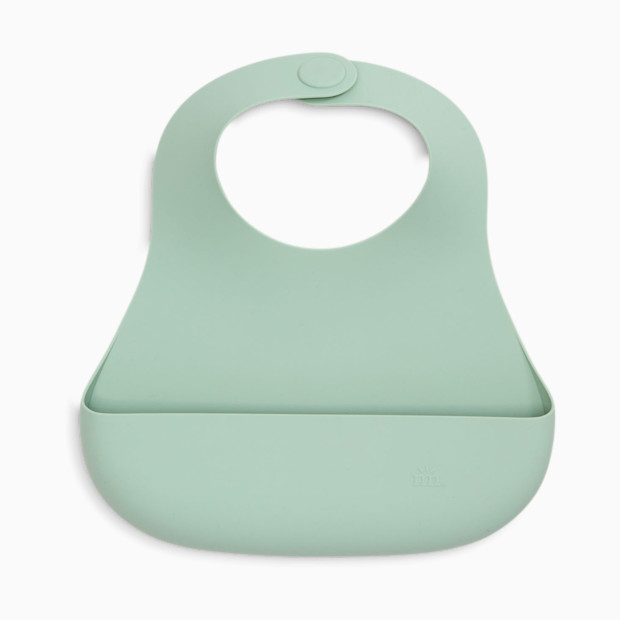
Bibs are an essential for baby-led weaning. Look for ones that are made from silicone or another waterproof, wipeable material that doesn’t have to be tossed in the wash after every use. A front pocket to catch dropped food (of which there will be a lot) is also helpful, as long as it’s not too bulky and doesn’t weigh down the bib. Bapron bibs are Ferraro’s top choice for a baby-led weaning-friendly bib, because they’re easy to clean, tie under the shoulder blade (which makes them sensory-friendly) and allows baby’s arms full range of motion while eating. Here are a few more "food catcher" options:
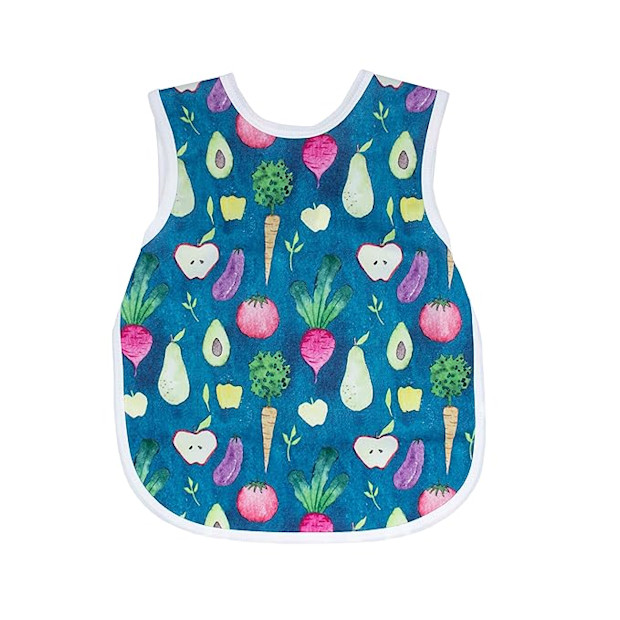
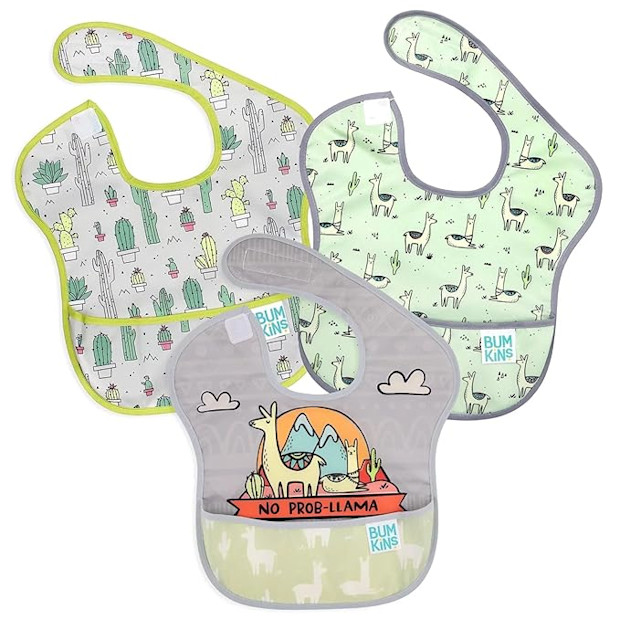
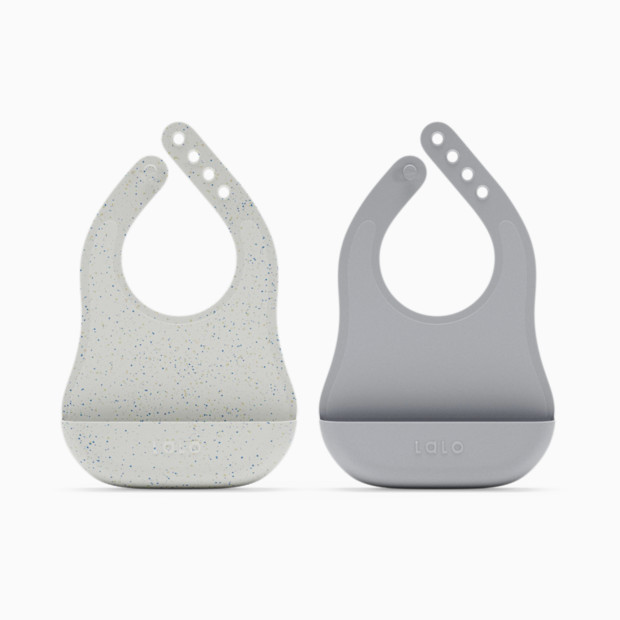
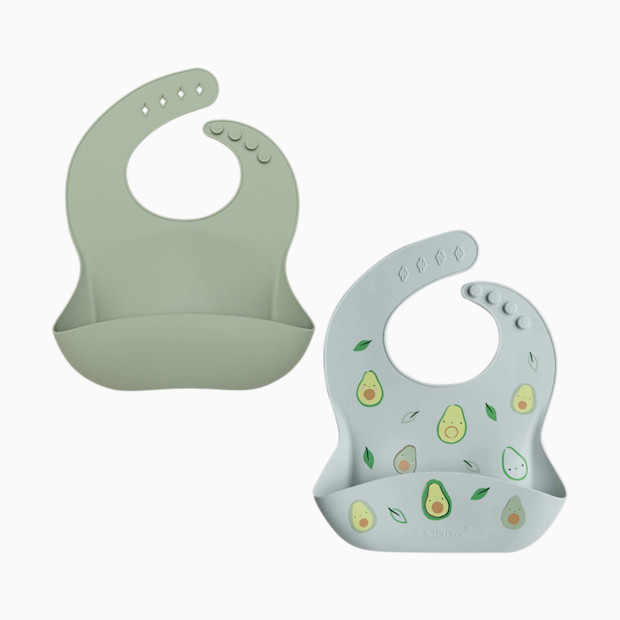
Tableware, Cups and Utensils for Baby-Led Weaning
In the beginning of baby-led weaning, it’s totally normal—and even encouraged—for babies to use their hands to explore their food and feed themselves. But since the goal of baby-led weaning is self-feeding, the tableware and utensils you choose should be designed with little hands in mind. They can start getting familiar with utensils around six to nine months, especially if they’re showing interest (i.e. reaching and grabbing for them). Keep in mind this can vary, since all babies' development is unique. In general, most likely won’t have the fine motor skills and hand eye coordination mastered to use them until a bit later, around 10+ months.
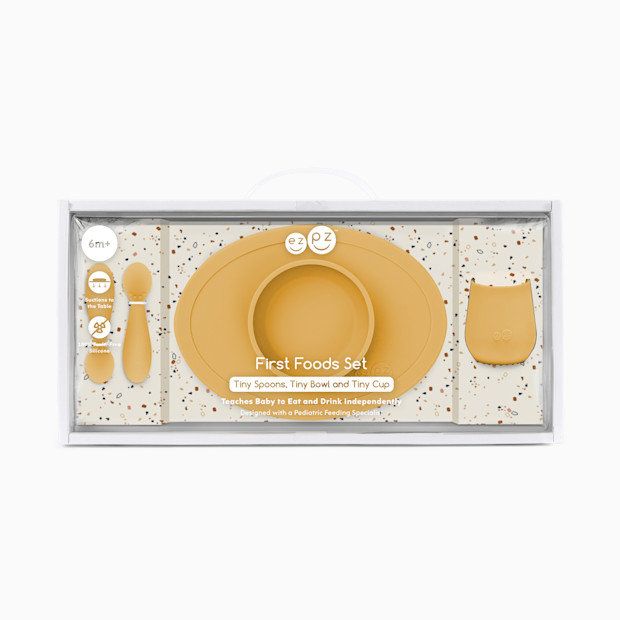
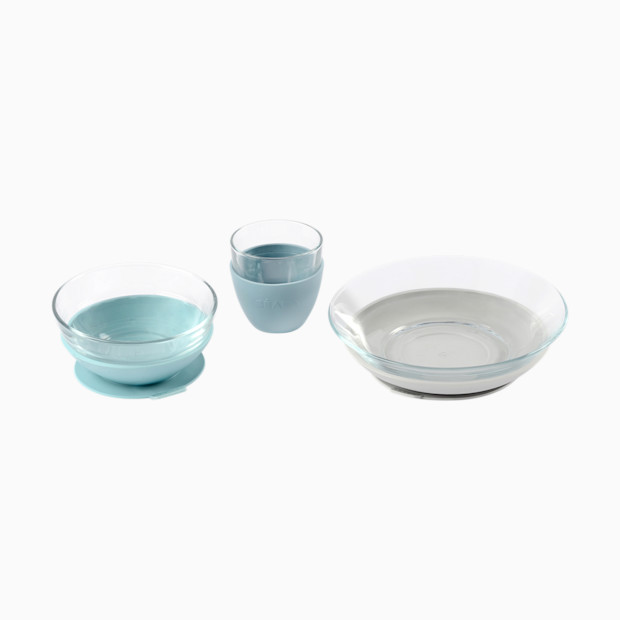
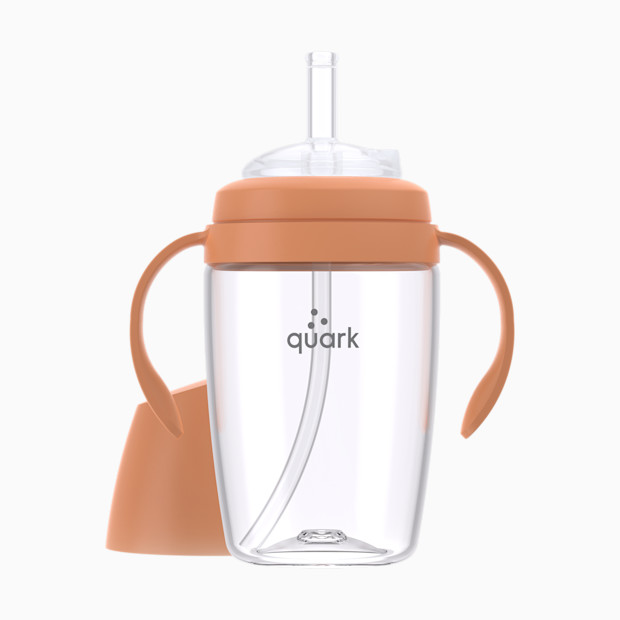
When shopping for utensils, look for spoons and forks that are easy for little hands to grab and hold, bowls and plates with suction bottoms to help them stay in place and slightly curved lips to help your baby scoop food independently and small cups that are the appropriate size for small hands and mouths. Ferraro is a huge fan of EZPZ’s tableware, cups and utensils. “All of their products are created by their feeding expert with developmentally appropriate design considerations,” she explains.
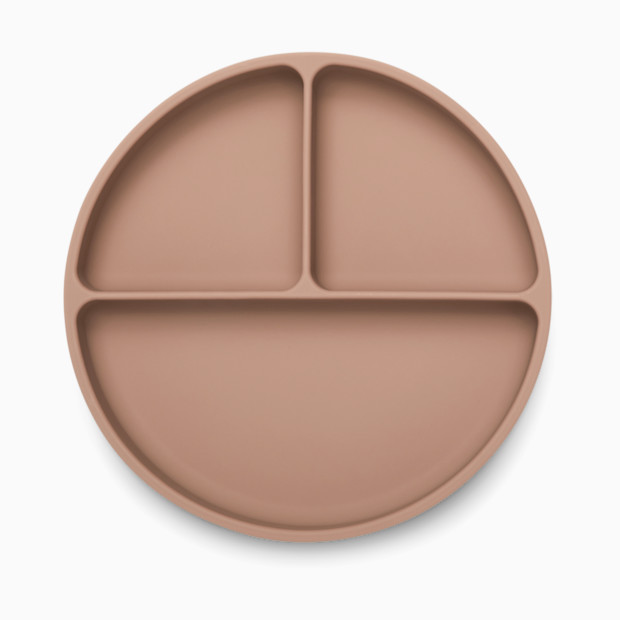
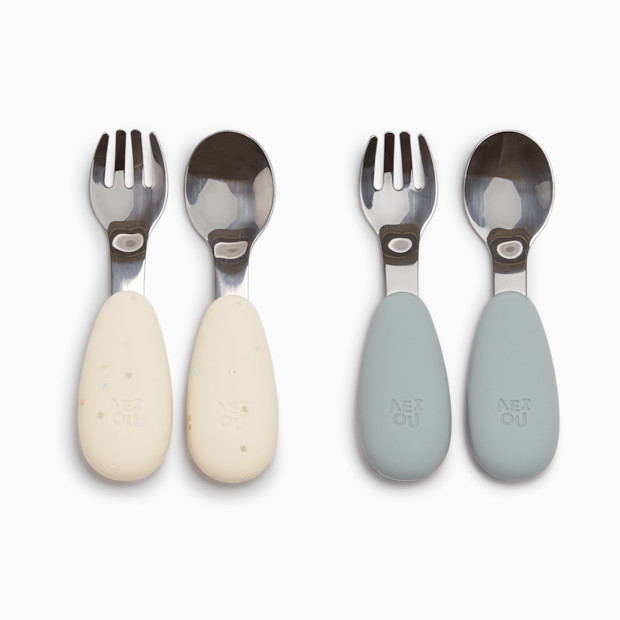
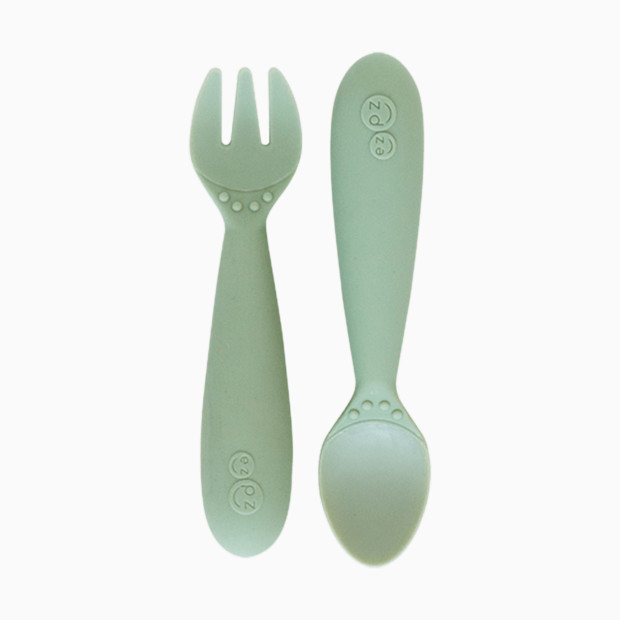
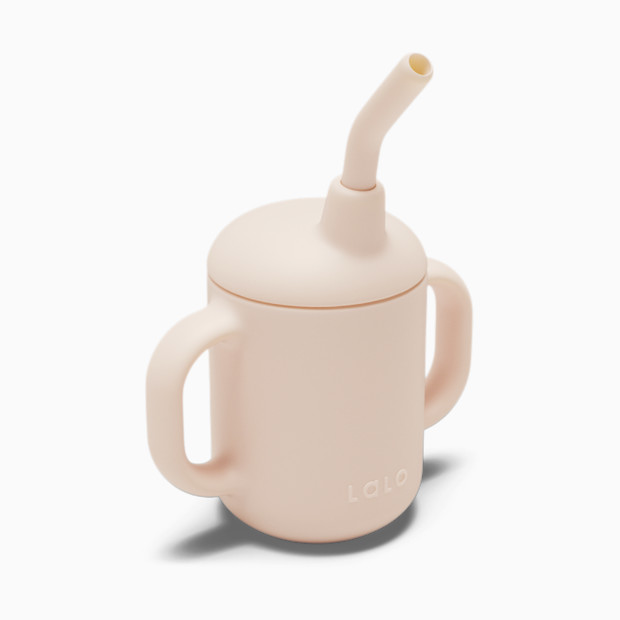
;)
;)
;)
;)
;)
;)
;)
;)
 - Clay/Oat Milk","url":"https://www.babylist.com/gp/aeiou-bib-2-pack/25950/1225057","source":"hello_baby"});)
;)
;)
;)
;)
;)
","url":"https://mushie.com/products/first-feeding-baby-spoons-2-pack?variant=45216368820466","source":"hello_baby"});)
;)
;)
;)
 - Sage/Oat Speckle","url":"https://www.babylist.com/gp/aeiou-stainless-steel-utensils-4-pack/44322/1677189","source":"hello_baby"});)
;)
;)
;)
Expert Sources
Babylist content uses high-quality subject matter experts to provide accurate and reliable information to our users. Sources for this story include:
-
Katie Ferraro, MPH, RDN, CDE, a dietitian specializing in baby-led weaning and a college nutrition professor. She’s also the host of the Baby-Led Weaning Made Easy podcast.