
Can Your Baby Sleep Smarter? These Smart Cribs May Help Them Snooze
Smart cribs and bassinets may help some babies sleep better and longer—see our favorite picks.

By
As Babylist’s senior gear editor, I’ve tested hundreds of baby products over the years, from simple must-haves to the newest tech-forward gear. But I’m also a mom of two kids, seven years apart, so I’ve seen firsthand just how much baby tech has evolved. What existed when my first was born looked very different by the time my second came along.
Smart cribs hit the market right around the time I welcomed my second son, and I tested a few out during those early months. These tech-enabled bassinets bring features like movement, cry detection and sleep analytics into the nursery. They’re one of the most asked-about products I hear about from expecting parents, and probably one of the most debated. The price tags are high, the marketing promises a lot and there’s no way to know in advance whether your baby will actually take to one.
My take is they’re not magic, and they’re not for everyone. But for the right family, they can genuinely make those early, exhausted months much more manageable.
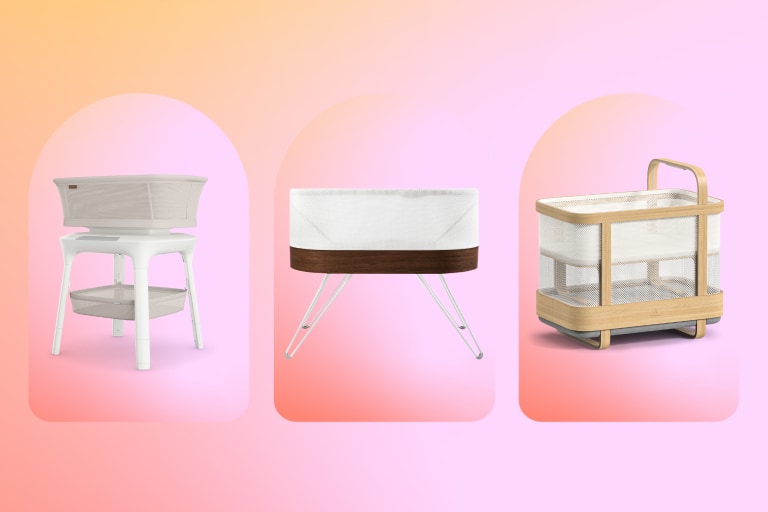
To find the best options, I combined hands-on testing with insights from pediatric sleep experts and feedback from thousands of parents, including results from our annual Most Loved Baby Products survey. From there, I narrowed it down to three standout picks (plus one new smart crib I’m keeping an eye on), with the Happiest Baby SNOO Smart Sleeper Bassinet earning the top spot. Whether you’re deciding if a smart crib belongs on your registry or just want to understand how they differ, here’s what to know.
How We Judged
Best Smart Crib Overall
Pros
- Automatically responds to cries with motion and sound
- Developed by a pediatrician
- Rental option available
Cons
- Expensive
- Some babies resist the swaddle or become motion-dependent
- Built-in swaddle can limit movement and development if used too long
TL;DR
SNOO is the original smart bassinet and still the one to beat. It automatically responds to your baby’s cries with graduated motion and white noise, and for the right baby can be a game-changer, but it’s expensive, has a short usage window and won’t work for every baby.
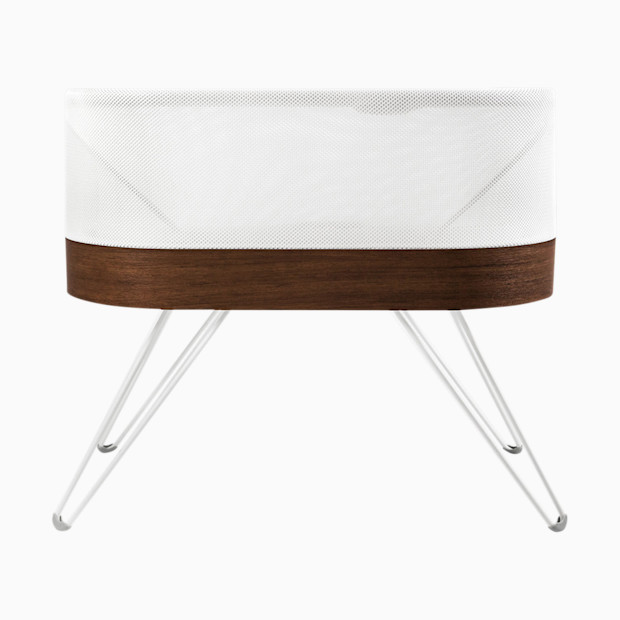
SNOO is far and away the product I get asked about the most as a baby gear expert. “Is it worth it?” “Should I register for it?” My answer is always the same: it depends. But if you’re set on a smart crib, it’s the gold standard.
SNOO was designed by Dr. Harvey Karp, a pediatrician, author and the baby sleep whisperer behind The Happiest Baby on the Block. It works by automatically responding to your baby’s crying with a combination of motion and white noise. The rocking and shushing move through increasing intensity levels depending on what your baby needs, then settle back to a gentle baseline once they’ve calmed down. There’s also a built-in swaddle to keep your baby safely on their back. The app gives you control over custom settings and detailed sleep data.
Opinions on SNOO are genuinely mixed, not because of its functionality (tech-wise, it’s the best smart crib on the market), but because it’s “magic” is pretty baby-dependent. Many parents absolutely swear by it. “The Snoo was a game changer,” one mom told us. “It’s the absolute best,” said another. “We were able to get much-needed sleep, and our newborn loved the motion and comfort it provided. We also loved the safety aspects.”
Others, however, aren’t as impressed. “It’s so expensive and just didn’t work for us,” one parent commented in our annual survey. “Our baby hated it so much. He hated to be swaddled, and that’s the only way you can use it…and when he would cry, the Snoo would speed up, and it would scare him.”
Some pediatricians and occupational therapists flag that the built-in swaddle can limit movement and potentially interfere with development if used too long. And Brittany Sheehan, a pediatric sleep consultant and founder of Brittany Sheehan Sleep, has concerns about motion dependency. “It trains babies to require motion and is often hard for them to be weaned from. In many cases, I come across four and five-month-olds who are still swaddled and much too big for the Snoo, not learning to roll or fall asleep independently, and the parents are terrified to make the transition.”
All that to say: SNOO is still my top pick in this category because it’s the best at what it does and, when used as directed, it’s genuinely effective for a lot of families. Like so many baby products, I tell expecting parents that whether they should register for it often comes down to personal preference.
Worth noting:
-
If SNOO isn’t in your budget or you’re hesitant to commit, there are two great alternatives: you can purchase a Certified Pre-Loved SNOO that has undergone a refresh and reconditioning process for about 25% off, or rent a SNOO for $159 per month (one-month minimum rental commitment), which works out to around five dollars a day.
-
The built-in SNOO Sack is required for use, which means babies who hate swaddling may not tolerate it.
-
Some pediatric occupational therapists recommend limiting use or skipping it altogether due to restricted arm movement; discuss with your pediatrician if you have concerns.
-
Usage window is short: newborn through about six months, or until baby can roll consistently.
Additional Specs
-
What’s Included: SNOO Smart Sleeper, 3 organic cotton sacks (S, M, L), organic cotton sheet, mattress and water-resistant cover, 9-month Happiest Baby App subscription
-
Dimensions: 35.75” L x 19” W
-
Child Guidelines: For babies 0-6 mos old who cannot roll over consistently
Best Smart Crib if You're Motion Curious
UPPAbaby Soma Smart Bassinet - Charlie
From $599.99Pros
- No cry detection or auto-response (pro for some families, con for others)
- Better value than most smart cribs
- 5 unique human-inspired motions
- Control manually or via app
- Modern, neutral aesthetic
Cons
- No cry detection or auto-response
- Large footprint
TL;DR
Think of the Soma as SNOO-lite, bringing motion and smart controls without auto-response. It’s a solid pick if you want some tech without committing to the full smart bassinet experience.
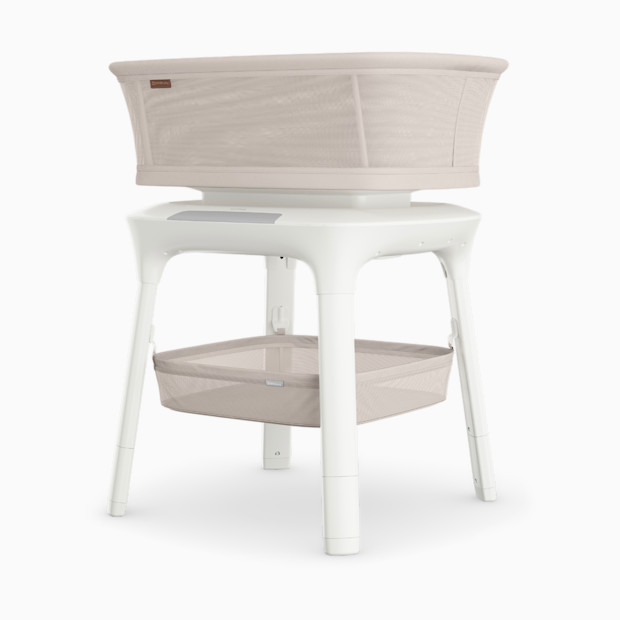
If you’re curious about incorporating motion into your newborn’s sleep routine but aren’t completely sold, the Soma Smart Bassinet from UPPAbaby is an excellent choice. Think of it like a SNOO “lite”: it offers motion options + sleep sounds, but skips cry detection and auto-response, so you’ll need to toggle through the different settings to see what works. (You can do that manually on the bassinet’s touchscreen, or via the connected app.) But the movements are gentler, the bassinet itself is a bit more portable and it shares SNOO’s modern, neutral aesthetic. It’s also less than half the cost.
Like the brand's Mamaroo Smart Swing, the Soma was designed to imitate human movements. It offers five parent-inspired motion options: cruise, bounce, sway, rock and wave. Unlike some smart bassinets that feature only one type of motion (front-to-back or side-to-side), the Soma also moves in a circular motion, which many babies like. And there’s a unique motion feature called MotionSync, which lets you record your motion with your phone then suggests a motion setting and speed for the bassinet that mimics your natural movements. Add in four sleep sounds, five adjustable speeds, two height settings and a breathable mattress, and it’s a pretty well-rounded bassinet—just not an autonomous one.
I used a previous version of the Soma with my second son and the lack of auto-response features was exactly what drew me to it. I loved the straightforward functionality and the ability to use motion when I wanted to—and to skip it when I didn’t.
Worth noting:
-
No cry detection means you’ll need to actively toggle settings when your baby wakes, as the bassinet won’t respond on its own.
-
The footprint is larger than many traditional bassinets; measure your space before ordering.
-
Some parents complain that the built-in white noise and other sound functions aren’t high quality and are too loud.
Additional Specs
-
What’s Included: Bassinet, AC adapter, mattress with cover, storage basket
-
Dimensions: 24.5”L x 33.8”W x 37”H
-
Child Guidelines: Birth to 25 lbs or until baby pushes up on hands and knees, whichever comes first
Keeping an Eye On 👀
The Sabine is a newer entry into the smart bassinet space, so we haven’t had a chance to test it yet, but it’s one I’m watching. It sits at a more approachable price point (similar to the Soma), but adds in a feature you won’t find there: automatic cry detection with responsive motion. That combination alone makes it intriguing for parents who want a bit more hands-off support without committing to the higher price tag of something like the SNOO. It also checks a few other boxes I like, including a clean, neutral aesthetic that fits seamlessly into most spaces and a straightforward feature set that doesn’t feel overly complicated.
Best One-and-Done Smart Crib
Cradlewise All-In-One Bassinet, Smart Crib, Baby Monitor
From $1,799.00Pros
- Bassinet, crib and monitor all in one
- Usable until 2 years old
- Learns your baby’s sleep patterns and auto-responds; tracks sleep analytics
Cons
- Expensive
- App can be glitchy + drains your phone battery
- Large, heavy
TL;DR
Cradlewise packs a bassinet, crib, baby monitor and sleep tracker into one product, and unlike most smart bassinets, it grows with your baby through toddlerhood. It’s a great all-in pick for parents who want maximum functionality and don’t want to buy separate gear.
I’m always looking for gear that stands the test of time and truly grows with your baby. Cradlewise delivers; it combines a bassinet, crib and baby monitor into one tech-forward package and is a solid option if you’re looking for a smart crib that can go the distance.
Similar to SNOO, Cradlewise automatically responds to your baby’s fussing with a gentle bouncing motion to help soothe them back to sleep. But there are two big differences. The first is size. Cradlewise is larger—much more “crib” than “bassinet”—meaning you’ll be able to use it until your baby is about two years old. The second is functionality. This smart crib features a built-in monitor, mounted on a bar over the crib, that learns your baby’s sleep patterns and starts responding before they’re fully awake. There’s a breath rate monitor (using the camera and a depth sensor), picture-in-picture mode, white noise and other sounds, extensive customization and detailed sleep analytics. That extended use, plus the built-in monitor (meaning you won’t need to buy one separately), helps justify the cost. (Pro tip: You can save money on Cradlewise by ordering in advance. For each month you plan in advance, you save $100.)
“I thought Cradlewise was unnecessary, but honestly, I don’t think my baby would sleep as well as he does without this thing,” one mom shared in our annual survey. “It soothes him to sleep multiple times through the night without waking me. It’s magical.”
That said, just like SNOO, Cradlewise’s effectiveness is pretty baby-dependent. What works to soothe one newborn doesn’t always work for another, so keep that in mind as you’re considering your options.
Worth noting:
-
The app is the main complaint of this smart crib. The interface can be slow and glitchy and the app occasionally disconnects from the crib. Many parents also report that it drains their phone’s battery fairly quickly.
-
The bouncing motion is vertical (up and down), which some babies love and others don’t respond to as strongly as horizontal rocking.
-
At 88 pounds, it’s heavy, so you’ll lose portability.
Additional Specs
-
What’s Included: Smart crib, bassinet attachment, mattress with cover, one fitted sheet, baby monitor, sleep tracker, 2 years of Nurture Core and power cord
-
Dimensions: 40”L x 25”W x 42”H
-
Child Guidelines: Newborn up to 2 yrs; max weight up to 33 lbs
Why Trust Babylist?
Babylist is the expert in baby; we know baby gear inside and out. We talk with parents face-to-face in our showroom and on our user panels and hear from thousands annually via our Best Baby Products online survey. We know what items millions of expecting parents are adding to their baby registries.
-
Firsthand professional and personal experience. I’ve been with Babylist since 2019 and have been the gear editor since 2021. During this time, I’ve had the chance to test dozens of bassinets, including many of the smart cribs included in this guide. I’m also a mom of two kids seven years apart and personally used a smart crib with my second son.
-
Expert input. For an expert POV, I spoke to Suzy Giordano, author of Twelve Hours' Sleep by Twelve Weeks Old and Brittany Sheehan, a pediatric sleep consultant and founder of Brittany Sheehan Sleep.
-
Smart crib data. I regularly analyze which baby products our users are adding to their baby registries the most (and which ones they aren’t) and what our team of Merchandising experts—our buyers who are responsible for ensuring the Babylist Shop is stocked with the best and newest gear—is excited about. Smart cribs have been on the rise over the last five years or so, and studying the data around them helped me choose which ones to narrow in and which ones to recommend to new and expecting parents.
-
Feedback and reviews. I reviewed comments and feedback from Babylist’s annual product survey of thousands of parents, read customer reviews from hundreds of Babylist users and spoke to parents on our staff about their real-life car seat experiences.
What Is a Smart Crib?
Traditional cribs and bassinets are safe sleep spaces designed specifically for infants, babies and toddlers. Smart cribs take things up a notch by layering in technology.
Smart cribs take things up a notch by layering in technology: motion, sound, lights, vibration and, in some cases, cry detection and sleep analytics. Some smart cribs detect your baby’s cries and respond automatically; others learn sleep patterns and can start soothing before your baby fully wakes up. Most are Bluetooth-compatible and app-controlled, and some integrate with Amazon Alexa or Google Home.
Are Smart Cribs Worth It?
There's no universal right answer to whether or not you should add a smart crib or bassinet to your registry. It depends on your situation and personal preferences.
Here are a few things to think through:
-
Budget. Smart cribs are significantly more expensive than traditional bassinets. If you’re planning a small family and intend to move your baby into a full-size crib relatively early, the math may not work in your favor. But if you’re hoping to use it through multiple children, or want to maximize the time your baby spends in a bassinet, the investment may make more sense.
-
Motion. Many smart cribs feature some form of motion, either manual or auto-response. Some parents swear by it; others find it doesn't make much of a difference. There's also a concern about motion dependency. “If your baby cries, the crib can start to rock or sway, and to some, this is a pro. In my experience, this is a pretty big reason to steer clear of smart cribs and opt for a traditional crib,” says Suzy Giordano, author of Twelve Hours' Sleep by Twelve Weeks Old. “These soothing features can and do inhibit your baby's own natural ability to self-soothe. After all, if the crib is working to help your baby calm and settle, what incentive will they have to learn?”
-
Information overload. If you love data, sleep analytics and detailed tracking, a smart bassinet is right in your wheelhouse. “A lot of parents sleep better knowing that their baby's breathing rate is being monitored,” Giordano shares. But what if too much information feeds your anxiety instead of easing it? “I have seen parents get very caught up in analyzing their baby's patterns. Why was their resting breathing rate different today? Why did they wake up at this time today versus this time yesterday?” she says. “That sort of thing can drive you mad if you let it.”
-
Portability. Most smart cribs lack portability. “A smart crib isn't something that travels well, so trips to grandma's house or vacations can disrupt your baby's sleep," says Giordano. "A traditional crib will help to prepare your baby for any sleep environment. Travel crib? No problem. Pack and play at daycare? Easy. Toddler bed? Not so different. It's one less thing to stress about.”
Are Smart Cribs Safe?
Smart cribs and bassinets are safe, but like any baby product, you should pay close attention to the guidelines and usage recommendations for your specific model. This is especially true since they are used for sleep, and safe sleep practices should always be on your mind as a parent.
“A traditional crib is always going to be your safest option. That being said, the Snoo and Cradlewise can be made safe. The key is to use them according to the manufacturer's directions, which [many] people don't do,” explains Giordano.
Most smart bassinets are appropriate from the newborn stage until your baby can push up on their hands, roll over or move around independently, usually around three to five months. Smart cribs that convert to full-size cribs (like the Cradlewise) extend that window significantly. Always check the weight and developmental guidelines for your specific model.
Expert Sources
Babylist content uses high-quality subject matter experts to provide accurate and reliable information to our users. Sources for this story include:
-
Suzy Giordano is a a sleep consultant, founder of The Baby Coach and author of Twelve Hours' Sleep by Twelve Weeks Old
-
Brittany Sheehan is pediatric sleep consultant and founder of Brittany Sheehan Sleep