
Ultimate Cloth Diaper Registry: What to Add So You're Ready for Baby
Thinking about cloth diapering? Here’s exactly what to add to your registry now so you’re ready when baby arrives.

By
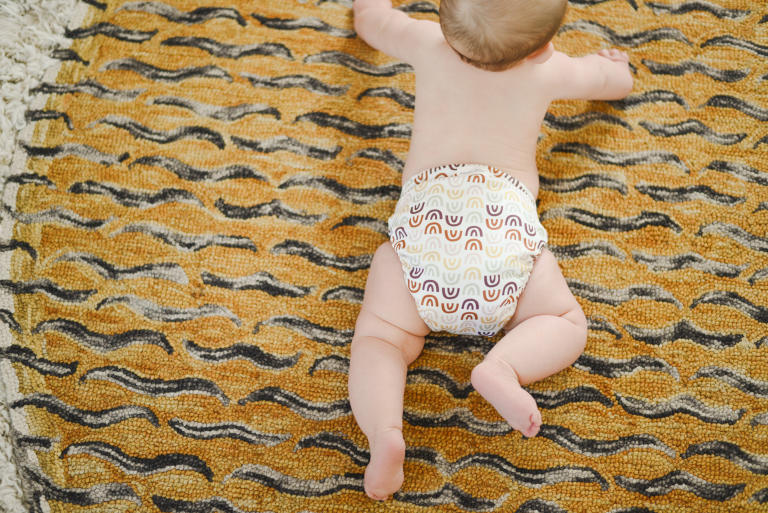
Cloth diapering can be a great way to save money and cut down on waste—but it does come with a bit of a learning curve. If you're still figuring things out, our Cloth Diapering 101 guide is a great place to start. Once you’ve decided to go for it, there are a few specific things you’ll want to add to your registry to make life easier when baby arrives.
Not sure where to start? This list covers the basics, so you’re ready from day one.
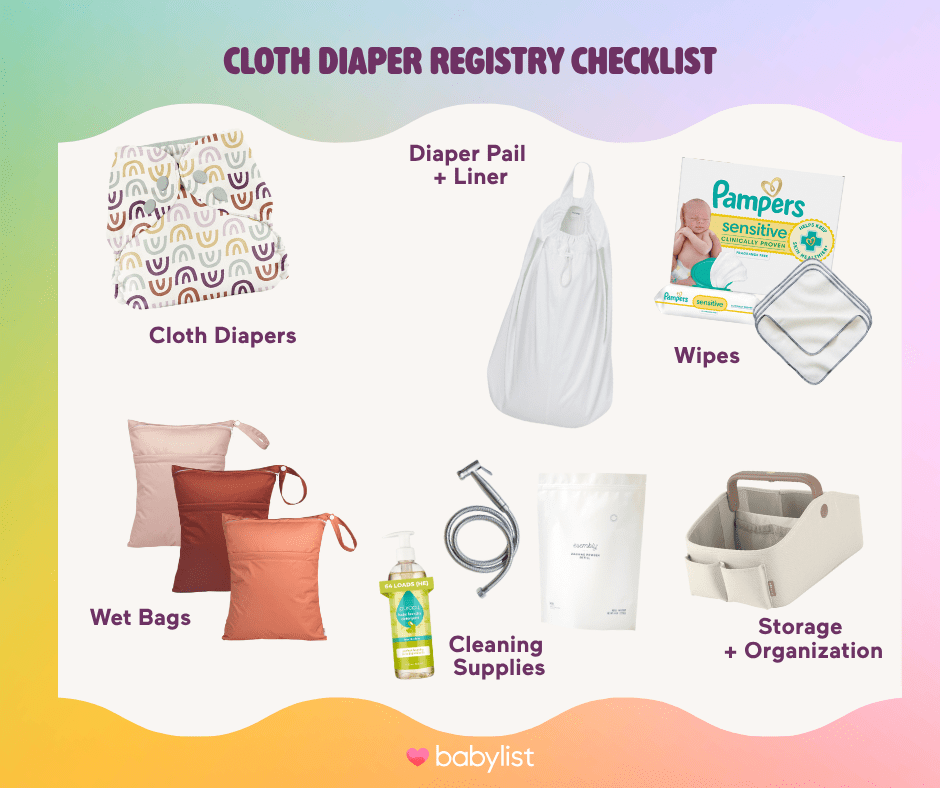
#1 Cloth Diapers
Your first (and most important) decision is going to be which type of cloth diaper you want to use. There are four basic types to choose from, but here’s a quick TL;DR:
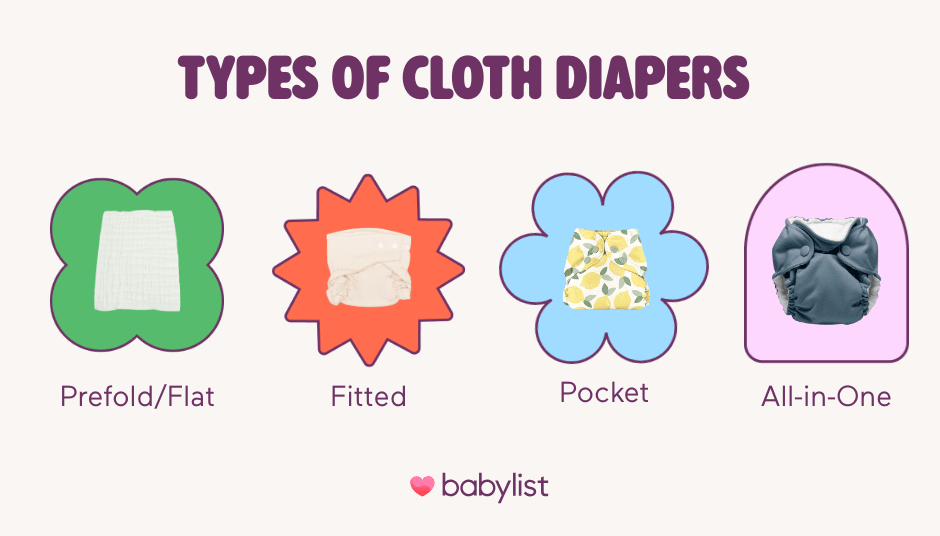
Prefolds/Flats. The most affordable and old-school option—just a folded piece of fabric that you secure with a fastener or snap and cover with a waterproof layer.
Fitted. Shaped like a diaper with elastic at the legs and waist (so a bit easier to use than flats), but still needs a separate waterproof cover.
Pocket. A waterproof cover with a built-in pocket where you stuff an absorbent insert. Easy to customize and quick to change.
All-in-Ones (AIOs). Just like a disposable in design, AIOs have absorbent layers and waterproof cover all in one piece. No stuffing or folding required.
Many Babylist families choose pockets and all-in-ones as their cloth diaper of choice because they’re easy to use, but figuring out what works for you is really a matter of preference. Your budget and your comfort level with cloth diapering will all factor into your decision.
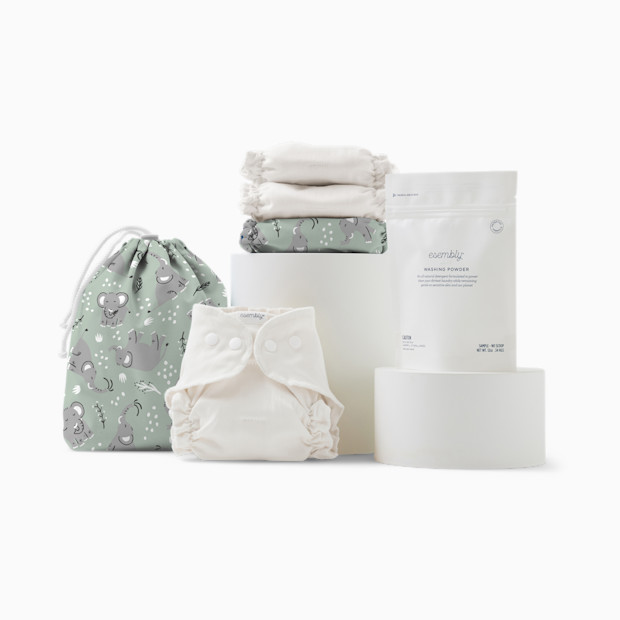
Don’t stock up on one type right away, either. Take your time, do your research and don’t be afraid to buy a small quantity of a few different kinds of cloth diapers to try before you commit to a full set. Here are some of the most popular choices you may want to browse:



How many cloth diapers will I need?
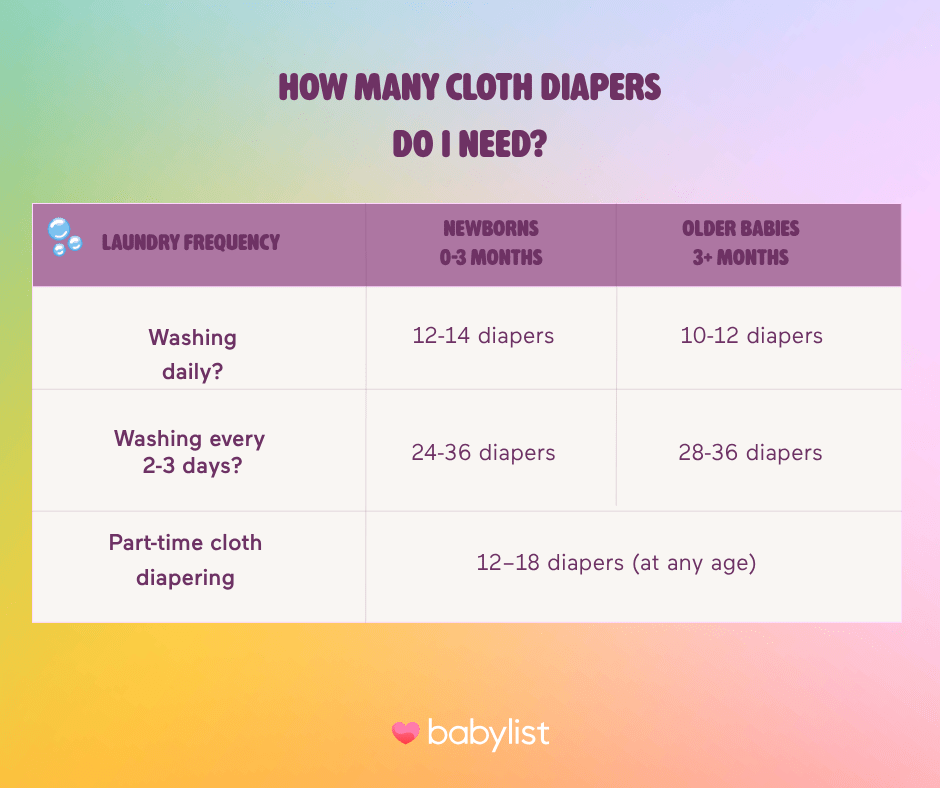
24-36 is a good starting point for families who plan on full-time clothing diapering from birth (newborns go through more changes each day than older babies). It also depends on a few things—mainly how old your baby is, how often you plan to do laundry and whether you’re cloth diapering full-time or just part-time.
👉 If you're cloth diapering part-time (like using disposables overnight or while traveling), 12–18 diapers is often enough.
👉 If you're using prefolds or flats, you’ll also want 6–8 outer covers—since the covers can be reused between changes. Check out the chart below to help you figure out your ideal number, based on laundry habits and baby’s age:
#2 Diaper Pail & Liner
Even though you’ll be tossing your diapers in the washing machine every few days, you’ll need a place to store them in between laundry loads. Look for a diaper pail with a large lid or a wide opening (cloth diapers tend to be bulkier than disposables) and a reusable pail liner that can be thrown in the wash right along with your soiled diapers.
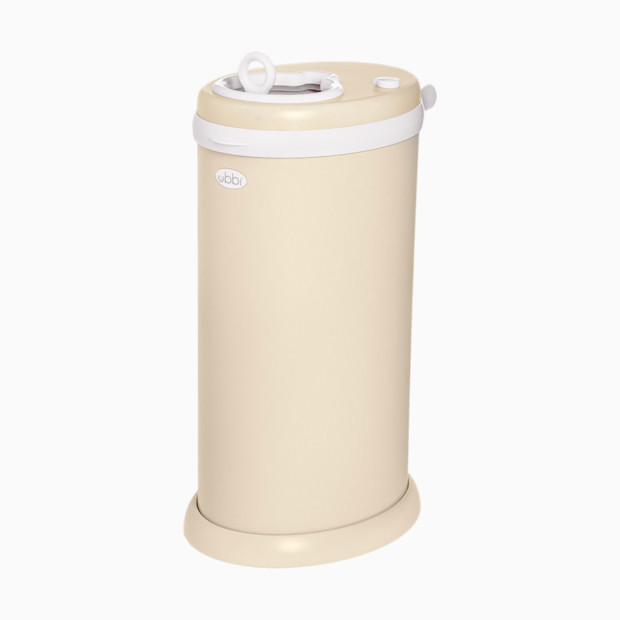
Ubbi Ubbi x Babylist Matte Steel Diaper Pail - Matte Oat Milk
From $79.99While you don’t absolutely need a diaper pail, many cloth diapering parents say they like the Ubbi for keeping things contained until they can do the laundry. This one works with Nora’s Nursery liners and the Esembly Pail Pouch below (but you can also use regular diaper pail liners, too).
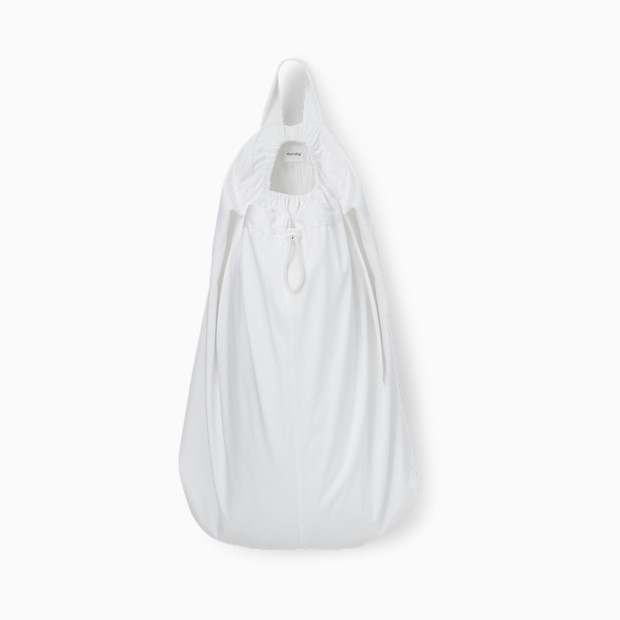
Esembly Pail Pouch - Sea Salt
From $29.50This reusable liner takes the place of the disposable plastic liners that you often see paired with many diaper pails. It has a drawstring closure that pulls completely closed and makes it easy to tote your dirty diapers right over to your laundry area, where the whole thing can be thrown right into the wash.

If you’re looking for a simpler option that resembles a garbage can rather than a traditional diaper pail, this is our favorite pick. It’s not hands-free, but the wide lid is easy to get on and off and there’s a carbon filter built in to help minimize odor. It’s also made from recycled plastic.
#3 Wipes
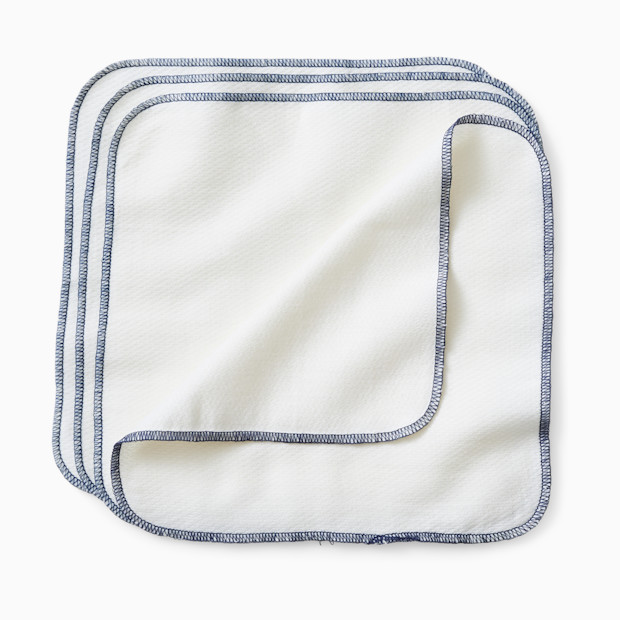
Just because you’re using cloth diapers doesn’t mean you also have to use cloth wipes, and vice versa; you should do whatever works best for your family. It’s okay to use a mix of both–lots of families choose to use cloth wipes at home and disposables on the go.
If you do decide on cloth wipes, we like the setup of having a basket of wipes with a spray bottle of water next to it. You can also use a soothing bottom wash in lieu of water, or this diapering lotion that some parents rave about.
#4 Wet Bag
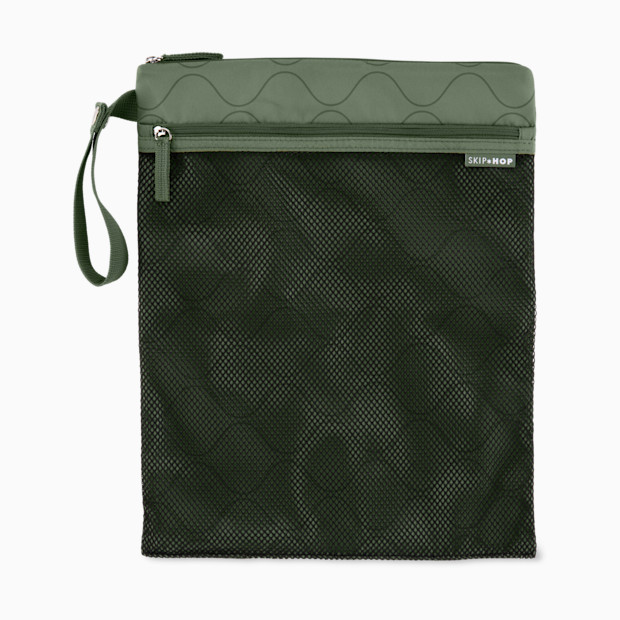
Having a wet bag (or a few) on hand when you’re cloth diapering away from home is essential. Wet bags keep dirty diapers (and other things like swimsuits or dirty clothes) away from the rest of your stuff, then can be tossed in the wash to use again and again.

#5 Diaper Sprayer
There is one downside of cloth diapering: cleanup. While diapers soiled with breastmilk can go directly into the wash, solid waste from formula or solids does need to be removed from the diaper before it hits your washing machine. And that’s where a diaper sprayer comes in handy.
A diaper sprayer features a hose on one end that attaches to a pipe behind your toilet and a sprayer nozzle on the other. When it’s time to rinse out the diaper, simply hold it over your toilet and use the water pressure from the nozzle end to spray the waste off directly into the toilet.

While it is possible to get by with just a diaper sprayer (like this one), we recommend a sprayer and a shield option. The shield helps to contain the mess and prevents water (and poop) from getting everywhere.
#6 Laundry Detergent
Laundry detergent may not be the most thrilling item on your registry—but if you're cloth diapering, it’s key. Many cloth diaper brands have their own recommendations on what detergent is best to use with their particular diapers. (Most also have tutorials on how best to wash their cloth diapers, so you might consider checking those out too.)
You may also need to do some trial and error on your own to figure out which detergent you like best, but these are our recommendations.


#7 A Cloth Diaper Service
You may also want to look into a diaper cleaning service in your area! These services pick up your dirty diapers and drop off clean ones on a weekly basis. Most require that you supply all of the “accessories”—diaper covers, fasteners, the diaper pail, etc., while the service takes care of the actual diapers (many use prefolds which are simple, foldable inserts). Cleaning services add to your budget, of course, but are great options for families who may not have easy access to laundry (think urban families) or for those who simply don’t want to deal with the hassle of washing diapers. They're very location-specific—for example there's Diaperkind for families who live in New York and Tiny Tots based in the Bay Area, California. A quick Google search will help you find options in your area.
#8 Storage & Organization
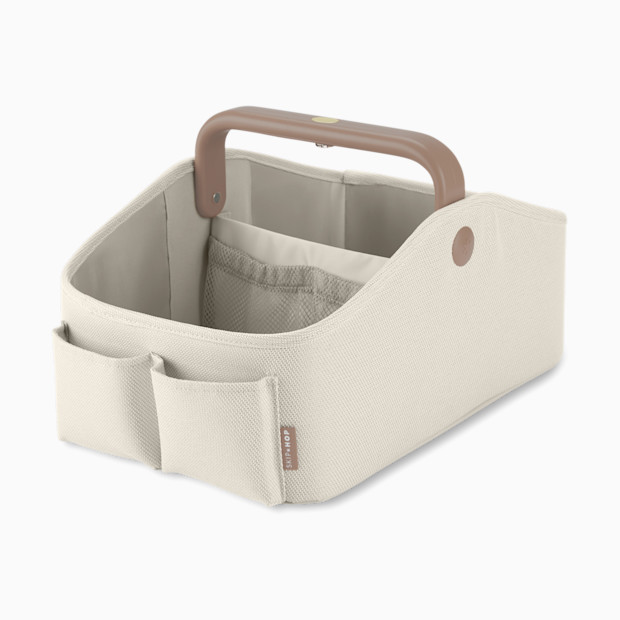
Keeping your cloth diapering station organized can save you time (and a little sanity). Think baskets, caddies or rolling carts to keep your setup tidy and easy to access. Here are a few storage picks that are as helpful as they are good-looking.


Nice-To-Haves, But Not Essentials

Lots of parents choose to add flushable, biodegradable liners to their little one’s cloth diapers, especially after baby’s poop becomes more solid around six months of age or so. The liners sit between the absorbent portion of the cloth diaper and baby’s skin and help to contain the waste. This can help cut down on laundry and extend the life of your cloth diaper.
Esembly Overnighters
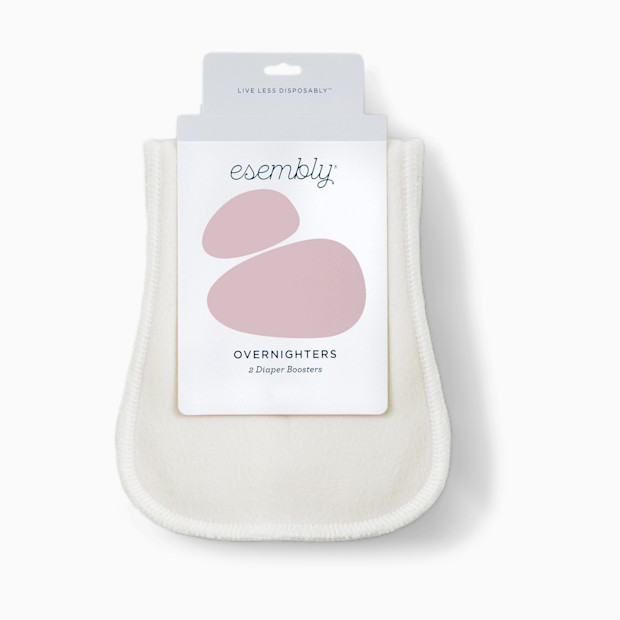
If you’re finding that your cloth diapers aren’t holding up overnight, these boosters add some extra absorbency for longer stretches of sleep (or at least we hope 🤞🏽). They’re especially helpful once your baby starts sleeping longer stretches—or if you just want a little more peace of mind overnight.
Cloth Diapering Resources
There’s no shortage of information out there on cloth diapering–but it’s tough to sort through it all, especially if you’re just beginning your research.
Here are some of our favorite resources we recommend to kick things off as you’re trying to figure out what’s right for you:
Another resource we love is Fluff University. Their site covers everything from how to cloth diaper a newborn to dirty diaper storage and so, so much more. They’ve even created a down and dirty (see what we did there?) cloth diapering cheat sheet with the essential information you need all in one place.

;)
","url":"https://www.babylist.com/gp/esembly-cloth-diapering-try-it-kit/24659/2575247","source":"hello_baby"});)
;)
;)
;)
;)
;)
;)
;)
;)
;)
;)
;)
;)
;)
;)