
The Best Baby Bottles of 2026: Our Top Glass, Plastic and Silicone Picks
Glass or plastic? Four ounces or eight? We’re demystifying how to choose the best bottle for your baby.

By
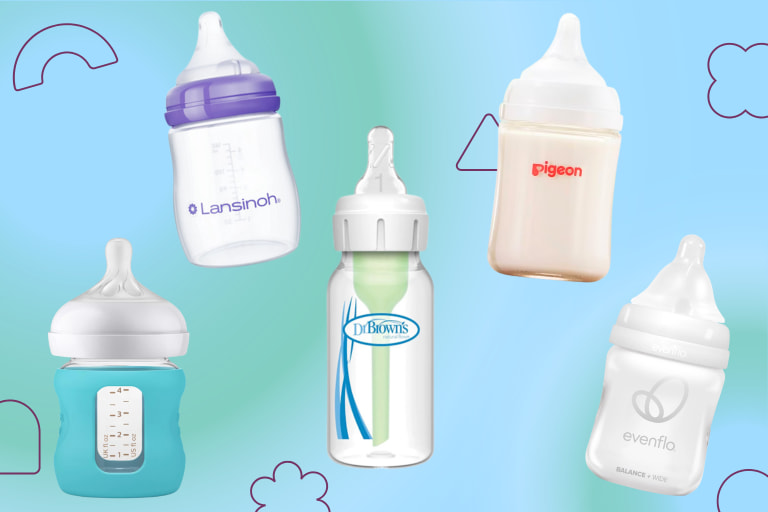
Baby bottles seem simple—until you start comparing glass, plastic and silicone, nipple shapes, venting systems and a small universe of flow rates. And even after all that research, your baby may have some very strong opinions about the bottle you choose.
That’s why this is our broadest guide to the best baby bottles, with picks across materials, feeding needs and budgets. Materials are becoming an especially important part of the decision: just over half of the parents in our 2026 survey said they prefer glass bottles, so we named separate overall winners for plastic, glass and silicone. If you already know you want glass, you can also explore our guide to the best glass baby bottles.
I’m a Certified Lactation Counselor (CLC), and for this guide, I also spoke with pediatrician Kelly Fradin, MD; Emily Spaeth, IBCLC and founder of Be Well Baby PDX; and Cindy Herdé, SLPD, CCC-SLP, CLC, a clinical specialist in feeding and swallowing at Nicklaus Children’s Hospital. Their expertise, along with our hands-on testing and feedback from Babylist parents, helped inform our picks.
The Dr. Brown’s Options+ Anti-Colic Bottle is our best plastic baby bottle overall because its removable venting system, reliable range of nipple flows and success with both feeding experts and picky babies made it the most versatile plastic option we tested—a conclusion backed by our 2026 survey, where one in three bottle-owning parents named Dr. Brown’s their favorite brand.
Of course, popularity only tells part of the story. The best bottle is ultimately the one your baby accepts and that works for your feeding routine, so our remaining picks cover priorities like switching between breast and bottle, supporting a deep latch, easier cleanup, travel and material.


How We Judged the Best Bottles
Best Plastic Bottle Overall: Dr. Brown's Anti-colic Options+ Narrow Baby Bottle
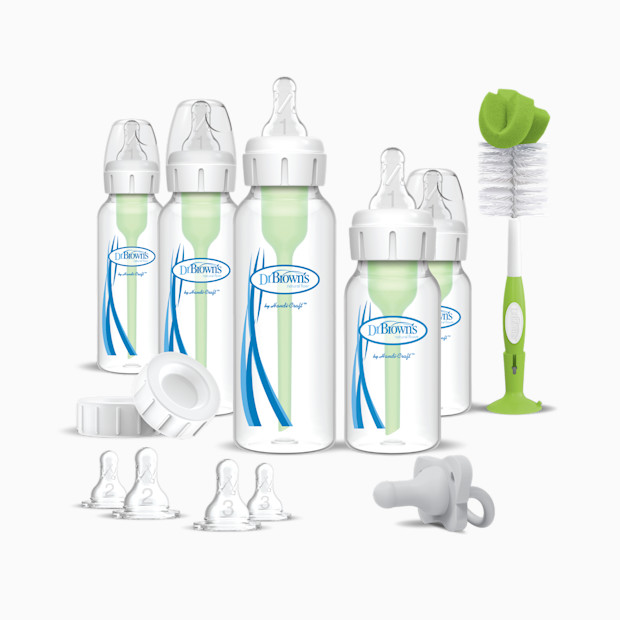
Dr. Brown's Anti-colic Options+ Narrow Baby Bottle Starter Gift Set - Clear/Blue
From $21.27Pros
- Can help reduce gas & colic
- Popular parent + pediatrician pick
- Can be used with or without venting system
Cons
- Lots of parts to clean
- Some parents say they leak
- Longer nipples may cause gag reflex for some babies
The Dr. Brown’s Options+ Anti-Colic Narrow Baby Bottle is our best baby bottle overall because its consistent flow and removable venting system work well for a wide range of babies.
One in three bottle-owning parents named Dr. Brown’s their favorite bottle brand in our annual most-loved products survey—more than any other brand. Our gear editor, Jen LaBracio, is one of them. “I used Dr. Brown’s bottles daily for four years with my two boys, one of whom was a preemie with latching issues,” she says. “They were the only bottles that consistently worked for both of them.” The brand’s claim to fame is its patented venting system. It limits your baby’s air intake while drinking, helping to reduce burping, gas, spit-up and even colic in some little ones.
Are they a magical solution for every fussy or bottle-refusing baby? Sadly, no. But enough parents tell us they see a noticeable difference when using Dr. Brown’s that we stand behind them. “My three-week-old has not thrown up once, spit up or had bad gas,” one parent noted in our survey. Dr. Brown’s bottles are “the only ones that worked for my baby for the first six months,” another said.
Lactation consultants also love Dr. Brown’s bottles because of their consistent flow. “As opposed to some other bottles, Dr. Brown’s uses a laser to create the hole in the nipple,” says IBCLC Emily Spaeth. This differs from other nipples on the market that are made using a needle, she explains, which can lead to inconsistent flow rates. This precise, consistent cut is a big reason she thinks lots of babies take these bottles so well. One Babylist parent said in their review, “My daughter is very picky when it comes to her bottle. She doesn’t accept most of the nipples [but] we tried Dr. Brown’s and she was able to latch on from the first try.”
/dr.brown's%20narrow%20options%201.jpg)
Dr. Brown’s Options+ Narrow bottle
Worth noting:
The two biggest negatives of these popular bottles are difficulty in cleaning and potential leaking. The first, unfortunately, is unavoidable; the bottle’s venting system has multiple parts, some of which are pretty tiny, and cleaning them does indeed take some time. The upside is that the Options+ system lets you remove the internal venting system as baby develops, leaving you with only a bottle, nipple and a collar to clean.
The second issue? Leaks. "You need a PhD to get the small bottles not to leak if you put any more than two oz in,” one Babylist parent wrote in their review. The good news is there are a few different ways to troubleshoot leaking, depending on the cause. You can check the brand’s FAQ section for solutions, but our biggest learnings from years of extensive testing are to remember to always use the Travel Disc, and keep the bottle upright when on the go. You should also loosen the collar just a bit before warming the bottle to reduce pressure.
These are completely made of plastic. want to avoid plastic in your baby’s feeding gear, there is a glass version.
Best Glass Baby Bottle: Philips Avent Glass Natural Bottle
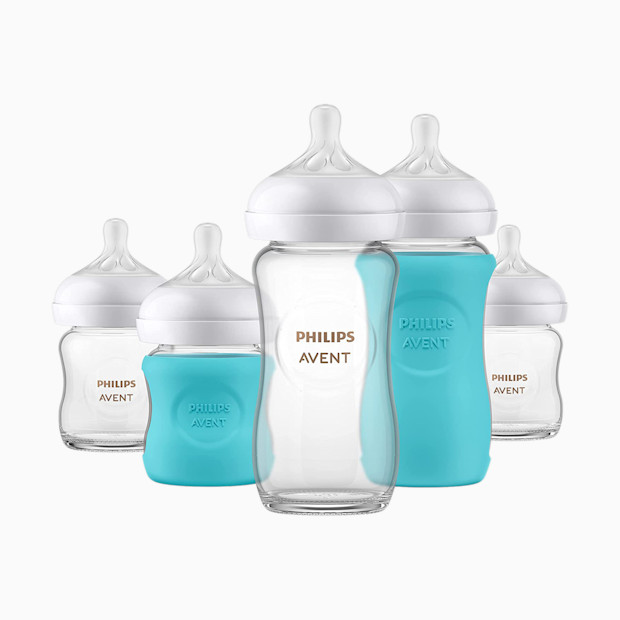
Philips Avent Glass Natural Bottle Baby Set
From $56.77Pros
- Pharmaceutical-grade glass (heat and thermal shock resistant)
- Included silicone sleeve improves grip and reduces risk of breaking
- Adjustable-flow nipples + anti-colic venting system
Cons
- Heavy
- Can leak
- Included nipples (sizes 1 and 2) are meant for newborns and may not work well for older babies
The Philips Avent Glass Natural Bottle is the best glass baby bottle because its thermal-shock-resistant glass, simple design and anti-colic vent balance durability with easy cleaning.
Glass bottles have become much more popular in recent years due to some parents’ preference for plastic-free feeding tools. In fact, a little more than 50% of Babylist parents who responded to our survey said they prefer them over plastic, citing that glass bottles are free of the chemicals used in plastic bottles, durable and easy to clean. And when it comes to favorites, parents told us these Philips Avent bottles top their list. (Among parents who preferred glass bottles, 29% selected Philips Avent Glass as their favorite glass-bottle brand.)
They have all of the components parents love about the brand’s plastic bottles—a wide, flexible nipple, an advanced anti-colic system and few parts to clean—but in glass. The glass is thermal-shock resistant, so it can transition between hot and cold without issue, and the twin-valve design reduces colic and discomfort by venting air into the bottle, not your little one’s stomach. They’re also ultra-durable. “Since they’re glass, I was able to save them from baby to baby…without concern of the plastic being too old,” one mom told us in our survey.
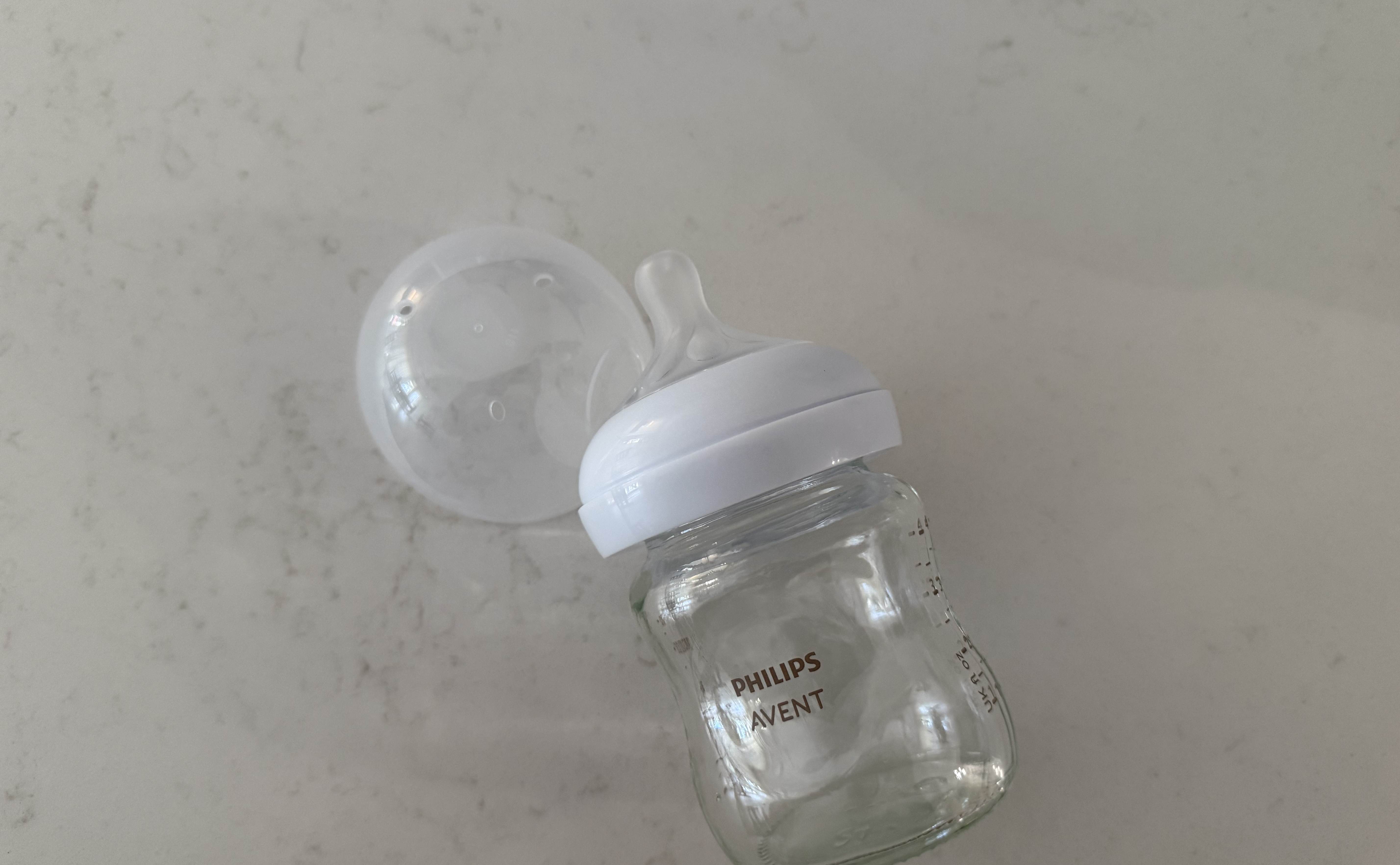
Philips Avent Glass Natural Bottle
Worth noting:
Of the glass bottle options we tested, these are definitely on the heavier side. And though they’re super durable, there’s always a risk of breakage if dropped (the silicone sleeve helps with this, though).
A few Babylist parents also mention in their reviews that these bottles can leak. “If you don't close the top just the right way, the bottles will leak out. Even when you think you have tightened the top enough, milk will still leak out,” one shared.
Best Silicone Baby Bottle: Boon Nursh Silicone Pouch Bottles
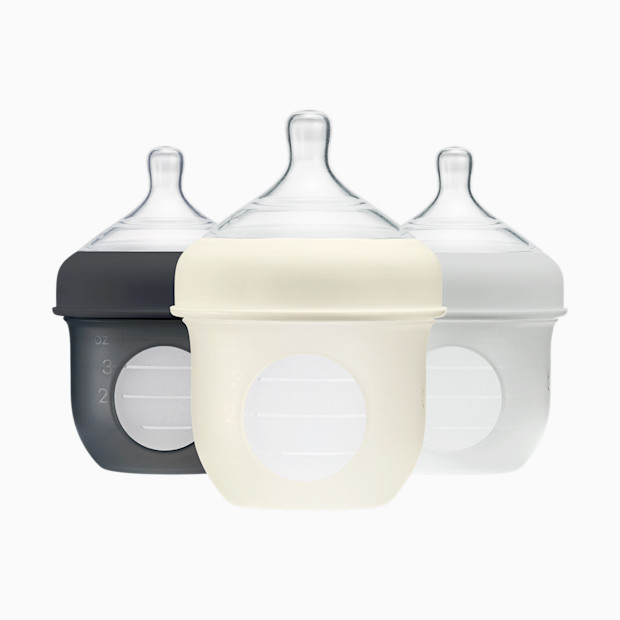
Boon NURSH Silicone Pouch Bottles - Gray, 4 Oz
From $19.99Pros
- Made of durable food-grade silicone
- No small parts to clean
- Inner pouch minimizes gas & colic
- Transitions to sippy cup
Cons
- Doesn’t fit in all bottle warmers
- Pouch can refill with air if baby takes long breaks during feeding
- Some parents complained of slight leaks
The Boon Nursh Silicone Pouch Bottles are our best silicone baby bottles because their collapsible pouch helps reduce air intake and makes the bottle simple to clean.
The colorways are so fun, but more importantly, the bottles are straightforward to use and can help tiny tummies. These bottles use a venting system with a silicone pouch that collapses as baby drinks, which results in less air ending up in baby’s tummy. This can help reduce gas, colic and overall fussiness. It also means there are only a few parts to keep track of and clean. Unlike some silicone options, these bottles have a sturdy base that helps prevent tip-overs.
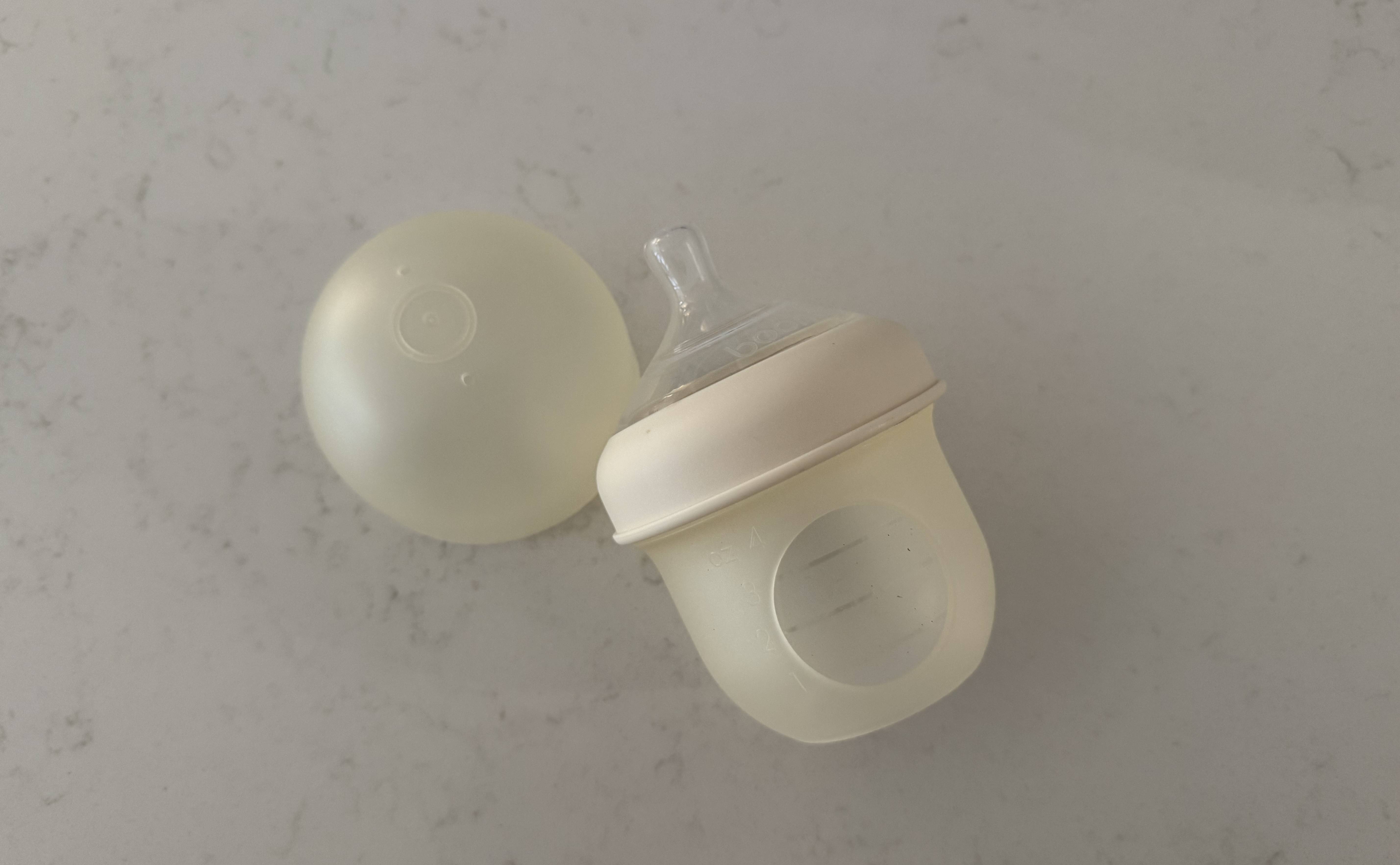
Boon Nursh bottle
These bottles also get extra credit for their ability to transform into sippy cups with the easy addition of a straw conversion top, extending their usefulness for years. “I originally bought the Boon Nursh bottles because I loved the look (don’t judge me!) and because they seemed really easy to clean (we are dishwasher parents),” Maddie, a Babylist team member, told me. “But I ended up loving them because of the way they transition from bottle to sippy to straw cup. We bought the straw cup attachments when our kid was ready to transition away from bottles, so we’ve been using our Nursh system for over two years now and they are still in great shape.”
Worth noting:
I’m a Certified Lactation Counselor (CLC), so nipple shape and how it supports a baby’s latch are things I pay close attention to when evaluating bottles. The nipple that comes with the NURSH isn’t my favorite: its shape can make it tricky for babies to maintain a wide, deep latch without slipping down onto the nipple. Boon does offer a Curve nipple that’s designed to support a wider latch.
Many parents complain that the bottles don’t fit well in most bottle warmers because of their wider shape.
Another common complaint is that they leak. One parent said, "Although baby likes this bottle, we are constantly fighting with a leaking seal. We own nine all together, between the larger oz and smaller oz, and when they leak, you have to take off top, clean and dry and try again.”
It’s also super hard to see the measurements on the side of the bottle because they blend in with the silicone (if you want to know exactly how many ounces your baby finished).
Best Bottles to Add to Your Baby Registry: Babylist Glass Bottle Box
Pros
- Lets you try popular baby bottles before committing
Cons
- Can’t select nipple size
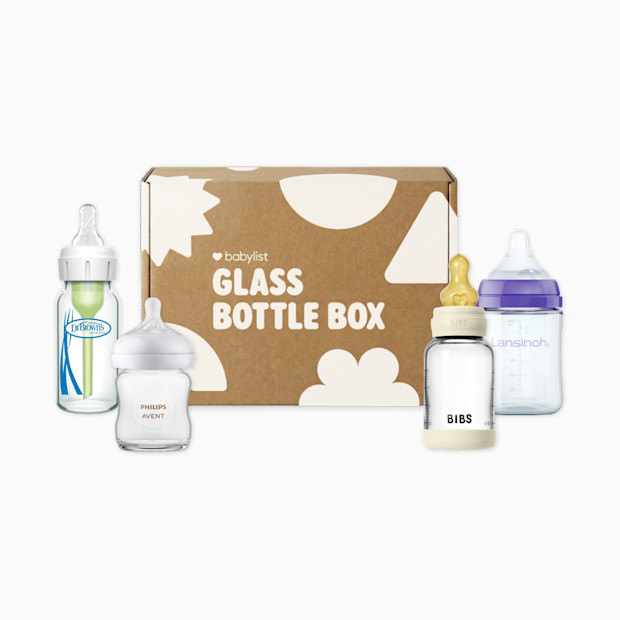
The Babylist Glass Bottle Box is our best baby bottle sampler for a registry because it lets you try four popular glass bottles before committing to a full set.
Since bottle preference is is subjective, and glass tends to be more expensive than plastic, the Bottle Box is a cost-effective way to try them out before spending money on a multiple bottles. We think most parents-to-be should add one to their baby registry because it solves the all-too-common issue of registering for a whole set of bottles only to realize your baby won’t take them.
“The Bottle Box allows you to try multiple brands/types of the product…[because] you’ll have no idea what your baby will like,” one Babylist parent wrote in our survey. Though the assortment is subject to change, the current box includes popular brands like Dr. Brown’s, Lansinoh, Philips Avent and Bibs. Another parent told us how happy they were that they decided to register for the box despite being unsure at first. “I had no idea these were going to come in handy when my youngest wouldn’t take the bottle,” she said.
If the idea of a try-it kit sounds appealing but you’re not totally set on glass, the bottle box also comes in a plastic and silicone option and a mixed material assortment as well.
Worth noting:
The biggest downside to this try-it kit is that you won’t be able to customize your nipple sizes—all bottles come with level one slow-flow nipples.
Best Bottle for Breastfed Babies: Pigeon Glass Anti-Colic Nursing Bottles
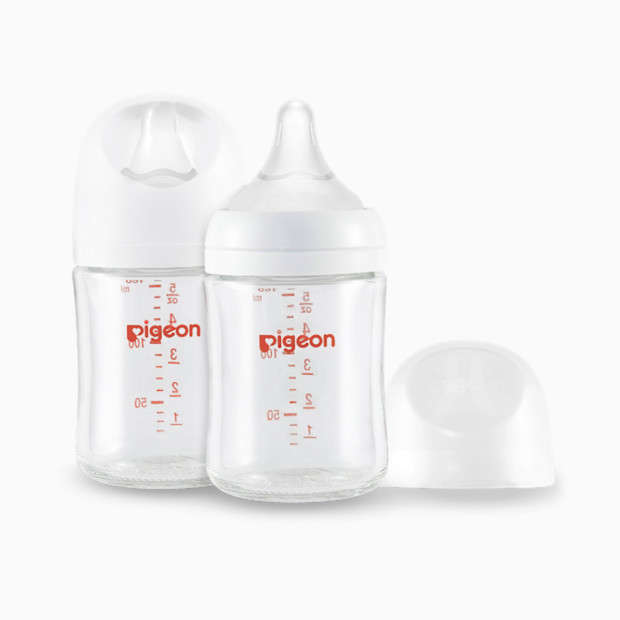
Pigeon Glass Anti-Colic Nursing Bottle Wide Neck - 5 Oz, 2
From $34.99Pros
- Sloped nipple supports deep latch
- Glass
- Few parts, easy to clean
Cons
- Pricey
- Break easily
The Pigeon Glass Anti-Colic Nursing Bottles are the best bottles for breastfed babies because their gradually sloped nipples encourage a deep latch, similar to what happens while nursing.
Lactation professionals widely recommend Pigeon bottles as a first choice for babies who are going between breast and bottle. One Babylist parent wrote in our annual survey, “We went through several bottle/nipple types before finally finding one that worked. For a breastfed/combo fed baby, these are phenomenal!”
The brand’s nipple design has a wide base, gradual slope and soft tip that encourages a breast-like latch at the bottle. While that alone isn't an indicator of whether a baby will seamlessly move between breast and bottle, it helps keep their oral functioning consistent. Paired with paced feeding, the two help prevent preferences from developing—because nipple confusion is really just a preference for a less-effortful flow. One parent struggling with bottle refusal shared in their review, “So far these have been the best bottles for my baby who absolutely refuses bottles.”
The nipple itself comes in five different flow rates, so you’re sure to find something that works for your baby, though it’s important to note that the size scale differs from most US bottle brands. It also has a latch line guide, which one parent said was “nice as a new mom to know she was getting a deep latch,” when bottle feeding. To top it off, the minimal design and wide-neck opening mean they’re easy to clean, and they’re also dishwasher safe.
Pigeon glass baby bottle
Worth noting:
These bottles are expensive, costing around $17 each. (Glass bottles are typically more expensive.) The brand does offer regular plastic and PPSU plastic options. Both are BPA-free and lightweight, though PPSU is the more durable, heat-resistant—and typically more expensive—of the two plastics.
Glass bottles are built to be tough, but they’re not indestructible. Parents’ biggest gripe is that these seem to break easier than other glass bottles on the market. The brand recently released a silicone-coated version that offers a bit more protection and grip, but they come at a steeper price point.
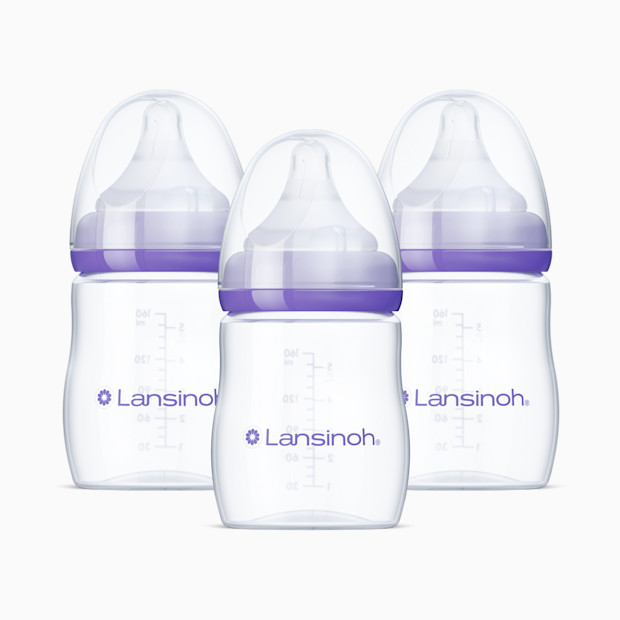
Runner Up: Lansinoh Anti-Colic Baby Bottles
Lansinoh Anti-Colic Baby Bottles - 5 Oz
From $18.69Pros
- Recommended by lactation consultants
- Helps reduce gas & colic
Cons
- Doesn’t include sealing discs (storage caps)
- Flow may be too fast for younger babies (slow flow nipples sold separately)
- Can leak
The Lansinoh Anti-Colic Baby Bottles are our runner-up for the best bottles for breastfed babies because their gradually sloped NaturalWave nipples support the same sucking motion babies use at the breast.
They’re also a bit easier on the wallet than Pigeon. Their NaturalWave nipples slope gradually from the base to the nipple, which helps get more of the bottle nipple into baby’s mouth and promotes a deeper latch, according to IBCLC Spaeth. Bottles with a more dramati
Though there isn’t an elaborate anti-colic venting system, there is a small vent to reduce air intake and a vertical groove on the nipple to prevent collapse. And with only four pieces and no tiny parts, cleaning won’t take forever (a feature most tired parents appreciate).
Lansinoh baby bottle
Worth noting:
The biggest gripe parents have with these bottles is the potential for leaks. “It’s unfortunate how much these bottles leaked every time I gave it to my baby…It’s a little awkward when others are trying to give her a bottle with this and their hand is covered with breast milk,” one Babylist parent wrote in their review.
These five ounce bottles come with slow-flow nipples, which might work for younger babies but could be too slow for older ones. The larger eight ounce size comes with medium-flow nipples, which many parents say are too fast for younger babies. Lansinoh also sells nipples separately (at places like Target and Walmart) if you find you need to experiment with different flow rates. They can also fit Pigeon nipples, our top pick for switching between breast and bottle. Lansinoh also recently released these bottles in a pack that comes with “extra slow” flow, ideal for babies up to one month old.
Best Affordable Baby Bottle: Evenflo Balance+ Wide-Neck
Evenflo Feeding Balance Plus Wide Neck Baby Bottles - 5 Ounce (Pack of 6)
From $24.99Pros
- Promotes wide, deep latch
- Budget-friendly
- Easy to clean
Cons
- Nipple collapses if not assembled properly
- Measurement lines are hard to read
- Lowest nipple flow may still be too fast for some babies
The Evenflo Balance Plus Wide Neck Baby Bottles are our best affordable baby bottles because they support a wide latch for about $4 per bottle.
What stands out is the nipple shape. Parents we heard from compared it to other bottles designed to encourage a wide latch, including Lansinoh, but at a more wallet-friendly price. One parent noted, “These and Lansinoh bottles are similar, but [are] more affordable, and have a slightly different nipple shape at the top.”
Another parent raved in their review, “Love these bottles! They pass the triangle test and are helping my daughter, who has a lip tie, stay latched and transfer between breast and bottle.
Evenflo Balance+ Wide-Neck bottle
Worth noting:
The measurement lines on this bottle are white, which means it's hard to see when it's filled with milk or formula. One parent wrote in their review, “Once the bottle is filled with milk, the lines become extremely difficult to read. In the middle of the night when you are exhausted and just trying to get a bottle ready quickly, this becomes surprisingly stressful.”
Some parents also note that these bottles leak, especially if the vent is not properly aligned (which is also important for the vent to work). “I’ve had so many messes. Even after tightening and putting it in straight, there is some sort of leak, and I lose so much breast milk, super frustrating,” one parent shared.
Quite a few parents of preemie and NICU babies mentioned that even the slowest flow was still too fast. All of the bottles come with a slow flow nipple too, so if you’re buying for an older baby, you’ll need to purchase the correct flow separately.
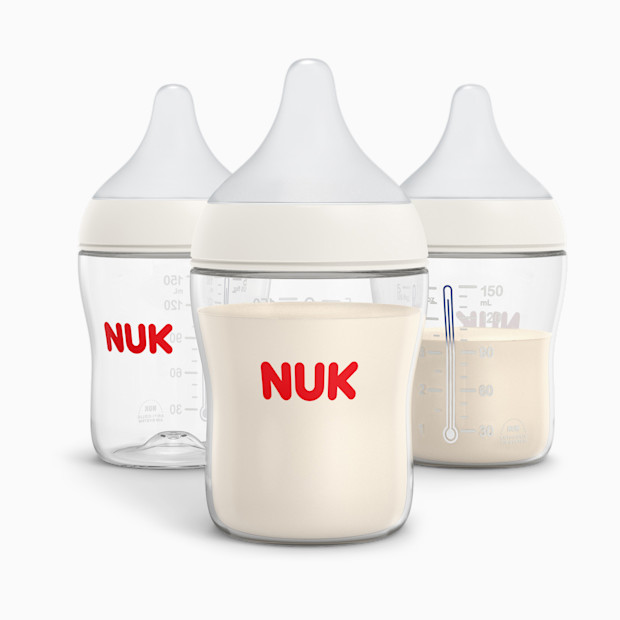
Best Easy-to-Clean Bottle: NUK Perfect Match Bottle
NUK Perfect Match Bottle (3 Pack) - 5 Oz
From $17.97Pros
- Three primary pieces
- Extra-wide opening for cleaning
- Combo-feeding friendly nipple shape
- Affordable
Cons
- Nipple is very pliable; some babies have trouble with it collapsing
The NUK Perfect Match Bottle is our best easy-to-clean baby bottle because its simple three-part construction and extra-wide opening make washing straightforward.
Sometimes less really is more. There’s just a bottle, collar and nipple to assemble and clean (plus a lid if you’re using it). They’re also one of the more affordable bottles on this list. One parent wrote: “Super easy to clean and are lightweight. These are very comparable to the Pigeon bottles, and the price is great!!” and many other reviews echo the same sentiment.
They feature a gradually sloped nipple which encourages a deep latch and are often recommended by lactation professionals. The material of the nipple is pliable like breast tissue, and many parents find these a go-to for combo feeding.
Worth noting:
While the soft nipple material and shape encourage a breastfeeding-like latch, they may be too soft for some babies. A few parents mention the nipple collapses, but that could also be a sign it’s time to move up a nipple flow.
Best Self-Sterilizing Bottle for Travel: MAM Easy Start Anti-Colic Bottles
MAM Easy Start Anti-Colic Baby Bottle (4 Pack) - Cotton / Linen, 5 Oz
From $29.99Pros
- Anti-colic air vent
- Slowest flow nipple is ideal for newborns
- Self-sterilizing feature
Cons
- Complex design with 6 parts
- Measurements are hard to read
- Many parents report leaking
- Thick base makes warming milk take longer
The MAM Easy Start Anti-Colic Bottles are our best self-sterilizing baby bottles for travel because they can be sanitized in a microwave without extra equipment.
“The bottle has a lot of parts, but they are self-sanitizing, so it’s good to travel with and not have to pack a bottle sanitizer too,” one parent wrote in their review. And the other parents had similar things to say. In fact, they were specifically called out in our annual survey for their convenience: “My baby only drinks from these bottles, but I really appreciate the design—fits my Spectra, safe materials, self-sanitizing,” one parent wrote.
The microwave sterilization feature means you won’t have to pack extra gadgets (like sterilization bags) for on-the-go cleaning. Parents also appreciate the bottles’ compact size, anti-colic vent and newborn-friendly slow-flow nipples.
Worth noting:
There are a lot of parts to assemble and clean, which are two of parents’ biggest complaints. One parent shared in their review, “I love the self-sterilizing ability on these, but it does mean that they have more ‘parts’ to them, which is kind of a pain when you go to wash them.”
On the topic of assembling, if the valve isn't perfectly aligned, you might find leaks during feeds or while gently shaking up formula. A few reviews also mention making sure the parts are totally dry before putting them back together to prevent leaks.
The measurement marks are painted on and not long-lasting. “We’ve been using these bottles less than two months, and the measuring marks are already coming off with only handwashing the bottles,” one parent wrote in their review. Due to the design of the base, you also can’t tell measurements below the two-ounce mark: "I don't like that I can’t see how much milk he has left after 2 ounces, because the base of the bottle is a solid color and not transparent like traditional bottles.”
Why Trust Babylist?
Babylist is the expert in baby; we know baby gear inside and out. We talk with parents face-to-face in our showroom and on our user panels and hear from thousands annually via our Best Baby Products online survey. We know what items millions of expecting parents are adding to their baby registries.
Firsthand and professional experience. As a mom of two, I’ve had the opportunity to test out dozens of bottles during my own feeding journey with both of my children. I’ve also completed 52 hours of training to become a certified lactation counselor (CLC) and used both of these experiences to help choose the bottles on this list. I also utilized insight from Babylist’s Gear Editor Jen LaBracio, an expert in the baby space for over six years and a mom of two who has written hundreds of baby gear guides and personally researched and tested hundreds of baby products, including many different types of baby bottles.
Expert POV. I talked to three professionals for their expert insight: Kelly Fradin, MD, a pediatrician, writer and New York City-based public health advocate; Cindy Herdé, SLPD, CCC-SLP, CLC, Clinical Specialist Feeding & Swallowing at Nicklaus Children's Hospital, and Emily Spaeth, an IBCLC, physical therapist and founder of Be Well Baby PDX. IBCLCs are the highest accredited healthcare professionals in lactation; they’ve completed years of training requirements including lactation-specific education and hands-on clinical training.
Baby bottle data. I regularly analyze which baby products our users are adding to their baby registries the most (and which ones they aren’t) and what our team of Merchandising experts—our buyers who are responsible for ensuring the Babylist Shop is stocked with the best and newest gear—is excited about. Studying this kind of data helped us choose which bottles to narrow in on and which ones to recommend to new and expecting parents.
Feedback and reviews. I reviewed comments and feedback from Babylist’s annual product survey of thousands of parents, read customer reviews from hundreds of Babylist users and spoke to parents on our staff about their real-life product experiences.
What types of baby bottles are there?
When you’re searching for bottles to try, keep in mind that they come in three different materials: glass, plastic and silicone. And has its own pros and cons.
Glass bottles
Glass bottles don’t absorb colors or odors the way silicone or plastic bottles can. They’re also thermal-shock resistant, meaning they can go from freezing cold to piping hot without breaking. Many are dishwasher-safe without the risk of chemical leaching, and because they often have fewer parts, they tend to be easier to clean than other types of bottles. According to our most recent annual baby product survey, about half of Babylist parents prefer glass baby bottle options.
There are two downsides: they’re rather heavy and more expensive, and although it’s not easy to break them, it’s certainly not impossible, either. If you choose to go with glass bottles and your baby will be attending daycare, make sure you check with the center if they’re allowed or not.
Plastic bottles
The plastic baby bottles you'll find on the market today are made from either polypropylene (PP) or polyphenolsulfine (PPSU).
PP is an economical, general-purpose food-contact plastic. It’s light and practical, but repeated heat, UV sterilization, scrubbing and use can make it cloudy or scratched sooner than other kinds of plastic. Most plastic options are made out of PP.
PPSU is a higher-performance plastic. It tolerates more heat and impact and generally holds up better through frequent sterilization, which is why it tends to cost more. It also has a natural amber tint compared to PP plastic bottles.
Many parents wonder if plastic bottles are safe to use. The initial concern over plastic baby bottles was because of bisphenol A, commonly called BPA, an industrial chemical used to make certain plastic that may cause negative health effects. The FDA banned BPA from all sippy cups and baby bottles in 2012, but according to the AAP continues to recommend limiting children’s exposure to plastics, particularly when food or drinks are heated.
If you decide to use plastic baby bottles, avoid microwaving them (It's good practice to avoid microwaving all bottles of milk in any case because it can create hot spots) and hand-wash dirty bottles instead of putting them in the dishwasher.
Silicone bottles
Silicone bottles are a plastic alternative. They’re unbreakable and free of many chemicals in plastic bottles. Silicone bottles are dishwasher safe and most contain fewer parts than plastic bottles so they’re easier to clean.
Silicone bottles tend to be a bit more expensive than plastic bottles, but not as pricey as glass. And although they don’t contain the same chemicals as plastic bottles, there’s still some concern over leaching at very high temperatures. They can also discolor and absorb odors over time.
How to Choose a Baby Bottle
There’s no perfect bottle—just the one that works best for your baby and your sanity. “Babies can be opinionated creatures,” Dr. Fradin, a pediatrician, says. And while she assures new parents that this “isn’t worth pre-worrying about” too much, we hear the same sentiment from many new parents.
How Do You Choose the Right Bottle Nipple Shape and Flow?
Bottle nipples vary in shape and flow rate, two things that have a lot to do with bottlefeeding success. First things first—no matter what shape you go with—Spaeth recommends starting with the slowest flow first.
A too-fast flow of milk or formula can overwhelm babies, especially newborns. A slow-flow nipple can help pace the feeding session.
Then you can consider the nipple shape. She recommends a nipple with a gradually tapered shape, which helps “get more of the bottle into the baby’s mouth and promote a deeper latch.”
In terms of the difference among nipple shapes on the market, Cindy Herdé, SLPD, CCC-SLP, CLC and clinical Specialist in feeding and swallowing at Nicklaus Children's Hospital says the main thing to keep in mind is this: “In my clinical view, a nipple shape that delivers milk with very little effort can encourage a more passive oral-motor pattern (a shallow latch, a tongue that rests low, less active lip and cheek engagement) compared with breastfeeding, which requires a wider, deeper latch and active milk removal (suckling/sucking).” While nipple shape is an important part of picking a bottle, she adds that nipple shape on its own, ““matters less than most parents assume and far less than flow rate, latch depth, and how well the baby can coordinate sucking, swallowing, and breathing.”
There are slightly different considerations for choosing a bottle, depending on whether you're going to be exclusively bottle-feeding or switching between breast and bottle.
“For an exclusively bottle-fed baby, I'd prioritize efficient, comfortable, safe feeding with physiologic stability over matching breast mechanics.” Herdé recommends. “Signs of a good fit include a calm, coordinated feed with no coughing, gulping, milk leakage.”
“For a breastfed baby who also takes a bottle, the goal is a nipple that doesn't undermine the
breastfeeding latch,” Herdé explains. “So one that supports a wide, deep latch, lets the tongue cup and elevate, and has a slow, controlled flow so the baby has to do some of the work rather than passively swallowing a flow.” In fact, these characteristics combined are what can potentially lead to what’s known as “nipple confusion”—a bit of a misnomer because it’s actually a preference.
A note on nipple confusion:
When a baby is nursing at the breast, there is a natural rhythmic cadence to the milk flowing, the sucking pattern. Breastfeeding requires a bit of skill on baby's part to effectively coordinate the suck-swally mechanics to effectively remove milk. If that baby is then given a bottle that has a relatively fast flow and they don't have to work as hard to remove milk, a preference can develop. For parents who are planning to breastfeed and occasionally bottle-feed Herdé says, “I'd avoid marketing claims that any bottle "mimics the breast," because none truly do!” She notes that following a paced bottle-feeding method and having a slow-flow nipple that encourages a deep latch is what matters more.
How do I know it’s time to change nipple flow?
According to Spaeth, flow rate—not just bottle size—is key to feeding success. Many bottle-feeding challenges can be troubleshooted by trying different nipple flows.
Things like leaking, choking, frustration, and preference for bottle over breast all have ties to how fast or slow the rate is.Here’s how to know if it’s time to adjust:
Signs baby needs a faster flow:
Feeds take longer than 30 minutes
Baby pops on and off the bottle or looks frustrated
Nipple is compressed or flattened during feeding
Signs baby needs a slower flow:
Finishes bottles in under five minutes (the ideal range is five to 25 minutes)
Coughing, choking or milk dribbling from mouth
Red or watery eyes, furrowed brows or clicking sounds while feeding
Baby Bottles FAQ: What You Need to Know
When do you need baby bottles?
You can start using bottles from day one. Babies usually use bottles until at least one year old, which is when the American Academy of Pediatrics (AAP) says it’s okay to transition your little one from breast milk or formula over to cow’s milk. At that point, babies will still use bottles and begin to transition to a sippy cup.
How do I introduce a bottle to my breastfed baby?
Introducing a bottle to your baby may look a bit different if you’re also breastfeeding. Many lactation experts recommend waiting until baby has the hang of nursing, usually between about three and six weeks. And because milk production works on supply and demand, it’s also important to consider how using a bottle will affect your supply.
“If you're breastfeeding, using a bottle, whether of pumped milk or formula, interrupts the supply-demand cycle of a baby sucking the breast to help bring in your milk,” explains Dr. Fradin. “This matters most in the first four to six weeks of breastfeeding, though of course, this must be balanced against what's best for the [nursing parent], as skipping feeds to recover from childbirth, to sleep or to function for other life goals is a very valid and often necessary choice,” she says.
She also cautions not to wait too long before introducing a bottle to a breastfed baby. “Around four months, babies can be very distracted during feeds, and parents often find it necessary to feed them in a dark quiet room to get a full feeding in,” she says. “Introducing a bottle during that time or in the weeks around when a parent returns from maternity leave can be pretty stressful.”
If you’re nervous about introducing a bottle to your breastfed baby, or have tried with no luck, check out our bottle refusal guide for tips.
How many bottles do I need?
If you’re exclusively bottle feeding, consider having six to 12 bottles on hand. This allows you to have a bottle ready to go whenever you need one while you’re washing the others. Many parents who regularly bottle-feed say bottle washers are a huge game changer for lightening some of the washing load.
If you’ll be using bottles occasionally, three to four is a good number to have on hand.
What are the types of baby bottles?
Bottles are typically made from one of three materials: glass, plastic or silicone.
Glass baby bottles were the norm in the decades before plastic and have recently returned to popularity. While it may sound like a head-scratcher to give your baby something made of glass, glass baby bottles are made from tempered glass, a type of glass that’s extra durable and can withstand being banged around and even dropped.
Plastic baby bottles are made out of polypropylene or , a hard type of plastic. Plastic bottles are the most common type of baby bottle on the market and the most affordable.
Silicone bottles are the newest type of baby bottles. They’re made from silicone, a soft, flexible material free from chemicals like BPA, PVC and Phthalate.
What sizes do baby bottles come in?
Most bottles come in two sizes:
Smaller-sized bottles, usually around four ounces, are geared toward newborns who eat less per feeding than older babies. Some brands—like Philips Avent, Lansinoh and Dr. Brown's—offer even smaller volumes like two ounces that come with super slow-flow nipples suitable for premies and newborns.
Larger bottles, which hold about eight ounces of breast milk or formula, are for older babies who eat more.
As a benchmark, newborns may eat as little as an ounce or two every meal. "Most babies aren’t going to need that full eight ounces until they're much older, usually around eight months," says Spaeth. Some parents choose to buy a few smaller and larger bottles, while others buy larger bottles from the start and only fill them up about halfway during baby’s first few months.
What size of bottle nipple does my baby need?
Baby bottle nipples come in different sizes. Each provides a different rate of milk flow.
Newborn and slow-flow nipples (sometimes also labeled as level zero or level one nipples) are designed for newborns and younger babies. They provide a slower flow of milk or formula so baby won’t gulp too much too fast.
Faster-flow nipples (levels two and up) are designed for older babies who have bigger swallows and have better control over a faster flow of liquid.
Expert Sources
Babylist uses high-quality subject matter experts to provide accurate and reliable information to our users. Sources for this story include:
Kelly Fradin, MD, a pediatrician, writer and New York City-based public health advocate.
Emily Spaeth, IBCLC and founder of Be Well Baby PDX.
Cindy Herdé, SLPD, CCC-SLP, CLC, Clinical Specialist Feeding & Swallowing at Nicklaus Children's Hospital.
