
Toy Rotation Can Help Your Little One Play More—How to Do It
Fewer toys out, more engaged play? Here's how toy rotation works, how often to rotate and what Montessori experts love about it.

By
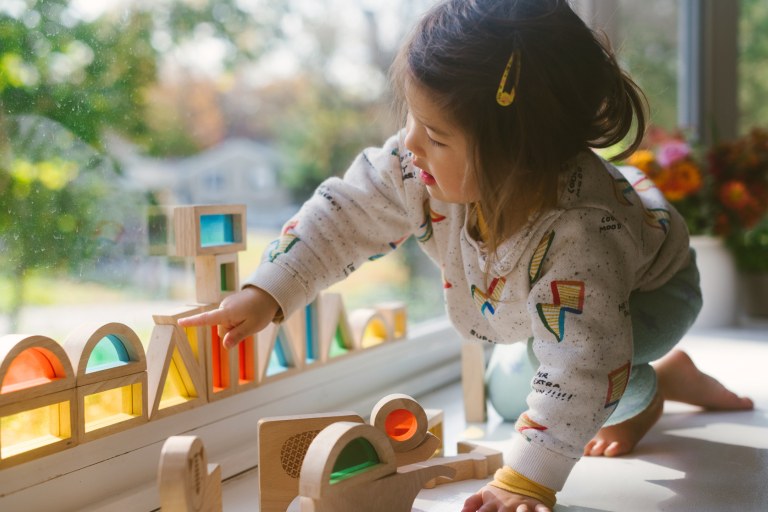
It’s amazing how quickly toys seem to accumulate throughout a child’s first few years of life. And what many parents may not realize is that those giant piles of mismatched, stray toys aren’t just a lot for you (as the parent who is likely responsible for organizing and tidying up)—they can be too much for your child, too. Instead of encouraging play, too many toys can have the opposite effect and leave children feeling overwhelmed and overstimulated.
Toy rotation—essentially swapping out the toys your little one has available to them—is a great tool to use in getting kids engaged with their space. It’s a Montessori-aligned philosophy that can really be applied in any home—whether you’re practicing the Montessori method or not.
If you're curious about trying it, we’re breaking down the what, why and how to incorporate toy rotation into your home. To put these tips together, I spoke to two experts: Simone Davies, founder of The Montessori Notebook and author of The Montessori Toddler, along with longtime Montessori educator Wendy Spencer, M.Ed. I'm also a former preschool teacher, with a Bachelor’s in Early Childhood Development and a mom of two who loosely followed Montessori with my own children.
What Is Toy Rotation?
Toy rotating is simple: you’re swapping out—or refreshing—the toys your child has out on their shelves or in their baskets, every few weeks or so. The idea is that it gives your child’s play a bit of a reset; they have a fresh set of toys to explore that often feel “new” since they haven’t seen them in a while.
Some parents do it weekly, some biweekly and some monthly—it doesn’t really matter much as long as you’re switching things out on a somewhat regular basis.
“Imagine a bookshelf curated with just the kind of books you like. You would be more interested to choose a book and read it, than with books that are no longer interesting to you or things that are too difficult for you,” says Simone Davies.
Benefits of Toy Rotation
Though it may sound like one more thing on your list of to-dos, the benefits of resetting your child’s toys may be worth it.
It supports focus and independent play
Less clutter and fewer options can actually encourage more independent play. “When a child is truly engaged, they will spend long amounts of time building mastery with educational concepts until they feel a completion of their achievement,” says Wendy Spencer, a Montessori educator with 30 years of experience teaching young children.
It makes old toys feel new again
Rotating toys keeps things feeling fresh—without having to buy anything new. That toy they were ignoring last month? It might become their favorite thing again after a little break. Spencer explains that children often reconnect with toys in a deeper way when they haven’t seen them for a while.
It reduces overwhelm—for everyone
Think of it like clearing your mental desktop. With fewer choices, your child doesn’t have to work as hard to decide what to play with. And you don’t have to feel guilty for not using all the toys all the time. “By eliminating unnecessary distractions, we help children to focus and deepen their concentration,” Davies explains. It’s a bit like clearing clutter from their mind, not just their shelves. It also means there’s less stuff out to keep track of and clean up at the end of the day.
How to Practice Toy Rotation, Step By Step
You don’t need to overhaul your child’s entire bedroom or playroom overnight. Starting simple is more than enough—and here’s how.
1. Start with the setup. The first step in toy rotation is having a designated spot for all of those toys. Use open shelves or display toys in baskets or trays so everything is easy to see and easy to put back. “Open shelves that allow for materials to be displayed in a beautified way will draw the child’s interest,” Spencer explains. “Baskets and trays lend a sense of order to the child’s ability to focus.”
2. Use a couple of bins to stay organized. In order to rotate toys in and out of your play area, you’ll need some kind of organizational tool for the things you’re putting away. You can keep rotated-out toys in a toy “library”—somewhere accessible, like a closet or under-bed bin. I use small plastic bins to store Legos, Magna-Tiles, animal figures and Hot Wheels when it’s time to take a break from them.
3. Rotate on a schedule that works for you. Some families rotate toys weekly, others do it monthly or seasonally. There’s no perfect schedule—go with what works for you. Toy rotation doesn’t have to be perfect. It’s about creating a space where your child can focus and engage, not about adding more to your plate.
Aim to leave out just a few toys or activities—Spencer says six to eight is a nice place to start. That way, there’s enough to invite focused play but not so many that it’s overwhelming. Bonus: let your child help pick what comes out next!
4. Pay attention to what your child is actually playing with. Not sure what to rotate out? Watch your child for a few days. If something hasn’t been touched, it can take a break. “I generally change items that they are no longer using,” says Davies.
If your child keeps coming back to the same toy, book or game—that’s a sign it’s still serving them and it’s totally fine to let it stay on the shelf. Rather than rotating out comfort items, give them a dedicated spot so your child knows exactly where to find them. That sense of ownership and order supports their independence too.
“In Montessori, we have core educational concepts that remain on the shelves year-round,” Spencer explains. “If a child has materials that are most prized for them, it’s best to create a sanctuary of space for these carefully curated items.” This could be a small basket, a corner of a shelf, or a fabric bin that’s always within reach.
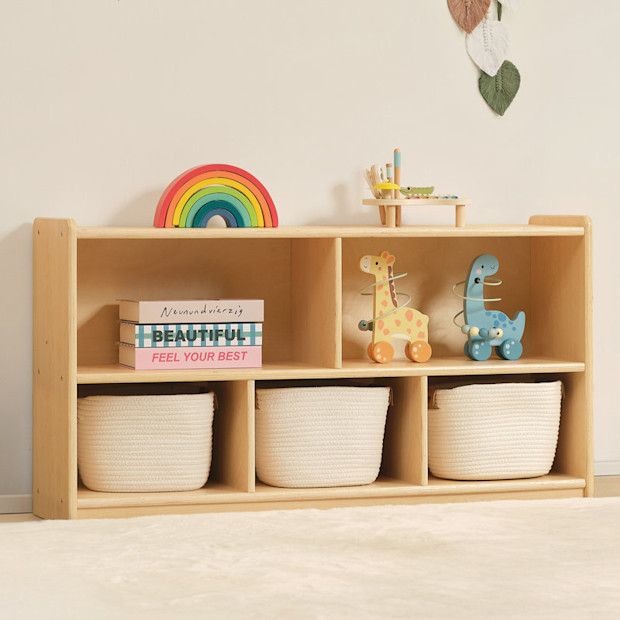


✨ Toy Rotation by Age and Stage
What works for a crawling baby isn’t the same as what’ll engage a preschooler—and that’s the point. The goal of toy rotation is to match the materials to your child’s current stage of development and interests. Here’s what that might look like.
👶 Infants (0–12 months)
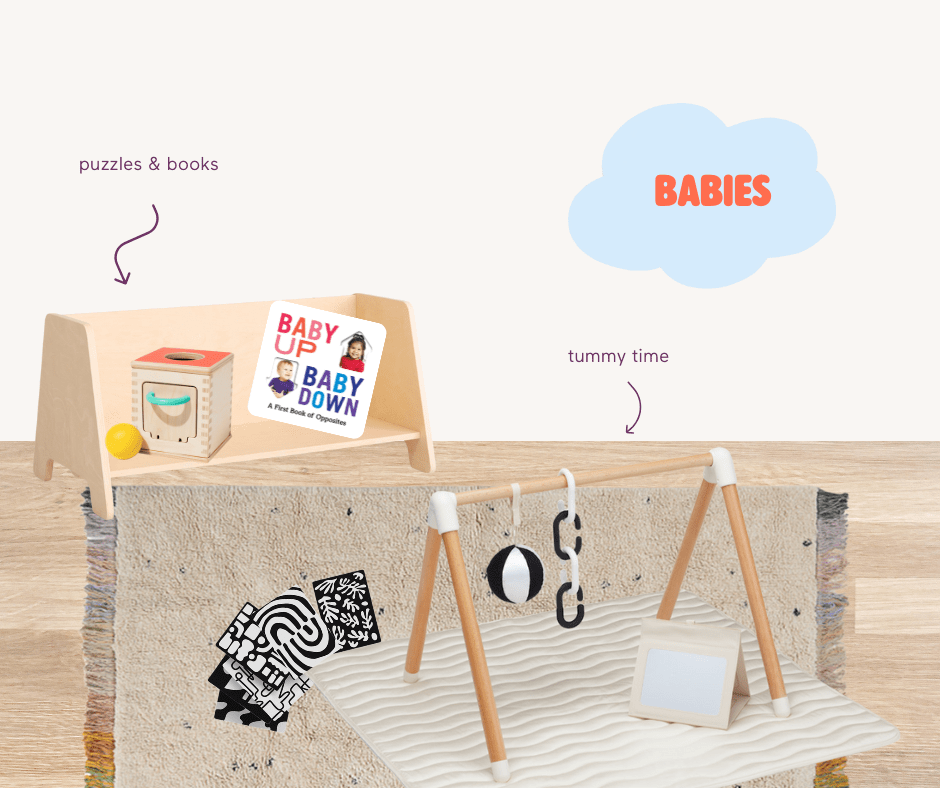
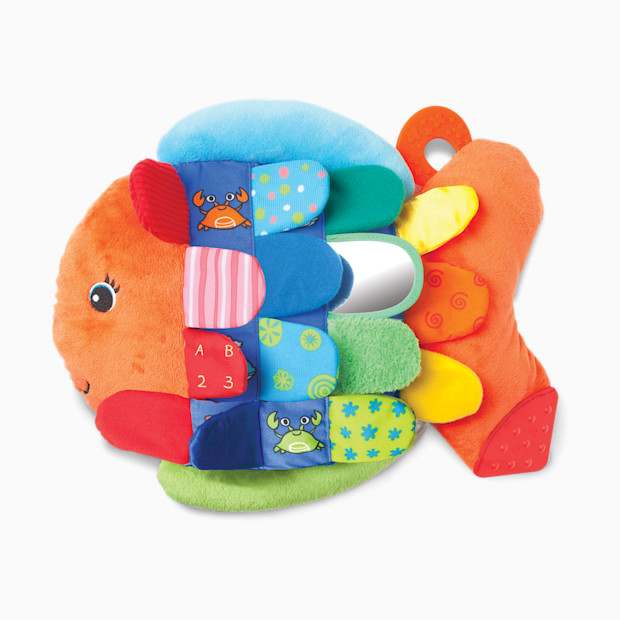
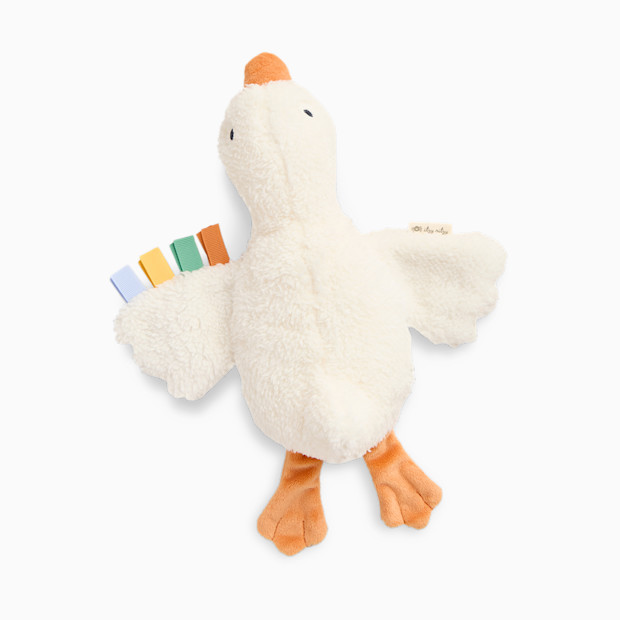
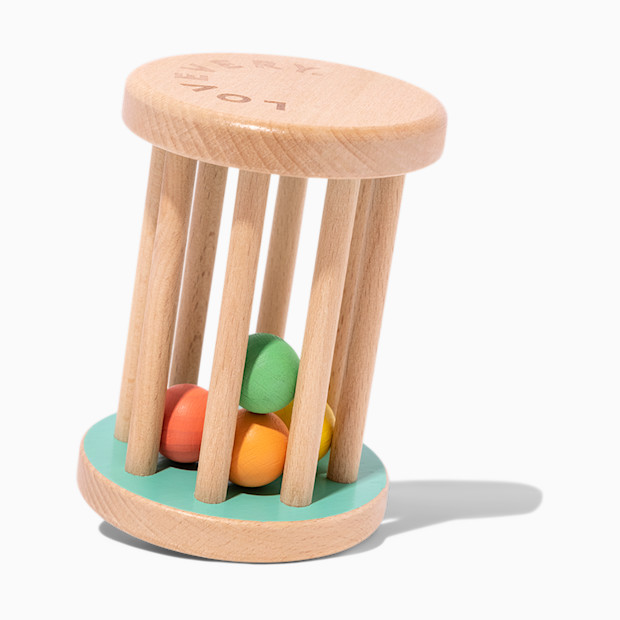
Focus on sensory-rich, safe materials that support exploration. This includes things like:
Soft textures, simple rattles, cloth books
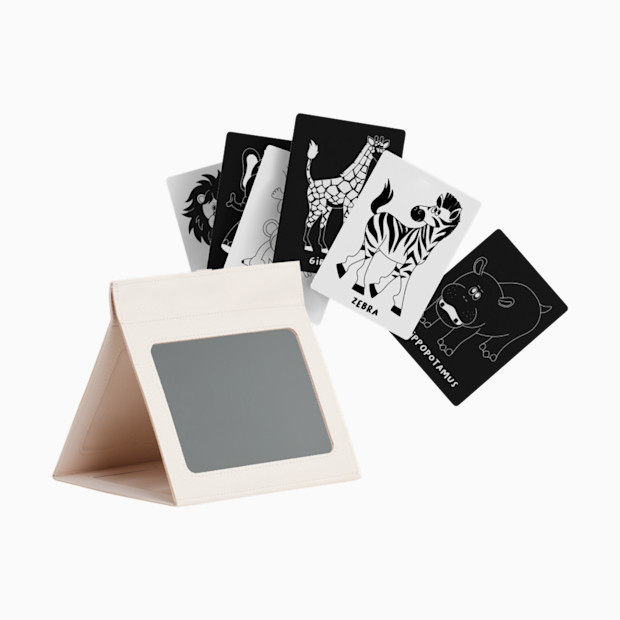
Visual contrast toys (like black and white cards)
Grasping or chewing toys that are safe to mouth
“Infants will have baskets that focus on sensory-seeking activities; soft and non-chokable items,” Spencer says.

🚼 Toddlers (12–36 months)
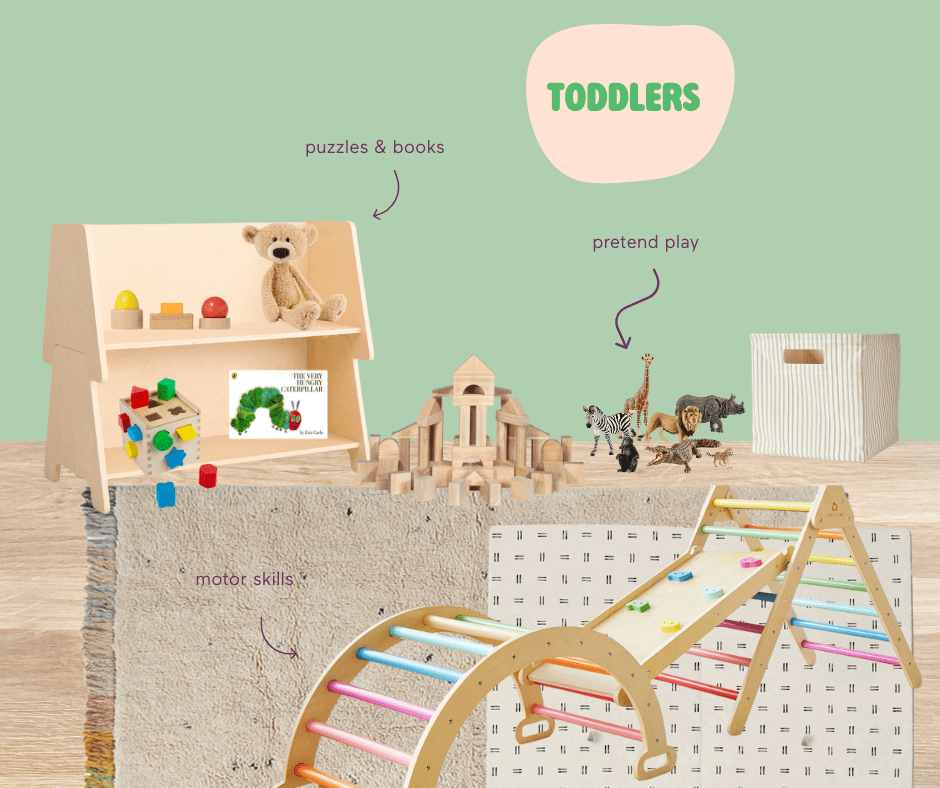
This is the age of big emotions, cause-and-effect obsession, and emerging independence. Keep things simple and hands-on. “At this stage, children love activities like practical life work—sweeping, pouring, carrying things around the home,” Davies adds.
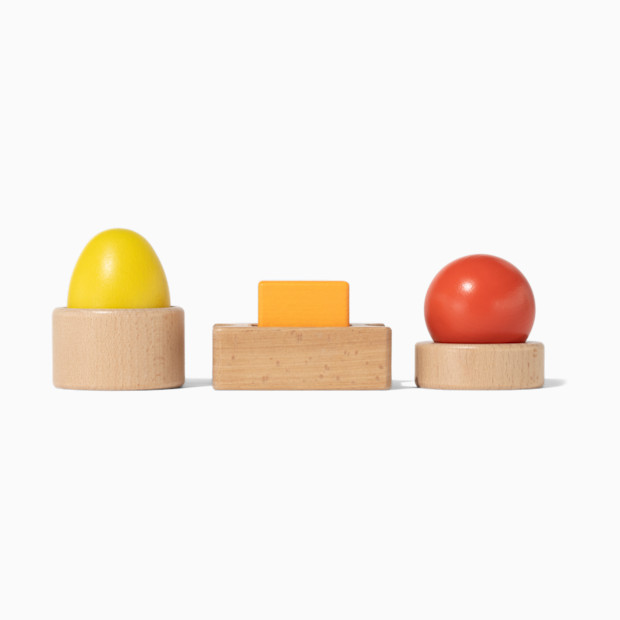
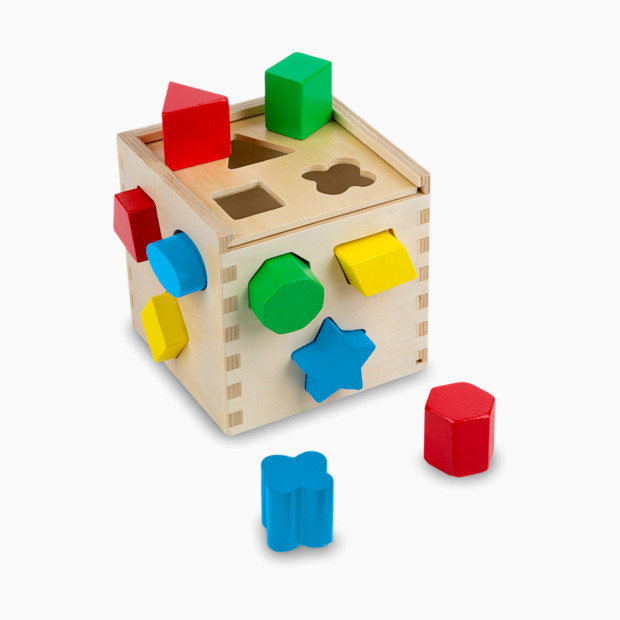
Stacking toys, shape sorters, nesting cups
Toys that encourage imitation and role play (like dolls or pretend food)
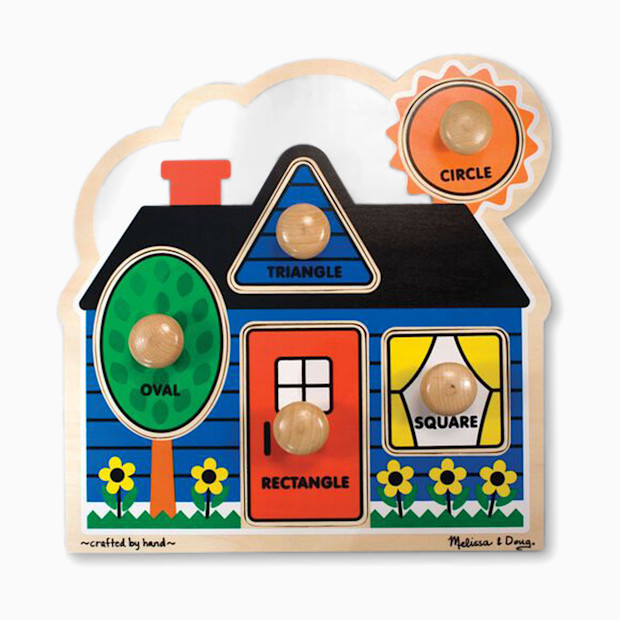
Simple puzzles and language-building books


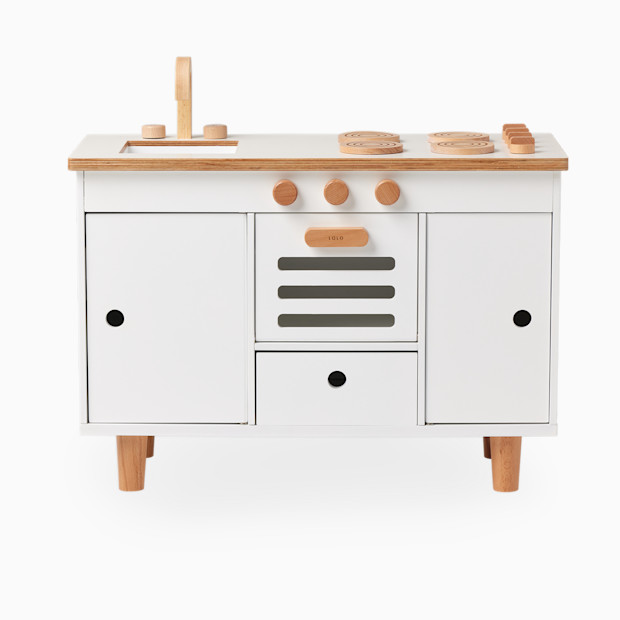


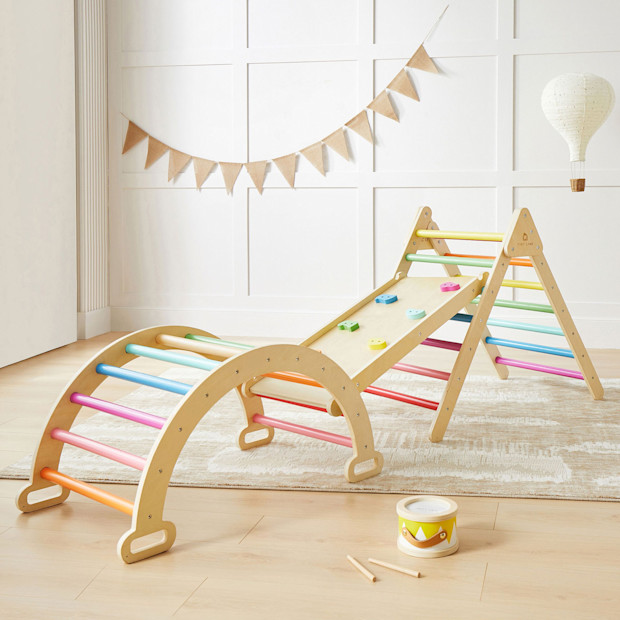
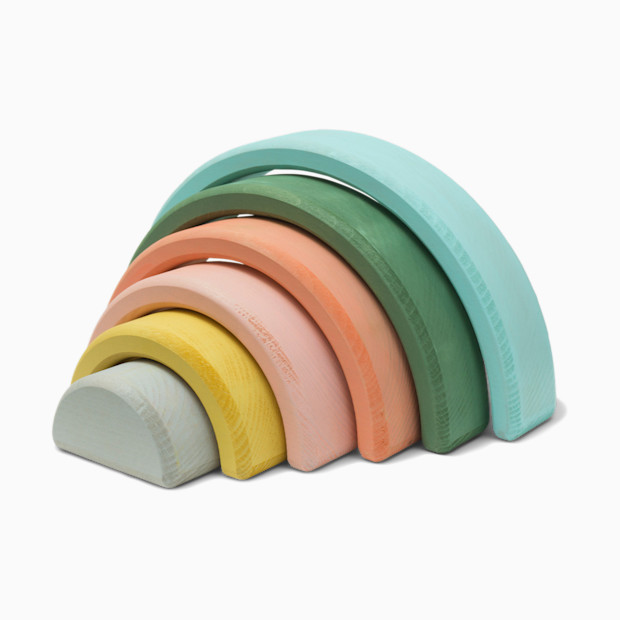
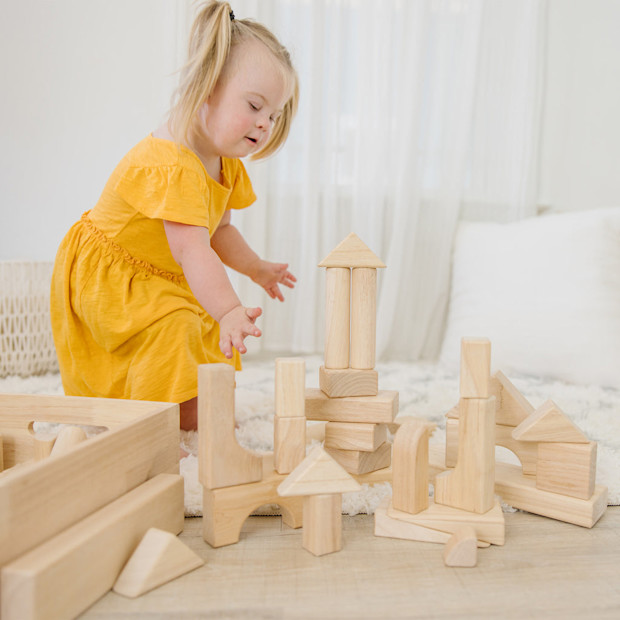
🎒 Preschoolers (3–5 years)
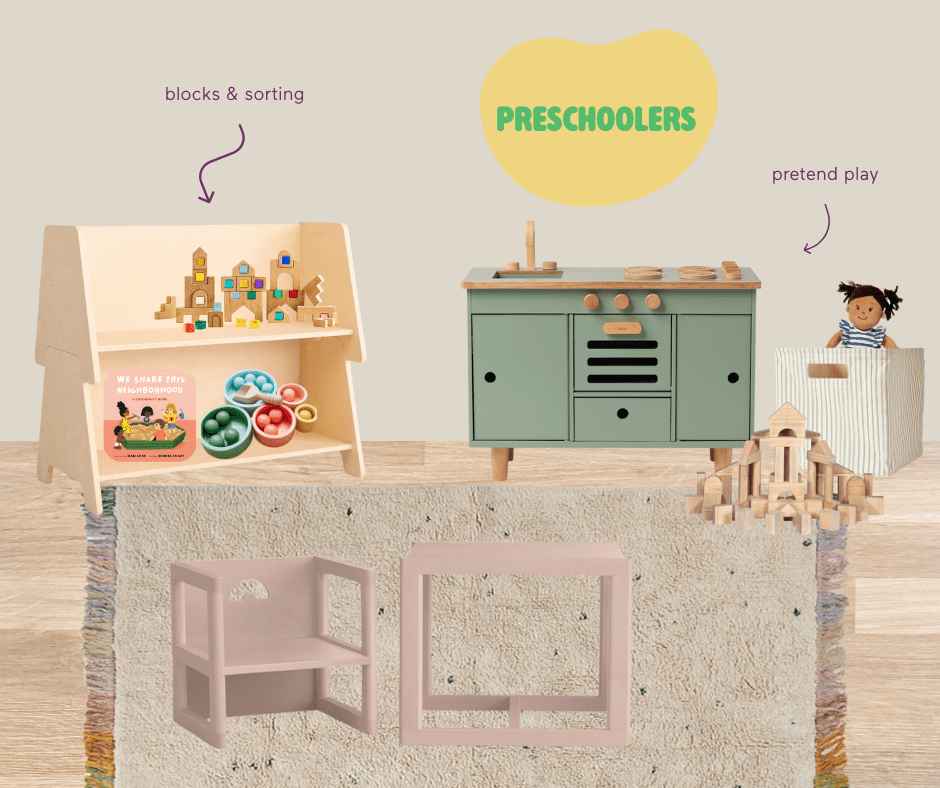
As imagination and problem-solving skills grow, you can start introducing more complex, layered materials.
Matching games, memory cards, and early board games
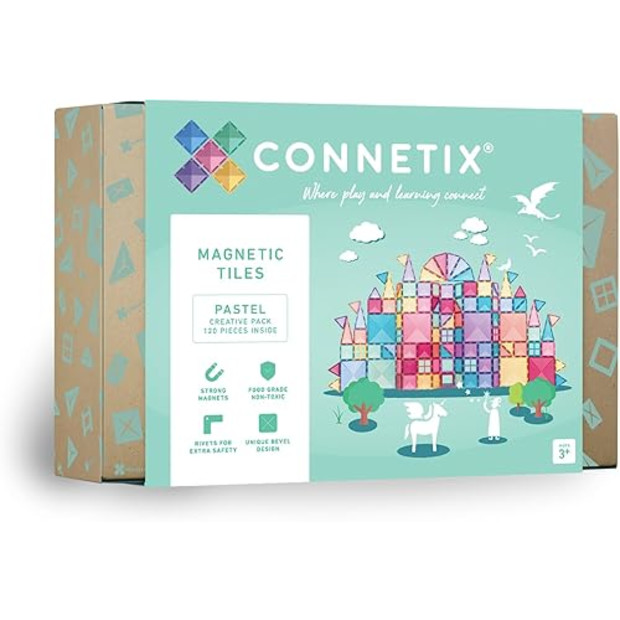
Tools for storytelling, building, and pretend play
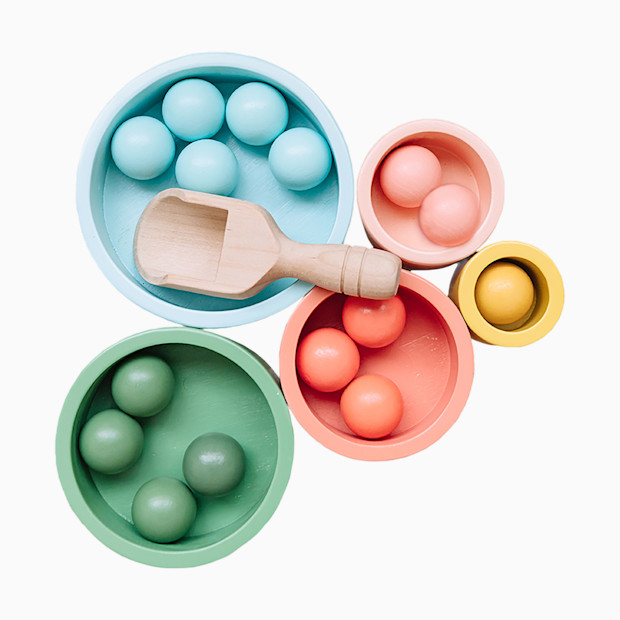
Montessori-style materials for counting, sorting and cultural exploration
“Preschoolers will work on building language, mathematics with one-to-one correspondence, care of self, and cultural studies that provide a lens to the world beyond theirs,” says Spencer.




Piccalio
Play Table
🪄 A note on older kids
Toy rotation doesn’t have to stop when kids turn five! Older children might rotate between craft supplies, building sets, science kits or even tools for hobbies and long-term projects. “It’s the same process for most age groups up until around 12 years old,” Davies explains. “Just the complexity of the activities will increase.”
No matter your child’s age, keep watching for what lights them up—and what they’re ignoring. And take that as your cue that it’s time to rotate.
Expert Sources
Babylist uses high-quality subject matter experts to provide accurate and reliable information to our users. Sources for this story include:
Simone Davies, founder of The Montessori Notebook and author of The Montessori Baby, The Montessori Toddler and The Montessori Child.
Wendy Spencer, Montessori educational director who has been a Montessori teacher for over 30 years, based in Northern California.

;)
;)
;)
;)
;)
;)
;)
;)
;)
;)
;)
;)
;)
;)
;)
;)
;)
;)
;)
;)
;)
;)
;)
;)
;)
;)
;)