
How Many Baby Clothes Do I Need?
5 bodysuits or 50? Here’s how to figure out the right number of baby clothes to put on your registry.

By
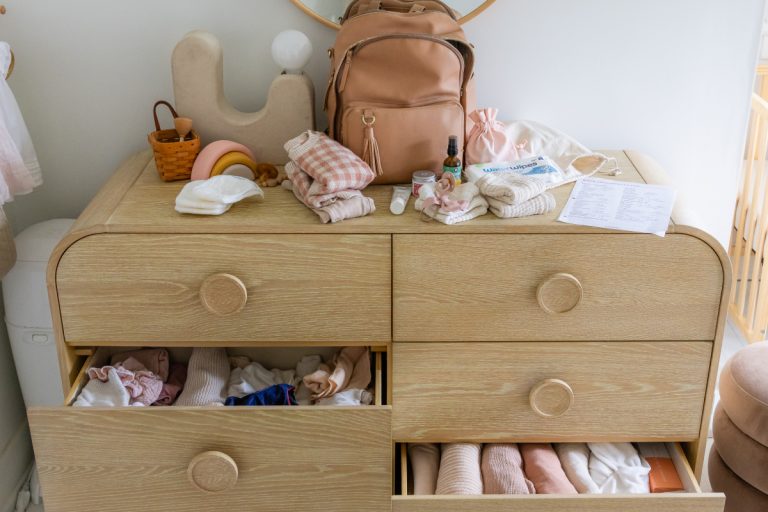
Babies can go through several outfit changes a day, but that doesn’t mean you need a dresser full of clothes before they arrive. A small collection of everyday basics is a great place to start—and you can add more once you know what fits and how often you do laundry.
If you’re building a registry, include clothes you’ll use regularly, like sleepers and bodysuits. Count any gifts and hand-me-downs toward your total, too. Below, we’ll break down how many of each item to have on hand and how to adjust the list for your family.
What to Know About Baby Clothing Sizes
Baby clothing sizes are a starting point, not a prediction of when your baby will wear them. Here’s how to plan:
Newborn and 0–3 months are different sizes. Newborn is generally the smaller of the two, but height and weight ranges vary by brand. Check the brand’s size chart before buying.
Have a few options for the early weeks. Some babies wear newborn clothes and others fit into 0–3 months from birth. Having a few basics in both sizes gives you options without buying a full wardrobe in each.
Fit varies by brand and style. Start with a few pieces before stocking up on one brand. Once your baby arrives, you’ll have a better sense of what fits and which styles make diaper changes easier.
Buy ahead selectively. Everyday basics can be useful in larger sizes, but it’s harder to predict what size your baby will wear in a particular season. Consider waiting on seasonal pieces until closer to when you’ll use them.
How many baby clothes will I need?
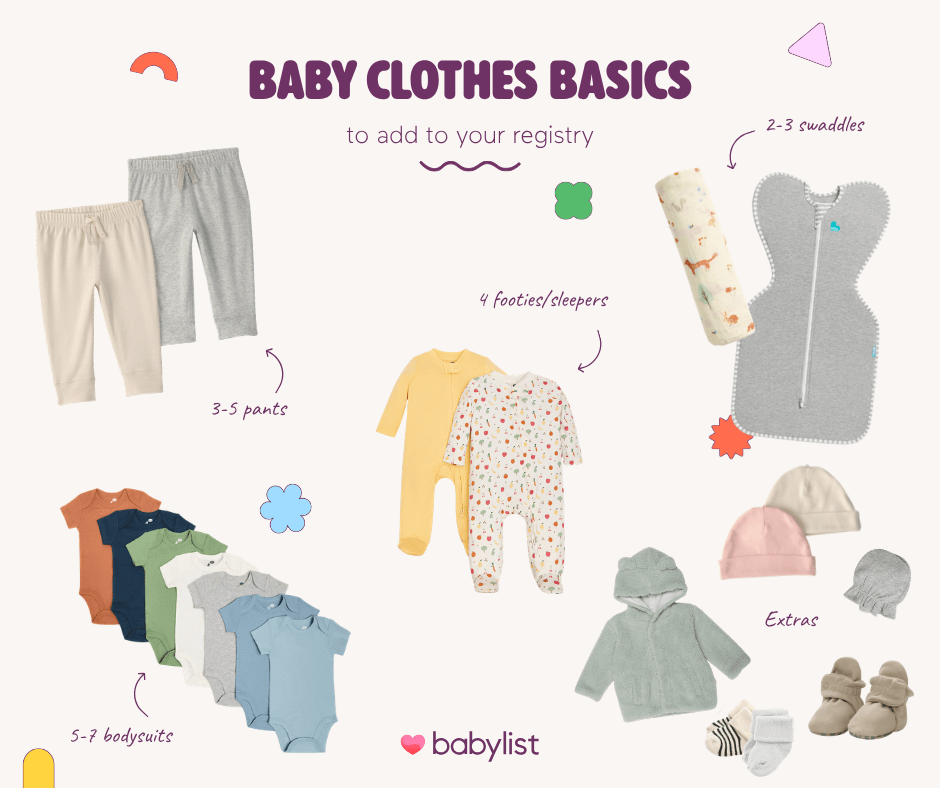
Use the checklist below as a starting point for clothes in your baby’s current size, assuming you do laundry every two to three days. Count any gifts and hand-me-downs toward these totals.
If you wash once a week, you may want roughly twice as many bodysuits and sleepers. If you wash daily, you can start with fewer—but keep a few spare outfits for unexpected changes.
You can also adjust the mix: if your baby mostly wears footies, you may want more of those and fewer bodysuits and pants. Extras like hats, booties and layers will depend on the weather.
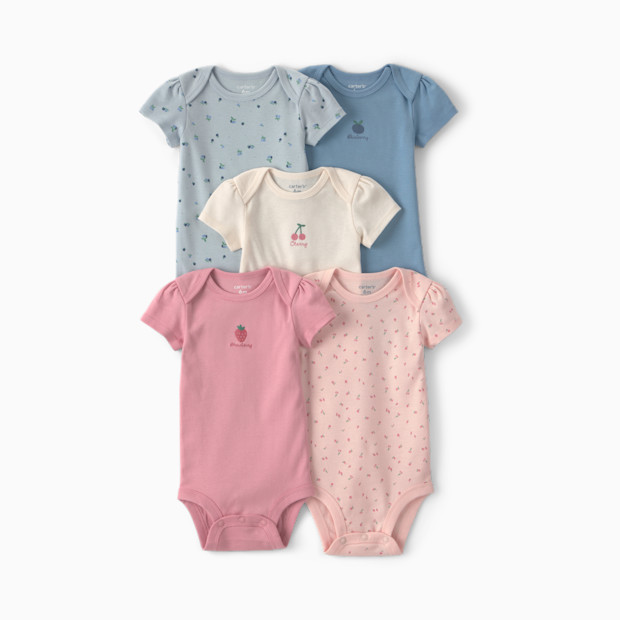
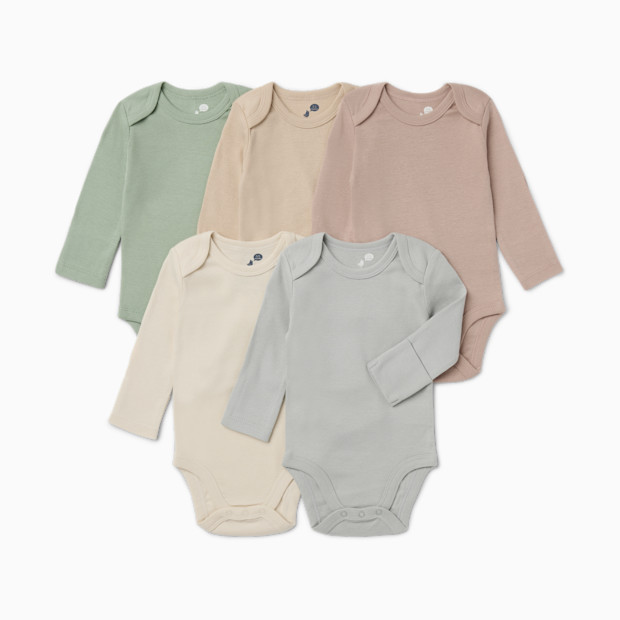
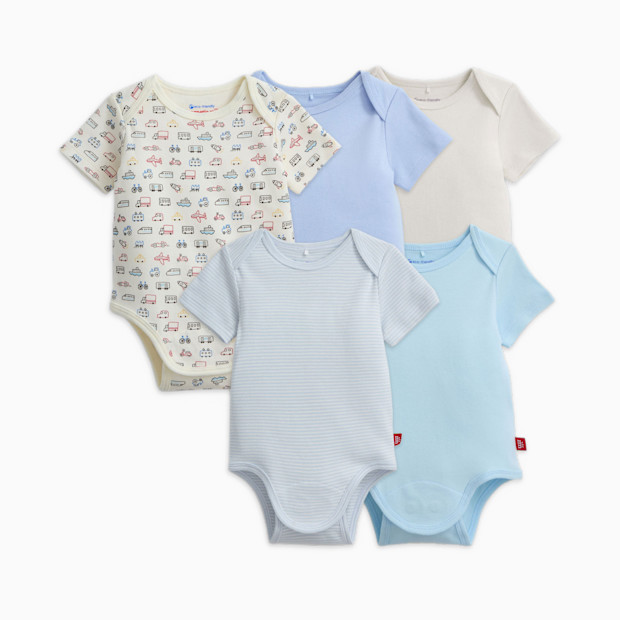
7 Bodysuits or Rompers
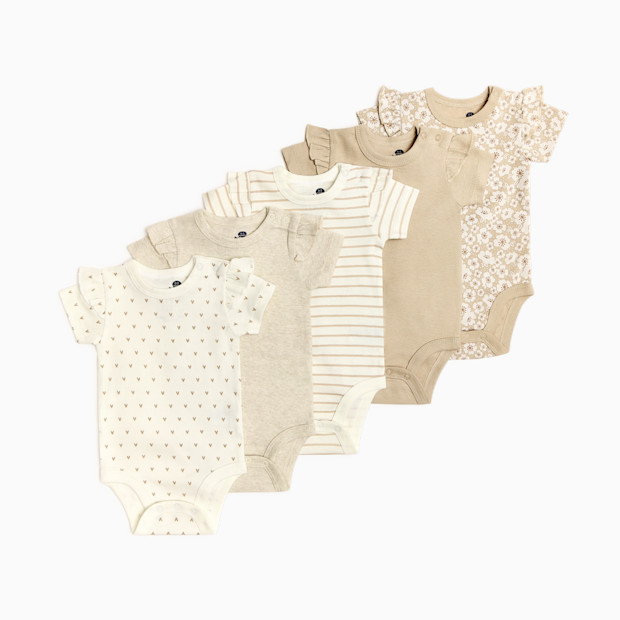
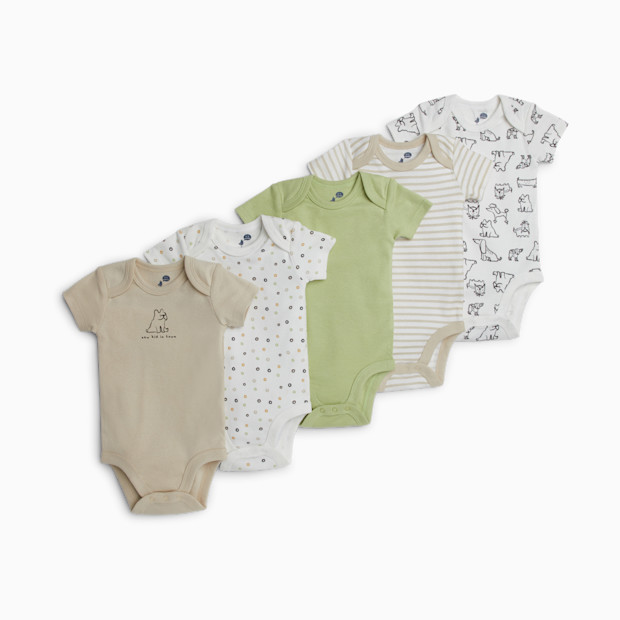
Bodysuits can be an easy, no-fuss outfit in summer or a basic layer in winter, and they come in both long- and short-sleeve styles. With seven, if you wash a couple of loads a week, you’ll always have clean ones on hand. Tip: Add a kimono-style bodysuit (sometimes also called a side-snap bodysuit) or two for baby to wear until their umbilical cord falls off, usually around one to two weeks after they’re born.
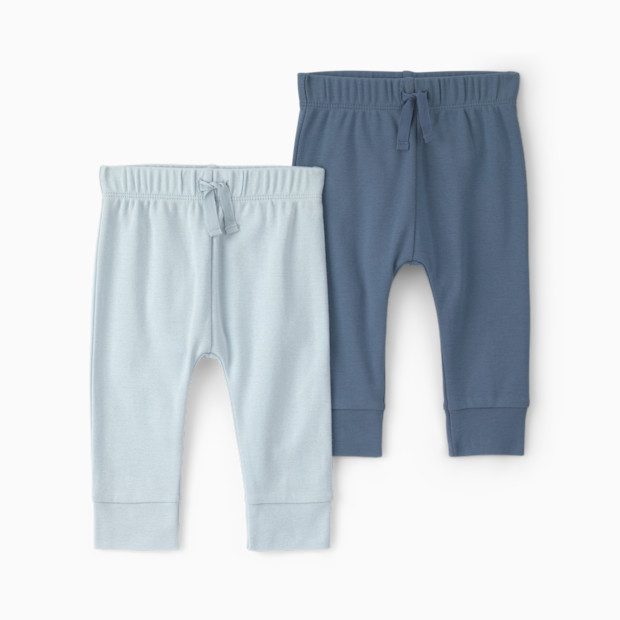
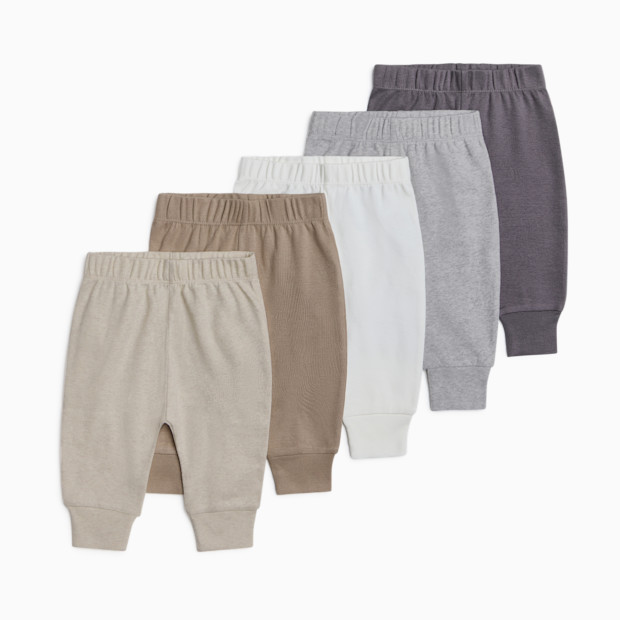
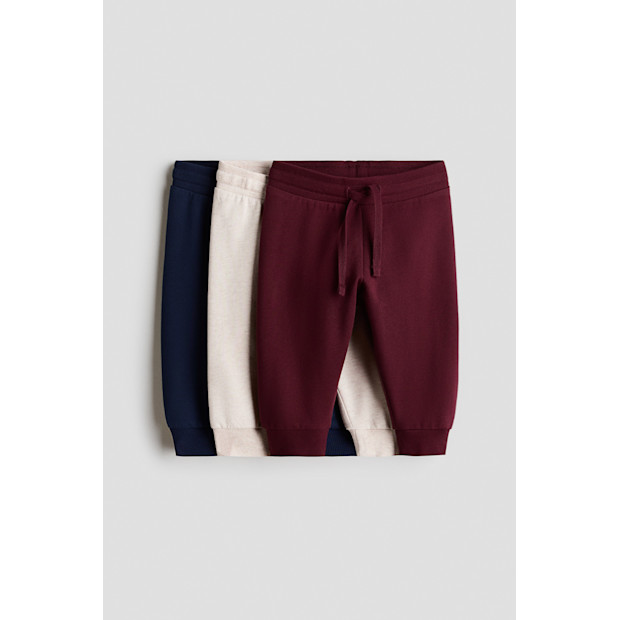
3 to 5 Pants
Babies don’t really need to wear pants, but having a few pairs on hand to pull over bodysuits can help keep their legs warm when it’s chilly.
4 Sleepers, Footies or Gowns
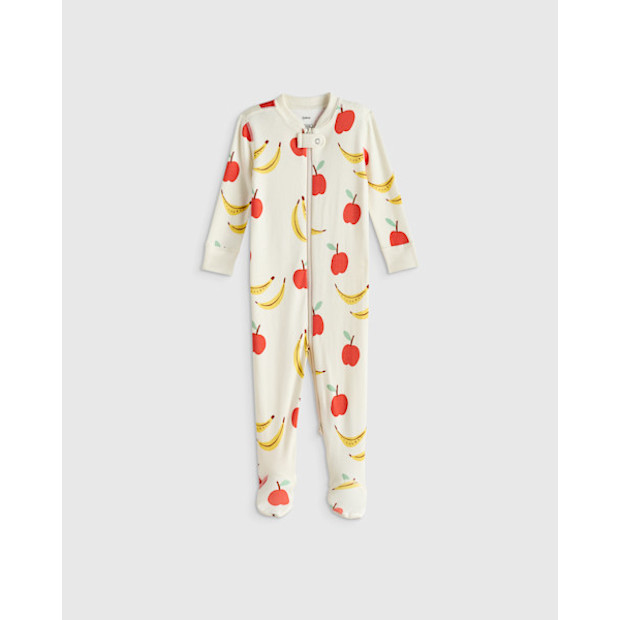
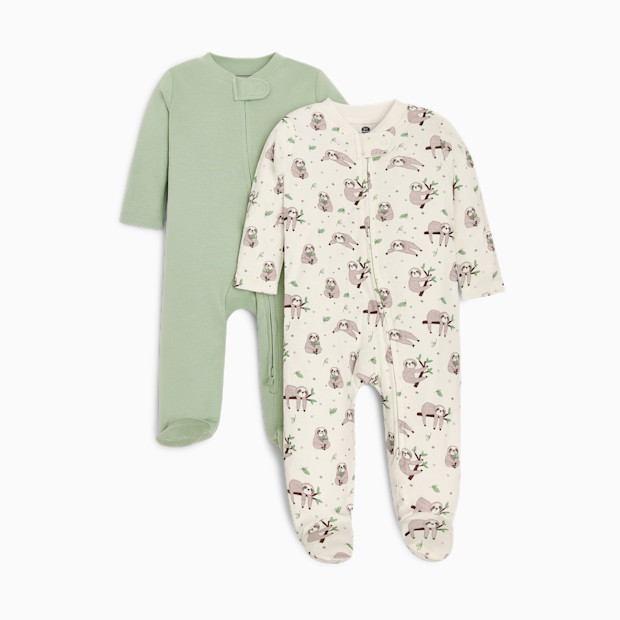
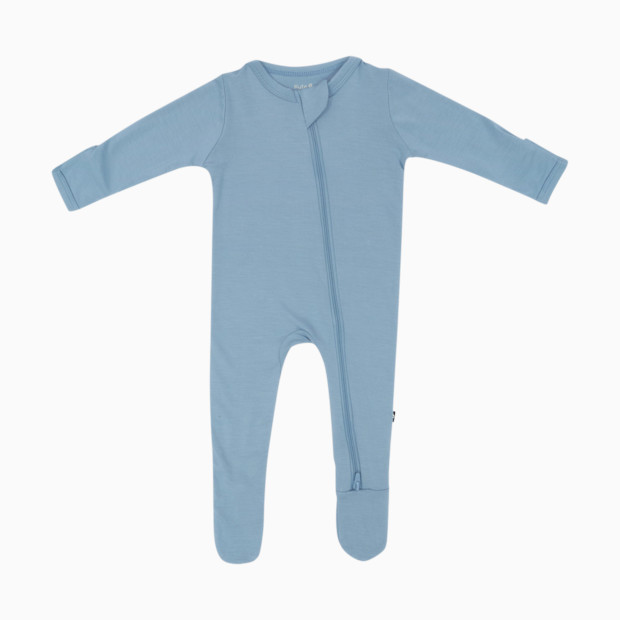
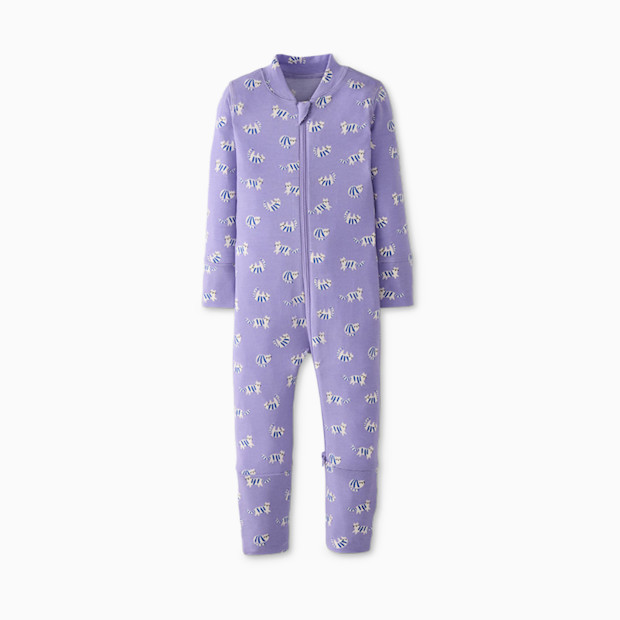
Sleepers and footies are for much more than just sleep—they work for daytime, too. In colder climates, they can also be paired with a swaddle for nighttime. Gowns are great wardrobe additions, especially during those first few months when you want something quick and easy for frequent diaper changes.

2 Hats
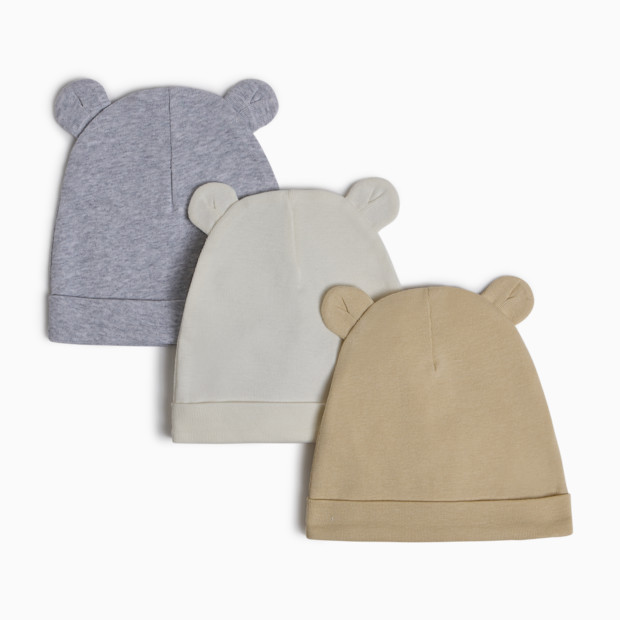
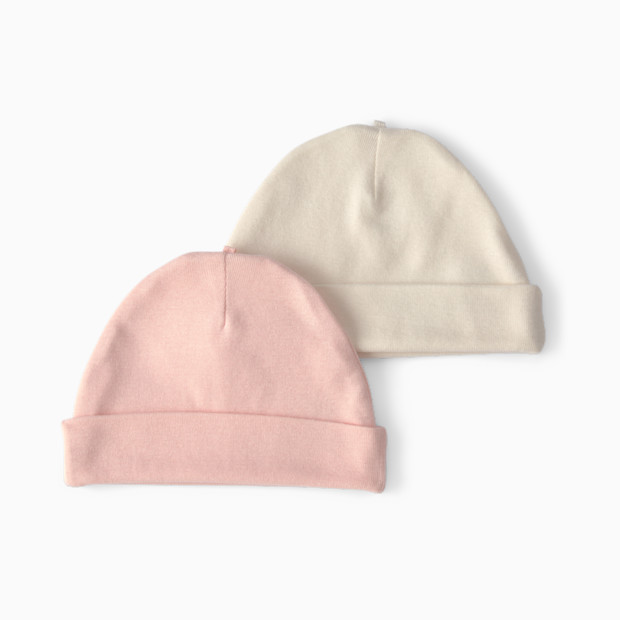
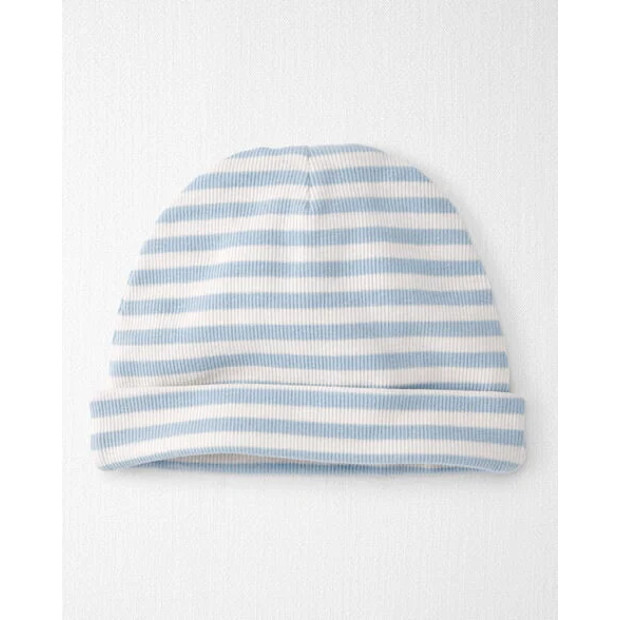
Beanie-style hats are important in the early weeks and months to keep your baby warm. Start with two hats—one for your baby to wear and one for the wash. In colder climates, fleece hats are also nice to have on hand. And a quick reminder: no hats when baby is sleeping or in the car.
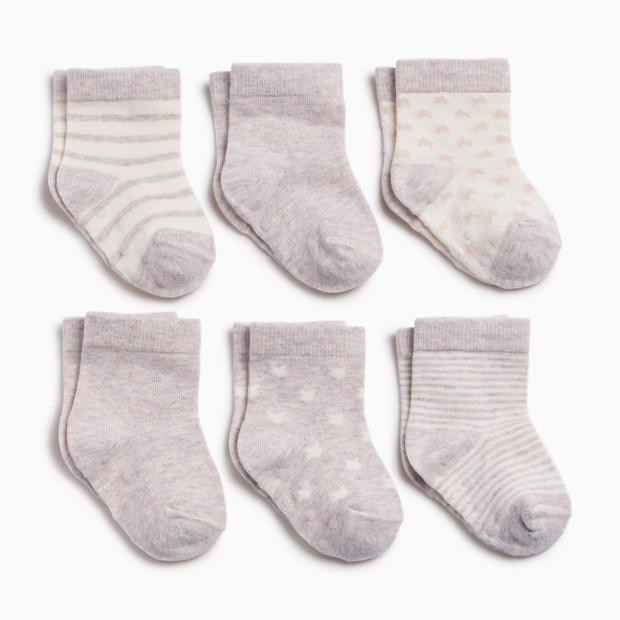
5 Pairs of Socks
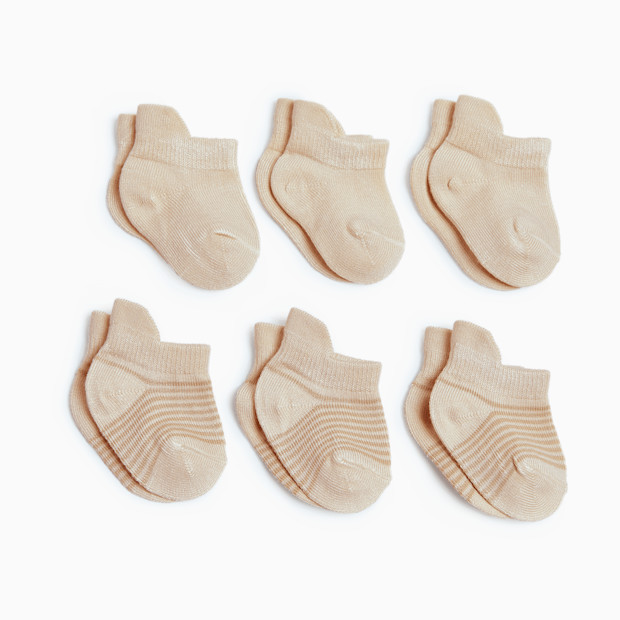
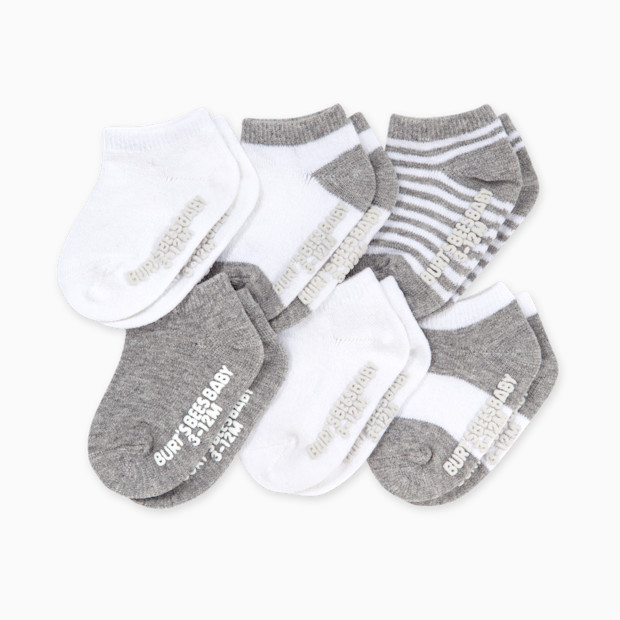
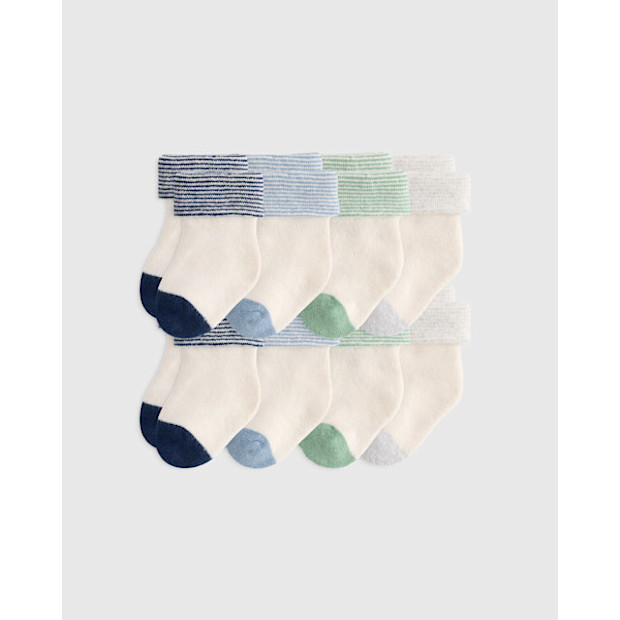
Even in summer, you’ll want to keep your baby’s feet cozy in socks. Tip: You won't have to match tiny socks if you get them all in one color. And if your baby’s due in winter, add two extra pairs.
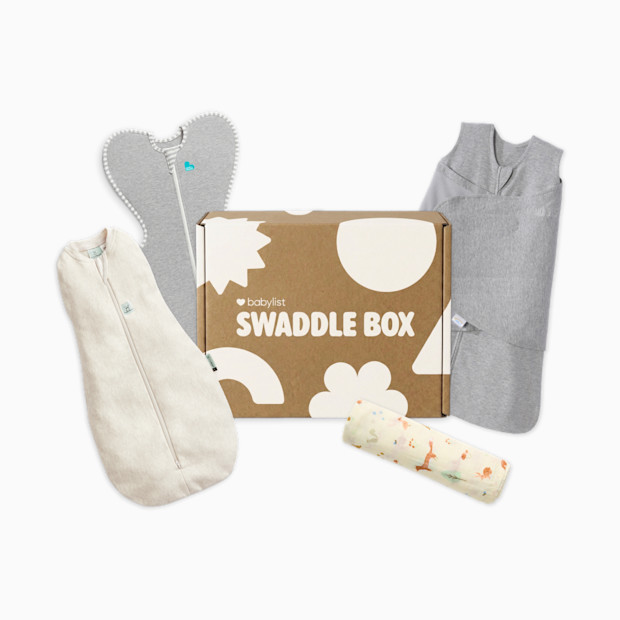
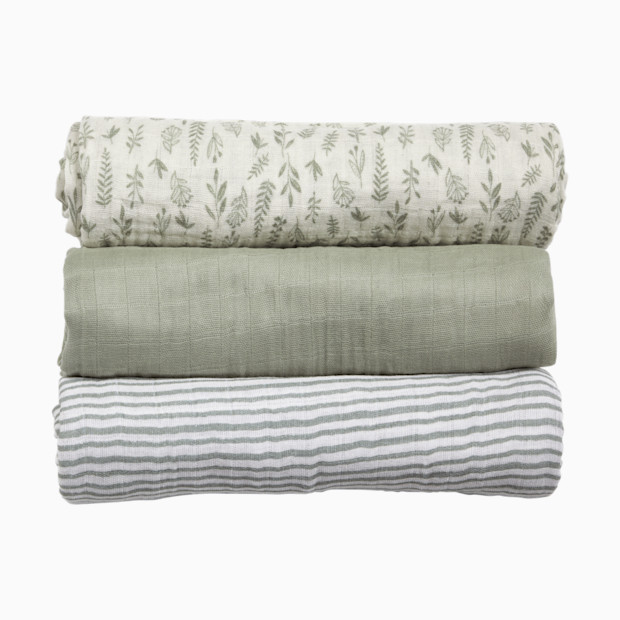
2 to 3 Swaddles
Swaddles aren’t clothes, per se, but many babies spend a ton of time in them. Why? Many babies like to be swaddled for the first few months—it’s very womb-like and helps prevent their startle reflex from waking them up. For newborn sleep time, you may find many nights you just put baby in a diaper and swaddle for sleep. Tip: You can swaddle baby in a blanket (this how-to swaddle video can help), or a two-in-one swaddle that makes things a little simpler.
Special Occasion Additions
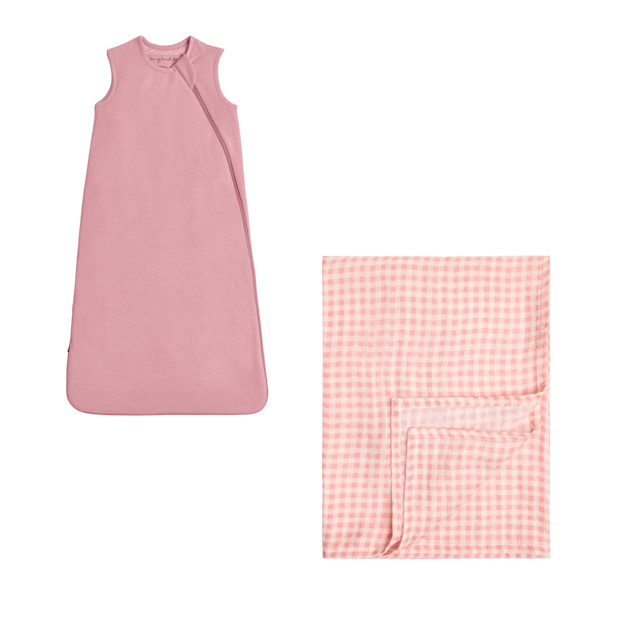
With a brand-new baby, you’ll probably have a few occasions to dress up or take some adorable photos. A coming-home outfit is also a sweet addition.
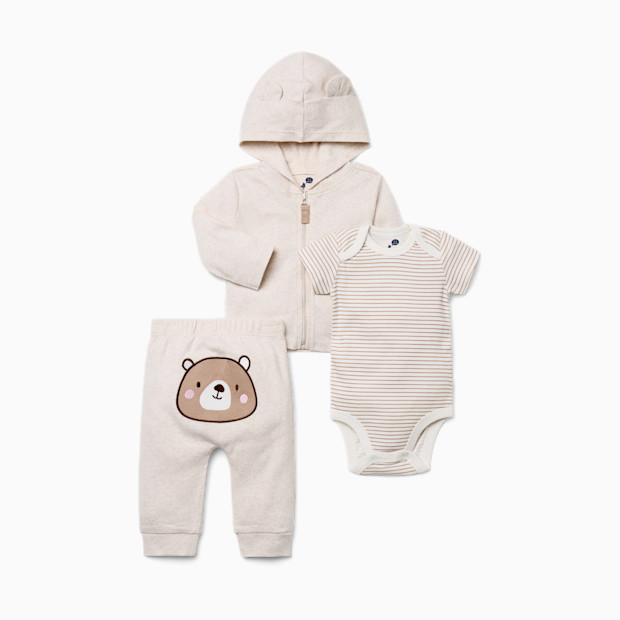
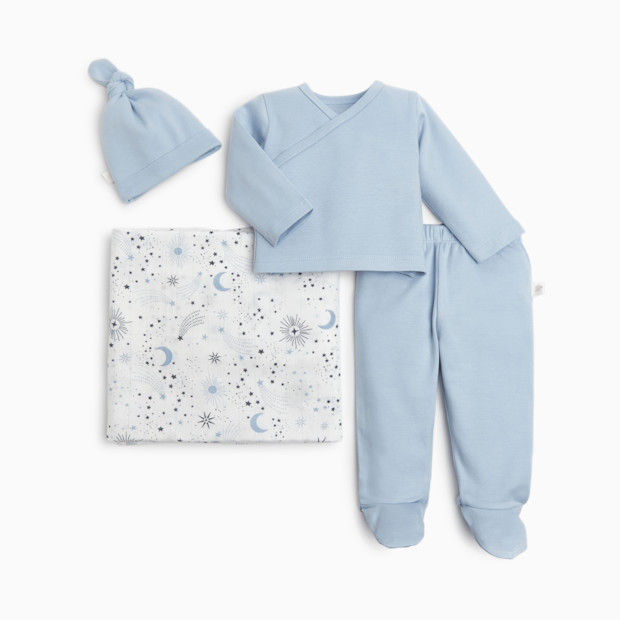
Tips for Building Baby’s Wardrobe
Whether you're expecting a winter baby or one born in the middle of a heat wave, a little planning goes a long way. These tips can help you register for what you’ll actually need in the sizes that make sense for your baby’s first year.
1. Plan for the seasons ahead
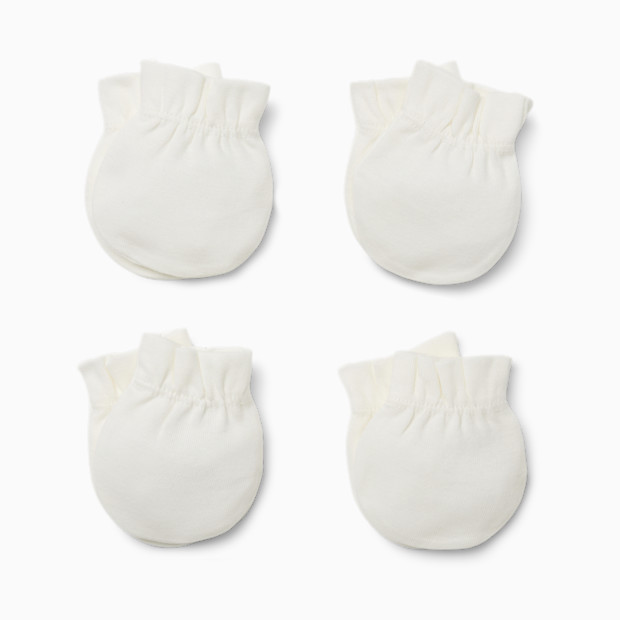
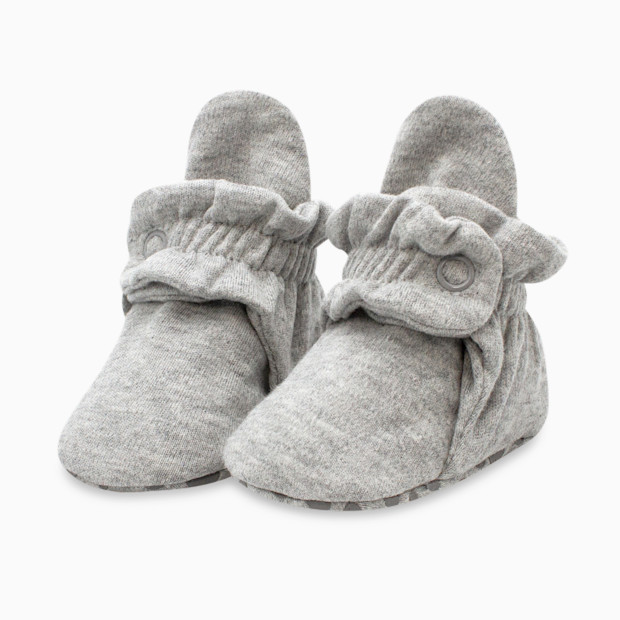
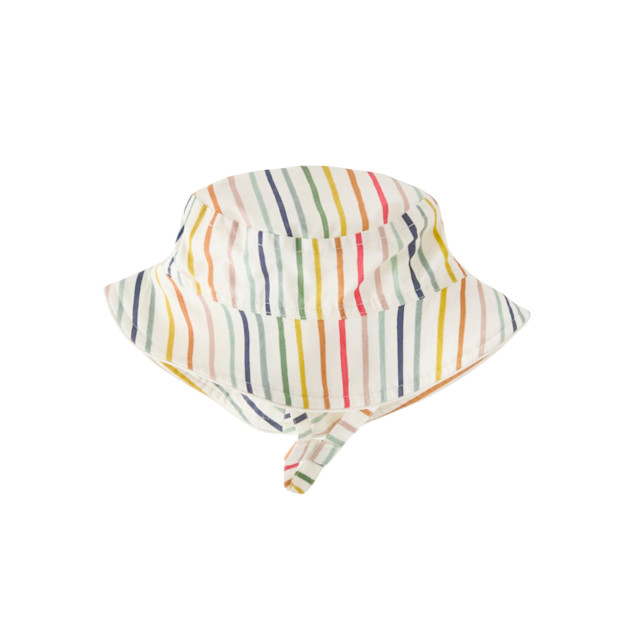
Babies grow fast—and they’ll hit different sizes in different seasons. If your baby’s due in January, think ahead to how old they’ll be in summer and register for warmer-weather clothes in the right size (lightweight layers, sun hats, a swimsuit, etc.). If your baby is due in the summer, think ahead to what they’ll need once the temperature starts dipping, like booties, a warm bunting and little mittens.


2. Stay organized
Tiny baby clothes = easy to lose track of. Organize your registry (and future drawers!) by size so you know what fits now and what’s coming up next.
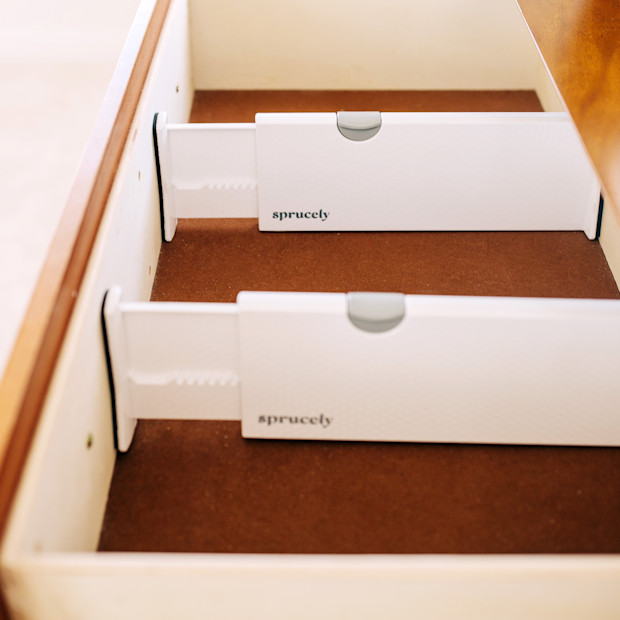
If you’re storing most of baby’s clothes in a dresser, drawer dividers are a great investment. They help keep everything in one place (we’re looking at you, tiny baby socks) and can be set up by clothing type, size or any other way you’d like.
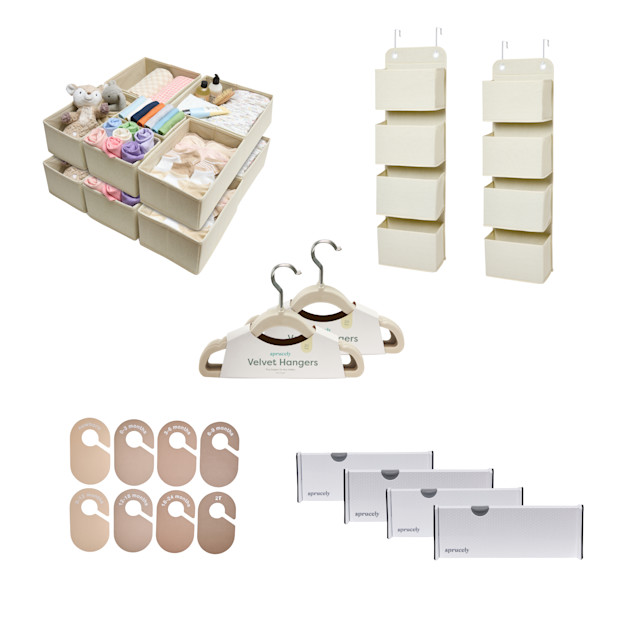
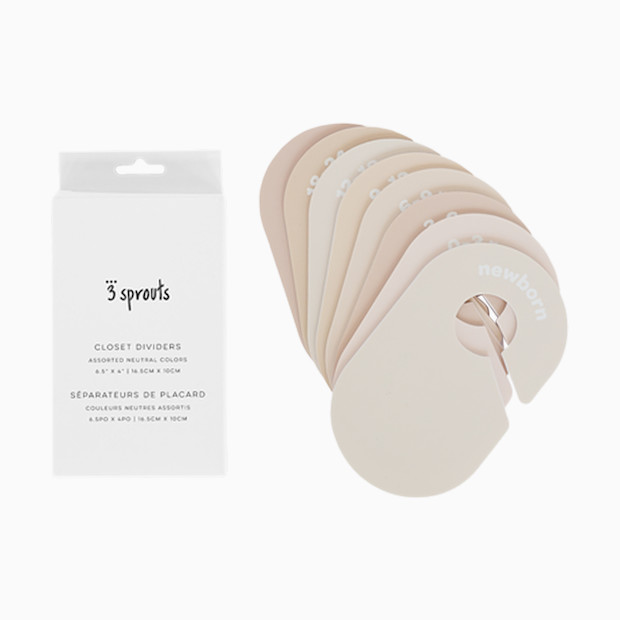
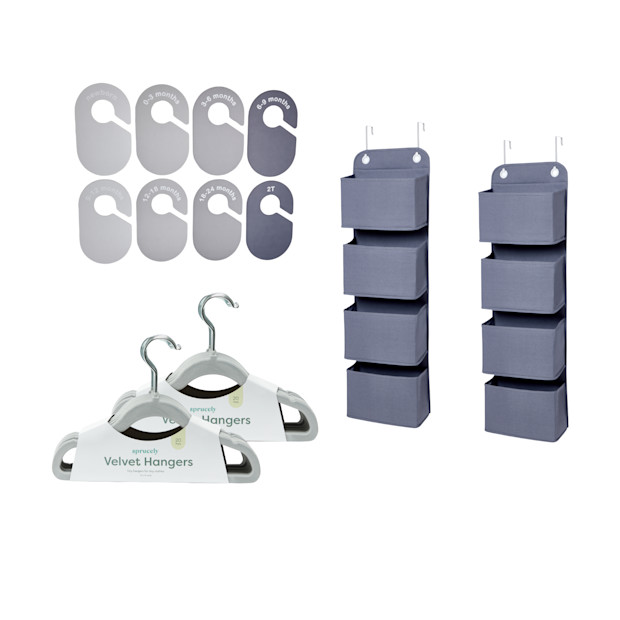
If you’re using a closet to store your little one’s wardrobe, check out closet dividers. (You can also get them as part of a larger nursery storage set). These hanging signs separate clothes by size (this set goes from newborn through 2T), so you can easily see what you have and are less likely to forget about clothes before they’re too small.
If you don’t want to buy an extra organizing accessory, you can designate a dresser drawer for a different type of clothing (pants on the bottom left, onesies on the top right) and keep only the size your baby is currently in.
One more organizational tip: rotate out clothing items as soon as your baby outgrows them. Staying on top of this onerous task goes a long way toward managing your baby’s wardrobe. Keep a storage bin (or two) on hand so you’ll always have somewhere to stash them; then you can decide if you want to hang onto them for the future, pass them on to someone else or donate them with other baby gear you’re looking to rehome.


 - Neutral Floral, 0-3 M","url":"https://www.babylist.com/gp/small-story-organic-cotton-short-sleeve-ruffle-print-mix-bodysuit-5-pack/83840/2752854","source":"hello_baby"});)
 - Playful Pups, 0-3 M","url":"https://www.babylist.com/gp/small-story-organic-cotton-short-sleeve-printed-bodysuit-5-pack-1772155856/37716/1422931","source":"hello_baby"});)
 - Fruit, 0-3 M","url":"https://www.babylist.com/gp/carter-s-short-sleeve-bodysuits-5-pack/73697/3148447","source":"hello_baby"});)
 - Earth Neutrals, 0-3 M","url":"https://www.babylist.com/gp/small-story-organic-cotton-long-sleeve-solid-bodysuits-5-pack/37719/1905365","source":"hello_baby"});)
;)
 - Blue, 3M","url":"https://www.babylist.com/gp/carter-s-cotton-pants-2-pack-1775766191/38981/3148379","source":"hello_baby"});)
 - Core Neutrals, 0-3 M","url":"https://www.babylist.com/gp/small-story-organic-cotton-solid-pants-5-pack/75070/2545766","source":"hello_baby"});)
","url":"https://www2.hm.com/en_us/productpage.1088055022.html","source":"hello_baby"});)
;)
 - Sloth & Sage Solid, 0-3 M","url":"https://www.babylist.com/gp/small-story-organic-cotton-2-way-zip-footie-2-pack/37720/2752870","source":"hello_baby"});)
;)
 - On The Go Multi, 0-3 M","url":"https://www.babylist.com/gp/magnetic-me-organic-cotton-magnetic-footie-4-pack/79100/2815088","source":"hello_baby"});)
;)
 - Core Neutrals, 0-6 M","url":"https://www.babylist.com/gp/small-story-organic-cotton-bear-hat-3-pack/50404/2423827","source":"hello_baby"});)
 - Pink/Ivory, 0-3 M","url":"https://www.babylist.com/gp/carter-s-caps-2-pack/22555/3148490","source":"hello_baby"});)
;)
 - Ecru, 0-3 M","url":"https://www.babylist.com/gp/tiny-kind-bamboo-viscose-socks-6-pack/57082/2151004","source":"hello_baby"});)
 - Heather Grey Pattern, 0-3 M","url":"https://www.babylist.com/gp/burt-s-bees-baby-ankle-socks-6-pack/15264/243314","source":"hello_baby"});)
;)
;)
;)
 - Sage Multi Leaf","url":"https://www.babylist.com/gp/tiny-kind-organic-muslin-swaddle-3-pack/36195/1374285","source":"hello_baby"});)
;)
;)
;)
;)
 - High Prairie + Dandelion, 0-3 M","url":"https://www.babylist.com/gp/goumi-kids-stay-on-baby-mitts-2-pack-1761846368/16253/2720770","source":"hello_baby"});)
 - White, 0-6 M","url":"https://www.babylist.com/gp/small-story-organic-cotton-mittens-4-pack/50408/1905306","source":"hello_baby"});)
;)
;)
;)
;)
;)
;)
;)