
Visiting a Newborn? Here’s What Parents Want You To Know
Meeting a newborn is exciting, but the best visitors follow a few unspoken rules. Here’s your guide.

By

There’s nothing sweeter than a brand-new baby smell—and nothing more delicate than the first few days (or weeks...or months) of figuring out life with a newborn. If you’re getting ready to visit a new baby (hi, grandparents 👋), you might be wondering what’s helpful, what’s not, and whether it’s okay to ask for baby snuggles right away.
To help everyone—especially new parents—feel supported and seen, we turned to a few people who really get it. First up: DeeDee Moore, a grandma herself and the founder of More Than Grand. As a grandparenting educator, she helps grandparents build strong, respectful relationships with today’s parents—and she’s passionate about helping both generations feel more connected.
We also spoke with Michelle Goitia, a postnatal doula and parent educator at JC Bump & Baby, who supports families through those tender early days. And Emily Silver, a family nurse practitioner and co-founder of NAPS (Newborn and Parenting Support), who’s helped thousands of new parents navigate postpartum life with expert care and lots of empathy.
Their advice? Show up with kindness, not assumptions. These tips will help you be the kind of visitor every new family actually wants around.
Ask First (No Surprise Pop-ins)
The biggest misconception Moore hears from new grandparents? Thinking you're automatically entitled to meet the baby right away. “Many parents want to savor the first few days with their new baby without having to share with anyone,” she explains. “They want to get their feet under them as new parents before inviting in the rest of the family.”
We get it—you’re excited! Most parents are looking forward to introducing their baby to loved ones. But they may also need a moment to settle in. Pressuring for a visit or dropping by unannounced (even with treats) can add stress to an already tender time.
If you're wondering how to ask about visiting without adding pressure, Moore recommends keeping it open and supportive: “Let us know when you’re ready for visitors!” or even better: “Let us know when you’re ready for us to come help out with whatever you need!”
This kind of language shows you're focused on what the parents need, not just what you want.
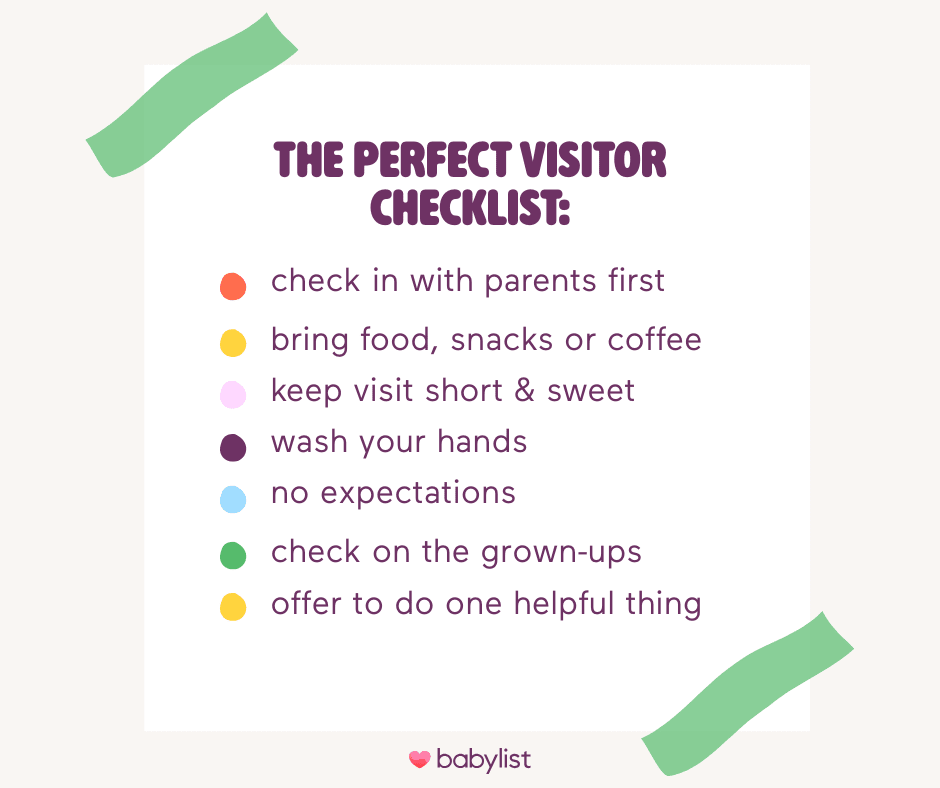
Once a visit is on the calendar, keep things low-pressure. Ask what day and time works best, and make it clear that they can cancel anytime. Bonus points for a quick “Still good to come by?” text before you leave your house. It’s a small gesture that goes a long way.
Respect Boundaries
Every family does things differently, and that’s especially true in the early days. You might be eager to give advice or share your personal stories, but pause first. Parents are still finding their rhythm, and what feels natural to you might not match their wishes.
“It’s a very different world than when we were parents,” Moore explains to other soon-to-be grandparents. “Today’s parents are following modern guidelines to keep their babies safe. If something seems unfamiliar or confusing, take the time to learn more about what’s new.”
Instead of assuming, ask. Want to post a photo? Offer to help with a diaper change? Jump in with baby-soothing strategies? It’s always better to check first. Even small things—like putting the baby down for a nap or adjusting how you hold them—can feel big when you're the parent watching it happen.
Feeding can also be a touchy subject. Some new parents don’t mind breastfeeding in front of close family or friends, while others might prefer some privacy. Emily Silver, a family nurse practitioner and founder of NAPS (Newborn & Parenting Support) in Boston, recommends saying, “Let us know when you’re getting ready to feed the baby and we will go in the other room to give you privacy.” They may take you up on the offer or they might be totally okay with you hanging around. Either way, you’re demonstrating your thoughtfulness.
Most importantly remember: boundaries aren't about keeping you out, they're about helping new parents feel confident and supported. The best visitors follow the parents’ lead and offer help in ways that actually help.
Delay Your Visit if You’re Sick (Even a Little)
You were really looking forward to this visit; we totally get it. But if you’re feeling under the weather (even just a slightly scratchy throat or the sniffles), it’s best to reschedule. Newborns have developing immune systems, and what feels like a mild cold to you can be a much bigger deal for them.
It’s tough to miss out, but showing you care by keeping your germs to yourself is the most loving thing you can do. And if you’re not sure whether to come or not? Just ask. Most new parents would rather err on the side of caution.
Bonus: Postponing a visit means you get to look forward to a more awake baby and more settled parents when you do stop by—definitely worth the wait!
Wash Up Before You Snuggle
We’re not saying you’re germy. But babies are brand new, and their immune systems are still catching up—so yes, everyone needs to wash their hands before getting in those sweet snuggles.
Make it a habit! Wash your hands as soon as you walk in the door, and again before holding the baby, especially if you’ve touched your face or phone, been outside or snacked on something. Hand sanitizer can work in a pinch, but soap and water is your best bet.
It’s a simple step, but it shows new parents you’re on their team, and makes it easier for them to relax while you’re cuddling their favorite tiny human.
Don’t Kiss the Baby
It’s so tempting. That soft skin and perfect little forehead! But skip the kisses, especially on the face and hands.
Newborns are extra vulnerable to viruses like RSV (respiratory syncytial virus) and Herpes Simplex Virus (HSV), which can be dangerous even in small doses. According to the American Academy of Pediatrics, RSV can cause serious illness in babies under six months old. And HSV-1 (the virus behind cold sores) can be transmitted through a single kiss, even if the person isn’t showing symptoms.
This can feel like a tough ask, especially if kissing feels like your way of showing love. But keeping babies safe is the ultimate form of love, and there are lots of other ways to connect: rock them, hum a lullaby or just soak in every tiny detail with your eyes (our personal fave).
Keep the Visit Short & Sweet
New parents are running on very little sleep and even less predictability. When you visit, think quality over quantity. An hour (or even less) is plenty to connect, offer support and soak in those sweet new baby vibes.
After about an hour, check in: Want me to stay a bit longer, or would it be better to wrap up? Giving parents the option (without pressure) shows you’re tuned in to what they need—not just what you want.
“The biggest concern for new parents is that they feel like they have to entertain anybody that comes to their house,” says Michelle Goitia, parent educator, postnatal doula and owner of JC Bump & Baby in Jersey City, New Jersey. As a visitor, you can take that pressure off by offering to bring food, or just letting them know you’re totally fine hanging on the couch offering supportive company.
Even if it feels like your visit ends too soon, you’re playing the long game. Moore reminds grandparents, “Respecting parents’ needs right now will pay off in the long run.” When families know you won’t overstay your welcome, they’ll be even more excited to see you next time.
Offer Help, Not Just Hugs
Snuggling the baby is sweet—but you know what’s even sweeter? Showing up for tired, overwhelmed new parents. “In the early days, the most important thing to do is show parents that you want to support them,” says Moore. “Focus on strengthening that relationship. Your connection with the baby will grow over time.”
New parents are juggling a lot, and practical help goes a long way. Not sure what they need? Here are a few ideas you can try asking:
“What can I take off your plate today?”
“I can grab groceries or fold some laundry—what’s more helpful?”
“Can I hold the baby while you shower, or would you rather I clean the kitchen while you nap?”
These small gestures can feel huge to tired parents who don’t have the bandwidth to ask (or don’t want to). And even if they say no? They’ll remember that you offered and that definitely means a lot.
Go With the Flow
Life with a newborn is unpredictable. Plans might change last minute, nap time might overlap with your arrival or baby might be mid-meltdown the whole time. (It happens.)
The best thing you can bring to your visit? Flexibility. Being patient and understanding when things don’t go as planned helps parents feel less pressure and more support, which is always the goal.
Bring Something Thoughtful (Optional, but Appreciated)
A small, thoughtful gesture can go a long way in helping new parents feel seen and supported. And while it’s lovely to focus on the baby, don’t forget the parents. A surprise box of diapers? Always useful. But food for tired parents? Even better.
It could be their favorite takeout, a freshly cooked meal that’s ready to eat, or something they can stash in the fridge and heat up later. Maybe it’s a coffee exactly how they like it—or a card that simply says, you’re doing great. Those small acts of kindness often mean more than anything you could wrap in a bow.
Most people show up for the baby (understandably), so a little care for the grownups can feel extra meaningful.
Celebrate from Afar (If Needed)
Can’t be there in person? You can still make your love felt. A thoughtful text, a video message, sending food or a gift card are all ways to show up without physically showing up. You might even offer to set up a quick FaceTime once everyone’s settled. Moore shares that because of COVID, she didn’t meet her granddaughter in person until she was five months old: “She was just as fascinated by me as I was by her. It was such a special moment.”
Whether you’re down the street or across the country, what matters most is letting the new parents know you’re cheering them on.
More to Know About Visiting a Newborn
When is it safe for family and friends to visit a newborn?
Technically? Right away. But in reality, the best time to visit a newborn depends on more than just medical clearance.
“Once babies are discharged from the hospital, we can assume that they’re healthy and can be around family,” says Silver. If a baby experienced complications at birth or spent time in the NICU, their pediatrician might recommend waiting longer or taking additional precautions.
But health status is just one piece of the puzzle. “Everybody’s risk tolerance is different, especially during cold and flu season or a pandemic,” Silver adds.
Some parents might welcome visits right away. Others may only feel comfortable with immediate family—or no visitors at all for a while. Some might ask that you be up-to-date on your Covid, flu or whooping cough vaccines. Others may ask visitors to mask or wash hands when they arrive.
“I don’t think there’s any right or wrong answer to all those layers,” says Silver. “It just comes down to personal preference and their threshold of risk tolerance.”
And yes, it can be hard to wait, especially when all you want to do is swoop in for hugs and help. But if you're asked to hold off, know it’s not personal. Most parents aren’t trying to push anyone away; they’re simply doing what they believe is best for their baby (and themselves) in those early days.
If your ultimate goal is to be a regular part of the baby’s life, the best thing you can do is respect the boundaries now. Showing that you're on their team makes it more likely you'll be welcomed with open arms—maybe sooner than you think.
How can I be truly helpful?
Silver says there’s a big difference between being a visitor and being a helper. “A visitor is someone who makes you feel like you have to tidy up, put out food or put on a bra,” she says. “Being a helper means that you’ll do things that make the parents’ day a little easier. Look for unfinished chores that are right in front of you that you can just do without being asked.” Putting away clean dishes you see on the drying rack is one example of this.
The tricky thing about helping and not just visiting, is that parents will need help in all sorts of different ways. One family might be desperate for you to fold their giant pile of laundry. Another might be horrified that you’ve seen their been-there-for-a-week wrinkly clothes. One parent might be thrilled to hand off the baby to you to hold so she can shower in peace. Another might prefer to hold the baby herself while you sit and catch up on all the gossip.
When in doubt, ask. Use language that makes it easy to say yes (or no).You might say something like, “I’d really love to help make things a little easier for you today. Would you rather that I fold those sheets, run out to get those stamps you need from the post office or keep an eye on the baby so you can nap?” When you ask in a low-pressure, solution-oriented way, you’re not just being polite, you’re being genuinely helpful. And that makes all the difference.
What should I bring (if anything)?
You don’t need to bring anything, but if you’re the bring-something type, here’s what actually helps. The short answer? Food. You can’t go wrong showing up with something nourishing (bonus points if you know what their favorite takeout place is). This is especially true if you’re visiting after the first few weeks as most meal trains fade out after the initial flurry of support.
That said, both Goitia and Silver agree: what parents need most isn’t stuff—it’s you. “Remember that you’re walking into someone’s home, and they quite possibly were up all night,” says Silver. “They might be on the verge of tears because their nipples hurt. Just walk in and be present.”
Expert Sources
Babylist uses high-quality subject matter experts to provide accurate and reliable information to our users. Sources for this story include:
Michelle Goitia, parent educator, postnatal doula, and founder of JC Bump & Baby based in Jersey City. She offers classes, doula services and meetups to help families feel more confident in early parenthood.
DeeDee Moore, grandparenting educator and founder of More Than Grand where she offers practical tools, modern insights and thoughtful guidance for navigating the transition into grandparenthood—without overstepping.
Emily Silver, family nurse practitioner and co-founder of NAPS (Newborn and Parenting Support), a Boston-based resource for expert-backed baby and postpartum care. She’s supported thousands of families with guidance that’s equal parts clinical and compassionate.
