
Babyproofing Feels Overwhelming—But It Doesn't Have to Be
How to tackle the biggest hazards first, stay ahead of your baby and choose the right gear.

By
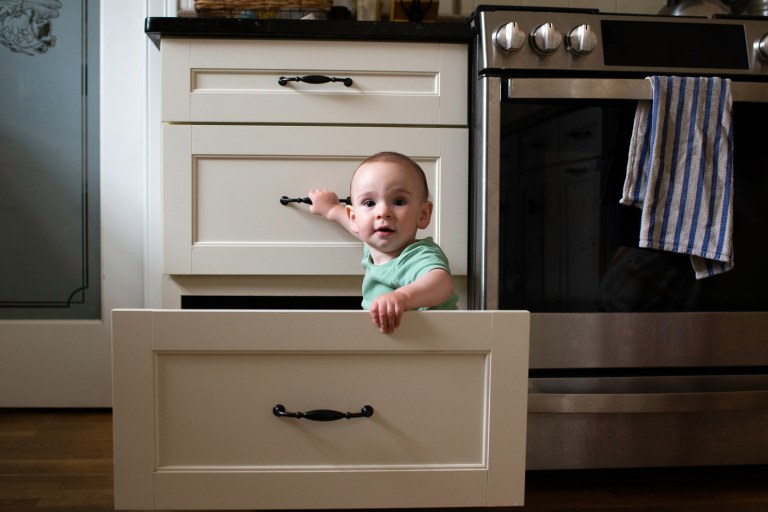
The early days (and sleepless nights) of parenthood can feel like an eternity. But in the blink of an eye, your tiny newborn is going to turn into a rolling, crawling baby and then a sprinting toddler who loves to explore their world, their home and…every electrical outlet in it.
“Babies and toddlers are wired to explore, but they don't yet have the judgment to know what's dangerous,” explains Amy Chezem, Senior Communications Manager at the Baby Safety Alliance, a trade group advancing baby product safety through advocacy, testing and verification, education and philanthropy.
That’s where babyproofing comes in. “Babyproofing takes the hazard out of the equation before it ever becomes one,” she says.
The tricky part isn't knowing you should babyproof—it's knowing where (and when) to start. Between endless product options and hazards that aren't always obvious until your baby finds them, it's easy to either do too little or buy way more than you need. Here’s how to prioritize (and simplify) the job, stay ahead of your baby’s development and choose the babyproofing gear that’s actually worth buying.
Why is babyproofing so important?
Babies and toddlers are natural explorers; touching, pulling on, opening and putting all the things into their mouths is how they learn. But it’s also how they get themselves into dangerous situations. Babyproofing is critical to keeping your child safe at home.
But babyproofing is about more than just safety, says Peter Kerin, president of the International Association for Child Safety (IAFCS) and owner of Foresight Childproofing, a Minnesota-based childproofing company. It’s about creating an environment that gives parents the peace of mind they need to let their child grow and explore safely.
“A well babyproofed space means the ordinary evolution of a baby learning to move, rolling, pulling up and climbing stays ordinary instead of becoming an emergency,” echoes Chezem.
How to Babyproof Your Home
If looking around your home and trying to spot everything that could possibly hurt your baby feels overwhelming, you’re not alone. Both of our experts say there are good reasons why.
For one, there’s a lot of information out there, and not all of it is reliable. “Parents today have more parenting content available to them than any generation before them, and it's not always easy to tell which of it is safety guidance versus which of it is just someone sharing what worked for their family,” says Chezem.
Then there’s the gear. Search for a cabinet lock or baby gate, and you’ll find endless options. Kerin says parents worry about making the wrong choice; add conflicting or outdated advice from friends, family and the internet, and it can be tough to know what to trust.
The good news: babyproofing feels a lot more manageable when you know what to prioritize and where to start. Here’s how.
Start before your baby is mobile
It’s hard to imagine your newborn on the move, and babyproofing may not feel particularly urgent when you’re running on three hours of sleep. But babies grow and change quickly, and both of our experts agree that it’s best to start earlier than you think.
“As much as possible, we advise families to babyproof their homes as early as possible, ideally before baby even arrives,” says Chezem. Babies don’t follow predictable developmental timelines, and a new skill like rolling, pulling up or climbing can seem to happen overnight.
“It would be very difficult to guess when a new stage has started and what precautions need to be implemented,” adds Kerin. “It is better to be thorough at the beginning and then remove precautions [when it] is age- and personality-appropriate.”
You don’t need every cabinet lock installed before you bring your newborn home, but some safety basics shouldn’t wait for mobility. Before baby arrives—or as soon as you can—Chezem recommends:
Setting up a safe sleep space with a firm, flat mattress and fitted sheet and nothing else in the crib
Making sure smoke and carbon monoxide alarms are working
Setting your water heater to 120°F
Locking up medications and cleaning products
Anchoring furniture and TVs
Starting early also gives you time to figure out your home's needs rather than racing to install a gate as your newly crawling baby heads for the stairs.
Know the hazards to prioritize
Things like outlet covers and padded corners are probably what comes to mind when you think of babyproofing—but they’re not necessarily the hazards that deserve the most attention.
“The hazards parents worry about most, outlets and sharp corners, are rarely the ones that hurt the most children,” says Chezem.
Instead, the BSA recommends prioritizing some less obvious—but important—hazards. The good news: many of the highest-impact babyproofing steps are also some of the simplest and least expensive.
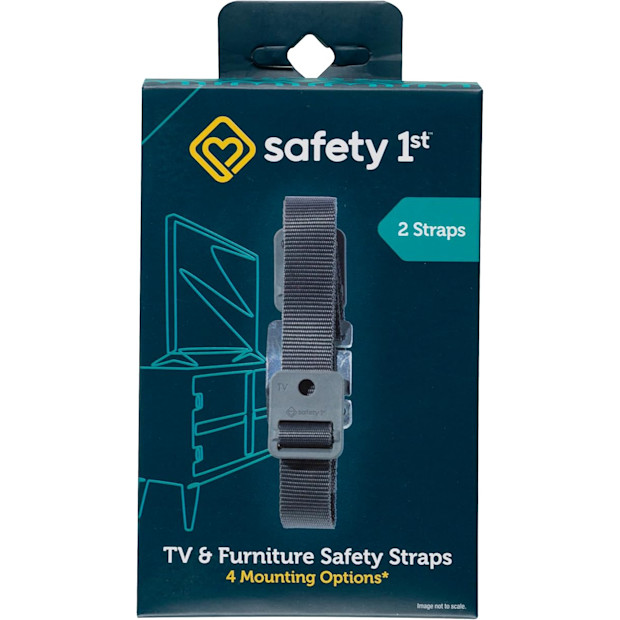
Furniture tip-overs: Dressers, TVs and other heavy furniture can tip when a child pulls or climbs on them. Anchor furniture securely to the wall rather than waiting until your baby starts pulling to stand.
Button batteries: Coin- and button-cell batteries can cause serious internal injuries if swallowed. Check remotes, key fobs, thermometers, light-up toys and other small electronics, and keep loose batteries completely out of reach.
High-powered magnets: If more than one is swallowed, these small, powerful magnets can attract to each other inside the body and cause serious injuries. Keep them away from young children and regularly check toys for loose or missing magnets.
Water: Bathtubs are a major drowning risk for babies. Stay within arm’s reach during baths, and don’t rely on bath seats or rings for safety.
Window cords: Corded window coverings can pose a strangulation risk. Choose cordless window coverings whenever possible and keep existing cords inaccessible.
Everyday poisons: Store medications, cleaning products and cosmetics securely and out of reach—but don’t forget less obvious spots like purses, diaper bags, and nightstands.
Buckles and restraints: Use the provided restraints every time your child is in a high chair, stroller, swing or bouncer, even if you’re right nearby.
Product recalls: Register baby gear like cribs, high chairs, strollers, swings and gates so manufacturers can contact you directly if there’s a safety recall.
You’ll also want to keep regional home-specific hazards in mind, according to Kerin, as each presents its own specific set of challenges to think through.
“In the north there are more fireplaces and basements. In the south, backyard pools are more prevalent. And there are more older homes in the east than in the west,” he says.
Get on your baby’s level
Once you’ve tackled the bigger, more universal hazards, it’s time to look for the ones that are specific to your home. The easiest way to do that? Get down on the floor.
Chezem recommends looking at each room from your baby's eye level—not just once, but periodically as they grow. You’ll suddenly notice the cord dangling from the window shade or the power strip under your desk. Think about what your baby could grab, pull, open, climb, knock over or put into their mouth.
It also helps to remember that babyproofing doesn't always require buying something. Kerin thinks about childproofing in three categories: physical, environmental and behavioral.
A physical fix might mean adding a gate or cabinet latch.
An environmental fix could be moving medications from a low bathroom drawer to a locked cabinet.
A behavioral fix might be remembering not to leave your purse (with things like medications, makeup or small objects inside of it) on the floor.
Babyproof for what’s coming next
If you do want to think about babyproofing by phases, focus on developmental milestones, not age.
“Injuries usually follow whatever your baby just figured out how to do, not their age on paper,” says Chezem. “So we tell parents to stay a step ahead: babyproof for the skill that's coming next, not the one you've already seen.”
As your baby approaches a new stage, think about the new hazards those skills can introduce.
Rolling: Be mindful of falls from changing tables, beds and couches. Never leave your baby unattended on an elevated surface.
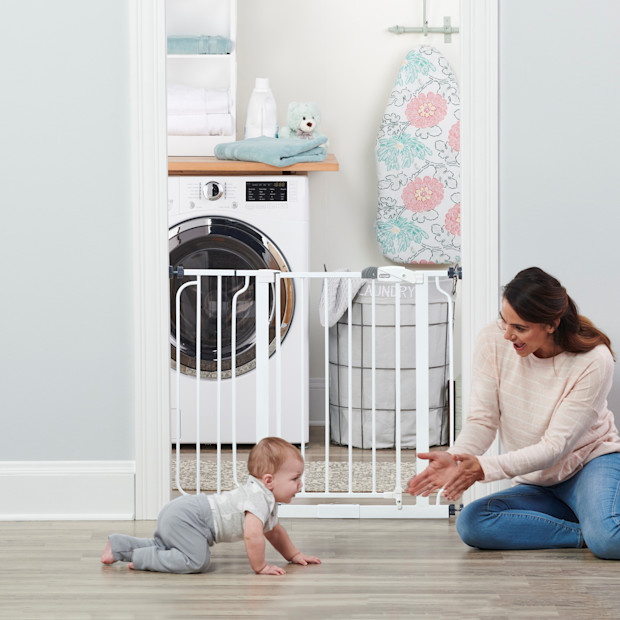
Crawling: Crawling babies find things you didn’t even know you had in your house. Look for small objects and choking hazards, accessible cords and outlets, cabinets and drawers, stairs and anything else that's reachable at floor level.
Pulling to stand: Secure furniture and TVs, check what your baby can pull down from tables and other surfaces and make sure unstable furniture can't topple.
Walking and climbing: Reevaluate gates, windows, doors and anything your child can use as a step to reach something higher.
Kerin takes an even more conservative approach and recommends thoroughly childproofing from the beginning rather than trying to predict exactly when you'll need each safeguard. “A child's development does not follow a straight linear path,” he says. He worries that a phased approach can leave parents constantly playing catch-up.
With either approach you choose, the takeaway isn't that you need to predict every move your baby will ever make—it’s that once you notice them working toward a new skill, that's your cue to take another look around.
Avoid these common babyproofing mistakes
What do babyproofing experts wish parents would stop doing? We asked Chezem and Kerin about the mistakes and overlooked hazards they see most often. A few came up again and again.
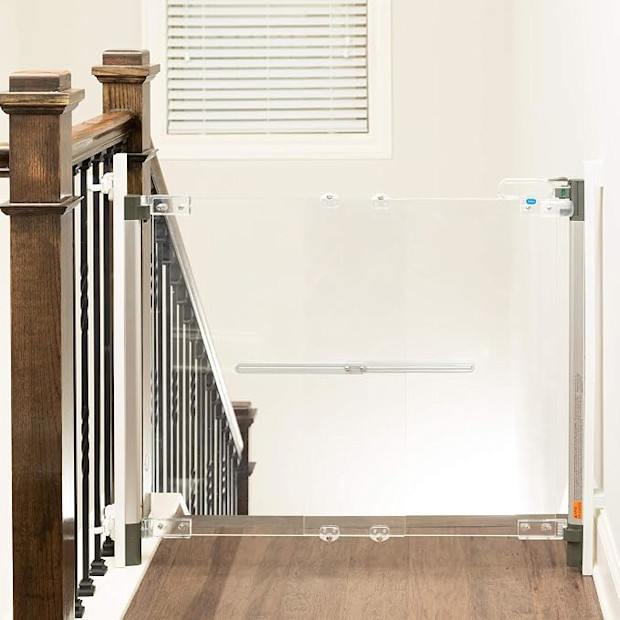
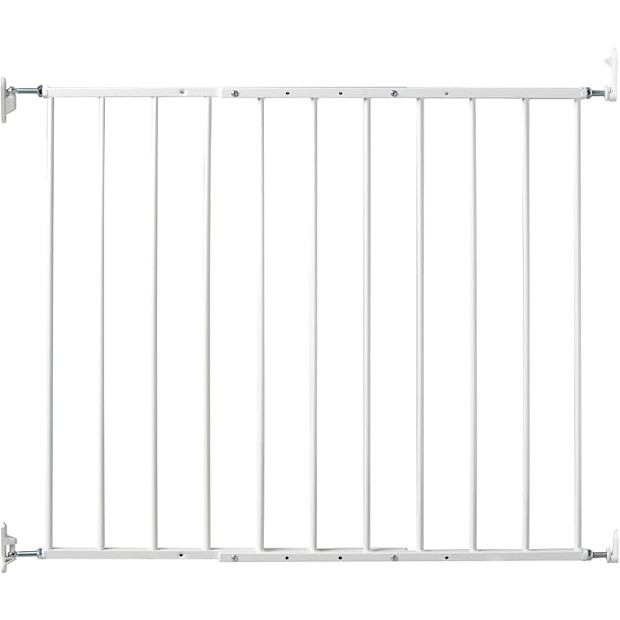
Using a pressure-mounted gate at the top of the stairs. This is the number one mistake Kerin sees in the homes he babyproofs. Both experts agree: gates at the top of a staircase should always be hardware-mounted, which means they're physically secured to the wall rather than held in place by pressure.
Forgetting to anchor furniture. Unsecured dressers, bookcases and other large pieces of furniture are another mistake Kerin frequently encounters. Chezem calls furniture tip-overs “one of the most underestimated hazards in the home.” Don’t assume a heavy piece of furniture can’t tip; anchor furniture and TVs securely to the wall before your baby starts pulling up or climbing.
Assuming a babyproofing product is safe just because it's for sale. “Many child safety products you see online have met little or no testing requirements,” says Kerin. Before buying, look for a reputable manufacturer and information about the safety standard the product meets. (More on how to do that below.)
Assuming all advice is good advice. Friends, family and social media can be helpful for plenty of parenting questions, but safety recommendations can be outdated, incorrect or simply based on what worked for one family. For safety questions, use your product’s instructions and trusted sources like the US Consumer Product Safety Commission (CPSC) and established child-safety organizations rather than relying on your FYP.
Choose babyproofing gear carefully
Not all babyproofing gear is created equal.
According to Kerin, the sheer number of options is one of the main reasons parents find babyproofing so overwhelming and confusing. And safety isn’t the only consideration; function, durability and proper installation matter, too.
Buy from a reputable manufacturer. Chezem recommends buying babyproofing gear from a reputable manufacturer with clear US contact information and information about the safety standard the product meets rather than vague language like “meets all safety standards.” Red flags: a marketplace seller that’s a random string of letters or numbers (instead of an actual brand) and pricing that’s too good to be true.
Recalls and registration. Check the CPSC’s Recalls and Product Safety Warnings site for any product recalls before you buy or use any babyproofing gear. Register eligible baby gear so you'll be contacted if it's recalled later.
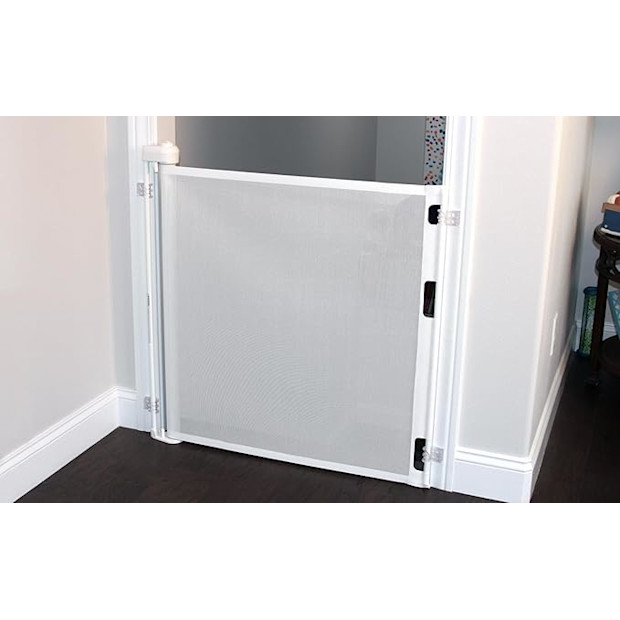
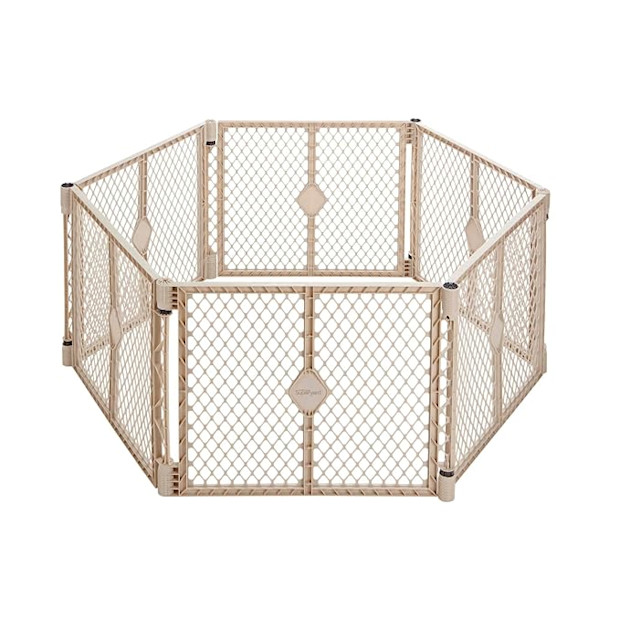
Pay special attention to safety gates. Gates must meet a mandatory federal safety standard. A legitimate gate should carry third-party testing, a tracking label and a registration card in the box.
You can also look for products carrying the Baby Safety Alliance verified seal. It can be found on a product’s packaging and indicates the item meets the highest federal, state and voluntary safety standards set for its category.
Reassess as your baby grows
Just like parenting, babyproofing isn’t something you do once and never think about again. Revisit your setup as your baby’s abilities change.
Check that gates and locks still work.
Look for new hazards as your baby learns to climb.
Routinely scan your home for anything that’s crept back within reach.
And don’t forget to babyproof beyond your own home. Sitters’ and grandparents’ homes, hotel rooms and vacation rentals all need to be babyproofed if you’re spending time there.
The Best Babyproofing Gear
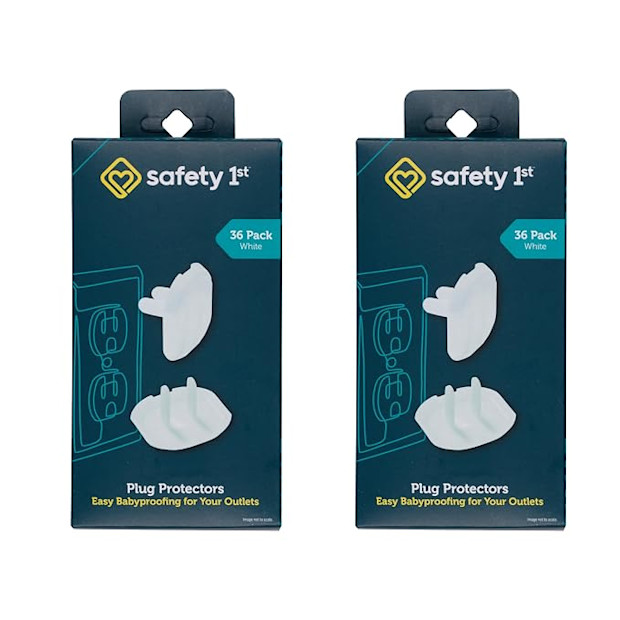
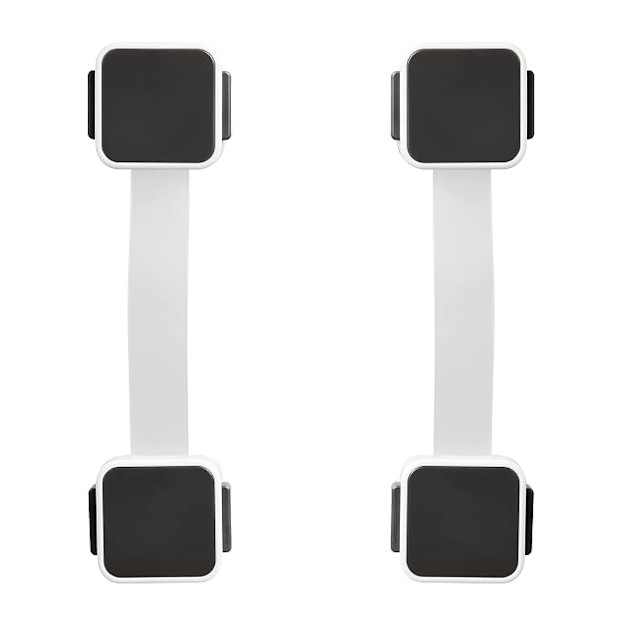
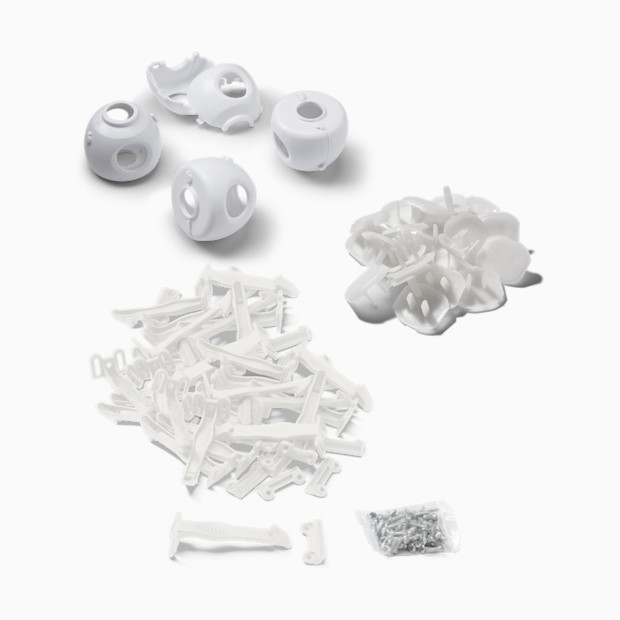
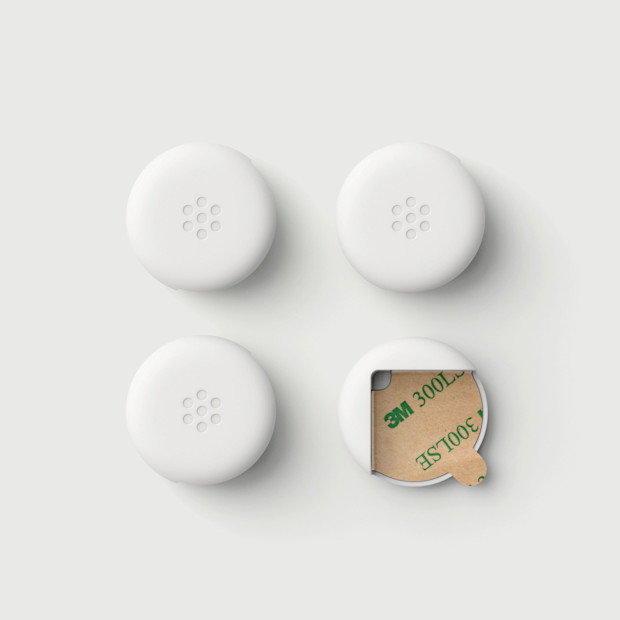
To help you wade through the seemingly endless options, these are some of our favorite gates, locks, furniture anchors and other babyproofing essentials.
Babyproofing Resources
These trusted resources offer expert-backed guidance to help you safely set up your space for baby.
Baby Safety Alliance resources:
Babylist articles and product guides:

;)
;)
;)
;)
;)
;)
;)
;)
;)
;)