
Why Your Baby Might Be Refusing the Bottle—And What to Try
You’ve tried the bottle—they said no. Now what? Start here.

By

Whether you're heading back to work, sharing feeds with a partner or caregiver, or just hoping for a little more flexibility, introducing a bottle to a breastfed baby can feel like a big milestone. But sometimes your baby has other plans—like flat-out refusing it. (Cue the stress.)
I’m a mom of two, and I breastfed both of my kids—so I know this struggle firsthand. Despite my best efforts, both of them turned their noses up at the bottle at one point or another. It was frustrating, emotional, and honestly, kind of overwhelming. So if you’re in it right now, I see you.
In addition to being an associate editor here at Babylist, I’ve also completed 52 hours of training to become a certified lactation counselor, so I’m bringing both personal experience and professional insight to this conversation. To go even deeper, I spoke with Emily Spaeth, an International Board Certified Lactation Consultant, IBCLC, who’s supported countless families through this phase. She shares why some babies resist the bottle, how to gently work through it and the small shifts that can make a big difference.
Why do some babies refuse to take a bottle?
First, know this: bottle refusal is so common—and it doesn’t mean you’ve done anything wrong. “There are a wide variety of reasons a baby might refuse a bottle,” says Spaeth. “The most common ones I see in newborns have to do with flow rate, nipple shape and the way the bottle is introduced.”
A fascinating twist? Around three to four months old, babies go from reflexively sucking bottles and nipples to making the choice to do it on their own. “This is a really fun time,” Spaeth explains. “Because all of a sudden, they aren’t required to suck, swallow and breathe because of their reflex. They get to choose. And sometimes, they choose that they don’t want the bottle.”
It's often less about the bottle itself and more about what it represents. If a baby is used to feeding at the breast, the bottle can feel unfamiliar—or even a little confusing. They have a different flow, smell and position, so it’s understandable that some babies need a little time to adjust, and that’s totally normal.
Here are a few common reasons babies might refuse a bottle:
They’re used to breastfeeding and haven’t had much bottle exposure yet
They prefer to feed directly from you (and they’re not wrong—skin-to-skin is cozy and comforting!)
The flow is too fast or too slow for their liking
They’re just not hungry or in the mood to feed at that moment
They’re dealing with a physical issue, like reflux or a tongue tie, that makes bottle feeding uncomfortable
Spaeth also adds that baby’s temperament can also play a role in bottle acceptance or refusal. “If feeding in general has been a struggle, if your baby had a tongue tie or difficulty maintaining a latch at breast, or any negative associations with things in their mouths (like a gloved finger, bottle with a too-fast flow rate, or even an unwanted pacifier) it can create an oral aversion. Once this exists it is much harder to encourage a baby to bottle feed.”
But bottle refusal doesn’t mean your baby will never take a bottle—it just means they need a little time (and maybe a few tweaks) to get there. Keep reading for some helpful tips.
Strategies to Encourage Bottle Feeding
Every baby is different, and what works for one might not work for another. But if your little one is giving the bottle a hard pass, these strategies might help make things a little easier. No pressure, no magic fix—just ideas to try, one feed at a time.
Spaeth says the first step is to try to dig into why your baby may be refusing the bottle:
Is it the flow rate?
Is your milk high lipase? (more on this below)
If formula feeding, does your baby not like the flavor of the formula?
Is it the shape of the nipple?
Is it that they actually aren’t hungry and are feeling as though they have to eat when a nipple is in their mouth, so they cry instead?
Sometimes it’s not easy to figure out—and that’s okay. Here are a few strategies you can use to get your baby to accept a bottle.
Try changing the bottle (or nipple)
Sometimes the solution is as simple as a different shape or flow. “Bottles offer one consistent flow rate and a much firmer surface than breast tissue, so the experience is really different,” says Spaeth. Trying different shapes and flows can help match what your baby is used to. (Check out our Bottles for Breastfed Babies guide for our top recommendations.) Some babies prefer a slower flow that mimics breastfeeding, while others get frustrated if it’s too slow. Testing out a few styles can be worth it—you’re not being extra, you’re being a problem-solver. (Pro tip: the Babylist Bottle box has five options to try and will help save that last-minute panic order or a trip to the store.)
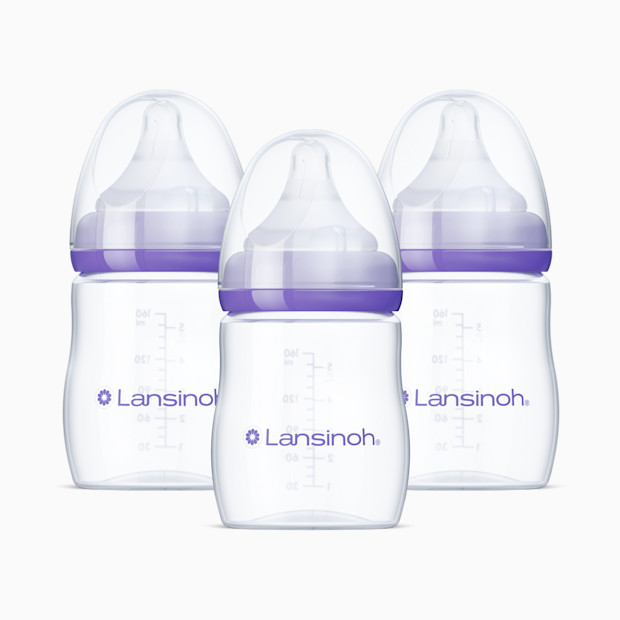
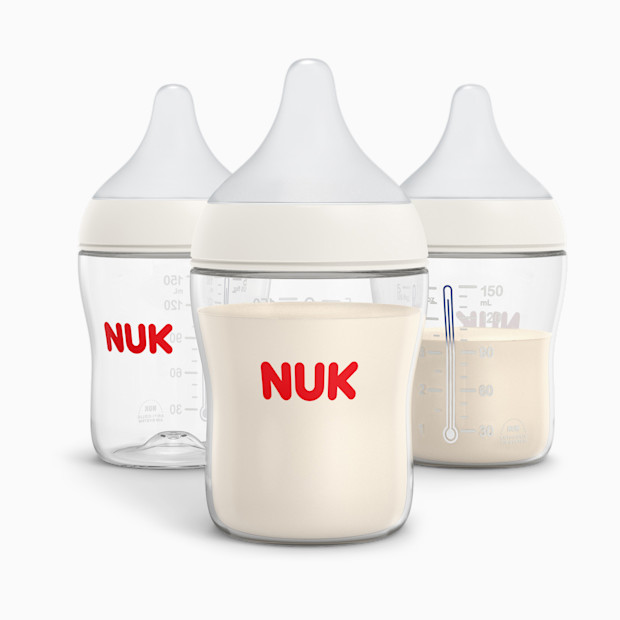
Here are few options to start with:
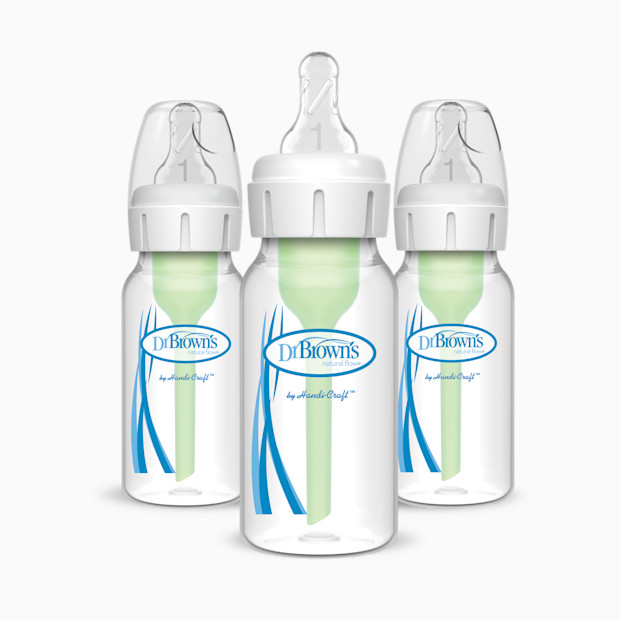
Dr. Brown's
Anti-colic Options+ Narrow Baby Bottle
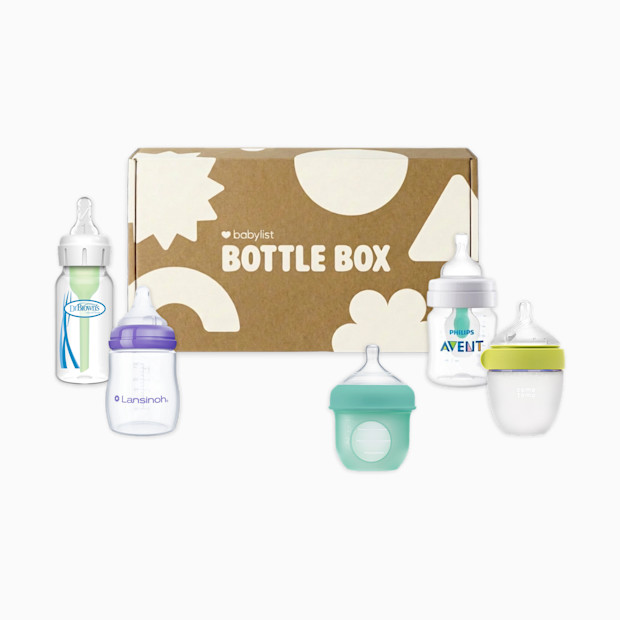
Babylist
Bottle Box
Have a non-nursing parent or caregiver offer the bottle
If you’re breastfeeding, your baby might expect to nurse when they’re with you (which makes total sense). Spaeth recommends that having a partner, caregiver or support person offer the bottle—especially when you’re not in the room—can sometimes make a big difference.
Choose the timing carefully
A baby who’s super hungry or overtired may be too overwhelmed to try something new. A calmer moment—like after a nap or when they’re just starting to show hunger cues—can be a better window to try. Spaeth adds, “Sometimes babies aren’t actually hungry and that mismatch can create frustration.”
Add a little movement
Some babies take a bottle more easily when they’re being gently rocked, walked around or even bounced lightly. Feeding in motion can be soothing and help distract from the “this-is-different” vibes.
Get creative with positioning
It doesn’t have to be a traditional cradle hold. Spaeth suggests trying side-lying or upright positions, even for babies who aren’t refusing. “It just helps keep the flow more consistent.” Sometimes just switching things up can help them engage differently with the bottle.
Warm it up (or cool it down)
Some babies prefer warm milk (especially if they’re used to breast milk directly), while others surprise you by liking it cooler. Same goes for the nipple itself—play around with different temps to see what they prefer. You can warm up bottles of expressed breast milk or formula by placing them in a bowl of warm water or using a bottle warmer (check out our guide for our top picks).
Keep it low pressure
If your baby’s refusing, you can offer without insisting. Let them explore the bottle with their mouth. Even a few seconds of latching or chewing counts as progress. “It’s important not to keep offering the bottle once it’s been refused,” says Spaeth. “That can cause frustration and even lead to an oral aversion—where a baby begins refusing anything in their mouth.” You’re building familiarity, and that takes time!
In addition to these tips, Spaeth shares one more piece of advice: “I like to use the slowest possible flow, put 15 mL of breast milk in a bottle and pace the baby as they enjoy it,” she says. Sometimes you can even hand-express a small amount of breast milk for this. “Once your baby is an expert, you don’t have to offer a bottle every day—but continuing every few days can help them stay familiar.”
A Note on High Lipase Breast Milk
My biggest obstacle in introducing a bottle to each of my kids (aside from their strong preference) was that I had high lipase breast milk. High lipase milk doesn’t taste different as it comes out of the breast, but can affect milk once it’s been expressed and sat in the refrigerator for a bit or frozen and thawed.
High lipase means the enzymes in your breast milk break down the fats more quickly, which can give it a soapy or metallic taste. Some babies don’t mind, but others might reject it. If you suspect this might be an issue, you can try scalding your milk right after pumping to help preserve the flavor.
When to Introduce a Bottle
If you're breastfeeding, Spaeth recommends waiting until about four weeks—once feeding is well established and weight gain is strong. “We want the baby and birthing person to feel very confident in their breastfeeding abilities,” she says. That early time is about building supply and getting into a rhythm, and introducing a bottle too soon can sometimes disrupt that.
On the flip side, waiting too long can also make bottle refusal more likely. There’s often a sweet spot for introducing a bottle—usually between four and six weeks—when feeding is well established but babies are still pretty adaptable. Starting during this window can help ease the transition without disrupting breastfeeding.
But sometimes you need to introduce a bottle sooner—and that’s totally okay, too. Whether it’s for medical reasons, going back to work or just what’s right for your family, starting before four weeks doesn’t necessarily mean you’ll disrupt breastfeeding.
It might take a little more finesse to help baby go back and forth between bottle and breast, but that’s where bottles with gradually sloped nipples can help. They’re designed to mimic how a baby latches while nursing, which can make the transition feel a little more familiar.

When to Ask for Help
If you’ve tried a few strategies and bottle refusal is still going strong—or if it's starting to feel stressful—it might be time to loop in a pro. If your baby is consistently refusing bottles and showing signs like coughing, gagging, clicking or arching their back during feeds, it may be time to check in with a lactation consultant or feeding specialist.
A lactation consultant—like an IBCLC or CLC—focuses specifically on breastfeeding. They’re trained to support things like latching, supply, pumping and nipple pain.
A feeding specialist is often trained in a wider range of feeding needs, including bottle refusal, solid food introduction and challenges related to reflux, oral aversion or developmental delays. Some are speech-language pathologists (SLPs) or occupational therapists (OTs) with feeding training.
If you’re not sure who to reach out to, start with someone who has experience in the type of feeding you’re working on.
And sometimes, just having someone say “Yep, that’s normal,” can be a game-changer. You're not doing anything wrong, and you don’t have to figure it all out by yourself!
What if they never take a bottle?
First, deep breath: it's rare, but it does happen. Some babies never fully take to bottles—and that doesn’t mean you’re out of options. “If your baby is six months or older, it is definitely possible to start introducing an open cup, straw cup or a sippy cup,” Spaeth says.
If you’re dealing with this, a lactation consultant or feeding specialist can walk you through next steps based on what makes sense for your baby (and for you).
Feeding your baby—however you’re doing it—is deeply personal. When something like bottle refusal pops up, it can feel like more than just a feeding issue. It can bring up stress, pressure, guilt or even grief.
So if this has you feeling discouraged or unsure, you're not alone. Take breaks when you need to, ask for help and give yourself the same patience you’re giving your baby.
Expert Sources
Babylist uses high-quality subject matter experts to provide accurate and reliable information to our users. Sources for this story include:
Emily Spaeth, an international board certified lactation consultant and the founder of Be Well Baby PDX where she offers parents support from birth through postpartum.

;)
;)
;)
 - 5 Oz","url":"https://www.babylist.com/gp/nuk-perfect-match-bottle-3-pack/60443/2189367","source":"hello_baby"});)
","url":"https://www.amazon.com/dp/B0BGX94WMP?th=1","source":"hello_baby"});)